Overview

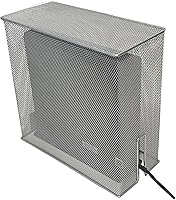
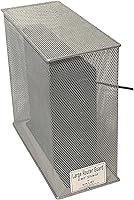
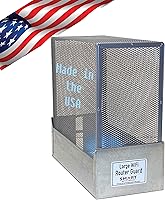
The Router Guard Large WiFi Router EMF Shield is a stainless steel mesh enclosure built to reduce the electromagnetic radiation your home router puts out around the clock. As more households start questioning the long-term effects of constant EMF exposure — especially with routers parked in bedrooms and living rooms — products like this EMF router cage have found a genuine audience. It is made in the US, which stands out given how many competitors source from overseas. The key thing to understand upfront: this is a passive shielding enclosure, not a kill switch. Your router keeps working; you simply get meaningfully less radiation spreading through the room.
Features & Benefits

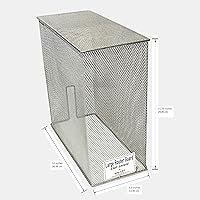
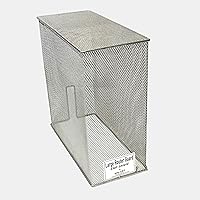
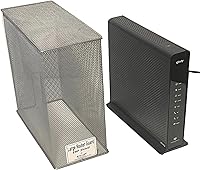
The enclosure relies on a Faraday-cage design — a stainless steel mesh that the brand claims blocks roughly 90% of router EMF output, covering quad-band and 5G home WiFi frequencies. It fits modern, bulkier routers up to 12.6 x 12.6 x 5.5 inches and weighs about 2 pounds, so it feels substantial without being awkward to reposition. Installation is genuinely quick: drop your router inside, set the lid on top, and you are done — no tools, no rewiring, no network changes required. The US manufacturing is a real differentiator for buyers who care about sourcing, and the overall build quality holds up well against the price point.

Best For

This shielding enclosure makes the most sense for people actively working to reduce household EMF without dismantling their home network. Parents who keep a router running near a child's bedroom, or home-office workers with a router sitting a few feet from their desk all day, are probably the clearest fit. It also suits anyone who has already addressed other EMF sources — smart meters, for instance — and wants to cover the router as the logical next step. If you have no interest in EMF exposure and just want maximum WiFi speed, this is not aimed at you. But for the health-conscious buyer, it offers a genuinely low-effort installation with no technical skill required.

User Feedback

With a 4.4-star average across more than 300 ratings, the router shield lands in solid territory, though buyer opinions split along predictable lines. Peace of mind is the reason most satisfied customers cite — many do not own an EMF meter and feel reassured simply knowing the cage is in place. More technically minded reviewers who actually measure their exposure report real reductions, but they also flag that WiFi signal strength can drop noticeably, especially across larger spaces or multiple walls. That trade-off divides opinion. Build quality and the domestic sourcing attract consistent praise, while the main criticisms involve fit problems with oddly shaped routers and a feeling among some buyers that the price is high for what is essentially a mesh metal box.

Pros

  • Blocks approximately 90% of router EMF output using a proven Faraday-cage mesh design.
  • Installation takes under a minute — no tools, no cables, no configuration changes needed.
  • Fits most modern large routers, including quad-band and 5G home WiFi models.
  • Made in the US, which is a genuine differentiator in a market flooded with overseas alternatives.
  • The router keeps working normally, so you are not trading internet access for EMF reduction.
  • Solid stainless steel construction feels durable and holds up well with everyday use.
  • Lightweight enough at 2 pounds to reposition or move to a different room without hassle.
  • Strong customer satisfaction overall, with a 4.4-star average across hundreds of real buyers.
  • Covers a real gap for people who have addressed other household EMF sources but overlooked the router.

Cons

  • WiFi signal range can drop noticeably, which is a real problem in larger homes or multi-floor setups.
  • The price feels steep relative to the straightforward nature of the materials involved.
  • No independent third-party certification is provided to verify the 90% EMF blocking claim.
  • Fit is not universal — oddly shaped, oversized, or tower-style routers may not sit properly inside.
  • Buyers without an EMF meter have no way to confirm the shielding is actually working as advertised.
  • The enclosure does nothing to address EMF from other household devices like smart meters or phones.
  • Some users report that the lid does not always sit flush, raising questions about shielding consistency.
  • Scientific consensus on household EMF health risk remains inconclusive, so the core use case is precautionary rather than evidence-based.

Ratings

Our AI-generated scores for the Router Guard Large WiFi Router EMF Shield were produced by analyzing verified buyer reviews from multiple global markets, with spam, bot activity, and incentivized feedback actively filtered out before scoring. The ratings reflect a genuine cross-section of real-world experiences — covering everything buyers praised to the friction points that caused frustration. Both sides are represented transparently so you can make a properly informed decision.
EMF Shielding Effectiveness
78%
22%
Buyers who invested in an EMF meter before and after installation consistently reported measurable drops in radiation readings near the router. For households running a router 24 hours a day in a bedroom or small home office, that documented reduction gave owners genuine confidence that the product is doing something real.
Without independent third-party certification, the brand's 90% blocking claim cannot be fully verified by most buyers. Users without an EMF meter have no practical way to confirm the shielding is performing as advertised, which leaves a meaningful portion of the audience relying entirely on trust.
WiFi Signal Impact
61%
39%
In compact living spaces — a studio apartment or a single-floor home — many users reported that their internet speeds and device connectivity remained workable after placing the router inside the enclosure. Buyers in those scenarios felt the trade-off was reasonable given the EMF reduction they were after.
Users in larger homes, multi-story layouts, or spaces with thick walls flagged noticeable drops in signal range and connection reliability. A handful of reviewers described dead zones appearing in rooms that previously had strong coverage, making this a real concern for anyone with a spread-out floor plan.
Build Quality
84%
The stainless steel mesh feels solid and well-finished for what it is — reviewers consistently noted that it does not feel flimsy or cheap when handled. Several buyers specifically called out the material quality as justifying the purchase over cheaper imported alternatives they had seen online.
A recurring complaint involves the lid not sitting perfectly flush on certain router shapes, which raises legitimate questions about whether the shielding seal is fully consistent around the edges. It is a minor but not insignificant point for buyers who care about maximizing shielding performance.
Ease of Installation
96%
This is one area where nearly every reviewer agrees: setup is genuinely effortless. You place the router inside, set the lid on top, and walk away — no cables to reroute, no settings to change, and no technical knowledge required whatsoever. Even the least tech-savvy buyers reported zero issues.
The only friction some users encountered was measuring their router beforehand — a step the product does not make obvious enough in its sizing guidance. A small number of buyers received the enclosure only to find their specific router model did not fit cleanly inside.
Router Compatibility
71%
29%
The enclosure accommodates a wide range of popular modern large-format routers from brands like Netgear, ASUS, and TP-Link that fall within the stated dimensions. Buyers with standard rectangular routers generally had no fit issues and found the interior space adequate.
Tower-style routers, models with fixed upright antennas, and unusually wide devices regularly caused fit problems that reviewers flagged in critical notes. The dimensional limit of 5.5 inches in height catches a surprising number of common router configurations off guard.
Value for Money
58%
42%
Buyers who prioritized US manufacturing and were already committed to reducing household EMF tended to feel the price was fair relative to the alternatives they found. For that specific buyer profile, paying a premium for domestic sourcing felt like a principled choice rather than an overcharge.
Objectively, this is a mesh metal box — and at its price point, a number of reviewers expressed frustration that the construction did not reflect more sophisticated engineering or finishing. Skeptical buyers felt the margin between material cost and retail price was hard to justify on specifications alone.
Size & Router Fit Range
67%
33%
The large variant genuinely accommodates routers that smaller competing cages cannot handle, and buyers upgrading from older, compact models to modern quad-band units appreciated having an option sized for current hardware. It fits a meaningful percentage of routers available today.
Asymmetrical or unconventional router designs fall outside what the enclosure can cleanly house, and the lid-fit consistency varies depending on the exact router profile. Buyers should treat the listed dimensions as a strict ceiling rather than a comfortable range.
US Manufacturing
88%
For buyers who actively seek domestically made products, this is a clear differentiator in a category where virtually every competitor sources from overseas. Several reviewers mentioned it as a deciding factor, particularly those who had concerns about quality control on imported EMF products.
The manufacturing origin does not come with any additional certification, warranty upgrade, or regulatory verification that would tangibly reinforce the quality claim. It functions more as a trust signal than a measurable product advantage for buyers who are on the fence.
Long-Term Durability
81%
19%
Stainless steel holds up well over time under normal household conditions — buyers who had owned the enclosure for a year or more reported no visible corrosion, mesh degradation, or structural weakening. The material choice makes long-term durability a relative strength for this product type.
There is limited long-term review data available since most verified purchases are relatively recent, and no official warranty terms are prominently communicated. Buyers have little formal recourse if the product fails or the mesh integrity changes over an extended period.
Packaging & Unboxing
74%
26%
Most buyers found the product arrived well-protected and ready to use straight out of the box. The presentation felt appropriate for the price tier, and no reviewers flagged damage on arrival as a recurring concern.
A few buyers noted that the packaging included minimal documentation — no setup guide, no sizing reference card, and no EMF measurement tips — which felt like a missed opportunity given the questions many first-time EMF product buyers tend to have.
Aesthetic & Home Decor Fit
69%
31%
The silver stainless steel finish is neutral enough to blend into most home office or living room setups without drawing attention. Buyers who keep their router on a shelf or desk appreciated that the enclosure does not look out of place next to other electronics.
The industrial mesh appearance is not for everyone, and a handful of reviewers noted it felt visually utilitarian in otherwise styled living spaces. There are no color options or finish variations available for buyers who want something less conspicuous.
Brand Credibility & Transparency
66%
34%
Smart Meter Guard has been in the EMF shielding space since at least 2019 and has accumulated a meaningful number of verified reviews, giving it more track record than many niche competitors. Buyers found the brand responsive and the product claims at least internally consistent.
The absence of independent lab testing data or recognized third-party certification makes it difficult to fully verify the core performance claim. In a product category where pseudoscientific offerings are common, the lack of external validation is a credibility gap that informed buyers notice.

Suitable for:

The Router Guard Large WiFi Router EMF Shield is best suited for health-conscious households where the router runs continuously and sits in a shared living space, bedroom, or home office. Parents who want to reduce their children's prolonged exposure to ambient WiFi radiation — without turning the internet off — will find this approach practical and low-effort. Home office workers whose router sits within arm's reach for eight or more hours a day are another strong fit, since the cumulative exposure concern is most relevant in close-proximity, long-duration scenarios. It also makes sense for buyers who have already taken steps to address other EMF sources in their home, like smart meters or wired appliances, and now want to round out their approach. If the goal is passive risk reduction without touching router settings or calling an ISP, this shielding enclosure delivers exactly that kind of hands-off solution.
Not suitable for:

The Router Guard Large WiFi Router EMF Shield is not the right buy for anyone whose primary concern is raw WiFi performance. Because the mesh physically attenuates the signal, households with larger floor plans, thick walls, or multiple floors may notice a real drop in coverage range or connection reliability — and that trade-off is worth taking seriously before purchasing. Buyers who are skeptical of EMF health concerns in general and are looking for a functionally justified upgrade will find little here to satisfy them, since the product offers no networking benefit whatsoever. It also will not work for every router shape: some oversized, asymmetrical, or tower-style units simply do not fit within the enclosure dimensions, so measuring your router carefully before ordering is essential. At its price point, buyers expecting premium fit and finish beyond a mesh metal box may feel the value proposition is thin, especially if their WiFi speeds suffer noticeably after installation.
Specifications

  • Dimensions: The enclosure measures 12.6 x 12.6 x 5.5 inches, accommodating most modern large-format home routers.
  • Item Weight: The unit weighs approximately 2 pounds, making it easy to reposition without tools or effort.
  • Material: Constructed from stainless steel mesh using a Faraday-cage design to attenuate electromagnetic radiation.
  • EMF Blocking Rate: The manufacturer claims approximately 90% reduction of the EMF output emitted by the enclosed router.
  • Frequency Coverage: Compatible with quad-band routers, including models operating on 5G home WiFi frequencies.
  • Installation: Tool-free lid-on placement — simply set the router inside the cage and place the top cover on.
  • Country of Origin: Manufactured in the United States, distinguishing it from the majority of competing products made overseas.
  • Color: Finished in silver, consistent with the natural appearance of stainless steel mesh.
  • Compatible Devices: Intended for use with home routers that serve laptops, desktop computers, smartphones, and tablets.
  • Recommended Use: Designed exclusively for home environments where reducing ambient router EMF exposure is the primary goal.
  • Brand: Sold under the Router Guard brand and manufactured by Smart Meter Guard.
  • Model Number: The official item model number is 642337772023.
  • First Available: The product was first listed for sale in January 2019.
  • Customer Rating: Holds a 4.4-out-of-5-star average rating based on 301 customer ratings on Amazon.
  • Sales Rank: Ranked #26,571 in Electronics and #1,314 in Computer Networking on Amazon at time of review.
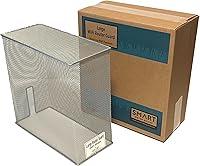
  • Included Components: Each purchase includes one EMF shield enclosure with a removable lid; no additional accessories are included.

Related Reviews
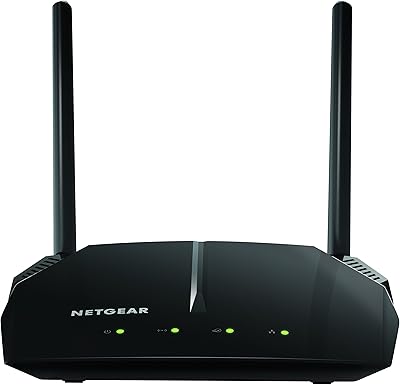
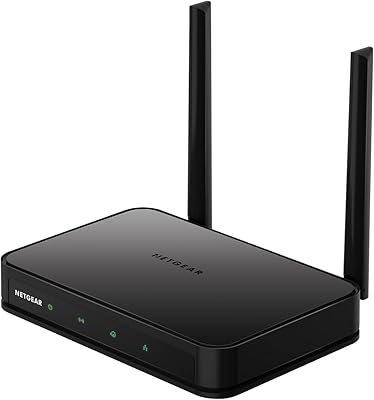
NETGEAR R6120 AC1200 Dual Band WiFi Router
74%
92%
Ease of Setup
89%
Value for Money
74%
Wi-Fi Coverage
51%
Wired Ethernet Performance
76%
Wireless Speed
More
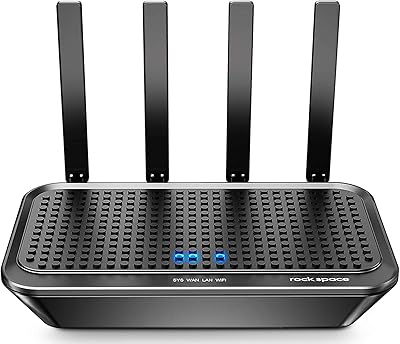
Rockspace AC2100 Wi-Fi Router
74%
83%
Value for Money
63%
Wi-Fi Range & Coverage
78%
Multi-Device Performance
88%
Setup & Ease of Use
86%
Wired Connection Quality
More
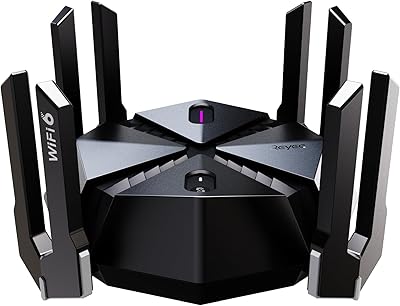
Reyee E6 AX6000 WiFi 6 Router
78%
93%
Value for Money
86%
Wireless Range & Coverage
82%
Gaming Performance
88%
Ease of Setup
61%
Mobile App & Software Experience
More
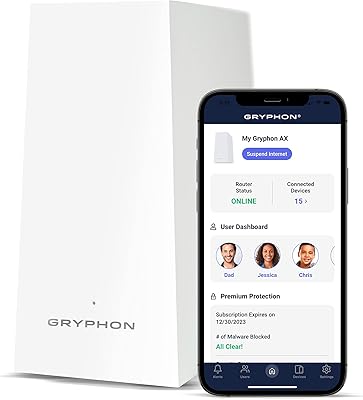
Gryphon AX Mesh WiFi 6 Router
73%
91%
Parental Controls
88%
Network Security
76%
WiFi Speed & Performance
78%
Coverage & Range
84%
Setup & Installation
More
Linksys MR7350 WiFi 6 Router
76%
91%
Setup & Onboarding
78%
WiFi Speed & Throughput
67%
Coverage & Range
83%
Device Handling & Congestion
72%
App & Remote Management
More
Gryphon Guardian Mesh WiFi Router
73%
88%
Parental Controls
84%
Network Security
61%
WiFi Speed & Performance
72%
Coverage & Range
83%
App Experience
More
Linksys MR8300 Tri-Band Mesh WiFi Router
79%
89%
Ease of Setup
72%
Wi-Fi Coverage
84%
Connection Stability
76%
Throughput & Speed
81%
Multi-Device Performance
More
Tenda RX2Pro AX1500 WiFi 6 Router
76%
91%
Value for Money
78%
Wireless Performance
72%
Coverage & Range
93%
Ease of Setup
74%
App Experience
More
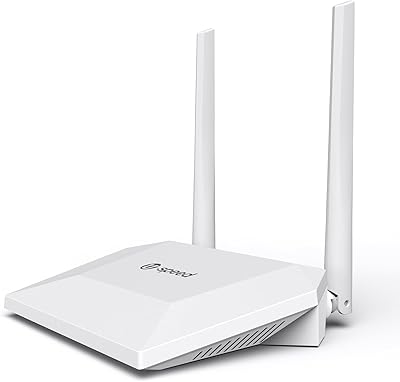
U-SPEED N300 T1 Pro WiFi Router
70%
88%
Ease of Setup
63%
WiFi Coverage
58%
Wireless Speed
83%
Value for Money
67%
Repeater Performance
More
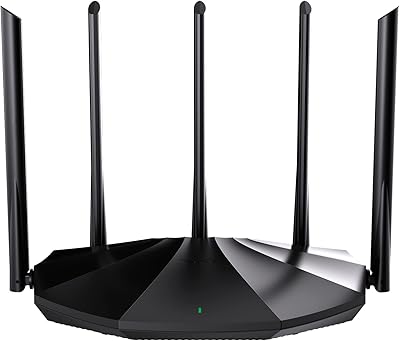
Linksys MR20EC WiFi 6 Mesh Router
74%
78%
Wireless Performance
63%
Coverage & Range
91%
Setup & Installation
69%
App & Remote Management
82%
Device Handling & Congestion
More

FAQ

Yes, your router continues to function and broadcast a signal through the mesh. However, because the mesh physically attenuates the radio signal, you may notice a reduction in range or speed — particularly in larger homes or through multiple walls. Most users in smaller spaces report acceptable performance, but it is worth testing before committing.

The brand bases this figure on the Faraday-cage principle, where conductive mesh intercepts and dissipates electromagnetic waves. The honest answer is that without your own EMF meter, you cannot independently verify it at home. If precision matters to you, an inexpensive handheld EMF meter can confirm whether levels have dropped before and after installation.

The interior fits routers up to 12.6 x 12.6 x 5.5 inches, which covers a wide range of modern large-format home routers. That said, some tower-style or asymmetrical routers may not sit cleanly inside the enclosure. Measure your router carefully before purchasing — length, width, and height including any antennas that fold down.

Yes, it is rated for quad-band operation, which includes the 5G frequencies that many newer home routers now use. This refers to 5GHz home WiFi, not 5G cellular infrastructure, which is an entirely different technology.

It takes about thirty seconds. You do not unplug anything — just lift your router into the enclosure and set the lid on top. There are no tools, screws, or cable modifications involved.

Yes. The enclosure is open at the base where cables typically exit, so your ethernet, power, and coax connections remain accessible without any modifications to your existing setup.

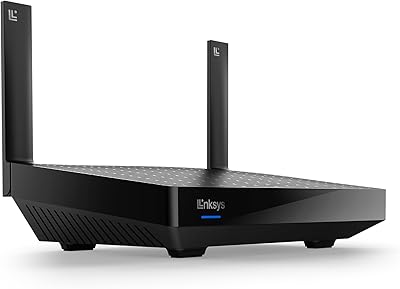
It depends on how the antennas are configured. Fixed upright external antennas may not fit within the height clearance of the lid, while routers with folding antennas often work fine once the antennas are laid flat. Check your router's antenna style and folded dimensions against the 5.5-inch height limit before buying.

Stainless steel mesh is low maintenance. An occasional wipe with a dry or slightly damp cloth is all it needs to stay clean. Avoid abrasive cleaners that could damage the mesh surface or leave residue on the metal.

The primary differentiator the brand cites is US manufacturing, which generally carries higher production costs than overseas alternatives. Whether that justifies the price premium is a personal call — the underlying mesh construction is relatively straightforward, so buyers should weigh the sourcing claim against their own budget expectations.

The scientific picture here is genuinely mixed. Regulatory bodies in most countries classify non-ionizing EMF from WiFi routers as low risk at typical exposure levels, and there is no established clinical consensus linking home router radiation to specific health outcomes. That said, many buyers take a precautionary approach — reducing exposure where it is easy and practical to do so, without waiting for definitive proof either way. This router shield is designed for exactly that kind of precautionary use.