Overview
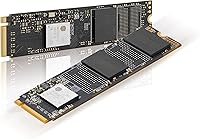
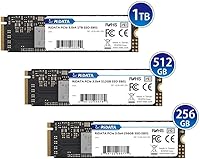
The Ridata E801 512GB NVMe M.2 SSD comes from Ritek, a Taiwanese manufacturer that has been producing NAND storage components for decades — a background worth knowing when evaluating a brand that hasn't built much name recognition in North America. This Ridata drive occupies the entry-to-mid-range NVMe space, using a standard M.2 2280 form factor and PCIe Gen3x4 interface that fits cleanly into the vast majority of modern laptops and desktops. The advertised sequential speeds are competitive on paper, and the included 3-year warranty is a reassuring commitment from a brand still building its Western reputation. That said, real-world consistency is always worth scrutinizing before committing.
Features & Benefits
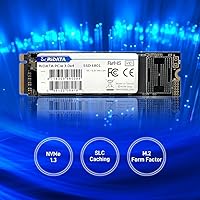
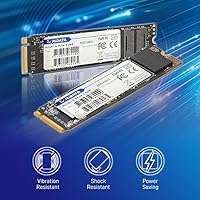
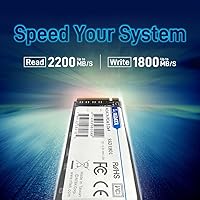
At 2200MB/s sequential read and 1800MB/s sequential write, this M.2 SSD delivers the kind of speed that makes a tangible difference when booting an OS, transferring large files, or launching applications quickly. Those figures are backed by 3D NAND with LDPC error correction — a combination that improves data integrity and long-term reliability compared to drives using more basic ECC implementations. The standard 2280 size and a featherlight 0.2-oz build make it a painless drop-in for laptops, mini-PCs, or secondary desktop slots. It also handles Windows, Linux, and macOS without issue, and will fall back gracefully to a Gen2 slot if your board requires it.
Best For
This Ridata drive is a natural fit for anyone swapping out an aging SATA SSD or a spinning hard drive in a mid-range or older laptop. Students and home users who need a fast, dependable boot drive without overspending will find the value proposition difficult to argue with. It also makes good sense as a secondary drive in a desktop build — particularly when the primary Gen4 slot is already occupied. Linux and macOS users benefit from broad OS compatibility that some budget drives quietly skip. And if your laptop's chipset would bottleneck a Gen4 drive anyway, chasing Gen4 specs simply isn't worth the price premium.
User Feedback
With a 4.6 out of 5 rating across roughly 90 reviews, the E801 NVMe is off to a strong start — though that pool is still relatively modest for a drive that launched in August 2024, so treat it as an encouraging early signal rather than a definitive long-term verdict. Buyers consistently highlight fast boot times and straightforward installation. A number of users ran CrystalDiskMark benchmarks and confirmed speeds reasonably close to advertised figures. Critical reviews are sparse and tend to reflect compatibility questions that traced back to user-side configuration rather than hardware defects. The one honest gap: long-term endurance data simply does not exist yet, which is worth factoring into your expectations.
Pros
- PCIe Gen3x4 speeds deliver a dramatic real-world upgrade over any SATA or hard-drive-based system.
- LDPC error correction adds a meaningful layer of data protection that budget drives often skip.
- Standard M.2 2280 form factor fits virtually every modern laptop and desktop without adapter hassles.
- Backward compatibility with Gen2 slots means it works in older machines without wasted performance.
- Broad OS support covers Windows, Linux, and macOS out of the box with no driver headaches.
- A 3-year warranty is a confident commitment for a drive at this price point.
- Early buyer benchmarks confirm speeds reasonably close to the advertised figures.
- Ritek's Taiwanese manufacturing background brings decades of NAND production experience to the table.
- At 0.2 oz, it is light enough that even slim ultrabooks have nothing to worry about with fitment.
- Strong early rating of 4.6 out of 5 suggests most buyers are genuinely satisfied with the purchase.
Cons
- Brand recognition in North America is minimal, which can make warranty support harder to evaluate in advance.
- The review pool is still small — around 90 ratings — making it too early to judge long-term reliability with confidence.
- 512GB fills up quickly for users with large game libraries, video projects, or growing media collections.
- No published TBW (terabytes written) endurance rating makes it difficult to compare lifespan against competing drives.
- Gen3 speeds, while solid for daily use, will noticeably lag behind Gen4 drives in sustained large-file transfers.
- The E801 NVMe has no published information about DRAM cache, which can affect performance under heavy workloads.
- Limited independent third-party reviews make it harder to verify real-world performance claims beyond early buyer benchmarks.
- Users replacing a drive in a warranty-covered laptop should confirm the swap does not void the original device warranty.
Ratings
The scores below were generated by AI after analyzing verified buyer reviews for the Ridata E801 512GB NVMe M.2 SSD from across global marketplaces, with spam, incentivized, and bot-flagged submissions actively filtered out. Each category reflects the honest range of real buyer experiences — both the recurring praise and the genuine frustrations. Where the evidence is thin or the product is too new to draw firm conclusions, that uncertainty is reflected in the score.
Value for Money
Read/Write Performance
Installation Ease
Compatibility
Build Quality
Long-Term Reliability
Brand Trust
Warranty & Support
OS Compatibility
Thermal Performance
Packaging & Unboxing
Sequential Write Speed
Random Read/Write (4K)
Suitable for:
The Ridata E801 512GB NVMe M.2 SSD is a smart pick for everyday upgraders who want a meaningful speed boost without spending heavily on premium storage. If you're still running a SATA SSD or, worse, a mechanical hard drive in an older laptop or desktop, swapping in this Ridata drive will produce a noticeable improvement in boot times and application responsiveness. Students on a tight budget will appreciate the balance of capacity and speed for schoolwork, media storage, and general computing. It also fits neatly into desktop builds as a secondary drive when the primary M.2 slot is already committed to a faster Gen4 option. Linux users and those running macOS on non-Apple hardware will find the broad OS compatibility a genuine practical advantage. The 3-year warranty adds a layer of reassurance that not every budget drive in this price range bothers to offer.
Not suitable for:
The Ridata E801 512GB NVMe M.2 SSD is not the right tool for users who push storage hardware hard. Content creators working with large 4K video projects, professional photographers batch-processing RAW files, or PC enthusiasts who benchmark obsessively will quickly find themselves wanting the sustained throughput that Gen4 drives and higher-endurance NAND can deliver. The 512GB capacity, while adequate for a boot drive or light secondary use, will feel cramped for anyone with a large game library or a growing media collection. The brand also lacks the long track record of household names in Western markets, and with only around 90 reviews collected since its August 2024 launch, there simply is not enough field data yet to speak confidently about multi-year reliability. Buyers who prioritize proven durability history over cost savings should look toward more established alternatives.
Specifications
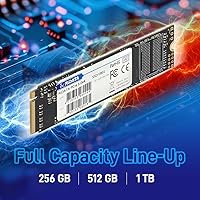
- Capacity: The drive offers 512GB of usable storage, suitable for an OS installation, applications, and a moderate media library.
- Interface: It connects via PCIe NVMe Gen3x4, delivering up to four lanes of PCIe Gen3 bandwidth for fast data transfer.
- Form Factor: The standard M.2 2280 form factor measures 3.2 x 0.9 x 0.2 inches, fitting the vast majority of modern laptops and desktops.
- Sequential Read: Rated sequential read speed reaches up to 2200MB/s under optimal, sequential workload conditions.
- Sequential Write: Rated sequential write speed reaches up to 1800MB/s, competitive for a PCIe Gen3 drive in this price tier.
- NAND Type: The drive uses 3D NAND flash memory, which stacks memory cells vertically to improve density and endurance over planar NAND.
- Error Correction: LDPC (Low-Density Parity-Check) coding is implemented for error correction, offering stronger data integrity protection than basic BCH ECC.
- OS Compatibility: Supported operating systems include Windows (XP through current releases), Linux distributions, and macOS.
- Warranty: Ritek backs this drive with a 3-year limited warranty from the date of purchase.
- Manufacturer: The E801 is designed and manufactured by Ritek Corporation, headquartered in Taiwan, with decades of experience in optical and flash storage production.
- Weight: The drive weighs just 0.2 oz (approximately 5.7g), making it negligible in terms of impact on overall system weight.
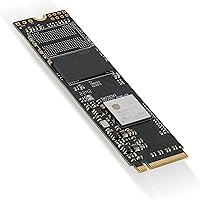
- Color: The drive ships in a black PCB finish with no heatsink included.
- Installation Type: Designed for internal installation into an M.2 slot; no external power cable or mounting tool is required beyond a single retaining screw.
- Compatible Devices: Listed as compatible with both desktop PCs and laptops that feature an M.2 NVMe slot.
- Backward Compatibility: The drive is backward compatible with PCIe Gen2 M.2 slots, operating at reduced speeds where Gen3 is unavailable.
- BSR Ranking: At time of evaluation, the E801 held a Best Sellers Rank of #473 in the Internal Solid State Drives category on Amazon.
- Launch Date: The product was first made available in August 2024, making it a relatively recent entry in the budget NVMe segment.
Related Reviews
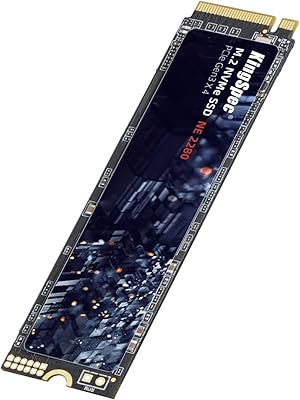
KingSpec NE 512GB M.2 NVMe SSD
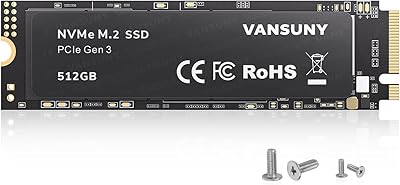
Vansuny X15 512GB NVMe M.2 SSD
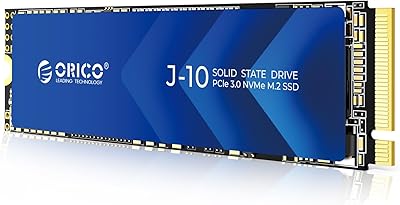
ORICO J10 512GB NVMe SSD
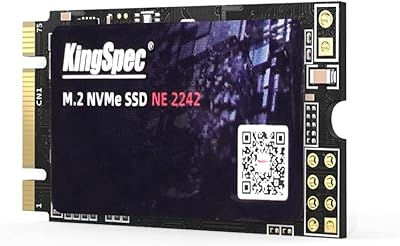
KingSpec NE-512 2242 512GB M.2 NVMe SSD
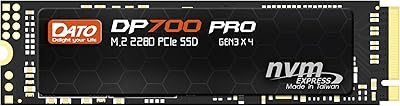
DATO DP700Pro 512GB M.2 NVMe SSD
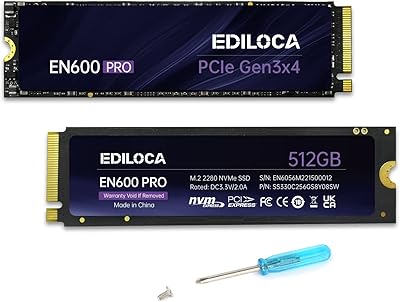
Ediloca EN600 Pro 512GB NVMe SSD
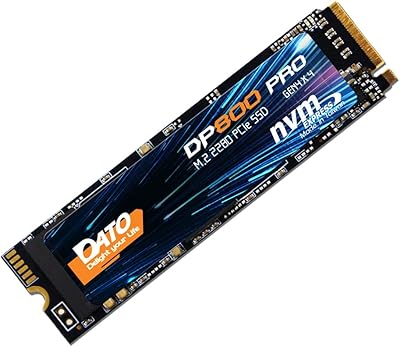
DATO DP800 Pro 512GB M.2 NVMe SSD
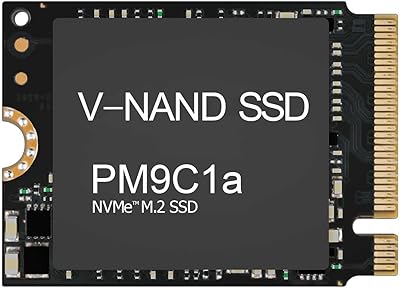
Samsung PM9C1A 512GB M.2 NVMe SSD
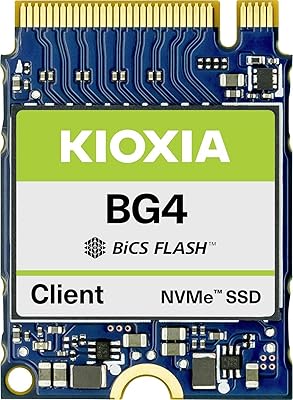
Kioxia BG4 KBG40ZNS512G 512GB M.2 2230 NVMe SSD
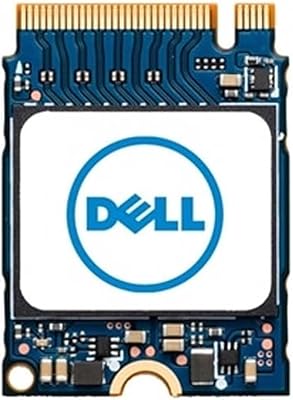
Dell AB292881 512GB M.2 2230 NVMe SSD