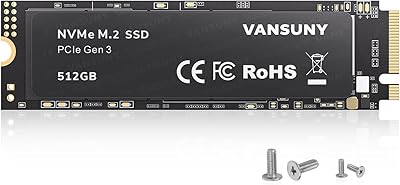


Overview

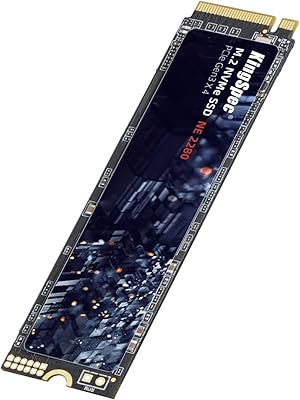
The KingSpec NE 512GB M.2 NVMe SSD enters a crowded budget storage market with reasonable credentials — KingSpec has been producing storage hardware out of China for over a decade, making them less of an unknown than the fly-by-night brands that clutter this price tier. This budget NVMe drive targets the M.2 2280 form factor with a PCIe Gen3x4 interface, meaning it slots into a wide range of laptops and desktops without compatibility headaches. Since launching in mid-2024, it has gathered over 1,000 ratings — solid early traction for a value-tier SSD. Just don't approach it expecting flagship performance; this is a cost-conscious storage upgrade, and it's best evaluated on those terms.

Features & Benefits

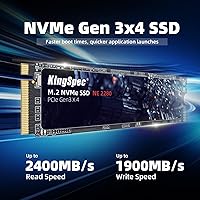
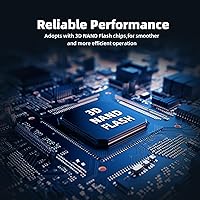
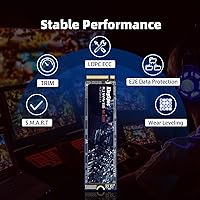
At 2400MB/s sequential read and up to 1700MB/s write, this budget NVMe drive lands right where a healthy Gen3 NVMe should — noticeably quicker than any SATA SSD, and more than adequate for everyday computing. It runs on the NVMe 1.3 protocol and supports TRIM, S.M.A.R.T., Wear Leveling, and Garbage Collection, the standard housekeeping functions that help sustain performance over time. One thing worth flagging: the listing describes the NAND flash as 3D NAND TLC/QLC, which is deliberately vague. TLC and QLC behave differently under sustained writes, and the ambiguity genuinely matters for buyers who plan to push the drive hard. The 3-year warranty paired with lifetime technical support is a real value-add at this price level.

Best For

This M.2 upgrade makes the most sense for a fairly specific buyer. If you're pulling a spinning hard drive from an aging laptop or replacing a SATA SSD in a budget build, the KingSpec NE SSD gets the job done without forcing you to overspend. Budget PC builders, students who primarily want snappy boot times, and anyone running an older system with PCIe Gen3 slots will find the performance more than sufficient. Be clear-eyed about one limitation, though: if your motherboard supports PCIe Gen4, this drive will not tap into that extra bandwidth. It also works better as a secondary or cache drive in a desktop than as the sole drive in a write-intensive workflow.

User Feedback

With a 4.6-star average across more than 1,000 ratings for a drive that only reached the market in 2024, early reception has been genuinely positive. Buyers frequently mention how straightforward installation is and how much snappier their machines feel afterward, especially those coming from hard drives. That said, a recurring frustration surfaces in reviews: the TLC/QLC ambiguity in the listing bothers more technically minded buyers, and since the drive is still relatively new, long-term reliability data is thin. Some users compare the KingSpec NE SSD favorably against similarly priced options like the TeamGroup MP33, while others remain cautious about trusting a lesser-known brand for anything beyond secondary storage.

Pros

  • Gen3 NVMe speeds up to 2400MB/s read deliver a noticeable jump over any SATA or HDD alternative.
  • The M.2 2280 form factor fits a wide range of laptops and desktops without adapter fuss.
  • A 3-year warranty plus lifetime technical support is a genuinely rare inclusion at this price tier.
  • Support for TRIM, S.M.A.R.T., and Wear Leveling means basic drive health management is covered.
  • Over 1,000 ratings with a 4.6-star average signals consistent buyer satisfaction for a relatively new product.
  • LDPC ECC and E2E Data Protection provide a reasonable layer of data integrity for everyday use.
  • This budget NVMe drive is broadly compatible with Windows, Linux, Ubuntu, and other major operating systems.
  • Installation is consistently described by buyers as straightforward, even for first-time upgraders.
  • At 0.704 ounces, the drive adds virtually no weight — relevant for laptop users.
  • For older Gen3 systems, the performance ceiling matches the platform, making it a cost-efficient pairing.

Cons

  • The NAND flash is listed as TLC/QLC without specifying which — a real transparency issue for informed buyers.
  • A DWPD of 0.69 is on the low end and limits suitability for write-intensive daily workloads.
  • KingSpec lacks the independent long-term reliability data that more established storage brands have accumulated.
  • The drive has only been on the market since mid-2024, so multi-year durability remains unproven.
  • Buyers with PCIe Gen4 motherboards will see zero benefit from this M.2 upgrade over a similar-priced Gen4 option.
  • Random 4K write performance at 14,500 IOPS is modest and can feel sluggish under multitasking pressure.
  • No included heatsink or thermal pad, which may matter in compact or thermally constrained builds.
  • Some technically minded buyers report frustration with the vague NAND specification in the product listing.
  • Brand recognition and resale value are negligible compared to drives from Samsung, WD, or Crucial.
  • Long-term customer support quality from a lesser-known overseas brand is harder to verify or predict.

Ratings

The scores below for the KingSpec NE 512GB M.2 NVMe SSD were generated by our AI engine after analyzing verified buyer reviews from global marketplaces, actively filtering out incentivized, duplicate, and bot-generated feedback. Every category reflects both what real users praised and where frustrations consistently surfaced — nothing has been smoothed over. The result is an honest, data-grounded snapshot of how this budget NVMe drive actually performs in the hands of everyday buyers.

Value for Money
91%
Among buyers on a tight budget, this M.2 upgrade consistently earns praise for delivering genuine NVMe performance at a price that undercuts many well-known brands. Students and first-time builders frequently call it one of the most cost-effective ways to breathe life into an older or budget system.
A small number of reviewers note that, when factoring in the NAND ambiguity and lesser brand recognition, the value proposition feels slightly less clear-cut than drives from established names at a similar price point. Buyers who later discover they received QLC NAND sometimes feel the deal was less straightforward than advertised.
Read/Write Speed
83%
Real-world boot times and application load speeds consistently impress users upgrading from SATA SSDs or hard drives, with many reporting Windows loading in under 15 seconds. The sequential read performance in everyday tasks — launching software, opening large files — lives up to what the Gen3 spec promises.
Sustained write performance can dip noticeably during large file transfers, particularly if the drive contains QLC NAND rather than TLC, as the SLC cache gets exhausted faster than buyers expect. Heavy workloads like bulk video file moves reveal the drive's budget-tier write ceiling more clearly than light daily use does.
Installation Ease
94%
Across hundreds of reviews, installation is the most consistently praised aspect of this budget NVMe drive — buyers of all technical skill levels describe the physical install as taking under five minutes with a single small screwdriver. First-time upgraders replacing laptop hard drives specifically call out how trouble-free the process was.
A handful of users on niche laptop models encountered slot compatibility surprises not flagged in the product listing, though these cases are rare. The absence of any bundled cloning software means OS migration requires sourcing a third-party tool, which adds a minor friction step for less experienced users.
Compatibility
88%
The standard M.2 2280 form factor means this drive slots into the vast majority of laptops and desktop motherboards without adapters or modifications, and buyers across Windows, Linux, and Ubuntu setups report plug-and-play recognition. Compatibility complaints are genuinely rare in the review pool.
A small subset of users with older or non-standard motherboards experienced detection issues, and the listing does not clearly flag that the drive requires an NVMe-capable M.2 slot rather than a SATA-only one. Buyers who skip this compatibility check can find themselves with an incompatible purchase.
NAND Transparency
41%
59%
Some buyers who received TLC NAND batches report consistent performance under moderate workloads, and those who do not specifically investigate the NAND type tend to leave satisfied reviews based purely on day-to-day speed.
The deliberate TLC/QLC ambiguity in the listing is a recurring source of frustration among technically informed buyers, and it is one of the most common negative talking points in critical reviews. Buyers who specifically seek TLC NAND for better sustained write performance have no guarantee they will receive it, which undermines trust in the product listing.
Reliability & Endurance
62%
38%
For light daily workloads — web browsing, document editing, media playback, and occasional file transfers — buyers report stable operation over the months since launch, with no widespread reports of early failures in the review pool. The LDPC ECC error correction appears to do its job quietly in normal use conditions.
The DWPD rating of 0.69 is on the lower end of the consumer SSD spectrum, and the drive has only been on the market since mid-2024, so there is simply not enough long-term data to assess multi-year durability with confidence. Buyers using the drive as a sole primary drive for intensive tasks are taking on more endurance risk than they might with a more established alternative.
Thermal Performance
69%
31%
In standard desktop and mid-range laptop installs with reasonable airflow, buyers rarely mention thermal throttling as a problem during typical daily tasks, and the drive's small physical footprint helps it stay within normal operating temperatures under light loads.
No heatsink is included, and in compact or thermally constrained builds — thin laptops with poor ventilation or tightly packed mini-ITX cases — some users notice heat buildup during sustained transfers. Buyers pushing the drive with long sequential write sessions report performance dips that correlate with thermal throttling rather than the drive's raw write ceiling.
Brand Credibility
57%
43%
KingSpec has been in the storage business for over a decade, which sets it apart from the entirely anonymous white-label brands flooding this price tier. Buyers familiar with Chinese storage manufacturers tend to give it more credit than complete newcomers to the category.
Outside of enthusiast communities, KingSpec carries minimal brand recognition, and many buyers admit they researched extensively before committing because of unfamiliarity. The absence of widespread independent benchmark testing from reputable third-party reviewers leaves a credibility gap that well-known brands do not have.
Warranty & Support
77%
23%
A 3-year warranty combined with lifetime technical support is a genuinely strong inclusion at this price point, and buyers who have contacted KingSpec support report reasonably responsive assistance for basic troubleshooting questions. The warranty duration matches or exceeds some better-known competitors in this tier.
The practical experience of claiming a warranty with an overseas brand is harder to verify than with Western Digital or Samsung, where established RMA processes are well documented. Several reviewers express uncertainty about how smoothly a warranty claim would actually proceed if needed, which tempers the theoretical value of the support promise.
Packaging & Presentation
72%
28%
The drive arrives well-protected in compact retail packaging, and buyers note it looks and feels like a legitimate product rather than a bare OEM unit, which helps build initial confidence at unboxing. Labeling is clear and the drive itself has a clean, professional finish.
Nothing beyond the bare drive is included — no heatsink, no screws, no cloning software, and no installation guide — which feels sparse even by budget-drive standards. Buyers expecting even a basic accessory inclusion at this price will find the unboxing experience purely functional.
OS & Platform Support
86%
Buyers across Windows 10, Windows 11, Ubuntu, and various Linux distributions consistently report that the KingSpec NE SSD is detected and initialized without driver installations or manual configuration, making it accessible to non-technical users. The broad OS support is a practical strength for anyone not running a mainstream Windows setup.
Windows 7 compatibility is listed but rarely tested by modern buyers, and some older OS edge cases in the reviews mention requiring manual driver updates. macOS is not listed as a supported platform, which limits usefulness for Mac users exploring external enclosure configurations.
Form Factor Fit
89%
The 2280 size is the universal standard for a reason — buyers across dozens of laptop and desktop models confirm the drive drops in without fitment issues, and the slim 2.1mm profile does not conflict with clearance in tight laptop chassis designs. It just fits, which is exactly what buyers need.
A small number of users with devices that only accommodate shorter M.2 form factors like 2242 found they had ordered the wrong size, though this is a buyer research issue rather than a product flaw. The listing could do more to help buyers confirm slot sizing before purchasing.
Random I/O Performance
59%
41%
For the workloads most everyday users actually run — loading a browser with multiple tabs, opening office applications, switching between tasks — the random read performance holds up adequately and keeps the system feeling responsive. Most non-technical buyers never notice the random write ceiling in practice.
The 14,500 IOPS random write figure is noticeably low compared to mid-range NVMe alternatives, and power users running virtual machines, compiling code, or managing large databases will feel the limitation directly. It is one of the clearest indicators that this drive is designed around casual, not professional, workloads.

Suitable for:

The KingSpec NE 512GB M.2 NVMe SSD is a strong fit for budget-conscious buyers who want a meaningful speed upgrade without a significant financial commitment. Students dropping this into an aging laptop will notice an immediate difference in boot times and app responsiveness compared to a hard drive or older SATA SSD. It suits budget PC builders working within a tight parts list, especially those using older platforms with PCIe Gen3 slots where a pricier Gen4 drive would deliver no real advantage. It also works well as a secondary storage drive in a desktop — a place to store games, media, or backups where the stakes on long-term endurance are lower. Anyone replacing a dead or dying drive in a mid-range laptop will find this M.2 upgrade hits a practical sweet spot between cost and capability.

Not suitable for:

The KingSpec NE 512GB M.2 NVMe SSD is not the right tool for every situation, and it is worth being honest about where it falls short. Professionals or power users running sustained write-heavy workloads — video editing, large database operations, or frequent large file transfers — should look at drives with higher DWPD ratings and clearly specified TLC NAND rather than the ambiguous TLC/QLC labeling this drive carries. Buyers with modern motherboards supporting PCIe Gen4 are leaving real performance on the table by choosing this budget NVMe drive; the Gen3 ceiling is a hard limit regardless of what else is in the system. Those who need maximum confidence in long-term reliability for a primary system drive should also consider more established brands with proven track records and independent benchmark data, since KingSpec lacks the broad third-party testing history that brands like Samsung or Western Digital carry. If 512GB feels tight for your workflow today, it will likely feel restrictive sooner than you expect.

Specifications

  • Capacity: The drive offers 512GB of usable storage, suitable for an operating system, applications, and a reasonable media library.
  • Interface: It uses an M.2 PCIe Gen3x4 interface running the NVMe 1.3 protocol, offering significantly higher throughput than older SATA-based M.2 drives.
  • Form Factor: The 2280 form factor measures 80×22×2.1mm, fitting the most common M.2 slot size found in laptops and desktop motherboards.
  • Sequential Read: Peak sequential read speed reaches up to 2400MB/s under optimal conditions for the 512GB capacity tier.
  • Sequential Write: Sequential write speed for the 512GB variant reaches up to 1700MB/s, which is competitive within the PCIe Gen3 class.
  • NAND Flash: The drive uses 3D NAND flash, listed by the manufacturer as either TLC or QLC depending on production batch — the exact type is not guaranteed in the product listing.
  • Random Read: Maximum random 4K read is rated at 100,200 IOPS, based on the 1TB model specification shared by the manufacturer.
  • Random Write: Maximum random 4K write is rated at 14,500 IOPS, which is modest and reflects the budget-tier positioning of this drive.
  • Endurance: The drive carries a DWPD rating of 0.69, meaning it is designed for light-to-moderate daily write workloads rather than sustained heavy usage.
  • Reliability Rating: KingSpec rates the MTBF at 1 million hours, a standard figure for consumer-grade SSDs in this class.
  • Data Protection: The drive supports LDPC ECC and end-to-end data protection to help detect and correct minor data errors during read and write operations.
  • Drive Features: Supported drive management features include TRIM, S.M.A.R.T., Wear Leveling, Garbage Collection, Over Provisioning, and Native Command Queuing.
  • OS Compatibility: Compatible operating systems include Windows 7 through 10, as well as RHEL, CentOS, Linux, and Ubuntu distributions.
  • Device Support: The drive is designed for installation in both desktop PCs and laptops with an available M.2 2280 slot.
  • Warranty: KingSpec provides a 3-year limited warranty on the drive, along with lifetime technical support for registered buyers.
  • Weight: The drive weighs just 0.704 ounces, adding negligible mass to any laptop or desktop build.
  • Package Dimensions: The retail packaging measures approximately 4.72×2.4×0.55 inches, compact enough to ship easily with a build order.
  • Release Date: This drive became available in April 2024, making it a relatively recent entry into the budget NVMe storage market.
  • Brand Origin: KingSpec is a China-based storage manufacturer with over a decade of experience producing SSDs and flash storage products for the consumer market.

Related Reviews
KingSpec NE-512 2242 512GB M.2 NVMe SSD
77%
88%
Value for Money
79%
Read Performance
71%
Write Performance
93%
Installation Ease
91%
Form Factor Compatibility
More
KingSpec NX Series 512GB NVMe M.2 SSD
72%
83%
Read Speed Performance
47%
Write Speed Transparency
91%
Value for Money
72%
Build & Reliability
88%
Compatibility
More
Vansuny X15 512GB NVMe M.2 SSD
75%
88%
Value for Money
74%
Read/Write Performance
91%
Installation Ease
69%
Build Quality
62%
Long-Term Reliability
More
ORICO M.2 NVMe SSD 512GB with Heatsink
86%
89%
Performance
92%
Cooling Efficiency
85%
Installation Ease
90%
Read/Write Speeds
88%
Capacity for Gaming & Everyday Use
More
DATO DP800 Pro 512GB M.2 NVMe SSD
90%
94%
Performance
95%
Speed/Read-Write Performance
87%
Installation Ease
90%
Power Efficiency
88%
Durability (Shock Resistance)
More
Kioxia BG4 512GB M.2 2230 NVMe SSD
87%
91%
Performance Speed
87%
Compatibility with Devices
88%
Build Quality & Durability
85%
Ease of Installation
93%
Size & Form Factor
More
Samsung PM9C1A 512GB M.2 2230 NVMe SSD
87%
94%
Performance
92%
Speed
89%
Value for Money
88%
Ease of Installation
90%
Compatibility
More
KingSpec 1TB M.2 2230 SSD NVMe Gen3x4
87%
94%
Performance
92%
Read Speed
88%
Compatibility with Small Devices
65%
Ease of Installation
89%
Durability (Shock Resistance)
More
KingSpec OneBoom X400 1TB M.2 NVMe SSD
88%
91%
Performance
94%
Read Speed
85%
Thermal Management
88%
Ease of Installation
89%
Compatibility
More
Ediloca EN600 PRO 512GB NVMe M.2 SSD
85%
91%
Performance
88%
Speed for Gaming
83%
Thermal Management
65%
Compatibility with Older Systems
90%
Build Quality
More

FAQ

In most cases, yes — as long as your laptop has an M.2 2280 slot that supports PCIe NVMe, this budget NVMe drive will install and function normally. The 2280 size is the most common M.2 length, so compatibility is broad. That said, a small number of older ultrabooks only support SATA over M.2, so it is worth confirming your slot type in your laptop's manual or spec sheet before ordering.

Yes, it will work physically and electrically in a Gen4 slot — PCIe is backward compatible. However, the drive itself is Gen3, so it will run at Gen3 speeds regardless of what your motherboard supports. If your system has a Gen4 slot and performance is a priority, you would get more out of a native Gen4 drive.

You can, and many buyers do exactly that. Windows 11 installs and runs without issues on this M.2 upgrade, and the NVMe speeds will make boot times and app launches feel noticeably snappier compared to a hard drive. Just keep in mind that if you plan to run heavy write-intensive software regularly, the relatively modest endurance rating means you may want something more robust as your sole primary drive long-term.

This is one of the more frustrating aspects of the listing. KingSpec describes the NAND as 3D NAND TLC/QLC, which means they do not guarantee a specific type and the flash used may vary by production batch. TLC generally handles sustained writes better than QLC, so if NAND type matters to you — for example, if you are writing large files frequently — this ambiguity is worth factoring into your decision.

Very straightforward. You slide the drive into the M.2 slot at a slight angle, press it flat, and secure it with a single screw. Most buyers, including those doing their first upgrade, report having no trouble at all. The only thing to confirm beforehand is that your system has an available M.2 2280 slot and that you have a small Phillips-head screwdriver handy.

No, the drive ships as a bare unit with no bundled accessories. There is no included heatsink, thermal pad, or cloning software in the box. If you need cloning software to migrate an existing operating system, free tools like Macrium Reflect or Clonezilla work well with this drive. For thermally constrained builds, you may want to consider a third-party heatsink, though most standard desktop and laptop installs will not require one.

All three sit in the same budget Gen3 NVMe tier and perform similarly for everyday tasks. The WD Green carries the brand trust of Western Digital and has more independent reliability data behind it. The TeamGroup MP33 is a well-regarded value pick with clear TLC NAND specifications. The KingSpec NE SSD is competitive on paper and has decent early user reviews, but it lacks the track record of those two alternatives. For a secondary or non-critical drive, the difference is minor; for a primary drive, the more established options offer greater peace of mind.

No. The PS5 requires an M.2 NVMe SSD that meets specific speed thresholds and physical slot requirements — it needs a PCIe Gen4 drive with a heatsink. This M.2 upgrade is a Gen3 drive and does not meet those requirements. For console storage expansion, you need a Gen4-compatible option.

KingSpec offers a 3-year warranty, so a failure within that window should qualify for a replacement or refund through their support process. They also advertise lifetime technical support. Keep in mind that KingSpec is not as widely distributed as major brands, so the warranty process may involve more back-and-forth than you would experience with a Samsung or Crucial drive. Keeping your purchase confirmation and any correspondence is advisable.

For a large share of everyday users — web browsing, document work, light photo storage, and a handful of installed applications — 512GB is workable as a primary drive. Gamers or users with large media libraries will likely feel the squeeze sooner than expected, especially since modern games routinely exceed 50GB each. If you are on a tight budget and plan to supplement with external storage or a secondary internal drive, 512GB can be made to work; otherwise, stretching to 1TB is worth considering.