Overview

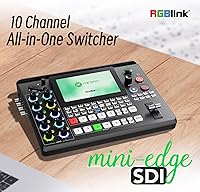
The RGBlink mini-edge SDI Live Streaming Switcher arrived in mid-2025 as one of the few compact units that genuinely bridges the gap between broadcast-grade SDI infrastructure and the HDMI cameras most modern crews rely on. Houses of worship, corporate AV teams, and live event producers are the natural audience here — people who need professional reliability without building a dedicated control room. The built-in 5.5-inch display, integrated audio mixer, and cloud-based remote control make it unusually self-contained for its class. That said, this is not a beginner's tool. The feature depth is real, but so is the setup complexity.
Features & Benefits

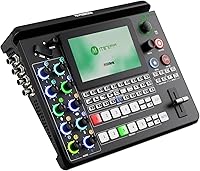
What makes the mini-edge SDI genuinely useful is how it handles input variety. Eight physical video inputs — four 4K HDMI and four 3G-SDI — mean you can plug a broadcast PTZ camera in alongside a DSLR without a converter in sight. On the output side, dual 2K HDMI plus USB-C UVC streaming lets you feed a local monitor and push to OBS or Zoom simultaneously. NDI|HX2 support opens the door to IP-based video routing over your existing LAN. The 8-channel audio mixer handles XLR mics with phantom power, Bluetooth sources, and USB audio — so you're rarely hunting for a workaround. LAN-based PTZ control ties it all together without extra software.

Best For

This all-in-one streaming mixer is an especially strong fit for houses of worship running multi-camera services that mix older SDI infrastructure with newer HDMI cameras — a combination that typically demands two separate devices. Corporate AV teams will appreciate the remote browser control for hybrid events where the operator isn't physically in the room. Small broadcast studios and eSports production desks get SDI capability in a compact chassis that won't dominate the desk. Podcasters and content creators who have outgrown basic HDMI switchers and need real mic preamps will find the audio side compelling. If you're consolidating PTZ control, recording, and streaming into one portable unit, this fits that brief well.

User Feedback

Early buyers give this SDI switcher a 4.1 out of 5 average, which is solid, though the review pool is still thin given how recently it launched. The most consistent praise centers on breadth of connectivity — having SDI and HDMI side-by-side in a box this size is genuinely uncommon at this tier. On the flip side, several users flag that initial setup, particularly configuring NDI and PTZ over LAN, can be frustrating without prior experience. One practical note worth heeding: update the firmware before you do anything else — RGBlink explicitly recommends it, and early adopters confirm it makes a noticeable difference. Long-term reliability remains an open question this early in the product's life.

Pros

  • Combines 4K HDMI and 3G-SDI inputs in one compact unit — a rare combination at this form factor.
  • The 8-channel audio mixer handles XLR, Bluetooth, and USB audio without needing an external mixing board.
  • LAN-based PTZ control eliminates the need for a dedicated camera controller in multi-camera rigs.
  • NDI|HX2 support makes it a natural fit for studios already running IP-based video workflows.
  • Dual HDMI outputs plus USB-C UVC streaming let you feed a monitor and broadcast simultaneously.
  • TAO Cloud and onboard web server allow full remote control from any browser on the network.
  • H.265 encoding and MP4 recording to external storage keep archive workflows simple and storage-efficient.
  • At 3.04 pounds, this all-in-one streaming mixer is genuinely portable for a device with this I/O count.
  • RTMP/RTMPS support covers every major streaming platform without requiring a separate encoder.

Cons

  • Initial NDI and PTZ configuration has a steep learning curve that can be genuinely frustrating for less experienced operators.
  • Firmware must be updated immediately out of the box — skipping this step causes avoidable issues reported by early buyers.
  • The review pool is still thin given the May 2025 launch, so long-term reliability is not yet proven.
  • No touchscreen interface, which some competing units at this tier offer for faster live switching.
  • Output resolution caps at 2K on HDMI, which may disappoint buyers expecting 4K throughput end-to-end.
  • The web server and TAO Cloud remote control features require network configuration know-how to set up properly.
  • Power delivery depends on USB-C PD at 12V/3.3A — losing a certified cable in the field could leave you without a working unit.
  • Only two video layers for composition, which limits complex overlay-heavy productions compared to software-based alternatives.

Ratings

Our AI rating engine analyzed verified buyer reviews for the RGBlink mini-edge SDI Live Streaming Switcher from global sources, actively filtering out incentivized, bot-generated, and duplicate submissions to surface what real operators actually experienced. The scores below reflect both the genuine strengths that earned this unit strong praise and the friction points that tempered enthusiasm — nothing is glossed over.
Input/Output Versatility
93%
Operators running mixed-camera productions consistently cite this as the mini-edge SDI's defining advantage — being able to plug legacy SDI broadcast cameras and modern HDMI DSLRs into the same unit without a single adapter is a real, time-saving relief on event day. NDI|HX2 and UVC add further flexibility that most competitors in this class simply do not offer.
A handful of users noted that the SDI inputs are capped at 3G rather than 12G, which limits compatibility with the latest high-frame-rate SDI sources. For most worship and corporate AV applications this is a non-issue, but broadcast studios running 4K over SDI natively will feel the constraint.
Audio Integration
88%
The 8-channel mixer with phantom-powered XLR, Bluetooth, and UAC USB audio genuinely replaces a separate audio interface for most podcast and live event setups. Users producing hybrid church services praised how smoothly they could blend lapel mics, a worship band line feed, and background music without touching a second device.
Some users found the audio routing menus unintuitive during high-pressure live situations, particularly when switching between UAC and analog sources mid-show. The 8-channel label can also be misleading — the physical analog input count is limited, and the channel count includes virtual and digital sources.
PTZ Camera Control
81%
19%
Having LAN-based PTZ control built directly into the switcher removes what is usually a separate hardware expense and a second cable run at the operator position. Church AV teams managing three or four PTZ cameras over a single Ethernet switch found the consolidated control genuinely practical once the initial configuration was complete.
Getting PTZ control working for the first time requires network configuration knowledge that less experienced operators may not have, and the setup documentation is not always clear on protocol compatibility. Users with older VISCA-over-serial PTZ cameras also reported compatibility gaps that required additional hardware.
Streaming Performance
86%
RTMP/RTMPS streaming to YouTube, Facebook Live, and similar platforms worked reliably for the majority of users once the unit was on stable internet. The UVC webcam output feeding directly into Zoom or OBS without drivers was a consistent highlight for corporate teams running hybrid meetings.
A few users reported needing to re-enter RTMP credentials after firmware updates, which caused brief scrambles before live broadcasts. Streaming quality at the RTMPS output is also bounded by the 2K output cap — operators expecting to push a 4K stream will need to adjust expectations.
Remote & Cloud Control
77%
23%
The TAO Cloud and onboard web server combination genuinely impressed corporate AV teams who needed a remote operator to manage scene transitions during town halls or multi-site broadcasts. Accessing the full interface from a tablet browser without installing any software is a meaningful convenience in fast-setup environments.
The remote control experience is dependent on a stable local network, and in venues with unreliable Wi-Fi or strict IT policies, users ran into connectivity issues that broke the workflow mid-event. The TAO Cloud feature also requires account setup and some cloud dependency that a few security-conscious enterprise buyers found uncomfortable.
Build Quality & Portability
79%
21%
At just over 3 pounds and with a chassis that fits comfortably in a carry-on bag, this all-in-one streaming mixer punches well above its weight class for portable productions. Event producers appreciated not needing a dedicated road case just to transport the switcher between venues.
Some users felt the chassis finish and button feedback did not fully match the premium expectations set by the price point. A few reported minor concerns about connector port durability under frequent plug-and-unplug cycles common in rental or touring production environments.
Setup & Initial Configuration
54%
46%
For operators with prior experience on professional switchers or IP video systems, the initial setup is manageable and the hardware is logically organized. Experienced AV technicians noted that once the firmware is updated and the network is configured correctly, the unit behaves predictably.
This is the most consistently cited pain point across early reviews — NDI configuration, PTZ network discovery, and audio routing all assume a level of technical fluency that trips up newer operators. The firmware-must-update-first requirement caught several buyers off guard, adding unplanned time before their first live use.
Firmware & Software Stability
67%
33%
Post-update stability was generally well-regarded, and RGBlink has been responsive with firmware releases that address reported bugs. Users who updated immediately out of the box reported a noticeably smoother experience than those who used the factory firmware.
The fact that the manufacturer explicitly flags a firmware update as a prerequisite for reliable operation signals that the factory-shipped software was not fully production-ready at launch. A handful of users also reported that certain features behaved inconsistently across firmware versions, requiring re-testing after each update.
Display & Monitoring
72%
28%
The 5.5-inch built-in screen gives operators a useful at-a-glance view of sources and program output without requiring an external monitor at the switcher position. For compact event setups where desk space is limited, having monitoring built in is a genuine workflow convenience.
The display is not touch-enabled, which surprised some buyers who assumed an onboard screen at this price tier would offer touch navigation. Menu traversal via physical buttons on a non-touch display slows down certain adjustments during live productions compared to competing units with touch interfaces.
Value for Money
74%
26%
For buyers who actually need both SDI and HDMI inputs in a single portable unit with integrated audio mixing and PTZ control, the consolidated cost versus buying separate devices is compelling. Houses of worship and small broadcast studios replacing a two or three-device chain found the overall value proposition reasonable.
For buyers who only use HDMI cameras and have no SDI infrastructure, the pricing feels hard to justify against capable HDMI-only switchers available at lower price points. The limited review depth at launch also makes it difficult to confidently assess long-term value retention.
NDI Workflow Integration
78%
22%
Studios already running NDI-based video networks appreciated having a hardware switcher that participates natively in both input and output NDI|HX2 workflows without a software bridge. This makes the mini-edge SDI a practical hardware node in a wider IP production ecosystem.
NDI configuration is among the most technically demanding parts of the setup, and the documentation does not always explain protocol-specific requirements clearly. Users unfamiliar with NDI toolsets found troubleshooting connectivity issues time-consuming, especially under pre-event time pressure.
Recording Capability
76%
24%
MP4 recording directly to USB storage via the USB-C port works reliably for archiving services, corporate events, or content repurposing without a separate capture card or laptop in the chain. H.265 encoding keeps file sizes manageable even for long-duration recordings.
The FAT32 limit of 32GB means users with smaller drives may hit a recording cap mid-event if they forget to format to exFAT beforehand. There is also no built-in SSD slot, so recording speed and reliability are contingent on the quality of the external USB drive used.
Documentation & Learning Resources
49%
51%
RGBlink does maintain online resources and a support channel, and the community of users around their product line provides some peer-sourced guidance through forums and video tutorials. Buyers with prior RGBlink experience found the interface logic somewhat familiar.
Multiple users across multiple regions flagged the user manual as incomplete or unclear, particularly for advanced features like NDI setup, TAO Cloud configuration, and audio routing. For a device targeting professional buyers, the documentation quality lags noticeably behind the hardware ambition.
Long-Term Reliability
61%
39%
Early adopters who have logged consistent use since the May 2025 launch report stable performance in controlled studio environments, and no widespread hardware failure patterns have emerged in the review pool so far.
The review pool is simply too young and too small to draw confident conclusions about long-term durability under heavy touring or rental use. Buyers who need proven reliability data before deploying in mission-critical productions should factor this uncertainty into their decision.

Suitable for:

The RGBlink mini-edge SDI Live Streaming Switcher is built for operators who already know their way around a production environment and need one device to replace a small rack of gear. Houses of worship are arguably the sweetest spot — many run a mix of older SDI cameras they can't justify replacing alongside newer HDMI PTZ units, and this SDI switcher handles both without adapters or compromise. Corporate AV teams managing hybrid town halls or multi-site broadcasts will appreciate the browser-based remote control, which means a single operator can manage the show without being physically at the unit. Small broadcast studios, eSports production desks, and live event companies that need recording, streaming, and PTZ control consolidated into something portable will get real, practical value here. If your audio situation is equally complex — mixing XLR mics, USB audio, and Bluetooth simultaneously — the built-in 8-channel mixer saves you a separate piece of kit and the cable clutter that comes with it.
Not suitable for:

The RGBlink mini-edge SDI Live Streaming Switcher is not the right call if you are new to live production and hoping to learn on the fly. NDI configuration, LAN-based PTZ setup, and firmware management all assume a baseline of technical fluency that casual streamers or first-time switcher buyers typically do not have yet. If you only use HDMI cameras and have no SDI gear in your setup, you are paying a significant premium for SDI capability you will never touch — there are capable HDMI-only switchers at lower price points that would serve you better. The lack of a touchscreen, which some competing units in this category include, may frustrate operators who prefer a tactile, menu-driven interface for fast live switching. Finally, because this all-in-one streaming mixer only launched in mid-2025, buyers who need long-term reliability data before committing to a production-critical unit should probably wait for the review pool to mature.
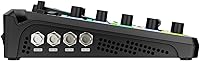
Specifications

  • Video Inputs: Eight total video inputs: four 4K HDMI 2.0 ports and four 3G-SDI ports, plus one NDI|HX2 IP input and one USB-C UVC webcam input.
  • Video Outputs: Two 2K HDMI outputs for local monitoring or display, one USB-C UVC output for webcam streaming, and one NDI|HX2 IP output.
  • Input Resolution: HDMI inputs support resolutions up to 4096x2160 at 60fps, with broad compatibility across standard HD and UHD formats.
  • Output Resolution: HDMI and UVC outputs support up to 1920x1080 at 60fps; 4K passthrough to output is not supported.
  • Audio Inputs: Audio inputs include one 6.35mm XLR+TS combo jack with 48V phantom power, one 6.35mm TRS jack, UAC USB audio, and Bluetooth.
  • Audio Outputs: Audio output is provided via one 6.35mm TRS jack and one 3.5mm mini-jack for headphone monitoring or line-level routing.
  • Audio Format: HDMI audio runs at Linear PCM 24-bit/48kHz stereo; USB audio operates at Linear PCM 16-bit/48kHz stereo.
  • PTZ Control: LAN-based PTZ control is handled over the RJ45 Ethernet port, supporting pan, tilt, zoom, and preset recall without additional software.
  • Streaming Protocols: Supports RTMP and RTMPS for direct streaming to platforms such as YouTube and Facebook, as well as NDI|HX2 for IP-based workflows.
  • Recording: Records in MP4 format via USB-C to external storage; supports FAT32 volumes up to 32GB and exFAT volumes from 64GB up to 2TB.
  • Video Encoding: Uses H.265 (ITU-T H.265/ISO IEC 23008-2) compression for efficient recording and streaming at high quality.
  • Color Processing: Processes video in RGB 10-bit color space with 4:4:4 YUV sampling for accurate color reproduction across inputs.
  • Video Latency: End-to-end video latency is specified at fewer than 4 frames, keeping switching and monitoring responsive in live environments.
  • Display: A 5.5-inch built-in screen provides on-device monitoring and interface navigation; the display is not touch-enabled.
  • Remote Control: TAO Cloud integration and an onboard web server allow scene switching, overlay management, and audio control from any browser on the local network.
  • Power: Powered via USB-C with USB Power Delivery 3.0 at 12V/3.3A, requiring a certified PD-aware cable; maximum power draw is 40W.
  • Dimensions: The unit measures 13.5 x 9.5 x 4.5 inches, making it compact enough for a desktop or portable production kit.
  • Weight: The device weighs 3.04 pounds, light enough for a single operator to carry between venues without dedicated transport cases.
  • Connectivity: Network connectivity is provided by one RJ45 Ethernet port supporting LAN-based PTZ control, NDI streaming, and web server access.
  • Video Layers: Supports two active video composition layers, plus two overlay or logo layers and a background layer for on-screen graphics.

Related Reviews
Blackmagic Design ATEM Mini Pro
82%
91%
Build Quality
93%
Streaming Performance
89%
Video Quality
86%
Audio Mixing
74%
Ease of Setup
More
RGBlink mini-MX SDI
RGBlink mini-MX SDI
86%
94%
Video Switching Performance
91%
Audio Mixing Quality
89%
Touchscreen Responsiveness
87%
Connectivity Options
85%
Ease of Setup
More
RGBlink Mini-Pro V3 4K Video Switcher
69%
83%
Build Quality
89%
Feature Set
54%
Ease of Use
41%
Documentation & Setup
76%
Streaming Performance
More
RGBlink mini-ISO Live Stream Video Switcher
76%
93%
Input Versatility
91%
Portability
86%
Streaming Capability
61%
Ease of Setup
58%
Output Resolution
More
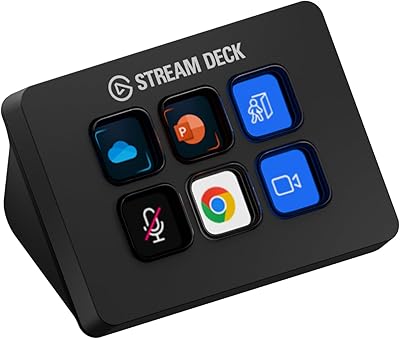
Elgato Stream Deck Mini
85%
93%
Ease of Setup
88%
Build Quality
91%
Key Customization
86%
Multi-Action & Macro Depth
89%
App Integration Breadth
More
AVerMedia Live Gamer Mini GC311
84%
91%
Video Quality (1080p60)
94%
Ease of Setup
89%
Portability/Size
90%
Latency (Pass-Through)
85%
Compatibility (Consoles & PCs)
More
Logitech Mevo Start Live Streaming Camera
71%
88%
Ease of Setup
74%
Video Quality
61%
App Dependency & Control
83%
Connectivity Flexibility
69%
Auto-Director Feature
More
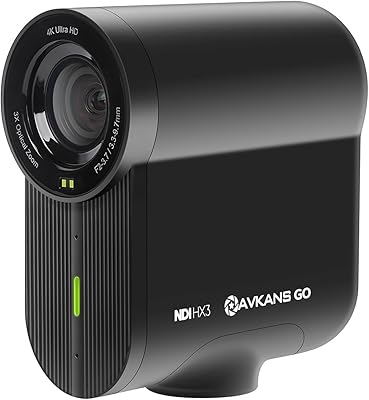
AVKANS Go Wireless Live Streaming 4K Camera
84%
92%
Image Quality
89%
Wireless Connectivity
84%
Battery Life
68%
Ease of Setup
90%
Streaming Flexibility
More
ClearClick Video2USB
79%
91%
Ease of Setup
78%
Analog Capture Quality
74%
HDMI Capture Performance
67%
Software Usability
93%
Input Versatility
More
Zowietek ZowieBox SDI NDI Encoder Decoder
76%
88%
Build Quality & Form Factor
91%
SDI-to-NDI Conversion Accuracy
86%
Standalone Streaming Reliability
58%
Encode-Decode Mode Flexibility
74%
UVC-to-SDI Bridge Performance
More

FAQ

Yes — update the firmware before you do anything else. RGBlink explicitly recommends this, and early users confirm that running outdated firmware out of the box can cause avoidable issues. The update process is straightforward once you connect the unit to your network.

Absolutely, and that is genuinely one of this SDI switcher's strongest practical advantages. You can have broadcast PTZ cameras on the SDI inputs and HDMI DSLRs or camcorders on the HDMI inputs simultaneously, switching between them in real time without any external converters.

No, it does not. The built-in 5.5-inch display is used for monitoring and menu navigation, but it is not touch-enabled. You interact with the unit via its physical controls, and remote control is handled through the onboard web server or TAO Cloud from a browser.

Yes. The mini-edge SDI supports RTMP and RTMPS natively, so you can push a stream directly to YouTube, Twitch, Facebook Live, or any platform that accepts an RTMP ingest URL. No external encoder hardware is required.

PTZ control runs over your local network via the RJ45 Ethernet port, so you do not need a dedicated hardware controller or any additional software. Your PTZ cameras do need to support LAN-based control protocols, which most modern broadcast and IP PTZ cameras do. Initial configuration does require some network setup knowledge.

Yes. The USB-C UVC output lets the unit appear as a standard webcam to any computer, which means Zoom, Teams, OBS, and similar software will recognize it without installing drivers. It is a clean, reliable way to feed a fully switched multi-camera production into a video call.

The unit accepts XLR microphones with 48V phantom power for condenser mics, standard TRS mics, USB audio via UAC, and even Bluetooth audio sources. For most podcast or live event setups, the built-in 8-channel mixer is enough to handle all your sources without a separate mixing board.

Yes. The onboard web server and TAO Cloud integration let an operator switch scenes, manage overlays, and monitor audio from any browser connected to the same network. For corporate events or worship services where the operator cannot be physically present at the unit, this is genuinely useful.

The all-in-one streaming mixer records MP4 files to USB storage connected via the USB-C record port. Drives formatted as FAT32 work for capacities up to 32GB, and exFAT is supported for drives from 64GB up to 2TB. For long recordings, an exFAT-formatted drive is the practical choice.

Honestly, probably not as a first switcher. The feature set is deep, and getting NDI, PTZ control, and network functions configured correctly assumes you already have some production experience. If you are just starting out, a simpler HDMI-only switcher would be easier to learn on. This unit rewards operators who already know what they need and are ready to use it fully.