Overview

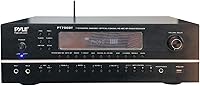
The Pyle PT796BT 7.1-Channel AV Receiver positions itself as a budget-friendly entry point into proper surround sound — and on paper, it makes a compelling case. You get a 7.1-channel setup with a claimed 2000W peak output, 4K UHD and 3D video passthrough via HDMI, and built-in Bluetooth for wireless streaming from phones or tablets. A VFD front panel display and AM/FM tuner add everyday usability that goes well beyond movie nights. For anyone trying to build a real home theater without spending four figures on a receiver alone, this AV amplifier lands in an interesting spot — feature-rich on spec sheets, but worth scrutinizing closely before committing.
Features & Benefits

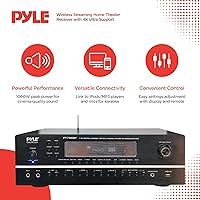
Four HDMI inputs handle 4K and 3D passthrough, making it easy to connect a gaming console, Blu-ray player, and streaming stick simultaneously without swapping cables. Bluetooth pairing works reliably with phones and laptops for casual listening. The dual 1/4-inch mic inputs — with independent echo and volume controls — are a genuine standout, especially for karaoke nights. DSP audio controls let you tune bass, treble, and surround modes to your room. USB, RCA, optical, and coaxial inputs round out a surprisingly broad connectivity lineup. Integrated protection against short circuits and voltage spikes is a quiet but reassuring inclusion at this price tier.

Best For

This surround sound unit makes the most sense for someone building their first real 7.1 home theater on a tight budget — think living room upgrades from a soundbar, not a dedicated audiophile setup. Karaoke households will appreciate the built-in mic inputs more than almost any other buyer segment. It also suits users managing several HDMI sources, since four ports remove the need for a separate switcher. If you want Bluetooth alongside traditional wired options and don't need studio-grade accuracy, this home theater receiver covers the essentials well. Just enter with grounded expectations around build quality and actual power delivery.

User Feedback

With over 1,000 ratings averaging 3.5 stars, this AV amplifier sits in clearly polarized territory. Happy buyers highlight the broad input selection and mic functionality as standout value. The frustrations, though, are consistent: the 2000W figure is a peak rating that bears little resemblance to real-world output, and buyers expecting room-filling power are routinely let down. HDMI compatibility has tripped up some users — Apple TV and Dish Network are explicitly unsupported, which matters. The included remote feels flimsy and tends to lose responsiveness over time. Setup can also be confusing given the sparse manual. Strong pick if you understand the trade-offs; a letdown if you don't.

Pros

  • Four HDMI ports let you connect multiple video sources without needing a separate switcher.
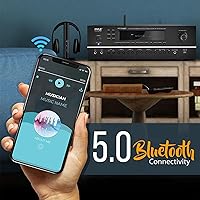
  • Built-in Bluetooth makes wireless streaming from phones and tablets genuinely convenient.
  • Dual mic inputs with echo control are a rare and practical feature at this price tier.
  • The broad input selection — USB, RCA, optical, coaxial, and HDMI — covers nearly any source device.
  • A built-in AM/FM tuner adds everyday utility well beyond dedicated movie or gaming use.
  • DSP sound controls let you tune bass, treble, and surround modes to match your room and content.
  • Integrated protection circuitry provides a real safety net for connected speakers and components.
  • First-time 7.1 builders get a surprisingly complete feature set without a major financial commitment.
  • The VFD display is clear and readable from across a typical living room.
  • Switching from a basic soundbar, most users notice an immediate and meaningful improvement in audio depth.

Cons

  • The 2000W power claim is a peak figure — real sustained output is far lower and noticeably so.
  • Apple TV and Dish Network users face confirmed HDCP compatibility issues that create real setup problems.
  • The included remote feels cheap, loses responsiveness over time, and frustrates users within months.
  • Build quality does not inspire confidence for long-term daily use, with thin plastics and warm running temps.
  • The instruction manual is vague enough that basic configuration often requires outside research to complete.
  • Large rooms expose the amplifier's power limitations quickly, with volume headroom running out early.
  • Thermal management under sustained high-volume use is a concern, with some units shutting down unexpectedly.
  • No automatic room calibration means surround accuracy depends entirely on patient manual tuning.
  • HDMI handshake reliability with certain third-party devices is inconsistent beyond the known exclusions.
  • The remote requires direct line of sight to function reliably, which limits flexible receiver placement.

Ratings

The Pyle PT796BT 7.1-Channel AV Receiver scores below are generated by AI after analyzing thousands of verified global buyer reviews, with spam, bot-submitted, and incentivized feedback actively filtered out. This home theater receiver attracts a wide range of opinions — from genuinely satisfied first-time surround sound builders to frustrated buyers who felt misled by spec-sheet claims — and both sides are reflected transparently in every score below.
Value for Money
67%
33%
For buyers focused on feature count per dollar, this AV amplifier genuinely delivers: four HDMI ports, Bluetooth, dual mic inputs, AM/FM tuner, and 7.1-channel support in a single box is hard to match at this price tier. Many first-time home theater builders feel they got a solid starting point without breaking the bank.
The value equation gets shakier once buyers realize the advertised 2000W is a peak figure that bears little resemblance to actual sustained output. Expectations set by the spec sheet frequently outpace real-world performance, leaving some buyers feeling the price was not quite as justified as it first appeared.
Audio Performance
58%
42%
For casual movie watching and background music in medium-sized rooms, this surround sound unit produces a reasonably full and spacious sound. Users switching up from a basic soundbar typically notice an immediate and satisfying improvement in channel separation and overall audio depth.
Demanding listeners quickly hit the ceiling. Real-world power output falls noticeably short of the 2000W headline figure, meaning large rooms or higher-volume listening sessions expose the amplifier's limitations clearly. Audiophiles or anyone with a calibrated ear for dynamic range will likely walk away disappointed.
Connectivity & Inputs
83%
The input lineup is genuinely one of this receiver's strongest suits. Four HDMI ports, USB, RCA, optical, coaxial, and Bluetooth together mean most users can connect everything they own — gaming consoles, Blu-ray players, streaming sticks, and phones — without needing a separate switcher or hub.
HDMI compatibility is not universal, and that is an important caveat. Apple TV and Dish Network users run into HDCP handshake issues that Pyle explicitly acknowledges. If either of those devices is central to your setup, this home theater receiver may cause persistent frustration with blank screens or signal drops.
Bluetooth Performance
74%
26%
Pairing with smartphones, tablets, and laptops is quick and generally stable during casual listening sessions. Users who primarily stream music wirelessly appreciate not having to fumble with cables when switching between devices throughout the day.
Bluetooth range is average and walls noticeably reduce signal stability. A handful of reviewers also report that the connection occasionally drops without warning during longer sessions, which becomes irritating when the unit is mounted inside a cabinet or entertainment center.
Build Quality
52%
48%
The chassis has a solid enough footprint and the front panel controls feel reasonably firm during daily use. At 25.8 pounds, the unit has a physical heft that gives some buyers initial confidence in its construction relative to the price.
Look closer and the build quality tells a different story. Plastic components feel thin, ventilation is minimal for a unit that runs warm under load, and the overall fit and finish does not inspire long-term confidence. Several reviewers reported physical wear or internal issues within the first year of regular use.
Remote Control
41%
59%
The remote covers all the core functions — volume, input switching, DSP modes — and works adequately out of the box for basic day-to-day control from the couch. Users who primarily adjust volume and switch inputs rarely find themselves reaching for the front panel.
Durability is a recurring complaint. The remote feels noticeably cheap in hand, buttons lose responsiveness over time, and responsiveness drops off if the receiver is not in direct line of sight. Multiple reviewers replaced or stopped using it within months, relying instead on the front panel controls.
Setup & Ease of Use
55%
45%
Physical connections are fairly intuitive for anyone who has set up AV equipment before. The labeled rear panel makes wiring a 7.1 speaker configuration less intimidating than it might seem, and initial Bluetooth pairing is genuinely simple.
The instruction manual is widely criticized for being vague and poorly illustrated, which creates real friction for first-time buyers. DSP settings and surround sound configuration options are not well explained, and several users spent considerable time troubleshooting HDMI handshake issues that a clearer guide could have prevented.
Surround Sound Accuracy
61%
39%
In a properly configured 7.1 layout with matching speakers, this surround sound unit creates a convincingly immersive soundstage for movies and gaming. The DSP processing modes add noticeable dimensionality, and channel separation is well-defined at moderate listening volumes in smaller to mid-sized rooms.
At higher volumes or in larger spaces, the surround imaging loses precision and the mix can feel congested. Without any automatic room calibration — a feature found on pricier receivers — getting the best out of the surround performance requires patient manual tuning that many buyers are not prepared for.
HDMI & Video Passthrough
66%
34%
4K UHD and 3D passthrough via HDMI works reliably with most mainstream devices, and for users running a TV alongside a console or Blu-ray player, the four-port switching is genuinely convenient. No noticeable latency or quality degradation was reported by the majority of compatible-device users.
The HDCP limitations create a hard boundary for certain users. Beyond the Apple TV and Dish Network exclusions, a small number of buyers experienced intermittent handshake failures with other devices, suggesting broader HDMI compatibility is not as airtight as the spec sheet implies.
Karaoke & Mic Functionality
78%
22%
The dual 1/4-inch mic inputs with independent echo and volume controls are a legitimate differentiator in this price range. Family karaoke nights work well, and the echo effect adds a fun, polished feel that most dedicated home theater receivers at this tier simply do not offer.
Echo control can be tricky to dial in, and at higher echo settings the audio bleeds noticeably into the main mix. For serious karaoke setups, the mic preamp quality is functional but not particularly refined, which becomes apparent when compared against even a basic dedicated karaoke system.
AM/FM Tuner
72%
28%
The built-in AM/FM tuner is a convenient bonus for buyers who still listen to terrestrial radio. Reception is acceptable in most urban and suburban environments, and having radio built in removes the need for a separate tuner component in a budget-conscious setup.
Sensitivity in weak-signal areas is average at best, and the tuner interface — navigated entirely through the VFD display and remote — is not particularly user-friendly. Preset memory works, but lacks the polish of standalone tuners or even mid-range receivers from established audio brands.
DSP & EQ Controls
69%
31%
Having adjustable bass, treble, and multiple DSP sound modes gives users a meaningful degree of control over how content sounds across different genres and media types. Buyers who take time to experiment with settings often land on a configuration they are genuinely happy with for TV and movies.
The DSP modes can sound artificial and over-processed on music, particularly at louder volumes. Without a proper parametric EQ or room correction system, some settings introduce a coloration that experienced listeners find fatiguing during extended listening sessions.
Thermal Management
49%
51%
The unit does not run hot during light use or short listening sessions, and the built-in protection circuits do provide a genuine safety net against overcurrent and voltage issues that could otherwise damage connected components.
Extended high-volume use causes the chassis to run noticeably warm, and the ventilation design does not inspire confidence in long-term thermal stability. A few reviewers reported automatic shutdowns during prolonged use, suggesting the thermal management under sustained load is a real weak point for this AV amplifier.
Aesthetics & Design
71%
29%
The front panel has a clean, purposeful look with the VFD display providing clear readability across the room. The overall aesthetic fits comfortably into a standard entertainment center without drawing attention for the wrong reasons.
The design is functional rather than refined. Up close, the plastic finish and control knobs feel more budget-tier than the price might suggest, and the unit lacks the premium visual quality of similarly priced receivers from more established audio-focused brands.

Suitable for:

The Pyle PT796BT 7.1-Channel AV Receiver is built for budget-conscious buyers who want a genuine step up from a soundbar without committing to a four-figure audiophile setup. If you are furnishing a living room home theater for the first time and want a single box that handles 7.1 speaker channels, multiple HDMI sources, and wireless streaming all at once, this AV amplifier checks a lot of boxes. Families who enjoy karaoke nights will find the dual mic inputs with echo control a surprisingly capable built-in feature that most receivers at this tier simply do not include. It also suits users with several video sources — a gaming console, a Blu-ray player, and a streaming stick, for example — since four HDMI ports remove the need for a separate switcher. Casual listeners who are not chasing reference-grade audio but want noticeably fuller, more immersive sound for movies and TV will generally leave satisfied, provided they calibrate their expectations around the actual power delivery rather than the headline wattage figure.
Not suitable for:

The Pyle PT796BT 7.1-Channel AV Receiver is the wrong choice for anyone who takes audio performance seriously or expects the 2000W figure to reflect real-world sustained output — it does not, and experienced listeners will notice the gap immediately. If your home theater revolves around Apple TV or a Dish Network receiver, the documented HDCP incompatibility is a hard dealbreaker that no firmware update has consistently resolved. Buyers who want long-term reliability from a daily-use component should also think carefully here, as build quality concerns and remote durability issues are recurring themes in user feedback rather than isolated complaints. Anyone planning to fill a large room or drive demanding speaker loads will find this surround sound unit running out of headroom well before the environment is properly covered. And if you are the type who reads a manual before setup, be prepared for a frustrating experience — the documentation is sparse enough that even moderately complex configurations require outside research to get right.
Specifications

  • Channel Config: This receiver supports a full 7.1-channel surround sound speaker configuration for immersive home theater audio.
  • Peak Power: Rated at 2000W peak output across all channels, though sustained real-world power per channel is significantly lower than this headline figure.
  • Impedance: Compatible with speakers rated between 4 and 16 ohms, covering the majority of consumer home theater speaker sets.
  • HDMI Ports: Equipped with 4 HDMI inputs supporting 4K UHD and 3D video passthrough to a connected display.
  • HDCP Support: HDCP compliance is present but does not extend to Apple TV or Dish Network, which may cause signal handshake failures with those devices.
  • Wireless: Built-in Bluetooth enables wireless audio streaming from smartphones, tablets, and computers without requiring additional adapters.
  • Audio Inputs: Accepts audio via USB, RCA stereo, optical digital, and coaxial digital inputs in addition to the four HDMI ports.
  • Mic Inputs: Features two 1/4-inch microphone inputs with independent echo and volume controls for karaoke or live speech applications.
  • Audio Processing: Onboard DSP engine provides adjustable bass, treble, and multiple surround sound mode presets for different content types.
  • Display: Front panel VFD display provides clear, room-readable readout of current input source, volume level, and radio frequency.
  • AM/FM Tuner: Integrated AM and FM radio tuner supports manual and preset station storage for everyday terrestrial radio listening.
  • Protection: Built-in circuitry actively protects against overcurrent, short circuit, and overvoltage conditions that could damage the unit or connected speakers.
  • Dimensions: The unit measures 13.8 x 16.9 x 5.5 inches, sized for standard AV cabinet shelving in most living room entertainment centers.
  • Weight: Weighs 25.8 pounds, reflecting a chassis with enough physical mass for stable placement but requiring firm shelf support.
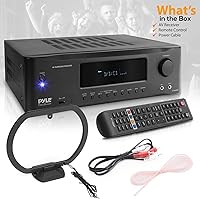
  • Remote Control: Includes a battery-operated remote requiring two AAA batteries, which are not included in the box.
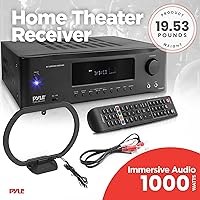
  • In the Box: Package includes the AV receiver unit, one remote control, and a power cable — no speaker cables or HDMI cables are included.
  • Model Number: Manufactured by Pyle under model number PT796BT, first made available in October 2020.

Related Reviews

Denon AVR-X1800H
Denon AVR-X1800H
81%
88%
Audio Performance
91%
Video Passthrough Quality
86%
Setup & Installation
74%
HEOS Multi-Room Streaming
83%
Build Quality & Design
More
Yamaha RX-V385
Yamaha RX-V385
75%
83%
Audio Quality
91%
Ease of Setup
88%
Build Quality
86%
Value for Money
79%
Connectivity & Inputs
More
Denon AVR-X2800H
Denon AVR-X2800H
78%
91%
Audio Performance
83%
Dolby Atmos & Spatial Audio
88%
Build Quality
92%
HDMI Connectivity
58%
Setup & Initial Configuration
More
Yamaha RX-V6A 7.2-Channel AV Receiver
84%
94%
Sound Quality (Dolby Atmos & DTS:X)
67%
Ease of Setup
91%
Video Performance (8K/4K pass-through)
89%
Connectivity (HDMI, Wi-Fi, Bluetooth)
88%
Multi-Room Audio (MusicCast)
More
Onkyo TX-NR5100
Onkyo TX-NR5100
79%
88%
Sound Quality
74%
HDMI & Video Passthrough
86%
Setup & Calibration
82%
Sonos Integration
83%
Build Quality & Design
More
Yamaha RX-A2A
Yamaha RX-A2A
78%
91%
Sound Quality
88%
Build Quality
89%
Room Calibration (YPAO)
84%
Gaming Performance
82%
Streaming & Wireless Connectivity
More
Yamaha RX-A4A AVENTAGE 7.2-Channel AV Receiver
78%
93%
Audio Performance
91%
Room Calibration (YPAO)
88%
HDMI & Video Handling
86%
Gaming Performance
94%
Immersive Audio Format Support
More
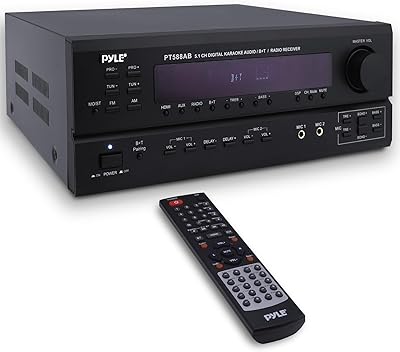
Pyle PT588AB 5.1 Channel Home Theater Receiver
70%
74%
Value for Money
52%
Build Quality
61%
Audio Performance
83%
Karaoke Functionality
78%
HDMI Connectivity
More
Denon AVR-X2700H
Denon AVR-X2700H
79%
91%
Audio Performance
88%
Gaming Performance
86%
Video Passthrough Quality
84%
Build Quality & Design
76%
Setup & Calibration
More
Denon AVR-S970H
Denon AVR-S970H
79%
91%
Audio Performance
93%
Gaming Performance
88%
Setup & Calibration
79%
Build Quality
52%
Remote Control
More

FAQ

Honestly, no — not in any practical sense. The 2000W figure is a combined peak rating across all channels under ideal lab conditions, not a real-world sustained output number. In actual use, per-channel power is considerably lower. It is enough for casual listening in a medium-sized room, but if you are expecting wall-shaking output, you will be disappointed. Go in with realistic expectations on volume headroom.

This is one of the most important compatibility caveats to know before buying. The Pyle PT796BT 7.1-Channel AV Receiver does not fully support HDCP as implemented by Apple TV or Dish Network, which means you may get a blank screen or no signal when routing either of those devices through its HDMI inputs. If Apple TV is central to your setup, this receiver is likely to cause persistent frustration.
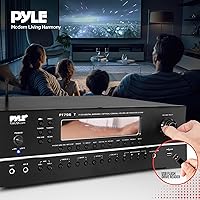
Yes, and this is genuinely one of the more useful things about this AV amplifier. It has two 1/4-inch mic inputs on the front panel, each with its own echo and volume controls. Standard dynamic microphones with a 1/4-inch plug work directly — or you can use an XLR-to-1/4-inch adapter for most stage mics. The echo effect is adjustable and adds a fun polish to karaoke sessions.

You get four HDMI inputs, so you can connect up to four devices simultaneously — such as a gaming console, a Blu-ray player, a streaming stick, and a cable box — and switch between them from the front panel or remote. All four ports support 4K UHD and 3D passthrough, so you are not downgrading video quality on any particular input.

For most users in open-plan rooms, Bluetooth pairing is quick and holds steadily during normal listening. Range starts to suffer through walls or if the unit is enclosed in a cabinet, and a small number of reviewers have reported occasional drops during longer sessions. It works well for everyday casual streaming but is not the most rock-solid Bluetooth implementation you will encounter.

The physical connections are fairly straightforward — the rear panel is labeled clearly enough. The main friction point is the instruction manual, which is widely criticized for being vague and missing detail on surround sound configuration and DSP settings. Expect to spend time consulting online resources or video guides to get the surround channels properly balanced. If you are patient, it is manageable; if you want plug-and-play simplicity, it may test your patience.

You will need seven full-range or satellite speakers plus a dedicated subwoofer. The receiver handles impedance between 4 and 16 ohms, which covers the vast majority of consumer home theater speaker packages available today. It does not include any speakers, so you will need to source those separately. A modest matched 7.1 speaker bundle pairs well with this surround sound unit given the overall budget-tier positioning.

This is one of the most common complaints from real buyers, so it is worth being direct: the remote feels cheap, and its reliability tends to decline within several months of regular use. Buttons can become unresponsive, and it requires a fairly direct line of sight to work consistently. Many users end up relying on the front panel controls instead. If remote usability is important to you, factor in the possibility of replacing it.

It runs warm during normal use, which is typical for AV receivers, but extended high-volume sessions push it noticeably hotter. The ventilation design is not particularly generous, and a handful of reviewers have reported automatic thermal shutdowns during long listening sessions. If you are housing it inside a closed entertainment cabinet, make sure there is adequate airflow above and around the unit to avoid heat buildup.

Yes, for most mainstream devices the 4K UHD passthrough works as expected — video quality is not degraded as it routes through the receiver to your TV. The caveat, as mentioned, applies to Apple TV and Dish Network specifically due to HDCP limitations. For a standard 4K Blu-ray player, gaming console, or Android streaming stick, you should see full 4K output on your display without any noticeable compromise.