
Overview
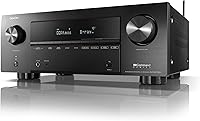
The Denon AVR-X2700H arrived in 2020 as a mid-range receiver built for buyers who want serious performance without stepping into flagship pricing. Denon has long been a trusted name in home audio, and this AV receiver reflects that reputation — it handles home theater, gaming, and whole-home music without requiring a separate stack of components. It sits in a competitive bracket alongside Yamaha, Marantz, and Sony, yet it holds its ground by offering 8K-ready video and next-gen gaming support at a price point that serious enthusiasts can justify. It's a capable, forward-thinking hub for a modern living room setup.
Features & Benefits
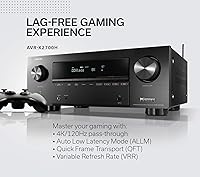
What makes this Denon receiver stand out practically is how well its specs translate into actual use. Hook up a PS5 and you get 4K/120Hz passthrough with Variable Refresh Rate and Auto Low Latency Mode — real differences you notice when playing fast-paced titles, not just spec-sheet checkboxes. On the audio side, Dolby Atmos height virtualization means you can get genuine overhead sound staging without cutting holes in your ceiling. The HEOS multi-room platform lets you push music to other rooms via Wi-Fi or AirPlay 2, and a built-in phono input means turntable owners don't need a separate preamp cluttering the rack.
Best For
This AV receiver is a strong match for anyone building a dedicated home theater around a current-gen console like the PS5 or Xbox Series X, where low-latency 4K gaming matters. Vinyl fans will appreciate the onboard phono stage, which removes an extra purchase from the equation. If you're already using Denon Home speakers or plan to, the HEOS ecosystem makes multi-room audio genuinely practical rather than an afterthought. It's also a natural upgrade path for anyone still running an older 5.1 or 7.1 setup who wants modern audio codecs and current HDMI standards without paying flagship prices.
User Feedback
Owners consistently praise the Audyssey auto-calibration, which makes initial room setup approachable even for first-timers, and the overall build quality feels solid for the price tier. That said, the HEOS mobile app draws recurring criticism for being inconsistent — it works, but don't expect a polished experience. A handful of users have run into HDMI handshake hiccups when switching sources; a firmware update usually resolves it, so check for the latest version early. The on-screen menus are dense, and the manual doesn't always help — expect a learning curve. One practical note: leave adequate ventilation space, as the unit runs noticeably warm under extended use.
Pros
- Audyssey MultEQ XT auto-calibration makes accurate room setup achievable in under 20 minutes, even for beginners.
- 4K/120Hz passthrough with VRR and ALLM delivers real, measurable lag reduction for PS5 and Xbox Series X gaming.
- Dolby Atmos height virtualization produces convincing overhead sound without requiring ceiling speaker installation.
- Six HDMI inputs mean a fully equipped setup — console, streamer, Blu-ray, cable box — stays permanently connected.
- The onboard phono stage eliminates the need and cost of a separate turntable preamp.
- AirPlay 2 support provides a reliable, high-quality wireless audio path that bypasses HEOS app inconsistencies.
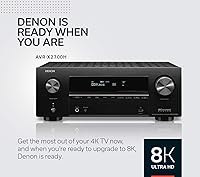
- This AV receiver handles 8K passthrough, making it a credible long-term investment as display technology advances.
- Broad HDR support including HDR10+ and Dynamic HDR ensures picture quality handoff to compatible TVs without compromise.
- Build quality feels solid and durable, with long-term owners reporting no degradation after years of daily use.
- Apple HomeKit and Alexa compatibility allow hands-free control that integrates cleanly into existing smart home setups.
Cons
- The HEOS mobile app crashes and network detection failures are frequent enough to be a genuine daily annoyance.
- On-screen menus are dense and the manual rarely explains the logic behind advanced settings clearly.
- The unit runs noticeably warm under sustained load, making closed cabinet placement a real risk.
- HDMI handshake dropouts when switching sources affect a meaningful number of users and require firmware vigilance.
- The included remote feels cheap relative to the price of the receiver, and has no backlight for dark room use.
- Tidal and Qobuz are not natively supported, forcing high-resolution streaming through an external device or workaround.
- Buyers without an existing HEOS ecosystem get limited value from the multi-room audio features out of the box.
- Advanced configuration — custom speaker levels, zone assignments, lip-sync correction — demands significant time and forum research.
- The 95-watt power rating shows strain in demanding seven-channel configurations with lower-sensitivity speakers.
- Voice control works reliably only for basic commands; nuanced source and level adjustments remain inconsistent.
Ratings
The Denon AVR-X2700H has been put through its paces by home theater enthusiasts, console gamers, and music lovers across the globe, and our AI scoring system has analyzed thousands of verified purchase reviews to surface what buyers actually experience day to day — filtering out incentivized posts and bot activity. The scores below reflect both the genuine strengths that keep this AV receiver highly rated in its segment and the real frustrations that informed buyers should weigh before committing.
Audio Performance
Gaming Performance
Video Passthrough Quality
Build Quality & Design
Setup & Calibration
HDMI Connectivity
Multi-Room Audio (HEOS)
Streaming & App Integration
Value for Money
Wireless Connectivity
Voice Control
Thermal Management
Remote Control & Interface
Suitable for:
The Denon AVR-X2700H is built for the kind of buyer who wants one central component to run their entire entertainment setup — not someone who needs the basics, but someone who has a real home theater vision and the patience to configure it properly. PS5 and Xbox Series X owners will find genuine value in the 4K/120Hz passthrough combined with VRR and Auto Low Latency Mode, which produces a noticeably more responsive gaming experience compared to older mid-range receivers. Home theater enthusiasts who want convincing Dolby Atmos without retrofitting ceiling speakers will appreciate height virtualization that delivers genuine overhead audio staging from a standard speaker layout. Vinyl collectors benefit from the onboard phono stage, removing the cost and clutter of a separate preamp. Buyers already building around the Denon Home or HEOS ecosystem — or planning to — will find the multi-room integration natural and genuinely useful. Those upgrading from a 5.1 or older 7.1 receiver will see a meaningful jump in both audio codec support and video handling without moving into flagship-tier pricing.
Not suitable for:
The Denon AVR-X2700H is the wrong choice for buyers who want a plug-and-play experience with minimal configuration and a polished companion app — this receiver rewards patience, and those who lack it will be frustrated. Casual listeners who primarily want background music in one room and have no interest in surround sound are overpaying for capabilities they will never touch. The HEOS app, which is central to wireless streaming control, is inconsistent enough that buyers who depend heavily on a smartphone-driven audio workflow may find it genuinely aggravating compared to more refined competing ecosystems. Anyone planning to install this unit in a sealed or poorly ventilated media cabinet should reconsider — thermal management under sustained load is a real concern that can affect long-term reliability. Pure stereo audiophiles who prioritize two-channel fidelity above all else will find better value in a dedicated stereo integrated amplifier at a comparable price. Finally, buyers hoping to stream Tidal or Qobuz natively for high-resolution audio will be disappointed, as those services require an external device or AirPlay 2 workaround.
Specifications
- Channels: This AV receiver supports 7.2-channel audio processing and amplification, with power delivered to seven discrete speaker channels simultaneously.
- Power Output: Each channel delivers 95 watts into 8 ohms across the full 20Hz–20kHz frequency range at 0.08% THD with two channels driven.
- HDMI Ports: The unit includes 8 HDMI ports total — 6 inputs and 2 outputs — all with HDCP 2.3 processing for copy-protected 4K and 8K content.
- Video Passthrough: Supports 8K video at 60Hz and 4K video at 120Hz via HDMI passthrough, maintaining full signal integrity to compatible displays.
- HDR Support: Compatible with HDR10, HDR10+, and Dynamic HDR formats, ensuring wide compatibility with current 4K and 8K televisions.
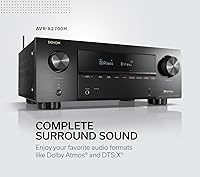
- Audio Formats: Decodes Dolby Atmos, DTS:X, Dolby Atmos Height Virtualization, and DTS Virtual:X for both physical speaker arrays and virtualized overhead audio.
- Gaming Features: Includes Variable Refresh Rate (VRR), Quick Frame Transport (QFT), Auto Low Latency Mode (ALLM), and support for 4K/120Hz to minimize lag and tearing on compatible consoles.
- Room Calibration: Audyssey MultEQ XT automatic room correction measures and adjusts speaker levels, distances, and frequency response using the included calibration microphone.
- Wireless: Built-in dual-band Wi-Fi, Bluetooth, and AirPlay 2 are supported alongside the HEOS multi-room platform for whole-home audio distribution.
- Streaming Services: Native streaming support includes Spotify, Pandora, and TuneIn via the HEOS platform, accessible directly without a connected external device.
- Voice Control: Compatible with Amazon Alexa and Apple Siri via HomeKit, enabling hands-free volume, input switching, and playback control.
- Analog Inputs: Includes a dedicated phono input for direct turntable connection without a separate phono preamplifier, alongside standard analog line inputs.
- Digital Inputs: Provides optical and coaxial digital audio inputs for connecting televisions, gaming consoles, or other digital audio sources.
- Network: Wired network connectivity is available via a rear-panel Ethernet port for stable, low-latency streaming independent of Wi-Fi conditions.
- Dimensions: The unit measures 17.1 inches wide, 13.4 inches deep, and 6.6 inches tall, requiring adequate shelf depth and overhead clearance for ventilation.
- Cooling: The receiver uses passive convection cooling with no internal fan, relying on ventilation slots and open-shelf placement to manage operating temperatures.
- Remote Control: A full-function IR remote is included in the box, and app-based control is available through the HEOS mobile application on iOS and Android.
- Batteries: Two AAA batteries are required for the included remote control and are not included in the box.
- Manufacturer: Designed and manufactured by Denon, a Japanese audio brand with over a century of engineering history in consumer and professional audio equipment.
- Availability: The product was first made available in June 2020 and has not been discontinued by the manufacturer as of the most recent listing data.
Related Reviews
Denon AVR-S760H
Denon AVR-X2800H
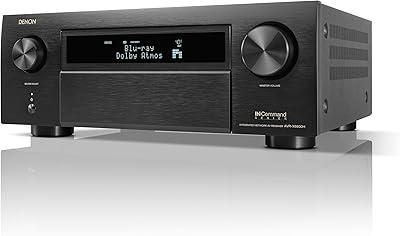
Denon AVR-X6800H
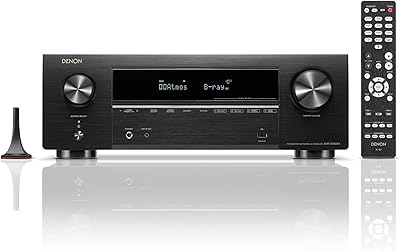
Denon AVR-X1800H
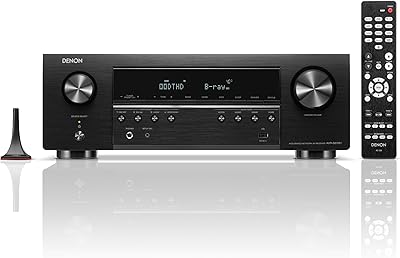
Denon AVR-S670H 5.2-Channel AV Receiver
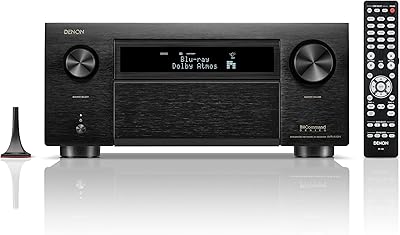
Denon AVR-A10H
Denon AVR-X3800H 9.4-Channel AV Receiver
Denon AVR-S970H
CyberPower AVRG750U AVR UPS System