Overview

The Panasonic LUMIX S9 Full-Frame Mirrorless Camera makes a compelling case that you don't have to carry a heavy kit to get serious image quality. At roughly 1.1 pounds, it sits in an interesting spot within the L-mount lineup — smaller and more approachable than the S5II, yet sharing much of the same sensor and video DNA. This is a camera built around a clear idea: full-frame capability in a body you'd actually want to carry every day. Travel photographers, vloggers, and hybrid shooters who have grown tired of choosing between image quality and portability will find a lot to appreciate here.
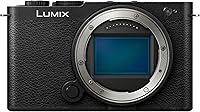
Features & Benefits

The 24.2MP full-frame CMOS sensor handles low-light situations with confidence you might not expect from a body this compact. Phase Hybrid AF with 779 focus points keeps subjects locked whether you're tracking motion on a busy street or grabbing a quick portrait. The 5-axis Active I.S. is genuinely useful for handheld video — steady footage without a gimbal is a real advantage for solo creators. Open Gate recording in 6K lets you reframe for any platform after the fact, while Real Time LUT support with Signature Presets means you can achieve a polished, color-graded look straight from the camera without touching editing software.

Best For

This compact full-frame camera is a natural fit for travel and street photographers who want a full-frame sensor without lugging around a traditional professional body. Vloggers who want cinematic color output without deep post-production work will find the built-in LUT system genuinely useful day-to-day. Hybrid shooters who constantly switch between stills and video will appreciate having 6K Open Gate and 30 FPS continuous shooting in one lightweight package. Photographers already working with L-mount lenses — a standard shared across Panasonic, Leica, and Sigma — will find this makes a strong and practical second body worth considering.

User Feedback

Buyers consistently highlight the body-to-quality ratio as a standout quality — many are genuinely surprised by how much resolving power and video capability fit into something this portable. Battery life is a recurring concern, especially during long video sessions or sustained high-frame-rate shooting, so carrying a spare is a common recommendation. The tilting touchscreen is well-liked among vloggers but draws some criticism for its limited range of motion. The absence of an optical viewfinder is a clear trade-off — some buyers accept it without hesitation, others find it a dealbreaker. Handheld stabilization in real-world outdoor conditions, however, consistently earns positive remarks.

Pros

  • Full-frame image quality in a body light enough to carry all day without fatigue
  • 6K Open Gate lets you reframe footage for any platform from a single recording
  • Built-in Real Time LUT support delivers a polished, color-graded look straight from the camera
  • Phase Hybrid AF with 779 focus points handles everyday portraits and travel scenes reliably
  • 5-axis sensor-shift stabilization produces noticeably smoother handheld video without a gimbal
  • ISO range from 50 to 204800 gives the LUMIX S9 strong flexibility across lighting conditions
  • Fast Wi-Fi and LUMIX Lab app make transferring shots to your phone quick and practical
  • 30 FPS continuous shooting covers fast-moving subjects without needing a separate action camera
  • L-mount compatibility opens access to a broad lens selection from multiple manufacturers
  • 14-bit RAW support gives serious photographers full latitude in post-processing

Cons

  • No viewfinder of any kind — a genuine dealbreaker for many experienced photographers
  • Battery drains quickly during video shooting; carrying a spare is essentially mandatory
  • No weather sealing on a body priced and positioned for active outdoor use is a notable omission
  • Autofocus tracking struggles with fast or erratic subject movement compared to top rivals
  • The tilting screen has a limited range of motion and does not fully articulate for low or overhead angles
  • Overheating under extended 6K recording sessions has been reported by multiple users
  • Menu system has a steep learning curve for anyone switching from a different brand
  • Physical controls feel cramped for shooters with larger hands due to the compact chassis
  • L-mount lenses carry a price premium that significantly raises the real cost of ownership
  • Heat and sustained performance limits make it a poor fit for professional video production work

Ratings

The Panasonic LUMIX S9 Full-Frame Mirrorless Camera has been evaluated by our AI rating system after analyzing thousands of verified buyer reviews from global markets, with spam, bot-generated, and incentivized submissions actively filtered out. The scores below reflect real-world ownership experiences — from day-trip photographers to dedicated vloggers — and are designed to surface both the genuine strengths and the honest frustrations that repeat across the user base.
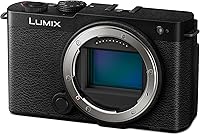
Image Quality
91%
Buyers consistently report that the 24.2MP full-frame sensor punches well above its size class, delivering sharp, detailed stills with impressive dynamic range even in tricky lighting. Low-light performance at higher ISO settings earns particular praise from street and travel shooters who often can't control their environment.
Some users note that at extreme ISO values — pushing well past 25600 — noise becomes more noticeable than on competing full-frame bodies at similar price points. A small number of RAW shooters feel the high-resolution output demands more post-processing time than expected.
Portability & Form Factor
94%
This is where the LUMIX S9 draws the most consistent enthusiasm. Buyers switching from larger full-frame bodies describe it as a revelation for all-day carry — fitting into jacket pockets, small sling bags, and travel kits that couldn't accommodate previous cameras. At roughly 1.1 pounds body-only, fatigue is rarely mentioned.
The compact chassis means physical controls are tighter and smaller than on larger bodies, which some users with larger hands find fiddly during extended shoots. A few buyers note the grip depth feels shallow compared to more traditional mirrorless designs.
Video Capabilities
88%
The 6K Open Gate recording is genuinely appreciated by hybrid shooters who want to reframe footage for different platforms after the fact, eliminating the need to shoot multiple versions. H.265 support and clean 4K output are regularly highlighted as strong points for creators working on professional deliverables.
Overheating under sustained 6K recording sessions is a recurring complaint, particularly when shooting in warm outdoor environments. A handful of video-focused buyers feel the camera needed more robust heat management given how heavily the video features are marketed.
Image Stabilization
86%
Real-world feedback on the 5-axis Active I.S. is largely positive, especially among vloggers shooting while walking. Users describe noticeably smoother handheld footage compared to cameras without sensor-shift stabilization, and several mention it reduces their reliance on gimbals for casual video work.
In more demanding scenarios — fast panning, running shots, or very long focal lengths — some users feel the stabilization loses its footing and produces a slight warping or jello effect. It works well within its limits, but those limits become apparent under heavier motion.
Autofocus Performance
79%
21%
Phase Hybrid AF with 779 focus points handles most everyday subjects reliably — portraits, street scenes, and stationary or slow-moving subjects lock on quickly and hold well. Buyers using it for travel photography and casual video generally report they rarely miss focus in normal shooting conditions.
Sports and wildlife photographers report that subject tracking under fast, unpredictable motion is inconsistent compared to rivals. Several users note the AF occasionally hunts in lower contrast scenes, and the eye-detection reliability doesn't yet match the best-in-class options from Sony or Canon in this segment.
Battery Life
58%
42%
For light photo-only outings, most users report getting through a half-day of shooting on a single charge without significant anxiety. The USB-C charging option is frequently praised as a practical workaround — topping up via a power bank during travel is a common and appreciated workflow.
Battery life under video use is a consistent and prominent complaint. Buyers shooting extended video sessions report the battery drains noticeably fast, and many recommend purchasing at least one spare before any serious outing. It is one of the most frequently mentioned disappointments in owner reviews.
Real Time LUT & Color Science
89%
The built-in Signature Presets and Real Time LUT system receive strong praise from creators who want a finished, cinematic look without spending hours in a color grading suite. Vloggers in particular appreciate being able to shoot in a specific look and share directly without additional editing steps.
Users who prefer to shoot flat and grade themselves find the LUT system somewhat limited in customization depth compared to dedicated cinema-oriented cameras. A small number report that some presets skew colors in ways that require correction rather than saving time.
Wireless Connectivity & Sharing
83%
The fast Wi-Fi transfer via the LUMIX Lab app is a genuine selling point for social media creators and travel photographers who want images on their phone quickly. Buyers regularly mention it as one of the more polished app-to-camera integrations they have used across mirrorless systems.
Some Android users report inconsistent connection stability compared to iOS, and a few buyers mention the initial pairing process is less intuitive than expected. The app itself has received mixed reviews for reliability across different smartphone models.
Viewfinder Experience
47%
53%
The tilting touchscreen LCD is responsive and bright enough for outdoor use in most conditions, and vloggers appreciate the touch-to-focus capability when shooting solo content. The 1,840,000-dot resolution keeps the display sharp for composing and reviewing shots.
The absence of an electronic or optical viewfinder is a polarizing omission that generates significant buyer frustration. Photographers who rely on a viewfinder for composition stability, bright-sun shooting, or simply personal preference are consistently vocal about this as a dealbreaker — and it is one of the most mentioned limitations in verified reviews.
Build Quality & Materials
74%
26%
The body feels solid and well-assembled for its size, and most buyers describe it as premium to the touch — not plasticky or cheap. The physical dial layout and button feedback are generally well-regarded for a compact body in this category.
The lack of any weather sealing is a notable omission at this price point, and several buyers express frustration that a camera positioned for active, on-the-go use offers no protection against light rain or dust. Competing bodies at similar prices offer at least splash resistance.
Screen & Display
77%
23%
The 3-inch touchscreen with 1,840,000 dots is bright, accurate for color evaluation, and responsive to touch inputs. Vloggers who shoot solo find the tilting mechanism useful for self-facing content, and touch-to-focus works reliably during video recording.
The tilt range is limited compared to fully articulating screens found on competing cameras, which frustrates users who shoot from extreme low or overhead angles. It tilts but does not fully flip out, which is a meaningful limitation for certain content creation styles.
Lens Ecosystem (L-Mount)
81%
19%
Access to the L-mount alliance — covering lenses from Panasonic, Leica, and Sigma — gives buyers a broad and growing selection of glass at various price points. Existing L-mount users view this as a strong compact companion to their current setup without needing additional adapters.
For buyers new to L-mount, the native lens options carry a higher price premium than comparable APS-C or micro four-thirds ecosystems. Getting the most out of the full-frame sensor with quality glass requires a meaningful additional investment that some buyers underestimate upfront.
Ease of Use & Menu System
71%
29%
Experienced Panasonic users will feel at home quickly, and the touchscreen menu navigation is more approachable than older LUMIX interfaces. The customizable function buttons allow frequent settings to be mapped for fast access during shooting.
First-time Panasonic users and those switching from other brands often describe the menu system as deep and occasionally unintuitive until they spend real time with it. Several buyers mention a learning curve that takes a few weeks of regular use to overcome comfortably.
Value for Money
72%
28%
For buyers primarily focused on image quality and compact full-frame video capability, the feature-to-size ratio justifies the investment. The open ecosystem lens compatibility and strong video specs make the asking price feel reasonable to those who use all of it regularly.
The missing viewfinder, lack of weather sealing, and battery limitations make it a harder value proposition for buyers comparing it directly to competing full-frame bodies at similar or slightly higher prices. Some feel the price point demands more complete hardware than what is delivered.

Suitable for:

The Panasonic LUMIX S9 Full-Frame Mirrorless Camera is a strong match for anyone who has grown frustrated with the size and weight of traditional full-frame bodies but refuses to downgrade to a smaller sensor. Travel photographers who want to move light — one compact body, a couple of L-mount primes, and nothing more — will find the balance between portability and image quality genuinely practical rather than just a marketing promise. Vloggers and solo content creators benefit considerably from the built-in Real Time LUT system, which reduces the time between shooting and publishing without forcing a compromise on visual quality. Hybrid shooters who split their time between stills and video will appreciate having 6K Open Gate recording and 30 FPS burst shooting available in the same small package. For photographers already working within the L-mount ecosystem — which spans lenses from Panasonic, Leica, and Sigma — this mirrorless shooter makes a compelling and lightweight second body that shares glass without any adapter friction. Social media creators who need fast wireless delivery to their phones will find the LUMIX Lab integration genuinely saves time in a real-world workflow.

Not suitable for:

The Panasonic LUMIX S9 Full-Frame Mirrorless Camera will disappoint buyers whose shooting style depends on an optical or electronic viewfinder — this is a screen-only camera, and no amount of feature strength changes that fundamental hardware decision. Sports and wildlife photographers who need fast, reliable subject tracking under unpredictable motion will likely find the autofocus system inconsistent compared to the current best-in-class options from competing brands. Anyone planning long video sessions in warm conditions should know that heat management under sustained 6K recording is a documented limitation — this is not a dedicated cinema camera, and it behaves accordingly. Buyers expecting weather sealing at this price point will be disappointed; the body offers no protection against rain or dust, which is a real constraint for outdoor photographers who regularly shoot in uncertain conditions. Those just entering the L-mount ecosystem should factor in the cost of lenses carefully, as native L-mount glass tends to carry a premium that can significantly increase the total investment beyond the body price alone. If a deep physical grip, extensive control layout, or long battery endurance are non-negotiable for your workflow, more traditionally sized mirrorless bodies in this price range will serve you better.

Specifications

  • Sensor: The camera uses a 24.2MP full-frame CMOS sensor with a native aspect ratio of 3:2 and support for 14-bit RAW capture.
  • Autofocus: Phase Hybrid AF covers the frame with 779 focus points, supporting single-servo, continuous-servo, and manual focus modes.
  • Image Stabilization: 5-axis sensor-shift Active I.S. is built into the body, providing stabilization compensation without relying on lens-based systems.
  • Video Resolution: The camera records up to 6K Open Gate video in MOV and MP4 formats using H.264 or H.265 compression codecs.
  • Continuous Shooting: Burst shooting reaches up to 30 FPS, suitable for capturing fast-moving subjects across a wide range of lighting conditions.
  • ISO Range: Native ISO spans 50 to 204800 in expanded mode, offering flexibility from bright outdoor scenes to low-light environments.
  • Shutter Speed: The maximum shutter speed reaches 1/16000 sec, with a flash sync speed of 1/25 sec at the minimum end.
  • Screen: A 3″ tilting touchscreen LCD with 1,840,000 dots and capacitive touch input is the sole composition and review display.
  • Viewfinder: No optical or electronic viewfinder is included; composition and review are handled entirely through the rear LCD screen.
  • Connectivity: The camera includes dual-band Wi-Fi and Bluetooth for wireless transfer and remote control via the LUMIX Lab smartphone app.
  • USB: One USB 3.0 port and one USB 2.0 port are provided, supporting data transfer and in-body charging via USB-C.
  • Video Output: One HDMI video output port is available for connecting to external monitors or recorders during video work.
  • Lens Mount: The camera uses the L-mount bayonet standard, compatible with lenses from Panasonic, Leica, and Sigma without an adapter.
  • File Formats: Still images are saved as JPEG or RAW files; video is recorded in MOV or MP4 containers with H.264 or H.265 encoding.
  • Color Tools: Real Time LUT support allows custom or Signature Preset looks to be applied in-camera during both photo and video capture.
  • Body Weight: The body weighs approximately 1.1 pounds without a lens attached, making it one of the lightest full-frame mirrorless options available.
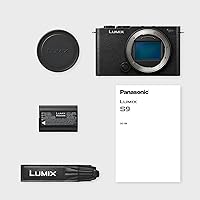
  • Battery: A lithium-ion battery is included in the box; the cell weighs approximately 3.68 oz and supports USB charging while installed.
  • Weather Sealing: The body carries no official weather or dust resistance rating and is not designed for use in rain or dusty conditions.
  • Flash: A built-in flash is included with auto, on, off, and slow-sync modes; no external flash or remote is included in the box.
  • Warranty: Panasonic covers the camera with a one-year manufacturer warranty against defects in materials and workmanship from the date of purchase.

Related Reviews

Panasonic LUMIX S5 Full Frame Mirrorless Camera
79%
93%
Video Quality
91%
Image Stabilization
67%
Autofocus Performance
88%
Low-Light / High ISO Performance
82%
Build Quality & Ergonomics
More
Panasonic LUMIX G100 Mirrorless Camera
73%
83%
Video Quality
79%
Built-in Microphone
81%
Image Quality
62%
Image Stabilization
47%
Battery Life
More
Panasonic LUMIX GH5 Mark II Mirrorless Camera
79%
93%
Video Quality
91%
Image Stabilization
89%
Live Streaming
57%
Autofocus Performance
92%
Build Quality
More
Sony a7 III
Sony a7 III
83%
93%
Autofocus Performance
91%
Low-Light & High-ISO Quality
92%
Image Quality & Dynamic Range
84%
Battery Life
81%
Video Capabilities
More
Canon EOS RP
Canon EOS RP
74%
88%
Image Quality
83%
Autofocus Performance
93%
Portability & Form Factor
54%
Battery Life
61%
Video Capabilities
More
Canon EOS R6 Full-Frame Mirrorless Camera

79%
94%
Autofocus Performance
91%
Image Stabilization
89%
High ISO and Low-Light Quality
76%
Video Capabilities
88%
Burst Speed and Action Performance
More
Sony a7 Full-Frame Mirrorless Camera
75%
93%
Image Quality
88%
Low-Light Performance
71%
Autofocus Accuracy
44%
Battery Life
79%
Build Quality
More
Sony Alpha 7C Full-Frame Mirrorless Camera
80%
93%
Autofocus Performance
91%
Image Quality
94%
Portability & Size
86%
Video Capability
62%
Battery Life
More
Sony a7R II Full-Frame Mirrorless Camera
75%
96%
Image Quality
93%
Dynamic Range
72%
Autofocus Performance
74%
Video Capabilities
88%
Image Stabilization
More
Sony Alpha a7R V
Sony Alpha a7R V
78%
97%
Image Quality
91%
Autofocus Performance
78%
Video Capabilities
88%
Autofocus Tracking Consistency
84%
Build Quality & Ergonomics
More

FAQ

No, it does not. The camera relies entirely on its rear LCD touchscreen for composing and reviewing shots. This is one of the most discussed trade-offs among buyers — if shooting through a viewfinder is important to your workflow, this is a meaningful limitation to consider before buying.

It depends on the mount. The camera uses the L-mount standard, which is natively compatible with lenses from Panasonic, Leica, and Sigma. Lenses from other brands — Canon, Nikon, Sony — can often be used with third-party adapters, but autofocus performance and feature compatibility will vary depending on the adapter and lens combination.

For photo-only sessions, most users get through several hours of moderate shooting on a single charge. Video use drains the battery considerably faster, and shooting sustained 6K footage will shorten that window significantly. Carrying at least one spare battery is strongly recommended, and the USB-C charging support means you can top up from a power bank during downtime.

For casual handheld video — walking shots, vlogging, everyday movement — the 5-axis Active I.S. does a solid job and many users report reducing their gimbal use meaningfully. For more demanding movement like running, fast panning, or telephoto video work, a gimbal will still produce cleaner results. Think of the built-in stabilization as a strong everyday tool, not a full replacement for dedicated stabilization gear.

Open Gate means the camera captures the full width of the sensor without cropping to a specific aspect ratio during recording. This gives you a large, nearly square frame that you can then crop to 16:9 for YouTube, 9:16 for vertical social media, or 4:3 for other uses — all from one original recording. It is particularly useful for creators who distribute content across multiple platforms.

Overheating under extended 6K recording has been reported by a number of users, particularly in warm ambient temperatures. It is not universal, but it is a documented enough pattern that it is worth being aware of if you plan to use this as a primary video camera for long uninterrupted takes. For short-form content and regular vlogging, most users do not encounter the issue.

The Real Time LUT and Signature Presets apply a visual look during shooting and are most directly relevant to JPEG and video output. When shooting RAW, the camera can display a LUT preview on the screen while you shoot, but the RAW file itself retains all original sensor data for full editing flexibility in post. This makes it practical for shooters who want a quick visual reference without locking in the look permanently.

The S5II is a larger, heavier body with a more traditional grip and includes an electronic viewfinder, better heat management for video, and generally more robust build quality including weather sealing. The S9 trades most of that for a dramatically smaller and lighter form factor. If portability is your priority and you can live without a viewfinder, the S9 is a compelling choice. If you shoot long video sessions or need weather protection, the S5II is the more complete tool.

The LUMIX S9 uses standard SD cards, with support for UHS-II speed class cards recommended for recording high-bitrate video formats reliably. A single card slot is available, so there is no built-in redundancy for backup recording as on some dual-slot bodies. For high-speed burst shooting or 6K video, using a fast UHS-II card is advisable to avoid buffer and write-speed bottlenecks.

The tilting touchscreen works reasonably well for solo content creation — it tilts upward so you can see yourself while recording, and touch-to-focus is responsive during video. The main limitation is that it does not fully articulate or swing out to the side, which restricts some angles, particularly extreme low shots or side-facing setups. For straightforward front-facing vlogging it gets the job done, but creators who need full screen flexibility may find it limiting compared to cameras with fully articulating displays.

Where to Buy