Overview

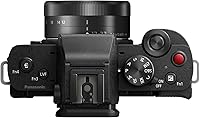
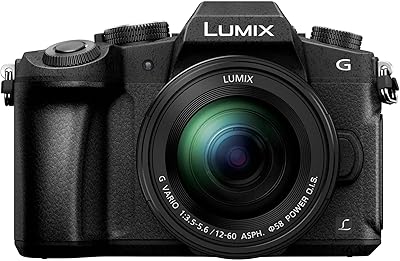
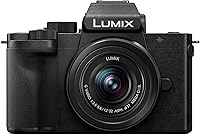
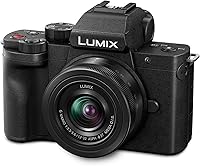
The Panasonic LUMIX G100 Mirrorless Camera is built squarely for content creators — vloggers, solo shooters, and photographers ready to leave their smartphones behind. It sits in a competitive mid-range bracket alongside the Sony ZV-E10 and Canon M50 Mark II, but carves out its own space with a few deliberate design choices. The included 12-32mm kit lens means you can start shooting the moment it arrives. Because it runs on the Micro Four Thirds system, you are not locked into a dead end — there is a wide ecosystem of lenses to grow into over time. Just be clear-eyed: this is a prosumer creator tool, not a broadcast replacement.
Features & Benefits

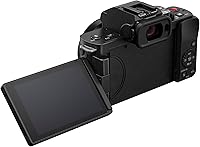
The G100's most distinctive feature is its built-in tracking microphone, which auto-adjusts to follow your voice as you move around the frame. It handles indoor recordings and quiet outdoor settings well, though do not expect miracles in strong wind. On the video side, 4K at 24p and 30p gives your footage a proper cinematic baseline, backed by a 20.3MP sensor and Venus Engine processing for clean stills. The 5-Axis Hybrid Stabilization is digital rather than optical — helpful for mild camera movement, but it won't fully compensate for vigorous handheld walking. The articulating touchscreen is a genuine convenience for self-shooting, and plugging into a computer via USB instantly turns this mirrorless camera into a sharp, sensor-quality webcam.

Best For

The LUMIX G100 makes the most sense for solo YouTube creators and vloggers who want reliable on-camera audio without strapping on a separate microphone. It is equally well-suited to travel shooters — at under 15 ounces with the kit lens attached, it is genuinely light enough for one-handed operation all day. Photographers moving up from a smartphone or compact camera will appreciate the manual controls and the freedom to swap lenses as their skills sharpen. Remote workers who want to look polished on video calls will find the USB webcam mode surprisingly painless to set up. If you plan to grow into a serious lens collection, the Micro Four Thirds mount gives you plenty of room to do exactly that.

User Feedback

Buyers consistently highlight the compact body and the tracking microphone as reasons they chose the G100 over competing options, with image quality earning solid marks for daylight shooting. The criticisms, however, are equally consistent. The absence of a headphone jack frustrates anyone who needs to monitor audio during a recording session, and battery life runs short on longer days out — packing a spare is practically non-negotiable. Some owners note that 4K footage carries a slight crop, which tightens the already modest field of view on the kit lens at wider settings. First-time LUMIX users occasionally find the menu system a bit layered at first, though most report getting comfortable with it after a week or two of regular use.

Pros

  • The built-in tracking microphone delivers genuinely usable audio for indoor and calm outdoor recordings without any extra gear.
  • 4K video at 24p and 30p gives footage a cinematic quality that no smartphone in a similar price range can match.
  • At under 15 ounces with the kit lens, the G100 is light enough to carry and shoot one-handed all day without fatigue.
  • The articulating touchscreen makes self-shooting and low-angle framing straightforward — no guesswork, no awkward setups.
  • USB webcam mode works reliably and turns this mirrorless camera into a high-quality video call upgrade with minimal setup.
  • The Micro Four Thirds mount opens access to a broad, mature lens ecosystem as your photography skills and ambitions expand.
  • Intelligent auto mode handles exposure and focus well for beginners, while full manual controls are there when you are ready for them.
  • The included 12-32mm kit lens means you can start shooting quality stills and video immediately, right out of the box.
  • Wireless transfer via the LUMIX app makes moving footage to a smartphone for quick edits and uploads genuinely convenient.

Cons

  • Battery life runs short during heavy 4K recording sessions — carrying at least one spare is essentially mandatory for all-day use.
  • No headphone jack means you cannot monitor audio in real time, a frustrating omission for anyone doing unattended or longer recordings.
  • The 4K recording mode applies a noticeable crop factor that tightens your effective field of view more than most buyers expect.
  • Contrast-detection autofocus hunts and hesitates with fast-moving subjects, making action and wildlife shooting unreliable.
  • Digital-only image stabilization cannot fully compensate for walking or dynamic handheld movement without additional gimbal support.
  • High-ISO performance softens and adds noise above ISO 3200, limiting usable image quality in dim or indoor environments.
  • The LUMIX menu system has a real learning curve for users coming from other brands, with key settings buried in layered submenus.
  • The kit lens maximum aperture of f/3.5-5.6 limits low-light versatility and background blur compared to even modest prime lenses.
  • No weather sealing leaves the body vulnerable in rain, dust, or humid outdoor conditions that travel creators regularly encounter.

Ratings

The scores below for the Panasonic LUMIX G100 Mirrorless Camera were generated by our AI engine after analyzing thousands of verified buyer reviews from global markets, with spam, bot submissions, and incentivized feedback actively filtered out. The result is an honest, balanced picture of where this camera genuinely earns its place on a creator's shelf — and where it asks you to make real compromises. Strengths and frustrations are both reflected without sugarcoating.
Video Quality
83%
4K at 24p and 30p produces footage that looks noticeably more cinematic than anything a smartphone delivers, with the Venus Engine keeping colors accurate and noise reasonably well-controlled in decent light. Creators shooting outdoor interviews or travel content in daylight consistently report clean, usable footage straight from the card.
The 4K mode applies a crop that tightens your field of view more than most buyers anticipate, which becomes a genuine issue when using the already-moderate 12-32mm kit lens indoors. Rolling shutter artifacts are also visible during fast panning, something users upgrading from DSLRs sometimes find surprising at this price tier.
Built-in Microphone
79%
21%
The directional tracking microphone is the feature that genuinely sets the G100 apart from most competitors at this price point. For solo vloggers recording in a quiet room, a coffee shop, or a calm outdoor setting, the audio quality is clear enough that many users skip an external mic entirely.
Wind sensitivity is a recurring complaint — even a light breeze outdoors introduces noticeable noise that the tracking system cannot compensate for. The complete absence of a headphone jack means you cannot monitor audio in real time, which is a meaningful limitation for anyone doing longer shoots where a problem could go unnoticed until editing.
Image Quality
81%
19%
The 20.3MP CMOS sensor resolves plenty of detail for portraits, street photography, and travel shots shared online or printed at moderate sizes. Daylight performance is where the G100 earns consistent praise, with natural color rendering that requires only light post-processing work.
High ISO performance starts to soften noticeably above ISO 3200, making low-light and indoor shooting more challenging without additional lighting. Users coming from full-frame cameras will feel the Micro Four Thirds sensor size limitation most acutely in dim environments like restaurants or evening events.
Image Stabilization
62%
38%
The 5-Axis Hybrid stabilization handles gentle handheld movement and minor wrist tremors reasonably well during slow walks or static talking-head shots. For static or near-static recording scenarios, the compensation is visible and helpful.
Because the stabilization is entirely digital rather than optical, it crops into the frame and cannot compete with cameras offering in-body optical stabilization at a similar price. Users who shoot while walking briskly or moving dynamically report that the footage still has a noticeable wobble that requires additional gimbal support to fix.
Battery Life
47%
53%
The included lithium-ion battery is sufficient for shorter shooting sessions — a casual half-day of intermittent recording and photo-taking is generally manageable on a single charge for most users.
Heavy 4K video shooters and all-day travel creators frequently cite battery life as the G100's most frustrating practical limitation, with many burning through a charge in under 90 minutes of continuous recording. Buying at least one spare battery is not optional for anyone planning longer shoots, which adds to the effective cost of ownership.
Build Quality & Portability
76%
24%
Weighing under 15 ounces with the kit lens attached, the G100 is genuinely easy to carry all day without fatigue — something travel creators and street photographers consistently appreciate. The body feels solid and well-assembled for its class, with a grip shape that works naturally for one-handed shooting.
The plastic construction does not convey the premium feel some buyers expect at this price, and there is no weather sealing of any kind. Users who shoot in lightly rainy or dusty environments need to be cautious, as even modest exposure to the elements can be a risk.
Autofocus Performance
68%
32%
Contrast-detection autofocus with 49 points handles straightforward subjects in good light competently, and face detection works reliably enough for talking-head video content. For stationary or slowly moving subjects, most users find the AF responsive and accurate.
Contrast-detection systems are inherently slower than phase-detection alternatives, and the G100 shows this during fast-moving subjects or quick scene changes. Action photographers and anyone filming moving subjects like pets or children will find the AF hunting more frequently than they would on competing cameras with hybrid autofocus.
Display & Touchscreen
84%
The 3-inch articulating touchscreen is well-suited to self-shooting scenarios — flipping it forward to face yourself while vlogging is intuitive, and the resolution is sharp enough to accurately judge focus and framing. Touch-to-focus works reliably during both photo and video capture.
Outdoor visibility in bright sunlight can be a challenge, as the screen washes out more than users would like when shooting in direct sun. A few buyers also note that the hinge mechanism, while functional, does not feel as robust as the articulating displays found on pricier competitors.
Kit Lens Usability
71%
29%
The 12-32mm pancake-style kit lens keeps the whole package impressively compact and covers a practical everyday range — wide enough for room-scale vlogging and tight enough for basic portrait work. Image sharpness at the center of the frame is solid for the lens class.
The f/3.5-5.6 maximum aperture limits low-light versatility, and the 32mm long end starts to feel restrictive when you want any meaningful reach. Some users note that the lens feels slightly plasticky and its build quality does not inspire confidence compared to dedicated Micro Four Thirds primes available separately.
Webcam Functionality
86%
Plugging the G100 into a computer via USB and using it as a webcam is a straightforward process that most users get working quickly without driver headaches. The sensor-quality image it delivers on video calls is a clear and immediate upgrade over any built-in laptop camera.
There is no clean HDMI output, which limits connectivity options for users who prefer that path for capture cards or streaming setups. A small number of users report that USB webcam mode can occasionally drop the connection during long sessions, requiring a reconnect.
Wireless Connectivity
77%
23%
Bluetooth and Wi-Fi pairing with the LUMIX app allows for wireless image transfers and remote shutter control, which solo shooters find genuinely convenient when setting up tripod shots or checking framing from a distance. The connection process has improved with recent firmware updates.
The app itself receives mixed reviews, with some users finding it slow to connect and occasionally unstable on older Android devices. Transfer speeds for larger RAW-equivalent files can feel sluggish compared to simply pulling the SD card directly.
Ease of Use & Menu System
66%
34%
The intelligent auto mode works well for complete beginners, producing properly exposed shots and video with minimal input. First-time mirrorless users who start in iA mode generally report a comfortable and encouraging early experience.
The deeper LUMIX menu structure has a known learning curve for users coming from other brands or from smartphones. Multiple reviewers specifically flag that finding and adjusting key video settings requires digging through menu layers that feel unintuitive until you have spent meaningful time with the camera.
Value for Money
74%
26%
For a creator stepping up from smartphone video who wants a real camera with a legitimate audio solution built in, the G100 offers a distinctive combination of features that is hard to find bundled together at this price tier. The included lens means you can get to work immediately without an additional investment.
Buyers who prioritize optical stabilization, phase-detection autofocus, or a headphone jack will find competing cameras at similar price points that address those needs more directly. The G100 asks you to accept specific trade-offs, and whether those trade-offs are acceptable depends heavily on your intended use case.

Suitable for:

The Panasonic LUMIX G100 Mirrorless Camera is a strong match for solo content creators — particularly vloggers and YouTube channel builders who want noticeably better audio without clipping an external microphone onto a cold shoe every time they head out. If you are currently shooting on a smartphone and feel constrained by its audio quality, fixed lens, and limited manual controls, this camera offers a meaningful and practical step up. Travel creators who keep an eye on bag weight will appreciate how little the G100 asks of your carry-on, and the articulating screen makes solo framing far less of a guessing game than it is on fixed-display cameras. Remote workers who want to look sharper on video calls without buying separate streaming gear will find the USB webcam mode a quietly useful bonus. It also suits photography beginners who want room to grow — the Micro Four Thirds lens ecosystem is wide and well-supported, so your investment in glass stays relevant as your skills develop.

Not suitable for:

The Panasonic LUMIX G100 Mirrorless Camera is not the right call for buyers who need dependable, optically stabilized footage while moving — the digital-only stabilization simply cannot match what a gimbal or a camera with in-body optical stabilization delivers during dynamic shooting. If you shoot a lot of fast-moving subjects, such as sports, wildlife, or active kids, the contrast-detection autofocus will frustrate you; phase-detection systems on competing cameras handle those scenarios considerably better. Anyone who monitors audio during shoots will immediately hit a wall with the missing headphone jack — there is no workaround, and that is a genuine dealbreaker for run-and-gun video work. Users hoping to shoot in rain, dust, or other unpredictable outdoor conditions should also look elsewhere, as there is no weather sealing on the body. And if your ambitions lean toward professional broadcast, cinema, or high-end commercial production, this camera's feature set and codec options are not built for that workload.

Specifications

  • Sensor: 20.3MP Micro Four Thirds CMOS sensor processed by Panasonic's Venus Engine for accurate color rendition and controlled noise.
  • Video Resolution: Records 4K UHD video at 24p and 30p in MP4 format, with Full HD options available at higher frame rates.
  • Kit Lens: Includes a 12-32mm f/3.5-5.6 collapsible zoom lens, equivalent to 24-64mm in full-frame terms.
  • Image Stabilization: 5-Axis Hybrid Image Stabilization combines digital correction across pitch, yaw, roll, and lateral axes to reduce handheld camera shake.
  • Autofocus System: Contrast-detection AF with 49 focus points supports Automatic AF, Continuous-Servo AF, and Manual Focus modes.
  • Display: 3-inch articulating capacitive touchscreen LCD with 1,840,000 dots that flips forward for self-shooting and vlogging.
  • Viewfinder: Built-in electronic viewfinder with 0.74x magnification for composing shots in bright outdoor conditions.
  • ISO Range: Native ISO range of 200–25600, expandable down to ISO 100, covering most shooting scenarios from bright daylight to dim interiors.
  • Shutter Speed: Shutter speed range spans 1/16,000 to 60 seconds, supporting fast-action freezing and long-exposure photography.
  • Continuous Shooting: Captures stills at up to 10 frames per second for burst sequences of moderate-speed subjects.
  • Microphone: Built-in directional microphone with subject-tracking audio technology that auto-adjusts pickup to follow the primary sound source.
  • Connectivity: Equipped with Bluetooth, Wi-Fi, USB, and HDMI for wireless transfers, webcam use, and external monitor connectivity.
  • Memory Card: Single SD/SDHC/SDXC card slot compatible with UHS-I cards rated U3 and V30, supporting a write speed of up to 30 MB/s.
  • Battery: Rechargeable lithium-ion battery pack included in the box, charged via USB connection.
  • Weight: Complete kit weighs approximately 14.88 ounces (422g) with the kit lens attached, making it suitable for all-day one-handed use.
  • Lens Mount: Micro Four Thirds mount is compatible with the full range of LUMIX G lenses and third-party MFT-compatible optics.
  • Exposure Modes: Supports Program, Aperture Priority, Shutter Priority, Manual, and Intelligent Auto exposure modes.
  • Flash: No built-in pop-up flash, but a standard hot shoe accommodates compatible external flash units.
  • File Format: Captures stills as JPEG with Basic, Normal, and Fine quality levels; video is recorded in MP4 container format.
  • Warranty: Covered by a one-year manufacturer warranty from Panasonic against defects in materials and workmanship.

Related Reviews

Panasonic LUMIX S9 Full-Frame Mirrorless Camera
78%
91%
Image Quality
94%
Portability & Form Factor
88%
Video Capabilities
86%
Image Stabilization
79%
Autofocus Performance
More
Panasonic LUMIX GH5 Mark II Mirrorless Camera
79%
93%
Video Quality
91%
Image Stabilization
89%
Live Streaming
57%
Autofocus Performance
92%
Build Quality
More
Panasonic LUMIX S5 Full Frame Mirrorless Camera
79%
93%
Video Quality
91%
Image Stabilization
67%
Autofocus Performance
88%
Low-Light / High ISO Performance
82%
Build Quality & Ergonomics
More
Panasonic LUMIX ZS99
75%
93%
Zoom Range & Reach
84%
Image Quality in Good Light
54%
Low-Light Performance
88%
Image Stabilization
79%
Video Quality
More
Panasonic Lumix DMC-ZS3 Digital Camera
83%
89%
Ease of Use
84%
Image Quality
91%
Portability
65%
Battery Life
83%
Video Quality
More
Panasonic LUMIX FZ80D
75%
93%
Zoom Range & Reach
88%
Image Stabilization
78%
Image Quality in Good Light
54%
Low-Light Performance
81%
4K Video Quality
More
Panasonic Lumix G85 Mirrorless Camera
78%
93%
Image Stabilization
89%
Build Quality
84%
Video Performance
71%
Autofocus Accuracy
82%
Image Quality
More
Panasonic Lumix DMC-ZS10
83%
85%
Image Quality
88%
Zoom Performance
90%
Ease of Use
93%
Portability
80%
Battery Life
More
Panasonic HomeHawk Window Indoor Security Camera
79%
93%
Ease of Installation
86%
Daytime Video Quality
61%
Night Vision Performance
68%
Person Detection Accuracy
67%
App Experience
More
Canon EOS R3 Mirrorless Camera
84%
96%
Autofocus Performance
93%
Continuous Shooting Speed
91%
Low-Light Image Quality
62%
Still Image Resolution
88%
Video Capability
More

FAQ

Yes, and it is one of the more practical things about this camera. You connect it to your computer via USB, and most systems recognize it as a video input source without needing to install additional drivers. The image quality upgrade over a built-in laptop camera is immediately noticeable.

For indoor recordings, quiet cafe settings, and calm outdoor environments, the tracking microphone performs well enough that many solo creators skip the external mic entirely. Where it struggles is wind — even a light breeze introduces noticeable noise that the tracking system cannot cancel out. If you plan to shoot frequently outdoors in variable conditions, a small external microphone or a dead-cat windscreen is worth considering.

It is a legitimate concern. Under heavy 4K video use, you can realistically burn through a charge in 60 to 90 minutes of continuous recording. For shorter shooting sessions or mixed photo and video use, a single battery gets you further, but it is still not generous. Buying a second battery before your first serious shoot is genuinely practical advice, not just cautious upselling.

It depends on what you are shooting. The crop tightens your field of view when recording in 4K, which becomes most noticeable when using the kit lens indoors or in tight spaces where you already want the widest possible angle. If you mostly shoot in open environments or talking-head setups where you have room to step back, it is manageable. For very confined spaces, shooting in 1080p avoids the crop entirely.

The Panasonic LUMIX G100 Mirrorless Camera uses the Micro Four Thirds mount, which is one of the most mature and affordable mirrorless ecosystems available. You have access to the full Panasonic LUMIX G lens lineup as well as Olympus OM System lenses and a wide range of third-party options from brands like Sigma and Voigtlander. Entry-level primes like the LUMIX 25mm f/1.7 are available for well under two hundred dollars and offer a significant low-light improvement over the kit lens.
The G100 has a 3.5mm microphone input, so you can connect an external mic if you want better audio than the built-in mic provides. However, there is no headphone jack, which means you cannot monitor your audio in real time while recording. For most casual creators this is a non-issue, but if you are doing interviews, events, or longer unattended recordings where a problem could go unnoticed, it is a real limitation.

The 5-Axis Hybrid stabilization handles gentle handheld movement and slow panning reasonably well, but it is digital rather than optical, which means it works by cropping into the frame. During vigorous walking or any dynamic movement, the footage will still have a noticeable wobble. If smooth walking shots are a priority, a small gimbal like the DJI OM series paired with this camera will get you the results you are after.

It is a reasonable first mirrorless camera, especially if your primary goal is content creation rather than serious photography. The intelligent auto mode handles most decisions for you when you are starting out, and the touchscreen and articulating display make the learning process more intuitive. The LUMIX menu system does have a bit of a learning curve compared to some competitors, but most first-time users report getting comfortable with the layout after a couple of weeks of regular shooting.

Both cameras target the same creator audience, but they make different trade-offs. The G100's tracking microphone is a meaningful advantage for audio out of the box, and the LUMIX lens ecosystem is broader. The ZV-E10, however, uses a larger APS-C sensor, which gives it an edge in low-light situations, and its phase-detection autofocus is generally faster and more reliable during dynamic movement. Your choice really comes down to whether built-in audio quality or autofocus performance matters more to your specific shooting style.

The G100 can capture RAW files (in Panasonic's RW2 format) in addition to JPEG, giving you full flexibility in post-processing. You can also shoot RAW plus JPEG simultaneously if you want an edit-ready copy alongside the full uncompressed file. For video, recording is in MP4 only, with no Log profile recording outside of the V-Log L option, which requires a paid firmware activation.

Where to Buy