Overview

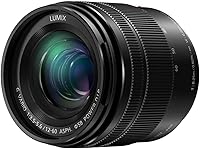
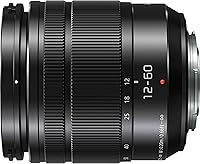
The Panasonic LUMIX G Vario 12-60mm Mirrorless Lens is the kind of optic that makes you wonder why you would ever bother carrying a bag full of primes for everyday shooting. Panasonic's LUMIX G system has earned real credibility among mirrorless enthusiasts, and this 12-60mm optic sits comfortably in the sweet spot between versatility and portability. The 24-120mm equivalent range is broad enough to handle a tight street corner in the morning and a distant landscape by afternoon. Just be clear-eyed about what it is: a mid-range zoom with a variable aperture, not a fast prime — low-light specialists will want to look elsewhere before committing.
Features & Benefits

The zoom range alone makes this 12-60mm optic worth serious consideration. At 12mm you get a genuinely wide perspective for interiors and landscapes; push to 60mm and you are in comfortable portrait territory. The Power Optical I.S. does real work — handheld shots that would otherwise blur at slower shutter speeds come out noticeably sharper. Pair it with a compatible LUMIX body and Dual I.S. activates, which steadies video footage in a way that is hard to replicate in post. The splash- and dust-proof sealed body adds real confidence when conditions turn wet or gritty, while aspherical lens elements keep distortion controlled across the entire zoom range. Autofocus is quick and quiet enough for video without distracting on-screen hunting.

Best For

This Micro Four Thirds lens is practically purpose-built for the travel photographer who insists on packing light. One optic going from wide-angle cityscapes to compressed telephoto landscapes covers the majority of what most trips demand. Hybrid shooters — those toggling between stills and video throughout the day — benefit from the stabilization system in both modes. It is also the sensible next step for anyone currently running a basic kit lens who wants meaningfully better build quality and all-weather reliability without committing to expensive specialist glass. Outdoor and adventure photographers will particularly value the sealed body on days when conditions simply refuse to cooperate.

User Feedback

With over 3,000 ratings sitting at 4.7 out of 5 stars, the consensus around this LUMIX zoom lens is unusually strong for a mid-range zoom. Buyers consistently highlight sharpness across focal lengths and the compact form factor, with many specifically crediting the weather sealing for saving shots during rainy travel days — a real-world benefit that is hard to appreciate until you actually need it. The most consistent critique centers on low-light performance: the variable aperture simply cannot match a dedicated fast prime when light drops. Some longer-term owners note the zoom ring feels stiff out of the box, and the lens hood fit earns occasional grumbles. Video shooters praise Dual I.S. smoothness but are quick to flag it only activates when paired with a compatible LUMIX body.

Pros

  • The 24-120mm full-frame equivalent zoom range covers wide-angle, standard, and short telephoto in a single lens.
  • Power Optical I.S. delivers real, visible improvement in handheld sharpness at slower shutter speeds.
  • Dual I.S. produces impressively smooth video footage when used with a compatible LUMIX camera body.
  • Splash- and dust-proof sealing adds genuine confidence when shooting outdoors in unpredictable weather.
  • Autofocus is fast and whisper-quiet, making it practical for video without distracting noise on-mic.
  • Aspherical lens construction keeps distortion and chromatic aberration well-controlled across the zoom range.
  • At just 8 ounces, this LUMIX zoom lens is light enough for long shooting days without shoulder fatigue.
  • Sharpness across focal lengths has earned consistent praise from a large and experienced user base.
  • Represents a substantial build-quality upgrade over standard kit lenses at a reasonable step-up price.
  • Ranked #29 in Mirrorless Camera Lenses with a 4.7-star average across more than 3,000 verified ratings.

Cons

  • The variable aperture drops to F5.6 at 60mm, limiting usefulness in dim or indoor shooting conditions.
  • Dual I.S. is body-dependent and only activates with select compatible Panasonic LUMIX cameras — verify before buying.
  • Background separation and bokeh are modest at best; this optic cannot replicate the look of a fast prime.
  • Some long-term owners report the zoom ring feels stiff initially and takes time to loosen up with use.
  • The included lens hood has attracted criticism for its fit and feel, which feels below par for the price.
  • At 60mm maximum reach, this 12-60mm optic falls short for wildlife, sports, or any subject at real distance.
  • No weather protection benefit if paired with a non-sealed camera body — the system only works together.
  • Video shooters without a Dual I.S.-compatible body will find stabilization noticeably less effective.

Ratings

The scores below reflect an AI-driven analysis of thousands of verified global reviews for the Panasonic LUMIX G Vario 12-60mm Mirrorless Lens, with spam, incentivized, and bot-generated submissions actively filtered out before any scoring was applied. Each category captures both what genuine buyers praised and where real frustrations surfaced, so you get an honest picture rather than a polished highlight reel. Strengths and shortcomings are weighted equally to help you make a well-informed decision.

Image Sharpness
88%
Across the zoom range, users consistently describe center sharpness as impressive for a mid-range zoom, holding up well even at the telephoto end. Travel shooters in particular noted that full-resolution crops from landscape and street shots retained crisp detail without the softness common in cheaper kit lenses.
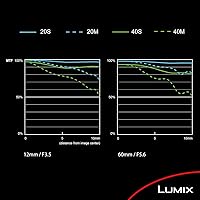
Edge sharpness at wide apertures — especially at 12mm — draws occasional criticism from pixel-peepers who compare it against sharper prime alternatives. Stopped down to F8 the edges tighten considerably, but wide-open corner performance is a known limitation.
Zoom Range Versatility
91%
The 24-120mm full-frame equivalent range is the single most praised attribute across the entire review base. Users describe genuinely leaving other lenses at home on trips, able to shoot cramped alleyways wide and then reach across a piazza for a compressed detail shot without ever switching glass.
At the telephoto end, 60mm leaves wildlife and sports shooters wanting more reach, and several users noted it is not quite long enough for comfortable candid street portraits at a discreet distance. Those specific niches will need a longer lens to complement it.
Optical Stabilization
86%
Power O.I.S. performs reliably for handheld stills at slower shutter speeds, and users shooting with compatible LUMIX bodies report that Dual I.S. takes the steadiness to a noticeably higher level — particularly useful for video pans and slow-shutter travel shots in dim light.
Users pairing this 12-60mm optic with non-Panasonic Micro Four Thirds bodies found stabilization noticeably less effective, as Dual I.S. simply does not engage outside the Panasonic ecosystem. A few buyers felt misled by marketing language around this point before researching the body-dependency requirement.
Weather Sealing
83%
Outdoor photographers and travel shooters who frequently face unpredictable conditions praise the splash- and dust-proof construction as a practical differentiator versus cheaper zoom options. Multiple reviewers describe confidently shooting through light rain in cities like Tokyo and London without any moisture ingress issues.
The sealing requires a weather-sealed camera body to function as a complete system — this catches some buyers off guard who assumed the lens alone provided full protection. Users with non-sealed bodies found the sealing benefit largely theoretical in wet conditions.
Autofocus Performance
84%
Lock-on speed is frequently described as reliable and snappy for both single-subject and moving subjects in good light. Video shooters particularly value how quiet the AF motor is during recording — focus pulls do not generate the buzzing or clicking noise that ruins otherwise clean audio tracks.
In low-contrast or very dim environments, some users noted occasional hesitation before locking focus, and continuous tracking of fast-moving subjects like children or athletes in unpredictable motion can result in a missed frame here and there.
Low-Light Performance
63%
37%
At the wide end, the F3.5 maximum aperture is workable for indoor available-light shooting, and the stabilization helps recover some usability at slightly elevated ISOs. Users shooting in moderately dim conditions — cafés, evening streets, indoor markets — report acceptable results when not pushing the lens to its limits.
At 60mm the aperture narrows to F5.6, which significantly hampers low-light flexibility and forces higher ISOs that reveal noise depending on the camera body used. Buyers expecting to shoot events, concerts, or dim indoor venues regularly will find this 12-60mm optic a frustrating companion for those specific situations.
Video Quality
82%
18%
Hybrid shooters praise the combination of quiet autofocus and effective stabilization for producing smooth, professional-looking footage during travel vlogs, documentary-style shoots, and event coverage. When Dual I.S. is engaged on a compatible body, handheld video becomes genuinely usable without a gimbal for casual to mid-level production work.
Without a Dual I.S.-compatible body, video stabilization drops to lens-only O.I.S., and walking shots can retain a noticeable wobble. Some video-focused users also noted that the variable aperture causes subtle exposure shifts during zoom pulls — a common zoom lens trait, but worth being aware of for interview or controlled lighting setups.
Build Quality
79%
21%
The overall feel in hand is a meaningful step above plasticky kit lenses — zoom and focus rings feel substantial, and the barrel conveys a level of robustness that reassures users carrying it daily in a bag. Many long-term owners note it still feels solid after years of regular use.
The zoom ring stiffness noted by a portion of reviewers is the most consistent build-related complaint, with some users finding it tighter than expected straight out of the box. The included lens hood also attracts regular criticism for feeling like a budget afterthought compared to the lens barrel itself.
Portability & Size
87%
At just 8 ounces, this Micro Four Thirds lens keeps the overall camera kit genuinely compact — users switching from DSLR systems often describe the weight relief as immediately transformative for long shooting days on foot. It slips into a jacket pocket with a small body attached, which matters for travellers counting every gram.
Compared to the smallest pancake lenses in the Micro Four Thirds lineup, this zoom is meaningfully larger, and a small number of users noted the size increase relative to a 14-42mm kit lens was bigger than they anticipated before it arrived.
Distortion & Aberration Control
77%
23%
Aspherical elements keep barrel distortion at the wide end and pincushion distortion at the telephoto end within ranges that most shooters find acceptable straight out of camera. Chromatic aberration is well-controlled for a zoom in this price tier, particularly in high-contrast edges under bright light.
Some technically minded reviewers note that software correction profiles are doing meaningful work to clean up the raw optical output, and images processed without correction enabled show more distortion than the corrected versions suggest. This is common for modern zoom lenses but worth noting for users shooting in formats that do not apply embedded corrections automatically.
Value for Money
81%
19%
Against the realistic alternatives — buying two or three primes to cover the same range, or stepping into higher-end professional zooms — this 12-60mm optic represents a practical and cost-aware choice for the versatility and build quality delivered. Users who purchased it as a kit lens upgrade consistently describe feeling the jump in quality was worth the investment.
Buyers approaching it from budget zoom options may find the price a stretch, and those who later invested in fast primes sometimes reflected that the money could have been split differently. At its price point, the variable aperture limitation feels like a compromise some wish had been resolved.
Bokeh & Depth of Field
58%
42%
At 60mm and close focusing distances, this LUMIX zoom lens produces background separation that is pleasant enough for casual portrait work and product shots in controlled settings. Users who understand the aperture constraints going in tend to be satisfied with what it delivers for everyday photography.
Anyone chasing creamy, pronounced background blur will find this lens falls short of expectations — F5.6 at the long end simply cannot produce the shallow depth of field a fast prime generates. This is the most frequently cited disappointment among users who switched from larger-sensor systems with faster glass.
Ease of Use
89%
The straightforward zoom-and-shoot nature of this optic makes it approachable for photographers at any skill level. Beginners appreciate not having to think about swapping lenses during fast-moving situations, while experienced shooters value the intuitive ring placement and smooth manual focus override when needed.
The stiff zoom ring noted by some users can make smooth one-handed zoom adjustments awkward, particularly during video recording where zoom noise or jerk can ruin a shot. A small number of first-time mirrorless users also mentioned a learning curve around understanding when and why Dual I.S. activates.
Compatibility & Ecosystem Fit
74%
26%
For Panasonic LUMIX G system shooters, this lens integrates tightly and reliably — Dual I.S., fast AF, and full electronic communication work without friction. It also mounts and autofocuses on Olympus OM System bodies, giving it broader usability across the Micro Four Thirds ecosystem than a proprietary mount lens would offer.
The Dual I.S. limitation to Panasonic bodies is the most significant compatibility caveat and catches some Olympus users off guard after purchase. There is also a subset of reviewers who found the lens hood and accessory fit slightly inconsistent across different body pairings, though this is a minor practical concern.

Suitable for:

The Panasonic LUMIX G Vario 12-60mm Mirrorless Lens is an excellent fit for photographers who want one dependable optic that can handle the majority of real-world shooting situations without the burden of swapping glass constantly. Travel photographers, in particular, will find the 24-120mm equivalent range covers everything from wide interior shots of a cathedral to a reasonably compressed portrait across a café table — all in a single, compact package light enough to carry all day. Outdoor and adventure shooters gain a meaningful layer of protection from the splash- and dust-proof sealed body, especially when paired with a weather-sealed LUMIX camera body. Hybrid shooters who move between stills and video will appreciate the stabilization system, which becomes noticeably more effective when Dual I.S. activates on compatible bodies. It also makes a compelling upgrade for anyone currently on a basic kit lens who wants a step up in build quality and optical performance without yet committing to prime lenses.

Not suitable for:

Photographers whose work regularly takes them into low-light environments — think wedding receptions, concert venues, or dim indoor events — will quickly run into the ceiling of what this 12-60mm optic can deliver. The variable aperture reaching only F5.6 at the long end simply cannot gather enough light in challenging conditions, and no amount of image stabilization compensates for a lens that needs a higher ISO to function. The Panasonic LUMIX G Vario 12-60mm Mirrorless Lens is also not the right choice for anyone chasing a shallow depth-of-field aesthetic; if creamy background separation is a priority, a dedicated fast prime will serve far better. Sports and wildlife photographers who need to reach subjects at significant distances will also find 60mm underwhelming and should look at longer telephoto options. Finally, photographers shooting with non-Panasonic Micro Four Thirds bodies should verify Dual I.S. compatibility carefully, as that stabilization mode is body-dependent and may not function as expected.
Specifications

  • Focal Length: Covers 12-60mm, equivalent to 24-120mm on a full-frame camera, spanning wide-angle through short telephoto.
  • Max Aperture: Variable aperture ranges from F3.5 at the wide end to F5.6 at the telephoto end.
  • Lens Mount: Designed exclusively for the Micro Four Thirds mount, compatible with Panasonic LUMIX G and Olympus OM System bodies.
  • Stabilization: Equipped with Power Optical Image Stabilization (O.I.S.) and supports Dual I.S. when paired with a compatible LUMIX camera body.
  • Weather Sealing: Splash- and dust-proof sealed construction provides protection during outdoor use in light rain, mist, or dusty environments.
  • Lens Elements: Incorporates ASPH. aspherical elements to reduce distortion, chromatic aberration, and edge softness across the zoom range.
  • Autofocus Type: Uses a fast, near-silent autofocus motor well-suited for both still photography and continuous video capture.
  • Weight: Weighs 8 oz (approximately 227g), keeping the overall camera kit compact and manageable for extended carry.
  • Filter Thread: Accepts 58mm screw-on filters, including UV, polarizing, and neutral density types.
  • Model Number: Officially designated as model H-FS12060 by Panasonic.
  • Manufacturer: Designed and manufactured by Panasonic, a long-established maker of LUMIX G system cameras and lenses.
  • Market Position: Positioned as a mid-range enthusiast zoom, bridging the gap between basic kit lenses and high-end professional glass.
  • Availability: First made available in February 2016 and remains in active production with no discontinuation announced.
  • Sales Rank: Holds a Best Sellers Rank of #29 in the Mirrorless Camera Lenses category on Amazon as of available data.
  • User Rating: Carries an average rating of 4.7 out of 5 stars based on over 3,121 verified customer ratings.
  • Zoom Operation: Features a manual zoom ring for direct, tactile control over focal length during both stills and video shooting.
  • Aperture Blades: Uses a rounded aperture diaphragm to produce smoother, more natural out-of-focus rendering in background areas.
  • Minimum Focus: Achieves a minimum focusing distance of approximately 0.2m (about 7.9 inches) at the wide end for close-subject work.
  • Compatibility Note: Dual I.S. mode requires a compatible Panasonic LUMIX body; the lens itself provides standard O.I.S. on all supported mounts.
  • Lens Hood: A petal-type lens hood is included in the box to reduce flare and provide minor physical protection to the front element.

Related Reviews
Panasonic Lumix G85 Mirrorless Camera
78%
93%
Image Stabilization
89%
Build Quality
84%
Video Performance
71%
Autofocus Accuracy
82%
Image Quality
More
Panasonic H-FS45150AK 45-150mm Mirrorless Lens
80%
83%
Image Sharpness
79%
Autofocus Performance
81%
Optical Stabilization
77%
Build Quality
82%
Video Usability
More
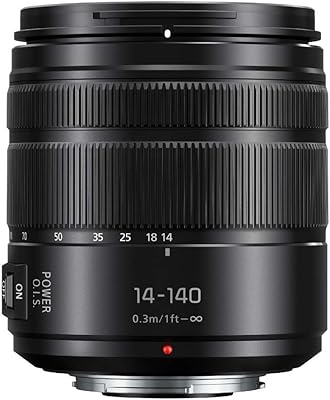
Panasonic Lumix G Vario 14-140mm Zoom Lens
81%
88%
Image Sharpness
93%
Zoom Range Versatility
86%
Optical Image Stabilization
61%
Low-Light Performance
82%
Build Quality & Durability
More
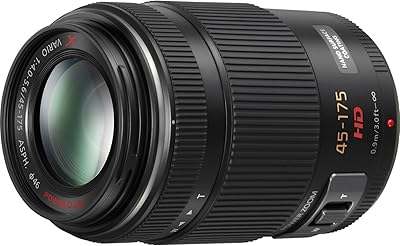
Panasonic H-PS45175K 45-175mm Power Zoom Lens
76%
83%
Image Sharpness
91%
Power Zoom Performance
78%
Optical Image Stabilization
76%
Autofocus Speed & Accuracy
62%
Build Quality & Durability
More
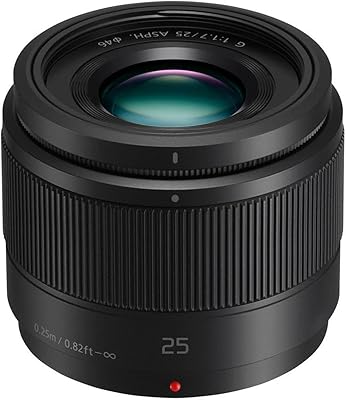
Panasonic LUMIX G 25mm F1.7 Mirrorless Lens
79%
91%
Optical Sharpness
83%
Autofocus Performance
88%
Low-Light Capability
87%
Video Usability
62%
Build Quality
More
Panasonic LUMIX S9 Full-Frame Mirrorless Camera
78%
91%
Image Quality
94%
Portability & Form Factor
88%
Video Capabilities
86%
Image Stabilization
79%
Autofocus Performance
More
Panasonic LUMIX G100 Mirrorless Camera
73%
83%
Video Quality
79%
Built-in Microphone
81%
Image Quality
62%
Image Stabilization
47%
Battery Life
More
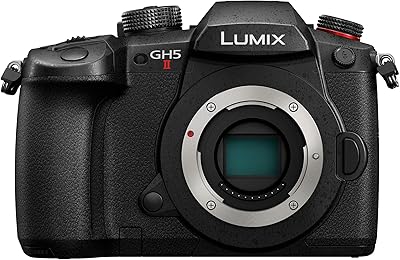
Panasonic LUMIX GH5 Mark II Mirrorless Camera
79%
93%
Video Quality
91%
Image Stabilization
89%
Live Streaming
57%
Autofocus Performance
92%
Build Quality
More
Panasonic LUMIX S5 Full Frame Mirrorless Camera
79%
93%
Video Quality
91%
Image Stabilization
67%
Autofocus Performance
88%
Low-Light / High ISO Performance
82%
Build Quality & Ergonomics
More
Panasonic LUMIX S-S85 85mm F1.8 Lens
82%
92%
Image Sharpness
84%
Bokeh Quality
71%
Autofocus Performance
83%
Build Quality
74%
Weather Sealing
More

FAQ

Yes, the Micro Four Thirds mount is a shared standard, so this 12-60mm optic will physically attach and autofocus on Olympus OM System bodies. That said, Dual I.S. is a Panasonic-specific feature and will not activate on Olympus cameras — you will still have the lens-based Power O.I.S., but the enhanced stabilization mode is Panasonic-only.

It handles light rain, drizzle, and dusty outdoor conditions reasonably well, but there is an important catch: the sealing only works as a system when your camera body is also splash- and dust-proof. If your LUMIX body lacks weather sealing, moisture can still enter through the mount. For serious wet-weather shooting, pair it with a sealed LUMIX body.

Dual I.S. combines the lens-based Power O.I.S. with the in-body stabilization of compatible Panasonic LUMIX cameras, working together to produce steadier handheld footage and sharper stills at slower shutter speeds. It is noticeably more effective than lens O.I.S. alone, especially for video. If you are shooting on a compatible LUMIX body, it activates automatically — you do not need to do anything special.

The difference in build quality is immediately noticeable — the weather sealing alone is a meaningful step up. Optically, most users find sharpness and distortion control improved across the zoom range, and the autofocus is quicker and quieter. The trade-off is size and cost; this 12-60mm optic is larger and more expensive than a typical bundled kit lens, but the upgrade is genuinely felt in real-world shooting.

It is a solid choice for video, particularly if you are on a compatible LUMIX body where Dual I.S. can smooth out handheld movement. The autofocus is quiet enough that it does not bleed audio onto recordings during focus pulls, which is a practical concern many overlook. For narrative or cinematic work requiring a very shallow depth of field, a fast prime will serve you better — but for travel, documentary, or run-and-gun style shooting, this LUMIX zoom lens performs well.

At 60mm on a Micro Four Thirds body (equivalent to 120mm in full-frame terms), you get a flattering compression for portrait framing and enough working distance to feel comfortable. Background separation will be modest given the F5.6 maximum aperture at that end, so do not expect the blurred-background look you would get from a fast 85mm. For natural-light environmental portraits, it works well; for studio or bokeh-heavy shots, a fast prime is the better call.

A number of long-term owners have noted the zoom ring feels stiffer than expected straight out of the box. This tends to ease up with regular use over time. It is not universally reported, so there may be some unit-to-unit variation, but if you prefer a very fluid, loose zoom action, this is worth keeping in mind before purchasing.

This 12-60mm optic uses a 58mm filter thread, which is a common size. Polarizing filters, UV protectors, and neutral density filters in this size are widely available and reasonably priced.

Based on extensive user feedback and optical testing, center sharpness across the zoom range is strong and holds up well for large prints. Edge sharpness is respectable, though like most zooms, it is at its best stopped down slightly from wide open. For everyday travel prints, wall-sized enlargements, or magazine-quality work, it delivers results that are genuinely satisfying.

Optically, a lens hood makes a real difference in reducing flare when shooting toward bright light sources, so it is worth using consistently. The one included with this Micro Four Thirds lens has received some criticism for feeling a little loose or plasticky compared to the lens itself. It functions correctly, but if build quality is important to you, it is one area where the accessory does not quite match the lens it is protecting.

Where to Buy