Overview

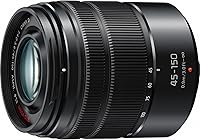
The Panasonic H-FS45150AK 45-150mm Mirrorless Lens is a compact telephoto zoom built specifically for the Micro Four Thirds system, offering a 90-300mm equivalent reach that covers everything from portrait distances to distant wildlife or sports action. That range is genuinely useful day-to-day — tight enough to isolate a subject across a crowd, long enough to pull in detail from a mountain ridge. It sits firmly in the mid-range telephoto category, a clear step up from a kit lens without the weight or cost of professional glass. Available since 2015, it has built a loyal following, which says something about how well it has held up over time. This is a travel-friendly telephoto, not a pro-grade workhorse — and it doesn't pretend to be.
Features & Benefits

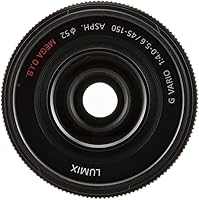
Panasonic's Mega O.I.S. stabilization is one of the first things you notice when shooting handheld at longer focal lengths — it genuinely helps reduce blur in borderline lighting, though it won't replace fast glass when you're working in genuinely dark environments. The stepping motor autofocus is near-silent during recording, which matters enormously for video work or when you're photographing skittish wildlife. Multi-coated elements, including one UHR and two aspherical lenses, handle backlit scenes without the ghost or flare problems that plague cheaper optics. The inner focus design means the barrel stays the same length throughout, and at just over 11 ounces, this compact tele lens is easy to carry for an entire day without fatigue.

Best For

This telephoto zoom is purpose-built for Micro Four Thirds shooters — whether you're using a Panasonic GH, G, or GX body, or a compatible Olympus OM-D — who want genuine reach without carrying a second bag. Travel photographers especially benefit here: the lens pairs naturally with a wide prime or standard zoom and fits into a compact bag with room to spare. It's also a strong pick for hobbyist birders or anyone who photographs sports from the sidelines, where that extra reach is the difference between a usable shot and a missed one. Video creators working handheld or in run-and-gun situations will appreciate the quiet autofocus and stabilization. And if you're moving past your first kit lens, this is a natural and sensible next step.

User Feedback

With a 4.7-star rating across more than 3,000 reviews, real-world sentiment toward the 45-150mm Panasonic lens is notably strong. Owners regularly point to sharpness in the mid-range — particularly between 45 and 100mm — as a genuine highlight. Autofocus is praised for speed and reliability during stills shooting, though low-light video can occasionally trigger some hunting. The size and weight come up again and again as decisive advantages over bulkier alternatives. That said, buyers should know that at 150mm wide open, some vignetting and corner softness is visible — stopping down a stop or two addresses it, but it's worth knowing before purchase. Long-term durability appears solid, with many owners reporting years of regular use without issues.

Pros

  • The 90-300mm equivalent reach covers portraits, wildlife, and events without carrying multiple lenses.
  • Mega O.I.S. stabilization noticeably reduces camera shake when shooting handheld at longer focal lengths.
  • Stepping motor autofocus is nearly silent, making this compact tele lens excellent for video recording.
  • At just over 11 ounces, it is light enough to carry all day without fatigue on travel or outdoor shoots.
  • Multi-coated optics handle backlit and high-contrast scenes well, with minimal ghosting or flare.
  • Image sharpness between 45 and 100mm is consistently praised by long-term owners across many shooting styles.
  • The inner focus design keeps the barrel length fixed, which feels solid and avoids unbalancing smaller bodies.
  • Seven aperture blades produce smooth, rounded bokeh that flatters portraits and isolates subjects cleanly.
  • With years on the market and thousands of positive reviews, reliability and community support are well established.
  • Compatible with both Panasonic and Olympus Micro Four Thirds bodies, broadening its usefulness across the system.

Cons

  • At 150mm, the maximum aperture of f5.6 is limiting in anything but bright or well-lit conditions.
  • Visible vignetting and corner softness wide open at 150mm require stopping down for the cleanest results.
  • Autofocus can hunt noticeably in very low light, particularly during continuous video recording.
  • No weather sealing means extra caution is needed when shooting outdoors in rain, dust, or humidity.
  • The variable aperture complicates exposure management when zooming through the focal range during a shoot.
  • Long-distance subject tracking in fast-action scenarios can feel less confident than on professional telephoto options.
  • Color fringing and chromatic aberration are visible in high-contrast edge situations if not corrected in post.
  • This telephoto zoom offers no manual aperture ring, which limits appeal for videographers who prefer direct control.

Ratings

The scores below reflect an AI-driven analysis of thousands of verified global user reviews for the Panasonic H-FS45150AK 45-150mm Mirrorless Lens, with spam, bot activity, and incentivized feedback actively filtered out to ensure accuracy. Both the strengths that keep buyers loyal and the friction points that generate complaints are weighted and represented transparently. The result is an honest, data-backed picture of where this compact tele lens genuinely excels and where it falls short of expectations.

Image Sharpness
83%
In the 45-100mm range, owners consistently describe the center sharpness as punchy and satisfying — a noticeable step up from the average kit lens. Birders and travel shooters regularly report keepers at moderate focal lengths even when shooting handheld.
At 150mm wide open, edge softness and mild vignetting are recurring complaints. Stopping down to f8 largely resolves it, but users who expected consistent corner-to-corner sharpness at full zoom are sometimes caught off guard.
Autofocus Performance
79%
21%
For still photography — portraits, wildlife perched on branches, events — the stepping motor AF earns consistently positive marks for speed and accuracy across Panasonic and Olympus bodies alike. Lock-on in good light is fast and confident.
In low-light video situations, focus hunting is a recurring frustration. Users shooting indoor events or dusk wildlife sessions note that the AF can lose its footing and visibly search, which is disruptive when recording continuous footage.
Optical Stabilization
81%
19%
Mega O.I.S. is genuinely appreciated by handheld shooters working in mixed light. Travelers and event photographers describe getting usably sharp shots at longer focal lengths in situations where a non-stabilized lens would have required a tripod.
A handful of reviewers point out that stabilization alone cannot compensate for fast-moving subjects in dim conditions — it addresses camera shake, not motion blur. Expectations occasionally outrun what the system can realistically deliver.
Build Quality
77%
23%
The lens feels solid in hand despite its light weight, and long-term owners frequently mention using it for several years without mechanical issues. The inner focus barrel adds to the impression of a well-assembled, consistent product.
The plastic construction, while durable in normal use, does not inspire the same confidence as metal-bodied alternatives. The absence of weather sealing is the most commonly cited structural limitation, particularly among outdoor and travel photographers.
Video Usability
82%
18%
The near-silent stepping motor is the standout reason video shooters choose this telephoto zoom over alternatives. Vloggers and run-and-gun filmmakers on GH-series bodies appreciate being able to use on-camera or external mics without lens noise polluting the audio.
The variable aperture causes gradual exposure shifts when zooming during a live recording, which can be jarring in edited footage. Experienced videographers manage around this, but it is an unwelcome quirk for those newer to the format.
Value for Money
88%
Across thousands of reviews, the price-to-reach ratio is one of the most praised aspects of the 45-150mm Panasonic lens. Buyers stepping up from a kit lens for the first time consistently describe it as a significant capability upgrade without a painful financial commitment.
A small segment of more experienced photographers feel the optical performance at the long end does not fully justify the cost when compared to older used alternatives available in the Micro Four Thirds ecosystem. It is competitive but not untouchable on value grounds.
Size & Portability
91%
At 11.2 ounces, this is genuinely one of the lightest telephoto zooms in its class, and real-world users notice it. Travel photographers and street shooters mention fitting it alongside a wide lens in a small daypack without compromising on the bag's overall weight.
A small number of reviewers note that the compact size, while an asset for travel, means the zoom ring sits close to the focus ring, leading to occasional accidental adjustments during handheld shooting — a minor ergonomic quirk rather than a serious flaw.
Low-Light Capability
58%
42%
Mega O.I.S. does recover some usability in dim environments for static subjects, and at 45mm the f4.0 maximum aperture is at least workable in reasonably lit indoor settings. Some users pair it with high-ISO bodies to compensate effectively.
At 150mm and f5.6, low-light shooting becomes genuinely difficult without a fast shutter speed, which in turn demands very high ISO values. Multiple reviewers are frank that this lens is not a viable choice for indoor sports, concerts, or night wildlife work.
Bokeh Quality
74%
26%
The seven-blade aperture diaphragm produces pleasing background separation for a telephoto zoom in this price tier. Portrait and close-up photographers note that subject isolation at 100-150mm looks natural and smooth rather than angular or distracting.
Compared to faster prime lenses or higher-end zooms, the bokeh is competent rather than exceptional. At shorter focal lengths within the zoom range, background blur is modest, and some technically minded reviewers note minor outlining in busy backgrounds.
Flare & Ghosting Resistance
78%
22%
The multi-coated optical formula handles backlit subjects notably well for a mid-range zoom. Landscape and outdoor photographers report shooting directly toward bright windows or strong side light with minimal ghosting artifacts visible in the final image.
In extreme contre-jour scenarios — shooting directly into strong sunlight without a lens hood — some flare is still present. A lens hood is not always included in the box, and users who skip one occasionally see haze reduce overall contrast.
Zoom Range Versatility
86%
The 90-300mm equivalent spread covers a genuinely useful spread of everyday telephoto needs in a single barrel. Wildlife hobbyists, sports sideline shooters, and travel photographers appreciate not swapping lenses to move between portrait distances and distant subjects.
The zoom range starts at 45mm rather than a wider focal length, so it must be paired with at least one other lens to cover everyday shooting. Users who want a single walk-around option will still need a standard or wide zoom alongside it.
AF Noise for Video
84%
The stepping motor AF is quiet enough that most on-camera microphones do not pick it up during normal recording conditions — a genuine practical advantage that separates this compact tele lens from older screw-driven alternatives in the same price range.
In very quiet recording environments or when using sensitive directional microphones in close proximity to the lens, a faint mechanical sound can occasionally be detected. It is a marginal concern, but audio purists may want to test in their specific recording setup.
Compatibility
93%
Full Micro Four Thirds compatibility means this lens works across the entire Panasonic LUMIX G and GX range as well as Olympus OM-D and PEN bodies, giving it one of the broadest potential audiences of any lens in this category.
Outside the Micro Four Thirds ecosystem, the lens has no native application. Users who later move to a different camera system — say, Sony E-mount or Fujifilm X-mount — would need to replace it entirely, as adapters do not preserve autofocus functionality.
Chromatic Aberration
67%
33%
In typical shooting conditions with moderate contrast, chromatic aberration is well controlled and barely noticeable in the mid-zoom range. Many users report clean results without needing to apply lens correction profiles in post-processing.
At the edges of the frame and in high-contrast scenarios — bright sky against dark branches, for example — purple or green fringing becomes visible, particularly at the long end. It is correctable in software but adds a post-processing step that more refined optics would avoid.
Long-Term Durability
82%
18%
A lens released in 2015 that still commands a 4.7-star average across more than 3,000 reviews tells its own story about durability. Many reviewers specifically note multi-year ownership without any degradation in optical or mechanical performance.
Some owners who use the lens heavily in outdoor environments report that the zoom ring can develop slight resistance over time. The lack of weather sealing means that moisture ingress, though not commonly reported, remains a realistic long-term risk for those who shoot in damp conditions.

Suitable for:

The Panasonic H-FS45150AK 45-150mm Mirrorless Lens is an excellent match for Micro Four Thirds shooters who want meaningful telephoto reach without adding serious weight to their bag. Its 90-300mm equivalent focal range covers a wide variety of real-world situations — from pulling in a bird perched across a field to framing a speaker on a stage from the back of a room. Travel photographers in particular will find this compact tele lens easy to justify: it slots into a small bag alongside a wide or standard lens and adds almost no burden over a long shooting day. Hobbyist wildlife and sports photographers who want extended reach at an accessible price will find it a capable and reliable tool. It also works well for video creators using Panasonic GH or GX bodies who need quiet autofocus and optical stabilization for handheld footage without investing in professional-grade glass.
Not suitable for:

Photographers who regularly shoot in low-light environments will quickly run into the limits of this telephoto zoom's variable aperture, which reaches only f5.6 at the long end — and while Mega O.I.S. helps with camera shake, it does nothing for subject motion blur in dim conditions. If you're shooting indoor sports, evening events, or anything that demands fast shutter speeds in poor light, this lens will frustrate you. Professionals or serious enthusiasts who demand edge-to-edge sharpness at 150mm and zero tolerance for wide-open vignetting will also want to look elsewhere or budget for stopping down consistently. It is not a weather-sealed lens, so outdoor photographers working in rain or dusty conditions should take note. Anyone shooting on non-Micro Four Thirds systems cannot use this lens at all — it is strictly mount-specific with no adapter pathway that preserves full autofocus functionality on other platforms.

Specifications

  • Focal Length: The lens covers a 45-150mm zoom range, equivalent to 90-300mm on a 35mm full-frame camera.
  • Maximum Aperture: Aperture ranges from f4.0 at the wide end to f5.6 at 150mm, following a variable aperture design typical of this lens class.
  • Lens Construction: The optical formula comprises 12 elements arranged in 9 groups, incorporating 1 UHR lens and 2 aspherical elements.
  • Aperture Blades: Seven rounded aperture blades produce smooth, circular bokeh across the aperture range.
  • Autofocus System: An inner focus stepping motor drives autofocus, delivering quiet, smooth focus transitions suited to both stills and video recording.
  • Image Stabilization: Panasonic Mega O.I.S. (Optical Image Stabilizer) is built into the lens to reduce blur caused by camera shake during handheld shooting.
  • Lens Coating: Multi-coated elements across the optical path suppress ghosting and flare, particularly in backlit or high-contrast lighting conditions.
  • Mount Type: The lens uses the Micro Four Thirds mount standard, compatible with Panasonic and Olympus Micro Four Thirds bodies.
  • Dimensions: The lens measures 4.02 x 4.02 x 4.84 inches, maintaining a compact cylindrical profile throughout its zoom range due to the inner focus design.
  • Weight: At 11.2 ounces, this telephoto zoom is notably lightweight for its focal range, making it practical for extended travel or outdoor use.
  • Filter Thread: The lens accepts 58mm screw-in filters at the front element, a common and widely available filter size.
  • Minimum Focus Distance: The lens achieves a minimum focus distance of approximately 0.9 meters (around 3 feet) across its zoom range.
  • Model Number: The official Panasonic model designation for this lens is H-FS45150AK, with the AK suffix indicating the USA black finish variant.
  • Manufacturer: Designed and manufactured by Panasonic, this lens is part of the LUMIX G VARIO lineup of Micro Four Thirds optics.
  • Release Date: This lens was first made available in September 2015 and remains in active production as of the time of writing.
  • Market Rank: The lens holds a position of number 29 in the Mirrorless Camera Lenses category on Amazon, reflecting sustained long-term popularity.
  • User Rating: It carries a 4.7-star rating based on more than 3,100 verified customer ratings across a broad range of shooting use cases.

Related Reviews
Panasonic H-PS45175K 45-175mm Power Zoom Lens
76%
83%
Image Sharpness
91%
Power Zoom Performance
78%
Optical Image Stabilization
76%
Autofocus Speed & Accuracy
62%
Build Quality & Durability
More
Panasonic LUMIX G100 Mirrorless Camera
73%
83%
Video Quality
79%
Built-in Microphone
81%
Image Quality
62%
Image Stabilization
47%
Battery Life
More
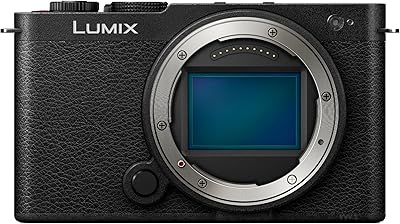
Panasonic LUMIX S9 Full-Frame Mirrorless Camera
78%
91%
Image Quality
94%
Portability & Form Factor
88%
Video Capabilities
86%
Image Stabilization
79%
Autofocus Performance
More
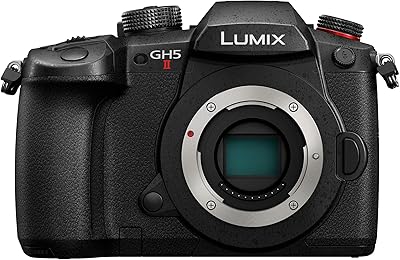
Panasonic LUMIX GH5 Mark II Mirrorless Camera
79%
93%
Video Quality
91%
Image Stabilization
89%
Live Streaming
57%
Autofocus Performance
92%
Build Quality
More
Panasonic LUMIX S 24-105mm F4 Lens
88%
94%
Image Quality
91%
Weather Sealing & Durability
88%
Low-Light Performance
84%
Ease of Use
90%
Stabilization Performance
More
Panasonic LUMIX S5 Full Frame Mirrorless Camera
79%
93%
Video Quality
91%
Image Stabilization
67%
Autofocus Performance
88%
Low-Light / High ISO Performance
82%
Build Quality & Ergonomics
More
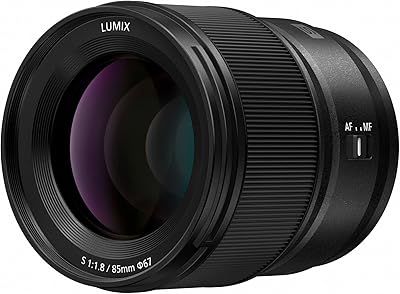
Panasonic LUMIX S-S85 85mm F1.8 Lens
82%
92%
Image Sharpness
84%
Bokeh Quality
71%
Autofocus Performance
83%
Build Quality
74%
Weather Sealing
More
Sony Alpha a6400 18-135mm Mirrorless Camera
74%
96%
Autofocus Performance
81%
Video Quality
88%
Image Quality
47%
Battery Life
53%
Image Stabilization
More
Panasonic S-S35 35mm F1.8 Prime Lens
83%
93%
Optical Sharpness
91%
Build Quality
67%
Autofocus Performance
88%
Video Usability
94%
Portability & Size
More
Sony Alpha A6300 Mirrorless Camera with 18-135mm Lens
84%
93%
Autofocus Performance
89%
Image Quality
91%
4K Video Recording
88%
Build Quality
90%
Portability/Weight
More

FAQ

Yes, it will. The Micro Four Thirds mount is a shared standard between Panasonic and Olympus, so this compact tele lens fits and functions fully on Olympus OM-D bodies. Autofocus and image stabilization both operate normally, though stabilization performance may vary slightly depending on how the body and lens stabilization systems interact.

It does help, especially for static subjects or slow-moving scenes where camera shake is the main concern. At 150mm equivalent reach (or 300mm full-frame equivalent), even small hand movements get magnified, and the Mega O.I.S. noticeably steadies the frame. That said, it won't freeze a fast-moving subject — for that, you need a fast shutter speed regardless of stabilization.

It's a solid choice for video work on those bodies. The stepping motor autofocus is nearly silent during recording, so you won't hear focus noise on your audio track. The optical stabilization also helps for handheld or walking shots. The one thing to be aware of is that the variable aperture can cause slight exposure shifts when you zoom during a shot, so many videographers set their aperture and focal length before starting a clip.

It's decent at 150mm, but this is where the lens shows its mid-range character most clearly. Wide open at f5.6, there is some visible softness toward the edges and a degree of vignetting. Stopping down to f8 cleans things up noticeably. For the center of the frame, sharpness remains quite usable even at maximum zoom.

Yes, and a lot of birders do exactly that. The 90-300mm full-frame equivalent reach gets you close enough for birds at feeders, on water, or perched in trees. The autofocus is reasonably quick for a lens in this category, though it is not as fast or as tenacious as a dedicated sports or wildlife telephoto. For stationary or slow-moving birds, it performs well. For birds in fast flight, results are more hit-or-miss.

No, it is not weather sealed. There is no gasket or sealing around the mount or barrel, so you should take care when shooting in rain, heavy humidity, or dusty conditions. If you regularly shoot outdoors in challenging weather, you would want to pair it with a protective bag or consider a weather-sealed alternative.

The jump in reach is the most obvious difference — a typical kit lens tops out around 42mm equivalent, while this telephoto zoom starts where many kit lenses end and extends to 300mm equivalent. Build quality and optical coatings are also a step up. If your kit lens has left you wishing you could zoom in further on subjects across a field or room, this lens directly solves that problem.

No. The inner focus design keeps the physical length of the barrel constant throughout the zoom and focus range. This is a practical advantage — the lens stays balanced on the camera and does not push into your lens cap or shade when zooming in.

Absolutely. Optical designs do not age the way electronics do, and the 45-150mm Panasonic lens produces images that remain competitive with more recent mid-range telephotos. The Micro Four Thirds mount standard has not changed, so compatibility is not an issue. The sustained high user rating and continued availability confirm that it is still a well-regarded, practical choice.

It uses a 58mm filter thread, which is one of the most common filter sizes available. You will have no trouble finding UV filters, circular polarizers, or ND filters that fit it, and at generally reasonable prices. A circular polarizer is especially useful on this lens for landscape or water shots.

Where to Buy