Panasonic LUMIX G 25mm F1.7 Mirrorless Lens



Overview
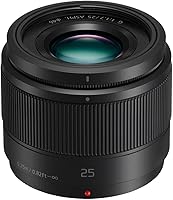
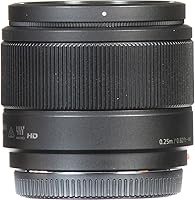
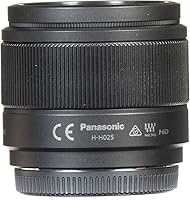
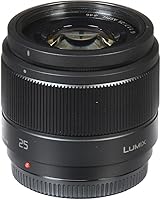
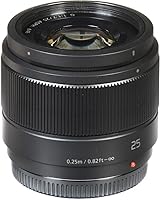
The Panasonic LUMIX G 25mm F1.7 Mirrorless Lens has been around since 2015, and the fact that it remains one of the most recommended primes in the Micro Four Thirds ecosystem says plenty about what it gets right. On a MFT body, 25mm translates to a natural 50mm equivalent — the kind of field of view that works for street shooting, casual portraits, and everything in between. At just 125 grams, it won't unbalance a compact camera or fatigue your wrist on a long day out. This is not a specialty tool built for one specific job; it is a workhorse prime that earns a place in everyday kits.
Features & Benefits
The F1.7 aperture is where this 25mm prime earns its reputation. Shooting indoors or at dusk, you have real breathing room to keep ISO low and shutter speed sensible — something a kit zoom simply cannot offer. Background blur is present and pleasing, though it helps to set realistic expectations: you are working with a smaller sensor, so the separation will not rival a full-frame 50mm at a similar aperture. The stepping motor autofocus is genuinely well-suited to video work — near-silent and smooth rather than the lurching, hunting behavior you sometimes see in older lens designs. Optically, the aspherical and UHR elements do solid work keeping edges clean and color fringing minimal.
Best For
The LUMIX G lens finds its strongest audience among photographers and videographers who prioritize portability without giving up optical quality. Street shooters will appreciate how small and unassuming the overall kit becomes — pair it with a compact MFT body and you barely draw a glance. It is also a natural first prime for someone stepping off a kit zoom for the first time, since the 50mm-equivalent framing is intuitive rather than extreme. Videographers working on Panasonic bodies will find the quiet autofocus a genuine asset for solo content creation. Portrait work on a budget is another reasonable use case, though for dedicated head shots, something longer usually serves better.
User Feedback
Owners of this MFT prime tend to keep it long-term — a reliable sign that real-world performance holds up. Sharpness wide open gets consistent praise; many users report being surprised by how clean the results are straight from F1.7. Autofocus on Panasonic bodies is widely described as fast and dependable, though users shooting with Olympus cameras occasionally note that performance is noticeably slower, worth factoring in before you buy. Build quality draws the most mixed reactions — the plastic construction feels light rather than premium, though that same lightness is what makes the lens so easy to carry. Some users also flag modest vignetting and slightly busy bokeh at wide apertures as minor but real trade-offs.
Pros
- Sharp results even at F1.7, with no need to stop down just to get a clean image.
- At 125 grams, this 25mm prime adds almost nothing to your carry weight.
- The stepping motor autofocus is quiet enough to use confidently during video recording.
- A 50mm-equivalent field of view makes composition feel natural for a wide range of subjects.
- Optical performance holds up well across the frame with minimal chromatic aberration in typical shooting conditions.
- Pairs particularly well with compact Panasonic bodies, keeping the overall kit small and balanced.
- Background separation is pleasing for everyday use, especially for environmental portraits and product shots.
- Has been on the market since 2015 with a strong track record — not an untested design.
- Autofocus on Panasonic bodies is consistently fast and reliable across a wide range of lighting situations.
- Many long-term owners describe this MFT prime as a lens they simply never feel the urge to remove from their camera.
Cons
- No weather sealing means you need to be careful in rain, dust, or humid outdoor conditions.
- Autofocus noticeably slower on Olympus bodies compared to native Panasonic cameras.
- Bokeh character at wide apertures can appear slightly busy or nervous rather than smooth in some backgrounds.
- Vignetting is visible at F1.7 and may require correction in post, especially on lighter or uniform backgrounds.
- The plastic build feels functional rather than premium, which can be a letdown at this price tier.
- No optical image stabilization, so you are relying entirely on in-body stabilization if your camera offers it.
- Minimum focus distance is not particularly close, limiting how much magnification you can achieve with nearby subjects.
- Seven aperture blades produce reasonably round bokeh highlights but not perfectly circular at mid-apertures.
Ratings
The scores below reflect our AI-driven analysis of verified global user reviews for the Panasonic LUMIX G 25mm F1.7 Mirrorless Lens, with spam, bot activity, and incentivized feedback actively filtered out before any scoring was applied. We examined thousands of real-world impressions from photographers and videographers across skill levels and camera systems. Both the consistent strengths and the recurring frustrations are transparently reflected in every category score.
Optical Sharpness
Autofocus Performance
Low-Light Capability
Video Usability
Build Quality
Bokeh Character
Chromatic Aberration
Value for Money
Size & Portability
Ease of Use
Compatibility Range
Sharpness at Edges
Vignetting Control
Longevity & Reliability
Suitable for:
The Panasonic LUMIX G 25mm F1.7 Mirrorless Lens is a strong fit for Micro Four Thirds shooters who want a capable, lightweight prime they can rely on daily without overthinking it. Street photographers will find the 50mm-equivalent framing intuitive and the small footprint easy to work with discreetly in public spaces. Travelers who already resent the weight of a full camera bag will appreciate how little this lens adds to the load. It is also a smart first prime for someone transitioning off a kit zoom, since the natural field of view does not demand a whole new way of composing shots. Videographers shooting on Panasonic bodies — whether for YouTube, documentary work, or client projects — get genuinely quiet, smooth autofocus that holds up well during continuous recording. Budget-conscious portrait shooters who want some subject separation without committing to a longer, heavier lens will find this MFT prime a practical middle ground.
Not suitable for:
The Panasonic LUMIX G 25mm F1.7 Mirrorless Lens is not the right call for every buyer, and it is worth being clear about where it falls short. Photographers who shoot predominantly on Olympus bodies should research autofocus compatibility carefully before purchasing, as real-world AF speed on non-Panasonic cameras can be noticeably slower and may frustrate action or candid shooting. Anyone expecting full-frame-style background blur will likely be disappointed — F1.7 on a Micro Four Thirds sensor produces moderate, pleasant bokeh rather than the dramatic subject isolation you get from a larger format. Shooters who regularly work in wet or dusty outdoor environments should also note the complete absence of weather sealing, which is a genuine limitation for demanding conditions. If you need a specialist lens for macro work, wildlife, or sports, this 25mm prime is simply not designed for those roles and a more purpose-built optic will serve better. Buyers who place high value on a premium metal construction and tactile build quality may find the plastic feel of this lens unsatisfying relative to pricier alternatives.
Specifications
- Focal Length: This lens has a 25mm focal length, which translates to a 50mm equivalent field of view on any Micro Four Thirds body.
- Max Aperture: The maximum aperture is F1.7, providing strong low-light capability and moderate background separation for a MFT sensor.
- Min Aperture: The minimum aperture is F16, giving sufficient range for controlled exposure in bright outdoor conditions.
- Lens Mount: Designed exclusively for the Micro Four Thirds mount, compatible with Panasonic LUMIX and Olympus MFT camera bodies.
- Optical Formula: The lens uses 8 elements arranged in 7 groups, incorporating 2 aspherical elements and 1 Ultra High Refractive (UHR) element.
- Autofocus Type: An internal stepping motor (STM) powers autofocus, delivering quiet and smooth focus transitions suited to both photo and video use.
- Aperture Blades: Seven aperture blades produce rounded bokeh highlights across the aperture range.
- Angle of View: The lens covers a 47-degree angle of view on a Micro Four Thirds sensor.
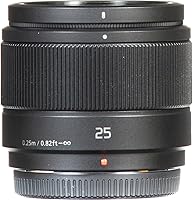
- Filter Thread: The front element accepts 46mm screw-in filters, including UV, polarizing, and ND types.
- Weight: The lens weighs approximately 125g (around 4.4 oz), making it one of the lighter options in the MFT prime category.
- Length: The lens body measures 2.05 inches (approximately 52mm) in length, keeping the overall camera profile compact.
- Dimensions: Overall dimensions are 3.23 x 3.23 x 4.41 inches including the lens barrel at its resting position.
- Weather Sealing: This lens has no weather sealing and is not rated for use in rain, dust, or high-humidity environments.
- Image Stabilization: The lens does not include optical image stabilization and relies on any in-body stabilization the camera body may provide.
- Video Support: The STM autofocus system supports hybrid photo and video shooting, maintaining quiet focus operation during HD video recording.
- Manufacturer: Designed and manufactured by Panasonic under the LUMIX G lens line, with model number H-H025K.
- Release Date: The lens was first made available in September 2015 and remains in active production as of this writing.
- Country of Use: The H-H025K variant is the official USA market version and comes with a domestic warranty.
Related Reviews
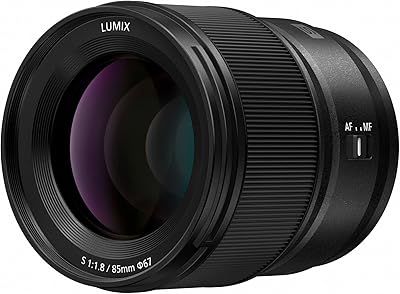
Panasonic LUMIX S-S85 85mm F1.8 Lens
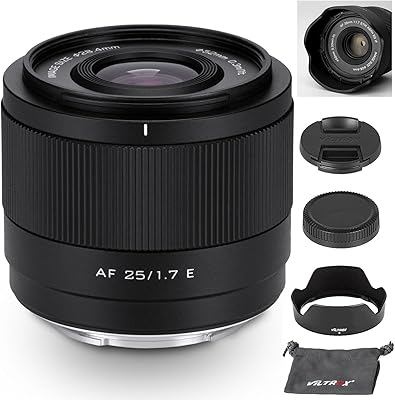
Viltrox 25mm f/1.7 E-Mount Prime Lens
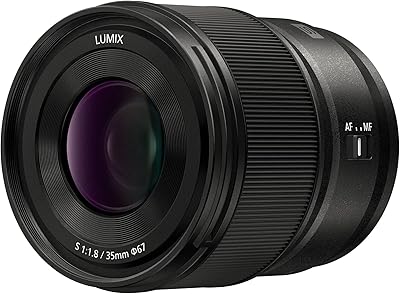
Panasonic S-S35 35mm F1.8 Prime Lens
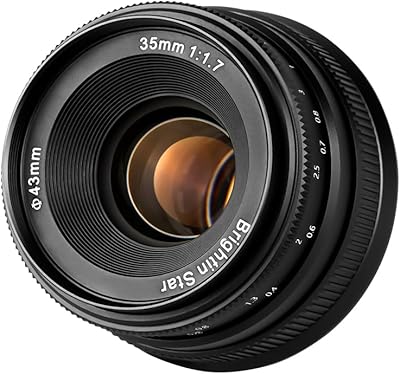
Brightin Star 35mm F1.7 Mirrorless Camera Lens
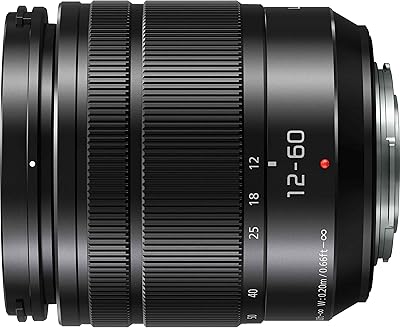
Panasonic LUMIX G Vario 12-60mm Mirrorless Lens
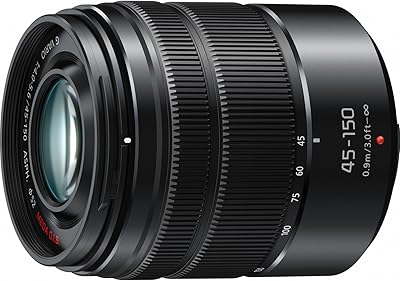
Panasonic H-FS45150AK 45-150mm Mirrorless Lens
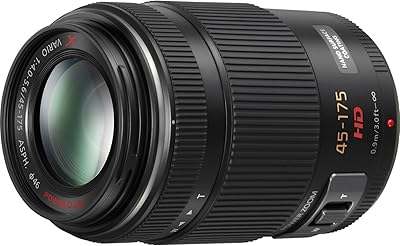
Panasonic H-PS45175K 45-175mm Power Zoom Lens
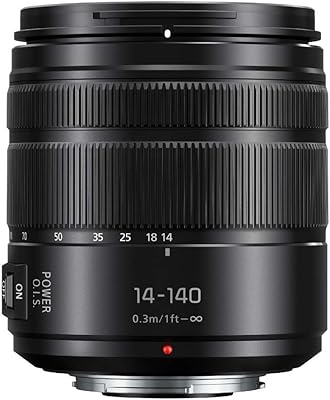
Panasonic Lumix G Vario 14-140mm Zoom Lens
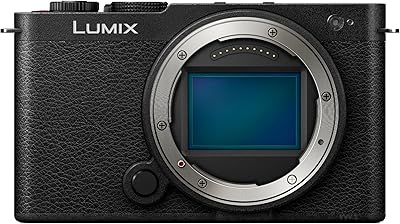
Panasonic LUMIX S9 Full-Frame Mirrorless Camera