Overview

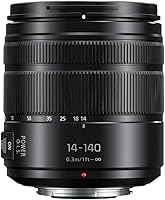
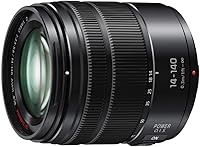
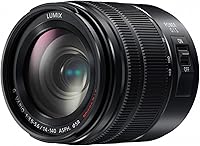
The Panasonic Lumix G Vario 14-140mm Zoom Lens is the upgraded Mark II version of one of Micro Four Thirds' most popular all-in-one zooms, and it improves on its predecessor in meaningful ways. Where the original felt like a compromise, this version brings tighter optics, a more robust build, and a metal mount that inspires actual confidence. The 10x zoom range — stretching from a useful wide-angle to a genuine telephoto reach — means you can leave a second lens at home. For anyone shooting on a Lumix G body who wants a single versatile option for travel or daily use, the 14-140mm lens makes a compelling case.
Features & Benefits

The standout practical feature here is Power O.I.S., which does genuinely useful work when shooting handheld or recording video — it smooths out the kind of micro-jitter that would otherwise ruin a clip or soften a shot at the longer end of the zoom. The optical construction, with aspherical elements and ED glass throughout, keeps chromatic fringing well controlled even when the light gets tricky. The splash and dust resistance is a real bonus for outdoor use, though it is worth being clear: this is not a fully weatherproof lens, just one that can handle a light drizzle or dusty trail. The compact form factor relative to this zoom range remains one of its strongest practical advantages.

Best For

This all-in-one Lumix zoom was essentially built for the traveler who does not want to swap lenses at a crowded market or miss a shot fumbling through a bag. It is equally at home on a day hike where a little grit or rain might find its way onto your gear. Videographers get real value here too — the stabilization system handles walking shots far better than a bare body alone, and the zoom range keeps framing options open. If you are upgrading from the older model, the sharper optics and improved sealing make the switch worthwhile. Less ideal for low-light or fast indoor action, where a faster prime would serve you better.

User Feedback

Buyers who use this telephoto zoom regularly tend to land in a consistent place: sharp images across the zoom range and a stabilizer that actually pulls its weight are the most praised attributes. Build quality earns positive mentions too — people feel like they got something solid. The recurring criticism, and it is a fair one, is the variable aperture. At the long end, f5.6 is limiting in dim conditions, and shooters hoping to avoid carrying a fast prime will find that is not always realistic. Owners upgrading from the previous model report noticeable gains in sharpness and weather resistance, though a portion felt the price jump was steeper than the improvements fully justified.

Pros

  • A genuine 10x zoom range means one lens covers almost every shooting situation a traveler encounters.
  • Power O.I.S. delivers noticeably smoother handheld video without needing a separate stabilizer.
  • Splash and dust resistance adds real-world confidence for hiking, outdoor events, and unpredictable conditions.
  • Sharper optics and improved ED glass produce cleaner images with minimal fringing compared to cheaper superzooms.
  • The metal MFT mount feels solid and communicates reliably with compatible Lumix bodies.
  • Compact dimensions relative to its zoom range make it easy to pack without dominating a travel bag.
  • Distortion and chromatic aberration are well controlled, reducing time spent correcting images in post.
  • Autofocus is quick and dependable for everyday subjects, travel scenes, and casual video work.
  • A meaningful upgrade over the original model in both optical quality and weather resistance.

Cons

  • At f5.6 on the long end, low-light performance is a consistent weak point that a fast prime cannot be replaced by.
  • Some softness at the edges of the frame becomes noticeable when shooting at maximum telephoto reach.
  • Flare and contrast drop are more pronounced than expected at this price when shooting toward strong light sources.
  • The variable aperture causes exposure shifts when zooming during live video, requiring manual compensation.
  • Autofocus hunting in low-contrast or dim scenes is a recurring complaint among video shooters.
  • Splash resistance is limited — sustained rain or near-water use goes beyond what the sealing was designed for.
  • Upgraders from the original version may find the optical gains modest relative to the cost difference.
  • Competing superzoom options exist at noticeably lower price points, making the value case harder to argue on specs alone.
  • The zoom ring texture shows wear after extended outdoor use, which feels inconsistent with the premium positioning.

Ratings

The scores below reflect an AI-driven analysis of verified buyer reviews for the Panasonic Lumix G Vario 14-140mm Zoom Lens, sourced globally and filtered to exclude incentivized, spam, and bot-generated submissions. Each category is scored on real-world usage patterns, capturing both the genuine strengths and the recurring frustrations that honest owners report. Nothing is glossed over — where users ran into consistent limitations, the scores and commentary reflect that directly.

Image Sharpness
88%
Across a wide range of shooting conditions, users consistently report crisp, detailed images especially in the wide-to-mid zoom range. The aspherical and ED glass elements do real work here — landscape and travel shots come back looking clean without heavy post-processing.
At the longer end of the zoom, some softness creeps in, particularly toward the edges of the frame. Pixel-peepers shooting at maximum telephoto extension will notice a modest but real drop in corner sharpness compared to dedicated telephoto primes.
Zoom Range Versatility
93%
The 10x zoom range is the single biggest reason buyers choose this lens, and it genuinely delivers. From wide street scenes to distant wildlife or a speaker on a stage, the 14-140mm lens covers what most photographers need in a single barrel without swapping glass mid-shoot.
The trade-off for that versatility is a variable aperture that narrows as you zoom in. Users coming from fixed-aperture zooms or fast primes sometimes find the flexibility of the range offset by the exposure limitations at longer focal lengths.
Optical Image Stabilization
86%
Power O.I.S. earns consistent praise, especially from videographers shooting handheld. Walking shots that would otherwise look shaky come out noticeably smoother, and still photographers report being able to hand-hold at longer focal lengths without the blur they would normally expect.
In very low light, the stabilization helps but does not fully compensate for the narrow aperture — you still end up pushing ISO higher than ideal. A few users also noted that O.I.S. adds a faint mechanical hum in very quiet video recordings when captured by sensitive on-camera microphones.
Low-Light Performance
61%
39%
In moderately dim environments — indoor events with decent ambient light, golden hour shooting — the combination of Power O.I.S. and the wide-end f3.5 aperture keeps results usable. Sharpness holds reasonably well in these conditions with a capable Lumix body behind it.
This is the lens's most discussed weakness. At the telephoto end, f5.6 forces ISO climbs that introduce noticeable noise on most MFT sensors. Users shooting concerts, dim interiors, or evening events frequently reach for a faster prime instead, making this a daylight-first lens in practical use.
Build Quality & Durability
82%
18%
The metal Micro Four Thirds mount and splash-resistant body give this all-in-one Lumix zoom a noticeably more confident feel than its predecessor. Outdoor shooters and hikers report taking it into light rain and dusty trails without damage, which is exactly the use case it was designed for.
It is important to be precise: splash-resistant is not the same as weatherproof. Users who tested it in sustained rain or near surf report some anxiety — it handles incidental exposure, not a downpour. The barrel also shows minor wear on the zoom ring texture after extended field use.
Autofocus Speed & Accuracy
79%
21%
Paired with a modern Lumix G body, autofocus is quick and confident for everyday subjects — walking subjects, travel scenes, and general video work all track reliably. The lens responds well to the contrast-detection systems in the cameras it was designed for.
Fast-moving subjects, particularly birds in flight or sports action, expose the limits of this lens. Tracking can hesitate or hunt at longer focal lengths, and users who shoot action regularly find it falls short of dedicated sports or wildlife glass in responsiveness.
Video Performance
84%
For travel vloggers and documentary-style shooters, the 14-140mm lens is a strong companion. The stabilization keeps handheld footage smooth, and the zoom range means one lens covers establishing shots and close-up details without stopping to swap. Zoom breathing is well controlled for this class.
At higher zoom ratios, a slight focus-hunting behavior can appear in video during low-contrast scenes or in tricky lighting. The variable aperture also means exposure shifts if you zoom during a live video shot, which requires manual exposure compensation or careful planning.
Size & Weight
91%
For a lens covering this zoom range, the compact dimensions are genuinely impressive. Travelers and street photographers regularly note that it fits in a small shoulder bag alongside a mirrorless body without dominating the kit, which is a real practical advantage over larger superzooms.
Compared to a single prime lens, it is still noticeably larger and heavier — context matters. Users who picked up the system for its minimalist appeal sometimes find the fully extended lens at 140mm breaks the compact aesthetic they were expecting from a Micro Four Thirds setup.
Distortion & Chromatic Aberration Control
83%
The optical design handles distortion and color fringing better than many superzooms in this class. Architecture and landscape shots retain straight lines with minimal barrel or pincushion distortion, and fringing on high-contrast edges is subtle enough that most users do not need to correct it in post.
Some barrel distortion at 14mm is visible if lens correction profiles are disabled. Chromatic aberration becomes more noticeable at extreme zoom settings in bright, high-contrast scenes. Most editing software corrects both automatically, but users shooting JPEG-only will see more pronounced artifacts.
Upgrade Value Over Previous Version
74%
26%
Owners who upgraded from the original H-FS14140AK consistently report tangible gains in sharpness and a more solid feel overall. The added splash resistance is the feature that earns the most appreciation, particularly among users who were already pushing the old version outdoors.
A meaningful portion of upgraders feel the performance delta does not fully justify the price premium over the older model. If you are already getting sharp results from the first-generation lens and do not need weather resistance, the incentive to upgrade is harder to justify on a tight budget.
Mount & Compatibility
89%
The metal MFT mount clicks into Lumix G bodies with a satisfying solidity, and users report zero compatibility issues across the range of supported cameras. The lens communicates cleanly with in-body systems, enabling features like Dual I.S. on supported bodies for even better stabilization.
Compatibility is naturally limited to the Micro Four Thirds ecosystem. Shooters who also use Sony E-mount or Fujifilm X-mount bodies cannot share this lens across systems, which is a straightforward but real limitation for those managing multi-platform kits.
Value for Money
72%
28%
As a single-lens solution for travel or everyday shooting, the cost becomes easier to justify when measured against buying multiple primes to cover the same range. Users who treat it as their only travel lens tend to report satisfaction with what they get for the investment.
At its price point, expectations are high, and the variable aperture remains the sticking point for many buyers doing the math. Competing superzoom options exist at lower price points, and some users feel the premium over those alternatives is not fully backed by a proportional jump in image quality.
Flare & Contrast Resistance
77%
23%
In most practical shooting situations — overcast skies, indirect sun, indoor lighting — contrast holds up well and flare is kept in check. Landscape photographers and travel shooters report clean results without significant ghosting under typical outdoor conditions.
Shooting directly toward a strong light source, particularly at mid-range focal lengths, produces noticeable flare and a mild drop in contrast. Using a lens hood helps, but the effect is more pronounced than on higher-end Lumix glass, which some users at this price point find disappointing.

Suitable for:

The Panasonic Lumix G Vario 14-140mm Zoom Lens was practically designed with the traveling photographer in mind — someone who wants to cover wide landscapes, street scenes, and distant details in a single day without hauling a bag full of glass. It is an equally smart fit for Lumix G-series shooters who want one reliable walk-around lens for everyday life, whether that means a family day out, a weekend hike, or a city trip where convenience matters more than squeezing every last drop of optical performance. Outdoor and nature photographers will genuinely appreciate the splash and dust resistance, which provides a real layer of confidence on trails or in unpredictable weather, even if it is not a substitute for a fully sealed professional setup. Videographers shooting travel content or documentary-style footage will find the Power O.I.S. earns its keep during handheld recording, smoothing out the kind of movement that would otherwise demand a gimbal. Users upgrading from the original 14-140mm version who shoot outdoors regularly will notice the build improvement immediately and find it justifies the move.
Not suitable for:

If low-light photography is central to your work — concerts, indoor events, nighttime street shooting — the Panasonic Lumix G Vario 14-140mm Zoom Lens will leave you wanting more, and that is not a minor caveat. The variable aperture narrows to f5.6 at the long end, which forces higher ISO values on MFT sensors and leads to noise levels that dedicated low-light shooters will find genuinely frustrating. Photographers chasing subject separation or that creamy background blur from a fast prime will also find this telephoto zoom an unsatisfying substitute — it is a versatility tool, not a portrait or artistic lens. Action and sports photographers who need snappy, confident tracking on fast-moving subjects should look elsewhere, as autofocus can hunt and hesitate under demanding conditions. Finally, budget-conscious buyers who already own the first-generation 14-140mm and shoot primarily in good light may find the upgrade harder to justify; the improvements are real but incremental, and the price gap between the two is not trivial.
Specifications

  • Focal Length: Covers a 14–140mm zoom range, equivalent to approximately 28–280mm in full-frame terms, delivering a true 10x optical zoom ratio.
  • Maximum Aperture: Variable aperture of f3.5 at the wide end and f5.6 at the telephoto end, which is typical for superzoom lenses in this class.
  • Lens Mount: Micro Four Thirds mount with a durable metal construction, compatible with all MFT-standard mirrorless camera bodies from Panasonic and Olympus.
  • Optical Formula: Comprises 14 elements arranged in 12 groups, including 3 aspherical lenses and 2 ED (extra-low dispersion) elements to control distortion and color fringing.
  • Image Stabilization: Features Panasonic Power O.I.S. (Optical Image Stabilizer), which actively compensates for camera shake during handheld shooting and video recording.
  • Weather Resistance: Constructed with splash and dust resistance to withstand light rain and dusty environments, though it is not rated for full waterproof submersion or sustained heavy rain.
  • Minimum Focus Distance: Achieves a minimum focusing distance of approximately 0.5m (about 1.6 feet) at the wide end, allowing moderately close subject capture.
  • Filter Thread: Accepts 58mm screw-in filters, including UV, polarizing, and neutral density types commonly used by travel and outdoor photographers.
  • Dimensions: Measures 2.64 × 2.64 × 2.64 inches (67 × 67 × 67mm) in its retracted state, keeping the overall kit compact when stored or carried.
  • Weight: Weighs approximately 0.96 oz as listed, though real-world shipping weight including caps and packaging is closer to 265g (approximately 9.3 oz).
  • Aperture Blades: Features a 7-blade aperture diaphragm designed to produce reasonably rounded bokeh at wider aperture settings across the zoom range.
  • Model Number: Official Panasonic model designation is H-FSA14140, distinguishing this Mark II upgraded version from the earlier H-FS14140AK release.
  • Generation: This is the second-generation (Mark II) version of the 14-140mm lens, introduced with improved optical coatings, weather sealing, and a refined build over the original.
  • Compatibility: Designed specifically for Micro Four Thirds mirrorless cameras, including the full Panasonic Lumix G series and compatible Olympus and OM System bodies.
  • Stabilizer Type: Power O.I.S. works in conjunction with Dual I.S. on supported Lumix G bodies, combining in-lens and in-body stabilization for enhanced correction during video and stills.
  • Zoom Type: Manual zoom ring operation with no power zoom motor, giving the photographer direct tactile control over focal length selection.
  • Lens Coatings: Nano Surface Coating is applied to reduce flare and ghosting in high-contrast shooting situations such as backlit subjects or direct artificial lighting.
  • Included Accessories: Ships with front and rear lens caps plus a removable lens hood, providing basic protection and glare control out of the box.

Related Reviews
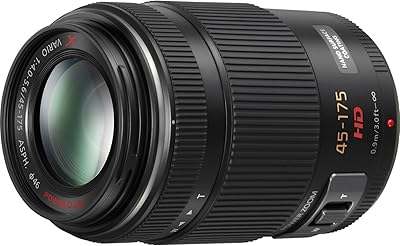
Panasonic H-PS45175K 45-175mm Power Zoom Lens
76%
83%
Image Sharpness
91%
Power Zoom Performance
78%
Optical Image Stabilization
76%
Autofocus Speed & Accuracy
62%
Build Quality & Durability
More
Panasonic LUMIX G Vario 12-60mm Mirrorless Lens
80%
88%
Image Sharpness
91%
Zoom Range Versatility
86%
Optical Stabilization
83%
Weather Sealing
84%
Autofocus Performance
More
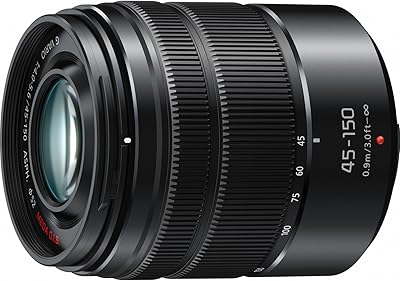
Panasonic H-FS45150AK 45-150mm Mirrorless Lens
80%
83%
Image Sharpness
79%
Autofocus Performance
81%
Optical Stabilization
77%
Build Quality
82%
Video Usability
More
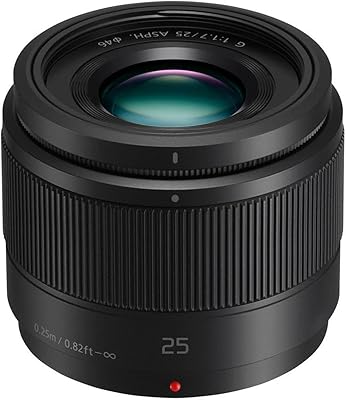
Panasonic LUMIX G 25mm F1.7 Mirrorless Lens
79%
91%
Optical Sharpness
83%
Autofocus Performance
88%
Low-Light Capability
87%
Video Usability
62%
Build Quality
More
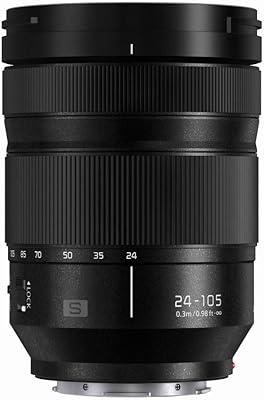
Panasonic LUMIX S 24-105mm F4 Lens
88%
94%
Image Quality
91%
Weather Sealing & Durability
88%
Low-Light Performance
84%
Ease of Use
90%
Stabilization Performance
More
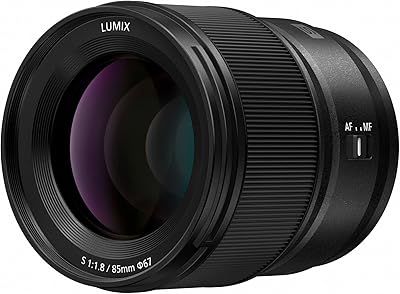
Panasonic LUMIX S-S85 85mm F1.8 Lens
82%
92%
Image Sharpness
84%
Bokeh Quality
71%
Autofocus Performance
83%
Build Quality
74%
Weather Sealing
More
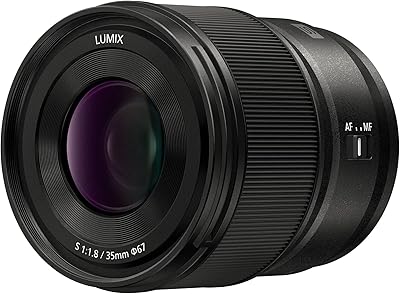
Panasonic S-S35 35mm F1.8 Prime Lens
83%
93%
Optical Sharpness
91%
Build Quality
67%
Autofocus Performance
88%
Video Usability
94%
Portability & Size
More
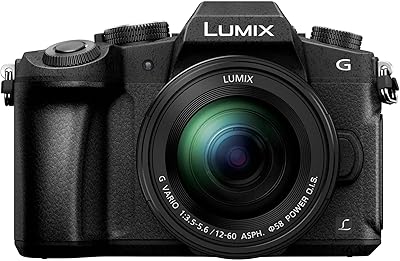
Panasonic Lumix G85 Mirrorless Camera
78%
93%
Image Stabilization
89%
Build Quality
84%
Video Performance
71%
Autofocus Accuracy
82%
Image Quality
More
Panasonic LUMIX 8-18mm F2.8-4.0 Lens
89%
91%
Image Quality
88%
Autofocus Performance
89%
Build Quality & Durability
84%
Ease of Use
90%
Video Performance
More
Panasonic LUMIX G II Vario 100-300mm Lens
82%
88%
Autofocus Speed & Tracking
83%
Image Sharpness
91%
Optical Stabilization
79%
Weather Sealing
84%
Build Quality & Durability
More

FAQ

Yes, it will. The Micro Four Thirds mount is a shared standard across Panasonic Lumix G, Olympus, and OM System mirrorless bodies, so the lens mounts and autofocuses without any adapter. You may lose access to Dual I.S. mode, which is a Panasonic-specific feature, but core functions including autofocus and Power O.I.S. will work normally.

In practical use, Power O.I.S. makes a noticeable difference for walking shots and slow pans — the kind of footage that would look genuinely shaky without it. It is not a substitute for a gimbal if you need buttery-smooth motion, but for travel vlogs, documentary-style clips, and casual handheld recording, it keeps footage usable and clean. On supported Lumix bodies, activating Dual I.S. pushes the stabilization even further.

Splash and dust resistant is the accurate description — not waterproof. It can handle light rain, a bit of trail dust, or accidental water contact without issue, but you should not take it into heavy rain, near surf, or any situation involving sustained water exposure. Think of it as a lens that gives you reasonable outdoor confidence, not one that is rated for harsh wet conditions.

It is not the strongest choice for those environments. The aperture narrows to f5.6 at the telephoto end, which means in dim lighting you will need to push ISO fairly high to maintain a fast enough shutter speed to freeze motion. The results can be acceptable in well-lit venues, but if indoor action or low-light performance is a priority, a faster prime or dedicated f2.8 zoom will serve you better.

The differences are real but incremental. The Mark II brings improved optical coatings, better distortion and chromatic aberration control, and crucially, splash and dust resistance that the original lacked entirely. If you shoot outdoors regularly or in variable weather, that weather sealing alone makes the upgrade meaningful. If you mostly shoot in controlled environments and already get sharp results from the original, the case for upgrading is harder to argue.

It accepts 58mm screw-in filters, which is a common size and easy to find. Polarizing filters are a popular pairing for landscape and travel shooting with this lens, and neutral density filters work well for video to maintain proper exposure in bright conditions.

At the wide end and at closer focusing distances, you can get some subject separation, but do not expect the creamy, pronounced blur you would get from a fast prime. The variable aperture limits background separation significantly, especially at longer focal lengths where depth of field becomes naturally shallower but the narrow aperture reduces the effect. For portraits where bokeh is a priority, a dedicated fast prime is a more reliable tool.

For standard travel and documentary shooting, autofocus is generally responsive and quiet enough for video use. Where it can struggle is in low-contrast scenes or challenging lighting — some users report occasional focus hunting, where the lens briefly searches before locking on. For scripted or controlled video work this is manageable, but for run-and-gun documentary shooting in tricky conditions, it is worth being aware of.

Yes, the barrel extends as you zoom toward 140mm, which is standard for lenses in this class. The extension is moderate and does not dramatically shift the balance point on most Lumix G bodies. Travel photographers and street shooters generally find it stays manageable, though it does make the overall kit feel less pocketable at full extension compared to a compact prime.

At the wide end, the minimum focusing distance is around 0.5m (roughly 1.6 feet), which is adequate for travel and general photography but not close enough for true macro work. If you need to photograph small subjects up close — insects, food detail, product shots — a dedicated macro lens would be a better fit. For most everyday and travel scenarios, the focusing range covers what you need without issue.

Where to Buy