

Overview

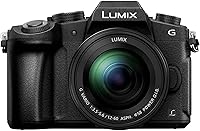
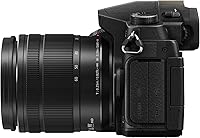
The Panasonic Lumix G85 Mirrorless Camera sits comfortably in the mid-range sweet spot — capable enough for serious enthusiasts, compact enough for shooters finally leaving bulky DSLRs behind. It launched as a strong step up from entry-level gear, and even as the market has grown more competitive, it holds up well. The bundled 12-60mm lens covers a 24-120mm equivalent range, handling most everyday situations without swapping glass. The weather-sealed body is genuinely rare at this price tier and worth highlighting. That said, the Micro Four Thirds sensor is smaller than APS-C or full-frame rivals, and that trade-off shows in demanding low-light conditions — something buyers should factor in honestly before committing.

Features & Benefits

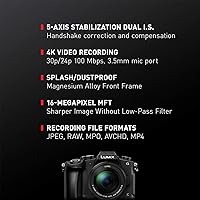
The standout here is the 5-axis Dual I.S. — in-body stabilization that communicates with the lens OIS to correct for multiple types of shake at once. In practice, you can handhold shots in dim restaurants or while walking without immediately reaching for a tripod. The 4K video modes go further than raw resolution: the 4K Photo feature lets you pull stills from footage after the moment has passed, a genuinely useful trick. The no-low-pass-filter sensor adds real sharpness to fine textures. The DFD autofocus is quick and confident for static or predictably moving subjects, though it can hunt noticeably when tracking something erratic — wildlife or fast sports, for instance.

Best For

This mirrorless camera makes the most sense for a specific kind of shooter. Travel photographers will appreciate the weather sealing paired with an all-in-one kit lens that covers wide to short-telephoto without extra weight. Vloggers and casual video creators get solid 4K with stabilization that genuinely reduces the need for a gimbal on walking shots. If you're upgrading from a smartphone or basic DSLR and want real manual control without a punishing learning curve, the G85 is approachable but not dumbed down. Existing Micro Four Thirds users can drop it into a lens collection they already own, which is a real advantage. Outdoor hobbyists shooting in changeable conditions will also value the resilient build.

User Feedback

Owners consistently single out the image stabilization as one of the strongest real-world performers in its class — many report rarely needing a tripod for everyday work. Build quality earns frequent praise too, with the camera feeling solid well beyond its years of use. On the flip side, battery life is the most common complaint; long shooting days almost always require a spare. The 4K crop factor frustrates some video users who expected a wider field of view. Menu navigation divides opinion: thorough once learned, but initially clunky. Long-term owners tend to report high satisfaction, especially those who expand into additional Micro Four Thirds lenses, which is where the system really starts to show its depth.

Pros

  • Class-leading dual image stabilization makes handheld shots noticeably steadier in real-world conditions.
  • Weather-sealed body is a genuine rarity among mid-range mirrorless cameras and adds meaningful shooting confidence outdoors.
  • The 12-60mm kit lens covers a practical range that handles travel, street, and everyday photography without swapping glass.
  • 4K Photo and Post Focus modes let you pull sharp stills from video after the moment has passed.
  • The no-low-pass-filter sensor resolves fine texture and detail with impressive crispness for a 16MP system.
  • The Lumix G85 is compact and light enough to carry all day without fatigue.
  • OLED electronic viewfinder is clear and responsive, making outdoor composition easy even in bright sunlight.
  • Micro Four Thirds mount opens access to a wide, mature ecosystem of lenses from multiple manufacturers.
  • Wi-Fi connectivity and the Lumix app allow remote shooting and quick image transfers without cables.
  • Long-term owners consistently report the build holding up well through years of regular use.

Cons

  • Low-light image quality trails APS-C and full-frame rivals at similar price points due to the smaller sensor.
  • Continuous autofocus struggles with unpredictable fast-moving subjects, making it a weak choice for sports or wildlife.
  • 4K recording applies a crop factor that restricts the field of view and limits wide-angle shooting in video mode.
  • Battery life is short enough that most users carry at least one spare for a full day of shooting.
  • The menu system is thorough but dense and can feel disorganized until you have spent real time with it.
  • The display tilts but does not fully articulate sideways, limiting creative framing for video work.
  • Only one memory card slot leaves no redundancy backup option for important shoots.
  • Burst shooting at top speed requires a very fast UHS-I card to avoid buffer slowdowns.
  • The 4K video crop makes previously wide lenses feel noticeably narrower, which can require additional glass.
  • Autofocus eye-detection, while present, is less refined and consistent than equivalent features on Sony rivals.

Ratings

The scores below for the Panasonic Lumix G85 Mirrorless Camera were generated by our AI after analyzing thousands of verified owner reviews from global markets, with spam, incentivized posts, and bot activity actively filtered out. The result is an honest cross-section of real long-term user sentiment — strengths are credited where they are genuinely earned, and recurring frustrations are reflected without being softened.

Image Stabilization
93%
Owners consistently rank this as the G85's single greatest strength, describing sharp handheld shots in dimly lit restaurants, cobblestone streets, and moving vehicles where other cameras in the class simply blur. The dual-system coordination between body and lens stabilization is frequently cited as feeling like shooting on a tripod.
A small subset of users note that in extreme low-light conditions — think candlelit indoor events — even the dual stabilization cannot fully compensate for very long exposures, and a tripod is still necessary. It is also only as effective as the shutter speed allows.
Build Quality
89%
The weather-sealed body earns consistent praise from hikers, travel photographers, and outdoor shooters who have used it in light rain, dusty trails, and humid coastal environments without issue. Long-term owners frequently comment that after years of use, the body still feels solid with no creaking or loose parts.
A few users feel the magnesium alloy exterior could look more premium given the price point, and the grip rubber has shown wear on units used heavily over two or more years. The kit lens, while sealed, does not feel quite as robust as the body itself.
Video Performance
84%
Vloggers and travel video creators regularly praise the combination of 4K quality and in-body stabilization, noting that walking footage comes out impressively smooth without a gimbal. The 4K Photo and Post Focus modes are described as practical creative tools rather than gimmicks.
The 4K crop factor is a recurring complaint, particularly from users who switched from cameras with full-sensor 4K readout and found their wide-angle shots suddenly feeling compressed. Rolling shutter artifacts are also visible in fast panning shots, which frustrates more technically demanding video users.
Autofocus Accuracy
71%
29%
For portraits, landscapes, street photography, and casual everyday shooting, most users find the DFD autofocus fast and reliable enough to trust. Eye Detection AF is particularly well-regarded for portrait work where subjects are relatively still or moving predictably.
Fast-action scenarios consistently expose the system's limits — users photographing running dogs, children playing sports, or birds in flight report noticeable hunting and lost lock in continuous mode. This is one of the most frequently mentioned shortcomings in long-form user reviews.
Image Quality
82%
18%
The no-low-pass-filter sensor delivers noticeably crisp fine detail in good light, and users shooting RAW files report excellent latitude in post-processing for exposure recovery. Colors straight out of camera are widely considered pleasing and well-balanced without aggressive processing.
At higher ISO values — particularly ISO 3200 and above — the Micro Four Thirds sensor shows more luminance noise than APS-C competitors at comparable prices, which is a real trade-off for users shooting evening events or dark indoor venues without flash.
Battery Life
58%
42%
Under light use — casual street walks or short travel days — the battery gets most users through a morning of shooting comfortably. Charging via USB is straightforward and can be done with a portable battery bank in the field.
Heavy 4K recording or prolonged EVF use drains the battery noticeably faster than the rated shot count suggests, and a significant majority of users explicitly recommend purchasing at least one spare before any serious day trip. This is one of the camera's most consistent pain points across user communities.
Kit Lens Quality
81%
19%
The 12-60mm Power O.I.S. lens is widely regarded as one of the better kit lenses in the mirrorless segment, covering a practical everyday range that handles travel, interiors, and mild telephoto compression in one piece of glass. Sharpness through the central frame is consistently praised.
Some corner softness at wider apertures and moderate barrel distortion at 12mm are noted by more technically observant users, and the f3.5-5.6 variable aperture limits low-light handheld shooting at the telephoto end. It is a solid all-rounder but not a specialist performer.
Touchscreen & Display
74%
26%
The tilt-and-touch LCD is genuinely useful for low-angle shots and overhead framing, and touch-to-focus works reliably when composing from the rear screen. The display is bright enough for outdoor use in overcast or partly cloudy conditions.
In direct harsh sunlight the screen can be difficult to see clearly, and the tilt-only mechanism frustrates users who wanted a fully articulating display for vlogging or side-angle video work. Touch response is functional but feels a generation behind modern smartphone glass.
Menu System
63%
37%
Once customized with the Q-menu and Fn button assignments, experienced users report the camera becomes fast and intuitive to operate in the field. Long-term G85 owners generally have few complaints once they have put in the initial learning time.
New users consistently describe the menu as dense, inconsistently organized, and difficult to navigate without consulting the manual or tutorial videos. This is particularly frustrating during setup, and is one of the most common criticisms among first-time Panasonic owners coming from Canon or Sony interfaces.
Portability
88%
At around 1.1 pounds with kit lens attached, the system is compact enough to carry in a shoulder bag all day without fatigue, and fits into smaller travel bags that would not accommodate a DSLR. Users on multi-day hiking trips specifically mention the manageable weight as a key reason they chose this system.
While compact for its capabilities, the G85 with the 12-60mm lens is noticeably larger than mirrorless cameras designed around smaller primes, and it does not approach the pocketability of compact cameras or certain micro four thirds bodies paired with pancake lenses.
Value for Money
86%
Given the inclusion of a weather-sealed body, a solid all-purpose kit lens, and a dual stabilization system not commonly found at this price tier, most buyers feel the package delivers clear value relative to alternatives. The Micro Four Thirds lens ecosystem also provides a long investment runway.
As newer competitors from Sony, Fujifilm, and OM System have released updated models with better autofocus and improved sensors at similar or only slightly higher prices, some buyers feel the G85 requires a stronger discount today to represent the same value it offered at launch.
Low-Light Performance
67%
33%
In well-managed ISO ranges up to around 1600, the G85 produces clean, detailed images that satisfy most enthusiast users, and the stabilization helps compensate by allowing slower shutter speeds than would otherwise be usable. RAW files at moderate ISO respond well to noise reduction in editing.
Above ISO 3200, the Micro Four Thirds sensor size becomes a tangible limiting factor compared to APS-C rivals, and this gap is consistently highlighted by users who shoot evening events, concerts, or indoor sports. It is not a dealbreaker, but it is a known ceiling.
Connectivity & Sharing
76%
24%
Wi-Fi pairing with the Lumix Sync app is well-regarded for remote shutter control during solo travel shooting, and image transfers to a smartphone work reliably once the initial connection is established. This is consistently cited as a useful feature for social media oriented travel photographers.
Initial Wi-Fi setup is more convoluted than it should be, and some users report inconsistent connection stability requiring re-pairing. There is no Bluetooth for always-on low-power connectivity, which means geo-tagging and background transfers are not as frictionless as on newer camera systems.
Viewfinder Quality
83%
The OLED EVF at 2360K dots is bright, high-contrast, and comfortable to use for extended shooting sessions, with users particularly appreciating the accurate exposure preview and histogram overlay that helps dial in shots before firing the shutter. Eyeglass wearers note the diopter adjustment range is generous.
In very fast panning situations, minor EVF lag is perceptible, which can make tracking moving subjects less intuitive than an optical viewfinder. A small number of users also report slight eyepiece rubber deterioration over extended heavy use.

Suitable for:

The Panasonic Lumix G85 Mirrorless Camera is a strong fit for enthusiasts who want a meaningful upgrade from smartphone or entry-level DSLR shooting without committing to a heavy, expensive full-frame system. Travel photographers in particular will find the combination of a weather-sealed body and a versatile 12-60mm kit lens genuinely practical — it covers wide landscapes through to compressed street scenes in one compact package. Vloggers and hybrid shooters who want 4K video with steady handheld results will appreciate that the dual image stabilization reduces the need for a gimbal in most everyday situations. If you already shoot in the Micro Four Thirds ecosystem, dropping the G85 into an existing lens collection makes even more sense, since compatibility is instant and the system has a deep bench of quality glass. Outdoor hobbyists and hikers who shoot in unpredictable weather will also find the sealed build reassuring in ways that similarly priced competitors often cannot match.

Not suitable for:

Buyers who prioritize low-light performance above all else should approach the Panasonic Lumix G85 Mirrorless Camera with realistic expectations — the Micro Four Thirds sensor is physically smaller than APS-C or full-frame alternatives at comparable prices, and that difference becomes visible when pushing higher ISO values in dark environments. Sports and wildlife photographers who need fast, reliable continuous autofocus will likely find the DFD system frustrating; it handles predictable subjects well but loses confidence quickly when tracking erratic or fast-moving action. Shooters who want an articulating screen for creative angles in video work may also be disappointed, as the display tilts but does not fully flip out to the side. Anyone planning to shoot heavily in 4K should note the crop factor, which narrows the field of view and limits how useful wide-angle lenses become in that mode. And if you are deeply invested in a Canon, Nikon, or Sony lens ecosystem, switching to Micro Four Thirds carries a real cost that the G85 alone cannot justify.

Specifications

  • Sensor: 16-megapixel Micro Four Thirds CMOS sensor with no low-pass filter, delivering sharper fine detail than comparable filtered sensors.
  • Stabilization: 5-axis in-body Dual I.S. works in tandem with compatible lens OIS across both photo and 4K video recording modes.
  • Video Resolution: Records 4K UHD (3840x2160) video in both MP4 and AVCHD formats, with additional 4K Photo and 4K Post Focus capture modes.
  • Kit Lens: Ships with a 12-60mm Power O.I.S. zoom lens, equivalent to 24-120mm in full-frame terms, with a 58mm filter thread.
  • Viewfinder: Integrated OLED electronic viewfinder with 2360K dots and 0.74x magnification for clear, high-contrast framing in bright conditions.
  • Rear Display: 3-inch tilt-and-touch LCD with 1040K dots allows flexible composition and touchscreen autofocus point selection.
  • Autofocus: 49-point DFD (Depth From Defocus) autofocus system with Eye Detection AF and support for single, continuous, and manual focus modes.
  • ISO Range: Native ISO starts at 200, with expanded minimum sensitivity down to ISO 100 for controlled shooting in bright light.
  • Burst Shooting: Continuous shooting reaches up to 9 fps with single autofocus, or 6 fps with continuous autofocus engaged.
  • Shutter Speed: Mechanical shutter range runs up to 1/4000 sec, with electronic shutter extending the top speed for silent shooting.
  • Connectivity: Equipped with Wi-Fi, Micro-HDMI output, and USB 2.0 for wireless transfer, external monitoring, and wired file management.
  • Memory: Single SD/SDXC card slot compatible with UHS-I U3 and V30-rated cards, required for reliable 4K video recording.
  • Body Build: Weather-sealed magnesium alloy body construction provides resistance to dust and light moisture in outdoor conditions.
  • Weight: Body weighs approximately 1.1 pounds (505g) with battery and card, keeping the overall kit portable for travel use.
  • Lens Mount: Micro Four Thirds mount ensures compatibility with a broad range of lenses from Panasonic, Olympus, and third-party manufacturers.
  • Flash System: Hot shoe mount accepts external flash units, and a pop-up flash is built into the body for immediate use.
  • Shooting Modes: Includes aperture-priority, shutter-priority, full manual, and a wide range of creative filter and scene modes for varied shooting styles.
  • White Balance: White balance options cover auto, daylight, cloudy, shade, incandescent, flash, and manual color temperature from 2500K to 10000K.
  • File Formats: Captures stills in RAW, JPEG (Fine, Normal, Basic), and simultaneously in RAW+JPEG, with video saved as MP4 or AVCHD.
  • Wireless App: Compatible with the Lumix Sync app for remote shutter control, live view monitoring, and wireless image transfer to a smartphone.

Related Reviews
Panasonic LUMIX G100 Mirrorless Camera
73%
83%
Video Quality
79%
Built-in Microphone
81%
Image Quality
62%
Image Stabilization
47%
Battery Life
More
Panasonic LUMIX GH5 Mark II Mirrorless Camera
79%
93%
Video Quality
91%
Image Stabilization
89%
Live Streaming
57%
Autofocus Performance
92%
Build Quality
More
Panasonic LUMIX S9 Full-Frame Mirrorless Camera
78%
91%
Image Quality
94%
Portability & Form Factor
88%
Video Capabilities
86%
Image Stabilization
79%
Autofocus Performance
More
Panasonic LUMIX S5 Full Frame Mirrorless Camera
79%
93%
Video Quality
91%
Image Stabilization
67%
Autofocus Performance
88%
Low-Light / High ISO Performance
82%
Build Quality & Ergonomics
More
Panasonic LUMIX ZS99
75%
93%
Zoom Range & Reach
84%
Image Quality in Good Light
54%
Low-Light Performance
88%
Image Stabilization
79%
Video Quality
More
Panasonic Lumix DMC-ZS3 Digital Camera
83%
89%
Ease of Use
84%
Image Quality
91%
Portability
65%
Battery Life
83%
Video Quality
More
Panasonic LUMIX FZ80D
75%
93%
Zoom Range & Reach
88%
Image Stabilization
78%
Image Quality in Good Light
54%
Low-Light Performance
81%
4K Video Quality
More
Panasonic HomeHawk Window Indoor Security Camera
79%
93%
Ease of Installation
86%
Daytime Video Quality
61%
Night Vision Performance
68%
Person Detection Accuracy
67%
App Experience
More
Panasonic Lumix DMC-ZS10
83%
85%
Image Quality
88%
Zoom Performance
90%
Ease of Use
93%
Portability
80%
Battery Life
More
Nikon Z50 II Mirrorless Camera
81%
91%
Autofocus Performance
88%
Image Quality
86%
Video Capability
84%
Portability & Build
89%
Color Presets & Creative Tools
More

FAQ

Yes, the body is weather-sealed, which means it can handle light rain, splashing, and dusty trails without issue. That said, you should pair it with a weather-sealed lens to keep the whole system protected — the included 12-60mm kit lens is sealed, so the combination is solid right out of the box.

It is genuinely one of the stronger stabilization systems in this class. The in-body system communicates with the lens OIS to correct for multiple types of camera movement simultaneously, and in real-world use the difference is noticeable — handheld shots in low light or at slower shutter speeds come out much cleaner than you would expect. It does not replace a tripod for very long exposures, but for walking shots and casual handheld work, it earns its reputation.

The 4K crop factor narrows your field of view compared to what you see in the viewfinder when shooting stills, which means wide-angle shots become noticeably less wide in video mode. For most vlogging or travel video, it is a manageable trade-off, but if you plan to shoot a lot of wide environmental footage in 4K, you may need to account for it by using a wider lens than you otherwise would.

Yes, any Micro Four Thirds lens will mount and work natively on the G85. Olympus lenses are fully compatible, including autofocus and image stabilization coordination. This is one of the real advantages of the Micro Four Thirds standard — the ecosystem is shared across brands.

It handles predictably moving subjects reasonably well, but if your kids or pets are darting in unpredictable directions at speed, you may find the continuous autofocus losing its lock more than you would like. For casual family moments and moderate movement it is fine, but dedicated sports or action shooters will likely want something with a more advanced tracking system.

You need at least a UHS-I U3 or V30 rated card to record 4K reliably. Anything slower risks buffer issues and dropped frames mid-clip. A good 64GB or 128GB card in that class is the practical recommendation — do not try to get by with an older or unrated card for video work.

Realistically, expect around 300 to 350 shots on a single charge under normal conditions, and noticeably less if you are shooting a lot of 4K video or using the electronic viewfinder heavily. Most owners who do any serious day-long shooting pick up a second battery — it is an inexpensive fix for what is otherwise the camera's most common frustration.

It works well for touch-to-focus when composing with the rear screen, and the tap-to-focus response is fast and accurate in that mode. When you switch to using the viewfinder, you can also use the screen as a touchpad to shift the focus point, which is a useful feature. The overall touch responsiveness is not quite as snappy as a modern smartphone, but it is reliable and practical.

It is a strong choice for that step up. The camera offers full manual control when you want it, but also enough automatic and assisted modes to let you learn gradually rather than being thrown in the deep end. The kit lens covers a useful range so you are not immediately forced to spend more on additional glass, and the stabilization makes early handheld shots more forgiving while you build technique.

Yes, the camera has a Micro-HDMI port that lets you connect to an external monitor or TV for a larger live view while shooting or for playing back footage. If you plan to use this regularly for video work, just make sure your monitor cable is Micro-HDMI rather than standard HDMI, as the connector on the camera body is the smaller format.