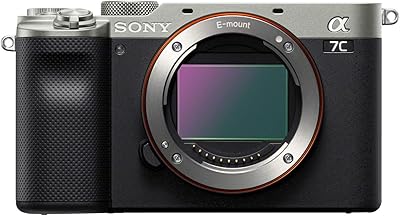
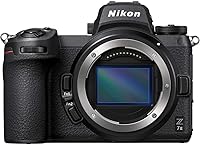
Nikon Z 7II Full-Frame Mirrorless Camera

Overview
The Nikon Z 7II Full-Frame Mirrorless Camera is Nikon's most refined high-resolution mirrorless body, built for professionals and serious enthusiasts who refuse to compromise on image quality. Compared to the original Z 7, the Z 7II arrives with a noticeably larger buffer, improved autofocus, and — finally — dual card slots. The body itself is solid: weather-sealed magnesium alloy, a comfortable grip, and a tilting touchscreen that pros actually use. Sitting alongside the Sony A7R IV and Canon EOS R5, it competes confidently on resolution and color science. Just know going in: this is a specialist precision tool, not a camera you would pick for tracking fast action or sports.
Features & Benefits
At the heart of the Z 7II sits a 45.7MP BSI-CMOS sensor capable of capturing extraordinary fine detail — the kind you only notice when cropping hard or printing large. Dual EXPEED 6 processors dramatically expand the buffer and push continuous shooting to 10 fps, addressing one of the original Z 7's most frustrating limitations. The 493-point phase-detect autofocus covers nearly 90% of the frame and handles mixed-light events far better than its predecessor. Five-axis in-body stabilization lets you shoot handheld in conditions where a tripod would normally be mandatory. For video, 4K UHD at 60p with 10-bit HDMI output is genuinely useful for commercial hybrid work, though it remains clearly a secondary strength.
Best For
This high-resolution mirrorless body earns its keep in a fairly specific set of hands. Wedding and event photographers will appreciate the dual-card redundancy — shooting to both slots simultaneously means real peace of mind when a moment is unrepeatable. Landscape and fine-art photographers who print large will find the sensor resolves detail that few cameras at any price can match. Studio portrait work benefits from in-body stabilization during tethered sessions. Hybrid shooters with commercial clients can treat the 4K 60p video as a genuine deliverable rather than an afterthought. Existing Nikon DSLR users transitioning their F-mount lens collection via the FTZ adapter will also find the learning curve notably gentle.
User Feedback
Owners of Nikon's flagship mirrorless consistently praise the color science and skin tones — landscape and portrait photographers describe results that require less post-processing correction than competing bodies. The improved buffer earns real appreciation too, though some RAW burst shooters still wish it ran deeper. Ergonomics draw consistent compliments from Nikon DSLR veterans who find the button layout immediately familiar. That said, honest users acknowledge two recurring frustrations: battery life is modest enough that carrying at least one spare is essentially non-negotiable, and autofocus tracking in fast, unpredictable situations — wildlife, sports, moving subjects — still lags behind what Sony and Canon currently offer at this tier.
Pros
- 45.7MP full-frame sensor delivers extraordinary detail for large prints and aggressive cropping.
- Dual card slots finally give professional shooters the redundancy they expect at this level.
- Improved buffer over the original Z 7 makes sustained RAW bursts far less frustrating in practice.
- Five-axis in-body stabilization enables sharp handheld shots in surprisingly dim conditions.
- Color science and skin tone rendering consistently impress portrait and wedding photographers.
- Intuitive button layout makes switching from a Nikon DSLR feel natural almost immediately.
- FTZ adapter opens access to roughly 360 F-mount lenses, protecting years of glass investment.
- USB-C charging keeps the camera topped up during long video shoots or livestreams.
- 4K UHD 60p with 10-bit HDMI output is genuinely useful for commercial hybrid projects.
- Weather-sealed magnesium alloy build feels solid and confident in outdoor professional use.
Cons
- AF tracking on fast, unpredictable subjects still trails Sony A7R IV and Canon EOS R5 noticeably.
- Battery life is modest enough that carrying two or three spares is practically mandatory.
- CFexpress and XQD cards remain significantly more expensive than standard SD cards.
- RAW buffer, while much improved, is still not unlimited — heavy burst shooters will hit the wall.
- The growing NIKKOR Z lens lineup is still smaller than competing native mount ecosystems.
- High-resolution files are large; storage and editing workstation requirements are non-trivial.
- No built-in flash and no pop-up option means always relying on hotshoe or off-camera lighting.
- Eye-tracking and subject recognition AF is less reliable compared to current Sony and Canon offerings.
Ratings
The scores below reflect an AI-driven analysis of verified global user reviews for the Nikon Z 7II Full-Frame Mirrorless Camera, with spam, bot-generated, and incentivized submissions actively filtered out to ensure accuracy. Every category is scored on the basis of real-world buyer sentiment, not manufacturer claims, so both the genuine strengths and the recurring frustrations are represented honestly. Photographers at every level of expertise weighed in, and the results paint a clear picture of exactly where this camera excels and where it asks for compromise.
Image Quality
Autofocus Performance
Build Quality
Battery Life
Ergonomics & Handling
In-Body Stabilization
Buffer & Continuous Shooting
Video Capability
Viewfinder Experience
Rear Screen
Connectivity & Workflow
Lens Ecosystem
Value for Money
Low-Light Performance
Suitable for:
The Nikon Z 7II Full-Frame Mirrorless Camera is purpose-built for photographers who place image resolution and color fidelity at the top of their priority list. Wedding and event professionals will find the dual-card slot setup — shoot to both simultaneously — gives genuine peace of mind when capturing unrepeatable moments. Landscape, fine-art, and architecture photographers who regularly print large or crop aggressively will get more usable detail out of the 45.7MP sensor than most competing bodies can offer. Studio portrait photographers benefit from the five-axis in-body stabilization during slower, deliberate shooting sessions, and the intuitive ergonomics make it a natural fit for anyone upgrading from a Nikon DSLR with an existing F-mount lens collection. Hybrid commercial shooters who need 4K 60p video as a credible secondary deliverable, rather than a primary focus, will also find it capable enough for most client work.
Not suitable for:
If your work depends on tracking fast, unpredictable subjects — wildlife, sports, press events, or anything that requires locking onto erratic motion — the Nikon Z 7II Full-Frame Mirrorless Camera is probably not your best option at this price. Sony and Canon have a meaningful AF tracking advantage in those situations, and no amount of loyalty to the Nikon ecosystem changes that practical reality. Photographers who shoot long events on a single charge will find battery life a persistent inconvenience; budgeting for two or three spares is not optional, it is just part of owning this body. Buyers who want a true do-everything camera at a high-resolution price point should be aware the Z 7II is a specialist, not a generalist. Those prioritizing video as their primary output — rather than a supplement to stills — will find dedicated hybrid or cinema-oriented bodies better suited to their workflow.
Specifications
- Sensor: 45.7MP BSI-CMOS full-frame (FX-format) sensor delivers high resolution with strong dynamic range across a wide range of lighting conditions.
- Image Processors: Dual EXPEED 6 processors work in tandem to accelerate buffer clearance, enable 10 fps continuous shooting, and improve overall camera responsiveness.
- Autofocus System: 493-point phase-detect hybrid AF covers approximately 90% of the frame and includes improved subject acquisition over the original Z 7.
- Stabilization: 5-axis in-body vibration reduction compensates up to 5 stops of camera shake, supporting handheld shooting with both Z-mount and adapted F-mount lenses.
- Continuous Shooting: The camera shoots at up to 10 fps in full-resolution, with a buffer capacity approximately 3.3 times larger than the original Z 7.
- Video Capability: Records 4K UHD at up to 60p and 1080p at up to 120p, with 10-bit N-Log output available via HDMI for advanced color grading in post-production.
- ISO Range: Native ISO range spans 64 to 25600, expandable to a minimum of 32 and a maximum of 102400 for low-light shooting scenarios.
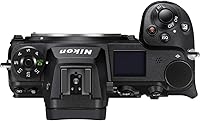
- Shutter Speed: Mechanical shutter operates from 30 seconds to 1/8000 sec, with flash sync speed at 1/200 sec.
- Card Slots: Dual card slots accept CFexpress Type B or XQD in slot one, and UHS-II SD cards in slot two, enabling simultaneous backup or overflow recording.
- Viewfinder: 0.8x magnification electronic viewfinder provides a large, clear view for precise manual focus and composition checking.
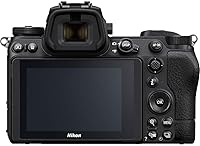
- Rear Screen: 3.2-inch tilting touchscreen LCD with approximately 2,100k-dot resolution supports touch-to-focus and touch shutter operation.
- Lens Mount: Nikon Z mount is natively compatible with all NIKKOR Z lenses and supports approximately 360 F-mount NIKKOR lenses via the FTZ mount adapter (sold separately).
- Connectivity: Built-in Bluetooth and Wi-Fi enable remote control and image transfer via the SnapBridge app, while USB-C, HDMI, 3.5mm mic, and 3.5mm headphone ports cover wired workflows.
- Power: EN-EL15c lithium-ion battery supports USB-C pass-through charging, allowing the camera to remain powered during livestreams, timelapses, or long video shoots.
- Body Construction: Magnesium alloy body with weather and dust sealing is built to withstand professional outdoor use and heavy daily handling.
- Body Weight: The camera body weighs approximately 1.9 lbs (705g) without lens, battery, or memory cards.
- File Formats: Captures stills in 14-bit RAW (NEF), TIFF, and JPEG formats across aspect ratios of 3:2, 4:5, and 1:1, with video recorded as MP4.
- Audio I/O: Dedicated 3.5mm microphone input and 3.5mm headphone output allow real-time audio monitoring during video recording.
- Vertical Grip: The body is compatible with the optional MB-N11 vertical battery grip, which adds portrait-orientation controls and accepts two batteries for extended shooting.
- Warranty: Covered by a one-year manufacturer warranty from Nikon USA, applicable to USA model units purchased through authorized retailers.
Related Reviews
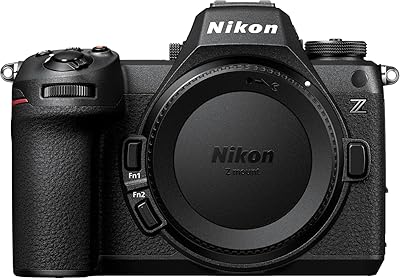
Nikon Z6 III
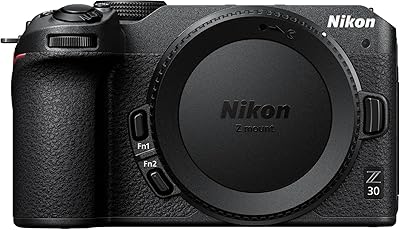
Nikon Z 30 Mirrorless Camera
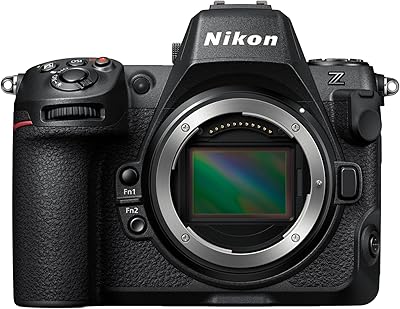
Nikon Z 8
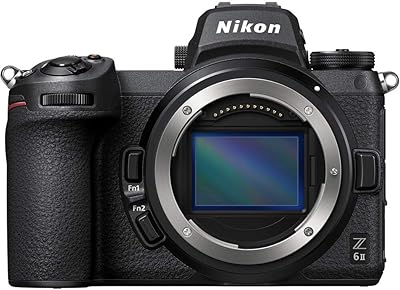
Nikon Z 6II Full-Frame Mirrorless Camera
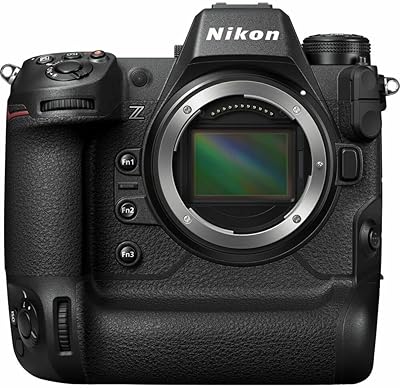
Nikon Z9 Full-Frame Mirrorless Camera
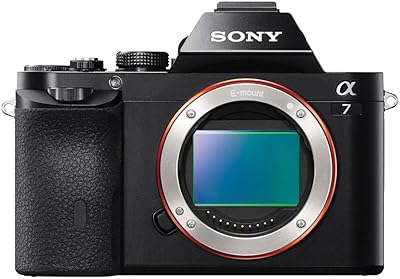
Sony a7 Full-Frame Mirrorless Camera
Panasonic LUMIX S5 Full Frame Mirrorless Camera
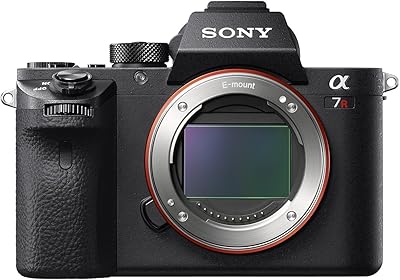
Sony a7R II Full-Frame Mirrorless Camera
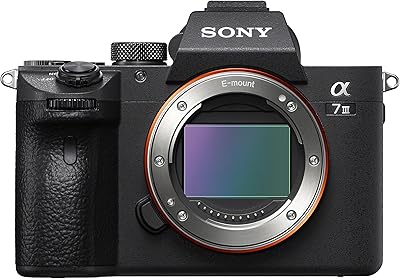
Sony a7 III