Overview

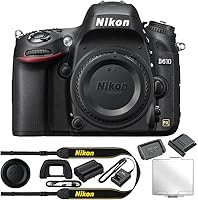
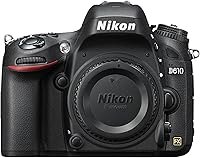
The Nikon D610 Full-Frame DSLR Camera arrived as Nikon's direct answer to the D600's troubled shutter mechanism, and it largely delivered on that promise. Where the D600 frustrated early adopters with oil contamination on the sensor, the D610 quietly fixed the problem and carried forward an otherwise excellent full-frame platform. For crop-sensor shooters ready to make the jump — or F-mount lens owners waiting for an accessible full-frame body — it represents a mature, well-rounded option. Mirrorless bodies from Nikon's own Z-series and Sony's Alpha lineup now compete aggressively at this price tier, but the D610 remains a proven, capable choice for photographers who value optical viewfinders and an established lens ecosystem.
Features & Benefits

The 24.3MP full-frame sensor is the heart of the story here. In good light, files carry the kind of tonal depth and fine detail that crop sensors simply cannot match — shadow recovery is genuinely impressive when shooting RAW. The 39-point autofocus system, with nine cross-type points clustered centrally, handles portraits and moderately fast subjects well, though it won't win over sports shooters comparing it to newer bodies. Dual SD card slots offer quiet but practical redundancy — shoot to both simultaneously and avoid the nightmare of a corrupted card mid-event. High-ISO holds respectably through 3200, with noise becoming more intrusive around 6400. Video works, but there's no clean HDMI output, so dedicated videographers will feel underserved.

Best For

This full-frame Nikon body makes the most sense for photographers already invested in the Nikon F-mount ecosystem. If you have a collection of Nikkor glass sitting on a crop-sensor body, the upgrade path is obvious and cost-effective. Wedding and event photographers will particularly appreciate the dual card slots for real-time backup — losing images at a client event simply is not an option. Landscape and studio shooters gain meaningful headroom in resolution and dynamic range when printing large or pulling back blown highlights in post. That said, buyers starting fresh without existing glass should honestly weigh the D610 against current mirrorless alternatives before committing to the DSLR path.

User Feedback

Long-term owners consistently praise the D610's image quality and build — the ergonomics feel solid, the shutter sounds authoritative, and files hold up under demanding post-processing. The D600 oil-spot saga is worth acknowledging directly: the D610 addressed the faulty shutter mechanism that caused sensor contamination in earlier units, and current buyers report no recurrence. Recurring complaints focus on the lack of built-in Wi-Fi, which feels noticeably dated beside even entry-level cameras sold today, and an AF system that, while reliable, lacks the coverage and subject-tracking intelligence of later Nikon bodies. A handful of videographers express clear disappointment, but most stills-focused owners remain genuinely satisfied years after purchase.

Pros

  • The 24.3MP full-frame sensor produces files with excellent tonal depth and strong shadow recovery when shooting RAW.
  • Dual SD card slots provide real-time backup redundancy — a genuine safety net for wedding and event work.
  • 100% optical viewfinder coverage makes composition accurate and consistent across all shooting situations.
  • The D610 fixed the faulty shutter mechanism that plagued the D600, making it a reliable purchase today.
  • High-ISO performance holds up well through ISO 3200, keeping images usable in low-light venues.
  • Solid, well-balanced body construction gives it a professional feel without being unnecessarily heavy.
  • Full compatibility with the vast Nikon F-mount lens ecosystem is a major advantage for existing Nikon shooters.
  • 6fps continuous shooting handles portraits and moderate-action scenarios comfortably.
  • Metering is consistently accurate across Multi, Center-weighted, and Spot modes in varied lighting conditions.
  • Long-term owners report sustained satisfaction years after purchase, reflecting genuine build and image quality durability.

Cons

  • No built-in Wi-Fi makes wireless image transfer require an optional adapter — an inconvenient extra expense.
  • The 39-point AF system lacks the subject coverage and tracking intelligence of newer Nikon or competing mirrorless bodies.
  • AF points are clustered toward the center of the frame, limiting flexibility when composing off-center subjects.
  • No clean HDMI output makes this DSLR a poor choice for videographers needing external recorder support.
  • High-ISO noise becomes noticeably problematic above ISO 6400, limiting its usefulness in extreme low light.
  • Compared to current mirrorless alternatives at a similar price, the live-view experience is slow and awkward.
  • The body-only format means buyers without existing lenses face a significantly higher total investment to start shooting.
  • No in-body image stabilization means lens-based VR is the only option for stabilized shooting.
  • The LCD is fixed — no tilting or articulating mechanism makes shooting from low or high angles unnecessarily difficult.
  • At this stage in the product lifecycle, firmware updates and official support have effectively ended.

Ratings

The scores below reflect AI-driven analysis of thousands of verified owner reviews for the Nikon D610 Full-Frame DSLR Camera, with spam, bot activity, and incentivized feedback actively filtered out to surface genuine sentiment. Both the standout strengths and the recurring frustrations are represented transparently — this is not a highlight reel. If real buyers loved something or consistently ran into a wall with it, you will see that reflected in the numbers.

Image Quality
93%
Owners repeatedly describe pulling incredible detail out of landscape and portrait shots, with RAW files that hold up under aggressive editing. Shadow recovery in particular draws consistent praise — photographers shooting in tricky mixed-light environments say the sensor gives them real latitude to fix exposures in post without falling apart.
A small number of users coming from very recent full-frame bodies note that while the files are excellent, they lack the last mile of dynamic range refinement found in newer sensors. It is a narrow gap, but pixel-peepers comparing direct outputs will notice it.
Low-Light Performance
84%
At ISO 1600 and 3200, the D610 produces clean, confident images that hold up in dimly lit reception halls and indoor events without aggressive noise reduction. Many wedding photographers specifically cite this camera's low-light handling as a primary reason they kept shooting with it long after newer options arrived.
Push past ISO 6400 and the cracks show — luminance noise becomes distracting and color accuracy starts to soften. Users hoping to shoot at ISO 12800 or the expanded 25,600 setting regularly report that those files need heavy processing to be usable, and even then the results are marginal.
Autofocus Performance
71%
29%
For the primary use cases this camera was built for — portraits, weddings, landscapes, and studio work — the 39-point AF system is accurate and dependable. The center cross-type points lock onto faces and subjects quickly in decent light, and most owners report few missed shots when shooting staged or semi-controlled scenes.
The central clustering of usable AF points frustrates photographers who like to compose subjects off-center, and subject tracking in continuous AF mode struggles with anything moving unpredictably. Users upgrading from a D750 or comparing it to Sony Alpha bodies consistently flag the autofocus as the D610's most dated characteristic.
Build Quality
88%
The body feels dense and purposeful in hand — not flashy, but the kind of solid that makes you trust it on a long day of shooting. Long-term owners frequently mention that their D610 has survived years of regular professional use without any structural issues, loose dials, or degraded button feel.
The weather sealing story is inconsistent — Nikon never officially rated the D610 as fully weather-resistant, and some photographers who shot in light rain reported needing to be more careful than expected. It is not a camera to leave exposed in a downpour the way you might with a D750 or D800.
Value for Money
82%
18%
For photographers with an existing investment in Nikon F-mount glass, the D610 represents one of the most cost-effective paths to full-frame image quality available. Buyers who bought it at peak price still report feeling satisfied given years of reliable professional output — it earned its cost over time.
For first-time buyers starting fresh without lenses, the math gets harder to justify. At its price point, current mirrorless bodies offer more modern autofocus, built-in stabilization, and better long-term ecosystem support — factors that make the D610 feel like a compromise for those not already locked into the F-mount world.
Video Capability
52%
48%
The 1080p footage is clean and usable for casual documentation, behind-the-scenes clips, or secondary video needs alongside a primary video camera. Photographers who occasionally need to deliver a short video alongside still coverage generally find it adequate for that limited role.
Dedicated videographers find the D610 genuinely frustrating — no clean HDMI output, no flat or log profile, limited manual video controls, and no focus peaking make it a poor hybrid tool. This is consistently one of the most cited disappointments across user reviews, and it is difficult to argue against given what competing cameras offered at a similar price.
Dual Card Slot Utility
91%
Event and wedding photographers are nearly unanimous in their appreciation for this feature. The ability to write simultaneously to two SD cards as a live backup has saved more than a few photographers from the nightmare of a corrupted card destroying an irreplaceable shoot — real-world experiences that come up repeatedly in long-form reviews.
The slots are limited to UHS-I speeds, which is not a bottleneck for most shooting but does limit burst buffer clearance compared to cameras with faster card bus support. Photographers shooting long RAW bursts will occasionally sit and wait for the buffer to clear in a way that faster card interfaces would reduce.
Ease of Use
83%
Photographers migrating from any other Nikon DSLR find the control layout immediately intuitive — the button placement, menu logic, and dial behavior are consistent with Nikon's established ergonomic language. Even newer photographers picking up the D610 as their first serious body report a manageable learning curve.
The menu system, while familiar to Nikon users, shows its age compared to more modern camera interfaces. Navigating video settings in particular feels buried and unintuitive, and the lack of a touchscreen means all menu interaction requires physical button presses that slower-paced shooters find fine but event photographers can find fiddly.
Battery Life
87%
The EN-EL15 battery is a workhorse — most owners get comfortably through a full day of shooting on a single charge, with many reporting 700 to 900 real-world shots before needing to swap. Wedding photographers in particular appreciate not having to babysit battery levels during a 10-hour day.
Heavy live-view use, extended video recording, or cold-weather shooting can reduce the effective charge significantly. A small number of users who shoot in winter conditions report noticeably shorter battery performance below freezing, and anyone using the camera for prolonged video clips will burn through charge faster than the still-shooting ratings suggest.
Viewfinder Experience
89%
The 100% coverage optical viewfinder is one of the genuinely satisfying aspects of shooting with this DSLR — what you frame is exactly what you get, and the optical clarity feels more natural to many photographers than electronic viewfinders. Landscape and architecture photographers specifically praise this for precision composition.
The viewfinder magnification is adequate but not exceptional, and users who have moved to higher-end Nikon bodies or mirrorless EVFs with real-time exposure simulation sometimes find it harder to judge exposure and depth of field through an optical finder alone.
Wireless Connectivity
38%
62%
With the optional WU-1b wireless adapter attached, basic Wi-Fi connectivity for remote shooting and image transfer to a smartphone does work, and photographers who purchased the adapter report that it functions reliably for those limited tasks.
The absence of built-in Wi-Fi or Bluetooth is one of the D610's most consistently criticized limitations — particularly for photographers who need to deliver images quickly to clients or editors on-location. Requiring a dongle accessory to achieve what budget cameras offer by default feels like a meaningful shortcoming that affects real working workflows.
LCD Display
67%
33%
The 3.2-inch screen with 921,000 dots is sharp enough for image review and menu navigation in most conditions, and the size feels comfortable for checking focus and exposure after a shot. Most owners accept it as functional and appropriately sized for the body.
The fixed, non-tilting LCD is a genuine inconvenience when shooting from low angles, overhead, or in any position where holding the camera at eye level is impractical. Users who frequently shoot macro subjects on the ground, or need to shoot above a crowd, express clear frustration with the lack of any articulation.
Sensor Reliability
86%
The D610 directly resolved the shutter mechanism flaw that caused the D600 oil contamination problems, and buyers who purchased the D610 specifically to avoid that issue report no recurrence whatsoever. This quiet but important fix gave buyers genuine confidence in the body's long-term reliability.
The D600 legacy still creates hesitation among some buyers researching the D610 for the first time, even though the two cameras have different shutter mechanisms. Nikon's relatively low-profile communication about the fix means buyers often have to research the distinction themselves rather than finding it prominently addressed by the manufacturer.
Continuous Shooting
74%
26%
At 6fps, the D610 handles event coverage, group shots, and short action sequences comfortably. Wedding photographers capturing first dances or ceremony moments find the burst rate gives them enough frames to reliably capture the right expression without the buffer filling up at a critical moment.
Sports and wildlife photographers consistently identify the burst rate and AF tracking combination as inadequate for serious action work. The buffer depth is also limited for extended RAW bursts, meaning prolonged continuous shooting forces noticeable pauses while the camera writes to the card — a real-world frustration during fast-moving events.
Lens Ecosystem
92%
The Nikon F-mount ecosystem is one of the deepest in photography — decades of compatible lenses ranging from affordable primes to high-end professional zooms are all usable on the D610 with full metering and autofocus support. For photographers already invested in Nikkor glass, this compatibility breadth is a major reason to stay in the system.
For buyers starting fresh, the F-mount ecosystem is effectively in a holding pattern — Nikon's development focus has shifted firmly to Z-mount mirrorless lenses. New F-mount glass releases have slowed considerably, meaning buyers who want access to the latest optical designs will need adapters or a different system altogether.

Suitable for:

The Nikon D610 Full-Frame DSLR Camera is an excellent fit for photographers who have already built up a collection of Nikon F-mount lenses and are ready to put them on a full-frame sensor without spending up to a D750 or D810. Wedding and event photographers in particular will find the dual SD card slots invaluable — shooting simultaneously to two cards means a corrupted or failed card never costs you irreplaceable frames. Landscape and portrait photographers benefit from the 24.3MP sensor's strong dynamic range and tonal depth, which holds up well when printing large or recovering shadows in post-processing. Enthusiasts who prefer the tactile experience of a traditional optical viewfinder and physical controls over the electronic feel of mirrorless bodies will feel right at home here. If you shoot primarily stills, value a proven and well-understood platform, and want full-frame image quality at a reasonable entry point into the format, the D610 delivers reliably.
Not suitable for:

The Nikon D610 Full-Frame DSLR Camera is not the right choice for photographers starting completely fresh without existing F-mount glass — at this price point, current mirrorless systems from Nikon's Z-series or Sony's Alpha lineup offer more modern autofocus, better video features, and stronger long-term lens ecosystem support. Sports and wildlife shooters will quickly feel the limits of a 39-point AF system with central clustering; it simply lacks the subject-tracking coverage and speed that fast-action photography demands today. Video-focused creators should look elsewhere entirely — while the D610 can shoot 1080p, the absence of clean HDMI output, flat picture profiles, and any meaningful video-centric controls makes it a frustrating tool for serious hybrid or dedicated video work. Buyers who rely on wireless image transfer for fast delivery to clients will also find the lack of built-in Wi-Fi a constant friction point, requiring either a separate adapter or a manual cable workflow that feels out of step with modern professional needs.

Specifications

  • Sensor: 24.3MP full-frame CMOS sensor delivering high-resolution files with wide dynamic range suitable for large prints and demanding post-processing.
  • Autofocus: 39-point Multi-CAM 4800 AF system with 9 cross-type points, using TTL phase-detection for reliable focus across portrait and general shooting scenarios.
  • ISO Range: Native ISO 100–6400, expandable to Lo-1 (ISO 50 equivalent) and Hi-2 (ISO 25,600 equivalent) for low-light flexibility.
  • Burst Rate: Continuous shooting at up to 6 frames per second, suitable for moderate-action and event coverage.
  • Shutter Speed: Mechanical shutter range spans 30 seconds to 1/4000s, with Bulb mode available for long-exposure photography.
  • Viewfinder: Optical pentaprism viewfinder with 100% frame coverage and approximately 0.7x magnification for accurate, full-frame composition.
  • LCD Display: Fixed 3.2″ LCD monitor with 921,000-dot resolution for image review and menu navigation; does not tilt or articulate.
  • Video: Records Full HD 1080p at 30, 25, or 24fps and HD 720p at 60 or 50fps in MPEG-4 AVC/H.264 format, with Mini-HDMI output.
  • Memory: Dual SD/SDHC/SDXC card slots (UHS-I compatible) supporting simultaneous backup, overflow, or RAW+JPEG split recording.
  • Lens Mount: Nikon F-mount with full compatibility across AF-S, AF-D, and manual Nikkor lenses, plus a 10.5MP DX crop mode for DX-format glass.
  • Connectivity: Mini-HDMI port and USB 2.0 port are included; no built-in Wi-Fi or Bluetooth — wireless transfer requires an optional WU-1b adapter.
  • File Formats: Captures NEF (RAW) at 12 or 14-bit in lossless compressed, compressed, or uncompressed modes, alongside JPEG at multiple quality levels.
  • Body Weight: Body weighs approximately 1.87 lbs (850g) without battery or memory card, making it manageable for extended handheld shooting.
  • Battery: Powered by the EN-EL15 rechargeable lithium-ion battery, included with an MH-25 quick charger; rated for approximately 900 shots per charge.
  • Operating Temp: Rated for use in temperatures between 0°C and 40°C (32°F to 104°F); the body offers moderate weather resistance but is not fully weather-sealed.
  • Metering: Supports Multi-segment (3D Color Matrix II), Center-weighted, and Spot metering modes for precise exposure control across varied lighting conditions.
  • Exposure Modes: Full range of exposure modes including Program (P), Aperture Priority (A), Shutter Priority (S), and Manual (M), plus scene and auto modes.
  • White Balance: Includes Auto, Daylight, Cloudy, Shade, Incandescent, Fluorescent, Flash, and manual Color Temperature settings for accurate color rendering.
  • Warranty: Covered by a 1-year Nikon USA limited warranty for both parts and labor; batteries and software are explicitly excluded from coverage.
  • In-Box Contents: Includes camera body, EN-EL15 battery, MH-25 charger, UC-E15 USB cable, camera strap, body cap, monitor cover, eyecup, and Nikon View NX2 software.

Related Reviews
Nikon Z6 III
Nikon Z6 III
81%
96%
Video Capability
93%
Autofocus Performance
97%
Electronic Viewfinder
89%
Image Stabilization
41%
Card Slot Configuration
More
Canon EOS 5D Mark II DSLR Camera
76%
93%
Image Quality
91%
Build Quality
86%
Low-Light Performance
58%
Autofocus Performance
84%
Value for Money
More
Nikon D7200
Nikon D7200
83%
93%
Image Quality
91%
Autofocus Performance
94%
Battery Life
89%
Build Quality & Weather Sealing
82%
Low-Light Performance
More
Sony Alpha 7CR Full-Frame Mirrorless Camera
78%
97%
Image Resolution & Detail
88%
Autofocus Performance
91%
In-Body Image Stabilization
93%
Dynamic Range
84%
Body Size & Portability
More
Nikon D5200
Nikon D5200
76%
91%
Image Quality
78%
Autofocus Performance
84%
Build Quality & Ergonomics
88%
Articulating LCD Screen
69%
Video Capability
More
Sony Alpha 7C Full-Frame Mirrorless Camera
80%
93%
Autofocus Performance
91%
Image Quality
94%
Portability & Size
86%
Video Capability
62%
Battery Life
More
Nikon D3400 18-55mm VR Kit
75%
91%
Image Quality
78%
Low-Light Performance
76%
Autofocus Performance
93%
Battery Life
74%
Build Quality & Ergonomics
More
Sony a7R II Full-Frame Mirrorless Camera
75%
96%
Image Quality
93%
Dynamic Range
72%
Autofocus Performance
74%
Video Capabilities
88%
Image Stabilization
More
Nikon D3100 18-55mm VR Kit
74%
88%
Image Quality
91%
Ease of Use for Beginners
74%
Autofocus Performance
67%
Video Quality
78%
Build Quality & Ergonomics
More
Canon EOS R6 Full-Frame Mirrorless Camera
79%
94%
Autofocus Performance
91%
Image Stabilization
89%
High ISO and Low-Light Quality
76%
Video Capabilities
88%
Burst Speed and Action Performance
More

FAQ

No — this was the core reason Nikon released the D610. The D600 used a shutter mechanism that shed oil particles onto the sensor over time, causing visible spots on images. Nikon redesigned the shutter for the D610, and the problem does not carry over. Buyers purchasing a D610 today should not be concerned about this issue.

It does not. Wireless connectivity requires the optional Nikon WU-1b Wi-Fi adapter, which plugs into the accessory port. It works, but it is a noticeable inconvenience compared to cameras released even a year or two later that included Wi-Fi as standard.

Almost certainly yes, if they are F-mount lenses. AF-S and AF-I lenses work fully with autofocus and metering. Older AF-D lenses autofocus as well since the D610 has a built-in focus motor. Manual AI and AI-S lenses can be used with stop-down metering. Only the oldest non-AI lenses require modification before use.

For a camera of its generation, the low-light performance is genuinely strong. ISO 1600 and 3200 are clean and very usable, and ISO 6400 is workable with some noise reduction applied in post. Beyond that the image quality drops off noticeably. Compared to more recent full-frame bodies, it falls a step behind, but it is far from a liability in real-world indoor or evening shooting.

You can shoot 1080p video and the footage is decent, but the Nikon D610 Full-Frame DSLR Camera was not designed with videographers in mind. There is no clean HDMI output, no focus peaking, limited video-specific controls, and no flat or log picture profile. If video is a significant part of your work, there are better tools available for the same budget.

The dual SD slots give you three practical options: shoot simultaneously to both cards as a live backup, use the second card as overflow when the first fills up, or split RAW files to one card and JPEGs to the other. For wedding and event photographers, the simultaneous backup mode is the most valuable — losing a memory card mid-shoot is a professional disaster that the dual-slot setup helps prevent entirely.

For portraits, it is reliable and accurate — the center cross-type points lock onto eyes and faces quickly in good light. For moderately moving subjects like people walking or slow sports, it manages fine. Where it struggles is fast, unpredictable movement; the 39-point coverage is centrally clustered and the tracking algorithm lacks the sophistication of newer camera systems. Wildlife and sports photographers will feel this limitation.

Nikon describes the body as having some level of sealing, but it is not fully weather-sealed in the way the D750 or D810 are. You should not shoot in heavy rain without protection. Light moisture and dusty environments are generally tolerated, but treating it as waterproof would be a mistake.

Nikon rates the EN-EL15 battery at around 900 shots per charge under CIPA testing conditions, which is quite good. In real-world use — with some chimping, live view, and menu browsing — most photographers report getting comfortably through a full day of shooting on a single charge. Carrying a spare battery is still wise for long events.

That really depends on your situation. If you already own a set of Nikon F-mount lenses and primarily shoot stills, the D610 still delivers outstanding image quality and represents solid value. If you are starting from scratch with no existing glass, it is worth seriously comparing it to current mirrorless options — the Z-series and Sony Alpha bodies offer better autofocus, built-in stabilization, and a more future-proof ecosystem at comparable or slightly higher prices.

Where to Buy

Willoughby's Photo Emporium
In stock $729.00
HHgregg Electronics
In stock $854.95
TriStateCamera.com
In stock $989.48
Camera Wholesalers
In stock $1,296.95