Nikon D7200
Overview
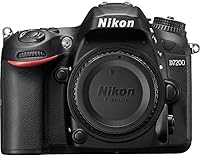
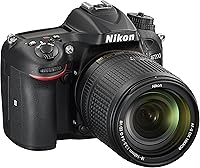
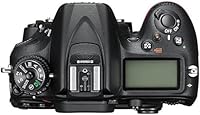
The Nikon D7200 sits at a comfortable middle ground in Nikon's DX lineup — capable enough for serious work, yet more approachable than a full-frame investment. One of the more interesting engineering calls here is the omission of an optical low-pass filter, which pushes fine-detail resolution noticeably higher at the cost of occasional moiré on repetitive patterns. For outdoor shooters, the weather-sealed magnesium body is a genuine selling point, not a checkbox feature. Practically speaking, dual SD card slots — uncommon at this tier — allow simultaneous backup or RAW+JPEG splitting without workarounds. Worth stating upfront: this is a body-only purchase, so your lens budget needs to be part of the conversation from day one.
Features & Benefits
The 24.2MP sensor without a low-pass filter produces images with real clarity — you notice it most on textured surfaces, foliage, or fine fabric. The 51-point autofocus system, anchored by 15 cross-type sensors, tracks moving subjects reliably even in dim conditions; bird-in-flight and sideline sports shots land in focus far more consistently than you might expect at this price tier. At 6fps burst, the D7200 body handles fast action without hesitation. Built-in Wi-Fi and NFC make it straightforward to push JPEGs to a smartphone for quick sharing. The ISO range, expandable to 102,400, adds flexibility for low-light situations, though keeping below the native 25,600 ceiling is the smarter move for clean results.
Best For
This enthusiast camera appeals most to photographers who have outgrown kit-level bodies and want a meaningful step up without crossing into full-frame territory. Wildlife and sports shooters benefit directly from the fast autofocus and burst rate, especially when paired with a long telephoto. Landscape and travel photographers will value the high-resolution output and the unfiltered sensor for capturing fine scene detail. Video is a secondary strength, not a primary one — 1080p footage is clean with an external mic attached, but live-view autofocus lags noticeably behind what current mirrorless cameras offer at comparable prices. Dual-card workflows for backup or format splitting run without friction on this Nikon DSLR.
User Feedback
Long-term owners are broadly positive, with autofocus consistency and build durability cited most often — feedback that holds across years of actual use, not just early impressions. Battery stamina earns consistent praise too; clearing 1,000 shots on a single charge is a real-world advantage that adds up on full shooting days. On the critical side, Nikon's menu architecture frustrates users new to the system, and the learning curve is steeper than some rivals. Video shooters note that live-view AF falls short of mirrorless competition in the same bracket. And for anyone new to the ecosystem, budgeting for lenses separately is a must — the body alone is only part of the equation.
Pros
- The unfiltered 24.2MP sensor resolves fine detail that gives landscape and architecture shots a clear edge over OLPF-equipped rivals.
- Autofocus reliability in mixed and challenging light is a genuine strength that wildlife shooters notice immediately in the field.
- Battery life comfortably exceeds 1,000 shots per charge, making full-day shoots manageable with a single battery.
- Weather sealing and the magnesium alloy body provide real-world confidence when shooting in rain or dusty outdoor conditions.
- Dual SD card slots allow simultaneous backup or RAW and JPEG splitting — a practical workflow advantage rare at this price tier.
- The optical viewfinder is bright, large, and lag-free — a meaningful advantage for tracking fast-moving subjects.
- Nikon F-mount compatibility unlocks decades of affordable used glass, giving buyers strong long-term kit-building flexibility.
- Long-term build reliability is well-documented across years of real-world ownership reports from experienced photographers.
- The Nikon D7200 handles high-ISO noise well within its native range, giving indoor and available-light shooters meaningful flexibility.
- At 6fps, continuous shooting is fast enough to capture decisive moments in sports and wildlife without professional-grade hardware.
Cons
- Body-only format means total system cost climbs quickly once lenses, cards, and accessories are factored in.
- Nikon's layered menu system has a steep learning curve that frustrates photographers new to the brand.
- Live-view autofocus during video recording is unreliable and falls well behind what mirrorless cameras offer at similar prices.
- No 4K video recording, which has become a baseline expectation on competing cameras in the same price bracket.
- Moiré on repetitive fine patterns is a recurring trade-off of the no-OLPF design that requires post-processing attention.
- The body is heavier than most mirrorless alternatives, making it less practical for minimalist travel or everyday carry.
- Wi-Fi pairing via the Snapbridge app is inconsistent enough that some owners abandon wireless transfer entirely.
- Burst buffer depth can limit long shooting runs in uncompressed RAW, especially on slower SD cards.
- Cold weather noticeably reduces real-world battery performance compared to the headline shot-count rating.
- As Nikon focuses resources on mirrorless, long-term service and firmware support for this DSLR body is a growing consideration.
Ratings
The Nikon D7200 has accumulated a substantial body of real-world feedback from enthusiast photographers across skill levels, and our AI-driven scoring system has processed verified global reviews — actively filtering out incentivized, bot-generated, and duplicate submissions — to surface what buyers genuinely experience day to day. Scores reflect both the standout strengths and the honest friction points, because a useful rating has to acknowledge both sides of the ownership experience.
Image Quality
Autofocus Performance
Battery Life
Build Quality & Weather Sealing
Low-Light Performance
Continuous Shooting Speed
Video Capability
Menu System & Usability
Wi-Fi & Connectivity
Value for Money
Viewfinder Experience
Dual Card Slot Functionality
Ergonomics & Handling
Lens Ecosystem Compatibility
Long-Term Reliability
Suitable for:
The Nikon D7200 is built for enthusiast photographers who have hit the ceiling of entry-level DX bodies and are ready to invest in a more capable, durable tool without committing to the cost and bulk of a full-frame system. Wildlife and sports photographers will find the 51-point autofocus and 6fps burst rate genuinely useful in the field — not just on paper — particularly when budget constraints make full-frame alternatives impractical. Landscape and travel photographers who prioritize resolution and fine detail will appreciate the no-OLPF sensor, which rewards careful technique with sharp, highly detailed files. Outdoor shooters who work in unpredictable weather conditions will value the weather-sealed magnesium body as a practical safeguard rather than a luxury upgrade. Photographers who already own Nikon F-mount glass — or who plan to build a kit using the extensive used Nikon lens market — will find the ecosystem compatibility a significant cost advantage. Anyone who wants a reliable dual-card backup workflow for events or travel will find this enthusiast camera one of the few at its tier to offer it without compromise.
Not suitable for:
Buyers whose primary creative ambition is video work should approach the Nikon D7200 with clear-eyed caution — live-view autofocus during recording is unreliable by current standards, and the absence of 4K means this body trails behind mirrorless competitors that now offer both at comparable price points. Photographers completely new to Nikon will face a genuine adjustment period with the menu system, and if ease of use out of the box is a priority, other options deliver a more forgiving onboarding experience. Anyone expecting a complete, ready-to-shoot kit will be caught off guard — this is a body-only purchase, and factoring in a quality lens, spare battery, and fast dual SD cards pushes the real investment considerably higher. Travelers or street photographers who prioritize portability will find the weight and bulk of the D7200 body a daily inconvenience when compared to modern compact mirrorless alternatives. Finally, photographers who anticipate upgrading to full-frame in the near term may find the DX-specific lens investments they make today less transferable than they expect, making the long-term system economics worth thinking through carefully before committing.
Specifications
- Sensor: The camera uses a 24.2MP APS-C CMOS sensor with no optical low-pass filter, maximizing fine-detail resolution across the full pixel count.
- Autofocus System: A 51-point Multi-CAM 3500DX II TTL phase-detection autofocus module is included, with 15 cross-type sensors for reliable subject acquisition in varied lighting.
- ISO Range: Native ISO sensitivity runs from 100 to 25,600, with an expanded ceiling of 102,400 available for extreme low-light scenarios.
- Continuous Shooting: The camera shoots at up to 6 frames per second in continuous high mode, suitable for sports, wildlife, and action photography.
- Shutter Speed: Maximum mechanical shutter speed is 1/8000 second, with a minimum of 30 seconds and bulb mode available for long-exposure work.
- Flash Sync: The maximum flash sync speed is 1/250 second, compatible with iTTL flash control and a standard hotshoe mount.
- Video: Full HD 1080p video is recorded in MP4 format, with an external microphone input for improved audio capture.
- Viewfinder: An optical pentaprism viewfinder provides approximately 100% frame coverage at 0.70x magnification with no electronic lag.
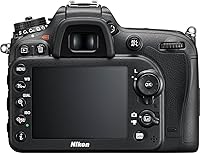
- LCD Screen: A fixed 3.2″ LCD with a resolution of 1,228,800 dots provides clear image review and menu navigation in most lighting conditions.
- Memory Slots: Two SD/SDHC/SDXC card slots support simultaneous backup, overflow, or RAW-plus-JPEG split recording workflows.
- Connectivity: Built-in Wi-Fi and NFC allow wireless image transfer and remote camera control via Nikon's Snapbridge application on compatible smartphones.
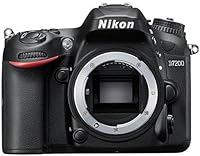
- Lens Mount: The camera uses the Nikon F mount with full AF coupling and AF contacts, ensuring broad compatibility with Nikon and third-party F-mount lenses.
- Body Construction: The chassis is constructed from a magnesium alloy with weather and dust sealing across key joints, buttons, and dials.
- Battery: An EN-EL15 lithium-ion rechargeable battery powers the camera, rated for approximately 1,110 shots per charge under standard testing conditions.
- Shooting Modes: Available exposure modes include Auto, Programmed Auto, Aperture Priority, Shutter Priority, and Manual, along with a range of scene modes.
- Metering: Three metering methods are available: 3D Color Matrix Metering II, Center-Weighted, and Spot, covering a wide range of exposure scenarios.
- File Formats: The camera captures stills as JPEG at Basic, Normal, or Fine compression levels, and NEF RAW files at 12-bit or 14-bit depth.
- Weight: The body weighs approximately 765 grams including battery and memory card, without a lens attached.
- Warranty: Nikon provides a one-year limited warranty covering labor and parts, excluding batteries and bundled software.
- In-Box Contents: The body-only package includes a camera strap, body cap, rubber eyecup, eyepiece cap, EN-EL15 battery, MH-25a charger, and a USB cable.
Related Reviews
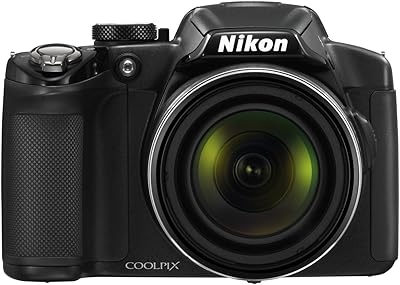
Nikon COOLPIX P510 Digital Camera
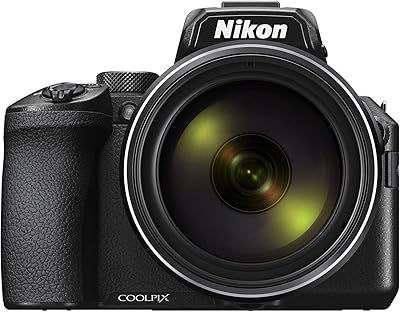
Nikon COOLPIX P950
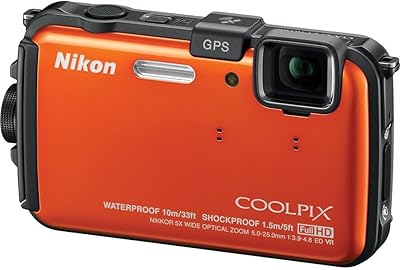
Nikon COOLPIX AW100 Waterproof Compact Camera
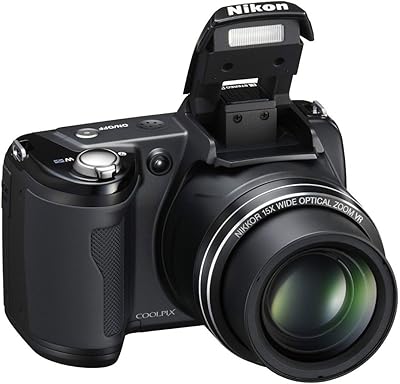
Nikon L105 15x Zoom Digital Camera
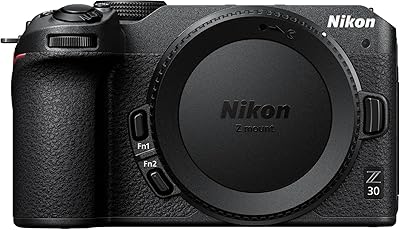
Nikon Z 30 Mirrorless Camera
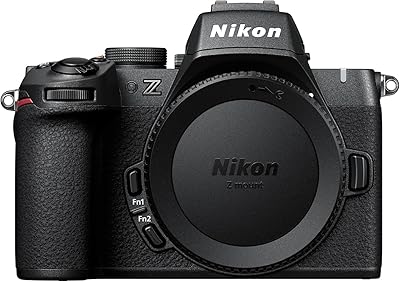
Nikon Z50 II Mirrorless Camera
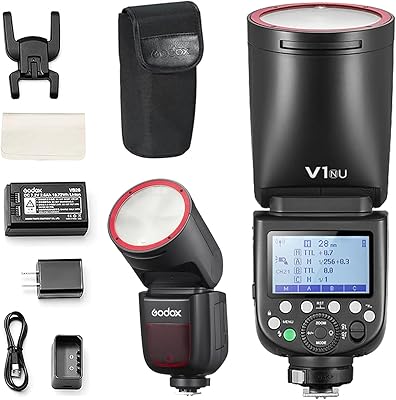
Godox V1-N Nikon Round Head Flash
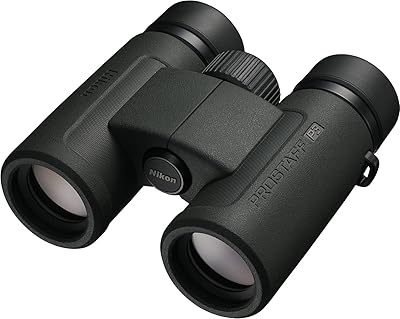
Nikon PROSTAFF P3 10x30
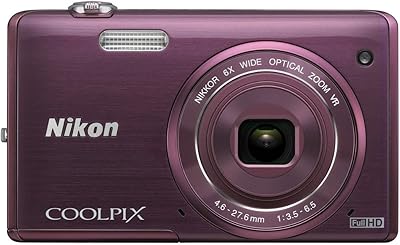
Nikon COOLPIX S5200 Digital Camera