Overview

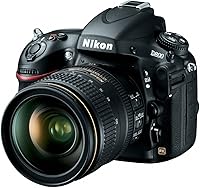
The Nikon D800 36.3MP FX-Format DSLR Camera arrived in 2012 and immediately set a new benchmark for what a professional full-frame body could resolve. At the time, 36 megapixels was genuinely shocking for a DSLR — medium-format territory compressed into a familiar SLR shell. Years on, the D800 remains a serious option for photographers who prioritize maximum image resolution over cutting-edge connectivity or mirrorless convenience. Sold as a body-only unit, it suits shooters migrating from other systems with an existing lens collection, and its professional-tier build holds up comfortably against contemporaries that originally cost considerably more.
Features & Benefits

The real story with the D800 is what those 36 megapixels actually mean in practice — shoot a wide landscape and crop aggressively, detail holds; print at mural scale, no apologies needed. The 51-point autofocus system with 3D tracking handles fast-moving subjects reliably, though it is in static or controlled environments where this full-frame Nikon body truly shines. Dual card slots — one CompactFlash, one SD — let working photographers shoot with a live backup, which matters on paid assignments. Continuous shooting tops out at 6fps, modest by sports standards but practical given the file sizes involved. Video at 1080p includes manual audio controls, though it remains a secondary capability.

Best For

This high-resolution DSLR is a natural fit for landscape, architecture, and studio photographers — anyone shooting deliberate, controlled frames where resolution and dynamic range matter more than burst speed. If you already own Nikon F-mount glass, the upgrade path to full-frame here is straightforward and cost-effective, especially on the used market. Commercial and editorial photographers who need files large enough to survive heavy retouching or tight crops will find the D800 more than adequate. It is less ideal for sports or wildlife shooters who depend on fast, sustained bursts. Video professionals should look elsewhere for a primary camera, as dedicated hybrid video bodies have clearly overtaken it.

User Feedback

Long-term owners consistently point to dynamic range and resolving power as the D800's defining strengths — it is the kind of camera that makes photographers stop second-guessing their gear. The build draws frequent praise too; users report running these bodies hard through years of paid work without significant issues. That said, the file size situation is real: 36-megapixel RAW files are large, and if your storage, backup, and editing workflow is not ready for that volume, frustration sets in fast. Autofocus in low light gets mixed marks — competent, but owners transitioning from newer bodies will notice the gap. Still, long-term value retention is a recurring theme among satisfied owners.

Pros

  • The 36.3MP sensor produces files with extraordinary detail, giving landscape and studio shooters serious cropping latitude.
  • Dynamic range is exceptional, recovering shadow and highlight detail that many competing bodies at launch simply could not match.
  • Dual card slots — CompactFlash and SD — allow simultaneous backup shooting, a practical necessity on professional assignments.
  • The magnesium alloy body has proven durable across years of hard professional use, with many owners reporting minimal wear.
  • A broad Nikon F-mount lens ecosystem means existing glass works immediately, keeping overall system costs manageable.
  • The 51-point autofocus system with 3D tracking handles controlled and moderately fast subjects reliably in good light.
  • Long-term value retention is strong; the D800 holds its reputation on the used market better than many of its contemporaries.
  • Full manual exposure control across aperture priority, shutter priority, and manual modes gives working photographers complete creative flexibility.
  • The optical viewfinder at 0.70x magnification offers a bright, accurate framing experience that many photographers still prefer over electronic alternatives.

Cons

  • RAW files are very large, and without fast cards, a capable computer, and ample storage, the editing workflow becomes a real bottleneck.
  • Autofocus in low-light conditions is noticeably behind what current full-frame bodies deliver, which matters for event or available-light photographers.
  • At 6fps, the continuous shooting rate is modest and will frustrate anyone regularly photographing fast-action subjects.
  • CompactFlash cards are an aging format — finding affordable, high-speed CF media has become less convenient compared to modern SD or CFexpress options.
  • No built-in Wi-Fi or wireless transfer means getting files off the camera requires a cable or a card reader, slowing down fast-turnaround workflows.
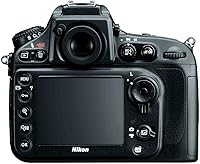
  • The fixed rear LCD does not tilt or articulate, making low-angle or overhead live-view shooting noticeably awkward.
  • Video, while functional at 1080p, lacks the autofocus performance and log profiles that make modern hybrid bodies genuinely useful for serious video work.
  • Shutter shock at certain speeds can introduce subtle blur on high-resolution files without careful technique or electronic shutter workarounds.
  • The body-only format means buyers new to Nikon must budget carefully for compatible lenses, which can substantially increase total investment.

Ratings

The scores below reflect an AI-driven analysis of verified global owner reviews for the Nikon D800 36.3MP FX-Format DSLR Camera, with spam, bot-generated, and incentivized submissions actively filtered out before scoring. Ratings cover the full spectrum of real-world use — from professional studio work to everyday shooting — and transparently surface both the strengths that earned this body its long-standing reputation and the friction points that genuine owners have reported over years of use.

Image Quality
96%
Owners consistently describe the output from this full-frame Nikon body as among the best they have seen from any DSLR, with fine detail that holds up under aggressive cropping and large-format printing. Landscape and commercial photographers in particular note that client-ready files regularly come straight out of the camera with minimal correction needed.
A small number of users report that the extreme resolution magnifies any technique errors — slight camera shake, back-focus, or lens imperfections that would go unnoticed on a 24MP body become visible at 36MP, raising the bar for both gear and shooting discipline.
Dynamic Range
93%
Shadow recovery on the D800 is genuinely exceptional — photographers shooting high-contrast scenes like sunlit architecture or golden-hour landscapes report pulling back multiple stops of underexposed shadow detail without the noise floor becoming unacceptable. This flexibility has made the body a trusted tool for single-exposure HDR-style editing.
While the raw dynamic range headroom is outstanding, extracting it requires shooting in NEF format and investing time in post-processing; JPEG shooters will not see the same latitude, and a few users felt the default tone curves compressed highlights too aggressively straight out of the camera.
Build Quality
91%
Working professionals repeatedly describe the magnesium alloy body as feeling planted and durable, with weather sealing that has held up across multi-day shoots in rain and dusty outdoor environments. Many long-term owners report using the same body for a decade without structural issues, which speaks to the quality of Nikon's construction standards at this tier.
The body is notably heavier than modern mirrorless alternatives, which a portion of owners find fatiguing on extended handheld shoots lasting several hours. A few users also noted that older rubber grip surfaces can deteriorate on heavily used secondhand units.
Autofocus Performance
72%
28%
In well-lit controlled environments — studio setups, outdoor portrait sessions, or architectural shoots — the 51-point system locks on accurately and the 3D tracking keeps up with moderately moving subjects without much complaint. Photographers shooting events in reasonably lit venues generally report consistent keeper rates.
In lower light conditions, particularly at indoor events or under artificial lighting, owners frequently mention that the autofocus hunts noticeably before confirming, and the outer focus points are considerably less reliable than the central cluster. Compared to current-generation full-frame bodies, the low-light AF gap is hard to ignore.
Value for Money
84%
On the used and refurbished market, the D800 delivers a level of image quality that would have required a significantly higher budget at launch, making it one of the more compelling value propositions for photographers moving into professional full-frame territory. Many owners describe it as the most cost-efficient resolution upgrade they have ever made.
The body-only format means the total system cost rises quickly once compatible lenses, fast CompactFlash cards, and capable editing hardware are factored in. Buyers underestimating those downstream costs have occasionally expressed frustration that the initial body price masked the fuller investment required.
Low-Light Performance
68%
32%
At native ISO settings up to around 3200, the high-resolution DSLR produces files with manageable noise that responds well to modern noise-reduction software, and many portrait and event photographers report usable results in dim indoor venues with fast primes attached.
Beyond ISO 3200 the noise becomes more apparent, and the expanded ISO settings above 6400 are generally considered a last resort rather than a practical tool. Photographers accustomed to the low-light performance of more recent sensor generations will find the D800 underwhelming at high sensitivities.
Burst Speed & Buffer
57%
43%
For photographers whose work does not revolve around rapid sequences — studio shooters, landscape artists, or portrait photographers — the 6fps rate is more than adequate and rarely becomes a limiting factor during a normal shooting day.
The buffer fills up quickly when shooting full-resolution RAW files at 6fps, and recovery time between bursts can interrupt shooting rhythm in fast-moving situations. Sports and wildlife photographers consistently flag this as the D800's most significant operational shortcoming.
Video Capability
61%
39%
The presence of a 3.5mm microphone input, headphone monitoring jack, and clean HDMI output gives videographers more practical control than many DSLRs of the same era offered, and the 1080p footage is sharp and color-accurate under good lighting conditions.
Autofocus during video recording is unreliable to the point where most users shoot video in manual focus mode, and the absence of any log picture profile limits post-production flexibility. Dedicated video shooters or hybrid creators will find the D800 a frustrating primary camera compared to what the current market offers.
Ergonomics & Handling
85%
Photographers with larger hands consistently praise the grip depth and button layout, describing the body as intuitive to operate after a short learning period. The logical placement of key controls — exposure compensation, metering mode, and AF selection — means adjustments can be made without pulling the camera from your eye.
The fixed rear LCD does not tilt, which makes low-angle live-view shooting awkward, and a few users with smaller hands find the body slightly large for extended handheld use. These are minor ergonomic compromises, but noticeable ones on longer shooting days.
Storage & Workflow
53%
47%
The dual card slot system — CompactFlash and SD running simultaneously — is genuinely useful for professionals who need real-time backup on assignment, and many working photographers cite it as a key reason they trust the D800 for paid work.
The sheer volume of data generated at 36MP is a recurring pain point; large RAW files demand fast cards, high-capacity storage solutions, and a capable editing workstation to avoid sluggish performance. Photographers who have not upgraded their post-processing setup often find the workflow bottleneck more disruptive than the camera's actual shooting experience.
Battery Life
77%
23%
For a body of its resolution class, the EN-EL15 battery holds up reasonably well during a full day of stills shooting, and the battery is widely available, affordable, and compatible with several other Nikon bodies — a practical advantage for photographers who share batteries across a kit.
Heavy live-view use, video recording, or cold-weather shooting noticeably reduces battery endurance, and owners doing extended fieldwork often carry two or three spares as a precaution. The rated shot count drops significantly in real-world mixed-use conditions compared to the published CIPA figures.
Display Quality
74%
26%
The 3.2-inch LCD with 921,000 dots delivers accurate color rendition and enough resolution for reliable focus checks and exposure histogram review, which is what most photographers primarily use the rear screen for in professional practice.
The fixed, non-articulating panel is a clear limitation compared to more recent bodies with tilting or fully articulating screens, and bright outdoor conditions can wash out visibility enough to make fine focus confirmation difficult without cupping the screen with a hand.
Lens Compatibility
93%
The Nikon F mount opens up one of the deepest lens ecosystems in photography, spanning decades of AF and manual glass — a significant advantage for photographers who already own Nikon lenses or want access to a broad secondhand market. Compatibility with AF-S, AF-D, and even older AI-S lenses makes the D800 a genuinely versatile platform.
A small number of older non-CPU lenses require manual entry of lens data to enable metering, which adds a setup step that less experienced users occasionally find confusing. Adapting non-Nikon glass is possible but generally means sacrificing autofocus and electronic communication with the body.
Connectivity
46%
54%
The USB 3.0 port enables reasonably fast tethered shooting and file transfer to a computer, which studio photographers working with tethering software find functional and stable during extended sessions.
There is no built-in Wi-Fi, Bluetooth, or NFC — wireless image transfer requires the separately purchased WT-5 adapter, an additional expense that feels conspicuous by modern standards. Photographers accustomed to instant mobile transfer on newer bodies will find the D800's connectivity options dated and limiting.
Long-Term Reliability
88%
Owner feedback collected years after purchase consistently highlights the D800 as a body that holds up under professional workloads without developing serious mechanical issues, and Nikon's service network still supports repairs and shutter replacements on this model. Many photographers describe their units as still performing identically to day one.
Shutter actuations do add up on used units bought secondhand, and buyers purchasing pre-owned bodies without shutter count verification face some uncertainty about remaining mechanical life. A small percentage of early production bodies also had a left-side autofocus accuracy issue that Nikon addressed, but unserviced units may still exhibit it.

Suitable for:

The Nikon D800 36.3MP FX-Format DSLR Camera is genuinely well-matched to photographers for whom resolution is the primary currency — landscape shooters printing large, studio photographers delivering files to demanding commercial clients, and architecture specialists who need to crop heavily without losing edge detail. If you already shoot with Nikon F-mount lenses, the transition to this full-frame body is straightforward and often cost-effective, particularly when buying used or refurbished. Advanced amateurs who have outgrown crop-sensor bodies and want a professional-grade tool without paying flagship-new prices will find the D800 a compelling option. The dual card slots are a genuine asset for anyone shooting paid work, offering a live backup that cheaper bodies simply do not provide. For deliberate, tripod-based shooting where each frame is considered rather than sprayed, this high-resolution DSLR consistently over-delivers.
Not suitable for:

The Nikon D800 36.3MP FX-Format DSLR Camera is a poor match for photographers who depend on speed — wildlife and sports shooters chasing sustained bursts will find 6fps limiting, and the large file sizes compound that frustration when buffers slow down. Beginners or casual shooters stepping into photography for the first time will likely find the body-only format daunting and the overall system cost — once lenses, fast storage, and capable editing hardware are factored in — significantly higher than expected. Anyone hoping to use this as a primary video tool should reconsider; while the 1080p output with manual controls is functional, newer mirrorless bodies have moved far ahead for hybrid shooting. Photographers who rely on fast, confident autofocus in dark environments may also find the D800 underwhelming compared to more recent full-frame options. Finally, if your current computer and storage setup is not ready to handle very large RAW files regularly, the workflow demands of this body can become a genuine daily frustration.
Specifications

  • Sensor: Full-frame FX-format CMOS sensor with an effective resolution of 36.3 megapixels and a total pixel count of approximately 36.8 megapixels.
  • Autofocus System: Multi-CAM3500 FX phase-detection module with 51 focus points, including 15 cross-type sensors and selectable 3D subject tracking.
  • ISO Range: Native sensitivity runs from ISO 100 to 6400, expandable to an equivalent of ISO 50 at the low end and ISO 25600 at the high end.
  • Shutter Speed: Mechanical focal-plane shutter covers 1/8000s to 30 seconds, plus Bulb mode for extended manual exposures.
  • Burst Rate: Continuous shooting reaches up to 6fps in FX format when paired with a compatible battery grip, or up to 4fps in standard body-only operation.
  • Video: Records Full HD 1080p video at up to 30fps using MPEG-4/H.264 compression, with manual exposure control available throughout.
  • Display: Fixed 3.2-inch TFT-LCD monitor with 921,000-dot resolution and 170-degree wide-angle viewing, calibrated for accurate color review.
  • Memory Slots: Dual slots accept one CompactFlash Type I card and one SD/SDHC/SDXC UHS-I card simultaneously, enabling backup or overflow recording modes.
  • Lens Mount: Nikon F (FX) bayonet mount with full compatibility across AF-S, AF-D, and a wide range of legacy and third-party Nikon F-mount lenses.
  • Connectivity: USB 3.0 port enables fast tethered shooting and file transfer, alongside a full-size HDMI output for connecting to external monitors or recorders.
  • Flash Sync: Maximum flash sync speed of 1/250s, with support for first-curtain, second-curtain, slow-sync, and red-eye reduction modes via hot shoe or PC terminal.
  • Viewfinder: Optical pentaprism viewfinder delivers 0.70x magnification and approximately 100% frame coverage for accurate, eye-level composition.
  • Audio I/O: Dedicated 3.5mm stereo microphone input and a 3.5mm headphone output allow real-time audio monitoring during video recording.
  • File Formats: Captures NEF (RAW) files at 12-bit or 14-bit depth in lossless compressed, compressed, or uncompressed modes, plus TIFF (RGB), JPEG, and simultaneous RAW+JPEG.
  • Metering: TTL metering system offers four modes: 3D Color Matrix II, center-weighted, spot, and highlight-weighted, covering a broad range of lighting scenarios.

Related Reviews
Nikon D850
Nikon D850
83%
97%
Image Resolution & Detail
96%
Dynamic Range
89%
Autofocus Performance
84%
Continuous Shooting Speed
74%
Video Capabilities
More
Nikon D610 Full-Frame DSLR Camera
78%
93%
Image Quality
84%
Low-Light Performance
71%
Autofocus Performance
88%
Build Quality
82%
Value for Money
More
Nikon D7200
Nikon D7200
83%
93%
Image Quality
91%
Autofocus Performance
94%
Battery Life
89%
Build Quality & Weather Sealing
82%
Low-Light Performance
More
Nikon D5200
Nikon D5200
76%
91%
Image Quality
78%
Autofocus Performance
84%
Build Quality & Ergonomics
88%
Articulating LCD Screen
69%
Video Capability
More
Nikon D60 18-55mm Kit DSLR Camera
67%
83%
Image Quality
49%
Autofocus Performance
81%
Value for Money
86%
Beginner Friendliness
56%
Battery Life
More
Nikon D3400 18-55mm VR Kit
75%
91%
Image Quality
78%
Low-Light Performance
76%
Autofocus Performance
93%
Battery Life
74%
Build Quality & Ergonomics
More
Nikon D3200 24.2MP DSLR
74%
91%
Image Quality
88%
Ease of Use
74%
Autofocus Performance
83%
Value for Money
79%
Build Quality & Handling
More
Nikon D3100 18-55mm VR Kit
74%
88%
Image Quality
91%
Ease of Use for Beginners
74%
Autofocus Performance
67%
Video Quality
78%
Build Quality & Ergonomics
More
Nikon D3300
Nikon D3300
75%
88%
Image Quality
71%
Low Light Performance
79%
Autofocus Performance
84%
Ease of Use
76%
Build Quality & Ergonomics
More
Nikon D300 12.3MP DSLR Camera
75%
89%
Autofocus Performance
93%
Build Quality
81%
Image Quality
88%
Battery Life
86%
Ergonomics & Handling
More

FAQ

Yes, the D800 uses the standard Nikon F mount, so virtually all AF Nikkor lenses are compatible, including older AF-D and AF-S glass. Non-CPU lenses can also be mounted, though you will lose metering and autofocus functionality with those. If you have built up a Nikon lens collection over the years, stepping into this body is a natural and cost-effective move.

The D800 has two card slots: one for CompactFlash Type I cards and one for SD, SDHC, or SDXC cards with UHS-I support. For best performance, use a fast CF card rated at 1000x or higher, since the large RAW files can otherwise create noticeable buffer slowdowns during continuous shooting. SD cards work well for backup or overflow purposes.

At 36.3 megapixels, uncompressed 14-bit NEF files can run between 70 and 75 megabytes each, and even losslessly compressed versions sit around 40 to 50 megabytes. A day of active shooting can easily fill hundreds of gigabytes of storage. If your current setup relies on an older hard drive and limited RAM, you will want to upgrade to an SSD and at least 16GB of RAM before making the most of this body.

For the right photographer, absolutely. If your work centers on landscapes, architecture, or studio still-life where maximum resolution matters and speed is secondary, the D800 remains genuinely competitive. The areas where age shows most are autofocus in very low light and the absence of wireless connectivity, but neither is a dealbreaker for the primary use cases this camera was built for. On the used market, it represents strong value for a professional full-frame body.

It can handle video in a supporting role — the 1080p output is clean, manual exposure control is available, and the mic and headphone jacks are genuinely useful. That said, this is a stills-first camera, and the autofocus during video recording is not reliable enough for run-and-gun or documentary work. If video is a significant part of your workflow, a more recent mirrorless body will serve you much better.

No, there is no built-in Wi-Fi or Bluetooth. Wireless tethering requires the optional Nikon WT-5 transmitter accessory. For most studio and landscape photographers this is not a problem, but if fast wireless transfer or remote control from a phone is important to your workflow, factor in the extra cost of that accessory or consider whether a more recent body suits you better.

The camera takes the Nikon EN-EL15 lithium-ion battery, which is widely available and also compatible with several other Nikon bodies, making spares easy to find. Rated battery life is approximately 900 shots per charge under CIPA testing conditions, though heavy live-view or video use will reduce that noticeably. Carrying a second battery on longer shoots is always a sensible precaution.

In decent light, the 51-point system is fast and accurate. In darker environments — indoor events, dim venues, night scenes — it can hunt and occasionally miss focus, particularly with the outer focus points. Photographers used to more recent bodies with improved low-light AF sensitivity will notice the difference. For static subjects in controlled lighting, however, precision is not an issue.

Honestly, it is not the best tool for those disciplines. The 6fps burst rate is modest, and the large file sizes mean the buffer fills up faster than a sports or wildlife shooter would like. The autofocus system is capable with predictable movement, but it does not match the tracking performance of bodies designed specifically for action. If fast, sustained bursts are central to your shooting, you would be better served by a different body.

Yes, the D800 offers a 1.2x DX crop mode, which reduces the effective sensor area and lowers the output resolution to around 25 megapixels while slightly increasing the apparent reach of your lenses. There is also a 5:4 crop mode. These are useful options when using DX lenses on the body, though for most shooters the full FX frame is the primary reason to choose this camera.