Overview

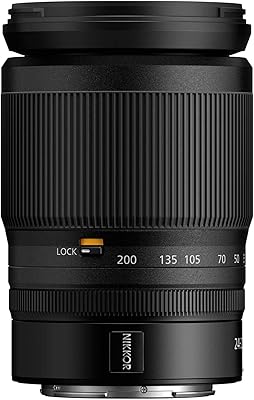
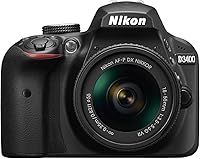
The Nikon D3400 18-55mm VR Kit is Nikon's answer to the classic beginner question: how do I get serious about photography without spending a fortune? Paired with an 18-55mm stabilized kit lens, this entry-level DSLR covers everything from wide landscapes to short telephoto portraits right out of the box. It sits in a competitive bracket alongside the Canon Rebel SL2 and Sony a6000, though it leans more traditional in its approach. As the successor to the well-regarded D3300, it refines rather than reinvents. Image quality is genuinely strong; connectivity and video flexibility, less so. Going in with that context makes all the difference.
Features & Benefits

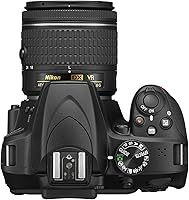
The heart of this Nikon beginner camera is its 24.2-megapixel sensor, which skips the optical low-pass filter to extract every bit of sharpness from a scene. In practice, fine textures — fabric, foliage, architectural detail — render with impressive clarity. The EXPEED 4 processor keeps up at 5 frames per second, handy for catching a kid mid-jump or a bird in flight. Low-light performance holds up well into indoor available-light situations. The kit lens earns its keep too: the stepping motor autofocus is whisper-quiet and the optical stabilization genuinely helps at slower shutter speeds. The optical viewfinder is a real advantage for anyone learning exposure — there's value in composing through glass rather than a screen.

Best For

If you're coming from a smartphone and want a meaningful jump in image control, this entry-level DSLR is a natural starting point. Photography students will find it capable enough to handle coursework — RAW files give plenty of room to learn post-processing — while the body stays compact enough to carry daily. Travelers benefit from the lightweight build and the lens range covering most everyday shooting situations. Parents chasing fast-moving kids will appreciate the reliable phase-detection autofocus and burst mode. And if you've been curious about manual settings but intimidated by pro-level bodies, the D3400 kit offers a forgiving learning curve without locking you out of real creative control. It rewards curiosity.

User Feedback

Across more than a thousand verified purchases, the pattern is clear: image sharpness is what buyers mention most, often with genuine surprise at what this camera produces compared to their old point-and-shoot. Battery life is another consistent highlight — many report shooting full days without reaching for a spare. Where feedback gets mixed is SnapBridge. The Bluetooth auto-transfer concept is appealing, but Android users in particular report inconsistent pairing and a clunky app experience. A few buyers also wish for an articulating or touchscreen display. The kit lens gets solid marks for general use, but portrait and low-light shooters frequently flag it as the first upgrade target. Overall, this Nikon beginner camera holds a strong 4.3-star average — earned on real-world results, not marketing.

Pros

  • 24.2-megapixel sensor delivers image sharpness that consistently surprises buyers upgrading from compact cameras.
  • Exceptional battery life — many users report 800 to over 1,000 shots on a single charge.
  • The optical viewfinder gives beginners a lag-free, immersive way to learn framing and composition.
  • AF-P kit lens autofocus is whisper-quiet, making it far less disruptive in quiet or social settings.
  • 14-bit RAW files offer real flexibility for hobbyists learning post-processing in Lightroom or similar software.
  • Lightweight body under 14 ounces makes this entry-level DSLR a practical everyday carry for students and travelers.
  • 5fps burst mode with phase-detection AF gives parents a fighting chance at sharp action shots.
  • Optical image stabilization in the kit lens genuinely reduces blur at slower shutter speeds indoors.
  • Strong out-of-the-box versatility — the 18-55mm range covers landscapes, everyday scenes, and short portraits without swapping glass.
  • At used or open-box prices, the D3400 kit delivers well above its cost in real photographic capability.

Cons

  • SnapBridge Bluetooth connectivity is unreliable on Android and the companion app feels unpolished and slow.
  • The fixed, non-articulating LCD makes low-angle, overhead, and self-facing shots genuinely awkward.
  • No touchscreen means users coming from smartphones face an adjustment to button-and-dial-only navigation.
  • Video manual controls are too limited for anyone with real filmmaking or content creation goals.
  • Autofocus coverage with only 11 points struggles when subjects move unpredictably across the frame edges.
  • High-ISO noise above ISO 3200 softens fine detail, limiting the camera in truly dark environments.
  • The camera is discontinued, raising long-term concerns about firmware updates and first-party support.
  • Buffer clearance slows noticeably during extended RAW burst sequences, causing frustrating wait times.
  • Kit lens performance wide open at the long end is soft, pushing users toward a lens upgrade sooner than budgeted.
  • No weather sealing leaves the body vulnerable during unexpected rain or dusty outdoor conditions.

Ratings

The Nikon D3400 18-55mm VR Kit scores here are generated by our AI system after analyzing thousands of verified global buyer reviews, with spam, bot-submitted, and incentivized feedback actively filtered out. What remains is an honest picture of where this entry-level DSLR genuinely delivers and where real users hit frustration. Both the highs and the friction points are reflected transparently in every category below.
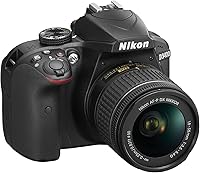
Image Quality
91%
Buyers across skill levels consistently report that the 24.2-megapixel sensor produces stills with a level of sharpness and color accuracy that surprises people coming from smartphones or basic compacts. Outdoor daylight shots in particular show excellent fine detail, and the absence of an optical low-pass filter gives images a crispness that stands out at this price tier.
In very high-contrast scenes, highlight recovery in JPEG mode can be limiting, and users shooting in RAW must invest time in post-processing to get the most out of the files. A handful of reviewers also noted some fringing in wide-open kit lens shots at the longer focal lengths.
Low-Light Performance
78%
22%
The EXPEED 4 processor handles moderate indoor lighting situations well, and shots taken at ISO 800 to 1600 remain usable with acceptable noise levels. Many users praised the camera for birthday parties, school events, and dim restaurant settings where flash is awkward or unwanted.
Beyond ISO 3200, noise becomes noticeable and fine detail softens, which limits the D3400 kit in truly dark environments without fast glass. The kit lens maximum aperture of f/3.5 to f/5.6 does not help in low light, and several buyers specifically flagged this pairing as the bottleneck rather than the sensor itself.
Autofocus Performance
76%
24%
The 11-point phase-detection autofocus locks on quickly in good light, and the AF-P stepping motor in the kit lens is noticeably quieter than older screw-drive lenses, making it less distracting during casual shooting. Parents shooting kids at school events found the burst plus autofocus combination capable of grabbing sharp frames in fast-moving situations.
The 11-point AF coverage feels narrow compared to rivals offering 49 or more points, and tracking a subject moving unpredictably across the frame can result in missed shots. Low-light autofocus hunting was a recurring criticism, particularly when shooting under tungsten or mixed indoor lighting.
Battery Life
93%
The EN-EL14a battery is a genuine strong point — a large number of buyers reported comfortably shooting full-day outings, hiking trips, or weddings as a second shooter without needing a spare. Estimates of 800 to over 1,000 shots per charge appear consistently across user reports, which is exceptional for this camera class.
Heavy use of live view or video recording drains the battery significantly faster, and users who shoot video regularly found the real-world life much shorter. The camera does not charge via USB, so a separate charger is required, which some travelers flagged as an inconvenience.
Build Quality & Ergonomics
74%
26%
The body feels solid in hand for a plastic-shell entry-level camera, and the grip depth is comfortable for extended handheld shooting. Most users who moved from compact cameras described the ergonomics as a clear step up, with well-placed primary controls that do not require menu diving for basic adjustments.
The all-plastic construction does not inspire confidence for rough outdoor use, and there is no weather sealing — a limitation several users discovered the hard way in light rain. Compared to slightly higher-tier bodies, the button layout can feel cramped for those with larger hands.
Kit Lens Quality
71%
29%
The AF-P 18-55mm VR lens covers a practical everyday range, and the optical image stabilization genuinely reduces camera shake at slower shutter speeds — handy for travel and indoor available-light photography. The quiet stepping motor also makes this lens a reasonable option for casual video walkaround use.
Wide open at f/5.6 on the long end, sharpness softens and background blur is modest at best, which frustrates users hoping for portrait-style subject separation. The plastic mount and retractable barrel feel lightweight, and a significant portion of reviewers listed replacing this lens as one of their first planned upgrades.
SnapBridge Connectivity
44%
56%
When the Bluetooth pairing works as intended, the automatic background image transfer to a smartphone is genuinely convenient — a handful of users on iOS reported a relatively smooth setup experience and appreciated not having to manually transfer files after a shoot.
Android users overwhelmingly reported inconsistent pairing, frequent dropouts, and an app interface that feels unpolished and slow. This was one of the most commonly cited frustrations in the review pool, with multiple buyers calling SnapBridge the single biggest disappointment of the D3400 kit.
Video Capability
58%
42%
1080p footage at up to 60fps is usable for casual family videos, vacation clips, and basic documentation, and the optical stabilization in the kit lens helps smooth out minor camera movement during handheld walking shots.
Manual control during video is severely limited — there is no way to pull focus smoothly or adjust exposure on the fly in a practical way. Compared to rivals like the Canon Rebel SL2 or Sony a6000, the D3400 kit trails noticeably for anyone with genuine video ambitions, and rolling shutter is visible during panning shots.
Display & Screen
55%
45%
The 3-inch LCD is bright enough for reviewing shots in most outdoor conditions, and the 921k-dot resolution is sufficient for checking basic composition and exposure after the fact.
The fixed, non-articulating screen is a real limitation for low-angle shots, overhead angles, or selfie-style vlogging — situations where a tilting display would matter. The lack of touchscreen functionality also drew consistent criticism from users accustomed to smartphone-style tap-to-focus interaction.
Value for Money
83%
Considering that the D3400 kit is often available used or open-box at a significant discount from its original retail price, the image quality and build-in features represent strong value for a first DSLR. Buyers who purchased via certified refurb channels in particular reported feeling they got considerably more camera than the price suggested.
At full original retail, the competition from newer mirrorless options has caught up and in some cases surpassed this entry-level DSLR in features per dollar. Buyers unaware that the camera is discontinued may pay more than necessary if not shopping carefully across used and refurbished marketplaces.
Ease of Use for Beginners
86%
The guided mode and scene-based shooting options give true beginners a comfortable on-ramp, and the menu system is logically organized for those ready to push into manual controls. Photography students in particular appreciated having a camera that grows with them rather than locking them into fully automatic mode.
The depth of the menu system can feel overwhelming in the first few weeks, and some features that beginners expect — like in-camera panorama or touch-to-focus — are simply absent. Accessing certain settings requires navigating multiple menu layers, which frustrated users who expected a more modern touch-driven interface.
Portability & Weight
81%
19%
At under 14 ounces for the body alone, this entry-level DSLR is lighter than most people expect, and the compact form factor makes it a realistic daily carry for students and travelers. Several users specifically mentioned choosing it over bulkier alternatives for international trips.
When paired with the kit lens, the combined package is still noticeably bulkier than mirrorless alternatives of similar sensor size, which matters for minimalist travelers. The protruding lens barrel when extended also catches on bags more than users anticipated.
RAW File Flexibility
84%
The 14-bit RAW files give hobbyists and students meaningful latitude for exposure correction, white balance adjustments, and shadow recovery in post-processing. Users who invested time learning Lightroom or Capture NX-D reported being genuinely impressed by how much they could pull from underexposed frames.
RAW files are large and can slow buffer clearance during burst shooting, which frustrated users trying to capture fast action in rapid succession. Those unfamiliar with post-processing software may find the JPEG straight-out-of-camera output slightly over-sharpened or color-shifted depending on the picture control setting used.
Viewfinder Experience
79%
21%
The optical viewfinder with 0.85x magnification is a highlight that mirrorless competitors at this price often cannot match, giving users a bright, lag-free view through the lens that helps with learning composition and framing in real time.
The viewfinder coverage is not 100 percent, meaning the final captured frame includes slightly more than what was visible while composing — a minor but recurring complaint among users who noticed cropped subject placement in their shots. Beginners unfamiliar with this optical quirk sometimes found it confusing.

Suitable for:

The Nikon D3400 18-55mm VR Kit is a genuinely strong match for anyone taking their first serious step into photography — someone who has outgrown their phone camera and wants real creative control without being overwhelmed. Photography students will find it capable enough to handle coursework that requires RAW shooting, manual exposure, and interchangeable lenses, while the relatively compact and lightweight body makes it easy to carry to class or on location. Parents who want sharp, dependable shots of fast-moving kids at sports events or school plays will appreciate the phase-detection autofocus and 5fps burst mode, which together give a much better hit rate than a smartphone in challenging situations. Travelers who prioritize image quality over connectivity features will also be well served — the exceptional battery life means fewer worries about running dry mid-trip, and the optical stabilization in the kit lens helps rescue shots in dimly lit interiors without a tripod. Hobbyists curious about post-processing will find the 14-bit RAW files surprisingly flexible, rewarding those willing to spend time in editing software.
Not suitable for:

Buyers with serious video ambitions should approach the Nikon D3400 18-55mm VR Kit with clear eyes, because this is not a video-first camera — manual exposure control during recording is limited, there is no headphone jack for audio monitoring, and rolling shutter is noticeable during panning shots. Content creators or vloggers who need an articulating screen for self-facing recording will find the fixed 3-inch LCD a hard constraint that no workaround can fix. Anyone who relies heavily on wireless photo transfer via smartphone should also think carefully, as the SnapBridge Bluetooth system has a documented history of frustrating setup experiences, particularly on Android devices. Photographers who want to grow quickly into wildlife, sports, or event work may find the 11-point autofocus system limiting sooner than expected, especially when tracking erratic subject movement across the frame. And since this camera has been discontinued, buyers expecting long-term firmware support, new first-party accessories, or easy warranty servicing through Nikon may encounter gaps that a current in-production model would not present.
Specifications

  • Sensor: 24.2-megapixel APS-C format CMOS sensor with no optical low-pass filter, allowing for sharper resolution of fine detail in still images.
  • Processor: EXPEED 4 image processor handles noise reduction, color rendering, and burst sequencing with efficient power consumption.
  • ISO Range: Native ISO sensitivity runs from 100 to 25600, with the ability to push further in expanded mode for extreme low-light situations.
  • Autofocus System: 11-point phase-detection autofocus system with a Multi-CAM 1000D module, covering the central portion of the frame.
  • Continuous Shooting: Captures up to 5 frames per second in continuous high mode, with a buffer that handles moderate burst lengths in both JPEG and RAW.
  • Kit Lens: Bundled AF-P DX NIKKOR 18-55mm f/3.5-5.6G VR lens features a quiet stepping motor and optical Vibration Reduction stabilization.
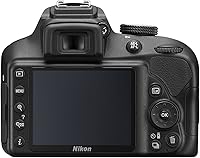
  • Viewfinder: Optical pentamirror viewfinder with 0.85x magnification and approximately 95 percent frame coverage.
  • Display: Fixed 3-inch TFT LCD monitor with 921,000-dot resolution; no articulation or touch input is supported.
  • Video: Records FHD 1080p video in MP4 format at up to 60fps; manual exposure control during recording is limited.
  • Connectivity: Bluetooth 4.1 via SnapBridge for background image transfer, plus full-size HDMI output and a USB 2.0 data port.
  • Storage: Single SD card slot compatible with SD, SDHC, and SDXC cards; supports UHS-I bus speed for faster write performance.
  • File Formats: Saves stills as JPEG (Basic, Normal, or Fine compression) or 14-bit uncompressed NEF RAW; video is recorded as MP4.
  • Battery: EN-EL14a lithium-ion rechargeable battery rated for approximately 1,200 shots per charge under CIPA standard testing conditions.
  • Body Weight: Camera body weighs approximately 13.9 oz (395g) without battery, memory card, or lens attached.
  • Shutter Speed: Mechanical shutter range spans from 30 seconds to 1/4000 second, with a flash sync speed of 1/200 second.
  • Built-In Flash: Integrated pop-up flash with a guide number of approximately 12 meters at ISO 100, supporting red-eye reduction and slow sync modes.
  • Lens Mount: Nikon F-mount with AF contacts, compatible with a wide range of DX and FX Nikkor lenses; some older lenses require manual focus.
  • Dimensions: Camera body measures approximately 4.9 x 3.86 x 3.0 inches (124 x 98 x 75.5mm) without lens.
  • Warranty: Covered by a one-year limited warranty from Nikon, valid through authorized service centers in the country of purchase.
  • In-Box Contents: Package includes camera body, AF-P 18-55mm VR lens, EN-EL14a battery, MH-24 charger, USB cable, eyepiece cap, and body cap.

Related Reviews
Nikon D5500 DSLR Camera with 18-55mm VR II Lens
87%
91%
Image Quality
88%
Ease of Use
85%
Battery Life
80%
Build Quality
89%
Autofocus Performance
More
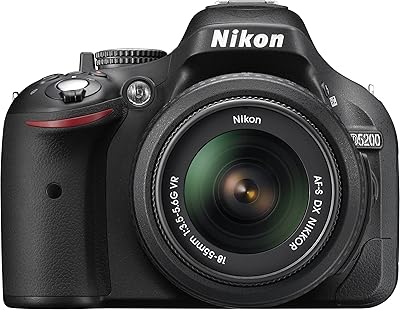
Nikon D5200
Nikon D5200
76%
91%
Image Quality
78%
Autofocus Performance
84%
Build Quality & Ergonomics
88%
Articulating LCD Screen
69%
Video Capability
More
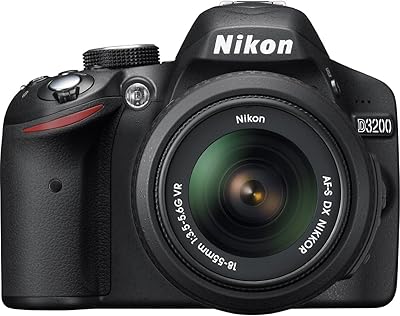
Nikon D3200 24.2MP DSLR
74%
91%
Image Quality
88%
Ease of Use
74%
Autofocus Performance
83%
Value for Money
79%
Build Quality & Handling
More
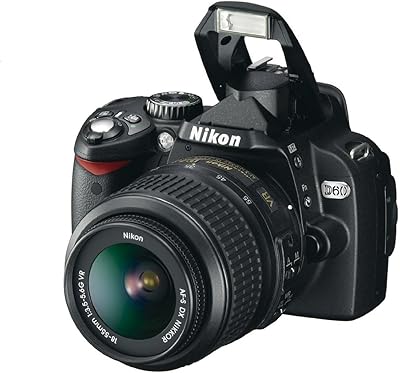
Nikon D60 DSLR Camera with 18-55mm Lens
82%
88%
Image Quality
91%
Ease of Use
84%
Portability/Weight
85%
Lens Versatility
83%
Build Quality
More
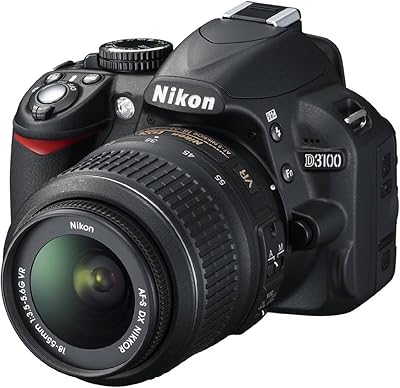
Nikon D3100 18-55mm VR Kit
74%
88%
Image Quality
91%
Ease of Use for Beginners
74%
Autofocus Performance
67%
Video Quality
78%
Build Quality & Ergonomics
More
Nikon NIKKOR Z DX 18-140mm VR Lens
87%
87%
Performance
91%
Image Stabilization
95%
Portability/Weight
80%
Autofocus Speed
85%
Build Quality
More
Canon EOS Rebel SL3
Canon EOS Rebel SL3
77%
88%
Image Quality
84%
Autofocus Performance
82%
Build Quality & Portability
61%
Video Capabilities
91%
Ease of Use
More
OVEHEL HQ-18 18-inch RGB Ring Light Kit
85%
89%
Lighting Performance
88%
Ease of Use
92%
Value for Money
85%
Build Quality
75%
Portability/Size
More
Pentax KF 18-55 WR Kit
84%
87%
Image Quality
90%
Build Quality
84%
Ease of Use
88%
Portability
75%
Battery Life
More
Zecti 18″ Ring Light Kit with 82″ Stand
87%
88%
Lighting Performance
91%
Ease of Use
84%
Build Quality
90%
Portability
85%
Compatibility with Devices
More

FAQ

Yes, for the right buyer it absolutely is. The Nikon D3400 18-55mm VR Kit still produces excellent image quality, and used or certified refurbished units are often available at prices that make the value proposition even stronger. The main consideration is that Nikon will not be pushing new firmware updates, so what you see is what you get in terms of features. If image quality and battery life matter more to you than cutting-edge specs, it remains a smart buy.

It depends on your phone and operating system. iOS users generally report a smoother pairing experience, while Android users have encountered inconsistent Bluetooth connections and an app that can feel sluggish or unresponsive. If wireless transfer is a core reason you are buying this camera, go in with low expectations for SnapBridge specifically. A direct USB connection or SD card reader will always be the more reliable option for getting images off the camera.

Many older Nikon F-mount lenses will physically fit the D3400, but there are important limitations. The camera does not have an in-body autofocus motor, so lenses without their own focus motor — most older AF lenses with a screwdriver coupling — will only work in manual focus mode. CPU-chipped AI-S and AF-S lenses generally work well; non-CPU lenses lose metering functionality entirely. It is worth checking Nikon's compatibility chart for your specific lens before assuming full functionality.

Any UHS-I rated SD or SDHC card will work well. A card with a speed class of U1 or U3 is recommended if you plan to shoot RAW files or record video, as slower cards can cause buffer delays during burst shooting. Brands like SanDisk, Lexar, and Sony offer reliable options. Capacity-wise, a 32GB card is a practical starting point for most users.

Yes, it covers everything a beginner-to-intermediate course typically requires. You get full manual exposure control, RAW file support, interchangeable lenses, and an optical viewfinder — all of which instructors commonly expect students to use. The 24.2-megapixel sensor also gives you meaningful room to crop and edit, which matters when you are learning post-processing alongside shooting technique.

It holds up exceptionally well by DSLR standards. On a typical shooting day — walking around a city, shooting events, or traveling — most users get comfortably through the day on a single charge. The key is to minimize heavy use of live view and video, both of which drain the battery considerably faster than shooting through the optical viewfinder. Carrying a spare EN-EL14a is still worthwhile on long trips, and the battery is inexpensive to source.

The kit lens can produce decent portrait shots, especially outdoors in good light at 55mm. However, the maximum aperture of f/5.6 at that focal length limits background blur and low-light performance. If portraits are your primary interest, a 50mm f/1.8G or a 35mm f/1.8G DX lens would be a meaningful and affordable upgrade that transforms the quality of your results without breaking the budget.

Honestly, it is not the right tool if video is your main goal. The 1080p footage is usable for casual clips, but the lack of manual exposure control during recording, no headphone jack, a fixed screen that does not face forward, and limited autofocus tracking in video mode all combine to make it a poor fit for regular video creators. If video matters as much as stills, a Canon Rebel SL3 or a mirrorless body in a similar price range would serve you better.

The most meaningful additions in this entry-level DSLR over the D3300 are SnapBridge Bluetooth connectivity and the newer AF-P lens with its stepping motor and quieter autofocus. Image quality is very similar between the two, as both share comparable sensors and processors. If you find a D3300 at a significantly lower price, it remains a capable alternative — the D3400 is really only a clear step up if Bluetooth transfer or the quieter kit lens are priorities for you.

No, there is not. The D3400 does not support in-body USB charging, so you will need to remove the EN-EL14a and place it in the included MH-24 charger. This is a genuine inconvenience for travelers who prefer to charge devices via a single USB power bank. Some third-party dual chargers are available that let you charge two batteries simultaneously, which is a practical solution if you decide to carry a spare.