Overview

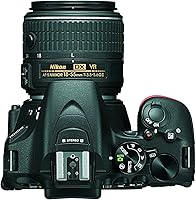
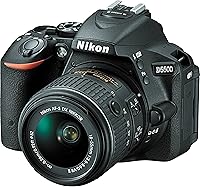
The Nikon D5500 18-55mm DSLR Camera sits in an interesting spot — built for photographers who have outgrown a basic point-and-shoot but aren't ready to invest in a professional-grade system. What makes this mid-range Nikon body stand out physically is its slim, lightweight build, coming in under a pound, which is genuinely uncommon for a DSLR with this level of capability. The bundled 18-55mm VR II lens covers everyday shooting competently, though serious portrait or landscape work will eventually push you toward additional glass. Released in 2015, it now competes in a market crowded with capable mirrorless alternatives, yet it still holds its ground as a strong stills performer — just don't walk in expecting a workhorse for demanding professional assignments.
Features & Benefits

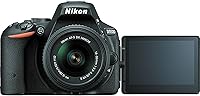
The 24.2MP sensor skips the optical low-pass filter, which sounds technical but translates simply: photos render with noticeably crisper detail across things like fabric textures, foliage, and architectural edges. The 39-point autofocus handles moving subjects well — tracking a running child or a pet without much fuss — though it isn't the quickest AF available at this tier today. That vari-angle touchscreen earns its keep fast: flip it out for ground-level flower shots or overhead crowd photos without awkward contortions. Video tops out at 1080p/60fps, solid for casual content but trailing mirrorless rivals that now offer 4K as standard. Built-in Wi-Fi rounds things out, letting you push images directly to a smartphone with minimal friction.

Best For

This Nikon crop-sensor DSLR hits its stride with a specific shooter: someone curious enough to explore aperture and shutter priority but not yet committed to a full professional system. Travel photographers benefit most from the compact form factor — it fits into a small shoulder bag without the bulk of larger bodies. Parents chasing toddlers at a birthday party will find the burst mode and responsive AF genuinely handy. Aspiring videographers on tight budgets get flip-screen convenience and decent HD output, even though 4K isn't on the table. Photography students also gain a real long-term advantage: Nikon F-mount compatibility opens access to an enormous lens ecosystem as skills and spending power grow together.

User Feedback

Across nearly 700 ratings, the D5500 kit holds a steady 4.5-star average, and the pattern in feedback is consistent: buyers praise image sharpness, appreciate the responsive touchscreen, and frequently note how much easier it is to carry compared to bulkier DSLRs. Long-term owners rarely sour on it — satisfaction tends to hold up well past the initial excitement. That said, recurring criticisms are worth knowing upfront: there is no built-in AF motor, which locks out autofocus on older Nikon lenses without internal motors, and the buffer depth can struggle during extended burst sequences. Battery life is a genuine bright spot, with most users reporting a full day of shooting without needing a spare. First-time buyers occasionally find the menu system dense, but most settle in within a few weeks.

Pros

  • The 24.2MP sensor without an optical low-pass filter produces genuinely sharp, detailed images that punch above this price tier.
  • Weighing under a pound, the D5500 kit is one of the lightest DSLRs you can buy with this level of image quality.
  • The vari-angle touchscreen is a practical advantage for shooting from awkward angles without guesswork.
  • Battery life is a real strength — roughly 820 shots per charge means most shooters get a full day without carrying a spare.
  • Nikon F-mount compatibility gives access to hundreds of lenses, keeping your investment relevant as your photography grows.
  • The 39-point autofocus handles everyday moving subjects, including children and pets, reliably well.
  • Built-in Wi-Fi makes transferring images to a smartphone quick and low-effort for casual sharing.
  • 1080p/60fps video is smooth and capable for social content, vlogs, and basic slow-motion clips.
  • The EXPEED 4 processor keeps noise controlled and colors accurate even at higher ISO settings.
  • Long-term owners consistently report sustained satisfaction — this is not a camera people tend to regret after the honeymoon period.

Cons

  • No built-in AF motor means older Nikon lenses without internal motors lose autofocus functionality entirely.
  • The buffer fills up faster than expected during extended burst sequences, which frustrates action and sports shooters.
  • No 4K video is a real limitation now that many competing cameras offer it as standard at this price level.
  • The kit 18-55mm lens shows visible softness and distortion toward the edges at wider apertures.
  • Menu navigation feels dense and dated compared to more modern camera interfaces, with a steeper learning curve for true beginners.
  • No weather sealing means outdoor shooting in rain or dusty conditions carries genuine risk of damage.
  • The optical viewfinder coverage is not 100%, which can cause minor framing surprises in the final image.
  • Wi-Fi connectivity relies on older software that can feel clunky compared to the wireless experience on current mirrorless systems.
  • The body alone has limited room to grow for photographers who eventually want dual card slots or more advanced metering options.
  • Resale value has dropped significantly as mirrorless alternatives have matured, making it a harder long-term financial bet.

Ratings

The scores below reflect an AI-driven analysis of verified global buyer reviews for the Nikon D5500 18-55mm DSLR Camera, with spam, bot-generated, and incentivized submissions actively filtered out to ensure the data reflects genuine ownership experiences. Across thousands of real-world ratings from hobbyists, students, and enthusiast photographers, both the standout strengths and the honest frustrations of this mid-range Nikon body are transparently represented.

Image Quality
91%
The 24.2MP sensor without an optical low-pass filter consistently draws praise from users who shoot detailed subjects — architecture, landscapes, and close-up portraits all come out with edge-to-edge sharpness that surprises buyers stepping up from entry-level cameras. Colors are rendered accurately and natural-looking straight out of the camera, even in JPEG.
At very high ISO settings above 6400, noise becomes visible enough to soften fine detail, which limits available-light shooting in darker indoor environments. A handful of reviewers also note that the kit lens introduces some edge distortion and chromatic aberration at wider focal lengths, which pulls the overall system sharpness down from what the sensor alone is capable of.
Autofocus Performance
78%
22%
For everyday hobbyist scenarios — kids at a park, a family gathering, casual street photography — the 39-point AF system locks on quickly and tracks moving subjects with reliable consistency. Users frequently describe it as noticeably faster and more confident than entry-level DSLRs they had previously owned.
In lower light or with lower-contrast subjects, the AF system hunts more than buyers expect, and the coverage across the frame does not extend far enough to the edges for off-center compositions without recomposing. Sports and wildlife shooters in particular find the tracking accuracy insufficient for sustained fast-action sequences compared to more recent AF systems.
Build Quality & Ergonomics
83%
The body feels solid for its weight class, with a well-textured grip that gives secure handling even during longer outings. Users transitioning from compact cameras consistently comment that the D5500 feels like a proper camera without the intimidating heft of larger DSLRs.
There is no weather sealing of any kind, which becomes a genuine inconvenience for outdoor photographers who shoot in variable conditions — even light rain or dusty environments feel risky. A few long-term users note that the mode dial can feel slightly loose over time, though this appears to be an intermittent rather than widespread issue.
Touchscreen & Display
88%
The fully articulating 3.2-inch capacitive touchscreen is one of the most praised features among buyers who shoot video or creative stills. Being able to tap to focus or swing the screen for overhead and low-angle shots makes casual shooting noticeably more flexible than a fixed-screen DSLR in similar use cases.
Direct sunlight washes out the display more than users would like, making outdoor live-view composition genuinely frustrating on bright days. The screen also picks up fingerprints quickly and, while the touch response is accurate, the refresh rate during live view can lag slightly when panning across busy scenes.
Video Capability
67%
33%
For casual content creators shooting vlogs, family videos, or YouTube tutorials, the 1080p/60fps output is clean and smooth, with the flip screen adding real practical value during self-filming. Footage holds up well in good lighting and the MP4 format is easy to edit without specialized software.
The absence of 4K recording is the single most cited complaint among buyers who researched the D5500 kit for video use — it is a real gap in an era where many competing cameras at or below this price tier now offer 4K as standard. There is also no headphone jack for audio monitoring, and rolling shutter is noticeable during quick pans, which limits its usefulness for more polished video productions.
Battery Life
89%
The EN-EL14a battery regularly earns direct praise in buyer reviews, with most users comfortably making it through full-day outings — festivals, day trips, family events — on a single charge without anxiety. The approximately 820-shot CIPA rating translates well to real-world use, especially with Wi-Fi kept off.
Enabling Wi-Fi continuously cuts into battery life more than some users anticipate, particularly when the camera is repeatedly broadcasting its hotspot looking for a connection. A small number of reviewers also note that battery performance degrades faster than expected after 18 to 24 months of regular use, though this is not unique to this model.
Portability & Size
92%
At under a pound for the body alone, this Nikon crop-sensor DSLR is one of the lightest interchangeable-lens cameras with genuine enthusiast-level image quality, and travel photographers consistently cite this as a key reason they chose it over bulkier alternatives. It fits into a small shoulder bag with the kit lens attached, which removes a major barrier to actually bringing the camera along.
The compact dimensions, while appreciated for portability, do result in a slightly cramped grip for users with larger hands — extended shooting sessions can feel less comfortable than with a deeper-grip body. Accessing some buttons and controls also requires small adjustments in hand position that users with bigger hands find mildly disruptive during fast shooting.
Lens Compatibility
61%
39%
The Nikon F-mount opens up access to an enormous catalog of modern AF-S and AF-P lenses, giving buyers a genuine long-term upgrade path as their photography develops. For users starting fresh with modern glass, the breadth of compatible lenses is a meaningful advantage over proprietary mounts.
The missing built-in AF motor is a significant and recurring pain point — any older Nikon AF or AF-D lens is reduced to manual-focus-only use, which catches many buyers off guard, particularly those who assumed older Nikon lenses would work fully. This limitation is not prominently disclosed in many listings, and several reviewers describe it as a frustrating surprise post-purchase.
Wi-Fi & Connectivity
69%
31%
For basic wireless image transfer to a smartphone, the built-in Wi-Fi does its job without requiring additional hardware or adapters. Users who want to quickly send a handful of shots to their phone for social media sharing find the process workable once the initial setup is complete.
The companion app — Nikon Wireless Mobile Utility — feels dated and generates consistent complaints about slow transfer speeds and a clunky interface compared to how modern mirrorless cameras handle wireless connectivity. The camera does not support Bluetooth for persistent low-power pairing, which means you need to manually reconnect the Wi-Fi each time, adding friction to what should be a simple workflow.
Kit Lens Quality
72%
28%
The included 18-55mm VR II lens covers a versatile everyday focal range and the Vibration Reduction system works effectively at slower shutter speeds, reducing handheld blur during indoor or dim-light shooting where the shutter must slow down. For learning composition and exposure fundamentals, it is a practical starting point.
Wide open at f/3.5 to f/5.6, the lens shows noticeable edge softness and some barrel distortion at 18mm that buyers doing architectural or landscape work will notice and likely find limiting. Most enthusiast users report feeling the urge to upgrade beyond this kit lens within six to twelve months as their photography develops.
Ease of Use
74%
26%
The touchscreen shortcuts and guided on-screen modes reduce the initial intimidation factor for new DSLR users, and the physical control layout is logical enough that most buyers find their way around the key shooting functions within a few days. For anyone stepping up from a point-and-shoot, the learning curve is real but manageable.
The menu system is deep and not particularly intuitive — finding less-used settings requires digging through multiple sub-menus, which can interrupt the shooting rhythm, especially for new users under time pressure. First-time DSLR owners frequently flag this in reviews as the biggest early frustration before they develop familiarity with the layout.
Value for Money
81%
19%
For buyers who need a capable still-image camera with a flip screen and solid Nikon F-mount compatibility, the D5500 kit offers a strong combination of hardware at its price point, and long-term owners rarely report buyer's remorse — satisfaction holds up well beyond the initial purchase period.
Compared to newer mirrorless alternatives entering the market at similar prices, the lack of 4K, the dated Wi-Fi implementation, and the absent AF motor start to chip away at the value proposition for buyers who care about any of those features. For photographers whose primary need is video or future-proofing, the value calculus is less favorable than it was at launch.
Burst Shooting & Buffer
63%
37%
At 5fps, the burst mode is adequate for short bursts of action — a child jumping, a pet mid-run, or a quick sequence of expressions during a portrait session. Casual sports and family photographers find it responsive enough for their typical use cases.
The buffer depth is a real limitation that shows up quickly under sustained shooting — after roughly 10 to 14 RAW frames in a continuous burst, the camera slows noticeably while it writes to the card. Action photographers who need long uninterrupted bursts will find this a meaningful bottleneck that affects their keeper rate in fast-moving situations.
Low-Light Performance
76%
24%
In the ISO 800 to 3200 range, images retain good detail and color fidelity that holds up well for indoor events, restaurant shooting, and evening walks — a clear step up from what smartphone cameras or entry-level DSLRs deliver in similar conditions.
Once ISO climbs past 6400, luminance noise increases enough to affect print quality and fine-detail retention, and the camera lacks in-body image stabilization to help offset the need for higher ISOs in hand-held low-light scenarios. Users who regularly shoot in dark venues or at night will find the OLPF-free sensor not enough to compensate for these system-level limitations.

Suitable for:

The Nikon D5500 18-55mm DSLR Camera is a strong match for hobbyists who have hit the ceiling of smartphone photography and want genuine control over their images without drowning in complexity. Photography students will find it especially practical — the Nikon F-mount opens up a vast lens ecosystem to grow into as skills sharpen, making it a camera that can last through several years of learning. Travel photographers who resent hauling heavy gear will appreciate that this mid-range Nikon body slips into a compact bag at under a pound without sacrificing real image quality. Parents photographing kids at birthday parties, sports days, or school plays benefit from the responsive 39-point autofocus and 5fps burst mode, which together handle unpredictable movement reasonably well. Budget-conscious video creators also get genuine value here: the flip-out touchscreen and 1080p/60fps output cover the basics of vlogging and casual content production without requiring a separate rig.
Not suitable for:

Buyers who need 4K video should look elsewhere — the D5500 kit caps at 1080p, and that gap is increasingly hard to ignore as mirrorless cameras at similar or lower price points now offer 4K as a baseline. Photographers hoping to use older Nikon lenses from their collection will run into a real frustration: this mid-range Nikon body has no built-in autofocus motor, meaning lenses without internal motors will only work in manual focus mode. Wildlife, sports, or event photographers who need deep buffer capacity for long, sustained bursts will find the buffer depth limiting during intense shooting sessions. Anyone expecting to step straight into professional client work — weddings, commercial shoots, editorial assignments — will quickly outgrow what the D5500 offers in terms of autofocus sophistication, weather sealing, and overall system depth. If your workflow demands the latest computational photography features, faster subject-tracking AI, or an electronic viewfinder, a modern mirrorless body is the more future-proof investment.

Specifications

  • Sensor: The camera uses a 24.2MP APS-C CMOS sensor with no optical low-pass filter, which helps preserve fine detail in high-resolution stills.
  • Processor: Nikon's EXPEED 4 image processor handles noise reduction, color rendering, and continuous shooting performance.
  • Autofocus: A 39-point Multi-CAM4800DX autofocus module supports Continuous-Servo AF and Manual Focus modes for tracking moving subjects.
  • ISO Range: Native ISO spans 100 to 25,600, giving usable sensitivity across a wide range of indoor and low-light shooting conditions.
  • Burst Speed: Continuous shooting runs at up to 5 frames per second, suitable for capturing fast-moving subjects in short bursts.
  • Video: Video recording tops out at 1080p Full HD at 60fps, saved in MP4 format, with no 4K recording capability.
  • Display: A 3.2-inch vari-angle capacitive touchscreen with 1,037,000 dots articulates fully away from the body for flexible framing angles.
  • Viewfinder: An optical pentamirror viewfinder offers 0.82x magnification and approximately 95% frame coverage.
  • Shutter Speed: Mechanical shutter speed ranges from 30 seconds to 1/4000s, with flash sync at speeds below 1/200s.
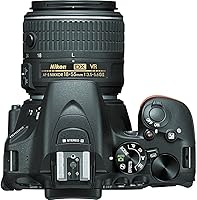
  • Lens Mount: The Nikon F mount accepts both DX and FX format lenses, though lenses without internal AF motors will only operate in manual focus.
  • Kit Lens: The included AF-S DX NIKKOR 18-55mm f/3.5-5.6G VR II lens covers standard wide-to-short-telephoto focal lengths with optical image stabilization.
  • Connectivity: Built-in Wi-Fi allows wireless image transfer to compatible smartphones using the Nikon Wireless Mobile Utility app.
  • Storage: The camera accepts SD, SDHC, and SDXC memory cards, compatible with speed classes C2 through C10 and UHS-I standards.
  • Battery: The EN-EL14a lithium-ion battery delivers an approximate 820 shots per charge under CIPA standard test conditions.
  • Body Weight: The camera body weighs approximately 0.93 lbs (420g) without lens, battery, or memory card, making it notably light for a DSLR.
  • File Formats: Still images can be captured as JPEG (Fine, Normal, Basic) or NEF RAW at 12-bit or 14-bit depth, with DPOF and DCF 2.0 compliance.
  • Metering: Three metering modes are available: Matrix, Center-weighted, and Spot, selectable depending on the lighting scenario.
  • Exposure Modes: Supported exposure modes include Auto, Aperture Priority, Shutter Priority, and full Manual, alongside a set of scene modes.
  • Flash: A built-in pop-up flash is included, with an accessory hot shoe for attaching external Nikon Speedlight units.
  • Warranty: Nikon provides a one-year limited warranty covering parts and labor, excluding batteries and bundled software.

Related Reviews
Nikon D60 18-55mm Kit DSLR Camera
67%
83%
Image Quality
49%
Autofocus Performance
81%
Value for Money
86%
Beginner Friendliness
56%
Battery Life
More
Nikon D3200 24.2MP DSLR
74%
91%
Image Quality
88%
Ease of Use
74%
Autofocus Performance
83%
Value for Money
79%
Build Quality & Handling
More
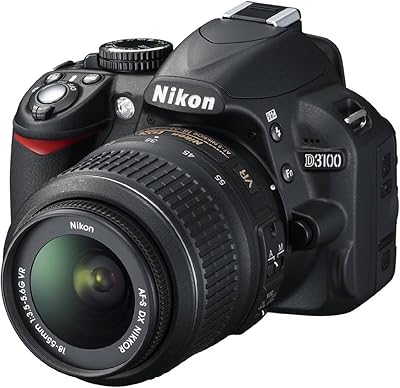
Nikon D3100 18-55mm VR Kit
74%
88%
Image Quality
91%
Ease of Use for Beginners
74%
Autofocus Performance
67%
Video Quality
78%
Build Quality & Ergonomics
More
Nikon D5200
Nikon D5200
76%
91%
Image Quality
78%
Autofocus Performance
84%
Build Quality & Ergonomics
88%
Articulating LCD Screen
69%
Video Capability
More
Nikon D3400 18-55mm VR Kit
75%
91%
Image Quality
78%
Low-Light Performance
76%
Autofocus Performance
93%
Battery Life
74%
Build Quality & Ergonomics
More
Canon Rebel XS DSLR Camera
74%
83%
Image Quality
88%
Ease of Use
52%
Low-Light Performance
86%
Value for Money
74%
Autofocus Performance
More
Canon EOS Rebel T7
Canon EOS Rebel T7
76%
88%
Image Quality
91%
Ease of Use
74%
Autofocus Performance
82%
Build Quality & Handling
53%
Video Capability
More
Canon EOS Rebel T6i
Canon EOS Rebel T6i
79%
91%
Image Quality
83%
Autofocus Performance
88%
Ease of Use
79%
Build Quality & Handling
61%
Video Capabilities
More
Canon EOS Rebel T1i DSLR Camera
70%
83%
Image Quality
88%
Ease of Use
74%
Build Quality
71%
Autofocus Performance
52%
Video Capability
More
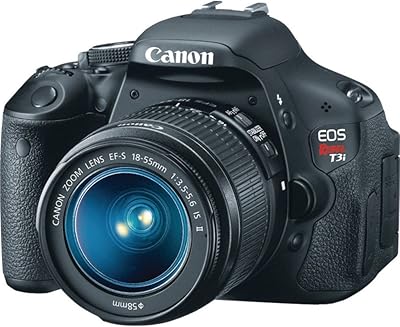
Canon EOS Rebel T3i
Canon EOS Rebel T3i
76%
83%
Image Quality
91%
Ease of Use
67%
Video Performance
72%
Autofocus System
88%
Articulating Screen
More

FAQ

It can work well for a motivated beginner, but it is better described as an enthusiast-level camera than a pure beginner body. There is a learning curve to the menu system and manual controls, so if you have zero photography experience, expect to spend some time with the manual and online tutorials. That said, the touchscreen and guided display modes help flatten that curve considerably.

You can mount older Nikon F-mount lenses physically, but there is an important catch: this mid-range Nikon body has no built-in autofocus motor. Any lens that relies on a body-side AF motor — typically older AF and AF-D lenses — will only work in manual focus mode. Lenses labeled AF-S or AF-P have their own internal motors and will autofocus normally.

No, it does not. Video maxes out at 1080p Full HD, up to 60fps. For casual vlogging, YouTube content, or slow-motion clips, that is genuinely sufficient. However, if 4K is a requirement for your work, you will need to look at more recent mirrorless or DSLR options that have made 4K standard.

The 3.2-inch touchscreen rotates fully away from the camera body on a hinge, letting you tilt it toward you for selfies, flip it flat against the body for protection during transport, or angle it downward for overhead shots. It responds to touch for focusing and shutter release, which makes shooting from unusual angles much more practical than squinting through a viewfinder at ground level.

Under standard CIPA testing conditions, you can expect around 820 shots per charge from the EN-EL14a battery. In real-world use with Wi-Fi off and moderate LCD use, most owners report comfortably shooting through a full day's outing on a single charge. Keeping the Wi-Fi on continuously will drain the battery faster, so it is worth switching it off when not actively transferring files.

The setup process is manageable but not instant — you install the Nikon Wireless Mobile Utility app on your smartphone, connect it to the camera's Wi-Fi hotspot, and then browse and transfer images from within the app. Once configured, the process is relatively smooth for casual transfers. It is worth noting that the app is not the most polished software experience, and some users find it slightly clunky compared to how modern mirrorless cameras handle wireless connectivity.

The D5500 kit takes standard SD, SDHC, and SDXC cards. For casual shooting in JPEG, a Class 10 card is perfectly adequate. If you plan to shoot RAW files or use burst mode regularly, a UHS-I rated card will help clear the buffer faster and reduce the wait time between bursts. Avoid very slow budget cards — they can cause the camera to pause noticeably after a burst sequence.

Yes, reasonably well. The ISO range extends up to 25,600, and at moderate settings like ISO 1600 to 3200, the images hold up well for casual and enthusiast use. Above ISO 6400, noise becomes more visible and some fine detail softens, so managing your expectations at the extreme end is sensible. For indoor events or evening shooting, the D5500 performs noticeably better than most smartphone cameras in similar conditions.

For everyday family action — kids running around, sports day at school, birthday parties — it handles itself well. The 39-point autofocus tracks moving subjects with reasonable reliability, and 5fps burst shooting gives you a decent selection of frames to choose from. It is not going to match a sports-focused professional body, and the buffer will fill if you hold the shutter down in long sequences, but for typical family photography scenarios, the results are solid.

Pretty much. The box includes the camera body, the 18-55mm VR II lens, a battery, charger, camera strap, lens caps, USB cable, and AV cable. You will need to purchase a memory card separately, as one is not included. A spare battery is also worth considering early on if you plan on full-day outings, though for everyday use the included battery covers most situations comfortably.

Where to Buy

acephoto.net
In stock $422.99
B&H Used Store
In stock $487.50
Willoughby's Photo Emporium
In stock $599.00
Garje Marathi
In stock $630.00
nopCommerce
In stock $630.00
TriStateCamera.com
In stock $812.00