Overview

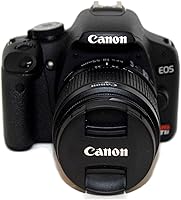
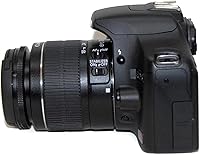
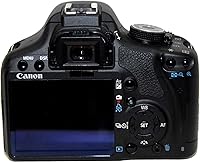
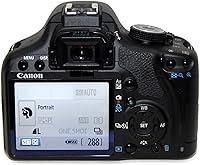
The Canon EOS Rebel T1i DSLR Camera arrived at a time when the gap between casual point-and-shoot photography and serious image-making was still wide, and Canon built this Rebel specifically to help beginners cross it. At just 1.1 pounds, the body feels manageable rather than intimidating — a real consideration for someone picking up their first interchangeable-lens camera. It ships as a kit with the EF-S 18-55mm IS lens, covering portraits, landscapes, and everyday shooting without needing an immediate upgrade. With a 4.4-star rating across hundreds of buyer reviews, it clearly earned its reputation as one of the most recommended starter DSLRs of its generation.

Features & Benefits

The 15.1MP APS-C sensor and DIGIC 4 processor work well together in decent light — shoot a family gathering outdoors and images come back sharp and color-accurate without much fiddling. The 9-point autofocus system with Continuous-Servo AF handles kids or pets in motion reasonably well for a beginner-tier camera. Optical image stabilization built into the kit lens is genuinely useful; hand-holding at slower shutter speeds becomes far less of a gamble. The Rebel T1i also offered Full HD 1080p video when that was far from standard, and with 14-bit RAW support, there is real room to correct exposures in post without the image falling apart.

Best For

This beginner-friendly camera makes the most sense for someone stepping up from a phone and wanting real creative control for the first time. Students or hobbyists who want to learn manual exposure without spending a fortune will find the Rebel T1i a forgiving place to start — auto and scene modes provide a safety net while full manual is always one dial away. Travelers appreciate the lightweight, compact body that will not weigh down a bag. It also suits casual videographers wanting HD footage without dedicated video gear. Buyers who already shoot regularly or need built-in wireless, however, should weigh more current options carefully.

User Feedback

Buyers consistently praise the image quality and how quickly they got comfortable behind the camera — many describe it as the model that made photography finally click for them. The kit lens earns particular credit for being genuinely useful rather than just a box-checker. On the critical side, battery life comes up often; 440 shots per charge sounds reasonable until a full day out reveals its limits. The fixed LCD's modest resolution feels dated, and the 12-minute video cap frustrates anyone recording longer clips. Most reviewers acknowledge this entry-level Canon DSLR is showing its age but still recommend it as a solid used-market starter for tight budgets.

Pros

  • Produces sharp, color-accurate images in good light that will genuinely impress first-time DSLR owners.
  • The bundled 18-55mm IS lens is versatile enough to cover most everyday shooting scenarios right out of the box.
  • At just over a pound, the Rebel T1i is light enough to carry all day without fatigue.
  • Full manual controls give beginners real room to learn, while scene and auto modes keep the safety net in place.
  • 14-bit RAW file support means there is meaningful latitude to fix exposure and white balance in post-processing.
  • Optical image stabilization in the kit lens helps produce usable handheld shots in lower light situations.
  • The 9-point autofocus system handles everyday moving subjects well for a starter camera.
  • Hot shoe compatibility means the flash system can grow with the photographer over time.
  • Strong used-market availability makes it easy to find a well-priced, reliable copy from reputable sellers.
  • A massive community of existing users means tutorials, tips, and compatible accessories are easy to find.

Cons

  • No built-in Wi-Fi or Bluetooth makes transferring photos to a phone or sharing online unnecessarily cumbersome.
  • Video clips are hard-capped at 12 minutes per recording, which is a frustrating limit for event or travel footage.
  • Autofocus does not function during video recording, making smooth footage of moving subjects very difficult.
  • The fixed LCD cannot tilt or swivel, which limits composing shots from awkward angles.
  • LCD resolution of approximately 640x480 pixels looks noticeably soft by today's standards.
  • Battery life rated at around 440 shots per charge can run short on full shooting days without a spare.
  • ISO performance above 1600 shows visible noise, limiting low-light usability compared to newer alternatives.
  • The DIGIC 4 processor shows its age when shooting bursts or writing RAW files continuously.
  • Continuous shooting tops out at 3.5 frames per second, which is insufficient for fast action or sports.
  • Newer entry-level DSLRs and mirrorless options at similar used prices now offer significantly more capable feature sets.

Ratings

Our AI rating engine analyzed thousands of verified buyer reviews for the Canon EOS Rebel T1i DSLR Camera from global sources, actively filtering out incentivized, duplicate, and bot-generated submissions to surface what real photographers actually experienced. The scores below reflect an honest cross-section of feedback — celebrating what this beginner-friendly camera genuinely does well while transparently flagging the friction points that matter to buyers today.

Image Quality
83%
In good daylight — think weekend hikes, outdoor family gatherings, or street photography — the 15.1MP APS-C sensor consistently delivers sharp, well-saturated images that far exceed what any smartphone of its era could produce. Reviewers frequently noted that photos from the Rebel T1i held up well when printed at larger sizes.
Once the light drops, the cracks show. Noise becomes noticeable above ISO 800 and fairly intrusive by ISO 3200, which limits usable indoor or evening shots without additional lighting. Buyers used to modern sensors will find the high-ISO performance a clear step behind what current entry-level bodies offer.
Ease of Use
88%
First-time DSLR owners consistently praised how quickly they felt comfortable with the controls — the mode dial is logical, the menu system is clean, and the guided scene modes give genuine confidence to beginners who are not yet ready for full manual. Many reviewers credited this camera specifically with helping them actually learn photography rather than just shooting on auto.
A small subset of users coming from fully automatic cameras found the jump to understanding exposure settings steeper than expected, and Canon's manual — while included — is dense. Some navigation menus feel dated and less intuitive compared to more modern camera interfaces.
Build Quality
74%
26%
The body has a solid, reassuring feel for a plastic-chassis entry-level camera — it does not flex or creak, and the grip is comfortable for extended handheld shooting. Numerous reviewers reported buying units second-hand that still functioned perfectly after years of regular use, which speaks to baseline durability.
There is no weather sealing whatsoever, so shooting in light rain or dusty environments carries real risk. The plastic construction also shows cosmetic wear fairly quickly — scuffs and paint rub-off on high-contact areas are a common complaint on used units, which is worth scrutinizing before purchasing.
Autofocus Performance
71%
29%
For stationary or slowly moving subjects — portrait sessions, still life, travel snapshots — the 9-point AF system locks on quickly and reliably in decent light. Reviewers shooting casual family events or street scenes found it responsive enough that missed focus was rarely a recurring frustration.
Fast or erratic motion — a child sprinting, a dog bounding toward you — exposed the AF system's limits, with a noticeable rate of slightly soft frames in burst sequences. In low light, the autofocus hunts more than users would like, and there is no AF assist beam on the body itself to help in dim indoor environments.
Video Capability
52%
48%
When it launched, Full HD 1080p video was a genuine selling point for a camera at this price, and the footage quality in good light is decent — colors are pleasant and the stabilized kit lens helps keep handheld clips watchable. Reviewers shooting short clips for social media or family archives found it functional enough for casual use.
The 12-minute clip ceiling is a persistent source of frustration, and the complete absence of autofocus during video recording makes filming anything that moves a real challenge. Reviewers who bought this camera with video as a primary use case were among the most disappointed, and by current standards this is one of the weakest aspects of the Rebel T1i.
Kit Lens Value
86%
The bundled EF-S 18-55mm f/3.5-5.6 IS lens earned consistent praise for being genuinely useful rather than a throwaway kit accessory — buyers appreciated covering wide-angle through short telephoto in a single lightweight package. Optical image stabilization made a real difference for handheld shots in mixed lighting, and many users kept using it long after upgrading their body.
The variable maximum aperture becomes a limiting factor in lower light, and experienced photographers will quickly recognize the plastic construction and modest sharpness at the edges of the frame. It is a solid starting point but clearly a lens you will want to supplement or replace as your skills develop.
Battery Life
61%
39%
For shorter outings — a morning at the farmers market, a birthday party, or a couple of hours of casual shooting — one charge is entirely sufficient, and the LP-E5 battery reaches a full charge relatively quickly. Reviewers on lighter shooting schedules rarely flagged battery as a problem.
At roughly 440 shots per charge under ideal conditions, real-world heavy shooters — especially those using Live View frequently — reported running low by mid-afternoon on full-day outings. Spare batteries are inexpensive and widely available, but needing one for a day of travel shooting is an added cost and inconvenience that newer cameras have largely resolved.
LCD Screen
48%
52%
The 3-inch size is physically comfortable for reviewing shots and navigating menus, and the Clear View coating performs reasonably well in outdoor light compared to some competing screens of the same period. For basic playback and menu navigation, it functions without major issues.
The approximately 640x480 pixel resolution looks noticeably soft by any modern standard — assessing fine focus or critical detail during playback is genuinely difficult, and the fixed non-articulating design means shooting from low angles or above a crowd requires uncomfortable body positioning. This is one area where even mid-range phones from recent years are dramatically better.
Low-Light Performance
57%
43%
At ISO 400 and below, the sensor performs admirably — indoor shots near a window or in a well-lit room come out clean and usable with minimal noise reduction needed in post. Reviewers shooting casual indoor events with some ambient light generally found results acceptable.
ISO 1600 and above shows increasingly heavy luminance and chroma noise, and the DIGIC 4 processor's in-camera noise reduction lacks the sophistication of more recent chips. Photographers trying to shoot concerts, dimly lit restaurants, or evening events without flash will find the results consistently disappointing compared to any current entry-level sensor.
Value for Money
79%
21%
Purchased at today's used-market prices, the Rebel T1i represents a compelling entry point into Canon's EF/EF-S lens ecosystem — body, lens, battery, and charger often come bundled for well under the cost of a new budget mirrorless kit. For a beginner who simply needs to learn on real hardware without a large financial commitment, reviewers broadly agree the price-to-capability ratio holds up.
At its original retail price, the value equation was tighter, and buyers comparing it to current new options at similar used prices will find more capable alternatives. The absence of Wi-Fi and the dated video system mean some features that are now considered basic are simply missing, which erodes perceived value for buyers with modern expectations.
Connectivity
41%
59%
The HDMI output is genuinely useful for reviewing images and video on a larger screen, and the USB 2.0 port enables straightforward tethered transfers to a computer for editing workflows that do not depend on speed.
The complete absence of Wi-Fi or Bluetooth is the single most frequently cited connectivity frustration — in an era when instantly sharing or backing up images wirelessly is considered table stakes, needing a cable or card reader to move files feels like a significant step backward. Buyers accustomed to any recent smartphone or mirrorless camera will feel this limitation daily.
Shooting Speed
59%
41%
For the types of subjects most beginners actually shoot — portraits, landscapes, slower-paced events — 3.5 frames per second is sufficient to capture the decisive moment without missing the shot. Reviewers shooting kids at birthday parties or casual sports from the sidelines generally got the frames they needed.
Anyone stepping into faster genres — youth soccer games, wildlife, action photography — will find the buffer depth and burst rate a hard ceiling very quickly. Continuous shooting fills the buffer and forces a noticeable pause, which experienced reviewers flagged as a clear limitation when compared even to modestly newer entry-level bodies.
Learning Curve
84%
The Rebel T1i has earned a lasting reputation as one of the most teachable starter DSLRs precisely because its controls map directly to how photography is actually taught — mode dial, exposure triangle, live histogram. An enormous library of tutorials, YouTube guides, and community forum posts exists specifically for this body, making self-guided learning unusually accessible.
The dated menu layout and some ambiguous button labeling tripped up reviewers more than once during early use, and the instruction manual — while comprehensive — is not the friendliest introduction for someone with zero prior camera experience. A brief guided setup session or an online starter course is strongly recommended before heading out to shoot.
Lens Ecosystem
91%
Canon's EF and EF-S mount library is one of the most extensive in photography history — primes, zooms, macro, tilt-shift, and telephoto options span every conceivable need and budget. Buying into this system means a vast used-lens market is available, and even budget third-party options from Sigma and Tamron perform reliably on this body.
EF-S glass cannot be used on full-frame Canon bodies, which means if a user eventually upgrades to a full-frame Canon EF or mirrorless RF system, some lenses will not carry forward without an adapter or replacement. This is worth understanding early if long-term system investment is a consideration.

Suitable for:

The Canon EOS Rebel T1i DSLR Camera is a strong match for anyone making their first serious move into photography — particularly those who have outgrown their phone camera and want to understand how aperture, shutter speed, and ISO actually work in practice. Students enrolled in photography courses will appreciate having a body that supports full manual control alongside forgiving auto modes, so they can learn at their own pace without feeling thrown in the deep end. Budget-conscious hobbyists hunting the used or refurbished market will find the kit genuinely complete: the bundled 18-55mm lens covers family events, travel snapshots, and basic portraits without an immediate need to spend more. Travelers who want noticeably better image quality but cannot justify carrying heavier gear will also find the 1.1-pound body a reasonable trade-off. If your goal is simply to build foundational camera skills and come away with photos that look far better than what a smartphone produces, this beginner-friendly camera still delivers on that promise.

Not suitable for:

The Canon EOS Rebel T1i DSLR Camera is not the right pick for buyers who need a camera that keeps up with modern workflows out of the box. There is no built-in Wi-Fi or Bluetooth, which means transferring images requires a cable or card reader — a genuine friction point if you are used to instantly sharing shots from your phone. Serious videographers should look elsewhere: the 12-minute clip limit, the absence of continuous autofocus during video, and the fixed LCD make it a poor tool for anything beyond casual HD footage. Photographers who regularly shoot in low light will also feel the ceiling of ISO 3200 fairly quickly compared to what current entry-level bodies offer. Anyone planning to grow into sports, wildlife, or event photography will likely outgrow this entry-level Canon DSLR within a year or two and might be better served investing in a more current platform from the start.

Specifications

  • Sensor: 15.1-megapixel APS-C CMOS sensor captures detailed images with a roughly 1.6x crop factor relative to full-frame.
  • Processor: Canon DIGIC 4 image processor handles noise reduction, color rendering, and file writing at the time of capture.
  • ISO Range: Native ISO runs from 100 to 1600, with an expanded maximum of ISO 3200 for lower-light situations.
  • Autofocus: 9-point TTL phase-detection autofocus system supports Continuous-Servo AF for tracking subjects in motion.
  • Shutter Speed: Mechanical shutter range spans from 1/4000 second at the fast end down to 30 seconds for long-exposure work, plus Bulb mode.
  • Video: Records Full HD video at 1920x1080 pixels with a hard clip limit of 12 minutes per recording and no continuous AF during capture.
  • LCD Display: Fixed 3″ Clear View LCD screen with an approximate resolution of 640x480 pixels supports Live View shooting and image playback.
  • Kit Lens: Bundled EF-S 18-55mm f/3.5-5.6 IS lens provides a 35mm-equivalent range of roughly 29-88mm with optical image stabilization.
  • Storage: Accepts SD and SDHC memory cards rated Class 6 or Class 10 for reliable burst and video write speeds.
  • Connectivity: Offers one HDMI output for direct TV playback and one USB 2.0 port for tethered computer transfer.
  • Battery: Canon LP-E5 Lithium-Ion battery pack is rated for approximately 440 shots per full charge under standard conditions.
  • Body Weight: Camera body weighs approximately 1.1 lbs (475g) without lens, battery, or memory card installed.
  • File Formats: Supports RAW (CR2), JPEG at three quality levels (Fine, Normal, Basic), and QuickTime MOV for video files.
  • Flash: Built-in pop-up flash with a guide number of up to 43 feet (13m) and a hot shoe for mounting Canon EX-series Speedlites.
  • Bit Depth: RAW files are captured at 14-bit depth, providing a wide tonal range for post-processing latitude in editing software.
  • Shooting Modes: Includes Full Auto, Creative Auto, Program, Aperture-priority, Shutter-priority, Manual, and several guided Scene modes.
  • Continuous Shooting: Burst mode shoots at up to 3.5 frames per second, suitable for casual action but limited for fast sports or wildlife.
  • Flash Sync: Maximum flash sync speed is 1/200 second, compatible with Canon EX-series Speedlites and most third-party strobes.
  • Lens Mount: Uses the Canon EF-S mount, which is compatible with all EF-S lenses and the full range of Canon EF lenses via native support.
  • Metering: Supports four metering modes: Evaluative, Partial, Spot, and Center-weighted Average for varied exposure control scenarios.

Related Reviews
Canon EOS Rebel T7
Canon EOS Rebel T7
76%
88%
Image Quality
91%
Ease of Use
74%
Autofocus Performance
82%
Build Quality & Handling
53%
Video Capability
More
Canon EOS Rebel T3i
Canon EOS Rebel T3i
76%
83%
Image Quality
91%
Ease of Use
67%
Video Performance
72%
Autofocus System
88%
Articulating Screen
More
Canon EOS Rebel T6i
Canon EOS Rebel T6i
79%
91%
Image Quality
83%
Autofocus Performance
88%
Ease of Use
79%
Build Quality & Handling
61%
Video Capabilities
More
Canon EOS Rebel SL3
Canon EOS Rebel SL3
77%
88%
Image Quality
84%
Autofocus Performance
82%
Build Quality & Portability
61%
Video Capabilities
91%
Ease of Use
More
Canon EOS 60D DSLR Camera Body
72%
83%
Image Quality
58%
Autofocus Performance
88%
Build Quality & Ergonomics
86%
Articulating LCD
63%
Video Capability
More
Canon EOS 80D DSLR Camera with 18-135mm Lens
81%
93%
Autofocus Performance
88%
Image Quality
61%
Video Capability
84%
Build Quality
86%
Battery Life
More
Canon Rebel XS DSLR Camera
74%
83%
Image Quality
88%
Ease of Use
52%
Low-Light Performance
86%
Value for Money
74%
Autofocus Performance
More
Canon EOS 5D Mark II DSLR Camera
76%
93%
Image Quality
91%
Build Quality
86%
Low-Light Performance
58%
Autofocus Performance
84%
Value for Money
More
Canon EOS 6D DSLR Camera with EF 24-105mm f/3.5-5.6 IS STM Lens Kit
84%
94%
Image Quality
82%
Autofocus Performance
88%
Ease of Use
90%
Low-Light Performance
85%
Build Quality
More
Canon EOS R3 Mirrorless Camera
84%
96%
Autofocus Performance
93%
Continuous Shooting Speed
91%
Low-Light Image Quality
62%
Still Image Resolution
88%
Video Capability
More

FAQ

The Canon EOS Rebel T1i DSLR Camera is genuinely old by digital camera standards, but that does not automatically make it a bad buy. If you can find one in good condition at a fair used price and your goal is to learn the fundamentals of DSLR photography, it still holds up for daylight shooting and casual use. That said, if your budget stretches to a newer entry-level body — even a slightly more recent Rebel model — you will get better low-light performance, a higher-resolution LCD, and likely Wi-Fi connectivity, which most people find very useful today.

Yes, the Rebel T1i uses Canon's EF-S mount, which accepts both EF-S lenses designed for crop-sensor bodies and the full range of Canon EF lenses without any adapter. It will not, however, accept EF-M or RF mount lenses, which are designed for Canon's mirrorless systems. If you already own Canon EF glass, it will mount and function normally here.

It depends entirely on what you plan to film. For short clips — vacation moments, a child's recital, a quick tutorial — 12 minutes per clip is rarely a problem. For interviews, events, or anything that runs longer continuously, it becomes a real inconvenience because you have to manually restart recording each time. If video is a significant part of why you are buying a camera, this limitation is worth taking seriously before committing.

No, it does not. This camera was released before built-in wireless connectivity became standard on consumer DSLRs. You will need to use the USB cable to transfer files to a computer, or remove the SD card and use a card reader. There are some third-party Eye-Fi SD cards that can add wireless transfer functionality, though their reliability and compatibility can vary.

The Rebel T1i accepts standard SD and SDHC cards, so any modern SD card will physically fit and work. For smooth video recording and burst shooting, a Class 10 card is recommended — it ensures write speeds are fast enough to avoid dropped frames or buffer slowdowns. Note that SDXC cards (typically 64GB and above) are not officially supported, so stick to SDHC cards of 32GB or below for reliable compatibility.

For a beginner camera, the 9-point autofocus system does a reasonable job with moderately active subjects. Continuous-Servo AF can track movement across the frame, but at 3.5 frames per second, it is not built for erratic fast motion like sports. For casual family photography — kids playing in the yard, a dog running toward you — it handles things well enough that most beginners will be satisfied. Just do not expect the tracking speed of a more advanced camera body.

Yes, the camera shoots Canon CR2 RAW files at 14-bit depth, which gives you a lot of flexibility to adjust exposure, white balance, and tone in post-processing. To open them, you will need compatible software — Canon's own Digital Photo Professional is free and works well, and popular options like Adobe Lightroom, Capture One, and even the free RawTherapee all support CR2 files without issue.

Canon rates the LP-E5 battery at around 440 shots under standard conditions, but real-world use tends to come in lower — especially if you use Live View frequently, review a lot of images on the LCD, or shoot in cold weather. For a half-day outing, one battery is usually fine. For a full day of active shooting, picking up a spare battery is a smart move. Third-party LP-E5 compatible batteries are widely available and inexpensive.

Generally yes. Sigma, Tamron, and Tokina all make lenses in Canon EF and EF-S mounts that are compatible with this body. Most modern versions of these lenses work reliably, including autofocus. Older or cheaper third-party lenses occasionally have minor compatibility quirks, so checking user reports for any specific lens before buying is always a good idea.

It is actually quite well suited for learning manual exposure, which is one of the reasons it developed such a loyal following as a starter camera. The mode dial gives you direct access to Aperture-priority, Shutter-priority, and full Manual alongside the auto modes, so you can ease in gradually — start in Program or Aperture-priority mode to get a feel for how settings affect images, then work your way toward full manual as your confidence grows. Many photography instructors recommend the Rebel series specifically because the controls are accessible without being overwhelming.

Where to Buy

Kenmore Camera
In stock $89.50
PayMore Woodbridge
In stock $93.99
The Camera Shop of Muskegon
In stock $99.00
Gulf Coast Camera
In stock $99.99
Kamerastore
In stock $117.00
B&H Used Store
In stock $119.95
bhphotovideo.com
In stock $119.95