Overview

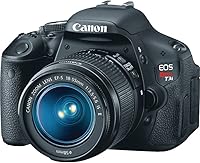
The Canon EOS Rebel T3i arrived in early 2011 as Canon's answer to beginners ready to outgrow their point-and-shoot cameras. Building on the T2i, it added a vari-angle articulating LCD — a meaningful upgrade that changed how people composed shots. The 18MP APS-C sensor and 1080p video were headline numbers that genuinely held up in real-world use. That said, nobody should mistake this Rebel DSLR for a professional tool. It was designed to teach, to encourage experimentation, and to produce noticeably better images than a phone or compact camera — and on those terms, it delivered.

Features & Benefits

The 18MP APS-C CMOS sensor is the heart of this entry-level Canon, producing sharp, well-defined images in good daylight with real latitude to recover shadows when shooting RAW. Flip the articulating screen around and suddenly you can shoot from ground level, above a crowd, or straight at yourself for a vlog — something fixed-screen cameras simply cannot do. For video, 1080p with manual exposure control was a serious perk in 2011, though by today's standards it lacks 4K or advanced autofocus tracking. The 9-point AF handles portraits well through the optical viewfinder, but live view autofocus is noticeably slower, which matters if you shoot video regularly.

Best For

If you are picking up your first interchangeable-lens camera, this Rebel DSLR is a smart starting point. The menu system includes a built-in feature guide that explains what each setting does as you scroll — genuinely useful when learning the difference between aperture priority and shutter priority. Photography students will appreciate the full manual mode, and travel hobbyists benefit from a compact body compatible with a wide range of affordable EF and EF-S lenses. Families wanting sharper portraits and event photos than a smartphone delivers will notice an immediate difference. It is not the right pick for sports photographers or anyone requiring fast burst speeds or professional video specs.

User Feedback

Owners of the T3i tend to be notably loyal. The flip-out screen draws consistent praise from vloggers and anyone shooting in awkward positions, and the guided menus help new users feel less overwhelmed than they would with most competing cameras. On the downside, there is no built-in Wi-Fi — wireless transfer requires an EyeFi card, which feels like a clunky workaround by current standards. Sluggish live view autofocus during video recording is another recurring complaint. Battery life works fine for day trips, though heavy video shooters suggest keeping a spare. Many buyers mention still using their T3i years after purchase, which speaks to its durability and lasting value.

Pros

  • The 18MP APS-C sensor delivers genuinely sharp, detailed images in good daylight that exceed smartphone output.
  • The articulating LCD makes self-recording, low-angle, and overhead shots practical without extra gear.
  • An in-camera feature guide explains settings in plain language — ideal for anyone learning from scratch.
  • Wide Canon EF and EF-S lens compatibility gives access to a deep, affordable used lens market.
  • RAW file support gives beginner photographers room to develop post-processing skills from day one.
  • Build quality holds up well over time, with many owners reporting years of reliable daily use.
  • The optical viewfinder AF is quick and accurate for portraits, events, and everyday subjects.
  • Battery handles a full day of casual stills shooting without needing a mid-day top-up.
  • At current used prices, the value per feature is strong for students and hobbyists on a budget.
  • Multiple metering modes and full manual control make it a legitimate tool for learning serious photography.

Cons

  • No built-in Wi-Fi means wireless transfers depend on a third-party EyeFi card, which is clunky and unreliable.
  • Live view autofocus during video recording is slow and frequently misses or hunts on moving subjects.
  • ISO performance degrades visibly above 3200, limiting usable low-light options in real shooting conditions.
  • No weather sealing makes outdoor shooting in rain or dusty environments a genuine risk to the body.
  • The 3.7 fps burst rate is too slow to reliably capture sports, wildlife, or fast-moving kids.
  • Video is capped at 1080p with no 4K option, which feels limiting against current content creation standards.
  • The buffer fills quickly during extended bursts, forcing frustrating pauses in continuous shooting scenarios.
  • Lack of focus peaking or zebra patterns makes manual video exposure harder than it needs to be.
  • Screen brightness struggles in direct sunlight, making accurate exposure review difficult outdoors.
  • Canon EF-S lens development has stalled as the brand pivots to RF mirrorless, narrowing future upgrade paths.

Ratings

Our AI-generated scores for the Canon EOS Rebel T3i are based on analysis of thousands of verified global user reviews, with spam, bot-submitted, and incentivized feedback actively filtered out. The result is an honest, balanced picture of where this entry-level Canon genuinely shines and where real buyers have run into frustration. Both the praise and the pain points are reflected directly in every score below.

Image Quality
83%
For a camera released in 2011, the 18MP APS-C sensor still produces impressively detailed shots in good lighting. Beginners shooting outdoor portraits or travel scenes regularly report being surprised by how sharp and color-accurate their images come out straight from the camera.
Dynamic range starts to feel limited in challenging mixed-light situations, and high-ISO shots above 3200 show noticeable noise. Compared to modern entry-level sensors, it trails behind, which matters if you plan to crop heavily or print large.
Ease of Use
91%
The in-camera feature guide is a standout for new photographers — scrolling over any setting brings up a plain-language explanation of what it does. Users who switched from a smartphone or point-and-shoot consistently describe the learning curve as manageable rather than intimidating.
The physical button layout can feel slightly cramped for users with larger hands, and navigating deeper menu layers still takes some patience. A few users noted that the sheer number of shooting modes is initially confusing before the logic clicks.
Video Performance
67%
33%
1080p recording with manual exposure control was a genuine differentiator when this camera launched, and it still produces clean, usable footage in decent light. Content creators on a tight budget who need basic talking-head or travel video find it more than adequate.
There is no 4K, no in-body stabilization during video, and live view autofocus during recording is sluggish enough to miss moving subjects. By current standards, even mid-range smartphones offer more capable video, so buyers expecting modern video performance will be disappointed.
Autofocus System
72%
28%
Through the optical viewfinder, the 9-point AF locks on quickly and accurately for portraits, family events, and everyday subjects. Face detection in live view works reliably when subjects are relatively still, which suits casual shooting well.
Live view AF is noticeably slower than viewfinder AF — a real frustration for video shooters tracking moving subjects. The 9-point coverage also feels sparse compared to newer systems, meaning off-center subjects in fast-moving scenes can be tricky to nail.
Articulating Screen
88%
The vari-angle 3-inch LCD is one of the most practically useful features on this camera. Vloggers, travel shooters, and anyone doing low-angle or overhead work immediately notice how much creative freedom a flip-out screen adds compared to fixed displays.
The resolution, while fine for the era, looks soft next to modern articulating screens. Outdoor shooting in bright sunlight also reveals the limits of the display brightness, making precise exposure evaluation harder than it should be.
Build Quality
79%
21%
The polycarbonate body feels solid and well put-together for an entry-level camera. Long-term owners frequently mention that their T3i is still fully functional after years of regular use, which is a real indicator of reliable construction at this tier.
There is no weather sealing, so shooting in light rain or dusty conditions carries risk. The kit lens mount connection and some buttons can feel slightly loose after extended heavy use, though this appears more common in older used units than fresh stock.
Battery Life
74%
26%
For a full day of shooting stills around a city or at a family event, the battery holds up well without needing to babysit the charge. Most casual users report getting through a day trip comfortably on a single charge.
Video recording drains the battery noticeably faster, and dedicated video users repeatedly recommend buying a spare battery before your first serious shoot. Cold weather also accelerates drain, a common complaint from outdoor and winter shooters.
Low-Light Performance
68%
32%
At ISO 800 to 1600, the T3i produces clean enough shots for indoor events, birthday parties, and dim restaurant settings — better than most people expect from a camera this age. The APS-C sensor size gives it a real edge over compact cameras in these conditions.
Push past ISO 3200 and noise becomes distracting, especially in shadow areas. The expandable ISO 12800 setting is largely unusable for anything other than rough documentary shots where noise is acceptable.
Value for Money
86%
Bought used at current market prices, this Rebel DSLR offers a genuinely compelling amount of camera for the money. Students and hobbyists get a full manual-control DSLR, a capable kit lens, and access to Canon's vast EF and EF-S lens ecosystem without a large upfront investment.
At original retail pricing it was competitive; today the value case depends entirely on finding a clean used unit at a fair price. Buying a poorly maintained second-hand body can mean hidden repair costs that erode the value advantage quickly.
Connectivity & Wireless
41%
59%
USB 2.0 and HDMI output cover the basics, and the HDMI port is genuinely useful for reviewing shots on a large screen. For straightforward wired transfers, it works without issue.
The absence of built-in Wi-Fi is a genuine inconvenience by any modern standard. Wireless transfer requires a third-party EyeFi SD card, which adds cost and a dependency on aging technology that can be unreliable and tricky to configure for newer devices.
Continuous Shooting Speed
62%
38%
At 3.7 frames per second, it handles kids running around a backyard, casual street photography, and slow-moving subjects well enough for most beginner use cases. For the intended audience, it rarely feels like a bottleneck.
Anyone hoping to photograph sports, wildlife, or fast action will hit the ceiling almost immediately. The buffer also fills up relatively quickly during longer bursts, forcing frustrating pauses between sequences.
Lens Compatibility & Ecosystem
89%
Canon EF and EF-S mount compatibility is one of the strongest arguments for choosing this camera. The sheer volume of available lenses — from cheap nifty-fifties to professional L-series glass — means the body can grow with the photographer for years.
While the ecosystem is vast, quality EF-S lenses that fully suit the APS-C sensor are fewer than the total lens count implies. New EF-S lens releases have also slowed as Canon shifts focus to its RF mirrorless system, which is worth considering for long-term investment.
Portability & Handling
77%
23%
The compact SLR form factor sits comfortably in hand without being tiring to carry over a full day of sightseeing or event shooting. It fits in a medium camera bag alongside a second lens without difficulty, which travel and hobbyist users appreciate.
It is still larger and heavier than mirrorless alternatives at comparable price points today. Users who switched from mirrorless cameras often comment that the optical viewfinder bulk takes adjustment, particularly if they are used to more compact systems.
In-Camera Features & Shooting Modes
81%
19%
The range of scene modes, creative filters, and the built-in help system give beginners a structured path from auto shooting toward full manual control. Having multiple metering modes and a self-timer makes it versatile for solo photographers and controlled environments.
Advanced features like focus peaking, zebra patterns for video exposure, or interval shooting for time-lapse are absent. Users who grow past beginner level often find themselves reaching for functions the T3i simply does not offer.

Suitable for:

The Canon EOS Rebel T3i was built for a specific kind of buyer, and it still serves that audience well today. If you are picking up your first serious camera and want to learn how aperture, shutter speed, and ISO actually work — rather than just pointing and shooting — the in-camera guidance system makes this Rebel DSLR one of the most approachable teaching tools available at its current used price. Photography students who need a capable body for coursework will find everything they need to practice composition, manual exposure, and RAW file editing without spending heavily. Budget-conscious vloggers and content creators who need a flip-out screen for self-recording will appreciate the articulating LCD, which was genuinely ahead of its time and still functions as a practical advantage. Families wanting sharper, more expressive photos of kids, holidays, and events than a smartphone delivers will notice an immediate and meaningful step up in image quality. Travel hobbyists who want to carry a real camera without the weight or cost of a professional kit will find the compact body and broad lens compatibility a solid combination for day trips and vacations.

Not suitable for:

Anyone expecting a modern shooting experience should think carefully before committing to this entry-level Canon. The Canon EOS Rebel T3i has no built-in Wi-Fi — sharing images wirelessly means relying on a third-party EyeFi SD card, which is an awkward and increasingly unsupported workaround that will frustrate anyone accustomed to instant phone-to-app transfers. Video shooters who need 4K resolution, reliable continuous autofocus during recording, or in-body image stabilization will hit hard limitations almost immediately, as the 1080p output and sluggish live view AF are simply products of 2011 technology. Sports and wildlife photographers will find the 3.7 fps burst rate and 9-point autofocus coverage too limited to reliably capture fast, unpredictable movement. Users planning to shoot frequently in rain, dust, or harsh outdoor conditions should also look elsewhere, since there is no weather sealing on this body. And if you are considering this as a long-term investment in a growing system, it is worth noting that Canon has shifted its development focus toward the RF mirrorless mount, meaning the EF and EF-S ecosystem this camera relies on is no longer seeing meaningful new lens releases.

Specifications

  • Sensor: 18MP APS-C CMOS sensor captures detailed stills with broad tonal range in well-lit conditions.
  • ISO Range: Native ISO spans 100 to 6400, with expansion available up to 12800 for low-light situations.
  • Autofocus: 9-point TTL-CT-SIR autofocus system supports phase detection, face detection, live view, and single-servo AF modes.
  • Continuous Shooting: Shoots at up to 3.7 frames per second with a buffer suitable for short casual bursts.
  • Video Recording: Records Full HD 1080p video with manual exposure controls and outputs in QuickTime MOV format using AVC encoding.
  • Display: 3-inch vari-angle articulating LCD with 1,040,000 dots provides flexible framing from virtually any shooting angle.
  • Shutter Speed: Mechanical shutter range spans from 1/4000 second down to 30 seconds, plus Bulb mode for long exposures.
  • Flash Sync: Maximum flash sync speed is 1/200 second, compatible with Canon Speedlites and standard hot-shoe flashes.
  • Lens Mount: Accepts Canon EF and EF-S mount lenses, giving access to a wide range of Canon and third-party optics.
  • Connectivity: Equipped with USB 2.0 and HDMI output; wireless transfer requires a compatible EyeFi SD card sold separately.
  • Storage: Accepts SD, SDHC, and SDXC memory cards with a rated write speed sufficient for 3.7 fps continuous shooting.
  • Viewfinder: Optical pentamirror viewfinder provides approximately 95% field coverage at 0.85x magnification.
  • Image Formats: Saves files in JPEG, RAW (CR2), and QuickTime MOV for video, supporting both in-camera and post-processing workflows.
  • Battery: Powered by a rechargeable Lithium-Ion LP-E8 battery pack weighing approximately 40 grams.
  • Form Factor: Compact SLR body measuring approximately 3.94 inches in height, weighing around 3 pounds with battery and lens.
  • Aspect Ratio: Native image aspect ratio is 3:2, standard for full-frame and APS-C DSLR sensors.
  • Self-Timer: Built-in self-timer offers a 10-second delay, useful for group shots and reducing camera shake on a tripod.
  • Audio Output: Stereo audio output via HDMI; the camera also includes a dedicated microphone input for external mic use during video.

Related Reviews
Canon EOS Rebel T7
Canon EOS Rebel T7
76%
88%
Image Quality
91%
Ease of Use
74%
Autofocus Performance
82%
Build Quality & Handling
53%
Video Capability
More
Canon EOS Rebel T1i DSLR Camera with 18-55mm Lens
82%
91%
Image Quality
88%
Ease of Use
74%
Autofocus Performance
83%
Build Quality
87%
Video Quality
More
Canon EOS Rebel T6i
Canon EOS Rebel T6i
79%
91%
Image Quality
83%
Autofocus Performance
88%
Ease of Use
79%
Build Quality & Handling
61%
Video Capabilities
More
Canon EOS Rebel SL3
Canon EOS Rebel SL3
77%
88%
Image Quality
84%
Autofocus Performance
82%
Build Quality & Portability
61%
Video Capabilities
91%
Ease of Use
More
Canon EOS R
Canon EOS R
88%
97%
Image Quality
94%
Autofocus Accuracy
91%
Video Performance
88%
Build Quality
90%
Ergonomics & Handling
More
Canon EOS R3 Mirrorless Camera
89%
96%
Autofocus Performance
94%
Image Quality in Low Light
92%
Build Quality and Durability
93%
Video Recording Capabilities
89%
Usability and Ergonomics
More
Canon EOS 5D Mark IV
82%
93%
Image Quality
89%
Autofocus Performance
94%
Build Quality & Durability
61%
Video Capabilities
88%
Low-Light Performance
More
Canon EOS 5D Mark III
79%
93%
Autofocus Performance
89%
Image Quality
82%
Low-Light Capability
91%
Build Quality & Durability
61%
Video Capability
More
Canon EOS 60D DSLR Camera Body
85%
88%
Image Quality
91%
Build Quality
83%
Video Recording
86%
Autofocus Performance
89%
Ease of Use
More
Canon EOS R7
Canon EOS R7
83%
94%
Autofocus Performance
91%
Burst Speed & Pre-Capture
88%
Image Quality
83%
Video Quality
86%
In-Body Image Stabilization
More

FAQ

It is genuinely one of the better starting points for a first-time DSLR user. The menu system includes an in-camera feature guide that explains what each setting does as you scroll through it, which takes a lot of the guesswork out of learning manual controls. Most beginners report feeling comfortable within a few weeks of regular use.

Yes — the T3i accepts both Canon EF and EF-S mount lenses, which covers a huge range of Canon glass going back decades. Third-party lenses from Sigma, Tamron, and Tokina in EF or EF-S mount work as well. Just note that EF-S lenses are designed specifically for APS-C sensors, while full-frame EF lenses work fine but cover more area than the sensor uses.

No, it does not. To transfer photos wirelessly, you need an EyeFi SD card, which is a third-party solution that communicates via the memory card slot. It works, but it is increasingly dated technology and can be unreliable with modern devices, so do not count on it being a smooth experience.

For basic talking-head videos, travel content, or casual vlogs, the 1080p output is usable and the articulating screen makes self-filming easy. That said, the live view autofocus is slow during recording, and there is no 4K option, so if video is your primary use case and you want something that holds up to current standards, you may want to consider a newer body.

A Class 10 or UHS-I SD card with at least 16GB of storage is a practical starting point. For RAW video or burst shooting, a faster card helps reduce buffer clearing time. SDXC cards up to 256GB are compatible, though anything above 64GB is more storage than most casual users will need per outing.

For a day of mostly still photography, the battery handles things well — you can typically get through a sightseeing day or a family event without a problem. Video recording drains it considerably faster, so if you plan to shoot a lot of footage, picking up a second LP-E8 battery is a smart move before any serious outing.

It is genuinely useful, not a gimmick. Being able to tilt or fully rotate the screen means you can shoot from ground level, hold the camera overhead in a crowd, or flip it around to face you for self-recording — all without guessing your framing. Vloggers and travel photographers in particular consistently rate it as one of the most practical features on this body.

Yes, it supports RAW (CR2) capture, JPEG, or simultaneous RAW plus JPEG recording. Shooting in RAW gives you significantly more flexibility in post-processing — you can recover highlights, adjust white balance, and refine exposure in editing software without the quality loss that comes from in-camera JPEG compression. It is worth learning if you plan to use Lightroom or similar tools.

At ISO 800 to 1600, results are clean enough for indoor events, parties, and dimly lit rooms — noticeably better than a typical smartphone in the same conditions. Once you push into the ISO 3200 to 6400 range, noise becomes more visible, especially in dark shadow areas. The expanded ISO 12800 setting is there for emergencies, but the image quality at that level is rough.

At used market prices, this Rebel DSLR represents solid value for a beginner or photography student. When buying second-hand, check the shutter count — Canon rates the shutter mechanism for around 100,000 actuations, and many used units are well beyond half that. Also inspect the sensor for dust spots, check that the articulating screen hinge is firm, and confirm the battery holds a proper charge. A clean, well-maintained unit can still have years of reliable life ahead of it.