Overview

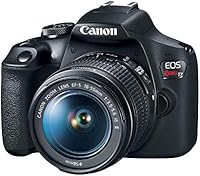
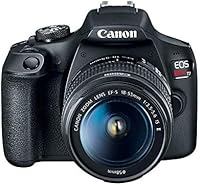
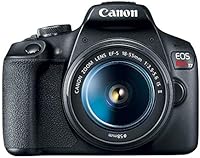
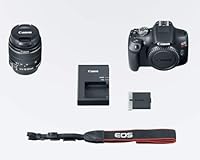
The Canon EOS Rebel T7 has been one of the most recommended entry points for anyone ready to step beyond smartphone snapshots and into interchangeable-lens photography. It is not the newest model in Canon's lineup, but it has remained popular for good reason — the combination of solid image quality and a gentle learning curve is hard to beat at this tier. This listing is for a renewed unit, inspected by a third-party seller with a 90-day limited warranty attached. That is not the same as buying new, so check the condition details carefully. Still, for a first DSLR with a versatile kit lens included, the value here is real.

Features & Benefits

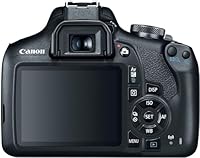
The 24.1-megapixel APS-C sensor is the heart of what makes this beginner Canon kit worth considering. In good light, it produces genuinely detailed photos with natural color that holds up well when printed or cropped. Push the ISO toward the higher end and you will notice some noise, but for everyday shooting the results are consistently clean. The 9-point autofocus handles portraits and stationary subjects confidently, though it struggles with fast-moving action. Wi-Fi and NFC make transferring photos to a phone quick and painless. The 3-inch LCD combined with Scene Intelligent Auto lets new shooters get decent results right away while they work toward manual settings.

Best For

This entry-level Canon DSLR is the right fit for a specific kind of buyer. If you are coming from a phone camera or a basic point-and-shoot and want to start learning aperture, shutter speed, and composition with real controls, this kit gives you a practical foundation. Photography students who need an affordable body to practice on will find the manual modes and Canon EF/EF-S compatibility genuinely useful long term. Travel and lifestyle shooters will appreciate the compact size. That said, if video is your primary goal, look elsewhere — no 4K recording and limited video autofocus make this a still-photography-first camera through and through.

User Feedback

The Rebel T7 carries a strong 4.5-star average, and the patterns across reviews are consistent. Buyers routinely praise the intuitive menu layout, how solid the body feels, and the out-of-camera JPEG quality. Criticisms are equally predictable: no touchscreen, a single memory card slot, and underwhelming video autofocus come up repeatedly. On the renewed condition specifically, most buyers report receiving units in good working order, though a handful mention cosmetic wear and recommend testing everything on arrival. The broader consensus is that this camera holds real value as a learning tool — most people outgrow it intentionally once their skills advance, not because it let them down.

Pros

  • The 24.1MP sensor produces detailed, sharp stills that outclass any smartphone in good light.
  • Scene Intelligent Auto mode makes it genuinely easy for complete beginners to get solid results immediately.
  • Intuitive menu system keeps frustration low while learning the basics of manual photography.
  • Built-in Wi-Fi and NFC make transferring photos to a phone quick and relatively painless.
  • The optical viewfinder is a practical advantage when shooting outdoors in bright sunlight.
  • Access to a vast Canon EF and EF-S lens ecosystem creates strong long-term upgrade potential.
  • Battery life comfortably covers a full day of casual shooting on a single charge.
  • The included 18–55mm kit lens handles everyday subjects — travel, portraits, interiors — without needing an immediate upgrade.
  • Solid, well-balanced body that feels comfortable to hold and carry for extended periods.

Cons

  • No 4K video recording is a real limitation for anyone who shoots hybrid photo and video content.
  • The fixed LCD has no touchscreen or articulation, making awkward angles genuinely difficult.
  • Video autofocus is slow and audible — not reliable enough for serious recorded footage.
  • At 3 frames per second, capturing fast action or peak moments is a consistent weak spot.
  • The 9-point autofocus provides narrow coverage and struggles noticeably with moving subjects.
  • Only one memory card slot means no backup redundancy, which matters when shooting important moments.
  • The 90-day warranty on the renewed unit offers less protection than a factory-new purchase.
  • No Bluetooth means you cannot maintain a convenient, persistent connection with your smartphone.
  • The kit lens loses light quickly as you zoom in due to its variable aperture, limiting indoor flexibility.

Ratings

The Canon EOS Rebel T7 has been scored by our AI engine after analyzing thousands of verified global buyer reviews, with spam, bot-generated, and incentivized submissions actively filtered out. The ratings below reflect real patterns — what everyday shooters consistently praised and where they ran into friction — giving you a transparent, balanced picture before you decide.

Image Quality
88%
The 24.1MP APS-C sensor consistently impresses users shooting in daylight or well-lit interiors — portraits come out with natural skin tones, and landscape shots retain solid edge detail. Many beginners report their photos looked noticeably more professional the first time they shot in RAW and edited.
In low-light indoor situations without a flash or fast lens, noise becomes visible above ISO 1600. Users expecting clean nighttime shots straight out of camera, especially in dim restaurants or evening events, often find results disappointing without post-processing.
Ease of Use
91%
The menu layout and Scene Intelligent Auto mode are repeatedly called out as genuinely intuitive by first-time DSLR owners. Buyers switching from smartphones say the transition felt surprisingly smooth, and the guided display mode that explains settings in plain language gets specific praise.
More experienced users find the limited customization of physical buttons frustrating over time. Accessing certain settings requires digging into menus rather than using dedicated dials, which can slow down shooting when conditions change quickly.
Autofocus Performance
74%
26%
For portraits, street photography, and relatively stationary subjects, the 9-point phase-detection system locks on quickly and accurately. Users shooting family gatherings, travel photos, or product photography find it reliably sharp without much fuss.
Sports, kids running, and pets in motion expose the system's limits clearly — the 9-point coverage is narrow, and tracking moving subjects results in noticeably soft shots. Reviewers coming from newer mirrorless cameras find the AF coverage feels noticeably dated.
Build Quality & Handling
82%
18%
The body feels solid and well-proportioned in hand, with a grip that suits a range of hand sizes comfortably. Users frequently describe it as feeling more substantial than its entry-level positioning suggests, which builds confidence when shooting outdoors.
There is no weather sealing, so shooting in light rain or dusty environments carries real risk. The plastic construction, while sturdy enough for daily use, does show scuffs and wear over time — a factor worth considering given the renewed condition of this listing.
Video Capability
53%
47%
For casual video clips — family events, short travel footage, simple vlogs — 1080p output is perfectly watchable and the footage has decent color. Users who shoot video occasionally rather than primarily find it adequate for basic needs.
The lack of 4K recording is a genuine shortcoming by current standards, and video autofocus is slow and audible enough to be distracting in recorded footage. Dedicated video creators or hybrid shooters will hit the ceiling of this camera's capabilities quickly.
Low-Light Performance
67%
33%
With the expanded ISO pushing to 12800, the Rebel T7 can capture usable shots in surprisingly dim conditions — think candlelit dinners or dimly lit event venues — when paired with a faster lens than the kit zoom.
The kit lens at f/3.5–5.6 limits how much light actually reaches the sensor, which is a real-world constraint the spec sheet does not fully convey. Noise reduction at higher ISOs tends to smear fine detail, which becomes obvious in larger prints.
Wi-Fi & Connectivity
78%
22%
Built-in Wi-Fi and NFC work reliably with the Canon Camera Connect app, and users who regularly share travel photos to Instagram or send images to their phones mid-shoot find the feature genuinely convenient and fast enough for the purpose.
The initial pairing process trips up some users, and the app interface has drawn criticism for being clunky compared to more modern camera companion apps. There is no Bluetooth, so maintaining a persistent low-energy connection — as many newer cameras offer — is not possible.
Kit Lens Quality
76%
24%
The 18–55mm f/3.5–5.6 zoom covers a genuinely useful focal range for a beginner — wide enough for interiors and tight enough for casual portraits. Sharpness in the center of the frame at mid-range focal lengths is better than many expect from a kit lens.
Corner sharpness drops off noticeably at wider angles, and the variable aperture means you constantly lose light as you zoom in. Long-term users almost universally recommend upgrading to a prime or better zoom lens within the first year.
Battery Life
83%
A single charge realistically carries most users through a full day of casual shooting — sightseeing trips, family outings, or photography walks — without needing to carry a spare. Users report around 500 shots per charge under normal conditions, which is solid for this class.
Heavy use of the LCD for live view, or extended Wi-Fi transfers, drains the battery considerably faster. Renewed unit buyers in particular are advised to test battery capacity on arrival, as older cells may hold less charge than a factory-fresh unit.
Value for Money
86%
As a renewed kit, this entry-level Canon DSLR offers access to a proven image system, a functional zoom lens, and the full Canon lens ecosystem at a price that is hard to argue against for a first camera purchase. Users consistently say they felt they got more than they paid for.
Compared to newer budget mirrorless options now available at similar prices, the Rebel T7 is starting to show its age in features like video, AF coverage, and display technology. Buyers who research extensively sometimes feel the value case is less clear-cut than it once was.
Renewed Condition Reliability
71%
29%
The majority of buyers in this renewed listing report receiving units in clean working order with minimal cosmetic wear. For buyers who inspect the camera thoroughly on arrival and test core functions within the 90-day warranty window, the experience is generally positive.
A consistent minority of reviewers mention issues like stuck pixels, worn grip rubber, or shutter counts higher than expected for the price. The 90-day warranty is shorter than manufacturer new-product coverage, leaving less protection if problems surface later.
Display & Viewfinder
69%
31%
The optical viewfinder is a genuine advantage for outdoor shooting in bright sunlight where LCD screens wash out — experienced photographers appreciate having it, and it helps new users understand framing in a way a screen alone cannot replicate.
The fixed 3-inch LCD with no touchscreen or articulation feels limiting in 2024. Shooting from low angles, over crowds, or in video mode requires awkward positioning, and the absence of touch-to-focus is a noticeable step back compared to even mid-range smartphones.
Continuous Shooting Speed
58%
42%
At 3 frames per second, the Rebel T7 handles casual burst needs — catching a friend mid-laugh, a pet leaping, or a child blowing out birthday candles — well enough when subjects are somewhat predictable in their movement.
Three frames per second is genuinely slow by modern standards, and it shows when attempting to photograph sports, wildlife, or anything requiring precise peak-moment capture. Users trying to shoot action consistently report missing the critical frame.
Lens Ecosystem Compatibility
93%
Access to decades of Canon EF and EF-S lenses — including a vast secondhand market — is one of the strongest long-term arguments for choosing this system. Users report being able to find affordable primes, telephoto zooms, and macro lenses to grow with for years.
Canon has shifted its primary development focus toward the RF mirrorless mount, meaning EF lens innovation has largely plateaued. Buyers who eventually want the latest Canon optics may find upgrading the body also means rebuilding their lens collection.

Suitable for:

The Canon EOS Rebel T7 is the right starting point for anyone who has outgrown their smartphone camera and wants to genuinely learn photography rather than just point and shoot. Photography students who need a capable body to practice composition, exposure, and manual settings will find it approachable without feeling dumbed down. Hobbyists who enjoy travel, portraits, or lifestyle photography will get consistently pleasing results without needing to master advanced technique on day one. It is also a smart entry into the Canon ecosystem — the EF and EF-S lens mount opens up a wide, affordable secondhand lens market that can grow with a photographer for years. Buyers comfortable with the renewed condition and who plan to verify functionality on arrival will likely find the value case here genuinely compelling for a first serious camera.

Not suitable for:

If video is a primary reason you are buying a camera in this era, the Canon EOS Rebel T7 will frustrate you relatively quickly — 1080p without 4K, sluggish video autofocus, and no mic input worth relying on make it a poor choice for vloggers, content creators, or hybrid shooters. Sports and wildlife photographers will also hit a wall fast: three frames per second and a 9-point autofocus system simply cannot keep up with unpredictable fast-moving subjects. Buyers who want a modern shooting experience with a touchscreen, articulating display, or Bluetooth connectivity should look at newer mirrorless alternatives, many of which are now available at comparable price points. Anyone expecting professional-grade low-light performance or extensive weather protection will also be disappointed, as this is fundamentally a fair-weather, good-light camera. If you already own an entry-level DSLR and are shopping for an upgrade, this is unlikely to feel like one.

Specifications

  • Sensor: 24.1-megapixel APS-C CMOS sensor (22.2 x 14.8 mm) captures detailed stills with good dynamic range for an entry-level body.
  • ISO Range: Native ISO runs from 100 to 6400, expandable to 12800 for shooting in lower-light conditions.
  • Autofocus: 9-point phase-detection AF system with AI Servo AF mode for continuous subject tracking during shooting.
  • Shutter Speed: Mechanical shutter covers 1/4000 to 30 seconds, with a flash sync speed of 1/200 second.
  • Burst Speed: Continuous shooting runs at 3 frames per second, suited for casual sequences rather than fast-action sports.
  • Kit Lens: Includes an 18–55mm f/3.5–5.6 IS II zoom lens covering a 35mm equivalent range of approximately 28.8 to 88mm.
  • Video: Records Full HD 1080p video in MP4 format; no 4K mode is available on this body.
  • Display: Fixed 3-inch LCD screen with 920,000 dots of resolution; no touchscreen or articulation functionality.
  • Viewfinder: Optical pentamirror viewfinder with approximately 0.8x magnification and 95% field of view coverage.
  • Memory: Single SD/SDHC/SDXC card slot compatible with UHS-I cards rated at U1 (V10) or faster.
  • Connectivity: Built-in Wi-Fi and NFC for wireless image transfer, plus USB 2.0 and Mini HDMI for wired connections.
  • Battery: LP-E10 Lithium-Ion battery pack weighing approximately 90.7 grams, rated for roughly 500 shots per full charge.
  • Lens Mount: Canon EF mount with full compatibility across Canon EF and EF-S lens families.
  • File Formats: Captures images as JPEG (Basic, Fine, or Normal compression) or RAW (.CR2) format, with simultaneous RAW+JPEG available.
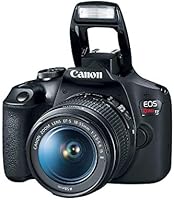
  • Flash: Built-in pop-up flash with a guide number of 9.2 m at ISO 100, plus a hot shoe for external Canon EX Speedlite units.
  • Weight: Approximately 2.5 pounds with the kit lens attached, making it manageable for extended handheld use.
  • Image Stabilization: Digital image stabilization is available in video mode; optical stabilization is handled by the lens rather than the body.
  • Warranty: This renewed unit comes with a 90-day limited warranty from the seller, shorter than the standard Canon manufacturer coverage.

Related Reviews
Canon EOS Rebel T3i
Canon EOS Rebel T3i
76%
83%
Image Quality
91%
Ease of Use
67%
Video Performance
72%
Autofocus System
88%
Articulating Screen
More
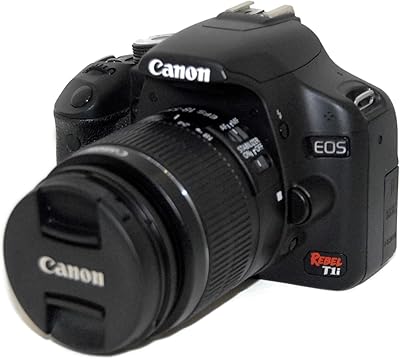
Canon EOS Rebel T1i DSLR Camera with 18-55mm Lens
82%
91%
Image Quality
88%
Ease of Use
74%
Autofocus Performance
83%
Build Quality
87%
Video Quality
More
Canon EOS Rebel T6i
Canon EOS Rebel T6i
79%
91%
Image Quality
83%
Autofocus Performance
88%
Ease of Use
79%
Build Quality & Handling
61%
Video Capabilities
More
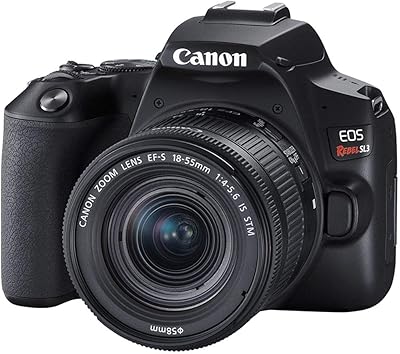
Canon EOS Rebel SL3
Canon EOS Rebel SL3
77%
88%
Image Quality
84%
Autofocus Performance
82%
Build Quality & Portability
61%
Video Capabilities
91%
Ease of Use
More
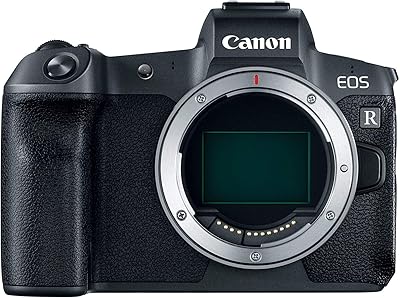
Canon EOS R
Canon EOS R
88%
97%
Image Quality
94%
Autofocus Accuracy
91%
Video Performance
88%
Build Quality
90%
Ergonomics & Handling
More
Canon EOS R3 Mirrorless Camera
89%
96%
Autofocus Performance
94%
Image Quality in Low Light
92%
Build Quality and Durability
93%
Video Recording Capabilities
89%
Usability and Ergonomics
More
Canon EOS 5D Mark III
79%
93%
Autofocus Performance
89%
Image Quality
82%
Low-Light Capability
91%
Build Quality & Durability
61%
Video Capability
More
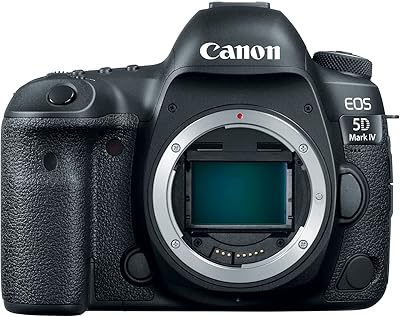
Canon EOS 5D Mark IV
82%
93%
Image Quality
89%
Autofocus Performance
94%
Build Quality & Durability
61%
Video Capabilities
88%
Low-Light Performance
More
Canon EOS 60D DSLR Camera Body
85%
88%
Image Quality
91%
Build Quality
83%
Video Recording
86%
Autofocus Performance
89%
Ease of Use
More
Canon EOS 40D Digital SLR Camera
84%
90%
Image Quality
85%
Build Quality & Durability
87%
Battery Life
84%
Ease of Use
88%
Autofocus Performance
More

FAQ

It is genuinely one of the more beginner-friendly DSLRs available. The Scene Intelligent Auto mode does the heavy lifting while you are getting comfortable, and the guided display walks you through what each setting does in plain language. Most first-time buyers report feeling confident shooting within a few days.

Renewed means the camera has been previously owned, then inspected and tested by a third-party seller before being relisted. It is not refurbished by Canon directly. The condition can vary, so read the seller notes carefully, check for cosmetic wear and a shutter count disclosure if possible, and test all core functions as soon as it arrives so you are within the 90-day warranty window if anything needs resolving.

This body uses the Canon EF mount, so it is only natively compatible with Canon EF and EF-S lenses. Third-party adapters exist for certain mounts like Nikon F or Sony A, but autofocus and electronic communication are often unreliable with adapted lenses, so native Canon glass is strongly recommended.

It manages reasonably well up to around ISO 1600 with decent results, but above that noise becomes noticeable, especially in shadow areas. The bigger limiting factor is the kit lens — its maximum aperture of f/3.5 to f/5.6 does not let in a lot of light. If you plan to shoot indoors frequently, a 50mm f/1.8 prime lens is a popular and affordable upgrade that makes a significant real-world difference.

No, it does not. Video tops out at Full HD 1080p. If 4K recording is important to you, this body will not meet that need and you should look at more recent mirrorless options.

You connect through the Canon Camera Connect app, available for iOS and Android. On first setup you pair the camera to your phone via NFC (tap your phone to the camera if NFC is supported) or manually through the Wi-Fi menu. Once paired, you can browse images on the camera and pull selected shots to your phone in under a minute.

For casual family moments where subjects are relatively cooperative — a birthday party, a playground visit, a pet sitting or walking slowly — it performs fine. For genuinely fast or unpredictable movement, the 9-point autofocus and 3 frames per second burst speed will cause you to miss shots regularly. It is not designed for high-speed action tracking.

Any standard SD, SDHC, or SDXC card works. For everyday shooting, a Class 10 or UHS-I U1 card with at least 32GB of storage is plenty. If you shoot RAW files regularly or record video, stepping up to a U3-rated card will keep write speeds from becoming a bottleneck during burst sequences.

The manual shooting skills absolutely transfer to any camera system. On the gear side, Canon EF and EF-S lenses work on other Canon DSLR bodies, so your lens collection stays useful. However, if you eventually move to Canon mirrorless (the RF mount system), you will need an adapter to continue using EF glass — though that adapter works well in practice.

Under normal use — shooting stills with occasional menu browsing and a reasonable amount of LCD review — most users comfortably get through a full day on one charge. Canon rates it at around 500 shots per charge, though heavy live view use, frequent Wi-Fi transfers, or an older cell in a renewed unit will reduce that noticeably. Carrying a spare LP-E10 battery is inexpensive and worth it for travel days.