Overview

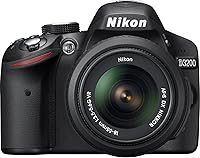
The Nikon D3200 24.2MP DSLR is one of those cameras that punched well above its class at launch, and it still holds its own for the right buyer today. Yes, it is discontinued — Nikon has moved on — but the core of this entry-level Nikon DSLR remains genuinely capable: a 24.2MP APS-C sensor that captures far more detail than any smartphone of its era. The included 18-55mm VR kit lens means you can start shooting the day it arrives. Just go in with clear eyes — this is older technology, and newer options exist at comparable price points.

Features & Benefits

At its heart, the D3200 is built around a sensor that produces files with enough detail to crop aggressively or print large without the image falling apart. Shoot in RAW and you gain real flexibility in post-processing — a solid advantage for anyone learning the craft. The 11-point autofocus system handles everyday subjects well, though it can struggle with fast or unpredictable movement. Low-light performance is respectable up to around ISO 1600; beyond that, noise becomes visible but manageable. Full HD 1080p video is a welcome bonus, and the optical viewfinder gives shooting a tactile, intentional feel that phone cameras simply cannot replicate.

Best For

This beginner DSLR kit makes the most sense for someone ready to move beyond auto mode and actually learn photography. Manual controls are all present — aperture, shutter, ISO — and the camera teaches without overwhelming. The Nikon F-mount is a genuine long-term asset: invest in a good lens now and it will work on more advanced Nikon bodies later. Students, family photographers wanting sharper holiday shots, and travelers who want creative control without heavy gear will all find it a practical fit. It is not the right pick for anyone who needs wireless connectivity or polished video autofocus out of the box.

User Feedback

With nearly 1,500 ratings averaging 4.5 stars, the D3200 has clearly earned real loyalty. Buyers most often praise image quality for the price, noting that photos look noticeably better than what they were getting from a phone or compact camera. Ease of use also gets consistent mention — the menu system is approachable for beginners. On the downside, the absence of built-in Wi-Fi is a common frustration for users wanting to share photos instantly. Battery life, rated around 540 shots, draws mixed comments — fine for a day out, but a spare is worth carrying on longer trips. Many users also note they quickly outgrew the kit lens.

Pros

  • 24.2MP sensor captures enough detail to crop aggressively or print large with confidence.
  • RAW file support gives beginners real flexibility to learn post-processing at their own pace.
  • The included 18-55mm VR kit lens means you can start shooting a full range of subjects immediately.
  • Nikon F-mount compatibility opens up a vast, affordable second-hand lens market.
  • Guide Mode actively teaches beginners how exposure settings affect the final image.
  • Optical viewfinder provides a natural, battery-efficient way to compose shots.
  • Solid build quality feels reassuring in hand without adding excessive weight.
  • Battery rated to around 540 shots holds up well for a full day of casual shooting.
  • 4.5-star average across nearly 1,500 verified ratings reflects consistent real-world satisfaction.

Cons

  • No built-in Wi-Fi or Bluetooth makes photo sharing a manual, cable-dependent process.
  • Video autofocus hunts and drifts visibly during recording, making footage look amateurish.
  • Low-light performance degrades noticeably above ISO 1600, limiting indoor and evening shooting.
  • The fixed LCD does not tilt, making low-angle or overhead shots difficult to frame accurately.
  • Kit lens sharpness drops toward the edges and the narrow maximum aperture limits available-light use.
  • Buffer fills quickly when shooting RAW bursts, causing frustrating pauses mid-action.
  • No weather sealing leaves the camera vulnerable during outdoor shooting in unpredictable conditions.
  • Discontinued status means no firmware updates, no manufacturer support, and no warranty safety net from Nikon.
  • Older autofocus lenses without internal focus motors will not autofocus on this body, a common surprise for second-hand lens shoppers.

Ratings

The Nikon D3200 24.2MP DSLR has been rated by our AI system after deep analysis of verified buyer reviews from global markets, with spam, bot-generated, and incentivized feedback actively filtered out. Across nearly 1,500 real-world ratings, the scores below reflect an honest picture — what this entry-level Nikon genuinely does well, and where it asks for compromise.

Image Quality
91%
For a beginner-tier body, the 24.2MP APS-C sensor consistently impresses users who compare their shots against phone cameras or older compacts. Detail in daylight portraits and landscape shots holds up well enough to crop or print at larger sizes without obvious degradation.
At higher ISO settings — particularly beyond 1600 — noise becomes noticeable, especially in shadow areas. Buyers who frequently shoot indoors under artificial light or at evening events report that images require cleanup in post-processing to look their best.
Ease of Use
88%
Users new to DSLR cameras consistently highlight how approachable the D3200 feels out of the box. The Guide Mode walks absolute beginners through settings in plain language, and the physical layout of dials makes learning exposure controls feel intuitive rather than intimidating.
The menu system, while functional, can feel layered and slow to navigate when you need to change settings quickly in the field. A few buyers note that without Wi-Fi or a companion app, transferring settings knowledge from online tutorials to the camera itself takes more effort.
Autofocus Performance
74%
26%
For stationary or slow-moving subjects — portraits, still life, landscape — the 11-point autofocus system locks on reliably and quickly enough to satisfy most beginners. The center point in particular is sharp and responsive in good lighting conditions.
Tracking fast or erratic subjects is where the system shows its age. Users attempting sports, pets in motion, or kids running around report missed focus more often than they would accept from a modern body. Video autofocus is a particular weak point — it hunts visibly during recording.
Value for Money
83%
Buyers who purchased this beginner DSLR kit to genuinely learn photography report strong satisfaction with what they received relative to the investment. The inclusion of the 18-55mm VR kit lens means buyers walk away with a functional shooting setup without additional spending.
The camera is discontinued, and buyers are essentially purchasing older technology. At current resale prices, some reviewers suggest that newer entry-level alternatives offer better connectivity and video specs for a similar outlay, making the value calculation less clear-cut than it once was.
Build Quality & Handling
79%
21%
The body feels solid enough in hand for its class — not a professional tank, but not flimsy either. The rubberized grip gives confidence when shooting one-handed, and the overall weight of around 1.1 pounds keeps it comfortable during longer sessions like a day of travel photography.
There is no weather sealing, which becomes a real limitation when shooting outdoors in unpredictable conditions. A few long-term users report that the plastic body shows scuffs and wear over time, and the mode dial can feel slightly loose compared to mid-range Nikon bodies.
Low-Light Performance
67%
33%
At ISO 800 and below, the D3200 produces clean, usable images in dimly lit rooms or during golden-hour outdoor shooting. The expanded Hi1 setting gives some flexibility when no other option exists, and users appreciate having it as a fallback.
Push past ISO 3200 and the image quality degrades noticeably — colors shift, fine detail smears, and luminance noise becomes distracting. Buyers hoping to shoot indoor events, concerts, or nighttime street scenes regularly without a flash will find the results disappointing.
Video Capability
58%
42%
For casual video needs — recording a family event, a short travel clip, or a simple YouTube video — the full HD 1080p output is acceptably sharp and the HDMI output is a useful bonus. Buyers who just want occasional footage are generally satisfied at this level.
The continuous autofocus during video is genuinely poor — it visibly searches for focus rather than smoothly tracking subjects. There is no headphone jack for monitoring audio, and the 60-minute recording cap frustrates anyone trying to shoot longer sessions.
Battery Life
71%
29%
On a typical day of casual shooting — a few hours, several hundred frames — the rated 540-shot battery life holds up reasonably well for most users. Buyers who carry one spare battery report rarely running into trouble even on full travel days.
Power users, video shooters, or those who use Live View extensively will burn through a charge much faster than the official rating implies. Several reviewers specifically recommend buying at least one spare battery before any trip, which adds to the overall cost of ownership.
Kit Lens Quality
72%
28%
The bundled 18-55mm f/3.5-5.6 VR lens is a better starter optic than many buyers expect. The Vibration Reduction system is noticeably helpful when shooting handheld in lower light, and the focal range covers everyday shooting scenarios from indoor portraits to moderate outdoor distances.
Optical sharpness drops toward the corners at wider apertures, and the maximum aperture of f/5.6 at the long end limits available-light performance. Most buyers find themselves wanting to replace or supplement it within a year once they understand what faster or sharper glass can do.
LCD Display
75%
25%
The 3-inch screen with 921,000 dots displays images with enough clarity to review focus and exposure in the field. Brightness is adequate for most conditions, and the size feels comfortable for navigating menus or reviewing shots after a session.
The display is fixed — it does not tilt or articulate — which makes low-angle or overhead shooting awkward without guesswork. Outdoor visibility in direct sunlight is limited, a recurring frustration among buyers who do a lot of travel or nature photography.
Lens Ecosystem Compatibility
93%
This is one of the D3200's most underappreciated strengths. The Nikon F-mount opens up access to a vast library of lenses spanning decades, and any glass purchased now can travel with the user to more advanced Nikon bodies later. For buyers thinking long-term, this is a meaningful advantage.
While FX lenses technically mount, the crop factor changes their effective field of view in ways beginners sometimes find confusing. Older F-mount lenses without internal motors will not autofocus on the D3200 body, which catches some buyers off guard when shopping second-hand glass.
Connectivity & Sharing
41%
59%
USB 2.0 and HDMI are both present and functional for transferring files to a computer or outputting to a TV. For buyers who do not mind a cable workflow, these basics cover the essentials without complaint.
There is no built-in Wi-Fi or Bluetooth, which is the single most common frustration mentioned across user reviews. In an era when smartphones share photos instantly, having to physically tether or swap memory cards to transfer images feels like a meaningful step backward for everyday users.
Continuous Shooting Speed
63%
37%
Four frames per second is sufficient for photographing relatively predictable action — a child blowing out birthday candles, a dog catching a ball on a slow throw, or a cyclist at moderate speed. Buyers shooting casual events find it does the job without much complaint.
Anyone stepping into this camera hoping to photograph fast sports, wildlife in motion, or live performances will find 4fps limiting compared to even moderately newer APS-C bodies. The buffer also fills quickly in RAW mode, causing a noticeable pause before shooting can resume.
Viewfinder Experience
77%
23%
The optical pentamirror viewfinder gives a direct, real-world view of the scene that many beginners find more natural and instructive than composing on a screen. It also conserves battery compared to relying on Live View, which is a practical benefit during longer outings.
Coverage is approximately 95 percent rather than full frame, meaning the final image includes a small sliver beyond what the viewfinder shows — a minor but occasionally frustrating quirk. The viewfinder also appears slightly dim compared to pentaprism finders found on higher-tier bodies.

Suitable for:

The Nikon D3200 24.2MP DSLR is a strong match for adults who are serious about learning photography but not yet ready to invest in a professional-grade body. If you have been shooting on a smartphone and find yourself frustrated by the lack of creative control — wanting to manually adjust depth of field, freeze motion, or experiment with long exposures — this camera hands you those tools in an approachable package. Photography students who need a capable body for coursework will find it covers all the fundamentals without unnecessary complexity. Budget-conscious buyers who want to start building a Nikon lens collection will also appreciate the F-mount compatibility, which means any glass purchased now can follow them to a more advanced body later. Casual family and travel photographers who simply want noticeably sharper, more detailed images than a phone delivers will get exactly that, especially in decent lighting conditions.

Not suitable for:

The Nikon D3200 24.2MP DSLR is genuinely the wrong tool for several types of buyers, and it is worth being direct about that. If wireless connectivity matters to you — sharing photos instantly to your phone, using a remote shooting app, or integrating with a modern workflow — this camera will frustrate you daily, as it has no built-in Wi-Fi or Bluetooth. Buyers who prioritize video work should look elsewhere; the autofocus during recording is visibly unreliable, there is no headphone monitoring jack, and the overall video feature set has been surpassed by far more affordable options released since this body was discontinued. Sports and wildlife photographers who need fast, accurate subject tracking will find the 11-point autofocus and 4fps continuous shooting insufficient for anything moving unpredictably. Anyone expecting a current, supported product with firmware updates and manufacturer backing should also be aware that this is an older, discontinued model with limited official support going forward.

Specifications

  • Sensor: The camera uses a 24.2MP APS-C CMOS sensor, which captures significantly more detail than entry-level compact cameras and produces files suitable for large prints or aggressive cropping.
  • Processor: Nikon's Expeed 3 image processor handles noise reduction, color rendering, and file writing, contributing to the camera's overall responsiveness during continuous shooting.
  • ISO Range: Native ISO runs from 100 to 6400, with an expanded Hi1 setting equivalent to approximately ISO 12,800 for use in very low-light situations.
  • Autofocus: An 11-point phase-detection autofocus system with 3D tracking is used for still photography, with contrast-detection autofocus available during Live View and video recording.
  • Continuous Shooting: The camera shoots at up to 4 frames per second in continuous mode, with buffer limitations that become noticeable when shooting extended RAW bursts.
  • Video: Full HD 1080p video recording is supported via H.264/MPEG-4 encoding, with HDMI output available for connecting to external monitors or displays.
  • Display: A fixed 3″ LCD screen with 921,000 dots is used for menu navigation, Live View composition, and image review after shooting.
  • Viewfinder: An optical pentamirror viewfinder provides approximately 95% frame coverage with 0.8x magnification for composing shots without using the rear screen.
  • Lens Mount: The Nikon F-mount accepts both DX and FX format lenses, giving access to a wide range of current and legacy Nikon glass, though older lenses without internal motors will not autofocus on this body.
  • Kit Lens: The included 18-55mm f/3.5-5.6 AF-S DX VR Nikkor zoom lens covers a versatile everyday focal range and features Vibration Reduction to help reduce blur from camera shake.
  • File Formats: Images can be saved as JPEG at multiple quality levels or as 12-bit RAW files in Nikon's NEF format, which retains full sensor data for post-processing flexibility.
  • Memory: The camera accepts SD, SDHC, and SDXC memory cards with UHS-I bus support via a single card slot located in the camera body.
  • Battery: A rechargeable EN-EL14 lithium-ion battery powers the camera with a rated capacity of approximately 540 shots per charge under standard testing conditions.
  • Connectivity: The camera includes one USB 2.0 port for tethered file transfer, one HDMI port for video output, and a 3.5mm microphone input jack; there is no built-in Wi-Fi or Bluetooth.
  • Weight: The camera body weighs approximately 1.1 pounds without lens or battery, making it manageable for extended handheld shooting sessions.
  • Shutter Speed: Shutter speeds range from 30 seconds to 1/4000 second in standard modes, with flash sync speed set at 1/200 second.
  • Flash: A built-in pop-up flash is included with auto, red-eye reduction, and slow-sync modes; the accessory hot shoe supports external Nikon Speedlight flashes.
  • Exposure Modes: Full manual, aperture priority, shutter priority, and program auto modes are available alongside scene modes and the beginner-oriented Guide Mode.
  • Dimensions: The camera body measures approximately 4.96″ wide by 3.78″ tall by 2.99″ deep, a compact form factor typical of entry-level DX-format DSLR bodies.
  • Warranty: Nikon provided a one-year limited manufacturer warranty at the time of original sale, though as a discontinued model, warranty coverage through Nikon is no longer active for new purchases.

Related Reviews
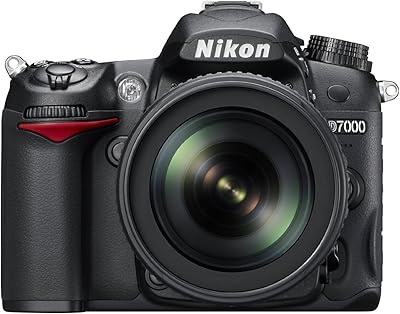
Nikon D7000 16.2MP DSLR with 18-105mm Lens
87%
96%
Image Quality
91%
Autofocus Performance
88%
Low-Light Capability
93%
Build Quality
87%
Ergonomics & Handling
More
Nikon D3300
Nikon D3300
75%
88%
Image Quality
71%
Low Light Performance
79%
Autofocus Performance
84%
Ease of Use
76%
Build Quality & Ergonomics
More
Nikon D610 24.3MP Full Frame DSLR Camera Body
86%
94%
Image Quality
88%
Autofocus Performance
90%
Build Quality & Ergonomics
80%
Battery Life
89%
Low-Light Performance
More
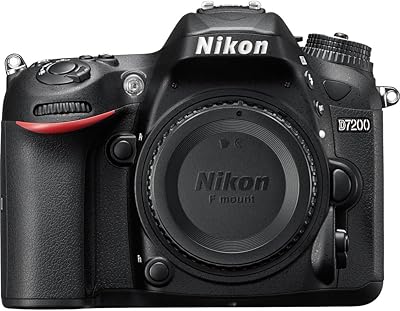
Nikon D7200
Nikon D7200
83%
93%
Image Quality
91%
Autofocus Performance
94%
Battery Life
89%
Build Quality & Weather Sealing
82%
Low-Light Performance
More
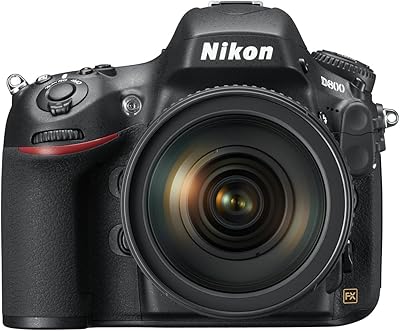
Nikon D800 36.3 MP DSLR Camera
85%
96%
Image Quality
85%
Autofocus Performance
92%
Build Quality
78%
Low-Light Performance
88%
Usability & Ergonomics
More
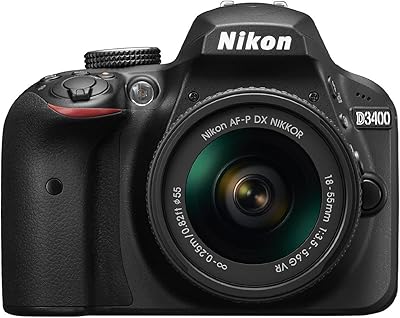
Nikon D3400 18-55mm VR Kit
75%
91%
Image Quality
78%
Low-Light Performance
76%
Autofocus Performance
93%
Battery Life
74%
Build Quality & Ergonomics
More
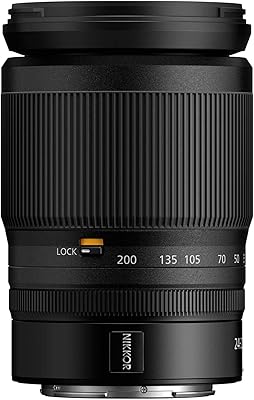
Nikon NIKKOR Z 24-200mm VR Lens
86%
91%
Image Quality
88%
Vibration Reduction (VR) Performance
87%
Portability & Weight
84%
Build Quality
90%
Focal Length Range (24-200mm)
More
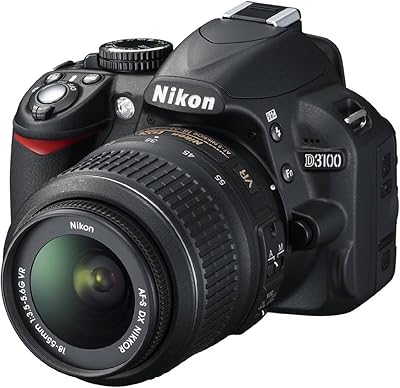
Nikon D3100 18-55mm VR Kit
74%
88%
Image Quality
91%
Ease of Use for Beginners
74%
Autofocus Performance
67%
Video Quality
78%
Build Quality & Ergonomics
More
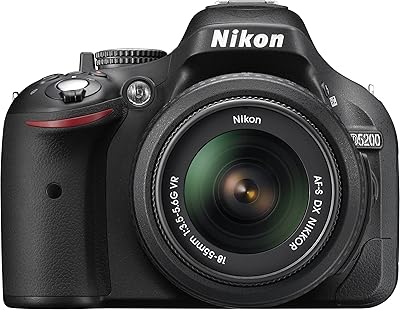
Nikon D5200
Nikon D5200
76%
91%
Image Quality
78%
Autofocus Performance
84%
Build Quality & Ergonomics
88%
Articulating LCD Screen
69%
Video Capability
More
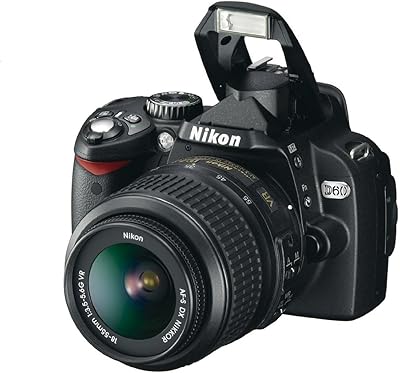
Nikon D60 DSLR Camera with 18-55mm Lens
82%
88%
Image Quality
91%
Ease of Use
84%
Portability/Weight
85%
Lens Versatility
83%
Build Quality
More

FAQ

It depends on what you need it for. The D3200 is discontinued, but its 24.2MP sensor still produces genuinely sharp, detailed images that outperform most smartphone cameras. If your priority is learning photography with manual controls and you are working with a limited budget, it remains a practical choice. Where it starts to feel its age is in connectivity — no Wi-Fi — and video autofocus, which is noticeably poor by current standards.

It accepts standard SD, SDHC, and SDXC cards. A Class 10 or UHS-I rated card is recommended, especially if you plan to shoot in RAW or use continuous burst mode, as slower cards can cause the buffer to fill more quickly and stall shooting.

Many older Nikon F-mount lenses will physically mount on this body, but there is an important catch: lenses that rely on the camera body for autofocus drive — known as screw-drive or non-AFS lenses — will not autofocus on the D3200. You would need to focus them manually. AF-S lenses with internal motors work fully.

No, it does not. This is one of the most common frustrations buyers mention. If you want to transfer photos wirelessly, your only option is to use a compatible Eye-Fi SD card or a separate wireless adapter — neither of which is as convenient as modern built-in Wi-Fi solutions.

Nikon's official rating of around 540 shots is measured under controlled conditions and represents a reasonable benchmark for typical still photography. In practice, heavy use of Live View, video recording, or working in cold weather will drain the battery faster. Most users recommend picking up at least one spare EN-EL14 battery before any longer outing.

It handles relatively predictable movement reasonably well, but fast, unpredictable subjects indoors will push its limits. The autofocus system is not designed for rapid tracking, and indoor low-light conditions will require either a flash or accepting some noise in your images above ISO 1600. For casual family photos it performs fine; for chasing a toddler around a dim living room, expect some misses.

Yes, there is a 3.5mm microphone input on the body, which is a genuinely useful feature at this level. An external microphone will produce much better audio than the built-in mono microphone. Note that there is no headphone jack, so you cannot monitor audio while recording — you would only hear the result after the fact.

JPEG files are processed in-camera and are ready to share immediately, but they discard a lot of image data in the process. RAW files in NEF format preserve everything the sensor captured, giving you far more flexibility to correct exposure, white balance, and color in editing software afterward. If you are learning photography and willing to spend time in post-processing, RAW is the better format to work in.

The 18-55mm range covers a solid variety of everyday shooting — wide enough for indoor group shots or landscapes, and the longer end is usable for loose portraits. Where beginners typically feel the limitation first is in background separation: the kit lens at f/5.6 does not produce the soft, creamy background blur seen in portrait photography. A 50mm f/1.8 AF-S Nikkor is a popular, affordable first upgrade that many D3200 owners make after a few months.

It is actually quite well suited for that purpose. The presence of full manual controls, RAW file support, and a genuine optical viewfinder means it covers everything typically required in an introductory photography curriculum. The Guide Mode is also a helpful bridge between fully automatic and fully manual shooting while you are still learning how the exposure triangle works.