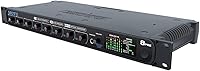



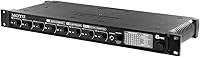
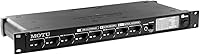
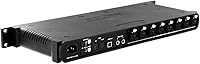
Overview

The MOTU 8pre USB Audio Interface sits firmly in the mid-to-upper tier of the recording interface market — built for serious home studio operators and small professional setups, not beginners looking for a simple plug-and-play box. MOTU has been a respected name in professional audio for decades, and this unit reflects that pedigree. What makes it genuinely compelling is its 16-in/12-out channel count, which is rare at this price range and opens real doors for multi-track sessions. Having been on the market since 2013 without being discontinued, it has quietly proven its staying power as a rack-mountable workhorse that engineers continue to trust.

Features & Benefits

The 8 built-in mic preamps are where this MOTU interface earns its keep. They offer solid headroom and a low noise floor — clean enough for tracking vocals, acoustic instruments, or overhead mics on a drum kit without coloration getting in the way. Add an ADAT-compatible preamp expander and you can push the total input count to 16, a genuine advantage for anyone recording a full band simultaneously. USB 2.0 handles the connection reliably on both macOS and Windows, with stable drivers that rarely cause headaches. Recording at 24-bit/96kHz gives sessions the resolution needed for serious tracking and mixing. CueMix DSP handles onboard monitoring and routing, though it takes real time to learn properly.

Best For

The 8pre USB makes the most sense for producers and engineers who have outgrown a basic stereo interface and need to record multiple channels simultaneously. Tracking a full drum kit with overheads, kick, snare, and room mics in a single pass is exactly the kind of task this eight-channel interface handles without compromise. Bands recording live together in a room will appreciate having enough inputs to cover everyone at once. It also suits podcasters or broadcast producers running multiple guests on dedicated mic channels. If you already own ADAT-compatible gear, the optical expansion option alone could be reason enough to choose this over competing interfaces in the same category.

User Feedback

With a 4.3-star average across a small but dedicated pool of reviews, the feedback on this MOTU interface paints a consistent picture. Owners praise the preamp transparency and the solid metal construction — this is a chassis built to live in a rack for years, and many users confirm exactly that, reporting long-term ownership without reliability issues. On the critical side, CueMix DSP draws complaints for being less intuitive than rival software bundles, and a handful of buyers noted needing driver updates when moving to newer operating system versions. Not a dealbreaker, but worth knowing before you commit. The modest review count means the rating reflects a niche audience rather than broad consumer consensus.

Pros

  • Eight clean, low-noise mic preamps handle everything from delicate acoustics to loud drum overheads without breaking a sweat.
  • ADAT optical expansion pushes total inputs to 16, giving growing studios real room to scale without buying a second interface.
  • Solid metal chassis feels built for permanent rack installation, not a plastic box that wobbles on a desk.
  • 24-bit/96kHz recording resolution keeps sessions clean and detailed enough for professional mixing and mastering workflows.
  • USB 2.0 connectivity delivers stable, low-latency performance on both macOS and Windows without chronic driver drama.
  • Owners consistently report using this MOTU interface for years without reliability issues — rare for gear in this category.
  • Wide connector variety — XLR, quarter-inch TRS, and optical — means it plays well with almost any existing studio gear.
  • CueMix DSP onboard monitoring eliminates the need for a separate headphone mix solution during tracking sessions.
  • Strong brand reputation in professional audio means firmware and driver support has remained available years after launch.
  • At its price tier, the preamp-to-channel ratio is genuinely difficult to match with competing USB interfaces.

Cons

  • CueMix DSP has a steeper learning curve than rival software bundles and will slow down new users on day one.
  • Some buyers have reported needing driver or firmware updates to maintain compatibility with newer OS releases.
  • The rack-mount form factor assumes you have rack space — awkward and oversized for compact desktop or portable setups.
  • With only 10 ratings available, it is hard to draw statistically confident conclusions about long-term reliability patterns.
  • No onboard LCD or detailed front-panel metering makes gain-staging less intuitive without diving into the software.
  • USB 2.0 is functional but shows its age compared to interfaces now offering Thunderbolt or USB-C connectivity.
  • No bundled DAW or recording software beyond CueMix DSP, so new users need to factor in that additional cost.
  • Weight of over five pounds and larger dimensions make it impractical for engineers who move between locations regularly.

Ratings

The scores below are generated by AI after analyzing verified owner reviews for the MOTU 8pre USB Audio Interface from buyers worldwide, with spam, incentivized submissions, and bot-generated feedback actively filtered out before any scoring took place. This eight-channel interface earns notably strong marks for preamp performance, build durability, and long-term reliability, while the analysis also surfaces genuine friction points around software complexity and driver maintenance that any informed buyer should weigh before purchasing.

Preamp Quality
86%
Engineers tracking vocals, acoustic guitars, and drum overheads consistently describe the preamps as punchy and clean, with enough headroom to handle dynamic sources without clipping. For the price tier, owners feel the noise floor is low enough to record sensitive sources confidently, and the gain range covers everything from ribbon mics to hot line signals.
Users comparing this MOTU interface directly to premium dedicated rack preamps note that the character, while clean, lacks the nuanced depth of higher-end outboard hardware. When recording very quiet sources in a well-treated room, some engineers feel the ceiling of the preamp performance becomes noticeable.
Build Quality
91%
The all-metal chassis draws consistent praise from owners who have had this unit installed in a rack for years, reporting zero signs of wear, loose connections, or structural degradation. Multiple long-term reviewers specifically call out the build as one of the primary reasons they have never felt compelled to replace it.
The unit is heavier than competing interfaces with plastic enclosures, which is rarely a complaint in fixed studio setups but becomes relevant for anyone who occasionally needs to move their gear. A few users note the front-panel controls feel functional rather than refined compared to newer flagship hardware.
Channel Count & I/O
88%
Having 16 inputs and 12 outputs available through a single USB connection is a meaningful advantage for home studio operators recording full bands or complex live setups. Producers who previously juggled multiple smaller interfaces to track drums simultaneously describe the channel count as one of the most practical upgrades the 8pre USB delivers.
While 16 inputs is impressive, reaching that total requires pairing the unit with external ADAT-compatible hardware, meaning the out-of-the-box count is 8 analog inputs. Buyers who expect 16 simultaneous analog preamp inputs without reading the specs carefully may feel misled when they first unbox the unit.
Value for Money
79%
21%
Relative to competing interfaces offering a similar preamp count and ADAT expansion capability, owners generally feel the pricing is fair for what the hardware delivers. The longevity of the platform — still in active use by engineers who bought it years ago — reinforces the perception that this is a sound long-term investment.
Budget-conscious buyers entering the mid-range interface market for the first time may find the price difficult to justify without fully understanding the channel count and expandability advantages. If you only need four channels, paying for eight preamps you will not use regularly dulls the value proposition considerably.
CueMix DSP Software
61%
39%
For engineers willing to invest time in learning it, CueMix DSP offers genuinely flexible onboard mixing, routing, and zero-latency monitoring that reduces dependence on a DAW during tracking. Power users who have mastered the software consider it one of the more capable bundled monitoring solutions available at this price point.
New users frequently report frustration with CueMix DSP during the first several sessions, finding the interface unintuitive compared to the simpler companion apps bundled with competing interfaces. The learning curve is real and steep enough that some owners never fully explore its capabilities, essentially leaving paid functionality sitting idle.
Driver Stability
73%
27%
On established, stable OS versions, the USB drivers perform reliably across both macOS and Windows, with most users reporting consistent operation over years of regular use without audio dropouts or unexplained disconnections during sessions.
A recurring theme in user feedback is the need to manually check for and install driver updates after operating system upgrades, which introduces an unwelcome interruption before the first session on a new OS version. This is a manageable inconvenience for experienced engineers but a frustrating surprise for buyers expecting plug-and-play simplicity.
Ease of Setup
67%
33%
Physical installation into a rack is straightforward, and USB connectivity means no proprietary expansion cards or complex clocking setups are required for basic use. Users with prior interface experience typically have the unit producing audio within a reasonable amount of time after unboxing.
The combination of CueMix DSP configuration, phantom power management through software, and routing options means the initial setup experience is more involved than competing interfaces aimed at a similar buyer. First-time MOTU users without a technical background tend to need supplementary tutorial resources before feeling confident the unit is configured correctly.
Latency Performance
78%
22%
USB 2.0 delivers acceptably low round-trip latency at practical buffer sizes for studio tracking, and the onboard CueMix DSP monitoring path provides a near-zero-latency headphone mix that sidesteps DAW latency entirely during live recording sessions.
USB 2.0 shows its age relative to Thunderbolt and USB-C interfaces that have become available since this unit launched, and at lower buffer sizes some users on busy systems report occasional glitches that Thunderbolt-equipped alternatives handle more gracefully. It is not a dealbreaker, but the technology is not cutting-edge.
ADAT Expandability
87%
The optical ADAT port is a well-regarded feature among studio owners who already have an ADAT-compatible preamp or digital mixer in their setup, effectively doubling the available input count without adding another USB device to the chain. Engineers building out a studio incrementally find this expansion path genuinely practical and cost-effective.
Realizing the full 16-input potential requires owning compatible ADAT hardware, which represents a separate purchase that not all buyers will have budgeted for. For users without existing ADAT gear, this feature sits dormant and provides no immediate benefit out of the box.
Connector Variety
83%
The combination of analog XLR, quarter-inch TRS, and optical connectors means the 8pre USB integrates naturally with a wide range of studio equipment without requiring adapters or workarounds. Owners with diverse signal chains — mixing microphones, keyboards, and digital gear — appreciate not needing to reconfigure cabling between sessions.
There is no dedicated front-panel headphone output with independent volume control on the unit itself, which some users find inconvenient when adjusting monitor levels during a tracking session without reaching for software. Competing interfaces at similar price points sometimes include more ergonomic physical controls for headphone and monitor management.
Noise Floor
84%
Under real tracking conditions, the noise floor is clean enough that owners recording acoustic instruments in home environments rarely encounter audible hiss or hum at normal gain settings. The overall signal quality holds up well when pushed to higher gain levels for quieter sources like room mics or passive ribbon microphones.
Under close scrutiny in a fully treated professional recording environment, the noise floor does not quite match dedicated high-end rack preamplifiers, and very sensitive microphones at high gain can occasionally reveal a subtle noise ceiling. This is largely imperceptible in a typical home studio mix but may concern perfectionists working at high gain.
Long-term Reliability
89%
One of the more telling signals in the available feedback is the frequency with which owners mention years of continuous use without hardware issues, which is a strong indicator of robust component quality for a device first released in 2013. The fact that MOTU has not discontinued the unit further supports its reputation as a durable long-term investment.
With a modest total review count, the reliability picture is drawn from a relatively small sample of owners, so it is worth tempering enthusiasm slightly. A few users have also noted that aging units occasionally require firmware attention when paired with modern OS environments, suggesting that maintenance becomes more important as the hardware gets older.
OS Compatibility
71%
29%
The 8pre USB works on both macOS and Windows, and MOTU has maintained driver availability over many years, which is more than can be said for some competing manufacturers who abandon older hardware when new OS versions ship. Most users on mainstream OS versions report stable, functional operation without major issues.
The compatibility story is not entirely smooth — buyers who upgrade their OS without first checking MOTU's driver release page have run into session-blocking problems that required downloading updated software before the unit would function correctly. This extra maintenance step is an ongoing expectation rather than a one-time inconvenience.

Suitable for:

The MOTU 8pre USB Audio Interface was built for a specific kind of buyer, and if you fit the profile, it is hard to beat at this tier. Home studio producers who have hit the ceiling of a basic two-channel interface — and need to track drums, bass, guitars, and vocals all at once — will find the eight simultaneous preamp inputs genuinely liberating. Bands that want to record live sessions without bouncing tracks or re-patching mid-session will appreciate how much this unit can handle in a single pass. If you already own ADAT-equipped gear like a standalone preamp or digital mixer, the optical expansion port turns this eight-channel interface into a 16-input hub, which is serious value for a growing studio. Podcasters and broadcast producers running panel discussions with multiple guests and dedicated mic channels will also find the clean preamp performance and reliable USB driver behavior a strong fit for their workflows.

Not suitable for:

If you are just starting out in home recording and primarily need to track one or two sources at a time, the MOTU 8pre USB Audio Interface is more hardware than you need right now, and the price and learning curve will not serve a beginner well. The CueMix DSP software, while capable, is not the kind of companion app you open and figure out in an afternoon — it rewards patience and study, which can frustrate users who want to record quickly without deep software configuration. This is also a rack-mount unit with a physical footprint to match, so anyone working from a small desk setup without rack space may find it awkward to integrate. Users on very recent operating systems should budget time for checking driver compatibility and potentially updating firmware before their first session. If your recording needs are primarily mobile or laptop-based in the field, the size and USB bus requirements make this eight-channel interface a poor travel companion compared to smaller portable options.

Specifications

  • Connectivity: The unit connects to a host computer via USB 2.0, providing stable audio streaming on both macOS and Windows systems.
  • Total I/O: It offers 16 inputs and 12 outputs in total, making it one of the more channel-rich interfaces in its class.
  • Mic Preamps: Eight built-in microphone preamplifiers with analog XLR inputs are included for simultaneous multi-source recording.
  • Bit Depth: Audio is recorded and played back at 24-bit resolution, preserving fine dynamic detail across all channels.
  • Sample Rate: The maximum supported sample rate is 96kHz, suitable for high-resolution tracking and professional mixing sessions.
  • ADAT Expansion: An ADAT optical I/O port allows connection to compatible external preamp expanders, pushing the total input count to 16.
  • Line Inputs: Quarter-inch TRS connectors are provided for line-level sources such as keyboards, direct boxes, and outboard gear.
  • Optical I/O: A dedicated optical connector supports ADAT lightpipe protocol for digital expansion with compatible external hardware.
  • Bundled Software: CueMix DSP software is included for onboard zero-latency monitoring, flexible signal routing, and mixer control.
  • OS Compatibility: The interface is officially supported on both Windows and macOS operating systems.
  • Device Compatibility: It is compatible with MIDI controllers and personal computers, and works with standard class-compliant DAW software.
  • Form Factor: The unit is designed for rack mounting, fitting standard 19-inch rack enclosures for permanent studio installation.
  • Weight: The interface weighs 5.28 pounds, reflecting its all-metal chassis construction.
  • Dimensions: Physical dimensions are 23.6 x 11.4 x 5.4 inches, spanning a standard rack-width footprint with moderate depth.
  • Model Number: The official model designation is 8 PRE USB, as assigned by MOTU.
  • Release Date: The product was first made available in August 2013 and has remained in active production since then.
  • Manufacturer Status: MOTU has not discontinued this model, and it remains available through authorized retail channels.
  • Hardware Platform: The interface is designed for use with headphones, laptops, and desktop PCs as the host platform.

Related Reviews
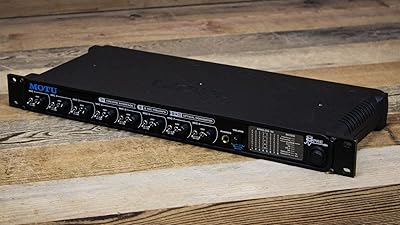
MOTU 8pre Firewire Audio Interface
76%
91%
Preamp Quality
88%
Build Quality
89%
I/O Flexibility
47%
Connectivity & Setup
39%
Modern Compatibility
More
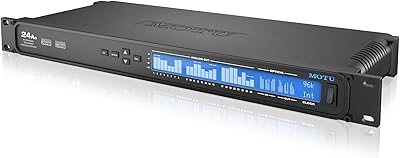
MOTU 24Ao USB AVB Audio Interface
80%
93%
Channel Density
87%
AVB Network Performance
79%
Driver Stability
58%
Setup & Configuration
74%
Value for Money
More
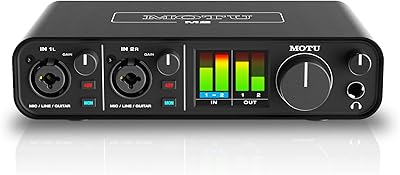
MOTU M2
MOTU M2
92%
96%
Audio Conversion Quality
98%
Visual Monitoring
93%
Build Construction
91%
Driver Stability
94%
Loopback Functionality
More
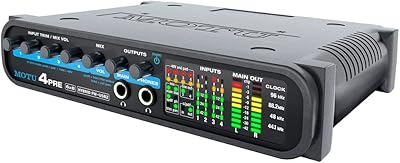
MOTU 4pre USB Audio Interface
68%
81%
Preamp Quality
63%
Driver Stability
58%
Connectivity Options
66%
Value for Money
77%
Build Quality
More
MOTU 112D Thunderbolt USB Audio Interface
81%
91%
Driver Stability
94%
Channel Count & I/O
87%
AVB Networking
89%
Thunderbolt Performance
88%
Connector Ecosystem
More
MOTU MicroBook IIc USB Audio Interface
70%
78%
Build Quality
83%
Sound Quality
58%
Mic Preamp Quality
54%
Ease of Setup
67%
Driver Stability
More
MOTU UltraLite-mk5
MOTU UltraLite-mk5
89%
96%
Audio Conversion Quality
92%
Preamp Transparency
94%
Driver Stability
91%
Latency Performance
88%
Software Interface (CueMix 5)
More
MOTU 16A 32x32 Audio Interface
79%
91%
Driver Stability
93%
Channel Count & I/O Depth
88%
Onboard DSP Mixer
86%
Connectivity Flexibility
74%
AVB Networking
More
MOTU M4
MOTU M4
89%
96%
Audio Conversion Quality
94%
Visual Monitoring
92%
Latency Performance
89%
Build Quality
93%
Loopback Functionality
More
MOTU 828x Thunderbolt/USB Audio Interface
71%
83%
Thunderbolt Performance
67%
USB 2.0 Compatibility
88%
Channel Count & I/O Flexibility
74%
Onboard DSP & CueMix FX
51%
Driver Stability
More

FAQ

Generally yes, but you should check MOTU's official support page before purchasing if you are on a very recent OS release. A handful of users have noted needing driver or firmware updates when upgrading their operating system, so it is worth downloading the latest drivers from MOTU directly before your first session rather than relying on whatever ships in the box.

The MOTU 8pre USB Audio Interface works as a standard USB audio device and is compatible with major DAWs including Logic Pro, Pro Tools, Ableton Live, Reaper, and Cubase. CueMix DSP is a companion mixer and monitoring application, not a DAW itself, so you are not locked into any specific recording software.

You connect an external ADAT-compatible preamp or digital mixer to the optical port, which adds another 8 channels via lightpipe, bringing your total input count up to 16. This is a genuinely useful feature if you already own an ADAT-equipped device or plan to expand your studio over time.

The 8pre USB requires its own power supply and does not run on USB bus power alone, which is expected given it houses eight preamps and a full analog signal path. Make sure you have an available AC outlet wherever you plan to use it.

Yes, 48V phantom power is available for condenser microphones connected to the XLR inputs. You will manage phantom power assignment through the CueMix DSP software rather than a dedicated front-panel switch for each channel.

It is steeper than the simple companion apps bundled with entry-level interfaces. CueMix DSP is a capable piece of software with flexible routing and monitoring options, but new users should expect to spend a few hours reading the manual and watching tutorials before everything clicks. It is not the kind of software you open and immediately understand.

Technically yes, but the rack-mount form factor and AC power requirement make it less practical for mobile or on-location recording compared to more compact interfaces. It is best thought of as a permanent studio fixture rather than a portable recording rig.

USB 2.0 performs well for studio recording at standard buffer sizes, and most users report latency that is perfectly workable for tracking. The onboard CueMix DSP monitoring also provides a near-zero-latency headphone mix so you can hear yourself while recording without relying on your DAW's software monitoring.

It depends on your priorities. The core hardware — preamps, I/O count, and ADAT expansion — holds up well against current competition, and MOTU continues to support it with drivers. If you need Thunderbolt or USB-C connectivity, you will want to look elsewhere, but for straightforward USB multi-channel recording the fundamental capability remains solid.

Multiple long-term owners specifically mention the metal chassis as a strong point, and several report using this MOTU interface for many years without hardware failures. It is clearly built to live in a rack rather than sit on a plastic consumer shelf, which gives it an edge in durability over comparably priced units with cheaper enclosures.

Where to Buy

Vintage King Audio
In stock $549.00