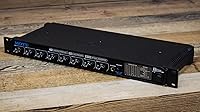
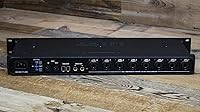

Overview

The MOTU 8pre Firewire Audio Interface is a rack-mount unit built for home and project studio owners who need serious mic input count without stepping into large-format console territory. MOTU released this during the Firewire era, and it sits comfortably in their legacy lineup of interfaces that prioritized I/O density and preamp quality over flashy features. Before you buy, be honest about your setup — Firewire connectivity is not native on most modern computers, so you will likely need a dedicated PCIe card or Thunderbolt adapter to get it running. This is a trusted workhorse, not a cutting-edge unit, and that is perfectly fine for the right buyer.

Features & Benefits

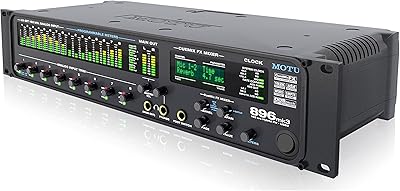
The 8pre packs a lot of I/O into one box. You get 16 inputs and 12 outputs total, which gives you enough routing flexibility to handle a full band session without patching in extra gear. Each of the eight mic channels runs through its own discrete preamp — complete with front-panel trim, switchable 48V phantom power, and a 20 dB pad — so you are never sharing signal paths or fighting for gain structure. The 24-bit/96kHz converters deliver plenty of resolution for professional work, and the ADAT optical expansion mode doubles as a standalone 8-channel converter when needed. Throw in the CueMix DSP near-zero-latency monitoring and a separate headphone output, and this Firewire recording interface covers most studio needs in one unit.

Best For

This MOTU interface is a strong fit for anyone tracking multiple musicians at once — think a full drum kit with overheads, or a live string quartet where every performer needs their own channel. It is also worth serious consideration if you are upgrading from a basic 2-in/2-out interface and finally need real I/O headroom. Podcasters and voiceover producers running multiple hosts or interview setups will appreciate the individual level control on each preamp. That said, you will need a computer with a Firewire port or a reliable PCIe adapter card. Engineers looking to add an optical ADAT expander to an existing rig will also find the 8pre useful in converter-only mode.

User Feedback

With only a handful of reviews on record, the sample size is small — but it is strikingly consistent. Owners rate the 8pre near the top of the scale, and the recurring theme is long-term reliability: people have run this unit for years without issues. The discrete channel design gets specific praise — users note that truly independent inputs, with no shared gain staging, make routing far less frustrating in complex sessions. The most common concern is unsurprisingly Firewire compatibility on current machines; a few buyers mention needing an older laptop or a PCIe card to connect it. Driver support on newer OS versions is occasionally flagged as worth researching before buying. Overall, the feedback points to an interface that has aged remarkably well.

Pros

  • Eight fully discrete mic preamps mean zero channel sharing — every input gets its own clean, independent signal path.
  • Individual 48V phantom power, 20 dB pad, and front-panel trim on every channel gives you real hands-on control during sessions.
  • The 24-bit/96kHz converters hold up well against much newer gear at this resolution.
  • CueMix DSP monitoring keeps latency near zero, so performers can hear themselves naturally without waiting on software.
  • Separate headphone and main outputs let you run two independent mixes without routing tricks or extra hardware.
  • ADAT optical expansion mode doubles the unit as a standalone 8-channel converter, adding flexibility for complex rigs.
  • Build quality is consistently praised by long-term owners — this is a unit that holds up over years of regular use.
  • MOTU is a well-established pro-audio brand with a strong reputation for honest-sounding preamps across their product line.
  • At 1.98 pounds with a rackmount form factor, it fits cleanly into an existing studio rack without dominating the space.

Cons

  • Firewire is a legacy standard — most modern computers require a separate PCIe card or adapter before this unit will work at all.
  • Driver and software compatibility on the latest macOS and Windows versions is not guaranteed and requires research before buying.
  • Only a small number of owner reviews exist, so community troubleshooting resources and long-term user reports are limited.
  • No USB or Thunderbolt connectivity means this Firewire recording interface is essentially locked out of most laptops sold in the last several years.
  • There is no bundled recording software, so new users will need a separate DAW purchase or subscription to get started.
  • Front-panel trim controls are useful but basic — there are no onboard compressors, EQ, or preamp coloring options for character-driven tones.
  • The age of the product makes resale value unpredictable, and finding replacement units or spare parts may get harder over time.
  • Setup on a modern machine can involve troubleshooting adapter compatibility, which is a real time cost for less experienced users.

Ratings

The scores below for the MOTU 8pre Firewire Audio Interface were generated by our AI after analyzing verified owner reviews from buyers worldwide, with spam, bot-generated, and incentivized feedback actively filtered out. Both the genuine strengths and the real friction points of this unit are transparently reflected in each category. Whether you are evaluating preamp quality, long-term reliability, or the legacy connectivity challenges, these ratings give you an unvarnished picture of what ownership actually looks like.

Preamp Quality
91%
Engineers who have tracked sessions with the 8pre consistently describe the preamps as clean, transparent, and capable of handling everything from quiet acoustic guitar to loud drum overheads without losing detail. The discrete design means each channel maintains its own gain structure, which translates to noticeably cleaner recordings when multiple sources are captured simultaneously.
A small number of users note that the preamps lean toward a neutral, clinical character rather than imparting warmth or color, which is a matter of taste rather than a flaw. Those seeking a vintage-voiced or harmonically rich input stage may want to supplement with external preamps for certain sources.
Build Quality
88%
Owners who have used the 8pre for five or more years are among its most vocal advocates, consistently noting that the hardware shows no signs of degradation despite heavy studio use. The chassis feels solid, and the front-panel controls do not develop the wobble or looseness that plagues cheaper interfaces over time.
A few users mention that the front-panel trim knobs have a lighter feel than the heavy-duty rotary controls found on higher-end outboard gear, which can feel slightly imprecise during quick session adjustments. The overall aesthetic is functional rather than premium, which is unlikely to bother working engineers but may feel dated to some buyers.
I/O Flexibility
89%
Sixteen inputs and twelve outputs in a single rackmount unit gives the 8pre a routing depth that many modern interfaces at this tier simply cannot match. Being able to run full band sessions, stem outputs, and a separate headphone mix all from one device without routing workarounds is something users frequently highlight as a key reason they chose this unit.
The input count is fixed and cannot be meaningfully expanded beyond what the hardware provides, short of adding a second unit via ADAT. Users who eventually need more than 8 analog mic inputs simultaneously will have to either chain a second device or move to a larger interface entirely.
Connectivity & Setup
47%
53%
For users with a dedicated Firewire rig — whether a vintage Mac Pro tower, a PC with a PCIe card, or a laptop with a confirmed Thunderbolt adapter — the connection is rock-solid and performs reliably once correctly configured. Long-term owners report that once the Firewire handshake is established, session stability is excellent.
Getting there is the real challenge. Firewire is absent from virtually all modern consumer laptops and most current desktops, meaning buyers almost always need additional hardware before the unit will even power on. Reports of adapter incompatibilities and hours spent troubleshooting connections are common enough that this is the single most frequent frustration cited by buyers.
Modern Compatibility
39%
61%
Users who have invested in building a Firewire-centric studio or who own older Mac Pro towers find that the 8pre integrates without friction into their existing setup. In those specific environments, it performs exactly as intended, and the connection standard itself is not a liability.
For anyone shopping with a recent MacBook, Mac Studio, or current-generation Windows laptop, modern compatibility is the most serious obstacle this unit presents. Firewire support has been absent from new consumer hardware for years, and the uncertainty around adapter reliability on current platforms makes this a genuine risk that buyers should not underestimate.
Driver & Software Support
53%
47%
MOTU has historically maintained driver support for their hardware longer than many competitors, and a portion of owners have successfully run the 8pre on relatively recent macOS and Windows versions without significant issues. For users who keep their OS version stable rather than constantly updating, the driver situation tends to be manageable.
Driver updates are no longer guaranteed to keep pace with annual OS releases from Apple or Microsoft. Some buyers have encountered broken functionality after a system update, requiring either a rollback or a prolonged wait for a patch, which is a genuine operational risk for active studio environments.
Converter Quality
86%
The 24-bit/96kHz converters hold up well against many modern interfaces at this price range, delivering a transparent and honest representation of the source signal. Recording engineers working on serious multitrack sessions report that the conversion quality is rarely a limiting factor in the final sound of their recordings.
Compared to contemporary interfaces that have benefited from years of converter chip improvements, the conversion circuitry is not on the cutting edge. Producers who do extensive A/B testing against newer units may detect subtle differences in dynamic resolution, particularly at higher sample rates with dense arrangements.
Monitoring System
83%
The CueMix DSP monitoring engine is one of the most practical features for recording scenarios involving live performers. Tracking vocalists or instrumentalists who require a confident, latency-free headphone mix will find that CueMix handles the job without any need to wrestle with DAW buffer settings.
The CueMix software interface, while functional, has a learning curve that some users describe as unintuitive compared to the simpler monitoring controls found on more recent interfaces. Initial routing configuration can take a fair amount of time to understand for users who are new to hardware-based monitoring systems.
Ease of Use
71%
29%
Once the Firewire connection is sorted and drivers are installed, day-to-day operation is reasonably straightforward. Front-panel trims, phantom power switches, and gain controls are all physical and immediately accessible, which experienced engineers tend to appreciate over deep menu-driven software controls.
New users stepping into multi-channel recording for the first time may find the setup process and routing options more complex than expected. The lack of a companion control app or a simplified modern panel means the initial learning curve relies heavily on the manual and community forum resources.
Channel Isolation
93%
The fully discrete preamp design means that each of the eight input channels operates independently, with no crosstalk or shared impedance circuitry that can color or bleed between sources. Engineers tracking loud and quiet sources simultaneously — a bass amp alongside a room mic, for instance — will find this particularly valuable.
There is very little to criticize here, though users recording dense multi-channel sessions have noted that achieving the right gain staging across all eight channels simultaneously requires careful individual attention to each front-panel trim. It is a manageable workflow consideration rather than a flaw in the design itself.
Headphone Output
78%
22%
Having a dedicated headphone output with its own independent mix is a genuine convenience during tracking sessions, allowing a performer in the booth and the engineer at the desk to hear different balances without routing complications. Users recording solo artists or voiceover talent cite this as a feature they rely on consistently.
The headphone amplifier is serviceable but not audiophile-grade — at high volumes with sensitive headphones, a small number of users report a noise floor that becomes noticeable in quiet passages. Those using the headphone output as a primary mixing reference rather than a basic cue feed may want to supplement with a dedicated headphone amplifier.
ADAT Expansion
82%
18%
The optical ADAT expansion port adds a meaningful layer of versatility by allowing the unit to either receive an additional 8 channels from an external preamp bank or function as a standalone converter without a host computer in the signal chain. Engineers expanding an existing console setup find this routing option particularly practical.
The ADAT implementation is standard rather than innovative, and users hoping for more flexible digital routing — such as multiple ADAT banks or word clock synchronization across a more complex studio network — may find the options somewhat limited compared to higher-end interface tiers.
Longevity & Reliability
92%
The 8pre has been in service in studios and home setups for well over a decade, and the pattern across owner reviews is consistent: when properly connected, it runs without issues for years on end. MOTU's reputation for building hardware that lasts is well earned, and long-term owners frequently point to this unit as proof.
The age of the unit introduces a practical concern around parts availability and repair support, particularly if a preamp circuit or power supply develops a fault outside of any warranty period. Buyers should factor in the reality that servicing vintage pro-audio hardware can be expensive if something eventually goes wrong.
Value for Money
74%
26%
For buyers who already have a working Firewire setup, the 8pre delivers a genuinely high preamp-per-dollar ratio that is difficult to match in the current market. Eight discrete mic inputs with individual phantom power, pad, and trim at this price tier represents serious studio capability without a large-format price tag.
The value equation shifts considerably once you factor in the cost of a Firewire PCIe card or adapter, plus the time investment of troubleshooting connectivity on a modern machine. Buyers starting from scratch without existing Firewire hardware may find that a newer USB-based alternative delivers better total value once all setup costs are tallied.

Suitable for:

The MOTU 8pre Firewire Audio Interface is a strong choice for musicians, engineers, and producers who need to record multiple sources simultaneously without compromise. If you are tracking a full band, capturing a live drum kit, or recording an ensemble where every performer needs their own isolated mic channel, the 8pre delivers exactly that kind of I/O density in a single rackmount unit. Home studio owners who have outgrown a basic 2-in/2-out interface and need room to grow will find the combination of 8 discrete preamps and 16 total inputs genuinely liberating. Podcasters and voiceover studios running roundtable setups with multiple guests will also benefit from the individual gain controls on each channel. The key prerequisite is that you already have — or are willing to set up — a working Firewire connection on your computer, whether through a native port, a Thunderbolt adapter, or a dedicated PCIe card.

Not suitable for:

The MOTU 8pre Firewire Audio Interface is not the right call for producers building a modern, plug-and-play studio around a current Mac or Windows machine with only USB-C ports. Firewire is a legacy connection standard, and getting it working reliably on a recent computer requires additional hardware investment and troubleshooting patience that many buyers simply do not want to deal with. If you only need one or two mic inputs for solo recording, songwriting demos, or podcasting as a single host, this level of I/O is overkill and the connectivity hurdle is not worth it. Buyers who depend on active manufacturer software support and frequent driver updates for the latest OS releases should also approach with caution, since a product of this age may not receive ongoing development attention. Anyone expecting a modern feature set — USB-C connectivity, built-in DSP effects, companion mobile apps, or a sleek touchscreen interface — will find this unit firmly rooted in an earlier era of pro-audio design.

Specifications

  • Connectivity: The unit connects to a host computer via Firewire, which requires a native Firewire port, a certified Thunderbolt-to-Firewire adapter, or a dedicated PCIe Firewire card.
  • Mic Preamps: Eight fully discrete microphone preamps are included, each operating on its own independent signal path with no channel sharing or multiplexing.
  • Total Inputs: The interface provides 16 total inputs, accommodating a combination of microphone, line-level, and optical digital sources simultaneously.
  • Total Outputs: Twelve total outputs are available, including separate main outputs and a dedicated headphone bus, enabling independent monitor mixes without additional hardware.
  • Bit Depth: All analog-to-digital and digital-to-analog conversion is handled at 24-bit resolution, which is standard for professional recording applications.
  • Sample Rate: The converters support sample rates up to 96 kHz, covering the full range needed for high-resolution audio recording and playback.
  • Phantom Power: Each of the eight mic channels carries individually switchable 48V phantom power, allowing condenser microphones to be used on any channel without affecting others.
  • Input Pad: A 20 dB pad is available per channel, making it straightforward to handle high-output sources such as loud instrument amplifiers or drum overheads without clipping.
  • Trim Controls: Front-panel gain trim knobs are provided for each of the eight mic inputs, allowing quick level adjustments during a recording session.
  • ADAT Expansion: An optical ADAT port supports 8-channel expansion, and the unit can also operate as a standalone 8-channel optical converter independent of the computer.
  • DSP Monitoring: The onboard CueMix DSP engine handles near-zero-latency monitor mixing entirely in hardware, so performers hear themselves without the delay introduced by software processing.
  • Headphone Output: A dedicated headphone output with its own independent mix allows the engineer and performers to monitor different mixes simultaneously without a separate headphone amplifier.
  • Main Outputs: The main stereo outputs are routed separately from the headphone bus, so adjusting the room monitor level does not affect what performers hear in their headphones.
  • OS Compatibility: The interface is designed to work with both Windows and macOS, though compatibility with the latest OS versions should be verified against current MOTU driver documentation before purchase.
  • Form Factor: The unit is built in a rackmount form factor, designed to sit in a standard equipment rack or on a desktop surface in a project studio environment.
  • Weight: The unit weighs 1.98 pounds, making it relatively lightweight for a multi-preamp rackmount interface of its I/O capacity.
  • Brand: MOTU (Mark of the Unicorn) is a Boston-based pro-audio manufacturer with a long-standing reputation for building reliable, professional-grade recording hardware and software.

Related Reviews
MOTU 8pre USB Audio Interface
80%
86%
Preamp Quality
91%
Build Quality
88%
Channel Count & I/O
79%
Value for Money
61%
CueMix DSP Software
More
MOTU 4pre USB Audio Interface
68%
81%
Preamp Quality
63%
Driver Stability
58%
Connectivity Options
66%
Value for Money
77%
Build Quality
More
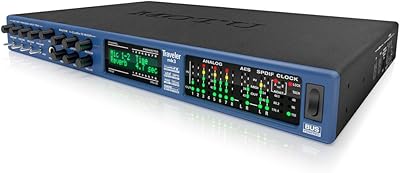
MOTU Traveler-mk3 FireWire Audio Interface
74%
93%
Audio Performance
91%
Channel Count
71%
Portability
58%
Connectivity
84%
Power Flexibility
More
MOTU 896mk3 Hybrid USB/FireWire Audio Interface
74%
84%
Build Quality
79%
Preamp Quality
47%
Driver Stability
58%
Software & DSP Routing
91%
I/O Flexibility
More
MOTU M2
MOTU M2
92%
96%
Audio Conversion Quality
98%
Visual Monitoring
93%
Build Construction
91%
Driver Stability
94%
Loopback Functionality
More
MOTU 112D Thunderbolt USB Audio Interface
81%
91%
Driver Stability
94%
Channel Count & I/O
87%
AVB Networking
89%
Thunderbolt Performance
88%
Connector Ecosystem
More
MOTU Track16 Desktop Studio Audio Interface
68%
88%
Audio Quality
83%
Build Quality
54%
Driver Stability
61%
Connectivity & Compatibility
57%
Ease of Setup
More
MOTU UltraLite-MK3 Hybrid USB/FireWire Audio Interface
69%
83%
Build Quality
79%
macOS Driver Stability
44%
Windows Driver Reliability
81%
Onboard DSP Performance
72%
Connectivity Flexibility
More
MOTU 24Ao USB AVB Audio Interface
80%
93%
Channel Density
87%
AVB Network Performance
79%
Driver Stability
58%
Setup & Configuration
74%
Value for Money
More
RME Fireface 802 Audio Interface
80%
94%
Driver Stability
91%
Converter Quality
93%
I/O Flexibility
87%
Preamp Quality
74%
TotalMix FX
More

FAQ

It depends on your machine. The MOTU 8pre Firewire Audio Interface uses a Firewire connection, which has not been built into most computers for well over a decade. On a modern Mac, you will need a certified Thunderbolt-to-Firewire adapter. On a desktop PC, a dedicated Firewire PCIe card is the most reliable route. Either way, budget some time to confirm compatibility before assuming it will be plug-and-play.

Apple sold an official Thunderbolt-to-FireWire Adapter that many users have relied on with MOTU gear, though it has been discontinued and is only available secondhand. Third-party adapters exist, but results can be inconsistent, so it is worth checking MOTU's support forums or documentation for currently confirmed adapters before spending money on one.

Yes, and that is one of the strongest reasons to buy the 8pre. Every mic channel has its own discrete preamp, so all eight can run simultaneously with no signal sharing. You can track a full drum kit, a brass section, or a vocal ensemble in a single pass without any channel compromises.

You can switch 48V phantom power on or off individually per channel, which is genuinely useful in practice. It means you can run a condenser mic on channel one and a dynamic mic on channel two without any risk of sending unwanted voltage to gear that does not need it.

CueMix is MOTU's onboard monitoring system that mixes your inputs in hardware rather than routing audio through your computer and DAW software. The result is near-zero latency, which is critical for singers and musicians who find even small delays in their headphone feed distracting or disorienting. It is a proper low-latency cue mix, not a simple direct-monitor switch.

This is an older product, and driver support is not guaranteed for every OS update. Before purchasing, it is strongly recommended to check the current driver page on MOTU's official website and look at recent forum posts from users on your specific OS version. Many owners have had success, but some have encountered hurdles after major OS upgrades.

No DAW or recording software is included in the box. You will need to supply your own, whether that is a paid application like Pro Tools, Logic Pro, or Reaper, or a free option. MOTU does offer its own DAW called Digital Performer separately, which integrates well with their hardware.

Yes, the 8pre can operate in standalone optical converter mode, accepting ADAT input and converting it without needing a computer in the chain at all. This makes it handy as an expander for digital consoles or larger recording rigs that already have a primary interface.

Based on owner feedback, the answer is yes. Long-term users consistently mention that the hardware holds up reliably over years of regular use, which is part of why it still earns strong ratings despite its age. MOTU built their reputation on sturdy, functional gear, and the 8pre reflects that.

Honestly, for most solo recording situations, it probably is. The 8pre is designed around having eight mic channels in active use, and all the complexity of setup and Firewire compatibility makes it hard to justify if you only need one or two inputs. A modern USB interface with two preamps will be easier to configure, more compatible with current computers, and almost certainly a better fit for a simpler workflow.

Where to Buy

Vintage King Audio
In stock $549.00