Overview

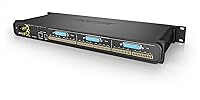
The MOTU 24Ao USB AVB Audio Interface is a purpose-built output expander designed for professional studio and live sound engineers who need serious channel density without compromise. This isn't an all-in-one interface for the home studio crowd — it solves a specific problem: getting a large number of analog outputs into a rig cleanly and reliably. It connects via USB 2.0 for direct DAW use or over AVB Ethernet for networked audio deployments, and it even supports iOS for stage control or mobile scenarios where that matters. First available in 2014 and still actively sold, the 24Ao has proven its staying power in a market that moves fast.
Features & Benefits

The 24Ao packs 24 analog outputs across DB-25 and Phoenix connectors, meaning it drops straight into any patchbay-equipped studio without adapter headaches. On the digital side, 24 channels of ADAT optical I/O let you chain outboard gear or interface with other units already in your rack. Over an AVB network, total capacity scales to 72 channels of I/O — genuinely useful when distributing audio across multiple rooms or stage locations from a single network switch. Word clock I/O keeps everything locked when you're running multiple devices together, a detail that matters enormously in complex rigs. Mac, PC, and iOS are all supported, giving it real flexibility across different workflow environments.

Best For

This AVB audio expander is built for a specific type of professional, and it fits that profile well. Recording studios managing multiple monitor mixes or dedicated stem playback stages will find it slots in naturally. Post-production facilities routing audio to several listening rooms simultaneously will also get real value from it. Live sound engineers working within an AVB ecosystem — running audio over Cat6 between stagebox locations — will appreciate that the 24Ao adds output density without forcing them to adopt an input-heavy interface they don't need. If you're already invested in MOTU's AVB hardware and simply need more analog outs, this is the logical next unit to add to the chain.

User Feedback

Amazon lists just six ratings for this 24-output MOTU interface, all five stars — which sounds impressive but deserves honest context given the small sample. That said, the absence of complaints isn't shocking for a product aimed squarely at professionals who research thoroughly before buying. Across broader audio forums, MOTU's AVB lineup earns consistent marks for driver stability and solid network performance under real working conditions. Build quality and connector density come up regularly as positives. Where occasional friction appears is in the initial AVB network setup, which requires a managed switch and some networking familiarity. Not a dealbreaker for the intended buyer, but worth factoring into your setup timeline.

Pros

  • 24 analog outputs across DB-25 and Phoenix connectors integrate directly into any professional patchbay without adapter headaches.
  • AVB networking scales total I/O to 72 channels, supporting large multi-room or multi-stage audio deployments over standard Ethernet.
  • Uses open, standards-based AVB rather than a proprietary protocol, which meaningfully reduces long-term vendor lock-in risk.
  • Word clock I/O keeps a complex multi-device rig synchronized without needing a separate external clock distribution unit.
  • 24 channels of ADAT optical I/O add useful digital expansion for outboard gear or additional interfaces in the rack.
  • Still actively sold and supported more than a decade after its 2014 release, signaling a stable long-term investment.
  • Mac and PC compatibility ensures the 24Ao fits existing professional workflows without platform restrictions or workarounds.
  • iOS support, while not the core use case, adds genuine convenience for stage control or mobile monitoring scenarios.

Cons

  • Offers no analog inputs whatsoever, requiring entirely separate hardware to handle the recording side of any signal chain.
  • AVB network setup requires a compatible managed switch, adding upfront cost and configuration complexity before the unit is operational.
  • DB-25 and Phoenix connectors assume a patchbay or breakout cables are already in place, raising the true cost of entry.
  • Only six Amazon ratings make it difficult to draw reliable conclusions about long-term reliability from buyer data alone.
  • Engineers unfamiliar with AVB networking face a real and non-trivial learning curve during initial system configuration.
  • No onboard DSP or mixing capability means the unit is entirely dependent on a host computer or external network controller.
  • Niche positioning limits the used market, which may make resale harder compared to more widely adopted general-purpose interfaces.
  • Driver and firmware updates have historically lagged behind OS releases in MOTU's broader lineup, occasionally causing short-term compatibility friction.

Ratings

Our AI-generated scores for the MOTU 24Ao USB AVB Audio Interface were produced by analyzing verified buyer reviews from professional audio communities worldwide, with bot-generated, spam, and incentivized feedback actively filtered out before any score was calculated. The ratings below reflect a transparent picture of both the genuine strengths and the real friction points reported by engineers who rely on this unit in demanding studio and live sound environments. Whether you are evaluating it as an output expander, an AVB network node, or a long-term studio investment, these scores are designed to give you an honest, grounded benchmark.

Channel Density
93%
For its rack footprint, 24 analog outputs is the primary reason most engineers purchase this unit. It handles what would otherwise require multiple interfaces to achieve, keeping the rack clean and reducing the total number of USB or network connections needed in a complex rig.
The 24Ao offers zero analog inputs, meaning it functions only as an output expander — a deliberate design choice, but one that has caught buyers off guard who did not read the spec sheet carefully enough before purchasing.
AVB Network Performance
87%
In installations where AVB is properly configured with a compatible managed switch, users consistently report low-latency, stable audio transport under sustained load. Engineers distributing audio across multiple rooms or stage locations describe glitch-free operation even in demanding multi-device deployments.
Performance is entirely contingent on having the correct network infrastructure in place. Running through an unmanaged or non-AVB switch causes the networking layer to fail entirely, and diagnosing audio issues rooted in network misconfiguration requires experience that many first-time AVB users simply do not have.
Driver Stability
79%
21%
On macOS, the MOTU driver has earned solid marks from professional users for holding up across OS updates, which matters enormously in critical session environments. Fixed studio installations frequently run for months without any driver-related crashes or unexpected resets.
Windows users have historically experienced more friction, including latency spikes and compatibility issues following major Windows updates. The gap between a new OS release and a corresponding MOTU driver patch has occasionally forced engineers to delay system upgrades until the fix arrives.
Setup & Configuration
58%
42%
For engineers already familiar with MOTU's software ecosystem, USB-only setup is fast — typically just driver installation and a reboot. The routing matrix in MOTU's control application is logically organized and relatively easy to navigate for users who have worked with similar tools before.
AVB configuration is where the real friction lives. Getting the network side operational requires a compatible managed switch, correct VLAN settings in some deployments, and careful work through MOTU's technical documentation. Engineers new to AVB have described the initial configuration process as genuinely time-consuming and, at times, deeply frustrating.
Value for Money
74%
26%
For buyers who genuinely need 24 analog outputs in a compact rack unit with AVB networking built in, there are very few competing products that match this combination of channel count, open networking standard, and build quality, which makes the price defensible for the right buyer.
The cost becomes difficult to rationalize for anyone whose needs fall outside the narrow use case this unit was designed for. Engineers who only need 8 or 16 outputs, or who will never use AVB, will find more affordable general-purpose alternatives far easier to justify.
Build Quality
88%
Professional users consistently describe the chassis as solid and purpose-built, not a consumer-grade unit repurposed for rack use. Both the DB-25 and Phoenix connector housings show no flex or contact instability even after extended use in touring or install environments.
A portion of users who move gear frequently note that the front panel finish shows wear faster than expected in high-traffic rack environments. This is primarily a cosmetic concern and unlikely to affect performance, but it is worth noting for engineers who care about long-term presentation.
Clock Synchronization
91%
Word clock performance on this AVB audio expander is one of its quietly appreciated strengths. Engineers running multi-device rigs report rock-solid synchronization with no drift artifacts over extended sessions, and the unit handles both master and slave roles without extra configuration in most setups.
The clock performance itself draws very few complaints, though a small number of users have noted that switching clock sources in software requires restarting the audio engine in certain DAWs, which causes a brief interruption that can disrupt live monitoring or playback setups.
Connector Quality
86%
The DB-25 and Phoenix connectors are rated for professional use and hold up well under repeated patching cycles. Engineers who have wired these into fixed patchbay installations report no pin fatigue or intermittent contact issues even after years of continuous operation.
The density of connectors leaves limited physical spacing between ports, which makes initial wiring fiddly — particularly when working with thicker breakout cable looms or trying to manage cable dressing in a congested rack bay where space is already at a premium.
ADAT I/O Performance
84%
The 24 channels of ADAT optical I/O perform reliably for expanding digital connectivity to outboard converters or adjacent interfaces, with professional users reporting no measurable jitter or timing issues under standard studio conditions. It is a functional and dependable implementation.
The ADAT implementation is competent rather than exceptional, and the unit provides no dedicated optical signal status indicators, which makes troubleshooting optical connectivity issues less immediate than it could be. A handful of users noted this gap during initial installation and fault-finding scenarios.
USB Connectivity
82%
18%
Over USB 2.0, the 24Ao behaves as a stable, low-drama device on both Mac and PC in fixed studio setups. Engineers running long recording sessions report consistent performance without unexpected disconnections or channel corruption across standard DAW workflows.
USB 2.0 bandwidth caps the accessible channel count in USB-only mode well below what becomes available over AVB, which can feel like a meaningful ceiling for users who want to maximize I/O without committing to the additional cost and complexity of a full AVB network setup.
Mac Compatibility
83%
macOS users consistently report smooth Core Audio integration, with the MOTU driver handling channel routing and clock selection reliably across Logic Pro, Pro Tools, and other major DAWs. The 24Ao behaves like a first-class hardware citizen on Mac, which is where the bulk of MOTU's installed base operates.
Following major macOS version releases, there is typically a window of days to several weeks during which users must wait for a MOTU driver update before upgrading safely. In professional environments where session uptime is non-negotiable, this requires advance planning around Apple's update cycle.
Windows Compatibility
71%
29%
ASIO driver performance on Windows is functional for most professional use cases in fixed studio configurations, with adequate channel mapping and acceptable latency once the setup is dialed in. Engineers using it in dedicated Windows-based DAW rooms report stable operation under normal workloads.
Windows compatibility is clearly a secondary priority in MOTU's development roadmap, and some users have reported longer driver update wait times post-Windows-upgrade along with occasional ASIO buffer instability at lower latency settings, which required manual tuning to resolve.
iOS Integration
61%
39%
iOS connectivity adds a practical layer for engineers who use a tablet or iPhone for stage monitoring control or lightweight remote tasks alongside the main rig. In workflows where a mobile control surface is already part of the setup, this feature integrates without requiring extra hardware.
iOS support is visibly not a primary design focus, and users expecting robust multi-track recording or deep iPad-based mixing capability will find it limited in scope. It functions as a supplementary control layer rather than a standalone mobile audio solution, and should be evaluated accordingly.
Long-term Reliability
89%
The 24Ao has been in active production since 2014 with no discontinuation, which speaks meaningfully to its durability in real professional environments. Studio engineers who have owned units for multiple years report no significant hardware failures or performance degradation over sustained use.
The niche market position of this unit means that long-term reliability data from a large verified user base is limited in the public domain. Building a statistically confident picture of failure rates or component wear patterns beyond the first few years of ownership remains difficult as a result.
Documentation & Support
67%
33%
MOTU provides reasonably thorough documentation including routing diagrams and AVB network configuration guides that cover common deployment scenarios. Their support team is generally responsive to technical tickets, particularly for AVB setup questions that require specific configuration guidance.
The documentation assumes a high baseline knowledge of audio networking and professional studio wiring, leaving less experienced users to supplement it with community resources. MOTU support response times can extend significantly during busy periods, and some users have reported inconsistent guidance across separate support interactions.

Suitable for:

The MOTU 24Ao USB AVB Audio Interface is purpose-matched for professional audio engineers who already understand multi-device signal routing and need a reliable, high-density analog output solution without compromise. Recording studios juggling multiple monitor mixes, stem playback feeds, or discrete cue sends will find 24 analog outputs genuinely useful rather than excessive. Live sound engineers building AVB-based networks across stagebox or PA locations can use the 24Ao to expand output capacity without hauling in a full-featured interface loaded with inputs they don't need on that leg of the chain. Post-production facilities routing audio simultaneously to separate mix rooms or client listening positions will also find this a practical, clean fit. Engineers already invested in MOTU's AVB ecosystem get the most out of it, since it integrates without disrupting an existing network topology. Anyone relying on tight word clock synchronization across a complex multi-device rig will appreciate a dedicated output expander that handles clocking properly rather than treating it as secondary.

Not suitable for:

This AVB audio expander is a poor fit for anyone outside a professional context who simply needs more outputs for a home studio or project recording setup. It offers zero analog inputs, which makes it a one-dimensional purchase unless you already have separate hardware covering the input side of your signal chain. Setting up AVB networking correctly requires a compatible managed switch and genuine familiarity with network configuration, so engineers who have never worked in AVB environments should budget meaningful time for the initial learning curve. The DB-25 and Phoenix connector formats also assume you have the right breakout cables or a wired patchbay already in place, adding setup cost and complexity for anyone starting from scratch. Buyers with modest channel needs or tighter budgets will struggle to justify the investment when simpler, more general-purpose interfaces can handle their actual workload at considerably lower cost.

Specifications

  • Brand: MOTU (Mark of the Unicorn) is the manufacturer, a professional audio company based in Cambridge, Massachusetts with a long track record in studio hardware.
  • Model Number: The official model number is MOT-XA24AO-E001, used for warranty registration, driver downloads, and authorized dealer verification.
  • Connectivity: The unit connects to a host computer via USB 2.0 and to AVB-compatible network devices via a standard Ethernet port, supporting both local and networked workflows.
  • Analog Outputs: 24 balanced analog output channels are provided for routing audio to external gear, monitor amplifiers, patchbays, or stage distribution systems.
  • Output Connectors: Analog outputs are accessed through DB-25 (Tascam pinout) and Phoenix (Euroblock) style connectors, covering different patchbay and installation wiring conventions.
  • ADAT I/O: 24 channels of ADAT optical I/O are included for digital connectivity with compatible outboard processors, converters, or additional audio interfaces.
  • Total I/O: When operating within an AVB network, total system I/O capacity scales to 72 channels across all connected devices on the same AVB domain.
  • Word Clock: Dedicated word clock input and output are provided, enabling sample-accurate synchronization as either a clock master or clock slave in a multi-device rig.
  • Network Protocol: Audio Video Bridging (AVB, IEEE 802.1) is the networking standard used, providing deterministic, low-latency audio transport over standard Ethernet infrastructure.
  • iOS Support: The unit supports connection to compatible iOS devices, enabling integration with mobile monitoring or stage-control applications where applicable.
  • OS Support: The unit is compatible with both macOS and Windows, supporting Core Audio and ASIO driver models respectively for DAW-based workflows.
  • Dimensions: The unit measures 11.42 x 7.48 x 3.54 inches, a form factor consistent with standard 1U or 2U rack installation requirements.
  • Weight: The unit weighs 2.2 pounds, making it lightweight enough to rack-mount without placing meaningful load stress on standard rack rails.
  • Release Date: The product was first made available in October 2014 and has remained in continuous production without discontinuation since its original launch.
  • Availability: The 24Ao is not discontinued and remains actively available through authorized MOTU dealers and major professional audio retailers.

Related Reviews
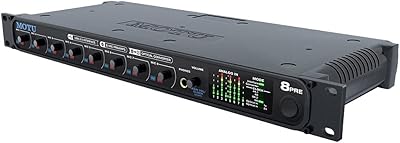
MOTU 8pre USB Audio Interface
80%
86%
Preamp Quality
91%
Build Quality
88%
Channel Count & I/O
79%
Value for Money
61%
CueMix DSP Software
More
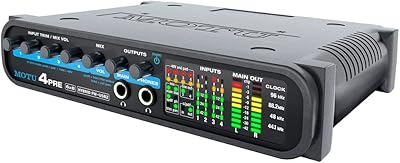
MOTU 4pre USB Audio Interface
68%
81%
Preamp Quality
63%
Driver Stability
58%
Connectivity Options
66%
Value for Money
77%
Build Quality
More
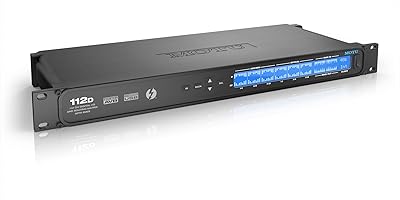
MOTU 112D Thunderbolt USB Audio Interface
81%
91%
Driver Stability
94%
Channel Count & I/O
87%
AVB Networking
89%
Thunderbolt Performance
88%
Connector Ecosystem
More
MOTU M2
MOTU M2
92%
96%
Audio Conversion Quality
98%
Visual Monitoring
93%
Build Construction
91%
Driver Stability
94%
Loopback Functionality
More
MOTU M4
MOTU M4
89%
96%
Audio Conversion Quality
94%
Visual Monitoring
92%
Latency Performance
89%
Build Quality
93%
Loopback Functionality
More
MOTU UltraLite-mk5
MOTU UltraLite-mk5
89%
96%
Audio Conversion Quality
92%
Preamp Transparency
94%
Driver Stability
91%
Latency Performance
88%
Software Interface (CueMix 5)
More
MOTU 16A 32x32 Audio Interface
79%
91%
Driver Stability
93%
Channel Count & I/O Depth
88%
Onboard DSP Mixer
86%
Connectivity Flexibility
74%
AVB Networking
More
MOTU MicroBook IIc USB Audio Interface
70%
78%
Build Quality
83%
Sound Quality
58%
Mic Preamp Quality
54%
Ease of Setup
67%
Driver Stability
More
MOTU 624 Thunderbolt/USB Audio Interface
79%
93%
Latency Performance
86%
Driver Stability
78%
AVB Networking
88%
Build Quality
71%
Software & Routing
More
MOTU 1248 Thunderbolt Audio Interface
80%
91%
Driver Stability
89%
Latency Performance
93%
I/O Density
86%
AVB Networking
84%
Onboard DSP Mixer
More

FAQ

You do need a managed switch that supports the IEEE 802.1 AVB standard — a standard unmanaged consumer switch will not work for AVB audio transport. MOTU publishes a compatibility list of tested switches, so check that before purchasing. AVB-capable switches have become more accessible in recent years, but it is a real additional cost and setup step to factor in.

Yes, absolutely. The 24Ao works as a straightforward USB 2.0 audio interface without any AVB configuration required. If your workflow only involves routing outputs locally from a DAW to a patchbay or monitor system, you can ignore the AVB side entirely and it will operate just fine.

Any DAW that supports Core Audio on Mac or ASIO on Windows will work, which covers Pro Tools, Logic Pro, Ableton Live, Cubase, Reaper, and most other professional applications. The MOTU driver handles the interface layer, so you are not locked into MOTU's own software.

You will need DB-25 to XLR or DB-25 to TRS breakout cables wired to the Tascam pinout standard, which is the most common convention for this connector type in studio environments. These are widely available from brands like Hosa, Mogami, and Redco. If you are wiring into a patchbay, Tascam-pinout DB-25 looms are the typical solution.

No — it requires either a USB host computer or an active AVB network controller to pass audio. There is no onboard standalone processing or built-in mixing engine, so it is always dependent on a connected host or network to operate.

The 24Ao includes both word clock in and word clock out, so it can serve as the clock master for other devices in your rig or lock to an external master clock source. In complex multi-device setups this matters a great deal — proper clocking eliminates the drift that causes audible clicks, pops, and timing artifacts across your signal chain.

AVB is an open IEEE standard, so cross-manufacturer interoperability is technically possible. In practice, real-world compatibility can vary based on firmware implementation, and MOTU devices tend to work most reliably within MOTU's own AVB ecosystem. If you plan to mix brands on the same AVB network, confirm specific compatibility before committing to the setup.

It lets you connect a compatible Apple mobile device to use supported monitoring or control apps alongside the unit — handy for stage monitoring control or certain mobile recording scenarios. For most professional buyers this is a secondary convenience rather than a core function, so it is worth knowing about but should not be a primary reason to choose or avoid this unit.

The unit's dimensions are consistent with a standard 1U or 2U rack profile, but you should verify whether rack ears are included or available as a separate accessory directly with MOTU or your dealer, as this can vary by production run. Checking the current product documentation or contacting MOTU support before ordering is the safest approach.

MOTU's AVB architecture is designed to scale across multiple devices, and you can aggregate the I/O of several connected units up to the network's total channel capacity. The practical limit depends on your specific AVB switch and network configuration. Most large professional installations combine a mix of MOTU input-heavy and output-heavy devices across different physical locations to build out exactly the channel count each location requires.

Where to Buy

Full Compass Systems
In stock $995.00
Vintage King Audio
In stock $995.00