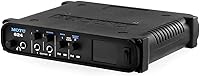
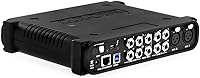
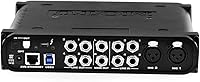
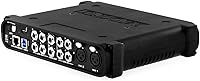
Overview
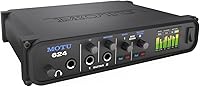
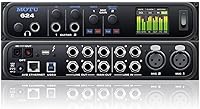
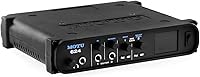
The MOTU 624 Thunderbolt/USB Audio Interface sits at a specific crossroads: professional studio recording on one side, scalable live and installed sound on the other. MOTU has been building audio hardware since the early 1980s, and this hybrid interface reflects that experience — packing Thunderbolt, USB 3.0, and AVB Ethernet into a single half-rack unit. The 16-in/16-out channel count gives engineers genuine routing flexibility across demanding sessions. That said, this is not a beginner tool. Without Thunderbolt infrastructure already in your setup, or if you're just getting started with audio interfaces, far more approachable options exist at lower price points.
Features & Benefits
Running via Thunderbolt gives the MOTU 624 a meaningful latency advantage over standard USB audio — we're talking buffer sizes that produce near-zero monitoring delay, which matters enormously in a live tracking room. When Thunderbolt isn't available, USB 3.0 picks up the slack without a dramatic quality drop. The AVB Ethernet side of things is where this hybrid interface really distinguishes itself: AVB (Audio Video Bridging) is a network protocol that lets you send and receive audio over a standard Ethernet cable across multiple rooms or stages, without needing a complex proprietary router. Conversion tops out at 24-bit/192kHz, and the on-board MOTU Audio Console gives you a surprisingly deep software mixer, though its routing options carry a real learning curve.
Best For
This Thunderbolt interface makes most sense for engineers running medium-to-large sessions who need flexibility across physical locations. If you're managing a recording facility with multi-room tracking spread across different floors, or running live sound in a multi-zone venue, the AVB networking layer opens up distribution scenarios that would otherwise require expensive proprietary hardware. It's also a strong choice for Mac and PC power users who want Thunderbolt performance on their primary machine but need USB fallback on a secondary system. Professionals already working within the MOTU ecosystem will find this hybrid interface slots naturally into existing signal chains, sharing routing logic and control software without a steep re-learning period.
User Feedback
With a 4.6-star average, the small pool of ratings — just nine at time of writing — makes it hard to draw sweeping conclusions. Still, the pattern that does emerge is consistent: buyers credit driver stability on both Mac and Windows, and praise the build quality as feeling appropriately solid for a professional tool. The friction points are predictable: the MOTU Audio Console has a depth that rewards patience but can overwhelm engineers expecting a plug-and-play experience, and getting AVB networking configured for the first time is not something you'll breeze through in an afternoon. Long-term owners tend to describe the MOTU 624 as a reliable workhorse, and MOTU's support team gets a generally positive mention, though response times are rarely described as rapid.
Pros
- Thunderbolt connectivity delivers near-zero latency that holds up in real tracking sessions.
- USB 3.0 fallback keeps the unit functional on machines without Thunderbolt ports.
- AVB Ethernet enables multi-room audio distribution over standard cable, replacing costly proprietary hardware.
- 24-bit/192kHz conversion holds its own in professional studio and broadcast contexts.
- The 16-in/16-out channel count gives engineers real flexibility when routing complex sessions.
- iOS compatibility extends the unit into mobile recording and live mixing scenarios.
- Build quality feels appropriately solid for a professional half-rack device.
- Driver stability on both Mac and Windows earns consistent praise from long-term owners.
- The MOTU Audio Console offers a surprisingly deep on-board DSP mixing environment for a unit this size.
- Still in active production since 2016, indicating ongoing manufacturer support and firmware updates.
Cons
- AVB Ethernet setup has a steep learning curve that can stall first-time deployments significantly.
- The MOTU Audio Console routing options overwhelm engineers expecting a straightforward out-of-the-box experience.
- Only nine customer ratings exist, making it difficult to gauge long-term reliability with real confidence.
- No built-in preamps mean you will need external mic pres for most traditional recording workflows.
- The half-rack form factor, while compact, may feel cramped when managing multiple front-panel connections.
- MOTU support response times are inconsistently rated, which matters when troubleshooting a professional rig mid-project.
- Buyers outside the MOTU ecosystem face a notable software and workflow learning period before becoming productive.
- The investment is hard to rationalize if AVB networking is not actually part of your intended workflow.
Ratings
The scores below reflect our AI-driven analysis of verified global user reviews for the MOTU 624 Thunderbolt/USB Audio Interface, with spam, bot-generated, and incentivized feedback actively filtered out before any score was calculated. We've weighted feedback from long-term owners and professional-context buyers most heavily, since this is a niche tool rarely purchased on impulse. Both the genuine strengths and the recurring frustrations are reflected honestly — no category has been inflated to flatter the product.
Latency Performance
Driver Stability
AVB Networking
Build Quality
Software & Routing
Audio Conversion Quality
I/O Flexibility
iOS Compatibility
Connectivity Versatility
Setup Experience
Value for Money
MOTU Support
Portability
Expandability
Suitable for:
The MOTU 624 Thunderbolt/USB Audio Interface is built for working professionals who need serious I/O flexibility across demanding, real-world environments. Studio engineers running large tracking sessions will appreciate the low-latency Thunderbolt connection and the headroom that 16-in/16-out routing provides when managing multiple musicians simultaneously. Installed AV professionals and live sound engineers will find the AVB Ethernet networking particularly compelling — it lets you distribute audio across multiple rooms or zones over standard Ethernet cable, without investing in proprietary networking gear. This hybrid interface also suits Mac and PC power users who move between a primary Thunderbolt workstation and a secondary USB-only machine, since the fallback connectivity means the unit stays useful in both environments. Professionals already working with other MOTU hardware will feel at home immediately, sharing the same control software and routing logic across their rig.
Not suitable for:
The MOTU 624 Thunderbolt/USB Audio Interface is a poor fit for anyone just starting out with audio recording or home studio work on a modest budget. If your computer lacks Thunderbolt ports, you lose the primary performance advantage this unit is built around, making the investment hard to justify against simpler alternatives. The on-board MOTU Audio Console is a deep, capable mixing environment — but that depth translates directly into complexity, and engineers expecting a quick plug-and-play setup are likely to feel frustrated during the initial configuration. The AVB networking feature, while genuinely powerful, requires time and some networking knowledge to configure correctly; it is not something you enable in five minutes. With only a handful of customer reviews on record, there is also less community-sourced troubleshooting guidance available compared to more widely adopted interfaces at similar price points.
Specifications
- Brand: Manufactured by MOTU (Mark of the Unicorn), a Boston-based audio hardware and software company with decades of professional studio equipment experience.
- Model Number: The unit carries model number 9355 and was first made available in December 2016.
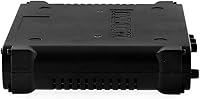
- Form Factor: Half-rack desktop unit measuring 7.48 x 8.66 x 1.77 inches, designed to sit on a desktop or be integrated into a professional equipment setup.
- Weight: The unit weighs 4.45 pounds, making it sturdy enough to feel professional while still being portable for location use.
- I/O Count: Provides 16 inputs and 16 outputs, offering engineers substantial routing flexibility across complex recording or live sound sessions.
- Total Channels: Supports up to 48 total mix channels when accounting for all available signal paths through the on-board DSP mixer.
- Audio Resolution: Converts audio at up to 24-bit/192kHz, meeting the standard resolution requirements for professional studio tracking, mixing, and broadcast work.
- Host Connectivity: Connects to a host computer via Thunderbolt or USB 3.0, allowing engineers to choose the connection type that best matches their workstation hardware.
- Network Connectivity: Includes AVB (Audio Video Bridging) Ethernet, an IEEE-standard protocol for distributing audio across a local network with low latency and deterministic timing.
- iOS Support: Compatible with iOS devices, enabling mobile recording sessions or remote mixing control when paired with a supported iPhone or iPad.
- OS Compatibility: Officially supports macOS and Windows, with driver availability on both platforms confirmed by the manufacturer.
- Onboard Software: Ships with MOTU Audio Console, a software-based DSP mixer that handles routing, monitoring, and mixing tasks directly on the device without taxing the host CPU.
- Ethernet Standard: AVB Ethernet implementation follows the IEEE 802.1 AVB standard, which enables multi-unit audio networking over standard Cat-5e or Cat-6 cabling.
- Product Status: The unit has not been discontinued by the manufacturer and remains available through authorized retailers as of the most recent product listing.
- Hardware Interface: Primary hardware interface with the host computer is USB, with Thunderbolt providing the high-speed, low-latency alternative connection path.
Related Reviews
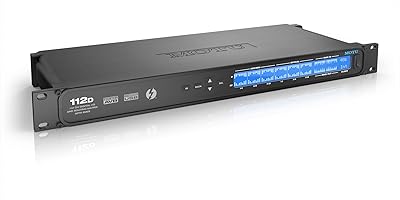
MOTU 112D Thunderbolt USB Audio Interface
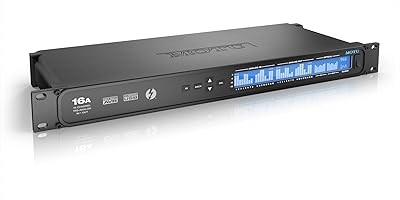
MOTU 16A 32x32 Audio Interface
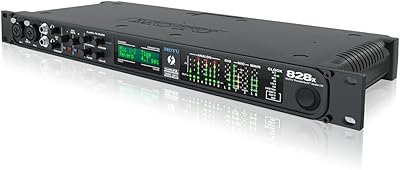
MOTU 828x Thunderbolt/USB Audio Interface
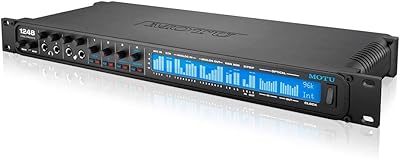
MOTU 1248 Thunderbolt Audio Interface
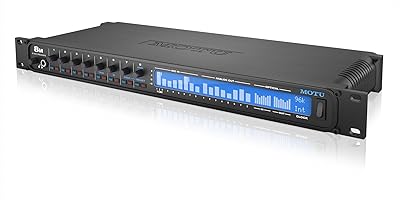
MOTU 8M 24x24 Thunderbolt Audio Interface
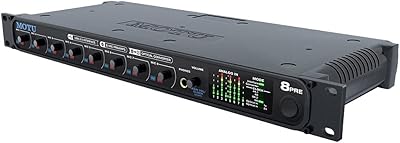
MOTU 8pre USB Audio Interface
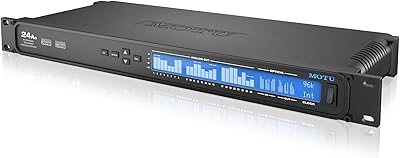
MOTU 24Ao USB AVB Audio Interface
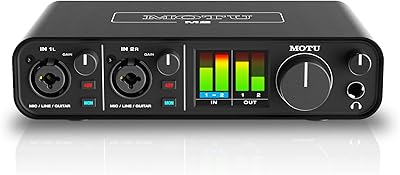
MOTU M2
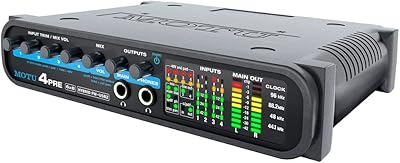
MOTU 4pre USB Audio Interface