

Overview

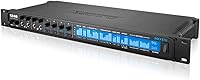
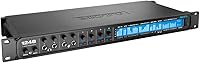
The MOTU 1248 Thunderbolt Audio Interface is a professional hybrid unit that brings together Thunderbolt, USB 2.0, and AVB Ethernet connectivity in a single 1U rack-mountable chassis — a combination that remains relatively uncommon at this tier. It runs on both Mac and PC, and also supports iOS devices, which gives it genuine flexibility across different workflows and locations. This isn't an interface aimed at home recordists dipping their toes in. The 1248 is built for engineers who need high channel counts and routing flexibility without stacking multiple units in a rack. If that describes your setup, it warrants a serious look.

Features & Benefits

The headline figure is 32-in/34-out I/O, which in practice means running a dense recording session without reaching for a second interface or a patchbay workaround. The eight line inputs pair naturally with outboard preamps or a summing mixer, while ADAT and S/PDIF digital I/O let you attach external converters when you need more headroom or sonic character. Four onboard mic preamps with 48V phantom power handle spot-miking or a quick vocal take, though engineers with dedicated preamp collections will mostly be working through the line inputs. The 48-channel DSP mixer handles monitoring and effects processing onboard, freeing your CPU for plugins. AVB Ethernet adds multi-unit networking for larger or distributed setups.

Best For

This MOTU interface makes the most sense for recording engineers already managing large session templates who want to consolidate I/O into one unit rather than daisy-chaining several interfaces together. Live sound engineers handling multi-room distribution or running AVB-based stage box setups will find the networking capability genuinely practical rather than just a spec-sheet item. It also suits composers running large hardware synth rigs through the line inputs, or project studio owners needing a single box to cover tracking, monitoring, and routing. If you work across Thunderbolt and USB 2.0 workstations, the dual-connection flexibility solves a real problem. Casual home studio users are likely paying for capabilities they will never touch.

User Feedback

Among buyers who have put the 1248 through real sessions, driver stability under Thunderbolt consistently comes up as a strength — low-latency performance in actual working conditions, not just controlled tests. Build quality also earns steady praise, which matters on a unit likely to spend years in a working rack. On the flip side, the MOTU software ecosystem — specifically CueMix and the network discovery tools — carries a learning curve that some users underestimate going in. A handful of owners also mentioned needing to work through firmware updates before certain features became fully accessible. Overall reception is strongly positive, particularly among professionals extracting real value from the AVB networking and dense I/O rather than just the basic recording path.

Pros

  • Thunderbolt connectivity delivers consistently low latency that holds up in real session conditions, not just benchmarks.
  • The 32-in/34-out channel count eliminates the need to stack multiple interfaces in most professional recording scenarios.
  • AVB Ethernet networking sets this MOTU interface apart from competing units at a similar tier.
  • Onboard 48-channel DSP mixer offloads monitoring and effects processing from your computer CPU during demanding sessions.
  • ADAT and S/PDIF digital I/O make it straightforward to expand the system with external converters or outboard gear.
  • USB 2.0 fallback connection provides genuine flexibility when Thunderbolt is not available on a secondary workstation.
  • Compatible with both Mac and PC, as well as iOS devices, covering a wide range of professional environments.
  • Build quality earns consistent praise from long-term users who rely on it in working studio and live sound racks.
  • The 1U rack-mount form factor keeps the footprint tight given how much I/O is packed into the chassis.
  • Driver stability under Thunderbolt is a recurring positive in real-world user reports across extended professional use.

Cons

  • CueMix and the MOTU network discovery software carry a genuine learning curve that newcomers tend to underestimate.
  • Some users need to work through firmware updates before the full feature set becomes accessible after initial setup.
  • Four onboard mic preamps cover basic needs but are not the reason to buy this unit if preamp quality is your priority.
  • AVB networking, while powerful, requires additional network hardware and configuration knowledge to deploy correctly.
  • The software ecosystem feels dated in its interface design compared to some newer competing products on the market.
  • Users on USB 2.0 connection rather than Thunderbolt may not achieve the same low-latency performance in dense sessions.
  • Limited community tutorials and third-party guides exist compared to more mainstream interface brands, slowing troubleshooting.
  • macOS and Windows compatibility should be verified against your specific OS version before purchasing, as driver support evolves.
  • The unit provides no standalone mixing capability without a connected computer, limiting its flexibility in certain live scenarios.

Ratings

The MOTU 1248 Thunderbolt Audio Interface earns consistently strong marks across verified buyer reviews worldwide, with our AI-driven scoring system filtering out incentivized submissions and bot activity to surface what working professionals genuinely think. Scores reflect both the real strengths that keep engineers loyal to this unit and the friction points that come up repeatedly in honest post-purchase feedback. The picture that emerges is of a capable, feature-dense interface that rewards experienced users while asking more patience from those new to the MOTU ecosystem.

Driver Stability
91%
Engineers running dense Thunderbolt sessions repeatedly single out driver reliability as one of the 1248's most bankable qualities. In real studio conditions — long tracking days, large plugin loads, frequent buffer changes — the unit holds its connection without the dropout issues that plague some competing interfaces at this channel count.
A small number of users on Windows report needing to revisit driver settings after major OS updates, and initial firmware setup occasionally requires a troubleshooting pass before stability is fully achieved. This is not a widespread issue, but it adds friction during onboarding.
Latency Performance
89%
Under Thunderbolt, monitored latency is tight enough to record through the DSP mixer without audible delay, which matters enormously when tracking vocalists or live instruments. Users who moved from USB-only interfaces specifically cite the low-latency headroom as a meaningful improvement in day-to-day session comfort.
USB 2.0 performance, while functional, does not match the Thunderbolt experience in high-track-count situations, and a handful of users report needing to raise buffer sizes when running the unit over USB during complex sessions. The Thunderbolt path is clearly the intended use case.
I/O Density
93%
Thirty-two inputs and thirty-four outputs in a single 1U box is a genuinely rare combination at this form factor, and users building out project studios or consolidating live rigs consistently call it out as the deciding factor in their purchase. Being able to run a full live band session without a second interface or patchbay is a real operational advantage.
The sheer I/O count can feel like overkill if your sessions rarely exceed eight to twelve channels, and buyers who do not fully utilize the routing capabilities may find the software configuration overhead disproportionate to their actual needs.
AVB Networking
86%
Among working engineers who have deployed AVB in a real multi-room or stage-box context, this feature draws the strongest enthusiasm of any aspect of the unit. Distributing audio over a standard network switch rather than running long analog or MADI cables is a workflow shift that users describe as genuinely practical once the system is configured.
Getting AVB up and running demands a compatible managed network switch, a solid understanding of audio networking concepts, and patience with MOTU's discovery software. Users without prior AVB experience frequently describe the setup process as more involved than they expected.
Onboard DSP Mixer
84%
The 48-channel DSP mixer offloads monitoring and effects processing from the host CPU, which during a heavy tracking session translates directly into more headroom for plugins and virtual instruments. Engineers running dense templates appreciate not having to choose between a good cue mix and stable plugin performance.
CueMix, the software interface for controlling the DSP mixer, has a dated visual design and a routing logic that takes several sessions to internalize. Users coming from more streamlined competing software often describe the learning curve as steeper than they anticipated.
Build Quality
88%
The chassis feels appropriately robust for a unit that may spend years in a working studio rack or travel to live sessions. Long-term users consistently report no structural degradation in connectors or panel controls even after extended daily use in professional environments.
The front panel control layout is functional rather than elegant, and the unit does not feel quite as premium to the touch as some higher-priced competitors in the professional interface market. This is a minor gripe rather than a durability concern.
Software Experience
61%
39%
CueMix and the MOTU discovery tools do cover the full range of routing, monitoring, and DSP control that professional sessions require. Once a user has internalized the workflow, day-to-day operation is reliable and the feature coverage is genuinely comprehensive for the price tier.
The software ecosystem is frequently cited as the weakest part of the overall package. The interface design feels visually dated compared to competing products, onboarding documentation is less approachable than it could be, and new users routinely report a significant time investment before they feel comfortable navigating routing scenarios.
Mic Preamp Quality
71%
29%
The four onboard preamps are clean and quiet enough for spot-miking, dialogue recording, or tracking a lead vocal when you do not want to patch through outboard gear. They handle phantom-powered condensers without issue and are a practical convenience for engineers who need occasional direct mic access.
These preamps are not the reason to buy this unit, and users expecting the kind of character or headroom found in dedicated external preamp designs will be disappointed. Engineers with quality outboard preamps will route through the line inputs instead, treating the onboard pres as a utility feature.
Multi-Platform Compatibility
83%
Running on both Mac and PC, with iOS support on top, gives the 1248 a flexibility advantage over interfaces tied to a single platform. Engineers who work across different machines — a Mac in the studio and a Windows laptop on location — appreciate not being locked into one OS ecosystem.
OS compatibility needs to be actively verified before purchasing, as driver support can lag behind major macOS and Windows releases. A few users have reported a period of waiting for updated drivers after OS upgrades before the unit was fully functional again.
Value for Money
78%
22%
Measured against what it would cost to build an equivalent I/O count from multiple simpler interfaces, plus the added value of onboard DSP and AVB networking, the 1248 represents solid engineering value for the professional buyer who will actually use its full feature set. Long-term owners frequently describe it as a unit that continues paying off years after purchase.
Buyers who use only a fraction of the available I/O and connectivity options are effectively paying a premium for features they will never touch. For those users, a more targeted interface would almost certainly represent better value per dollar spent.
Setup & Onboarding
58%
42%
For experienced engineers who are comfortable with audio networking concepts and have worked with multi-I/O interfaces before, the initial setup process is manageable and the unit is fully operational within a reasonable session prep window. MOTU's documentation covers the essential configuration steps.
First-time MOTU users and engineers unfamiliar with AVB consistently describe the onboarding process as more demanding than expected. Firmware updates, network configuration, and CueMix routing setup can collectively add up to several hours of troubleshooting before the unit is running the way it should.
Expandability
87%
ADAT and S/PDIF digital I/O open up straightforward expansion paths — adding an eight-channel external converter via ADAT is a common and cost-effective way to push the mic preamp count well beyond four without replacing the core interface. This makes the unit a credible long-term investment as a session grows.
Expansion requires additional hardware purchases and some comfort with digital I/O configuration, which adds cost and setup complexity. Users who assumed the base unit would cover all their needs without further investment occasionally express surprise at how quickly the onboard analog connectivity fills up in a larger session.
Form Factor
82%
18%
Fitting 32-in/34-out I/O into a single 1U rack slot is an objectively efficient use of rack space, and studio engineers with tight rack budgets appreciate not sacrificing multiple rack units to achieve this channel count. The 2.2-pound weight also makes it practical for mobile rack setups.
The unit is strictly a rack-mount design with no desktop-friendly orientation or rubber feet option, which can be inconvenient for users who want to use it on a desk outside of a rack without additional mounting hardware.
iOS Integration
67%
33%
iOS compatibility is a genuine bonus for engineers who occasionally want to record directly to an iPad on location or in a rehearsal space, and it works without requiring a separate mobile-specific interface. For lightweight mobile sessions, it covers the basics reliably.
iOS functionality covers a limited subset of the full I/O capability available on desktop connections, and users expecting the same performance and routing depth as the Thunderbolt desktop experience will find the mobile mode comparatively restricted. It is useful, but it is not the core use case this unit is built around.

Suitable for:

The MOTU 1248 Thunderbolt Audio Interface is built for working audio professionals who need serious I/O density without filling an entire rack with gear. Recording engineers running large session templates — think 24-plus simultaneous inputs across drums, live band, or orchestral overdubs — will get immediate, practical value from the 32-in/34-out channel count. Live sound engineers operating AVB-networked stage setups or distributing audio across multiple rooms will find the networking capabilities genuinely useful in real-world deployments, not just on paper. Project studio owners who want one interface to handle tracking, monitoring, and routing rather than managing multiple units will appreciate the consolidation. Composers integrating large hardware synthesizer collections through the line inputs, and any engineer who needs reliable Thunderbolt performance with USB 2.0 as a fallback connection, will also find this Thunderbolt interface fits naturally into a demanding professional workflow.

Not suitable for:

The MOTU 1248 Thunderbolt Audio Interface is not the right tool for everyone, and being honest about that saves buyers real frustration. Home studio enthusiasts recording vocals and a guitar at the same time are paying for dozens of channels and AVB networking they will never use; a simpler two-in, two-out interface would serve them far better and cost considerably less. Beginners who are still learning signal flow and routing fundamentals may find MOTU's CueMix software and AVB setup genuinely confusing, and the firmware update process that some users have reported adds another layer of friction during initial setup. If your workstation relies on USB-C only or lacks a native Thunderbolt port, you may face compatibility headaches worth investigating before committing. Buyers expecting plug-and-play simplicity out of the box should look elsewhere — the 1248 rewards engineers who already know what they need and how to configure it.

Specifications

  • Form Factor: The unit is rack-mountable in a 1U chassis, measuring 11.42 x 7.48 x 3.54 inches, making it compact relative to its channel count.
  • Weight: The unit weighs 2.2 pounds, which is light enough for transport but solid enough for permanent rack installation.
  • Primary Connections: Connectivity options include Thunderbolt, USB 2.0, and AVB Ethernet, allowing flexible integration across different studio and live sound environments.
  • Total I/O: The interface provides 32 inputs and 34 outputs simultaneously, covering a wide range of recording and playback requirements in a single unit.
  • Mic Preamps: Four onboard mic preamps are included, each supporting 48V phantom power for use with condenser microphones.
  • Line I/O: Eight line-level inputs and twelve line-level outputs are available for connecting outboard preamps, summing mixers, and other analog gear.
  • Digital I/O: ADAT and S/PDIF digital I/O ports are provided, enabling connection to external converters and digital outboard equipment.
  • DSP Mixer: An onboard 48-channel DSP mixer handles monitoring and effects processing independently from the host computer, reducing CPU load during sessions.
  • AVB Networking: AVB Ethernet networking supports multi-unit audio distribution and integration into larger networked studio or live sound systems.
  • iOS Compatibility: The interface is compatible with iOS devices in addition to Mac and PC computers, extending its use across mobile recording workflows.
  • OS Compatibility: The unit is officially compatible with both macOS and Windows operating systems, though users should verify driver support against their specific OS version.
  • Model Number: The official model number is MOT-XA1248-E001, which should be referenced when checking for firmware updates or contacting MOTU support.
  • Availability: The product was first made available in July 2014 and has not been discontinued by the manufacturer as of the latest available information.
  • Channel Count: The unit supports up to 66 channels in total across all connection types and I/O configurations when fully expanded.
  • Phantom Power: 48V phantom power is available on all four onboard mic preamp channels to support condenser and ribbon microphones that require it.
  • Software Included: MOTU CueMix software is included for onboard DSP mixer control, routing configuration, and monitoring setup from a connected Mac or PC.
  • Discovery Protocol: MOTU's network discovery protocol is used to detect and configure AVB-connected units across a local network.
  • Hardware Interface: The primary hardware interface protocol for low-latency computer connection is Thunderbolt, with USB 2.0 available as a fallback option.

Related Reviews
MOTU 112D Thunderbolt USB Audio Interface
81%
91%
Driver Stability
94%
Channel Count & I/O
87%
AVB Networking
89%
Thunderbolt Performance
88%
Connector Ecosystem
More
MOTU 16A 32x32 Audio Interface
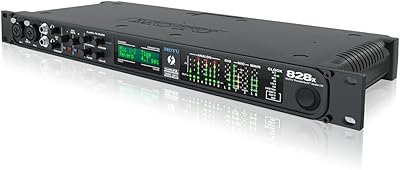
79%
91%
Driver Stability
93%
Channel Count & I/O Depth
88%
Onboard DSP Mixer
86%
Connectivity Flexibility
74%
AVB Networking
More
MOTU 828x Thunderbolt/USB Audio Interface
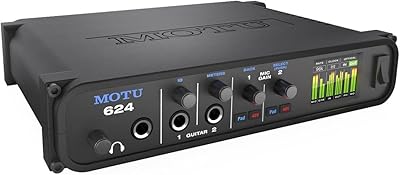
71%
83%
Thunderbolt Performance
67%
USB 2.0 Compatibility
88%
Channel Count & I/O Flexibility
74%
Onboard DSP & CueMix FX
51%
Driver Stability
More
MOTU 624 Thunderbolt/USB Audio Interface
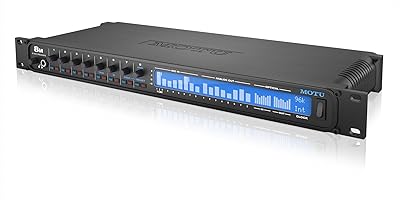
79%
93%
Latency Performance
86%
Driver Stability
78%
AVB Networking
88%
Build Quality
71%
Software & Routing
More
MOTU 8M 24x24 Thunderbolt Audio Interface
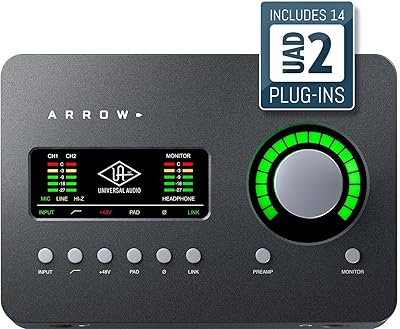
72%
91%
Channel Count & I/O Depth
84%
Thunderbolt Performance
78%
Onboard DSP Mixer
73%
Mic Preamp Quality
49%
Driver Stability
More
Universal Audio Arrow Thunderbolt 3 Audio Interface

77%
93%
Audio Conversion Quality
91%
Unison Preamp Performance
88%
Real-Time UAD Processing
58%
Thunderbolt 3 Connectivity
61%
Windows Compatibility
More
Universal Audio Apollo X16 Audio Interface
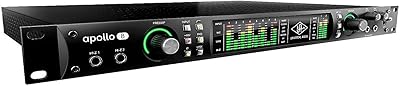
82%
94%
Conversion Quality
91%
UAD DSP Performance
89%
Build & Hardware Quality
92%
Low-Latency Tracking
88%
I/O Flexibility
More
Universal Audio Apollo 8 QUAD Audio Interface
79%
93%
Preamp Quality
91%
DSP Performance
89%
Audio Conversion
92%
Build Quality
74%
Software & Console 2.0
More
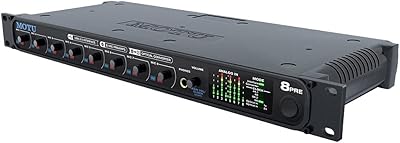
MOTU 8pre USB Audio Interface
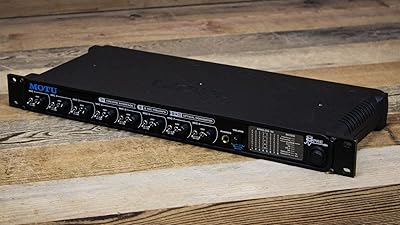
80%
86%
Preamp Quality
91%
Build Quality
88%
Channel Count & I/O
79%
Value for Money
61%
CueMix DSP Software
More
MOTU 8pre Firewire Audio Interface
76%
91%
Preamp Quality
88%
Build Quality
89%
I/O Flexibility
47%
Connectivity & Setup
39%
Modern Compatibility
More

FAQ

It works with both Mac and PC. MOTU has maintained cross-platform driver support for the 1248 since its release, though you should always check MOTU's website to confirm the current driver is compatible with your specific version of macOS or Windows before purchasing.

Yes, the interface supports iOS connectivity, which extends its usefulness beyond a fixed studio setup. Keep in mind that iOS integration typically handles a subset of the full I/O available on a desktop connection, so it is best suited to lighter mobile workflows rather than full 32-channel sessions.

Honest answer: AVB setup has a meaningful learning curve, especially if you have not worked with networked audio before. You will need a compatible AVB network switch, and MOTU's discovery software needs to be configured correctly to see all units on the network. It is powerful once running, but budget some time for the initial configuration and be prepared to consult MOTU's documentation closely.

Some users have reported needing to apply firmware updates before accessing the full feature set, particularly on units that have been in storage for a while. MOTU provides firmware updaters through their website, and the process is generally straightforward, but it is worth doing before your first session rather than during one.

Yes, this is actually one of its practical strengths. The Thunderbolt connection gives you the best low-latency performance for demanding sessions, and USB 2.0 works as a fallback when you are at a workstation without Thunderbolt. Just be aware that USB 2.0 performance may not match Thunderbolt in high-track-count situations.

Keep your external preamps. The four onboard mic pres are convenient for spot-miking or a quick vocal take, but they are not the reason to buy this unit. Engineers with quality outboard preamps will route them through the line inputs, which is where this interface really shines in terms of I/O flexibility.

No, the 1248 requires a connected computer to operate the CueMix DSP mixer and configure routing. It does not offer a standalone mode where it functions independently as a mixer or router without a host machine, which is worth factoring in if you were hoping to use it in a computer-free live setup.

CueMix is functional and capable, but the interface design is not the most intuitive, particularly for users coming from competing platforms. It handles complex routing well once you are familiar with it, but expect a ramp-up period of a few sessions before it feels natural. There are tutorials available through MOTU and the wider audio community that help considerably.

Build quality is consistently praised by working professionals who have had the 1248 in active rack use over extended periods. It is not a flimsy consumer-grade unit. That said, like any piece of studio equipment, standard rack-mounting care applies — proper rail support and avoiding physical impacts will keep it running reliably.

You can connect up to four microphones directly using the onboard XLR mic preamp inputs, all of which support 48V phantom power. If you need more microphone inputs, you can expand via ADAT by connecting an external mic preamp with ADAT output, which is a common and cost-effective way to scale up the mic channel count significantly.