Overview

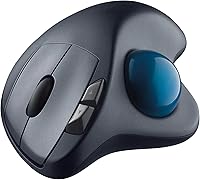
The Logitech M570 Wireless Trackball has quietly built one of the most loyal followings in the peripheral market — and for good reason. Unlike a standard mouse, this trackball keeps your hand planted in one spot while your thumb does all the navigation, which makes a real difference if wrist fatigue or shoulder tension is something you deal with daily. It connects via a tiny USB nano-receiver and takes up almost no desk real estate. This isn't a trendy new release; it's been around long enough to prove its reliability, and it continues to hold a strong position among ergonomic alternatives.
Features & Benefits

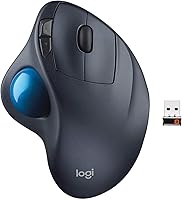
The thumb-controlled ball is the heart of how this ergonomic mouse alternative works. Your hand rests in a sculpted, right-handed shell that naturally angles your wrist, and from there, your thumb rolls the ball to move the cursor — no sliding the device across a pad at all. The 2.4GHz wireless connection through a nano-receiver is rock-solid; in everyday use, you simply plug it in and forget about it. Five buttons cover the basics well: scroll wheel, back, forward, and left and right click. Battery life is genuinely impressive — many users report going months on a single AA. Optional Logitech software unlocks button remapping if you want more control.

Best For

This trackball was essentially built for people who sit at a desk for most of the workday. If you're managing RSI, carpal tunnel, or general wrist discomfort, switching to a thumb-operated trackball often brings noticeable relief because you stop moving your entire arm to navigate. It also works beautifully in tight spaces — no mouse pad needed, and the device itself barely takes up room. That said, the sculpted shell is strictly right-handed, so left-handed users are simply out of luck here. Those who prefer to plug something in and leave it alone will appreciate how low-maintenance this setup is; there's very little to configure and nothing to break in.

User Feedback

Across a large number of reviews, the pattern is consistent: people who make the switch from a conventional mouse often comment on reduced wrist strain within a couple of weeks. Build quality and battery longevity come up repeatedly as genuine strengths. But it's not all praise. The first week tends to involve a real adjustment period — cursor control feels unfamiliar, and precision tasks take patience until your thumb develops muscle memory. A noticeable chunk of long-term owners mention the scroll wheel becoming stiff or losing responsiveness over time. And left-handed users are unanimous: this design simply doesn't work for them. For right-handed users who stick with it, though, repurchase intent is remarkably high — many describe it as something they'd never go back from.

Pros

  • Stationary hand position significantly reduces wrist and forearm strain during long work sessions.
  • Compact footprint means it works on tight desks, trays, and non-flat surfaces without needing a mouse pad.
  • The USB nano-receiver delivers a reliable wireless connection with virtually no setup required.
  • Battery life is exceptional — most users report months of use from a single AA battery.
  • The sculpted shell keeps the hand in a natural, low-tension position throughout the day.
  • Build quality is solid; many owners report using the same unit for several years without issues.
  • Works out of the box on both Windows and macOS with no driver installation needed.
  • Five-button layout covers everyday navigation needs, and button remapping is available via optional software.
  • Strong long-term owner satisfaction — repurchase rates among right-handed users are notably high.
  • Decades-long market presence means a well-tested, mature product with a large community of experienced users.

Cons

  • Designed exclusively for right-handed users, making it completely unusable for left-handed buyers.
  • The learning curve is real — expect at least one to two weeks before thumb control feels natural.
  • Scroll wheel can stiffen or lose tactile precision after extended use, which is a recurring complaint.
  • No Bluetooth support means the USB receiver permanently occupies a port on your computer.
  • Only one device can be paired at a time, which is inconvenient for multi-computer workflows.
  • Cursor precision for detailed creative tasks is genuinely harder to achieve than with a high-DPI mouse.
  • The ball occasionally accumulates dust and lint, requiring periodic manual cleaning to maintain smooth tracking.
  • No rechargeable battery option — you will need to stock AA batteries over time.

Ratings

The scores below for the Logitech M570 Wireless Trackball were generated by AI after systematically analyzing thousands of verified global user reviews, with spam, bot-submitted, and incentivized feedback actively filtered out. Each category reflects the honest distribution of real buyer experiences — strengths are credited where earned, and recurring pain points are scored accordingly without being softened.
Ergonomic Comfort
91%
This is the single most praised aspect of the M570 across user feedback. People who made the switch from a conventional mouse specifically to address wrist pain, carpal tunnel discomfort, or shoulder fatigue consistently report meaningful relief within the first few weeks of adapting.
A small but vocal group notes that the fixed right-handed shell causes awkward thumb positioning for users with very large hands, and a few report mild thumb fatigue during the initial adjustment phase before the motion becomes natural.
Wireless Reliability
88%
The 2.4GHz nano-receiver connection is widely described as rock-solid in everyday office and home setups. Users working up to 10 feet from their computer rarely report dropouts, and the plug-and-forget nature of the receiver means most people genuinely never think about connectivity once it is set up.
In environments with heavy wireless interference — open-plan offices with many competing 2.4GHz devices — a small number of users notice occasional micro-stutters. The single-receiver pairing also frustrates those who switch between two computers regularly.
Battery Life
93%
Battery performance is one of the most consistently praised aspects of this ergonomic mouse alternative. A significant portion of long-term owners report going six months to well over a year on a single AA battery, which removes battery anxiety from daily use entirely.
The lack of a rechargeable battery option is a recurring frustration for buyers who prefer not to manage disposable batteries. While the life is long, eventually running out mid-workday without a spare AA on hand is an annoyance several users specifically call out.
Build Quality
84%
The shell and overall construction feel sturdy and purposeful rather than hollow or plasticky. Many multi-year owners report the body of the device holding up without cracking, rattling, or showing significant wear even after heavy daily use across several years.
The scroll wheel is the most commonly reported weak point in build quality; over extended use it can stiffen, skip, or lose consistent tactile feedback. This is a recurring enough complaint across long-term reviews that it meaningfully pulls down the overall build score.
Scroll Wheel Quality
61%
39%
Out of the box, the scroll wheel functions reliably for standard document and browser navigation. New owners typically have no complaints, and for light-to-moderate scrolling the wheel performs adequately in day-to-day office work.
This is the M570's most documented vulnerability over time. After sustained use — often cited as starting around the one-year mark — the wheel becomes noticeably stiffer, less consistent, or develops a scratchy texture that makes precision scrolling frustrating. It is a known and recurring issue.
Cursor Precision
72%
28%
For general office navigation, web browsing, and document editing, the thumb-controlled ball delivers smooth and responsive cursor movement once users have completed the adaptation period. At that point, everyday desktop tasks feel effortless and efficient.
Precision-demanding tasks — such as fine photo editing, clicking small UI targets in dense interfaces, or working inside illustration software — expose the limits of thumb-controlled tracking. Achieving the same fine motor accuracy as a high-DPI laser mouse is genuinely harder and takes much longer to develop.
Setup & Ease of Use
96%
The out-of-box experience is exceptionally straightforward. Plug in the nano-receiver, insert the AA battery, and it works immediately on both Windows and macOS — no drivers, no accounts, no pairing ritual. For users who want zero friction from a peripheral, this delivers.
The only real setup friction is the learning curve of thumb-based navigation itself, which is not a setup issue per se but catches some new users off guard. A small number of buyers also report the nano-receiver being stiff to remove when they want to store the device.
Desk Space Efficiency
94%
Users with small desks, crowded workstations, or tray-table setups consistently cite the M570's stationary footprint as a genuine practical advantage. No mousing area is needed, and the compact shell tucks comfortably into any corner without being in the way.
The lack of a cable management system or storage slot for the nano-receiver is a minor but real annoyance — the tiny receiver is easy to misplace when transporting the device or switching workstations. This is a small gripe but comes up often enough to note.
Learning Curve
58%
42%
Users who commit to the adjustment period almost universally report success. Most describe being reasonably functional within five to seven days, and genuinely comfortable within two to three weeks, after which the thumb-ball motion feels intuitive and efficient.
The early days are legitimately difficult for many buyers, particularly those transitioning mid-project or during a busy work period. Some users abandon the trackball during this window and return to a conventional mouse, which means initial frustration is a real drop-off risk.
Button Layout
79%
21%
The five-button arrangement covers the core needs of most desk workers well. The back and forward buttons are positioned naturally under the fingers, and the scroll wheel click adds a practical middle-click without requiring an awkward reach.
There is no dedicated DPI or sensitivity toggle button, which means adjusting cursor speed requires going into software settings. Users coming from mice with six or more programmable buttons may find the layout feels minimal and limiting for complex workflows.
Software & Customization
74%
26%
For users who want more than default behavior, the optional Logitech Options app enables button remapping and pointer speed tuning without requiring much technical knowledge. The software is stable and works consistently across both major operating systems.
Customization depth is limited compared to what competing software ecosystems offer. Advanced users wanting macros, per-app profiles, or gesture control will find the available options fairly thin, and the software is not required — meaning most users never explore it at all.
Value for Money
76%
24%
For buyers whose primary goal is ergonomic relief from wrist or shoulder discomfort, the M570 delivers a meaningful return on investment. The long battery life, durable construction, and years of reliable daily use make the per-day cost quite low over the device's lifespan.
At its current price point, buyers reasonably expect a more refined scroll wheel and multi-device support. Competitors have introduced rechargeable trackballs with Bluetooth at similar or slightly higher prices, making the M570's value proposition feel less clear-cut than it once was.
Compatibility
89%
Broad OS compatibility and plug-and-play operation mean this trackball works on virtually any desktop or laptop that has a USB-A port. Most users report zero compatibility issues across Windows 7 through current releases and macOS 10.5 onward.
The USB-A nano-receiver is the only connection option, which creates a dependency on adapters for users with USB-C-only laptops. The absence of Bluetooth also means it cannot connect to tablets or devices that lack a USB host port entirely.
Left-Hand Usability
11%
89%
There is virtually nothing positive to say here for left-handed users. The design makes no concession to non-right-handed use, and this is a consistent, unanimous point of failure across all left-handed buyer feedback.
The sculpted shell and thumb-ball placement are entirely optimized for right-handed grip, leaving left-handed buyers with an ergonomically unusable device. This is the single most frequent reason for one-star reviews, and there is no workaround or alternative version available.
Long-Term Reliability
82%
18%
The majority of long-term owners — those using the device daily for two years or more — describe it as a dependable workhorse that outlasts cheaper alternatives. The core tracking mechanism and wireless connection hold up well across sustained professional use.
Scroll wheel degradation over time is the primary long-term reliability concern and is significant enough to affect confidence in the device past the one to two year mark. Some units also develop minor shell creaking over years of use, though this is less commonly reported.

Suitable for:

The Logitech M570 Wireless Trackball is purpose-built for right-handed desk workers who spend most of their day navigating a computer and are starting to feel the physical cost of that. If you've been dealing with wrist soreness, forearm tension, or early signs of repetitive strain injury, the stationary hand position this trackball enforces can take meaningful pressure off the joints that a sliding mouse constantly stresses. It's equally well-suited for people working at cramped desks, standing setups, or even from a couch, since it doesn't need a flat surface to glide across. Remote professionals and office workers who want a low-maintenance peripheral they can plug in and rely on for years will find the M570's straightforward setup and long battery life genuinely convenient. If you're patient enough to push through an initial adjustment period, this ergonomic mouse alternative tends to reward long-term commitment with lasting daily comfort.

Not suitable for:

The Logitech M570 Wireless Trackball is a hard pass for left-handed users — the thumb-ball placement and sculpted shell are designed exclusively around a right-handed grip, and there is simply no workaround for that. Gamers or users who demand pixel-level cursor precision for tasks like detailed photo retouching or vector illustration will also find the thumb-controlled ball frustrating; fine motor control with a trackball takes considerable time to develop and may never match the precision of a high-DPI traditional mouse for certain workflows. If you frequently switch between devices and need multi-device Bluetooth pairing, the M570's single USB nano-receiver setup will feel limiting. Buyers who are sensitive to scroll wheel quality should be aware that this is one of the more commonly reported weak points of the M570 over extended use — it can become stiff or lose tactile responsiveness before the rest of the device shows any wear.

Specifications

  • Brand: Manufactured by Logitech, a well-established peripheral brand with decades of input device experience.
  • Model: Model designation is M570, a long-running trackball that has remained in active production since its 2012 launch.
  • Dimensions: The device measures 5.75 x 3.75 x 1.5 inches, giving it a compact, stable footprint on any desk surface.
  • Weight: The trackball weighs 4.8 oz without battery, making it light enough to use comfortably for extended periods.
  • Connectivity: Uses a 2.4GHz wireless connection with a reported range of up to 33 feet under typical indoor conditions.
  • Receiver: Includes a USB nano-receiver that plugs into any standard USB-A port and requires no ongoing management once inserted.
  • Tracking: Navigation is handled by a thumb-controlled trackball that moves the cursor while the hand and wrist remain stationary.
  • Hand Orientation: The sculpted shell is designed exclusively for right-handed use; no left-handed variant of this model exists.
  • Buttons: Equipped with 5 buttons: left click, right click, scroll wheel click, and dedicated back and forward navigation buttons.
  • Scroll Wheel: A single rubber scroll wheel is positioned centrally and supports standard vertical scrolling without horizontal tilt functionality.
  • Battery: Powered by one AA battery; Logitech rates battery life at up to 18 months under typical usage conditions.
  • OS Support: Compatible with Windows 7 or later and macOS 10.5 or later; basic functionality works without any driver installation.
  • Software: Optional Logitech Options software enables button remapping and sensitivity adjustments beyond the default out-of-box configuration.
  • Item Color: Available in a single colorway: black with gray accents across the shell and thumb-rest zone.
  • Certification: The device carries standard FCC, CE, and IC certifications for wireless electronics sold in North America and Europe.
  • In the Box: Package includes the M570 trackball unit, one USB nano-receiver, one AA battery, and a basic printed user guide.

Related Reviews
Logitech Ergo M575S
Logitech Ergo M575S
79%
93%
Ergonomic Comfort
78%
Trackball Precision
61%
Learning Curve
88%
Click Noise Level
91%
Battery Life
More
Logitech MX Ergo S
Logitech MX Ergo S
81%
91%
Ergonomic Comfort
88%
Trackball Precision
93%
Battery Life
86%
Click Noise Reduction
79%
Software & Customization
More
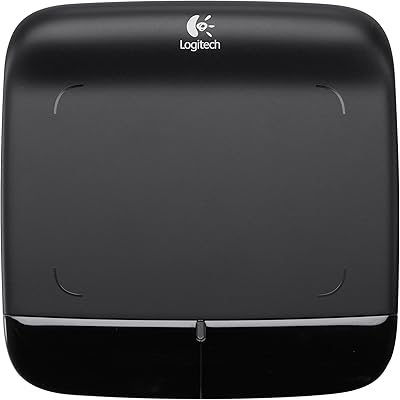
Logitech Wireless Touchpad
84%
80%
Performance
85%
Ease of Use
88%
Wireless Connectivity
83%
Build Quality
82%
Ergonomics
More
Logitech K270 Wireless Keyboard
86%
91%
Battery Life
88%
Build Quality
85%
Typing Comfort
83%
Wireless Range
92%
Ease of Setup
More
Logitech Wireless Mouse M217
81%
91%
Value for Money
94%
Battery Life
92%
Ease of Setup
88%
Portability
85%
Tracking Accuracy
More
Logitech Wireless Mouse M275
85%
94%
Battery Life
88%
Ergonomics/Comfort
92%
Ease of Setup
85%
Tracking Performance
83%
Build Quality
More
Logitech Wireless Keyboard K360
87%
95%
Battery Life
92%
Ease of Setup
83%
Typing Comfort
90%
Wireless Connectivity
85%
Build Quality
More
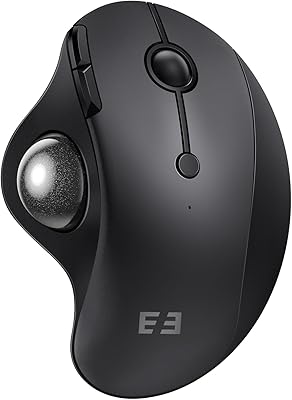
SABLUTE Wireless Trackball Mouse
74%
83%
Ergonomic Comfort
79%
Adjustable Tilt Base
86%
Multi-Device Connectivity
67%
Trackball Precision & Feel
74%
DPI Range & Customization
More
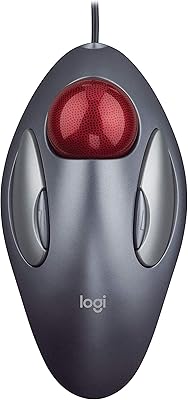
Logitech Trackman Marble Trackball
86%
91%
Ergonomics & Comfort
88%
Precision & Tracking
85%
Ease of Use
94%
Build Quality
90%
Value for Money
More
seenda Wireless Trackball Mouse
78%
88%
Ergonomic Comfort
74%
Trackball Precision
86%
Multi-Device Connectivity
83%
Battery Life
71%
Build Quality
More

FAQ

It takes real adjustment — most people feel noticeably clumsy for the first three to five days. By the end of the first week, thumb control starts to feel more intuitive, and within two to three weeks the majority of users report it feeling completely natural. Precision tasks like clicking small UI elements take a bit longer to master, so give yourself that grace period before judging it.

Yes, it works plug-and-play on both Windows and macOS straight out of the box. You get full cursor movement, all five buttons, and the scroll wheel with zero setup. If you want to remap buttons or adjust tracking sensitivity, the free Logitech Options app unlocks those settings, but it is entirely optional.

For many users, yes — and meaningfully so. Because your hand stays in one fixed position and your thumb does the moving, you eliminate the repetitive lateral wrist motion that aggravates carpal tunnel and RSI. That said, it is not a medical device, and results vary depending on your specific condition. If symptoms are severe, it is worth consulting a healthcare provider alongside any ergonomic changes.

You need a USB-A port for the nano-receiver, which most full-size laptops have. If you're on a newer laptop with only USB-C ports, you'll need a USB-A to USB-C adapter — the receiver itself is standard and works fine through one.

In practice, most users go anywhere from six months to over a year before needing to swap the battery, depending on daily use intensity. The M570 uses a single AA battery and does not have a built-in rechargeable option, so keeping a spare AA around is a sensible habit.

No surface is required at all — that is actually one of the practical advantages of a trackball. Since the device never moves, you can place it on a desk, armrest, lap tray, or any stable surface and it works identically in all cases.

Pop the ball out from the front of the device — it comes out easily with a gentle push from the small access hole on the underside. Use a dry cloth or cotton swab to wipe the contact rollers inside the housing, then reinsert the ball. Doing this every few weeks prevents the gradual buildup of lint and oils that causes sluggish tracking.

No, the nano-receiver pairs to a single device only. If you want to use it across two computers, you would need to physically move the receiver between them or use Logitech's Unifying Receiver ecosystem, which allows multiple devices to share one receiver — though you would still only be controlling one computer at a time.

It works well initially, but the scroll wheel is the component most commonly flagged by long-term users. After a year or more of heavy use, some owners report it becoming stiffer or losing consistent tactile feedback. It is not a universal failure, but it is worth being aware of if you rely heavily on scrolling in your workflow.

Unfortunately, no. The shell and thumb-ball placement on this model are entirely right-handed in design, and Logitech does not offer a mirrored version. Left-handed trackball users generally look at alternatives from other manufacturers that offer ambidextrous or left-handed layouts.