Overview

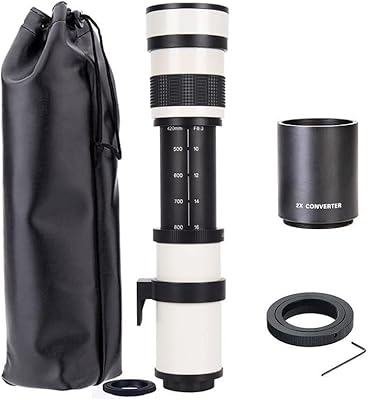
The Lightdow 420-800mm F8.3 Telephoto Zoom Lens is ZLY Technology's bid to put serious reach in the hands of Canon DSLR shooters without the usual cost barrier. One thing to be clear about upfront: this is a fully manual lens with no electronic contacts, which means your camera will likely flag a no-lens error straight after mounting. The fix takes about 30 seconds — enable the Release shutter without lens option in your camera menu, then set the mode dial to M. From there, you have a portable, lightweight zoom that opens up extreme focal distances most beginners never get near.
Features & Benefits

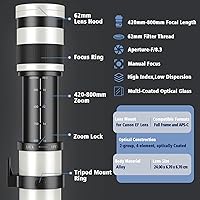
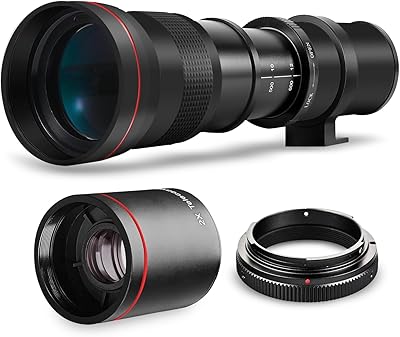
The 420–800mm manual lens packs a solid feature set for its price tier. The variable aperture runs from f/8.3 at 420mm to f/16 at 800mm — a predictable trade-off as you zoom in, and worth understanding before you shoot. UMC (Ultra Multi-Coating) helps reduce flare and chromatic aberration, which matters most when you are pointing at bright skies or a moonlit scene. The internal focus mechanism is a genuine plus: the barrel stays the same length as you focus, keeping the lens balanced in use. It also accepts 62mm filters for UV protection or polarizing effects, and fits both Canon EF and EF-S bodies natively.

Best For

This super-telephoto zoom is well-matched to hobbyist and beginner photographers who want to push into long-range territory without a major outlay. If you enjoy moon and bird photography from a fixed position — a tripod on a back porch, a quiet spot in a nature park — this telephoto lens is a natural fit. Autofocus is simply not part of the picture here, so fast action and sports are a poor match. Canon DSLR owners looking for a dedicated outdoor lens to complement their kit glass will find this a sensible, low-risk way to explore 800mm reach on a budget.

User Feedback

Buyers tend to agree the value proposition is real — especially for moon photography, where many report getting crisp, detailed shots that genuinely surprised them at this price point. Build quality gets mixed marks: most find it acceptably solid, but a few note the plastic construction feels lightweight in hand. At the far end of the zoom range, sharpness does fall off noticeably, and that comes up frequently in user comments. The UMC coating handles bright skies reasonably well, though not at the level you would expect from premium glass. Setup confusion around the no-lens error is the most common frustration, but it is a quick fix once you know it. Overall sentiment leans positive.

Pros

  • Brings 800mm of focal reach to Canon DSLR shooters at a fraction of typical telephoto lens prices.
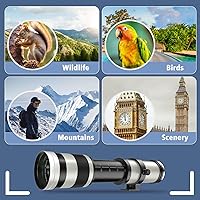
  • The 420–800mm zoom range covers moon, wildlife, and landscape photography in a single lens.
  • UMC coating keeps flare and color fringing reasonably controlled for a budget telephoto option.
  • Internal focus mechanism means the barrel length stays consistent, making tripod use more stable.
  • At under two pounds, this super-telephoto zoom is light enough to carry on long outdoor walks.
  • Compatible with 62mm filters, so users can add UV protection or polarizing effects without adapters.
  • Works across a wide range of Canon EF and EF-S mount bodies, including older Rebel models.
  • Moon photography results regularly exceed buyer expectations when shot from a stable tripod.
  • The large focus ring provides enough tactile feedback for patient, deliberate focusing on static subjects.

Cons

  • Image sharpness drops noticeably at the 800mm end, often resulting in soft edges and reduced detail.
  • No electronic contacts mean the camera displays a no-lens error immediately after mounting — requires a menu workaround.
  • The aperture narrows to f/16 at full zoom, making any low-light or overcast shooting extremely difficult.
  • Plastic-heavy construction feels fragile in the field and raises questions about long-term durability.
  • Tracking any moving subject — birds in flight, wildlife on the run — is practically unworkable without autofocus.
  • The camera cannot manually set the aperture value, displaying F00 instead, which confuses many new users.
  • Chromatic aberration becomes more visible at longer focal lengths, especially around high-contrast edges.
  • There is no tripod collar included, meaning all mount stress is transferred through the camera body over time.
  • Buyers expecting results comparable to mid-range lenses will find the optical performance falls noticeably short.

Ratings

The scores below for the Lightdow 420-800mm F8.3 Telephoto Zoom Lens were generated by our AI system after analyzing verified buyer reviews collected from global markets, with spam, bot submissions, and incentivized feedback actively filtered out. The results reflect what real hobbyist and enthusiast photographers experienced across a wide range of shooting conditions — from backyard bird watching to late-night moon sessions. Both the genuine strengths and the recurring frustrations are represented here without softening.
Value for Money
83%
For buyers who understand what they are getting into, the value proposition here is hard to argue with. Reaching 800mm of focal length at this price point is something most photographers assumed was simply out of reach, and for casual moon or wildlife photography, it delivers enough to justify the spend.
A portion of buyers felt misled when they realized how significantly the image quality drops at the 800mm end. Compared to mid-range telephoto lenses, the output gap becomes apparent quickly, and some felt the savings were not worth the optical compromises.
Image Sharpness
61%
39%
At 420mm, sharpness is genuinely respectable for a budget lens — moon shots in particular tend to come out with recognizable crater detail when conditions are right and the shooter takes time to focus carefully. Several users were pleasantly surprised by their first lunar images.
Push toward 800mm and sharpness falls off noticeably. Edge softness becomes a persistent issue, and subjects like perched birds or distant buildings often come out slightly blurred even with careful manual focusing. This is the most commonly cited disappointment across user reviews.
Manual Focus Usability
69%
31%
The focus ring is large and provides decent tactile feedback, which makes deliberate, patient focusing reasonably comfortable. For static subjects like the moon or a stationary bird, users report that with practice, hitting focus consistently becomes achievable.
There is no autofocus at all, and for many buyers — especially those coming from kit lenses — the adjustment period is steep. Missing focus on a moving bird or airplane is common early on, and the long focal length amplifies any wobble or miscalibration in the focus position.
Build Quality
58%
42%
At under two pounds, this super-telephoto zoom is easy to carry on outdoor walks or attach to a lightweight tripod. Users heading out for casual wildlife photography appreciate not having to lug heavy gear, and the white finish does not show everyday handling marks easily.
The plastic construction is hard to ignore when you hold it alongside any mid-range lens. Several users noted flex in the barrel and a general sense of fragility that made them cautious about rough outdoor conditions. It does not inspire confidence for frequent field use.
Setup & Compatibility
72%
28%
Once the initial camera menu adjustment is made — enabling the release shutter without lens option — the lens mounts and operates without further fuss across a wide range of Canon EF and EF-S bodies. The broad body compatibility is a real plus for users with older Canon DSLRs.
The no-lens error that appears immediately upon mounting catches a large number of buyers off guard. The fix is straightforward, but the instructions provided are easy to miss, and some users spent significant time troubleshooting before finding the solution online.
Zoom Range Versatility
74%
26%
The 420–800mm range covers a lot of practical ground for distant subject photography. Buyers who want to frame the moon tightly at 800mm and then pull back to 420mm for wider landscape context find the zoom range genuinely useful in a single outing.
The aperture narrows considerably as you zoom in — from f/8.3 at 420mm to f/16 at 800mm — which forces higher ISO settings in lower light and introduces noticeable grain in the final images. This trade-off limits the usable range in anything less than bright daylight.
Lens Coating & Flare Control
66%
34%
The UMC coating does provide a measurable benefit when shooting toward bright skies. Users photographing birds against an overcast sky or shooting early morning landscapes noted fewer washed-out highlights compared to completely uncoated budget lenses they had tried previously.
Shooting directly toward strong light sources — the sun near the horizon, stadium lights — still produces visible ghosting and flare artifacts. The coating helps but does not eliminate the issue, and at this focal length, avoiding strong light sources is not always possible.
Portability & Weight
81%
19%
Weighing just 1.67 pounds, this telephoto lens is genuinely easy to take into the field. Hikers and casual wildlife observers appreciate being able to slip it into a bag without reorganizing their entire kit, and it sits comfortably on entry-level tripods without causing balance issues.
The light weight is partly a consequence of the plastic-heavy construction, which not all users see as a net positive. A few noted that the lens hood — when used — adds some front-heaviness that makes handheld shooting at slow shutter speeds even more challenging.
Moon Photography Performance
78%
22%
This is arguably where the 420–800mm manual lens earns its strongest user endorsements. Mounted on a tripod with a remote shutter release, users consistently report capturing moon images with clear surface detail that are genuinely satisfying for personal use and social sharing.
Getting the focus exactly right on the moon requires patience and some trial-and-error, especially for beginners. At 800mm, even small focus misses are magnified, and users who rush the setup process often end up with soft, disappointing results on their first few attempts.
Bird & Wildlife Photography Performance
54%
46%
For patient photographers who target perched or slow-moving birds, this telephoto lens can produce usable shots. Backyard bird watchers with a fixed shooting position report being able to pull in recognizable detail on subjects that would be invisible with a standard kit lens.
Any bird in active flight is effectively off the table. Without autofocus and with a narrow maximum aperture, tracking moving wildlife is extremely difficult, and the success rate drops sharply compared to even entry-level autofocus telephoto options. Frustration is common among users expecting wildlife versatility.
Aperture & Low-Light Handling
47%
53%
In bright daylight — golden hour landscape shots, midday wildlife photography — the aperture range is workable, and users who plan their shoots around good lighting conditions report acceptable exposures without excessive ISO compensation.
An f/8.3 maximum aperture is already restrictive, and f/16 at full zoom makes low-light photography extremely difficult. Evening bird sessions or overcast wildlife trips push ISO values into noise territory quickly, and the camera cannot set aperture values manually, making the F00 display a persistent reminder of this limitation.
Chromatic Aberration Control
63%
37%
The UMC coating helps keep color fringing reasonably contained at the 420mm end, and users shooting in controlled lighting conditions report cleaner color transitions than they expected from an entry-level telephoto lens in this category.
At the longer end of the zoom, chromatic aberration becomes more noticeable — particularly around high-contrast edges like tree branches against a bright sky. Post-processing can reduce this, but it adds a step that users shooting JPEG straight from camera will find inconvenient.
Filter Compatibility
76%
24%
The 62mm filter thread is a practical inclusion that many budget lenses at this focal length skip entirely. Users who already own 62mm UV or circular polarizing filters can add protection or creative control without any additional adapters, which saves both cost and setup time.
The filter thread is functional but not precision-cut, and a handful of users reported that some filters required extra care to thread properly without cross-threading. It is a minor issue, but worth noting for anyone planning to use high-end filters with this lens.
Tripod & Stability Use
71%
29%
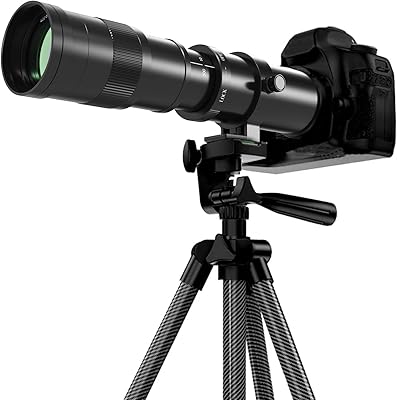
On a stable tripod with a ball head, this super-telephoto zoom performs significantly better than handheld — something nearly all experienced users emphasize in their reviews. The consistent barrel length during focusing also helps maintain tripod balance across the zoom range.
The lens lacks a dedicated tripod collar, meaning all weight transfers through the camera body mount. This puts stress on the lens mount over time and can introduce subtle misalignment on cheaper tripod heads, particularly when panning to track a moving subject.

Suitable for:

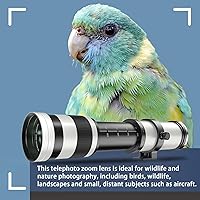
The Lightdow 420-800mm F8.3 Telephoto Zoom Lens is built for Canon DSLR owners who want to explore extreme focal lengths without committing to the cost of professional glass. It fits naturally into the kit of a hobbyist who shoots the moon from a tripod on a clear night, or a backyard bird watcher who has a favorite perch and the patience to dial in manual focus before the subject moves. Beginners curious about telephoto photography will find it a low-stakes way to learn — manual focus, exposure settings, and the quirks of shooting at long distances are all part of the experience here. Canon shooters with older EOS Rebel bodies or mid-range DSLRs like the 80D or 90D will appreciate the broad mount compatibility. Anyone who already enjoys slow, deliberate photography — landscapes, astro, stationary wildlife — is the natural home for this lens.
Not suitable for:

The Lightdow 420-800mm F8.3 Telephoto Zoom Lens is a poor fit for photographers who depend on autofocus, or who want to track birds in flight, athletes, or any fast-moving subject. The fully manual operation and narrow maximum aperture make action photography genuinely frustrating, not just challenging. Sports photographers, event shooters, and anyone working in low-light environments will find the f/16 maximum at 800mm a hard wall that no amount of technique can fully work around. Professionals or serious enthusiasts expecting sharp images edge-to-edge at the long end of the zoom will likely be underwhelmed — this lens was not engineered to compete with mid-range telephoto glass on optical performance. Anyone who dislikes fiddling with camera menus should also know upfront that getting the lens to fire at all requires enabling a specific setting on the camera body first.
Specifications

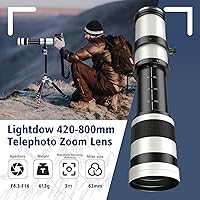
  • Focal Length: This lens covers a focal range of 420mm to 800mm, designed for distant subject photography.
  • Aperture Range: The aperture varies automatically with the zoom position, running from f/8.3 at 420mm to f/16 at 800mm.
  • Focus Type: Fully manual focus only — there are no electronic contacts and no autofocus capability of any kind.
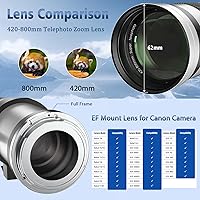
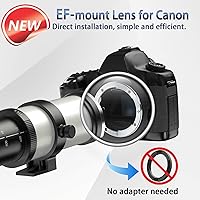
  • Lens Mount: Compatible with Canon EF and EF-S mounts, covering a broad range of Canon DSLR camera bodies.
  • Focus Mechanism: Internal focus design keeps the physical barrel length constant while adjusting focus, which aids tripod stability.
  • Lens Coating: UMC (Ultra Multi-Coating) is applied to reduce flare, ghosting, and chromatic aberration in high-contrast lighting.
  • Filter Thread: The front element accepts standard 62mm threaded filters, including UV and circular polarizing types.
  • Dimensions: The lens measures 9.45 inches in length with a 2.44-inch diameter at both the front and rear.
  • Weight: Total weight is 1.67 pounds, making it one of the lighter options available at this focal length.
  • Electronic Contacts: This lens has no electronic contacts, meaning aperture, EXIF data, and focus confirmation are not communicated to the camera body.
  • Compatible Bodies: Verified compatible with Canon EOS Rebel series, 90D, 80D, 70D, 5D series, 7D series, and 1D series cameras.
  • Zoom Type: Manual zoom ring design with no optical image stabilization included at any focal length.
  • Color: Available in white with a standard black lens cap included for front element protection.
  • Manufacturer: Produced by ZLY Technology and sold under the Lightdow brand, a third-party lens manufacturer.
  • Best Sellers Rank: Ranked #23 in the SLR Camera Lenses category on Amazon at the time of review.
  • Release Date: This lens was first made available for purchase in July 2024.
  • Tripod Collar: No dedicated tripod collar is included; the lens must be supported through the camera body mount point.
  • Aperture Display: Because there are no electronic contacts, the camera body will display F00 or F-- rather than a numeric aperture value.

Related Reviews
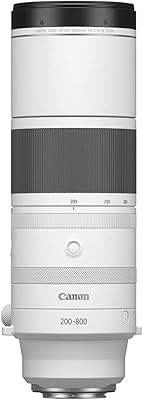
Canon RF200-800mm F6.3-9 IS USM Zoom Lens
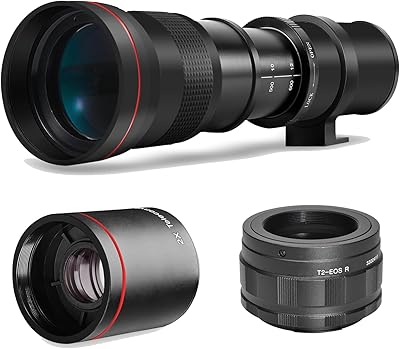
82%
96%
Zoom Range Versatility
91%
Image Stabilization
83%
Autofocus Performance
89%
Portability & Weight
58%
Aperture Range
More
BENOISON 420-800mm Manual Focus Telephoto Lens
69%
88%
Value for Money
91%
Focal Reach
58%
Manual Focus Usability
67%
Image Sharpness
74%
Build Quality
More
BM Premium 420-1600mm f/8.3 Telephoto Zoom Lens
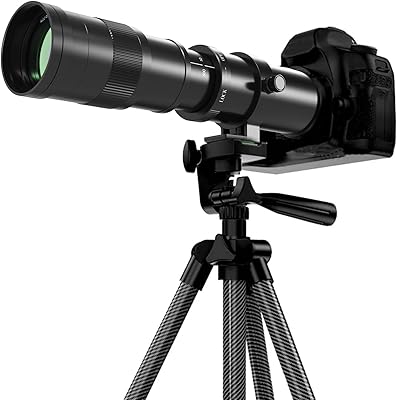
69%
83%
Value for Money
88%
Focal Reach
57%
Image Sharpness
61%
Manual Focus Usability
59%
Build Quality
More
BENOISON RF 420-800mm Manual Telephoto Lens for Canon
81%
88%
Value for Money
79%
Manual Focus Precision
84%
Image Quality at 420mm
91%
Build Quality & Durability
92%
Compatibility with Canon RF Mount
More
JINTU 420-1600mm Telephoto Zoom Lens for Canon EF Mount
79%
91%
Magnification Range
85%
Build Quality
65%
Manual Focus Usability
55%
Weight & Portability
87%
Value for Money
More
Big Mike's 420-1600mm f/8.3 HD Manual Telephoto Lens for Nikon
82%
89%
Value for Money
92%
Image Quality at Long Focal Lengths
67%
Manual Focus Precision
86%
Build Quality and Durability
72%
Ease of Use
More
Sony SEL200600G 200-600mm Telephoto Zoom Lens
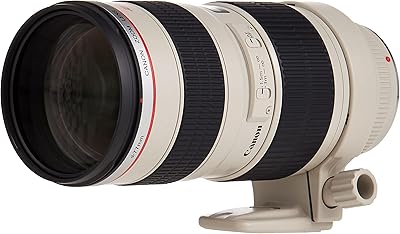
79%
93%
Autofocus Speed
91%
Optical Sharpness
88%
Image Stabilization
89%
Build Quality
74%
Value for Money
More
Canon EF 70-200mm f/2.8L USM Telephoto Zoom Lens
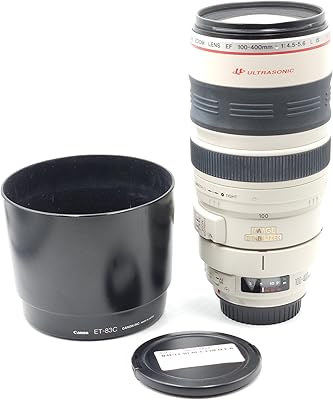
82%
91%
Autofocus Speed
93%
Image Sharpness
94%
Build Quality
92%
Aperture Consistency
89%
Bokeh & Subject Separation
More
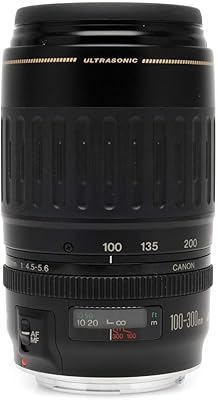
Canon EF 100-300mm f/4.5-5.6 Telephoto Zoom Lens
75%
88%
Autofocus Speed
91%
Autofocus Noise
67%
Image Sharpness
43%
Image Stabilization
78%
Build Quality
More
Canon EF 100-400mm f/4.5-5.6L Telephoto Zoom Lens
81%
91%
Autofocus Speed & Accuracy
88%
Image Stabilization
86%
Optical Sharpness
93%
Build Quality & Weather Sealing
67%
Push-Pull Zoom Mechanism
More

FAQ

This happens because the lens has no electronic contacts, so the camera cannot detect it the normal way. The fix is straightforward: go into your camera menu and enable the option labeled something like 'Release shutter without lens.' Once that is turned on, the error goes away and the lens fires normally. You will also need to shoot in full manual mode.

Yes, both the T7 and T8i use Canon EF-S mounts, which this telephoto lens is fully compatible with. The same applies to most other Canon Rebel and mid-range EOS bodies. Just remember to enable the shutter release without lens option in the camera menu before shooting.

Moon photography is honestly where this lens performs best. Mounted on a stable tripod with a remote shutter or the camera's self-timer, it can produce images with recognizable lunar surface detail. Results improve significantly with careful manual focusing and shooting in bright, clear conditions — the moon is bright enough that the narrow aperture is rarely a problem.

Realistically, no. Because there is no autofocus, tracking a bird in active flight is extremely difficult. Where it works better is for perched or slow-moving birds at a fixed distance, where you have time to dial in the focus manually before shooting. If fast-action bird photography is your primary goal, an autofocus telephoto lens would serve you much better.

Yes, and this is something worth understanding before you shoot. At 420mm the maximum aperture is f/8.3, but as you zoom toward 800mm it narrows to f/16. The camera cannot override this — it adjusts automatically based on your focal length. In practice this means you will need to raise your ISO or slow your shutter speed to compensate in anything less than bright daylight.

A tripod is strongly recommended, especially at longer focal lengths. At 800mm, any camera shake is magnified enormously, and handheld shooting almost always produces blurry results. A stable tripod combined with the camera's 2-second self-timer or a remote shutter release makes a noticeable difference in sharpness, particularly for moon and wildlife shots.

The front element has a 62mm filter thread, which is a common size. Standard 62mm UV filters, circular polarizing filters, and neutral density filters all attach without any adapter. A UV filter is a popular choice for protecting the front element during outdoor use.

Sharpness is reasonable at the 420mm end but drops noticeably as you push toward 800mm. Edge softness and some chromatic aberration become more visible at the longer end. For casual use — moon photography, backyard birds, distant landscapes — the results are acceptable at this price tier, but anyone expecting edge-to-edge sharpness comparable to mid-range lenses will be disappointed.

No, this is designed for Canon EF and EF-S DSLR mounts only. Canon mirrorless cameras use the RF or M mount system, which is physically different. While EF-to-RF adapters exist, using this lens on a mirrorless body is not officially supported and may produce unreliable results.

The construction is primarily plastic, which keeps the weight low but does mean it feels less robust than metal-bodied lenses. It holds up fine for regular casual use in dry conditions, but it is not weather-sealed or built for rough outdoor environments. Handling it carefully and keeping it in a padded bag between uses will help it last longer.