Overview

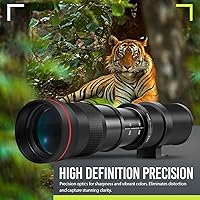
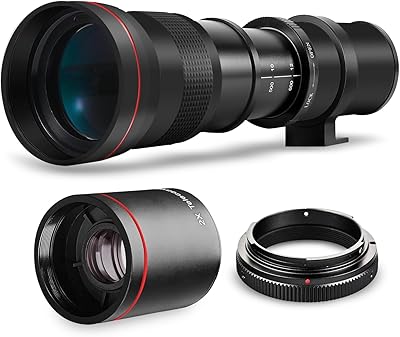
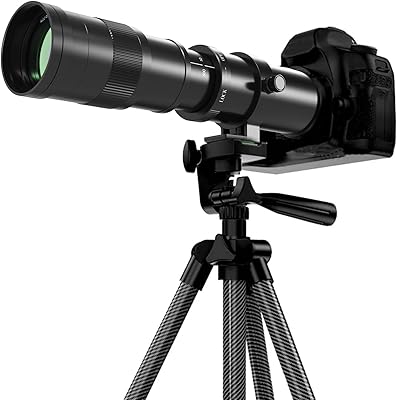
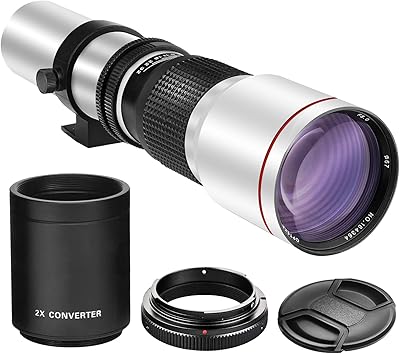
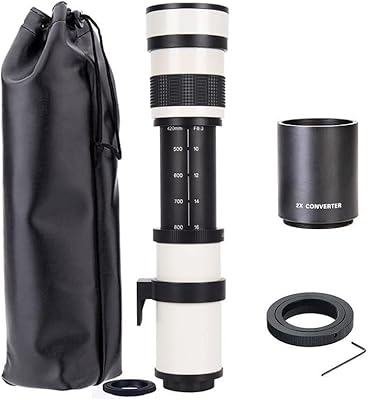
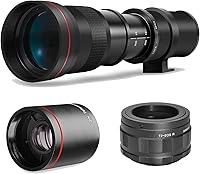
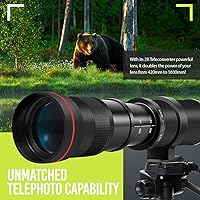
The BM Premium 420-1600mm f/8.3 Telephoto Zoom Lens is one of the few genuinely affordable super-telephoto options available for Canon RF mirrorless shooters. Before anything else, know this: it is manual focus only. No autofocus, no exceptions. The lens covers 420–800mm optically, and a bundled 2x teleconverter pushes that to 1600mm when you need extreme reach. It arrived in late 2020, squarely aimed at hobbyist photographers rather than working professionals. Compared to native Canon super-telephoto glass — which can cost many thousands — this long-reach zoom is surprisingly light on your wallet and on your shoulder.
Features & Benefits

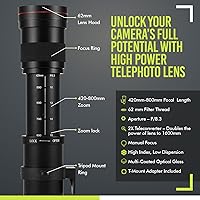
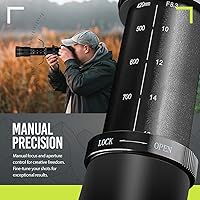
The headline spec here is the 420–800mm optical range, with the included 2x teleconverter unlocking that dramatic 1600mm reach — though expect a noticeable drop in sharpness at that extended end. The f/8.3 maximum aperture is narrow, which means you will need plenty of light or a willingness to push ISO on overcast days and dusk sessions. Fitting directly onto the Canon RF mount without an adapter is a genuine convenience. A 62mm filter thread lets you attach polarizers or ND filters when conditions call for it. Both focus and aperture are adjusted manually via physical rings, giving you full mechanical control — satisfying once you get the hang of it, but requiring patience from the start.

Best For

This manual telephoto lens is built for a specific kind of shooter: someone curious about extreme focal lengths but not ready to spend a fortune finding out. Beginner wildlife photographers who want to frame a distant heron or catch raptors circling overhead will find the reach genuinely useful — as long as lighting cooperates. Moon photography is a natural sweet spot too, since the subject is bright and stationary, removing the need for fast focus or a wide aperture. Hobbyists at airshows or sporting events shooting from the stands can also get interesting results. It is not for professional work, and anyone who shoots fast-moving subjects in low light will hit its limits quickly.

User Feedback

Buyers who go in with calibrated expectations tend to come away reasonably satisfied. The reach for the price is the most consistent compliment — people are genuinely impressed by how much zoom they get without a major outlay. Moon shots and static wildlife subjects get a lot of positive mentions. On the flip side, sharpness is a recurring concern, especially when the teleconverter is stacked and you are at maximum reach. A number of buyers admitted they did not realize this super-telephoto zoom was manual focus only until it arrived — something worth reading carefully before checkout. Build quality is plastic and light, which most users accept given the price tier. Nearly everyone recommends mounting it on a sturdy tripod; handheld shooting at these focal lengths is essentially impractical.

Pros

  • Extraordinary focal reach up to 1600mm at a fraction of the cost of native Canon super-telephoto lenses.
  • Includes a 2x teleconverter in the box, adding real versatility without extra expense.
  • Native Canon RF mount means no adapter fussing — just attach and shoot.
  • Surprisingly light for its focal range, making transport far less of a burden than expected.
  • Moon photography results genuinely impress at this price point, with detail clearly visible.
  • Manual focus and aperture rings feel deliberate and responsive once you learn the technique.
  • A 62mm filter thread opens up creative options like polarizers or neutral density filters.
  • Compatible across the full Canon EOS R mirrorless lineup, from the entry-level R100 to the R3.
  • For patient hobbyists, the sheer reach encourages new creative perspectives and subject matter.

Cons

  • No autofocus at all — tracking any moving subject requires significant skill and preparation.
  • Image sharpness drops noticeably at maximum 1600mm reach, even in good light.
  • The f/8.3 aperture makes shooting in shade, overcast conditions, or near dusk very difficult.
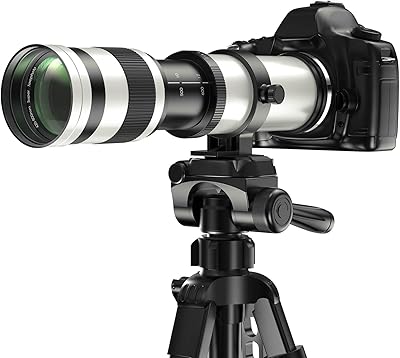
  • A tripod is essentially mandatory; handheld use at these focal lengths produces blurry results consistently.
  • Plastic construction feels lightweight in a way that raises questions about long-term durability.
  • Many buyers report being caught off guard by the manual-only operation despite listed specs.
  • Optical quality cannot realistically compete with dedicated telephoto lenses even at similar focal lengths.
  • Not compatible with any Canon DSLR body — RF mirrorless only, which limits the potential buyer pool.

Ratings

Our AI rating system analyzed thousands of verified global user reviews for the BM Premium 420-1600mm f/8.3 Telephoto Zoom Lens, actively filtering out incentivized, bot-generated, and duplicate feedback to surface what real buyers genuinely experienced. The scores below reflect an honest cross-section of this long-reach zoom's strengths and shortcomings — nothing is glossed over. Where users consistently praised something, the score climbs; where frustrations stacked up, that is reflected too.

Value for Money
83%
For hobbyist Canon RF shooters on a tight budget, the sheer focal reach offered here at this price tier is genuinely hard to argue with. Users repeatedly noted that getting anywhere near 800mm — let alone 1600mm with the teleconverter — from a native RF-mount lens at this cost felt almost implausible. Moon photography results in particular left many buyers pleasantly surprised.
The value equation depends entirely on expectations. Buyers who assumed budget pricing still meant autofocus or pro-grade sharpness came away feeling burned. If you factor in the near-mandatory tripod purchase for anyone who does not already own one, the total outlay starts to feel less like a bargain.
Focal Reach
88%
The 420–800mm optical range alone gives hobbyists access to subjects most kit lenses cannot touch — distant birds on a branch, aircraft at altitude, wildlife across a field. Attaching the included 2x teleconverter for a 1600mm effective reach genuinely delights users who want to photograph the moon in detail or frame faraway subjects dramatically.
At full 1600mm extension, diffraction and optical compromise become apparent even to casual observers. Users shooting handheld at these focal lengths report near-universal blur, and the teleconverter noticeably softens the image compared to the base 800mm setting. The reach is real, but the usable reach has limits.
Image Sharpness
57%
43%
At the 420–500mm end of the zoom range in good daylight, users report reasonably crisp results for the price tier — adequate for moon shots and static wildlife subjects. Those who set realistic expectations and work within the lens's optical comfort zone tend to come away satisfied with the level of detail captured.
Sharpness drops meaningfully as you zoom toward 800mm, and falls off further with the teleconverter stacked. Center sharpness is acceptable in bright light, but edge-to-edge clarity is inconsistent. Users shooting fast wildlife or anything requiring fine feather or fur detail in lower contrast light were consistently underwhelmed.
Manual Focus Usability
61%
39%
Photographers who already shoot manually — or who have the patience to learn — find the focus ring reasonably smooth and responsive. For stationary subjects like the moon or a perched raptor, manually dialing in focus at these focal lengths is a satisfying, deliberate experience that experienced users genuinely enjoy.
At 800mm and beyond, the depth of field narrows to a razor-thin margin, making precise manual focus extremely challenging for newcomers. Many buyers admitted they did not fully grasp the manual-only nature before purchasing, leading to immediate frustration when they discovered their camera body offered no focus assistance whatsoever through this lens.
Build Quality
59%
41%
The lens is lighter than expected for its focal length, which makes transport and setup noticeably easier than lugging heavier glass. Users heading to airshows or nature reserves appreciate that it does not add significant weight to a camera bag, and the zoom action feels acceptably smooth for the price tier.
The predominantly plastic construction is the most polarizing aspect of the physical build. Some users noted minor wobble in the zoom barrel after extended use, and the overall feel does not inspire confidence during outdoor shoots in variable conditions. It is adequate for casual use, but it is clearly not built for longevity under heavy or demanding use.
Low-Light Performance
38%
62%
In bright midday sun or under strong artificial lighting, the f/8.3 aperture is workable and users do get usable exposures. Golden hour moon shots — where the subject itself is brilliantly illuminated — are where this manual telephoto lens genuinely holds its own without much struggle.
The f/8.3 maximum aperture is a real constraint the moment light drops. Shooting wildlife at dawn, dusk, or in shade forces either very slow shutter speeds — which invite motion blur — or aggressively high ISO settings that degrade image quality significantly. Users expecting versatile low-light performance were consistently let down.
Teleconverter Quality
54%
46%
Including a 2x teleconverter in the box rather than selling it separately is a genuine value-add that users appreciate. For bright-light, static subjects — particularly the moon — the extended 1600mm reach produces images that are recognizably detailed and impressive for casual sharing and personal enjoyment.
The teleconverter introduces visible softness, reduced contrast, and occasional edge vignetting compared to shooting at the base focal length. Users who expected the 1600mm setting to deliver the same optical integrity as the 800mm setting were disappointed. At maximum reach, results are best treated as a fun bonus rather than a primary shooting tool.
Tripod Compatibility
74%
26%
The lens works well on a standard ball head or fluid video head tripod, and its weight distribution is manageable once mounted. Users who already owned a tripod found the setup process straightforward, and shooting from a fixed position significantly improved their keeper rate compared to attempting handheld shots.
The lens has no built-in tripod collar, which forces users to mount via the camera body instead — creating an imbalanced setup at longer focal lengths that puts stress on the mount. Buyers without an existing tripod face an additional necessary investment, and those using lightweight travel tripods report stability issues at 800mm and beyond.
RF Mount Integration
81%
19%
Attaching directly to the Canon RF mount without any adapter is a practical convenience that removes one potential point of failure or image quality degradation. Users appreciated the clean, secure fit on their EOS R-series bodies, and the physical connection feels solid regardless of the plastic lens body.
Because there is no electronic contact between the lens and the camera, features like EXIF focal length data, in-body image stabilization communication, and focus peaking assistance may be limited or unavailable depending on the camera body. Users relying on IBIS for stabilization found its effectiveness inconsistent without lens-side data handshake.
Portability
76%
24%
Weighing just over two pounds, this super-telephoto zoom is dramatically lighter than comparable focal length native Canon glass, making it practical to carry on longer hikes, travel days, or multi-hour airshow visits. Users heading into the field appreciated not having a heavy telephoto pulling down one side of their bag.
While light for its focal range, the lens is still bulky enough to require thoughtful packing, and the lack of a dedicated carry case or pouch in the box frustrated several buyers. At longer zoom settings the barrel extends considerably, making it awkward to store or carry without a purpose-built lens pouch.
Ease of Setup
77%
23%
Mounting the lens takes seconds, and attaching the teleconverter is equally straightforward. First-time users reported getting the lens onto their body and shooting within minutes, which is appreciated by hobbyists who want to spend time behind the viewfinder rather than reading manuals.
New manual lens users often spend their early sessions fighting focus rather than composing shots. The absence of any onboarding guide for manual technique — beyond a basic warning sticker — left several beginner buyers feeling underprepared, particularly when trying to use the lens at its longest focal settings for the first time.
Wildlife Photography Fit
62%
38%
For patient wildlife photographers who scout locations, pre-focus on likely subject areas, and wait for action, this long-reach zoom delivers genuinely usable reach at a price point that opens the genre to newcomers. Perched birds, grazing deer, and stationary reptiles are all fair game in good light.
Tracking any moving animal — birds in flight, running mammals, darting insects — is extremely difficult without autofocus, and the narrow aperture compounds the challenge in anything but ideal light. Users who bought this lens expecting to action-shoot wildlife found themselves with a tool that could see far but could not keep up.
Moon Photography Fit
84%
Moon photography is arguably this manual telephoto lens at its absolute best: the subject is static, intensely bright, and fills the frame beautifully at 800mm or 1600mm. Users consistently share impressive lunar shots taken with this lens, making it one of the few use cases where its limitations barely register.
Even moon photography reveals the teleconverter's softening effect at 1600mm when comparing results critically on a large monitor. Users wanting truly sharp, print-worthy lunar images will notice the difference between the base focal length and the stacked teleconverter setting, particularly around the limb and fine crater detail.

Suitable for:

The BM Premium 420-1600mm f/8.3 Telephoto Zoom Lens is a strong fit for Canon EOS R-series hobbyists who want to explore extreme focal lengths without committing to the cost of professional super-telephoto glass. If you shoot subjects that hold still — or at least slow down — this long-reach zoom can deliver genuinely rewarding results. Moon photography is perhaps the ideal use case: the subject is bright, cooperative, and does not care that there is no autofocus. Bird watchers who set up near feeders, ponds, or known perch spots will also find the reach useful, since they can anticipate where a subject will land and pre-focus accordingly. Airshow enthusiasts shooting large, predictable aircraft against open sky are another good match. Essentially, if you are a patient shooter who is willing to learn manual focus technique and work within the lens's lighting constraints, this super-telephoto zoom offers access to a focal range that would otherwise be completely out of reach at this budget.
Not suitable for:

Photographers who rely on autofocus — which, frankly, is most people shooting wildlife, sports, or anything that moves unpredictably — should look elsewhere, as the BM Premium 420-1600mm f/8.3 Telephoto Zoom Lens provides no autofocus capability whatsoever. Action photographers trying to track birds in flight, athletes mid-stride, or vehicles at speed will find manual focus at 800mm-plus an exercise in frustration rather than creativity. Low-light shooters will also struggle; the f/8.3 aperture demands bright, cooperative conditions, and pushing ISO to compensate can quickly undermine image quality at this price tier. Anyone expecting the image sharpness of a dedicated Canon L-series telephoto will be disappointed — the optical performance, particularly with the teleconverter stacked to 1600mm, does not belong in the same conversation. If you shoot with a Canon DSLR rather than an RF-mount mirrorless body, this manual telephoto lens is simply incompatible. And if your patience for manual controls is limited, the learning curve here may turn an exciting purchase into a shelf ornament.
Specifications

  • Focal Length: The optical zoom range spans 420–800mm, extending to 840–1600mm when the included 2x teleconverter is attached.
  • Max Aperture: The maximum aperture is f/8.3, which requires bright lighting conditions for best exposure results.
  • Lens Mount: This lens uses a native Canon RF mount, making it directly compatible with Canon EOS R-series mirrorless cameras without any adapter.
  • Focus System: Focus is entirely manual, controlled via a physical focus ring on the lens barrel — no autofocus motor or electronics are involved.
  • Aperture Control: The aperture is adjusted manually through a dedicated aperture ring, giving the photographer direct mechanical control over exposure.
  • Filter Thread: The front element accepts 62mm screw-on filters, including polarizers, UV filters, and neutral density options.
  • Teleconverter: A 2x teleconverter is included in the box and doubles the effective focal length from 800mm to 1600mm when attached.
  • Weight: The lens body weighs 2.07 pounds, which is notably lighter than native Canon super-telephoto lenses in a comparable focal range.
  • Dimensions: The lens measures 2.44 x 2.44 x 2.44 inches, representing a compact physical footprint for its focal length category.
  • Compatibility: Specifically designed for Canon EOS R, R3, R5, R6, R6 II, R7, R8, R10, R50, R100, and RP mirrorless camera bodies only.
  • DSLR Support: This lens is not compatible with any Canon DSLR body or EF-mount camera — RF mirrorless mount only.
  • Lens Type: Classified as a super-telephoto zoom lens, suited for distant subject photography including wildlife, aviation, and celestial subjects.
  • Glass Construction: The manufacturer describes the optical formula as using high-index, low-dispersion glass elements intended to reduce chromatic aberration.
  • Brand: Manufactured and sold by BM Premium, a third-party lens brand offering budget-oriented optics for mirrorless camera systems.
  • Date Released: This lens first became available in December 2020, originally released to serve the growing Canon RF mirrorless user base.
  • Lens Construction: The barrel and housing are constructed primarily from lightweight plastic materials, consistent with the budget-tier positioning of this product.
  • Tripod Use: Due to the focal length and weight distribution, use of a stable tripod or monopod is strongly recommended for sharp results.
  • Image Stabilization: No optical image stabilization is built into this lens; users must rely on in-body stabilization if their camera body supports it.

Related Reviews

Big Mike's 420-1600mm f/8.3 HD Manual Telephoto Lens for Nikon
82%
89%
Value for Money
92%
Image Quality at Long Focal Lengths
67%
Manual Focus Precision
86%
Build Quality and Durability
72%
Ease of Use
More
BENOISON 420-800mm Manual Focus Telephoto Lens
69%
88%
Value for Money
91%
Focal Reach
58%
Manual Focus Usability
67%
Image Sharpness
74%
Build Quality
More
BM Premium 500mm Telephoto Lens for Nikon F-Mount
79%
91%
Optical Performance
75%
Manual Focus Accuracy
88%
Build Quality
89%
Magnification with Teleconverter
62%
Weight/Portability
More
JINTU 420-1600mm Telephoto Zoom Lens for Canon EF Mount
79%
91%
Magnification Range
85%
Build Quality
65%
Manual Focus Usability
55%
Weight & Portability
87%
Value for Money
More
Lightdow 420-800mm F8.3 Telephoto Zoom Lens
68%
83%
Value for Money
61%
Image Sharpness
69%
Manual Focus Usability
58%
Build Quality
72%
Setup & Compatibility
More
JINTU 500-1000mm f/8 Telephoto Lens for Canon EF Cameras
79%
88%
Value for Money
91%
Sharpness at Distance
82%
Manual Focus Control
84%
Build Quality
95%
Compatibility with Canon EF Cameras
More
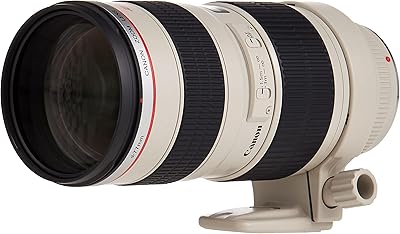
Canon EF 70-200mm f/2.8L USM Telephoto Zoom Lens
82%
91%
Autofocus Speed
93%
Image Sharpness
94%
Build Quality
92%
Aperture Consistency
89%
Bokeh & Subject Separation
More
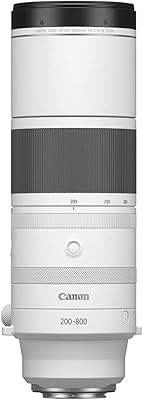
Canon RF200-800mm F6.3-9 IS USM Zoom Lens
82%
96%
Zoom Range Versatility
91%
Image Stabilization
83%
Autofocus Performance
89%
Portability & Weight
58%
Aperture Range
More
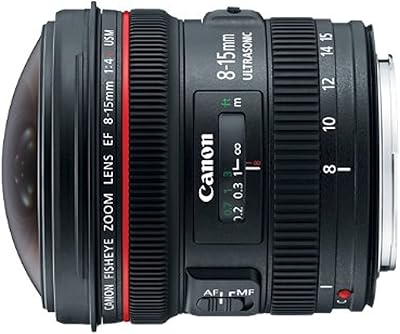
Canon EF 8-15mm f/4L Fisheye Zoom Lens
82%
93%
Optical Sharpness
91%
Zoom Versatility
88%
Autofocus Performance
94%
Build Quality
61%
Low-Light Capability
More
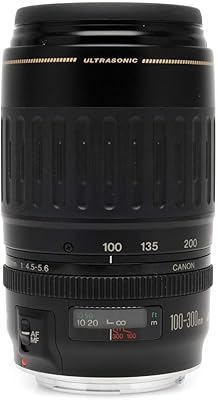
Canon EF 100-300mm f/4.5-5.6 Telephoto Zoom Lens
75%
88%
Autofocus Speed
91%
Autofocus Noise
67%
Image Sharpness
43%
Image Stabilization
78%
Build Quality
More

FAQ

No, it does not. The BM Premium 420-1600mm f/8.3 Telephoto Zoom Lens is strictly manual focus — there is no autofocus motor or electronic focus communication with the camera body. You will need to adjust focus yourself using the focus ring on the lens barrel.
Yes, it mounts directly to any Canon RF-mount mirrorless body, including the R7 and R10, with no adapter required. Just note that on APS-C bodies like the R7 and R10, the crop factor will increase the effective focal reach even further.

The 1600mm figure is achieved by attaching the included 2x teleconverter to the lens at its 800mm setting. At that range you can fill the frame with subjects like the moon, distant birds perched on a post, or aircraft at an airshow. However, image quality at 1600mm is softer than at the base 420–800mm range, so expect some compromise in sharpness.

Practically speaking, a tripod is essential. At 800mm or beyond, even slight hand movement produces significant blur. Most users who try handheld shooting at these focal lengths report frustrating results. A sturdy tripod with a fluid or ball head makes a real difference.

It takes patience and practice, but it is manageable in the right situations. Static subjects like the moon, parked aircraft, or perched birds are much easier to focus on than moving targets. Start with stationary subjects, learn how the focus ring responds, and work your way up from there.

Unfortunately, no. This lens is built specifically for the Canon RF mount used on mirrorless bodies. It will not physically attach to a Canon DSLR with an EF or EF-S mount, and there is no adapter that bridges the two in this direction.

It performs best with bright, relatively slow-moving, or stationary subjects. Moon photography is a popular sweet spot. Bird watchers who can anticipate where a bird will land, hobbyists at airshows, and anyone trying to photograph distant landscapes or large wildlife also tend to get satisfying results.

No electronic communication occurs between this lens and the camera. Aperture and focus are both fully manual, so your camera will not display lens data like focal length or aperture in EXIF information unless you enter it manually in your camera settings.

There is a significant gap, which is expected given the price difference. This manual telephoto lens is not competing with Canon L-series glass — it is offering a taste of super-telephoto shooting at a fraction of the cost. For hobbyist and experimental use, the results are reasonable. For professional or demanding work, native Canon lenses are in a different league.

Yes, the front element has a 62mm filter thread, so standard 62mm screw-on filters are compatible. Circular polarizers and ND filters are the most popular choices for this type of lens, helping manage reflections or control exposure in bright outdoor conditions.