Overview

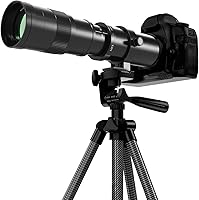
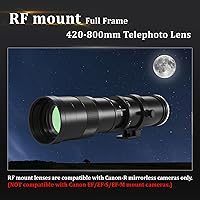
The BENOISON 420-800mm RF Telephoto Lens is a third-party, fully manual super-telephoto built specifically for Canon EOS R mirrorless cameras — and it occupies a very specific niche. This is not an OEM Canon product, so optical expectations should be calibrated accordingly. What it does offer is an impressively long focal range for distant subjects like birds, wildlife, or the moon, all without requiring an adapter thanks to its native RF mount. The trade-off is that everything — focus, exposure mode — is handled manually. If you go in knowing that, this manual telephoto can be a surprisingly capable tool for the right shooter.
Features & Benefits

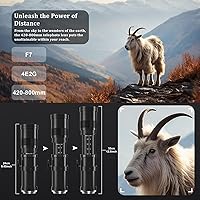
The zoom range here runs from 420mm all the way out to 800mm, which is genuinely useful territory for wildlife and lunar shooting. The native RF mount is a real practical win — you attach it directly to any compatible Canon EOS R body without hunting for an adapter ring. At 1.8 lbs and under 10 inches, this budget super-telephoto is lighter than you might expect. That said, the aperture situation deserves plain talk: it starts at f/8.3 at 420mm and narrows to f/16 at 800mm, and you cannot adjust it. Bright daylight is your friend. The 62mm filter thread is a nice touch for those who use ND or polarizing filters.

Best For

This manual telephoto makes the most sense for hobbyist photographers who want to explore super-telephoto reach without committing serious money to the experiment. Moon photographers will find the 800mm end particularly rewarding on clear nights, especially when paired with a sturdy tripod. Wildlife enthusiasts shooting in open daylight — think birds on a sunny morning — will fare much better than those working in shade or overcast conditions. It also works well as a manual focus learning tool for beginners; if you ruin a shot on this lens, it stings a lot less than on expensive glass. Canon EOS R series shooters looking for a dedicated RF telephoto at a low entry point have very few alternatives in this range.

User Feedback

Buyers who go in with realistic expectations tend to come away reasonably satisfied. The most consistent praise centers on value for the price and the convenience of the native RF mount — not having to fiddle with an adapter is appreciated. Where things get bumpy is the initial setup: many users are caught off guard by the need to enable the release shutter without lens option in the camera menu before anything works. Image sharpness gets mixed reviews; center sharpness at 420mm draws more positive comments than results at the far end of the zoom. Build quality impressions are generally decent — the focus ring moves smoothly enough, though low-light performance is a common point of frustration given the narrow aperture.

Pros

  • Native RF mount means no adapter fiddling — just attach and shoot on any compatible Canon EOS R body.
  • The 420–800mm zoom range offers serious reach for moon, bird, and distant wildlife photography.
  • At 1.8 lbs, this budget super-telephoto is light enough to handheld shoot or carry on long hikes.
  • A 62mm filter thread gives you flexibility to add ND or polarizing filters with standard accessories.
  • Entry-level price point makes it a low-risk way to experiment with super-telephoto focal lengths.
  • Full-frame compatibility means it works across the entire Canon EOS R lineup without crop factor concerns.
  • Manual focus, once learned, gives you precise control over exactly what plane is sharp in your frame.
  • Build quality feels solid for the price tier — the focus ring turns smoothly and the mount fits snugly.
  • Ideal for moon photography where the fixed aperture and manual focus are actually well-suited to the subject.
  • A practical learning lens for beginners who want real-world manual focus practice without expensive stakes.

Cons

  • The aperture is completely non-adjustable, shrinking to f/16 at 800mm — low light shooting is essentially off the table.
  • You must manually enable the release shutter without lens option in your camera menu before the shutter will fire at all.
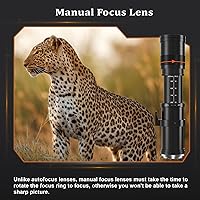
  • No electronic contacts means zero EXIF data, no image stabilization communication, and no in-lens autofocus — ever.
  • Image sharpness drops noticeably toward the 800mm end, and corner softness is present even at shorter focal lengths.
  • Manual focus at 800mm on a moving subject requires significant practice and patience — expect a learning curve.
  • There is no optical stabilization, so handheld shots at full zoom will demand very high shutter speeds or a tripod.
  • Not compatible with Canon M-series mirrorless bodies, which limits its audience more than the packaging makes obvious.
  • Color fringing and chromatic aberration can appear in high-contrast scenes, particularly at the longer end of the zoom.
  • The fixed narrow aperture makes the lens highly dependent on bright ambient light for usable exposures.
  • Customer support and long-term parts availability for a newer third-party brand remain uncertain factors.

Ratings

Our AI rating system analyzed verified global buyer reviews for the BENOISON 420-800mm RF Telephoto Lens, actively filtering out incentivized submissions and bot activity to surface what real hobbyist photographers actually experienced. The scores below reflect a balanced picture — genuine strengths are recognized, but real frustrations are not softened. Whether this manual telephoto earns a place in your kit depends heavily on how well its specific trade-offs match your shooting style.

Value for Money
83%
Among Canon RF-mount telephoto options, finding anything close to this focal range at this price point is nearly impossible, and buyers repeatedly acknowledge that gap. For moon shooters and casual wildlife hobbyists, the cost-to-reach ratio is genuinely compelling and hard to argue with.
Buyers who push the lens hard and compare output to even mid-tier alternatives quickly feel the ceiling. At the longest zoom settings, the value proposition softens because image quality drops enough to question whether the shots are usable for anything beyond personal enjoyment.
Focal Range Versatility
78%
22%
The jump from 420mm to 800mm gives hobbyists real flexibility — users report switching between filling the frame with a perched hawk and pulling back slightly for birds in flight context. That range on a native RF mount is a practical advantage for anyone who shoots both wide telephoto and extreme close-up distances.
The fixed aperture constraint undercuts the versatility of the zoom range significantly. At 800mm with f/16, you are essentially locked into bright midday shooting, which means half the zoom range becomes situationally useless in anything but ideal outdoor lighting.
Build Quality
71%
29%
For a budget-tier third-party lens, the physical construction draws more positive comments than expected. The focus ring moves with reasonable smoothness, the barrel feels solid rather than hollow, and the RF mount fits Canon bodies without the wobble some cheaper lenses exhibit.
Prolonged handling reveals limitations — some users report the zoom action stiffening over time, and the materials do not inspire confidence for rough fieldwork. It is not a lens you would want to expose to dust, moisture, or any real outdoor abuse without a protective bag.
Image Sharpness
62%
38%
At 420mm in good daylight, center sharpness satisfies hobbyist expectations well enough to produce genuinely enjoyable shots of the moon, distant birds, and landscape details. Users shooting lunar photography specifically report that the sharpness at this focal length exceeded their expectations given the price.
Zoom past 600mm and sharpness drops in a way that is hard to ignore, with edge softness and detail loss becoming apparent even on casual inspection. Chromatic aberration appears in high-contrast scenes, and at 800mm the combined effect of f/16 and softer optics limits practical usability considerably.
Ease of Setup
54%
46%
Once the mandatory camera menu adjustment — enabling shutter release without a detected lens — is completed, the physical setup is straightforward. Users who read the instructions first report no friction, and the native RF mount means there is no adapter to lose or misconfigure.
The shutter release menu setting trips up a disproportionate number of first-time users, with many initially believing the lens is defective. There are no electronic prompts or error guidance from the camera body, so buyers who skip the manual can spend significant time troubleshooting a trivially fixable issue.
Manual Focus Usability
66%
34%
The focus ring has enough tactile resistance to allow deliberate, controlled adjustments — users photographing stationary subjects like the moon or a perched bird report that achieving accurate focus is achievable with patience. The ring placement near the front of the barrel is ergonomically sensible for slow, deliberate shooting.
For any moving subject, manual focus at 800mm is genuinely punishing. Wildlife that shifts position even slightly requires rapid ring adjustments that most users struggle to execute consistently, and without focus peaking on older Canon bodies, confirming sharp focus in the viewfinder requires extra concentration.
Low-Light Performance
38%
62%
In very bright, sunny conditions — think midday beach or open grassland — the fixed aperture causes fewer problems than you might expect, and users in these scenarios report workable exposures at reasonable shutter speeds even at moderate zoom lengths.
In anything less than strong daylight, this budget super-telephoto becomes very difficult to use productively. The f/16 maximum aperture at 800mm forces shutter speeds so slow that hand-holding is impractical and even tripod-mounted shots risk motion blur from the subject rather than the camera.
Compatibility
88%
The native RF mount is a genuine practical win — every Canon EOS R series body from the entry-level R100 to the professional R3 accepts it without modification. Users upgrading from T-mount or EF-S telephoto options specifically appreciate skipping the adapter step entirely.
Canon M-series owners are completely excluded, which the product listing does not make obvious enough at a glance. A small but vocal subset of buyers have purchased this lens only to discover their M50 or M200 is incompatible, resulting in avoidable returns.
Portability
79%
21%
At 1.8 lbs and under 10 inches, this manual telephoto is lighter than most zoom lenses in its focal range and packs into a standard camera bag without dedicated compartment planning. Wildlife observers who hike to shooting locations cite the manageable weight as a genuine day-to-day benefit.
Handheld stability at 800mm is still a challenge regardless of weight — the length of the barrel amplifies any hand tremor noticeably. Users who expected to shoot handheld at full zoom consistently found that a monopod or tripod was not optional but necessary for usable results.
Moon Photography Performance
81%
19%
This is where the BENOISON RF zoom earns its strongest real-world praise. The moon is bright, stationary, and forgiving of a fixed aperture — users report capturing detailed lunar surface shots that they are genuinely proud of, especially with a tripod and a self-timer engaged.
Atmospheric haze and heat shimmer at 800mm affect lunar shots just as they would with any lens at this focal length, something newer buyers underestimate. Results vary considerably by location and night conditions, and some users expected a level of crispness that the optics cannot consistently deliver.
Wildlife Photography Performance
57%
43%
In open, sunny habitats — fields, coastlines, open woodland — the reach of this budget super-telephoto allows hobbyists to fill the frame with subjects they could not otherwise approach. Birders shooting from a fixed hide or platform report satisfying results on stationary or slow-moving species.
Fast-moving wildlife in variable light exposes every limitation of this lens simultaneously — slow manual focus, a narrowing aperture, and softening sharpness at full zoom combine to produce a high rate of missed or unusable shots. Serious wildlife photographers will outgrow it almost immediately.
Accessory Compatibility
74%
26%
The standard 62mm filter thread is a practical inclusion that opens up a real ecosystem of compatible filters. Users who shoot in extreme brightness report that adding a standard ND filter helps manage exposure at the shorter focal lengths where the aperture is slightly more open.
Without a dedicated tripod collar included or widely available as an accessory, longer shooting sessions place rotational stress on the camera body mount. Users who want to switch between landscape and portrait orientation with a tripod-mounted setup have to get creative with third-party solutions.
Durability Over Time
61%
39%
Early impressions from users who have owned this lens for several months suggest the core build holds up under light regular use. The mount connection remains snug and the focus ring retains its action without significant degradation reported in the short-to-medium term.
Long-term durability data is limited given the December 2024 release, and there are early signals that the zoom mechanism can stiffen in cooler temperatures. As a newer brand without a long track record, the question of how this lens holds up after a year or two of regular fieldwork remains genuinely open.

Suitable for:

The BENOISON 420-800mm RF Telephoto Lens is a strong fit for hobbyist photographers who want to explore super-telephoto shooting without taking a significant financial risk. If your primary subjects are the moon, birds in open fields, or distant wildlife under bright sunlight, this manual telephoto can genuinely deliver satisfying results when used with patience and good technique. Canon EOS R series shooters who already own a body but have no dedicated long-reach optic will find this a practical way to fill that gap without committing to a high-end investment. It also suits beginners who want to build manual focus skills on real subjects — tracking a bird or nailing the lunar surface manually teaches you a lot about how lenses actually work. Tripod-friendly shooters and those who enjoy a slower, more deliberate photographic process will adapt to this lens most naturally.
Not suitable for:

The BENOISON 420-800mm RF Telephoto Lens is simply the wrong tool for photographers who rely on autofocus, fast-moving subjects, or low-light conditions. The aperture locks at f/8.3 on the wide end and narrows to f/16 at full zoom — there is no workaround — which makes indoor shooting, golden hour wildlife, or overcast skies genuinely frustrating. Sports photographers, event shooters, or anyone who needs to fire quickly and accurately should look elsewhere entirely. Users expecting optical quality comparable to professional-grade glass will be disappointed; this is a budget instrument and the image rendering reflects that honestly. Canon M-series mirrorless owners should also note this lens is incompatible with their system, and anyone unwilling to dig into camera menu settings to enable shutter release without a detected lens will find the out-of-box experience confusing.
Specifications

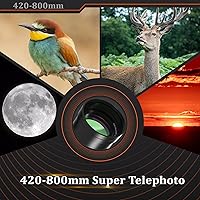
  • Focal Length: Offers a manual zoom range of 420mm to 800mm, suited for distant subjects like wildlife, birds, and the moon.
  • Aperture: Fixed aperture of f/8.3 at 420mm, narrowing to f/16 at 800mm — this value is non-adjustable at any focal length.
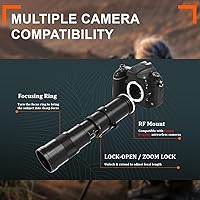
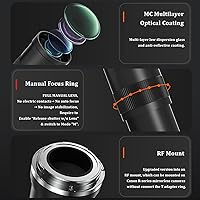
  • Mount Type: Native Canon RF mount, attaching directly to compatible Canon EOS R series bodies with no adapter required.
  • Focus System: Fully manual focus only, operated via a dedicated focus ring near the front of the lens barrel.
  • Filter Thread: Features a 62mm front filter thread, compatible with standard ND, polarizing, and UV filter accessories.
  • Dimensions: Measures 9.45 x 2.64 x 2.64 inches, making it a reasonably compact tube for its focal length range.
  • Weight: Weighs 1.8 lbs, which is manageable for handheld use in short bursts but benefits from tripod support at full zoom.
  • Frame Coverage: Fully compatible with full-frame Canon EOS R series sensors as well as APS-C crop sensor bodies in the lineup.
  • Electronic Contacts: Contains no electronic contacts, meaning the camera cannot communicate with the lens for EXIF data, stabilization, or autofocus.
  • Compatibility: Works with Canon EOS R, Ra, RP, R3, R5, R5 C, R6, R6 Mark II, R7, R8, R10, R50, and R100 mirrorless bodies.
  • Incompatibility: Not compatible with any Canon M-series mirrorless camera bodies due to the different mount standard.
  • Lens Type: Third-party super-telephoto zoom lens manufactured by BENOISON, not an OEM Canon product.
  • Release Date: First made available in December 2024, making it a relatively new addition to the third-party RF-mount lens market.
  • Manufacturer: Designed and produced by BENOISON, a third-party optics brand specializing in budget-tier manual lenses.
  • Camera Setting: Requires the Release Shutter without Lens option to be enabled in the camera menu before the shutter will fire.

Related Reviews
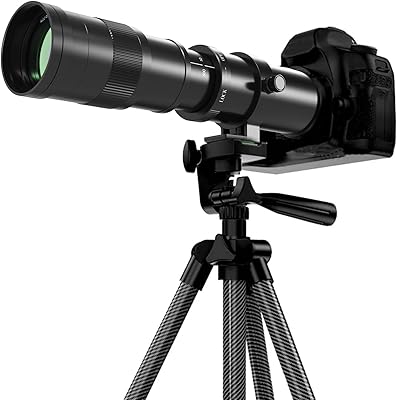
BENOISON 420-800mm Manual Focus Telephoto Lens
69%
88%
Value for Money
91%
Focal Reach
58%
Manual Focus Usability
67%
Image Sharpness
74%
Build Quality
More
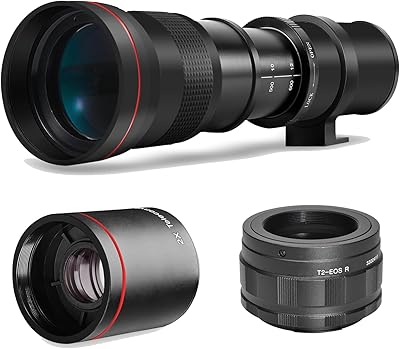
Lightdow 420-800mm F8.3 Telephoto Zoom Lens
68%
83%
Value for Money
61%
Image Sharpness
69%
Manual Focus Usability
58%
Build Quality
72%
Setup & Compatibility
More
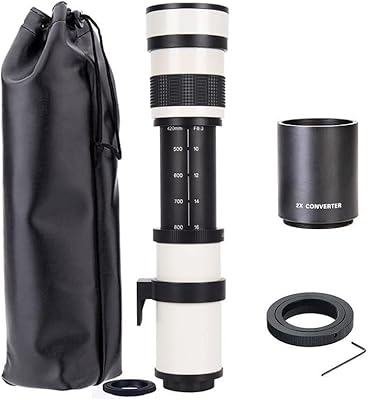
BM Premium 420-1600mm f/8.3 Telephoto Zoom Lens
69%
83%
Value for Money
88%
Focal Reach
57%
Image Sharpness
61%
Manual Focus Usability
59%
Build Quality
More
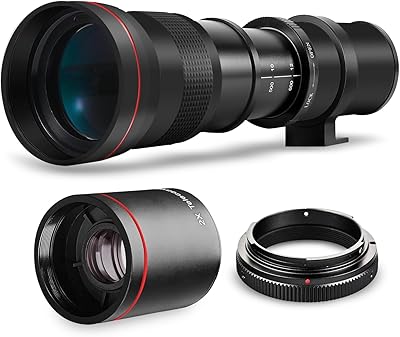
JINTU 420-1600mm Telephoto Zoom Lens
71%
83%
Value for Money
88%
Focal Reach
61%
Image Sharpness
79%
Build Quality
54%
Manual Focus Experience
More
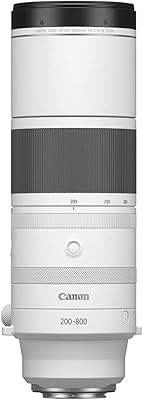
Canon RF200-800mm F6.3-9 IS USM Zoom Lens
82%
96%
Zoom Range Versatility
91%
Image Stabilization
83%
Autofocus Performance
89%
Portability & Weight
58%
Aperture Range
More
Big Mike's 420-1600mm Manual Telephoto Lens
60%
78%
Value for Money
47%
Optical Sharpness
88%
Focal Reach
54%
Manual Focus Usability
31%
Low-Light Performance
More
Canon RF 600mm f/11 IS STM Lens
71%
93%
Portability
91%
Value for Focal Length
82%
Image Sharpness
74%
Autofocus Performance
88%
Image Stabilization
More
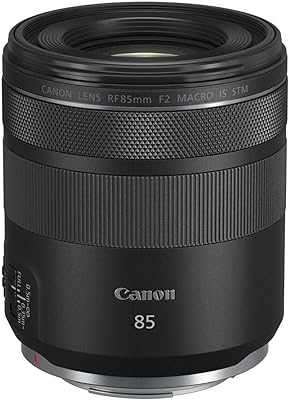
Canon RF 85mm F2 Macro Lens
82%
93%
Image Sharpness
89%
Bokeh Quality
61%
Autofocus Speed
91%
Image Stabilization
74%
Macro Capability
More
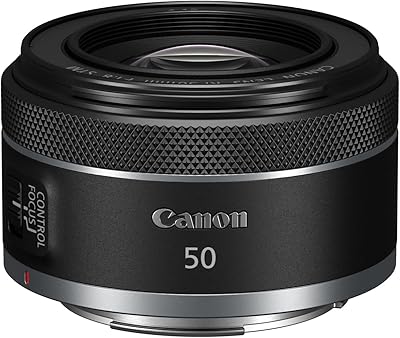
Canon RF 50mm F1.8 STM Lens
74%
83%
Image Sharpness
78%
Bokeh Quality
76%
Autofocus Speed & Accuracy
81%
Low-Light Performance
61%
Build Quality & Durability
More
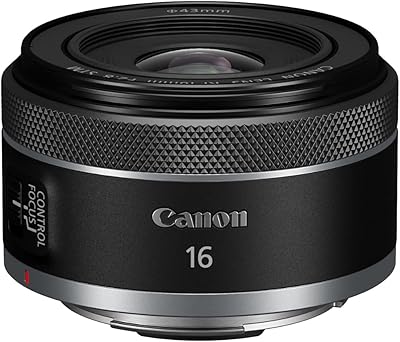
Canon RF 16mm F2.8 STM Lens
78%
78%
Image Sharpness
83%
Autofocus Performance
61%
Build Quality
82%
Value for Money
94%
Portability & Size
More

FAQ

Yes, it mounts directly via the native RF connection — no adapter ring needed. Just attach it to your R10 body and you are ready to go, provided you enable the correct shutter release setting in the camera menu first.

This catches a lot of buyers off guard. Because the lens has no electronic contacts, your Canon body does not detect it as a recognized lens and will block the shutter by default. Go into your camera menu and enable the option labeled something like Release Shutter without Lens — the exact wording varies slightly by body model, but it is usually under the shooting or safety settings.

Unfortunately no. This lens uses an RF mount, which is physically and electronically incompatible with the Canon M-series EF-M mount. It is strictly designed for Canon EOS R series mirrorless bodies.

No — the aperture is fixed and non-adjustable. At 420mm it sits at f/8.3, and as you zoom toward 800mm it closes down to f/16. There is no aperture ring or electronic control to change this. Plan your shooting around bright, well-lit conditions to compensate.

It takes practice, no question about it. At that focal length, even slight hand movement or focus ring adjustments cause noticeable shifts in what is sharp. Using a sturdy tripod, shooting in good light, and taking your time makes a significant difference. Many users find it rewarding once they get the hang of it.

It is actually one of the more popular use cases for this lens. The moon is a bright, stationary subject — which suits the fixed aperture and manual focus perfectly. At 800mm on a full-frame body, you can capture a nicely detailed lunar disc. A tripod and a remote shutter or self-timer will help you get sharp results.

IBIS on compatible Canon bodies will still operate based on the body's own gyro sensors, but because the lens has no electronic contacts it cannot pass focal length data to the camera. You may need to manually enter the focal length in your camera's IBIS settings, if that option is available, for the stabilization to work most effectively.

Center sharpness at 420mm is the strongest point of this budget super-telephoto, and many users find it acceptable for hobby use. As you push toward 800mm, sharpness softens and chromatic aberration can appear in high-contrast areas. It is not a precision optical instrument — but within its price tier, the results can still be enjoyable.

Yes. The front element has a 62mm filter thread, which is a standard size. You can use ND filters to manage exposure in very bright conditions, or a polarizing filter for sky and water shots. Just keep in mind you cannot compensate for the fixed aperture by opening it up, so ND filters can help if light is extremely intense at shorter focal lengths.

The product listing does not specify included accessories beyond the lens itself, so do not count on a tripod collar or hood being in the box. Given the length and weight at full zoom, investing in a basic tripod collar separately is worth considering if you plan to shoot for extended periods.