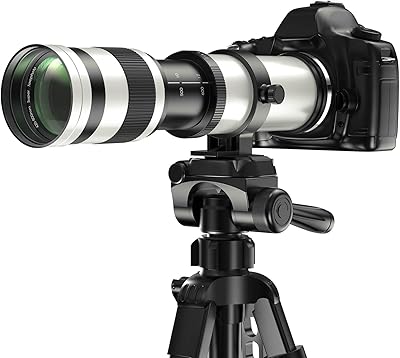
Canon EF 100-400mm f/4.5-5.6L Telephoto Zoom Lens
Overview
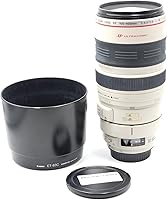
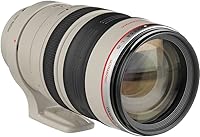
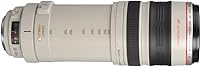
The Canon EF 100-400mm f/4.5-5.6L Telephoto Zoom Lens has been a fixture in professional camera bags for decades, and for good reason. Built for Canon EF-mount SLR cameras, this telephoto zoom earned its reputation among wildlife, sports, and birding photographers who need serious reach without sacrificing optical quality. As part of Canon's prestigious L-series lineup, it carries the build standards and glass quality that working photographers trust. One thing worth knowing upfront: it uses a push-pull zoom mechanism rather than the rotating barrel found on newer designs. That's a deliberate choice that divides opinion, but the lens itself remains highly capable and widely used in the field today.
Features & Benefits
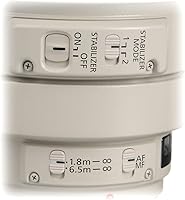
The 100-400L covers a genuinely useful focal range, from moderate telephoto at 100mm all the way out to 400mm for distant subjects. The variable aperture of f/4.5 to f/5.6 is a real-world trade-off — you lose a little speed as you zoom in, but for outdoor shooting in decent light that rarely becomes a problem. The two Image Stabilizer modes are practically valuable: one steadies the frame for static shots, the other compensates intelligently during panning. Fluorite and Super UD glass keep color fringing in check even at the long end. Ring-type USM autofocus is fast and quiet, which matters when a bird lands or a sprinter rounds a bend. Paired with Canon's 1.4x or 2x extenders, effective reach stretches to 560mm or 800mm — solid flexibility without buying a second lens.
Best For
This Canon L-series zoom is purpose-built for photographers who spend real time in the field. Wildlife and nature shooters will appreciate the reach and stabilization combination — you can track a bird in flight or a deer at the tree line without losing the shot to camera shake. Sports photographers covering outdoor events will find the autofocus responsive enough to lock onto fast-moving athletes. It is also a smart pick for anyone who wants a versatile L-series telephoto without locking into a fixed prime focal length. And if you shoot with extenders regularly, the extender compatibility with Canon's 1.4x II and 2x II options makes this lens stretch further than its 400mm ceiling suggests.
User Feedback
Owners of this telephoto zoom are largely positive, and the praise is consistent: autofocus performance in tracking birds, athletes, and moving vehicles comes up again and again as a standout strength. The image stabilization also gets real appreciation from photographers shooting handheld in challenging conditions. Where opinions split is on the push-pull zoom — dedicated users love how quickly it lets them reframe, but some worry about zoom creep when pointing the lens downward. A portion of reviewers bring up the lens's age relative to the Mark II successor, noting that newer optics and a revised zoom design have moved the bar. The variable aperture draws occasional criticism in low light, but build quality and weather sealing are almost universally praised.
Pros
- Fast, near-silent USM autofocus reliably tracks birds in flight, athletes, and moving vehicles in the field.
- Dual image stabilization modes handle both stationary and panning shots — genuinely useful, not just a checkbox feature.
- Fluorite and Super UD glass keep chromatic aberration and color fringing well controlled even at 400mm.
- L-series weather sealing holds up in rain, dust, and cold — working professionals trust it in demanding outdoor conditions.
- Extender compatibility with Canon 1.4x II and 2x II effectively turns this telephoto zoom into a 560mm or 800mm option.
- The 100–400mm zoom range is broad enough to cover most wildlife and sports scenarios without swapping glass mid-shoot.
- Minimum focus distance of 5.9 feet allows surprisingly tight framing for bird portraits and insect detail work.
- Build quality feels genuinely solid and durable, not like a lens that will need babying in the field.
- Works across the full range of Canon EF-mount SLR bodies, including crop-sensor cameras where effective reach extends even further.
Cons
- Push-pull zoom mechanism causes creep when the lens is pointed downward — requires the zoom lock when not shooting.
- Aperture narrows to f/5.6 at 400mm, which pushes ISO up uncomfortably in fading or mixed light.
- Internally, the push-pull design can draw in fine dust over years of use in dry or sandy environments.
- At just over three pounds, extended handheld sessions at 400mm become genuinely fatiguing.
- AF tracking on erratic or small subjects in cluttered backgrounds can hunt, especially in lower contrast conditions.
- Compared to the Mark II successor, sharpness at the long end and overall IS refinement show the lens's age.
- The 2x extender pairing degrades autofocus reliability enough that it is not dependable for fast-action tracking.
- RF-mount mirrorless users relying on an adapter will not get the same AF performance as with native RF telephoto options.
- Full retail pricing is difficult to justify when the Mark II version offers meaningful real-world improvements for a modest premium.
Ratings
The Canon EF 100-400mm f/4.5-5.6L Telephoto Zoom Lens has accumulated a substantial body of verified owner feedback across global markets, and our AI has analyzed that data — actively filtering out incentivized, spam, and bot-generated reviews — to produce the scores you see below. The ratings reflect where this telephoto zoom genuinely excels and where real-world shooters have run into frustration. Both sides are represented honestly, because that is the only way these scores are useful to you.
Autofocus Speed & Accuracy
Image Stabilization
Optical Sharpness
Build Quality & Weather Sealing
Push-Pull Zoom Mechanism
Value for Money
Variable Aperture Performance
Extender Compatibility
Handling & Ergonomics
Focusing Speed in Low Light
Compatibility with Canon Bodies
Minimum Focus Distance Versatility
Dust & Environmental Resistance
AF Tracking for Moving Subjects
Suitable for:
The Canon EF 100-400mm f/4.5-5.6L Telephoto Zoom Lens is built for photographers who spend serious time shooting subjects that do not hold still and do not come close. Wildlife and nature photographers will find the combination of reach, image stabilization, and fast USM autofocus directly matched to what the job demands — whether that is tracking a raptor in a thermal, following a cheetah across open ground, or waiting out a wading bird at a marsh. Bird photographers in particular get a lot from this lens: the dual IS modes handle the difference between a perched subject and one in full flight, and the compatibility with Canon's 1.4x II extender stretches the range to 560mm without a dramatic loss of AF performance. Sports and action shooters covering outdoor events — cycling, football, motorsport — will also find it a reliable workhorse. Canon EF-mount shooters who want a versatile telephoto zoom rather than locking budget into a single prime focal length will appreciate the range flexibility, especially knowing extenders can push it further when the situation calls for it.
Not suitable for:
Photographers who are primarily or exclusively shooting in low-light environments — indoor sports arenas, nocturnal wildlife, dimly lit events — will consistently run into the variable aperture ceiling that the Canon EF 100-400mm f/4.5-5.6L Telephoto Zoom Lens imposes, particularly at the long end where f/5.6 forces a trade-off between ISO, shutter speed, and subject sharpness. Anyone who has already transitioned to Canon's RF mirrorless system should weigh this lens carefully: it works via adapter, but native RF glass will outperform it in AF responsiveness on those bodies, and buying a legacy EF lens as a long-term investment in a mirrorless kit is a harder case to make. Buyers who are new to push-pull zoom designs and expecting the standard rotating barrel experience may find the adjustment period frustrating, and those who frequently shoot in sandy or dusty conditions should be aware that the push-pull bellows mechanism can accumulate fine particles internally over time. If the price gap between this original version and the Mark II has narrowed at the time of purchase, the newer design's improvements in optical performance, zoom mechanism, and IS refinement make it the smarter buy for most people — this older version is compelling primarily when the value equation is clearly in its favor.
Specifications
- Focal Length: This telephoto zoom covers a 100–400mm focal length range, suitable for distant wildlife, sports, and birding subjects.
- Maximum Aperture: The variable maximum aperture runs from f/4.5 at 100mm to f/5.6 at the 400mm end of the zoom range.
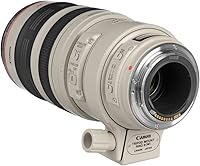
- Lens Mount: Designed exclusively for the Canon EF mount, making it compatible with Canon's full range of EF-mount SLR and DSLR camera bodies.
- Zoom Mechanism: Uses a push-pull zoom barrel design rather than the rotating collar found on most modern telephoto zooms.
- Image Stabilizer: Two-mode optical image stabilization is built in: Mode 1 for static subjects and Mode 2 optimized for panning shots of moving action.
- Autofocus System: Ring-type Ultrasonic Motor (USM) drives the autofocus system, delivering fast and near-silent focusing performance.
- Optical Elements: Incorporates one Fluorite element and one Super UD glass element to suppress chromatic aberration and secondary spectrum across the zoom range.
- Min. Focus Distance: The minimum focusing distance is 5.9 feet (1.8 meters), enabling close-range portraits and tightly framed detail shots.
- Extender Support: Fully compatible with Canon Extender EF 1.4x II and EF 2x II, extending maximum reach to 560mm and 800mm respectively.
- Filter Thread: Accepts 77mm screw-in filters, a standard size shared with many other Canon L-series lenses.
- Dimensions: The lens measures 3.62 inches in diameter and 7.44 inches in length when retracted at the 100mm position.
- Weight: The lens weighs 3.04 pounds (approximately 1,380 grams), which is substantial for handheld use over extended periods.
- Weather Sealing: As an L-series lens, it includes dust and moisture resistance appropriate for professional outdoor shooting conditions.
- Zoom Lock Switch: A zoom lock switch holds the barrel at 100mm to prevent zoom creep during transport or when carrying the lens pointed downward.
- Tripod Collar: A rotating tripod collar with a detachable foot is included, allowing the lens-camera combination to balance correctly on a tripod or monopod.
- Lens Construction: The optical formula consists of 17 elements arranged in 14 groups.
- Aperture Blades: The aperture diaphragm uses 8 blades, contributing to reasonably smooth out-of-focus rendering in background areas.
- Manufacturer: Manufactured by Canon Cameras US, with a stated one-year limited warranty covering defects in materials and workmanship.
- Model Number: The official Canon model number for this lens is 2577A002, and its Amazon ASIN is B00007GQLS.
- Lens Hood: The lens ships with a dedicated bayonet-mount lens hood designed to reduce flare and protect the front element in the field.
Related Reviews
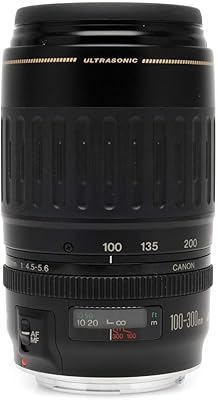
Canon EF 100-300mm f/4.5-5.6 Telephoto Zoom Lens
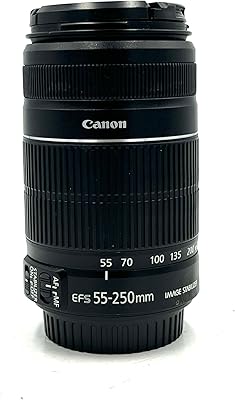
Canon EF-S 55-250mm IS II Telephoto Lens
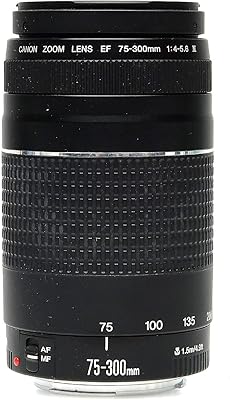
Canon EF 75-300mm III Telephoto Zoom Lens
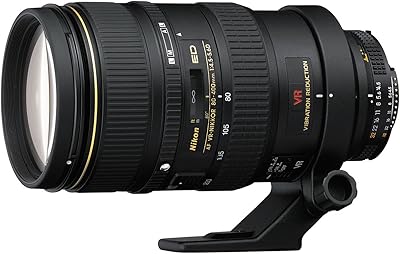
Nikon 80-400mm f/4.5-5.6D VR Telephoto Lens
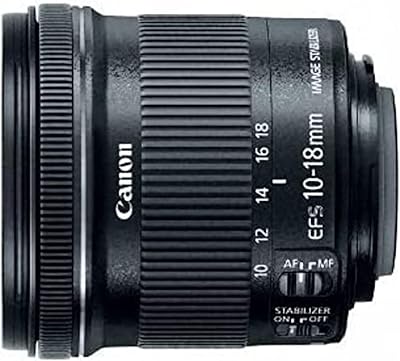
Canon EF-S 10-18mm STM Wide-Angle Lens
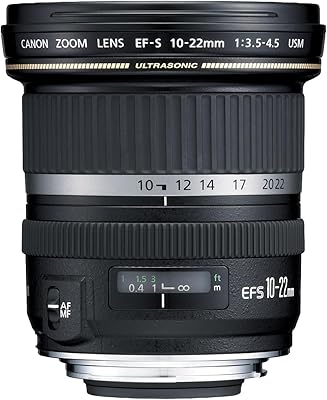
Canon EF-S 10-22mm f/3.5-4.5 USM Wide-Angle Lens
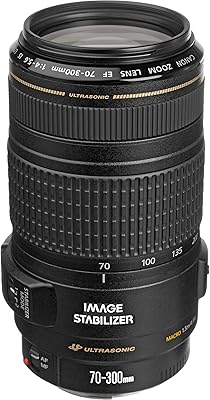
Canon EF 70-300mm IS USM Telephoto Lens
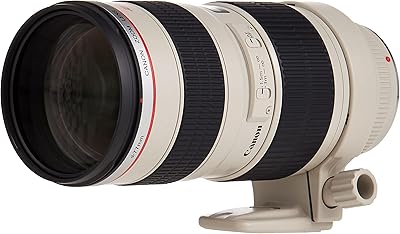
Canon EF 70-200mm f/2.8L USM Telephoto Zoom Lens
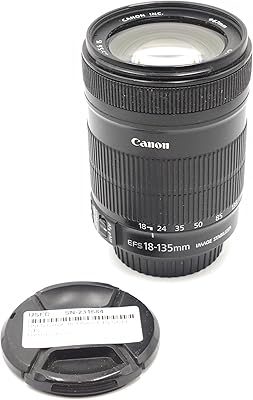
Canon EF-S 18-135mm f/3.5-5.6 IS Zoom Lens