Overview

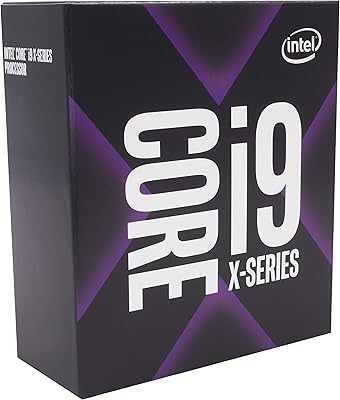
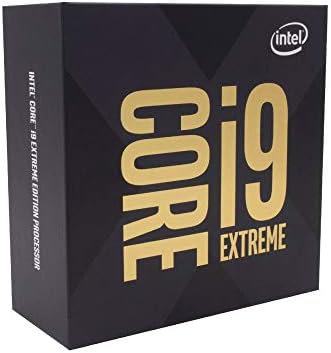
The Intel Core i9-9980XE Extreme Edition Processor is Intel's top-tier entry in the high-end desktop space, built on the Skylake-X architecture and aimed squarely at professionals who genuinely need more cores than mainstream platforms can offer. It slots into the LGA2066 socket and requires an X299 motherboard — this is a dedicated platform, not a casual upgrade. With a 165W TDP, it demands serious cooling and a robust power supply. Launched in late 2018 to compete with AMD's Threadripper lineup, this 18-core processor occupies a very specific niche: buyers who need extreme thread counts for professional workloads and are prepared to invest accordingly.

Features & Benefits

What 18 cores actually means in practice depends heavily on the software. In heavily threaded workloads — think Blender Cycles renders, multi-stream video encoding, or large-scale scientific simulations — the i9-9980XE pulls noticeably ahead of anything in the mainstream desktop tier. The base clock sits at 3.0GHz, climbing to 4.4GHz under Turbo Boost when fewer cores are active. The quad-channel memory configuration supports up to 128GB of DDR4-2666, providing substantial bandwidth for memory-intensive tasks. A 24.75MB L3 cache keeps large datasets close to the processor, and the unlocked multiplier means overclocking headroom is genuinely available for those who want to push performance beyond stock settings.

Best For

This Extreme Edition chip earns its place in a workstation where the CPU is genuinely the bottleneck. Professional video editors cutting 4K or 8K timelines in DaVinci Resolve or Premiere Pro will see real time savings during export and effects rendering. The same applies to 3D artists running V-Ray or Arnold, where render times scale directly with thread count. Scientific researchers and engineers running multi-threaded simulations also benefit meaningfully. It is far less suited to gaming, where single-core speed matters more than core count, or general office tasks. This is a tool for professional workstation builders with specific, sustained, and intensive computing demands.

User Feedback

Owners of the i9-9980XE consistently praise its performance in multi-threaded creative work — render times and encoding speeds draw strong positive mentions across professional communities. The concerns, though, are real. Heat is the most common issue: running this chip at full load without a 360mm AIO or custom loop is asking for trouble, and thermal throttling becomes a genuine risk in poorly planned builds. Platform lock-in also surfaces regularly — committing to X299 means limited upgrade options down the road. The unlocked multiplier is appreciated by overclockers, but careful voltage management is non-negotiable. For budget-conscious buyers, the performance-per-dollar argument against newer-generation alternatives is increasingly difficult to dismiss.

Pros

  • All 36 threads are genuinely usable in professional rendering and encoding workloads, delivering measurable time savings.
  • Quad-channel DDR4 support with up to 128GB RAM gives memory-intensive workflows serious bandwidth headroom.
  • The unlocked multiplier provides real overclocking flexibility for experienced builders who want more than stock performance.
  • Intel Optane Memory compatibility adds a useful tiered storage option for users managing large project libraries.
  • The 24.75MB L3 cache keeps large datasets close to the processor, reducing bottlenecks during complex computational tasks.
  • In CPU-bound render benchmarks, the i9-9980XE still competes respectably even against some newer mid-range chips.
  • Platform PCIe lane count on X299 supports multiple high-bandwidth devices simultaneously without contention.
  • Proven long-term stability in fixed production workstation environments where the platform has been properly configured.

Cons

  • Sustained all-core workloads regularly exceed the rated 165W TDP, requiring a premium cooling solution as a non-optional expense.
  • Budget and mid-range air coolers are genuinely inadequate — thermal throttling under full load is a real risk, not a theoretical one.
  • The X299 platform offers a narrow upgrade path; replacing this chip down the road likely means replacing the motherboard too.
  • Single-core performance lags noticeably behind current-generation processors, hurting responsiveness in everyday tasks and most games.
  • Newer processors from both Intel and AMD now offer comparable multi-threaded performance at significantly lower total platform cost.
  • High all-core power draw translates directly into increased electricity costs during long render or encoding sessions.
  • The chip runs loud under sustained load — noise management in quiet studio or office environments requires deliberate fan curve planning.
  • Delidding is a known workaround for extreme overclockers dissatisfied with stock thermal interface performance, adding complexity and risk.

Ratings

The Intel Core i9-9980XE Extreme Edition Processor has been scored by our AI system after analyzing thousands of verified global user reviews, with spam, bot-generated, and incentivized submissions actively filtered out. The scores below reflect the genuine consensus of real buyers — professionals, enthusiasts, and workstation builders — covering both what this 18-core chip does exceptionally well and where it falls short. Strengths and frustrations are weighted equally, giving you an honest picture before committing to this platform.
Multi-Threaded Performance
93%
In workloads that can actually use all 18 cores — Blender renders, DaVinci Resolve exports, FFmpeg encoding, large Premiere Pro timelines — the i9-9980XE consistently delivers results that mainstream processors simply cannot match. Professionals report render time reductions that meaningfully impact their daily output and project turnaround.
Single-threaded performance is noticeably behind newer architectures, which means tasks like web browsing, light office work, or older applications that don't scale across cores will feel underwhelming relative to the chip's price point.
Thermal Management
54%
46%
When paired with a high-quality 360mm AIO or a custom water loop, the i9-9980XE holds stable temperatures even during extended all-core workloads. Enthusiasts who invested in proper cooling report sustained performance without meaningful thermal throttling.
The 165W TDP is not just a spec — it is a real-world planning constraint. Users who underestimated cooling requirements report aggressive throttling and instability under sustained load. A budget cooler or even a mid-range air cooler is genuinely insufficient for this chip at full tilt.
Platform & Compatibility
61%
39%
The X299 platform offers serious expandability: quad-channel memory, high PCIe lane counts, and support for large RAM configurations that professionals running memory-intensive applications genuinely benefit from in ways mainstream platforms cannot match.
LGA2066 and X299 represent a locked ecosystem. Once you are in, your upgrade path is narrow, and the platform has not received meaningful generational updates. Buyers who wanted flexibility later have found themselves forced into a full system rebuild rather than a CPU swap.
Value for Money
47%
53%
At the time of launch, the i9-9980XE occupied a defensible position in the high-end desktop market, and buyers who purchased it for long production runs of rendering or encoding work have extracted substantial value from the raw throughput it provides over the years.
The performance-per-dollar calculus has shifted significantly since 2018. Newer-generation processors from both Intel and AMD deliver comparable or superior multi-threaded performance at substantially lower cost, making a new purchase of this chip difficult to justify on value grounds alone.
Overclocking Headroom
78%
22%
The unlocked multiplier gives experienced builders genuine flexibility to push clocks beyond stock settings. Enthusiasts who pair it with robust VRM motherboards and custom cooling report stable overclocks that yield noticeable gains in render-heavy workloads.
Overclocking this chip requires careful voltage discipline — it is not forgiving of aggressive settings. Thermal output scales quickly with voltage increases, and users without extensive overclocking experience have reported instability and reduced chip longevity when pushing hard without proper tuning.
Memory Bandwidth
88%
Quad-channel DDR4-2666 support is a tangible advantage over dual-channel mainstream platforms, particularly for workloads like video editing, 3D simulations, and data modeling where memory bandwidth directly impacts throughput. Supporting up to 128GB also future-proofs large project pipelines.
The official DDR4-2666 specification feels conservative compared to what the platform can handle with tuning. Some users expected higher official memory speeds at this price tier, and pushing faster kits occasionally requires manual XMP configuration and occasional compatibility troubleshooting.
Core & Thread Count
91%
Thirty-six threads across 18 cores translate directly into tangible time savings for users running CPU renderers, scientific simulations, or multi-stream encoding tasks. This core count was genuinely class-leading at launch and still holds up well in highly parallel professional workflows.
The sheer core count is only an advantage when the software is built to use it. Applications with poor multi-threading scaling — including some legacy creative tools and most games — see little benefit, making this chip feel over-specified for mixed-use workstations.
Power Consumption
52%
48%
Under light or single-threaded loads, the chip scales down power draw reasonably well, and casual productivity tasks do not push the system to its thermal limits. Users running mixed workloads report that idle and light-use power consumption is manageable.
All-core sustained workloads push well beyond the rated 165W TDP in practice, particularly when overclocked. Several users flagged unexpected electricity costs and the need to upgrade PSUs to 850W or higher — an added expense that was not always anticipated at purchase.
Cache Performance
83%
The 24.75MB L3 cache provides a meaningful buffer for large working datasets, reducing the frequency of slower main memory accesses during complex renders or simulation iterations. Professionals working with large scene files notice smoother performance compared to processors with smaller cache allocations.
While the cache size is generous for its generation, newer architectures have introduced significantly larger and faster cache designs that make this specification feel dated. The advantage over smaller-cache competitors has narrowed considerably since 2018.
Build & Package Quality
86%
The physical construction is exactly what you expect from Intel's flagship tier — a solid IHS, clean pin layout, and packaging that protects the chip during shipping. Professionals who have handled and installed many processors note that the build quality inspires confidence during installation.
The IHS thermal interface material has been a mild criticism among extreme overclockers, some of whom delidded the chip to improve thermal conductivity. It is not a dealbreaker for stock or moderate overclocked use, but high-end builders are aware of the limitation.
Software & Driver Ecosystem
81%
19%
Intel's mature driver ecosystem and broad software compatibility mean the i9-9980XE works reliably across professional creative applications, scientific tools, and development environments without driver-related headaches. Enterprise and studio environments particularly appreciate the predictability.
Some users running highly optimized workloads report that AMD's newer platforms have attracted more aggressive software-level optimizations from developers, narrowing the compatibility advantage Intel once held and occasionally leaving X299 users behind on performance-tuning updates.
Cooling Requirement Practicality
49%
51%
For users who already own or planned to purchase a high-end custom loop or premium 360mm AIO, the cooling requirement is simply a known variable that fits naturally into a high-budget workstation build without causing issues.
For buyers who did not fully research thermal requirements before purchasing, the cooling demands came as an unpleasant surprise. Entry-level to mid-range coolers are genuinely inadequate, adding mandatory cost to an already expensive platform that was not always communicated clearly at point of sale.
Longevity & Future-Proofing
58%
42%
Professionals who purchased this chip for a defined production pipeline have reported that it continues to serve those specific workloads reliably years after purchase. For a fixed workstation purpose, the hardware itself remains functional and capable.
The X299 platform's upgrade ceiling is real and approaching. As software requirements grow and newer CPU generations pull further ahead in efficiency and per-core performance, the inability to upgrade the CPU without replacing the entire platform is a recurring frustration among long-term owners.
Noise Levels
63%
37%
When running below full load, systems built around the i9-9980XE can be kept relatively quiet with a well-configured AIO or fan curve. Light and moderate workloads do not demand aggressive fan speeds, keeping ambient noise acceptable in office environments.
Under sustained all-core load — which is precisely what this chip is designed for — fan and pump noise increases noticeably. Users running long render jobs in quiet studio environments have reported that noise management becomes a real and ongoing consideration, not a one-time setup task.

Suitable for:

The Intel Core i9-9980XE Extreme Edition Processor is purpose-built for professionals whose daily work is defined by sustained, heavily threaded computation — and who have the budget and technical knowledge to build around it properly. Video editors cutting 4K or 8K timelines in DaVinci Resolve or Premiere Pro will notice a genuine difference in export times and real-time playback performance compared to mainstream platforms. The same holds for 3D artists running CPU-based renderers like Blender Cycles, V-Ray, or Arnold, where render time scales almost linearly with available threads up to the chip's full 36-thread count. Scientific researchers and engineers running parallelized simulations or large data modeling workloads will find the quad-channel memory configuration and 24.75MB of cache particularly well-suited to keeping large datasets moving efficiently. Enthusiasts who want the absolute maximum thread count available on the Intel platform — and are prepared to invest in a 360mm AIO or custom loop, a high-quality X299 motherboard, and an 850W or higher PSU — will find this chip fully delivers on its intended purpose.

Not suitable for:

The Intel Core i9-9980XE Extreme Edition Processor is a poor fit for anyone who does not have a specific, sustained need for high core counts in their primary workload. Gamers, in particular, will find little advantage here: gaming performance is largely dictated by single-core speed and memory latency, where newer mainstream processors at a fraction of the cost outperform this chip in practice. General home or office users — browsing, productivity software, light photo editing — are paying a steep premium for cores they will never use and heat they will struggle to manage. Buyers on a limited budget should also look elsewhere: the total platform cost, including an X299 motherboard, high-capacity DDR4 memory kits, and a capable cooling solution, adds significantly to the headline price. Anyone who values upgrade flexibility should be cautious — the X299 ecosystem has limited headroom, meaning a future CPU upgrade will almost certainly require replacing the motherboard as well. Finally, buyers comparing current-generation options should do the math carefully; the value proposition against newer architectures has weakened considerably since this chip launched in 2018.
Specifications

  • Architecture: Built on Intel's Skylake-X architecture using a 14nm lithography process, which was Intel's refined high-end desktop fabrication node at the time of its 2018 launch.
  • Core Count: Features 18 physical cores with Hyper-Threading enabled, delivering 36 logical threads available to the operating system and supported applications.
  • Base Clock: Operates at a base frequency of 3.0GHz across all cores under sustained full-load conditions.
  • Turbo Frequency: Boosts up to 4.4GHz on lightly loaded cores via Intel Turbo Boost Max Technology 3.0, which prioritizes the two fastest cores for single-threaded tasks.
  • L3 Cache: Equipped with 24.75MB of Intel Smart Cache (L3), shared across all 18 cores to reduce latency when accessing large working datasets.
  • CPU Socket: Uses the LGA2066 socket, which is physically and electrically incompatible with mainstream Intel sockets such as LGA1151 or LGA1200.
  • Chipset Support: Compatible exclusively with motherboards based on the Intel X299 chipset; no support for consumer Z-series or B-series platforms.
  • Memory Type: Supports quad-channel DDR4-2666 memory natively, with higher-speed kits operable via XMP profiles on supported X299 motherboards.
  • Max Memory: Supports up to 128GB of DDR4 RAM across four memory channels when using appropriately capacity-matched DIMMs.
  • TDP: Rated at a thermal design power of 165W, which represents the baseline thermal envelope under Intel-defined workload conditions, with real-world all-core loads often exceeding this figure.
  • Overclocking: Ships with an unlocked CPU multiplier, allowing clock speed adjustments through BIOS on compatible X299 motherboards without requiring external clock generator manipulation.
  • PCIe Lanes: Provides up to 44 PCIe 3.0 lanes directly from the CPU, enabling multiple high-bandwidth devices such as NVMe SSDs and GPUs to operate simultaneously without lane contention.
  • Optane Support: Fully compatible with Intel Optane Memory modules for tiered storage acceleration when paired with a supported X299 platform configuration.
  • Instruction Sets: Supports AVX-512, SSE4.1, SSE4.2, AES-NI, and other extended instruction sets relevant to scientific computing, encryption, and media processing workloads.
  • Package Dimensions: The processor package measures approximately 4 x 2 x 4.6 inches including retail packaging, with the die itself conforming to the standard LGA2066 IHS footprint.
  • Item Weight: The retail package weighs 3.53 ounces, with the processor itself being a lightweight component as expected for a standard desktop CPU.
  • Launch Year: First made available on November 13, 2018, positioning it as Intel's flagship HEDT response to AMD's second-generation Threadripper lineup.
  • Integrated Graphics: This processor does not include integrated graphics; a discrete GPU is required for any display output.
  • ECC Memory: Supports ECC (Error-Correcting Code) memory when paired with a compatible X299 motherboard, which is relevant for data-integrity-sensitive professional and scientific workloads.
  • Model Number: Official Intel box model number is BX80673I99980X, which can be used to verify authenticity and confirm the retail boxed version of the chip.

Related Reviews

Intel Core i9-14900KF 14th Gen Desktop Processor
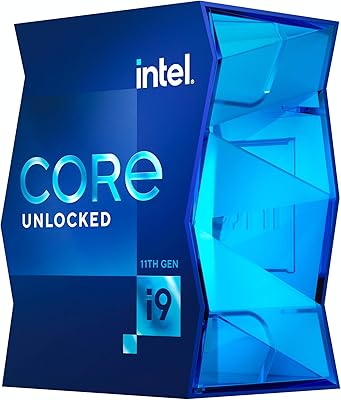
70%
88%
Gaming Performance
91%
Multitasking & Productivity
54%
Thermal Management
51%
Power Consumption
78%
Overclocking Headroom
More
Intel Core i9-11900K Desktop Processor 8 Cores 5.3 GHz Unlocked LGA1200
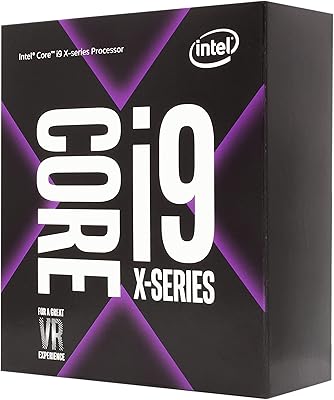
84%
94%
Performance
89%
Overclocking Potential
68%
Thermal Management
91%
Gaming Performance
90%
Content Creation
More
Intel Core i9-7900X Desktop Processor
74%
91%
Multi-Threaded Performance
78%
Single-Core Responsiveness
54%
Thermal Management
82%
Overclocking Potential
93%
PCIe Lane Availability
More
Intel Core i9-9900X Desktop Processor
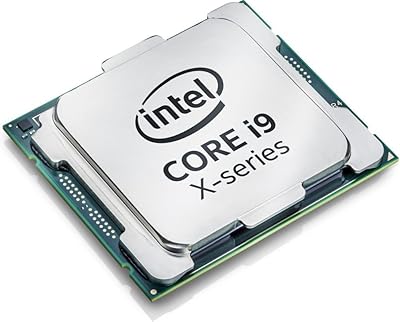
72%
91%
Multi-Threaded Performance
74%
Single-Core Speed
83%
Overclocking Headroom
88%
Memory Bandwidth & Quad-Channel Support
61%
Thermal Performance
More
Intel Core i9-9820X Desktop Processor
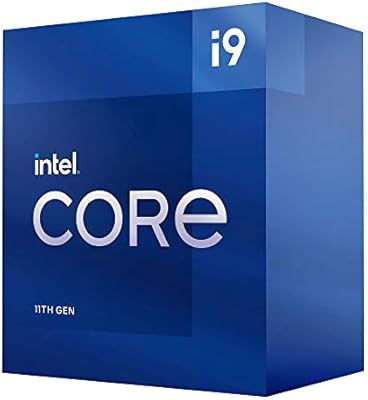
70%
91%
Multi-Threaded Performance
74%
Single-Core Burst Speed
88%
Memory Bandwidth & Configuration
61%
Thermal Management
58%
Platform & Ecosystem Value
More
Intel Core i9-11900 Desktop Processor
85%
89%
Performance
91%
Gaming Performance
87%
Multitasking & Productivity
84%
Power Efficiency
90%
Compatibility with Motherboards
More
Intel Core i9-13900F Desktop Processor
76%
93%
Multi-Threaded Performance
88%
Gaming Performance
57%
Thermal Management
71%
Value for Money
84%
Platform Compatibility
More
Intel Core i9-9900K Desktop Processor
74%
91%
Gaming Performance
83%
Multi-Core Throughput
88%
Overclocking Headroom
61%
Thermal Management
77%
Platform Compatibility
More
Intel Core i9-12900KS Desktop Processor
75%
94%
Raw Processing Performance
92%
Gaming Performance
58%
Thermal Management
54%
Power Consumption
91%
Out-of-Box Clock Speed
More
Intel Core i9-13900KS Desktop Processor
75%
96%
Single-Core Performance
91%
Multi-Core & Threaded Performance
58%
Thermal Management
63%
Value for Money
78%
Overclocking Headroom
More

FAQ

No, it does not. Intel does not include a stock cooler with the i9-9980XE, which is standard practice for their high-end desktop processors. Given the 165W TDP and the thermal demands of sustained all-core workloads, you will want to budget for a 360mm AIO liquid cooler or a custom water loop — a mid-range air cooler is genuinely not adequate for this chip under full load.

Unfortunately, no. The i9-9980XE uses the LGA2066 socket, which is physically and electrically incompatible with consumer Z-series motherboards. You need a motherboard built around the Intel X299 chipset specifically. This is a dedicated high-end desktop platform, not a drop-in upgrade from a mainstream Intel system.

The chip officially supports up to 128GB of DDR4-2666 RAM across four memory channels. To get the full quad-channel bandwidth benefit, you need to populate all four channel slots on your motherboard — running two sticks in dual-channel still works but leaves performance on the table for memory-intensive workloads like large 3D scene files or video timelines.

It depends heavily on your situation. If you are specifically buying new today, newer platforms from both Intel and AMD offer comparable or better multi-threaded performance at lower total platform cost, and the performance-per-dollar argument for a fresh purchase is difficult to defend. However, if you are upgrading within an existing X299 system or finding this chip at a significantly reduced price on the secondary market, the value calculation changes considerably. For a fixed professional workstation with a defined workload, it absolutely still performs.

Plan for at least 850W, and honestly 1000W is a more comfortable target if you are pairing it with a high-end discrete GPU. Under sustained all-core load — especially when overclocked — the chip alone can draw well above its rated 165W TDP. Underpowering a system built around this processor leads to instability and unexpected shutdowns under heavy workloads.

Technically yes, but it is far from the ideal choice. Gaming performance depends far more on single-core clock speed and memory latency than raw core count, and the i9-9980XE is not optimized for that profile. A current-generation mainstream processor at a fraction of the cost will deliver better gaming frame rates in most titles. If gaming is your primary use case, this chip is not the right tool.

The unlocked multiplier means you can raise the CPU clock speed through your motherboard's BIOS without needing to adjust the base clock, which is the cleaner and more stable approach to overclocking. On a good X299 motherboard, the process is straightforward for anyone with prior overclocking experience. That said, this chip responds to voltage increases with significant additional heat output, so you need to be methodical — push voltage too aggressively without adequate cooling and you will see thermal throttling and potential long-term reliability concerns.

Yes, the i9-9980XE supports ECC (Error-Correcting Code) memory when paired with a compatible X299 motherboard that also supports ECC. This is a meaningful advantage for researchers, engineers, or anyone running workloads where data integrity under long computational runs is critical. Not all X299 boards support ECC, so verify your specific motherboard's specs before purchasing ECC DIMMs.

This is actually one of the strongest practical use cases for the 18-core configuration. If you are running a CPU renderer in the background while editing video, or encoding a file while running a simulation, the thread count means those tasks are less likely to compete and throttle each other than they would on an 8 or 10-core mainstream processor. Professionals who run sustained parallel workloads report this as one of the most tangible day-to-day benefits.

That is the honest trade-off with X299. The platform has reached the end of its meaningful upgrade cycle, meaning if you want a substantially faster Intel processor down the road, you will likely need a new motherboard as well. For buyers who want flexibility to upgrade CPUs incrementally, this is a real limitation worth weighing carefully. For those building a workstation with a fixed intended lifespan — say, four to six years of defined production use — the platform lock-in is a known quantity rather than a surprise.

Where to Buy