Overview

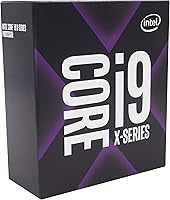
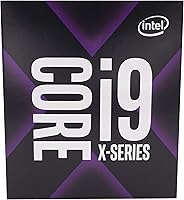
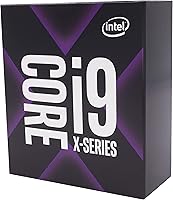
The Intel Core i9-9820X Desktop Processor belongs to Intel's X-series lineup, a family purpose-built for users who find mainstream consumer platforms too limiting. The HEDT segment exists because some workloads simply demand more PCIe lanes, more memory channels, and more cores than a standard desktop chip can provide. This X-series chip sits on the LGA2066 socket and requires an X299-based motherboard, meaning you're committing to a platform, not just swapping a chip. Launched in late 2018, the i9-9820X is no spring chicken, but for the right workloads it still holds its own. Just don't mistake it for a gaming CPU — that's not what it was designed for.
Features & Benefits

The i9-9820X runs 10 cores and 20 threads, which translates to real parallel processing muscle for applications that actually use them. At its base the chip ticks at 3.3GHz, but Turbo Boost pushes individual cores up to 4.1GHz when concentrated single-core power is needed. Where this HEDT processor genuinely separates itself is memory bandwidth: quad-channel DDR4 support means your RAM isn't the bottleneck on a heavy video timeline or a complex 3D render. The 16.5MB L3 cache keeps frequently accessed data close to the cores, cutting latency during data-heavy tasks. An unlocked multiplier gives headroom for overclocking — though a capable cooler is a firm requirement at 165W TDP.

Best For

This HEDT processor is purpose-built for professional and prosumer workloads — video editors working in DaVinci Resolve or Premiere Pro with complex effect stacks, 3D artists grinding through long Blender renders, developers compiling large codebases. Running virtual machines simultaneously or crunching large datasets is where the thread count and memory bandwidth earn their keep. Builders already invested in the X299 platform will appreciate the broad PCIe lane count and high memory capacity ceiling. That said, if gaming is your primary goal, a modern mainstream platform delivers better value. The i9-9820X is a specialist chip, and buyers who approach it that way tend to walk away satisfied.

User Feedback

With 131 ratings and a 4.4-star average, the i9-9820X earns broadly positive marks — though the picture isn't uniform. Professionals running sustained multi-threaded workloads consistently highlight its stability during long sessions; it doesn't throttle erratically or drop performance unexpectedly mid-job. The criticism, when it comes, tends to cluster around two points: the considerable thermal output that demands a serious cooling solution, and the total platform cost once you factor in an X299 board. A few buyers also flagged compatibility quirks with specific motherboards, so checking your board's CPU support list beforehand is genuinely worth the time. Enthusiasts who bought it expecting a top-tier gaming chip are the least satisfied group; professional users generally are not.

Pros

  • Ten cores and twenty threads handle sustained professional workloads without visible performance degradation over long sessions.
  • Quad-channel DDR4 support removes memory bandwidth as a bottleneck in video editing and 3D rendering pipelines.
  • Exceptional platform stability reported by professionals running the i9-9820X in production workstations for extended periods.
  • Unlocked multiplier gives experienced builders meaningful overclocking headroom when paired with adequate cooling.
  • Generous PCIe lane allocation supports multi-drive NVMe setups, capture cards, and high-end GPUs without compromise.
  • Turbo Boost up to 4.1GHz provides sufficient single-core burst speed for mixed workloads alongside heavy background tasks.
  • Drop-in upgrade option for existing X299 platform owners extending workstation life without a full rebuild.
  • Intel Optane Memory support adds a useful storage acceleration layer for compatible workflow configurations.
  • Strong long-term reliability track record among professional users across a wide range of demanding applications.

Cons

  • Total platform cost is steep — a quality X299 board, quad-channel RAM kit, and capable cooler add significantly to the chip price.
  • At 165W TDP, thermal output under sustained load demands a high-end cooling solution; budget coolers fall short.
  • Single-core performance is noticeably behind current mainstream processors, which matters for lightly-threaded tasks and games.
  • The X299 platform is end-of-life, offering no forward upgrade path beyond what already exists in the LGA2066 ecosystem.
  • Compatibility issues with certain X299 motherboard revisions have surfaced in reviews, requiring BIOS verification before purchase.
  • Power consumption under heavy workloads is high relative to newer architectures delivering comparable multi-threaded throughput.
  • Buyers building fresh today face newer-generation alternatives that offer better multi-threaded performance per dollar spent.
  • RAM must be installed in matched quad-channel kits to realize full memory bandwidth — a setup cost that often surprises first-time HEDT builders.

Ratings

Our AI-generated scores for the Intel Core i9-9820X Desktop Processor are derived from analyzing verified global buyer reviews, with spam, bot-submitted, and incentivized feedback actively filtered out before scoring. The ratings below reflect the honest consensus of real-world users — professionals, content creators, and platform enthusiasts — covering both where this X-series chip excels and where it falls short.
Multi-Threaded Performance
91%
Users running Blender renders, large Premiere Pro timelines, and parallel compilation jobs consistently report that the 10-core, 20-thread configuration handles sustained loads without flinching. It chews through tasks that would visibly stall a mainstream 6-core chip, and professionals working long sessions appreciate that performance stays stable over hours.
A handful of users noted that moving to newer architectures exposed a modest generational gap in raw per-thread throughput. For workloads that don't scale well across many cores, the advantage over a well-tuned 8-core mainstream chip narrows considerably.
Single-Core Burst Speed
74%
26%
The 4.1GHz Turbo Boost ceiling is adequate for tasks that spike briefly on one or two cores, and most users found it responsive enough during everyday application launches and light interactive work alongside heavier background processes.
This is not where the i9-9820X shines. Reviewers comparing it directly against newer mainstream processors noted that single-core performance feels dated, which matters for gaming or any lightly-threaded application. Buyers expecting top-tier burst responsiveness came away underwhelmed.
Memory Bandwidth & Configuration
88%
Quad-channel DDR4 support is a genuine differentiator here. Video editors working with high-bitrate footage and 3D artists dealing with large scene files specifically called out how much smoother their workflows felt compared to dual-channel mainstream platforms — the memory pipeline simply does not become the bottleneck.
Getting the full benefit requires populating all four channels, which means buying RAM in matched quad kits — an added upfront cost that frustrated budget-conscious builders. A few users also noted that DDR4-2666 is the rated ceiling, leaving some performance on the table compared to platforms with higher memory speed support.
Thermal Management
61%
39%
Users who paired the i9-9820X with a high-end 280mm or 360mm AIO cooler, or a large air tower, reported stable thermals even during extended rendering sessions. The chip does respond well to proper cooling investment, and overclocking headroom opens up noticeably with adequate thermal headroom.
At 165W TDP, this chip runs hot under sustained load — and that is not a surprise to informed buyers, but it catches some off guard. Multiple reviewers flagged that budget or mid-range coolers simply cannot keep up during long renders, leading to thermal throttling. It is a non-negotiable cost addition to any honest build budget.
Platform & Ecosystem Value
58%
42%
For users already invested in an X299 motherboard, dropping in the i9-9820X is a cost-effective upgrade path that unlocks more PCIe lanes and memory capacity without replacing the entire platform. The expandability ceiling — both in RAM slots and storage connectivity — is genuinely useful in professional workstation builds.
The X299 platform is aging, and that reality colors a lot of reviews. High-quality LGA2066 motherboards carry a significant price premium, and the total system cost climbs fast. Buyers building fresh today face stiff competition from newer platforms that offer comparable or better multi-threaded performance with a healthier long-term ecosystem.
Overclocking Headroom
77%
23%
The unlocked multiplier gives experienced builders room to push the chip beyond stock settings, and reviewers with capable cooling and quality X299 boards reported solid, stable overclocks. For those willing to tune, there is a meaningful performance bump available beyond the default configuration.
Thermal and power demands scale up quickly when overclocking, and the already-high 165W stock TDP leaves less comfortable headroom than some users expected. Results also vary noticeably by chip sample, so not everyone hits the same ceiling — a point that generated some frustration in reviews.
Gaming Performance
53%
47%
The i9-9820X is technically capable of gaming, and users running it in a dual-purpose workstation-gaming rig reported perfectly playable frame rates in most titles when paired with a strong GPU.
This is not a gaming-optimized processor, and the reviews reflect that clearly. Mainstream platforms with faster single-core performance and lower platform costs outperform it in frame-rate-focused gaming benchmarks at a fraction of the total build cost. Buyers who purchased it primarily for gaming expressed the most buyer's regret.
Value for Money
62%
38%
Within a professional workstation context — particularly for users upgrading an existing X299 system — the pricing makes more sense, and those buyers generally felt the cost was justified by the productivity gains on multi-threaded workloads.
Evaluated against the current market, the value proposition is harder to defend. Newer-generation processors from both Intel and AMD deliver comparable or superior multi-threaded performance at lower price points, and several reviewers noted they would make a different choice with the benefit of hindsight.
Installation & Compatibility
71%
29%
Most users reported a straightforward installation experience on compatible X299 boards, with the chip being recognized and running at expected speeds after a BIOS update. Experienced builders found it no more complex than any other high-end desktop CPU swap.
Compatibility with specific X299 motherboard revisions caused headaches for a segment of reviewers, particularly with older board BIOS versions that needed flashing before the chip would post correctly. The advice to verify CPU support lists beforehand came up repeatedly in critical reviews.
Workstation Stability
89%
Long-term stability is one of the most consistently praised aspects across reviews. Professionals running the chip in production workstations reported months and years of reliable, crash-free operation under demanding sustained workloads — a quality that genuinely matters when a machine is earning its keep daily.
A small number of users reported instability tied to RAM configuration rather than the chip itself — quad-channel kits with mismatched XMP profiles occasionally caused issues. These were edge cases, but worth noting for builders planning to push memory configurations beyond JEDEC defaults.
PCIe Lane Count
84%
The generous PCIe lane allocation available through the X299 platform was a real draw for professional users running multiple NVMe drives, capture cards, and high-end GPUs simultaneously. Reviewers building out dense workstation configurations appreciated not having to compromise between storage speed and GPU bandwidth.
For users running a simple single-GPU, single-SSD setup, the extra PCIe lanes deliver no practical benefit and represent cost paid for capability never used. It is a feature that only rewards buyers with specific, complex storage and expansion needs.
Power Efficiency
48%
52%
Under light workloads, the chip idles at reasonable power draw, and users who only stress it occasionally reported that electricity costs were not a meaningful concern in day-to-day use.
Under sustained heavy load, the 165W TDP translates into real power consumption and heat output that reviewers building energy-conscious workstations found hard to overlook. Compared to more recent architectures that deliver similar throughput at lower wattage, the efficiency profile is a clear weak point.
Software & Platform Support
79%
21%
Intel Optane Memory support adds a useful storage acceleration option for users with compatible setups, and the platform's maturity means driver support, BIOS stability, and software compatibility are all well-settled. There are no surprises or rough edges on the software side.
The X299 platform is no longer receiving active development attention, which means users should not expect meaningful new firmware features or optimization updates going forward. For buyers planning a system to last many more years, the lack of a forward roadmap is a real consideration.
Long-Term Upgrade Path
44%
56%
Within the LGA2066 socket ecosystem, there are still higher-tier X-series options, and users who bought this chip with an upgrade-in-mind strategy appreciated having some room to grow without replacing the motherboard.
The X299 platform has reached the end of its product lifecycle, and the upgrade ceiling is low. Buyers thinking about where their system will be in three to five years found this a significant drawback — at some point, the whole platform will need replacing, not just the CPU.

Suitable for:

The Intel Core i9-9820X Desktop Processor was built for a specific kind of buyer, and those buyers tend to love it. If your daily work involves running DaVinci Resolve or Premiere Pro with complex multi-layer timelines, grinding through long Blender renders, or compiling large codebases while keeping a browser, Slack, and a virtual machine running in the background, the 10-core, 20-thread configuration genuinely earns its place. The quad-channel memory setup is a real advantage for anyone whose workflow is bottlenecked by memory bandwidth — think high-resolution video editing or large dataset processing where RAM throughput matters as much as raw clock speed. Professionals already invested in an X299 motherboard will find this a compelling upgrade that extends the life of their platform without the cost and disruption of a full system rebuild. Builders who need the extra PCIe lanes for dense storage arrays, capture cards, and a high-end GPU running simultaneously will also appreciate what the X299 platform enables here.
Not suitable for:

The Intel Core i9-9820X Desktop Processor is a poor fit for anyone building or upgrading primarily for gaming. Mainstream platforms available today deliver faster single-core performance — which is what frame rates actually depend on — at significantly lower total system cost, and that gap is hard to argue away. First-time builders or budget-focused buyers should also look elsewhere: the X299 platform demands a premium motherboard investment, a serious cooling solution capable of handling 165W sustained TDP, and RAM bought in quad-channel kits to realize the chip's full potential, all of which add up fast. Anyone thinking long-term about upgrade paths should factor in that the X299 ecosystem has reached its end of life — there is no next-generation socket compatibility, so eventually the entire platform will need replacing. If you are starting fresh today without an existing LGA2066 board, the value case for building around this chip is genuinely difficult to make against current-generation alternatives.
Specifications

  • Core Count: The processor features 10 physical cores, each capable of handling two threads simultaneously for a total of 20 logical processors.
  • Base Clock: The chip operates at a base frequency of 3.3GHz across all cores under sustained multi-threaded load.
  • Turbo Boost: Intel Turbo Boost Technology 2.0 allows individual cores to reach up to 4.1GHz when thermal and power headroom permits.
  • L3 Cache: A 16.5MB Intel Smart Cache is shared across all cores, reducing memory latency for frequently accessed data in professional workloads.
  • CPU Socket: The processor uses the LGA2066 socket and is exclusively compatible with motherboards built on the Intel X299 chipset.
  • Memory Type: The chip natively supports DDR4 memory at speeds up to DDR4-2666 across four independent memory channels.
  • Memory Channels: Quad-channel memory architecture provides significantly higher memory bandwidth compared to the dual-channel configuration found on mainstream desktop platforms.
  • TDP: The processor carries a thermal design power rating of 165W, requiring a high-capacity cooling solution for stable operation under sustained load.
  • Bus Speed: The chip communicates with the platform via a DMI3 bus running at 8 GT/s for data transfer between the CPU and chipset.
  • Multiplier: The CPU multiplier is fully unlocked, allowing experienced builders to manually overclock the processor beyond its rated stock frequencies.
  • Optane Support: Intel Optane Memory is supported, enabling compatible Optane modules to accelerate storage responsiveness when paired with a supported drive and platform configuration.
  • Product Series: This processor belongs to Intel's X-series HEDT lineup, a family designed specifically for professional, workstation, and high-demand content creation use cases.
  • Launch Date: The processor was officially introduced to market in November 2018 as part of Intel's high-end desktop refresh for the X299 platform.
  • Item Weight: The processor weighs 3.52 ounces, consistent with a standard high-end desktop CPU package including the integrated heat spreader.
  • Model Number: The official Intel box model number for this processor is BX80673I99820X, which identifies the retail boxed version of the chip.
  • Processor Family: The chip belongs to Intel's Core i9 family, positioned at the top of Intel's consumer and prosumer CPU hierarchy at the time of its release.
  • Hyperthreading: Intel Hyperthreading Technology is enabled, allowing each physical core to process two instruction threads simultaneously for improved multi-threaded throughput.
  • Memory Speed: The officially rated maximum memory speed for this platform is DDR4-2666, though higher-speed kits may be supported on certain X299 boards via XMP profiles.

Related Reviews
Intel Core i9-11900K Desktop Processor 8 Cores 5.3 GHz Unlocked LGA1200
84%
94%
Performance
89%
Overclocking Potential
68%
Thermal Management
91%
Gaming Performance
90%
Content Creation
More
Intel Core i9-12900KS Desktop Processor
75%
94%
Raw Processing Performance
92%
Gaming Performance
58%
Thermal Management
54%
Power Consumption
91%
Out-of-Box Clock Speed
More
Intel Core i9-10980XE Desktop Processor
84%
94%
Multi-core Performance
91%
Overclocking Capability
60%
Power Consumption
62%
Thermals (Heat Output)
88%
Compatibility (X299 & Optane)
More
Intel Core i9-9900K Desktop Processor
74%
91%
Gaming Performance
83%
Multi-Core Throughput
88%
Overclocking Headroom
61%
Thermal Management
77%
Platform Compatibility
More
Intel Core i9-13900F Desktop Processor
76%
93%
Multi-Threaded Performance
88%
Gaming Performance
57%
Thermal Management
71%
Value for Money
84%
Platform Compatibility
More
Intel Core i9-13900KS Desktop Processor
75%
96%
Single-Core Performance
91%
Multi-Core & Threaded Performance
58%
Thermal Management
63%
Value for Money
78%
Overclocking Headroom
More
Intel Core i9-11900 Desktop Processor
85%
89%
Performance
91%
Gaming Performance
87%
Multitasking & Productivity
84%
Power Efficiency
90%
Compatibility with Motherboards
More
Intel Core i9-14900KF 14th Gen Desktop Processor
70%
88%
Gaming Performance
91%
Multitasking & Productivity
54%
Thermal Management
51%
Power Consumption
78%
Overclocking Headroom
More
Intel Core i5-13400F 2.5GHz 10-Core Desktop Processor
87%
88%
Performance
92%
Value for Money
84%
Gaming Performance
89%
Multi-core Efficiency
91%
Ease of Installation
More
Intel Core i5-9500 Desktop Processor 6 Cores 3.0 GHz
82%
85%
Performance for Everyday Use
80%
Gaming Performance
82%
Multitasking Efficiency
88%
Power Efficiency (TDP)
91%
Value for Money
More

FAQ

You need a motherboard built on the Intel X299 chipset with an LGA2066 socket — there is no flexibility here. The i9-9820X will not fit any other socket, and X299 boards will not accept mainstream LGA1151 or LGA1200 chips. Always verify that your specific board model lists this CPU in its official support list before buying.

There is no stock cooler included — Intel does not bundle one with this processor, so you need to budget for cooling separately. Given the 165W TDP, a large air cooler from a reputable brand or a 240mm to 360mm all-in-one liquid cooler is strongly recommended. Underpowered cooling will cause thermal throttling during sustained workloads like rendering, which directly hurts performance.

Honestly, it is not the right choice if gaming is your main goal. Current mainstream processors offer better single-core performance — which is what gaming frame rates depend on — at a lower total build cost when you factor in the X299 platform requirements. The i9-9820X makes sense for professional or prosumer workloads where multi-threaded performance and quad-channel memory bandwidth matter.

Yes, and this catches a lot of buyers off guard. To take full advantage of the quad-channel memory architecture, you need to install RAM in matched sets of four modules — populating all four channels equally. Running only two sticks drops you to dual-channel mode and leaves a significant portion of memory bandwidth on the table, which undermines one of the chip's main advantages for creative workloads.

It handles 4K editing workflows in DaVinci Resolve and Premiere Pro quite capably, particularly with a GPU doing the heavy lifting on effects. The combination of 10 cores, 20 threads, and quad-channel memory bandwidth keeps timelines responsive and export times competitive. It is not the newest architecture available, but for professional video editing it remains a practical and functional choice.

Yes, the unlocked multiplier means you can push it beyond stock clocks via your motherboard BIOS. In practice, you will need a high-end cooling solution — the stock 165W TDP already runs warm, and overclocking increases both heat and power draw. A quality X299 board with robust power delivery is also important; budget boards tend to struggle at sustained elevated frequencies.

In gaming scenarios, yes — the single-core performance gap between this chip and current-generation processors means a top-tier modern GPU will not run at its full potential in frame-rate-sensitive titles. For GPU-accelerated creative work like video rendering or 3D scene processing, the bottleneck dynamic is different, and the CPU holds its own reasonably well because those workloads use all available cores and rely on memory bandwidth too.

That really depends on your situation. If you already own an X299 motherboard, the i9-9820X is a cost-effective way to meaningfully upgrade your system without rebuilding from scratch. If you are starting a fresh build from zero today, the honest advice is to evaluate current-generation platforms first — the X299 ecosystem is end-of-life, meaning no new CPU support will be added, and your future upgrade options within the platform are limited.

Before purchasing, go directly to your motherboard manufacturer's website and find the CPU compatibility list for your specific board model and BIOS version. Some older X299 boards require a BIOS update before they will recognize this chip, and that update sometimes needs to be applied with a different CPU first. It is a solvable problem, but skipping this step is one of the most common sources of frustration in reviews.

The CPU itself makes no noise — the noise you hear comes from the cooler you pair it with. Because the TDP is 165W, even a good cooler needs to spin its fans meaningfully under a sustained full-core render. If you are building in a quiet environment and noise matters to you, invest in a larger cooler that can manage the heat at lower fan speeds rather than relying on a compact cooler running flat out.

Where to Buy