Overview

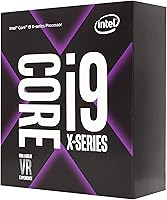
The Intel Core i9-9900X Desktop Processor sits in Intel's X-series HEDT lineup — a tier built for users who have genuinely outgrown what a mainstream consumer platform can offer. Designed for the LGA2066 socket and paired with X299 motherboards, it brings workstation-adjacent capabilities to the enthusiast desktop. The unlocked multiplier gives overclockers real flexibility, while the HEDT platform adds features like quad-channel memory that mainstream chips simply don't support. Fair warning, though: this is a chip from 2018, and at its current price, the value conversation matters. It's not about chasing the latest silicon — it's about whether the X299 ecosystem fits your specific workflow and total budget.
Features & Benefits

Ten cores and 20 threads is where this X-series chip earns its keep. In tasks like multi-track video rendering, 3D scene compilation, or running virtual machines alongside your primary workflow, the extra threads make a tangible difference. Turbo speeds reaching 4.4GHz keep single-threaded responsiveness competitive, and the unlocked multiplier means patient overclockers can push further. What really separates this chip from mainstream alternatives is quad-channel DDR4 support — four memory channels instead of two delivers significantly more bandwidth for memory-hungry applications. Add 19.25MB of cache cutting data-fetch delays on large projects, plus Intel Optane compatibility for storage acceleration, and the picture is clear. The 165W TDP, however, demands a quality cooler — budget cooling is simply not an option here.

Best For

The i9-9900X is built for people whose work actually demands that many cores. Think 4K and 8K video editors who can't afford to wait on export queues, 3D artists rendering complex scenes, or After Effects users stacking effects-heavy compositions. Streamers who want to game and encode simultaneously without either side suffering will appreciate having cores to spare. Bandwidth-intensive workflows — scientific computing, large dataset analysis, audio production with hundreds of tracks — benefit especially from quad-channel support. Enthusiasts already invested in the X299 platform looking for a meaningful CPU upgrade will find this a natural fit. It also appeals to builders hunting high core counts without spending flagship-tier money, provided they're honest with themselves about the platform's total cost of ownership.

User Feedback

Buyers rate this HEDT processor very well overall, with most praise centered on its multitasking endurance and the real-world headroom the unlocked multiplier provides for those comfortable tuning their system. The 4.4-star average reflects genuine satisfaction among creators using it for production workloads. On the other side, several reviewers raise fair points about platform age — X299 motherboards aren't cheap, and doing this chip justice requires a meaningful upfront investment beyond the CPU itself. Thermal behavior under sustained all-core loads comes up repeatedly; it runs hot without deliberate cooling choices. Some buyers weigh it against AMD Ryzen alternatives at comparable prices and note the competition has stiffened considerably. A handful also mention needing BIOS updates before the chip was recognized, so verifying motherboard compatibility beforehand is genuinely worth doing.

Pros

  • Ten cores and 20 threads handle brutal multi-threaded workloads that would stall mainstream chips entirely.
  • Quad-channel DDR4 support delivers noticeably higher memory bandwidth than any dual-channel consumer platform.
  • The unlocked multiplier gives experienced overclockers real headroom to push performance beyond stock settings.
  • 19.25MB of cache keeps complex project data close, reducing processing stalls during intensive editing sessions.
  • At its current street price, the i9-9900X offers serious threaded compute without flagship-tier spending.
  • Streamers and dual-taskers benefit from enough cores to handle encoding and gaming simultaneously without compromise.
  • Intel Optane Memory support provides a practical storage acceleration path for users with mixed storage setups.
  • Buyers already on X299 can upgrade to this chip without replacing any other component in their system.
  • 4.4GHz turbo frequency keeps everyday responsiveness sharp despite the chip's primary identity as a threaded workhorse.

Cons

  • Sustained all-core loads push temperatures aggressively — budget or mid-range coolers will cause real throttling.
  • The X299 platform is end-of-life, leaving buyers with no meaningful CPU upgrade path once they have committed.
  • Some older X299 motherboards require a BIOS update before recognizing the chip, which can be a painful first-boot surprise.
  • Total platform cost — board, quad-channel RAM, and adequate cooling — erodes the CPU-level value proposition significantly.
  • Current-generation alternatives from both Intel and AMD have closed the performance gap considerably at comparable prices.
  • The 165W TDP rules out small form factor and compact builds entirely — this chip needs space and airflow.
  • Single-threaded performance shows its age against newer architectures, a gap that is especially visible in gaming benchmarks.
  • Power consumption under heavy load is substantial enough to be a real concern for users on metered electricity.
  • Buyers whose workloads are GPU-accelerated may see little practical benefit over a less expensive mainstream CPU option.

Ratings

The Intel Core i9-9900X Desktop Processor has been scored below using AI analysis of verified global buyer reviews, with spam, bot-generated, and incentivized submissions actively filtered out before scoring. Ratings reflect the honest distribution of real-world experiences — where this X-series chip genuinely excels and where buyers have run into friction. Both the strengths and the legitimate frustrations are weighted into every number you see here.
Multi-Threaded Performance
91%
Buyers doing serious production work — long Premiere Pro exports, Blender renders, Cinebench runs — consistently report that the 10-core, 20-thread configuration handles punishing workloads without choking. Tasks that would stall a mainstream 6-core chip get pushed through noticeably faster, and users running multiple heavy applications simultaneously praise the headroom.
A handful of reviewers note that newer architectures from both Intel and AMD have since closed or surpassed this performance gap at comparable prices, so buyers sensitive to absolute benchmark rankings should factor in the generational context before committing.
Single-Core Speed
74%
26%
The 4.4GHz turbo ceiling keeps everyday responsiveness — browser snappiness, app launches, light gaming — feeling sharp enough that users rarely notice any sluggishness during single-threaded tasks. For a chip whose identity is threaded throughput, it holds its own in daily use.
Against current-generation chips, single-core performance is where the i9-9900X shows its age most visibly. Gamers or users whose primary workloads are lightly threaded will find more competitive options at this price point today.
Overclocking Headroom
83%
The unlocked multiplier is genuinely useful here, not just a marketing checkbox. Enthusiasts with good cooling report achieving stable all-core overclocks that push sustained performance noticeably beyond stock, and the X299 platform gives them the voltage and power delivery headroom to do it properly.
Getting those overclocks stable requires real effort — tuning voltage, verifying thermals under extended load, and sometimes dealing with per-core variance. Buyers who expected plug-and-play OC results were occasionally disappointed; this chip rewards patience and experience.
Memory Bandwidth & Quad-Channel Support
88%
This is one of the clearest practical advantages the i9-9900X holds over anything on a mainstream Z-series platform. Users running memory-intensive workloads — large Photoshop canvases, scientific datasets, sample-heavy audio DAWs — report tangibly faster throughput once four sticks are populated and running in quad-channel mode.
The benefit is workload-specific. Buyers who don't regularly saturate memory bandwidth in their workflow may not notice a meaningful difference over dual-channel setups, meaning they're paying a platform premium for an advantage that never fully materializes in their day-to-day use.
Thermal Performance
61%
39%
Under moderate workloads and with a quality tower cooler or 240mm AIO, the chip runs at manageable temperatures. Users who invested in proper cooling hardware from the start report stable sustained performance without throttling during typical production sessions.
Under sustained all-core loads — prolonged rendering, stress tests, long encoding sessions — temperatures climb aggressively, and budget coolers simply cannot keep up. Multiple reviewers specifically warn that the 165W TDP is not a suggestion; underpowered cooling leads to thermal throttling and real performance loss.
Platform & Ecosystem Value
58%
42%
For builders already owning an X299 motherboard, dropping this chip in as an upgrade is a cost-effective way to significantly increase core count and memory bandwidth without replacing the entire system. In that context, the value proposition is genuinely strong.
For new builders, the total platform cost is a real concern. X299 motherboards carry a premium over mainstream alternatives, and pairing them with adequate cooling and quad-channel RAM adds up fast. Several buyers felt the full build cost was harder to justify given what current-generation platforms offer at similar total spend.
Value for Money
67%
33%
At its current street price — well below launch pricing — the i9-9900X offers a meaningful amount of threaded compute for what you spend on the CPU itself. Buyers who found it discounted feel they got legitimate production-grade performance without paying a flagship premium.
The chip does not exist in isolation. Once the full platform cost enters the equation, the value calculation gets complicated quickly. Buyers comparing total system cost against modern alternatives sometimes conclude the older platform ecosystem dilutes the savings.
Compatibility & Setup Experience
66%
34%
For buyers with a fully compatible X299 board running an up-to-date BIOS, installation is straightforward. The LGA2066 socket is well-documented, and users with experience building systems report no surprises during setup.
A recurring complaint involves BIOS compatibility — some older X299 boards required a firmware update before recognizing the chip, which is inconvenient if you don't have a compatible fallback CPU to boot into BIOS first. First-time HEDT builders flagged this as an unexpected friction point.
Content Creation Workflow Performance
89%
Video editors working in Resolve or Premiere with 4K timelines, compositors stacking effects in After Effects, and 3D artists rendering in Cinema 4D consistently rate this among the chip's strongest suits. The core count and cache combination keeps complex project timelines responsive in ways a 6-core chip simply cannot match.
GPU-accelerated workflows may mask CPU gains depending on the software and renderer used. A few creators noted that investing in a stronger GPU delivered more noticeable improvement for their specific pipeline than upgrading to this chip did.
Gaming Performance
69%
31%
For users who game alongside production work — streaming while gaming being the clearest example — the extra cores make the dual-task scenario genuinely comfortable. Dedicated gaming sessions feel smooth, and frame rates are competitive in most titles.
As a pure gaming chip, the i9-9900X is not the right tool for the job. Modern gaming CPUs on mainstream platforms offer equal or better frame rates with lower platform cost. Buyers building primarily for gaming are consistently advised to look elsewhere.
Power Consumption
53%
47%
Under light workloads the chip scales down reasonably, and users on efficient builds report that idle and browsing power draw is not alarming. Day-to-day desktop usage does not constantly hammer the full 165W ceiling.
Under load, power draw is substantial and a recurring point of friction in reviews. Users on metered electricity or building in compact cases with limited airflow flag the power appetite as a genuine concern, and the high TDP rules out small form factor builds entirely.
Longevity & Future-Proofing
55%
45%
Ten cores and a capable platform still handle demanding software well enough that buyers doing professional work report no urgency to upgrade today. For workloads that have not fundamentally changed since 2018, the chip continues to perform without complaint.
The X299 platform is effectively end-of-life, meaning there is no meaningful upgrade path within the socket. Buyers investing in this ecosystem are committing to hardware with a defined ceiling, which makes long-term platform value a legitimate concern for anyone planning to own the system for five or more years.
Packaging & Out-of-Box Presentation
78%
22%
Buyers consistently note that Intel's retail packaging for X-series chips is solid — the processor arrives well-protected with proper anti-static precautions, and the unboxing experience matches expectations for a premium CPU purchase.
No cooler is included, which is expected at this tier but still catches some first-time HEDT buyers off guard. The absence of bundled thermal solution means additional immediate spend before the chip is even operational.
Cache & Latency for Professional Tasks
82%
18%
The 19.25MB cache pays dividends in specific professional scenarios — users working with large audio sample libraries, complex simulation datasets, or lengthy video editing timelines notice that the chip keeps frequently accessed data close and reduces processing stalls during intensive sessions.
The benefit is narrow enough that general users or light multitaskers will not experience it as a meaningful differentiator. It is a specialist advantage that justifies itself only within specific, cache-sensitive workflows.
Intel Optane Memory Support
62%
38%
For users with spinning-disk storage or lower-tier SSDs, Optane support offers a legitimate path to accelerated storage responsiveness without replacing existing drives. Buyers who implemented it in mixed storage setups noted improved load times and snappier system feel.
Optane adoption has been limited, and the technology's future is uncertain. Most modern builders opt for fast NVMe SSDs instead, making this feature feel increasingly niche and unlikely to influence buying decisions for the majority of potential buyers today.

Suitable for:

The Intel Core i9-9900X Desktop Processor is a strong fit for creators and prosumers whose daily work genuinely punishes a CPU — think 4K or 8K video editors grinding through long export queues, 3D artists waiting on complex scene renders, or audio producers running dense sessions with hundreds of virtual instrument tracks. The quad-channel DDR4 memory support is a meaningful real-world advantage for anyone whose software regularly saturates memory bandwidth, including simulation professionals, data analysts, and developers running multiple virtual machines simultaneously. Streamers who want to dedicate cores to encoding while gaming without either task degrading will find the 10-core configuration gives them comfortable headroom that mainstream chips simply cannot match. Enthusiast builders who already own an X299 motherboard will find this chip an especially sensible upgrade — you get a substantial jump in core count and platform capability without replacing the entire system. Even buyers building fresh on a tight budget who want HEDT-class threaded performance without paying for a current-generation flagship will find the current street price makes the platform math workable, provided they go in with clear eyes about total build cost.
Not suitable for:

The Intel Core i9-9900X Desktop Processor is not the right call for buyers whose primary use case is gaming. Modern mainstream platforms deliver equal or better gaming frame rates at lower total system cost, and the X299 ecosystem overhead simply does not pay off for someone who mostly plays games and does light everyday tasks. Buyers on a strict total-build budget should also think carefully — while the CPU itself may be attractively priced, X299 motherboards carry a platform premium, quad-channel RAM adds cost, and the 165W TDP makes a quality cooler non-negotiable rather than optional. Anyone prioritizing long-term upgradability should note that the X299 platform is effectively end-of-life, meaning there is no meaningful upgrade path within the socket once you have bought in. Users who run primarily single-threaded applications or lightly threaded software will not see the performance gains that justify the platform investment. And if you are building in a compact or small form factor case, the power and thermal demands make this HEDT processor a practical impossibility.
Specifications

  • Core Count: The processor features 10 physical cores with Hyper-Threading enabled for a total of 20 logical threads.
  • Base Clock: The base operating frequency runs at 3.5GHz across all cores under sustained load conditions.
  • Turbo Frequency: Single-core turbo boost reaches up to 4.4GHz, managed dynamically by Intel's Turbo Boost Max Technology 3.0.
  • Cache: A total of 19.25MB of Intel Smart Cache reduces data fetch latency for large, complex workloads.
  • CPU Socket: The chip uses the LGA2066 socket, which is exclusive to Intel X299-series motherboards.
  • Compatible Chipset: Full compatibility is limited to motherboards built on the Intel X299 chipset; mainstream Z-series boards are not supported.
  • Memory Type: The processor supports DDR4 SDRAM exclusively, with no support for DDR3 or DDR5 memory modules.
  • Memory Channels: Quad-channel memory architecture is supported, enabling up to four independent memory channels for significantly higher bandwidth than dual-channel platforms.
  • Max Memory Speed: Official Intel specification supports DDR4-2666 memory, though higher-frequency kits may operate at XMP profiles depending on the motherboard.
  • TDP: The rated thermal design power is 165W, requiring a robust cooling solution capable of sustained heat dissipation under full load.
  • Multiplier: The CPU multiplier is fully unlocked, allowing manual overclocking adjustments through compatible X299 motherboard BIOS settings.
  • Optane Support: Intel Optane Memory is supported, enabling storage acceleration when paired with a compatible Optane module and system configuration.
  • Processor Series: This chip belongs to Intel's X-series High-End Desktop platform, positioned above the mainstream Core consumer lineup.
  • Model Number: The official Intel product model number is BX80673I99900X, used to verify the retail boxed version.
  • Item Weight: The retail package weighs 3.17 ounces, consistent with Intel boxed X-series processor packaging.
  • Package Dimensions: The retail box measures 4 x 2 x 4.6 inches, housing the processor and documentation without a bundled cooler.
  • Cooler Included: No thermal solution is included in the box; a third-party cooler rated for 165W TDP or higher must be purchased separately.
  • Launch Date: The processor was first made available in November 2018 as part of Intel's Skylake-X Refresh generation.
  • Discontinuation Status: As of the available product data, Intel has not officially discontinued this processor, though the X299 platform is no longer receiving new CPU releases.
  • Instruction Sets: The chip supports AVX-512 instruction sets, beneficial for scientific computing, machine learning inference, and professional media encoding workloads.

Related Reviews
Intel Core i9-11900K Desktop Processor 8 Cores 5.3 GHz Unlocked LGA1200
84%
94%
Performance
89%
Overclocking Potential
68%
Thermal Management
91%
Gaming Performance
90%
Content Creation
More
Intel Core i9-13900KS Desktop Processor
75%
96%
Single-Core Performance
91%
Multi-Core & Threaded Performance
58%
Thermal Management
63%
Value for Money
78%
Overclocking Headroom
More
Intel Core i9-12900KS Desktop Processor
75%
94%
Raw Processing Performance
92%
Gaming Performance
58%
Thermal Management
54%
Power Consumption
91%
Out-of-Box Clock Speed
More
Intel Core i9-11900 Desktop Processor
85%
89%
Performance
91%
Gaming Performance
87%
Multitasking & Productivity
84%
Power Efficiency
90%
Compatibility with Motherboards
More
Intel Core i9-13900F Desktop Processor
76%
93%
Multi-Threaded Performance
88%
Gaming Performance
57%
Thermal Management
71%
Value for Money
84%
Platform Compatibility
More
Intel Core i9-10980XE Desktop Processor
84%
94%
Multi-core Performance
91%
Overclocking Capability
60%
Power Consumption
62%
Thermals (Heat Output)
88%
Compatibility (X299 & Optane)
More
Intel Core i9-9900K Desktop Processor
74%
91%
Gaming Performance
83%
Multi-Core Throughput
88%
Overclocking Headroom
61%
Thermal Management
77%
Platform Compatibility
More
Intel Core i9-14900KF 14th Gen Desktop Processor
70%
88%
Gaming Performance
91%
Multitasking & Productivity
54%
Thermal Management
51%
Power Consumption
78%
Overclocking Headroom
More
Intel Core i5-13400F 2.5GHz 10-Core Desktop Processor
87%
88%
Performance
92%
Value for Money
84%
Gaming Performance
89%
Multi-core Efficiency
91%
Ease of Installation
More
Intel Core i5-9500 Desktop Processor 6 Cores 3.0 GHz
82%
85%
Performance for Everyday Use
80%
Gaming Performance
82%
Multitasking Efficiency
88%
Power Efficiency (TDP)
91%
Value for Money
More

FAQ

It only works with motherboards built on the Intel X299 chipset using the LGA2066 socket. Mainstream boards with Z390, Z490, or similar chipsets are completely incompatible — the socket physically differs. Before buying, double-check that your board explicitly lists X299 and LGA2066 support.

Quite possibly, yes. Several X299 boards shipped with BIOS versions that do not natively recognize the Skylake-X Refresh CPUs. If your board was purchased before late 2018, check your manufacturer's BIOS update history and confirm the minimum supported firmware version for this chip. If you do not have a compatible fallback CPU to boot into BIOS for updating, contact your motherboard manufacturer — many offer a BIOS flashback feature that lets you update without a working CPU installed.

You need something robust — a high-quality 240mm or 280mm all-in-one liquid cooler, or a large tower air cooler rated for 200W TDP or more. The 165W thermal rating is not a conservative estimate; under sustained all-core loads the chip generates serious heat. Running it on a budget or entry-level cooler will result in thermal throttling and real performance loss, so do not cut corners here.

It will play games fine, but it is genuinely not what this chip is designed for. Modern gaming depends more on single-core speed and efficient architecture than raw core count, and current-generation mainstream processors often match or beat it in gaming benchmarks at lower total cost. Where it earns its keep for gamers is in dual-use scenarios — streaming while gaming, for example — where the extra cores handle encoding without impacting gameplay.

The X299 platform supports a large amount of RAM — up to 128GB depending on your motherboard. To take full advantage of the quad-channel memory controller, you should install RAM in sets of four matching sticks. Running only two sticks will drop you to dual-channel mode and reduce memory bandwidth noticeably, which partially defeats one of the main advantages this platform offers over mainstream alternatives.

Yes — the multiplier is fully unlocked, which is exactly what enthusiasts want. You can adjust clocks through your X299 motherboard's BIOS. That said, achieving a stable all-core overclock takes patience: you will need to tune voltages carefully, run stability tests, and monitor temperatures. It is not a one-click process, and results vary between individual chips. If you are new to overclocking, expect to spend a few sessions dialing it in properly.

Honestly, AMD has been very competitive in this space since this chip launched. Modern Ryzen CPUs — particularly the Ryzen 9 series — offer comparable or better multi-threaded performance with superior power efficiency and on newer platforms with a longer upgrade path. The X-series chip still performs well in threaded workloads, but if you are building fresh and comparing on raw value, you should put Ryzen alternatives side-by-side before deciding.

For most everyday tasks — browsing, office software, even light gaming — you will not feel a meaningful difference compared to dual-channel. The quad-channel advantage shows up in workloads that genuinely move large amounts of data through memory quickly: video editing with high-resolution footage, large sample libraries in audio production, scientific datasets, and rendering workflows. If your work involves any of those, the bandwidth gain is real and noticeable.

That depends entirely on your situation. If you already own an X299 motherboard, upgrading to this chip is a smart and cost-effective move. If you are building from scratch, the platform's age is a real consideration — X299 is effectively end-of-life, boards carry a price premium, and you are committing to a socket with no future CPU upgrades available. For new builds, weigh the total cost carefully against what a current-generation platform offers before committing.

No thermal paste is included in the box. Since there is also no bundled cooler, you will need to supply your own thermal compound when installing your third-party cooler. Most aftermarket coolers include a small tube of thermal paste in the package, so check what your cooler comes with before purchasing extra. If your cooler does not include it, a quality mid-range thermal compound is an inexpensive addition and worth doing properly given how hot this chip can run.

Where to Buy