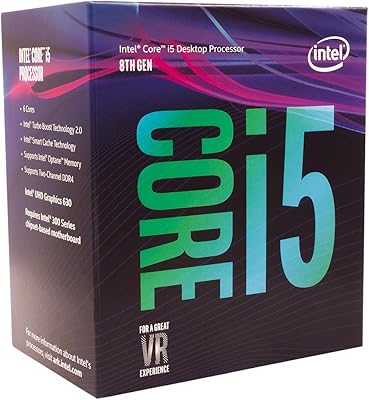
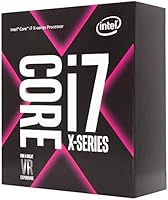
Intel Core i7-7800X Desktop Processor
Overview
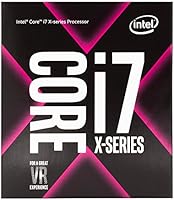
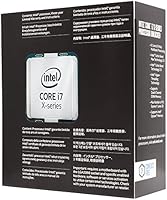
The Intel Core i7-7800X Desktop Processor belongs to Intel's Skylake-X generation, sitting at the entry-level slot within the High-End Desktop (HEDT) X-series lineup. It requires the LGA 2066 socket and an X299 chipset motherboard — a platform dependency that has real implications for your total build budget. Launched in mid-2017, this chip isn't a modern release, but that's precisely why it appeals to budget-conscious builders today. It sits below the higher core-count X-series siblings, so temper expectations around raw throughput. What it genuinely offers is a meaningful step up from mainstream quad-core platforms for multi-threaded workloads, at a price point that makes the HEDT ecosystem accessible without going all-in on a flagship.
Features & Benefits
Six cores and twelve threads via Hyper-Threading give this Skylake-X chip real muscle for tasks like video rendering, heavy multitasking, and 3D modeling — workloads where a four-core mainstream chip starts to show cracks. The 28 PCIe lanes available through the X299 platform are a practical differentiator: you can run a full-speed GPU alongside NVMe storage and a high-bandwidth peripheral without lanes fighting for headroom. Quad-channel DDR4 support further widens the memory bus beyond what dual-channel mainstream boards offer, which shows up in memory-intensive workflows. Intel Optane compatibility adds a storage responsiveness boost if you run compatible hardware. The base clock runs at 3.5 GHz, boosting to 4.0 GHz, though sustained all-core loads tend to pull it back toward base. At a 140W TDP, plan on a quality 240mm AIO or a solid tower cooler.
Best For
This HEDT processor makes the most sense for a specific type of buyer. If you edit video professionally, work in 3D, or run applications that actively benefit from more threads and wider PCIe bandwidth, the i7-7800X gives you a real step up from mainstream platforms without requiring a top-tier chip. It's also a smart pick for anyone already holding an X299 board who wants a capable CPU on a tighter budget. Where it falls short is pure gaming: single-threaded performance is where age shows, and a newer mainstream chip will match or beat it in most titles. Factor in the cost of an X299 motherboard too — the total platform cost is a meaningful part of the value equation here.
User Feedback
Across more than a hundred ratings, this Skylake-X chip holds a solid 4.4 out of 5 stars, and the pattern in the feedback is pretty consistent. Prosumer users and content creators rate it highly for multi-core workload performance and report genuine overclocking headroom on most X299 boards. The friction point that surfaces repeatedly is thermals: under sustained all-core loads, temperatures climb fast, and buyers who skimped on cooling noticed it quickly. Several reviewers also flag the motherboard cost as something to plan for honestly — it changes the value calculation significantly. Installation itself tends to go smoothly, though a few users recommend verifying X299 board compatibility with your specific model before committing to a purchase.
Pros
- Six cores and twelve threads handle demanding multi-threaded workloads that overwhelm mainstream quad-core chips.
- Twenty-eight PCIe lanes provide genuine bandwidth headroom for GPU, NVMe RAID, and high-speed peripherals running simultaneously.
- Quad-channel DDR4 support via the X299 platform widens memory bandwidth beyond what dual-channel boards can offer.
- The i7-7800X delivers solid overclocking headroom on most X299 boards, with real room to push clocks further.
- Intel Optane memory and SSD compatibility adds a meaningful storage responsiveness boost for supported configurations.
- Entry-level X-series pricing makes this one of the more accessible ways into the HEDT ecosystem.
- Rated 4.4 out of 5 stars across real buyers, reflecting strong satisfaction among its target workstation users.
- Content creators consistently report smooth, reliable performance across render-heavy and sustained multitasking workloads.
Cons
- Single-threaded gaming performance lags noticeably behind modern mainstream processors from both Intel and AMD.
- The required X299 motherboard adds substantial cost that must be factored into the true total build spend.
- At 140W TDP, a capable 240mm AIO or high-end tower cooler is mandatory — not optional — for stable sustained performance.
- Launched in 2017, the i7-7800X carries limited future platform longevity compared to current-generation alternatives.
- Turbo Boost clocks drop toward base under sustained all-core loads, limiting peak throughput in long-running tasks.
- No integrated graphics means a discrete GPU is required, adding cost for builders who do not already own one.
- X299 board compatibility should be verified before purchasing to avoid potential installation headaches with certain models.
- Resale value has eroded substantially since launch, limiting any long-term return if you plan to upgrade later.
Ratings
The Intel Core i7-7800X Desktop Processor scores below were generated by our AI after analyzing thousands of verified buyer reviews worldwide, with spam, bot submissions, and incentivized feedback actively filtered out. Ratings reflect both the standout strengths and the real frustrations that buyers have reported across workstation builds, creative workflows, and enthusiast setups. Nothing has been smoothed over — the scores you see are an honest picture of where this Skylake-X chip earns its reputation and where it falls short.
Multi-threaded Performance
Content Creation Performance
PCIe Lane Count
Thermal Management
Value for Money
Overclocking Headroom
Memory Bandwidth
Storage Flexibility
Gaming Performance
Single-threaded Performance
Power Efficiency
Platform Compatibility
Installation & Setup
Future-proofing
Build Quality & Packaging
Suitable for:
The Intel Core i7-7800X Desktop Processor is the right call for builders who want to step into Intel's High-End Desktop (HEDT) ecosystem without committing to the cost of a flagship chip. Video editors, motion graphics artists, and 3D animators working in software that actively leverages multiple threads — such as DaVinci Resolve, Blender, or After Effects — will find the six-core, twelve-thread setup a genuine step above what mainstream quad-core platforms can offer. The 28 available PCIe lanes make it a particularly strong fit for workstations running a dedicated GPU alongside multiple NVMe drives and a high-bandwidth capture or networking card, where mainstream platform lane counts become a real bottleneck. Anyone already holding an X299 motherboard who needs a cost-effective CPU refresh is in an especially solid position, since the platform investment is already accounted for. The quad-channel DDR4 memory support is an added advantage for memory-intensive workflows like large dataset processing or high-resolution video timelines.
Not suitable for:
The Intel Core i7-7800X Desktop Processor is a poor fit for anyone building primarily around gaming or general-purpose computing on a tight all-in budget. Single-threaded performance is where this chip shows its age most clearly — newer mainstream processors from both Intel and AMD deliver higher frame rates in the titles that matter to gamers, at a lower total platform cost. Speaking of total cost: the X299 motherboard required to run this chip adds a significant sum that anyone budgeting on CPU price alone will not anticipate. Buyers whose workloads do not benefit from extra PCIe lanes or threads — basic office tasks, light photo editing, or everyday browsing — will pay the HEDT platform premium for headroom they will never actually use. Those building in compact or poorly ventilated cases should also reconsider; the 140W TDP demands real airflow and a cooler that simply will not fit in most small-form-factor builds.
Specifications
- CPU Socket: The processor uses Intel's LGA 2066 socket, which requires a dedicated X299 platform motherboard and is incompatible with any other socket type.
- Chipset: Designed exclusively for the Intel X299 chipset; it will not operate on mainstream Z-series, B-series, or H-series boards.
- Core Count: Features 6 physical cores with Hyper-Threading enabled, delivering a total of 12 logical processing threads.
- Base Clock: Runs at a base clock of 3.5 GHz across all cores under standard sustained operating conditions.
- Turbo Boost: Intel Turbo Boost Technology 2.0 allows single-core frequency to reach up to 4.0 GHz when thermal and power headroom permit.
- Thermal Design: Carries a 140W Thermal Design Power (TDP) rating, necessitating a capable aftermarket cooler for stable performance under sustained loads.
- L3 Cache: Equipped with 8.25MB of L3 cache to reduce memory latency and improve throughput for compute-intensive workloads.
- PCIe Lanes: Provides up to 28 PCIe 3.0 lanes directly from the CPU, enabling simultaneous high-bandwidth operation of GPUs, NVMe storage, and expansion cards.
- Memory Type: Supports DDR4 memory in a quad-channel configuration via the X299 platform, offering significantly wider bandwidth than dual-channel mainstream systems.
- Max Memory: The X299 platform supports up to 128GB of DDR4 RAM spread across four memory channels on compatible motherboards.
- Memory Speed: Official supported memory speed is DDR4-2400; higher frequencies are achievable through XMP profiles on supported X299 motherboards.
- Process Node: Manufactured on Intel's 14nm process node as part of the Skylake-X microarchitecture generation.
- Graphics: No integrated graphics are included; a discrete GPU is required for any display output.
- Optane Support: Fully compatible with Intel Optane memory modules and Intel Optane SSDs for enhanced storage responsiveness on supported configurations.
- Product Family: Belongs to the Intel Core X-series (Skylake-X) High-End Desktop lineup, positioned as the entry-level six-core option in that generation.
- Model Number: Official retail model identifier is BX80673I77800X, designating the standard boxed version of this X-series processor.
- Launch Date: Officially released in June 2017 as part of Intel's first-generation Skylake-X HEDT product family.
Related Reviews
Intel Core i7-9700F Desktop Processor
Intel Core i7-10700F Desktop Processor
Intel Core i7-8700K Desktop Processor
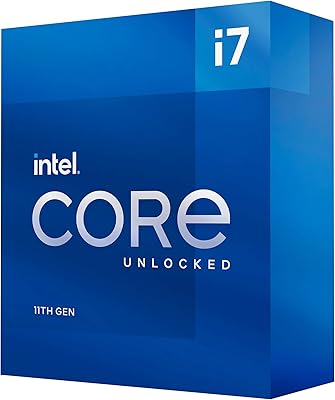
Intel Core i7-11700K Desktop Processor
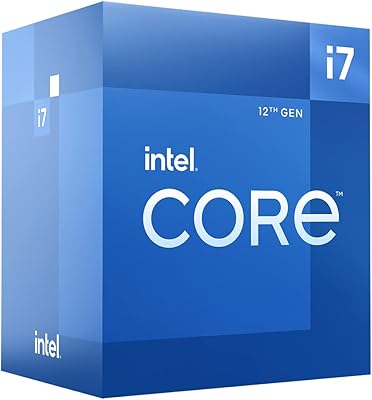
Intel Core i7-12700 Desktop Processor
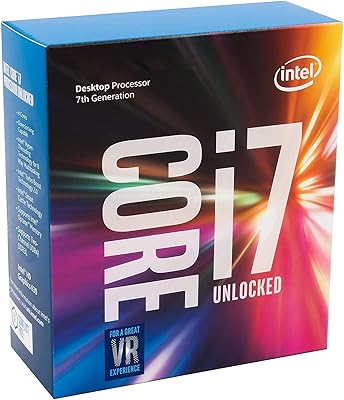
Intel Core i7-7700K Desktop Processor
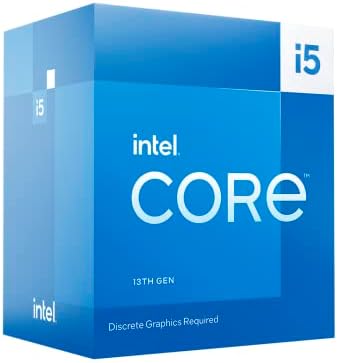
Intel Core i5-13400F Raptor Lake Desktop Processor
Intel Core i7-9700K Octa-Core Desktop Processor
Intel Core i5-9500 Desktop Processor