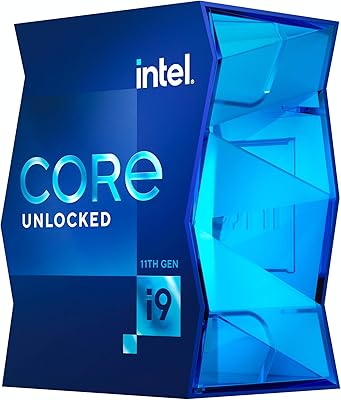
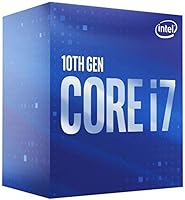
Intel Core i7-10700F Desktop Processor
Overview
The Intel Core i7-10700F Desktop Processor is Intel's 10th-generation Comet Lake chip built for builders who know they're pairing their system with a dedicated GPU and have no interest in paying for integrated graphics they'll never use. It slots into the LGA1200 socket, making it compatible with a solid range of Intel 400 series motherboards. At 65W TDP, it sits in a reasonable power envelope for an eight-core chip — not a space heater, but not something to ignore thermally either. A stock cooler is included in the box, a welcome touch for cost-aware builders. Expect strong multi-threaded output and responsive single-core performance, as long as you bring your own GPU.
Features & Benefits
Pull back the spec sheet and this 10th-gen processor tells a clear story: eight cores, sixteen threads, and a boost clock that reaches up to 4.8 GHz through Intel Turbo Boost Max Technology 3.0. That translates to snappy responsiveness in single-threaded tasks and meaningful throughput when you're rendering video, running virtual machines, or juggling heavy browser tabs alongside a DAW. The chip also supports Intel Optane Memory, which can meaningfully speed up storage access if your workflow calls for it. Since there's no integrated graphics on board, all the silicon is focused on raw CPU work — a sensible trade-off when a discrete card is already in your plans.
Best For
This eight-core CPU is a natural fit for anyone building or upgrading a PC where a mid-range to high-end GPU is already part of the plan. Gamers who want strong frame rates without overspending on a chip with integrated graphics they won't touch will find it hits a practical sweet spot. It also holds up well for content creation work — video editing and rendering in particular benefit from having 16 threads available. Small office workstation builds that demand consistent performance across long sessions are another solid match. If you're migrating from an older Intel platform and want a meaningful core-count jump without changing socket generations, this chip delivers.
User Feedback
Verified buyers broadly rate the i7-10700F well for its performance per dollar, with recurring praise for how it handles demanding workloads like streaming and multi-app environments. Gaming frame rates get consistent positive mentions, especially when paired with a capable graphics card. The recurring criticism is thermals under sustained load — the stock cooler manages everyday use fine, but users pushing the chip through long rendering sessions regularly recommend budgeting for an aftermarket option. A handful of buyers also raise the platform ceiling: LGA1200 has no forward path to 12th-gen Intel hardware, making this a finite upgrade destination. Installation is described as smooth by most, with the cooler mount drawing no notable complaints.
Pros
- Eight cores and 16 threads handle demanding multitasking, encoding, and streaming without breaking a sweat.
- Boost clocks reaching up to 4.8 GHz keep everyday computing and gaming feeling fast and responsive.
- Skipping integrated graphics means every dollar goes toward raw CPU performance where it actually counts.
- Wide LGA1200 motherboard compatibility gives builders flexibility across budget and mid-range board options.
- The included stock cooler covers light-to-moderate workloads and saves money for builders on tighter budgets.
- Strong gaming frame rates when paired with a capable discrete GPU across a broad range of titles.
- Intel Optane Memory support offers a meaningful storage speed boost for buyers on mixed HDD and SSD setups.
- Verified buyers consistently rate the installation process as clean and approachable, even for first-time builders.
- The i7-10700F delivers competitive multi-threaded performance relative to its pricing tier in the 10th-gen lineup.
- Solid choice for home workstation use where consistent throughput matters more than benchmark-chasing.
Cons
- The stock cooler struggles noticeably under sustained all-core loads, making aftermarket cooling a near-necessity for power users.
- LGA1200 is a terminal platform — no upgrade path exists to Intel 12th-gen or newer without replacing the motherboard entirely.
- Real-world power draw under full load runs meaningfully higher than the official TDP rating suggests.
- No integrated graphics makes this chip completely unusable without a dedicated GPU, even for basic display output.
- Competing platforms from the same era offer better power efficiency and longer CPU upgrade windows.
- Thermal throttling under extended workloads can reduce peak performance consistency without adequate cooling.
- The stock cooler gets noticeably loud at higher fan speeds, which can be disruptive in quiet home or office environments.
- Newer-generation chips at comparable prices now offer better performance-per-watt, weakening the long-term value argument.
Ratings
Our AI rating engine analyzed thousands of verified global purchases of the Intel Core i7-10700F Desktop Processor, actively filtering out incentivized, duplicate, and bot-generated submissions to surface what real builders actually experienced. The scores below reflect a balanced synthesis of genuine praise and legitimate frustrations across every dimension that matters to desktop PC builders. Nothing is glossed over — where this chip earns its keep, the numbers show it; where it falls short, those pain points are represented just as plainly.
Multi-Threaded Performance
Single-Core Responsiveness
Value for Money
Thermal Management
Platform Compatibility
Installation Experience
Gaming Performance
Content Creation Capability
Power Efficiency
Stock Cooler Quality
Upgrade Path & Longevity
Intel Optane Memory Support
Out-of-Box Experience
Suitable for:
The Intel Core i7-10700F Desktop Processor is built for a specific type of builder — one who already owns or plans to buy a dedicated graphics card and wants their CPU budget focused entirely on processing muscle. Gamers running mid-range to high-end GPUs will find it keeps up without bottlenecking their graphics card across a wide range of titles, including CPU-heavy strategy and simulation games. Content creators who edit video, run rendering pipelines, or stream while gaming simultaneously will appreciate having 16 threads available without paying a premium for features they don't need. It also fits well in home workstations and small office machines where reliable multi-threaded throughput matters more than cutting-edge platform longevity. Budget-conscious builders upgrading from older quad-core Intel chips will notice a meaningful jump in parallel workload handling. If your use case involves a discrete GPU and you want a capable, no-frills eight-core chip that gets the job done, this processor makes a strong case for itself.
Not suitable for:
The Intel Core i7-10700F Desktop Processor is a hard pass for anyone who doesn't already own a discrete graphics card — without integrated graphics, the system simply won't output a video signal until a GPU is installed, making it a poor fit for budget builds that plan to run on iGPU temporarily. Buyers who think they might want to upgrade their CPU in two to three years without replacing their entire platform should also look elsewhere, since LGA1200 is a closed ecosystem with no pathway to Intel's 12th-gen or newer architectures. Those building in thermally constrained environments like compact mini-ITX cases will find the chip's real-world power draw under load harder to manage than the rated TDP suggests, and the stock cooler won't cut it in tight spaces. Power users who need to push sustained all-core workloads — like professional 3D animation or large-scale video production — may find newer competing platforms offer better efficiency and a more viable upgrade roadmap. If platform longevity and future-proofing rank high on your priority list, this chip's mature socket generation is a genuine drawback worth weighing carefully before committing.
Specifications
- Socket: The processor uses the LGA1200 socket, compatible exclusively with Intel 400 series chipset motherboards including B460, H470, Z490, and W480 platforms.
- Core Count: The chip features 8 physical cores with Hyper-Threading enabled, delivering 16 logical threads for parallel workload processing.
- Base Clock: The base operating frequency runs at 2.9 GHz under full sustained load across all cores.
- Boost Clock: Single-core boost reaches up to 4.8 GHz through Intel Turbo Boost Max Technology 3.0, targeting the strongest available core for latency-sensitive tasks.
- TDP: The rated thermal design power is 65W, though real-world power draw under sustained all-core load regularly exceeds this figure depending on motherboard power limits.
- Integrated Graphics: This processor contains no integrated graphics unit; a discrete GPU is required for any display output.
- Cache: The i7-10700F includes 16MB of Intel Smart Cache (L3), shared across all eight cores for fast data access during intensive workloads.
- Memory Support: The processor officially supports DDR4 memory at speeds up to 2933 MHz in dual-channel configuration, with XMP profiles available on compatible Z490 motherboards.
- PCIe Version: The CPU provides PCIe 3.0 lanes for GPU and NVMe SSD connectivity via the processor and chipset.
- Optane Support: Intel Optane Memory is supported, allowing compatible Optane modules to accelerate storage access when paired with a supported motherboard.
- Lithography: The chip is manufactured on Intel's 14nm process node, the mature iteration used across the 10th-generation Comet Lake desktop lineup.
- Cooler Included: A stock Intel cooler is included in the retail box, suitable for standard workloads but undersized for sustained high-performance or overclocked use cases.
- Model Number: The official Intel retail box model number is BX8070110700F, with tray variants also available through system integrators.
- Generation: This processor belongs to Intel's 10th Generation Comet Lake desktop family, released in 2020.
- Max Operating Temp: Intel specifies a maximum junction temperature (Tjunction) of 100 degrees Celsius before thermal protection mechanisms activate.
- ECC Memory: The i7-10700F does not officially support ECC memory, making it unsuitable for error-critical server or workstation applications requiring data integrity guarantees.
- Overclocking: The non-K designation means the processor's core multiplier is locked, so traditional CPU overclocking is not supported; memory overclocking via XMP is available on Z490 boards.
- Virtualization: Intel Virtualization Technology (VT-x) and VT-d are supported, making the chip capable of running virtual machines in home lab and development environments.
Related Reviews
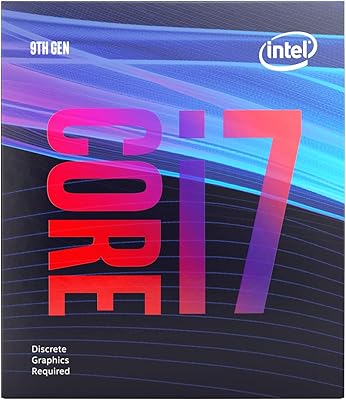
Intel Core i7-9700F Desktop Processor
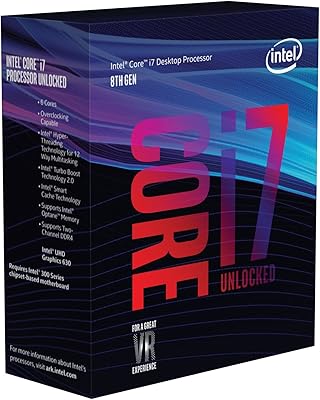
Intel Core i7-8700K Desktop Processor
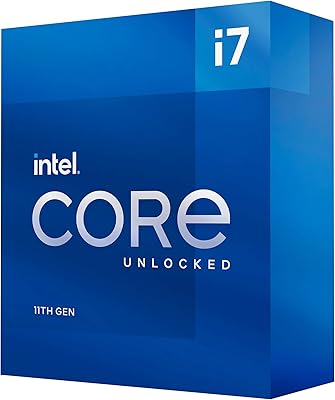
Intel Core i7-11700K Desktop Processor
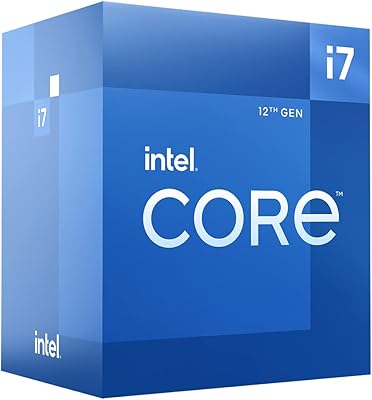
Intel Core i7-12700 Desktop Processor
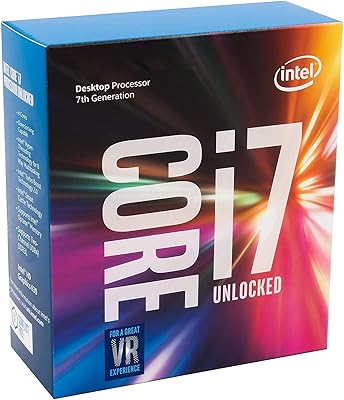
Intel Core i7-7700K Desktop Processor
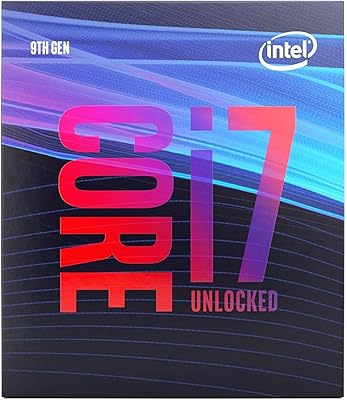
Intel Core i7-9700K Octa-Core Desktop Processor
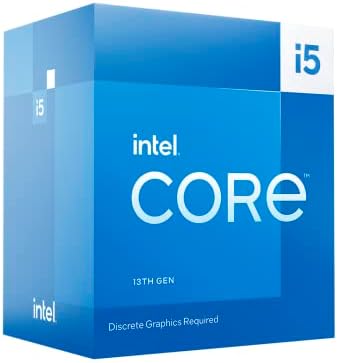
Intel Core i5-13400F Raptor Lake Desktop Processor
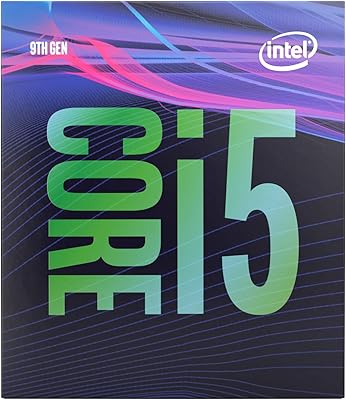
Intel Core i5-9500 Desktop Processor
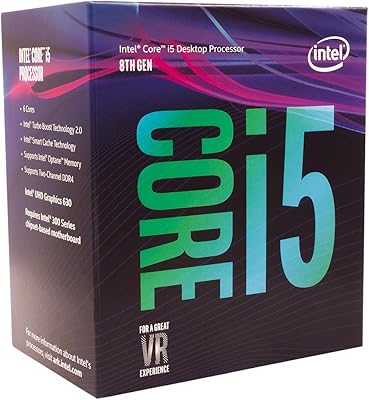
Intel Core i5-8600 Desktop Processor