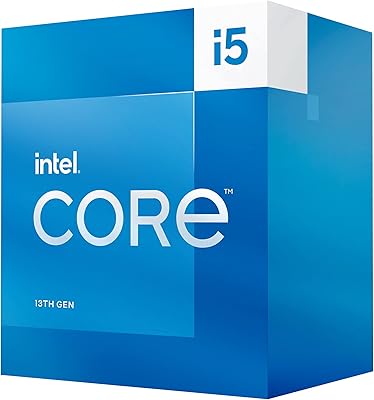
Intel Core i5-8600 Desktop Processor
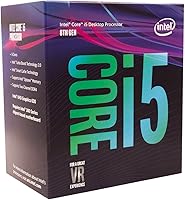
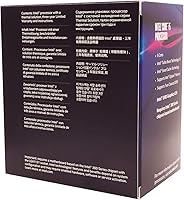
Overview
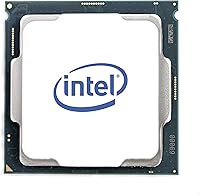
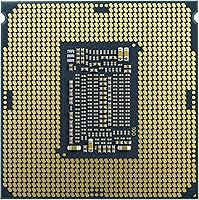
The Intel Core i5-8600 Desktop Processor arrived in 2018 as Intel's Coffee Lake mid-range answer for desktop builders who wanted real six-core muscle without paying flagship prices. It sits just below the unlocked i5-8600K — the key difference being a locked multiplier and a power-efficient 65W TDP, which makes it attractive for builds where thermal headroom matters. Today, the i5-8600 remains a reasonable option for upgrading an older system on a 300-series board or assembling a budget desktop. Just go in with clear eyes: this is an older chip, and newer generations have moved the bar considerably.
Features & Benefits
The i5-8600 runs six cores at a 3.1 GHz base clock, boosting up to 4.3 GHz under load — plenty of headroom for snappy everyday performance. Nine megabytes of Intel Smart Cache keeps frequently accessed data close to the processor, which you notice in tasks like video editing and web browsing more than raw benchmarks suggest. The integrated Intel UHD Graphics 630 means you can run a display without a dedicated card, useful during initial builds or troubleshooting. DDR4 memory support and optional Intel Optane pairing round out a practical, capable platform for anyone working within the LGA1151 ecosystem.
Best For
This Coffee Lake chip hits a sweet spot for home office builders and anyone putting together a reliable family PC without breaking the bank. Productivity tasks — spreadsheets, video calls, light photo editing — run without a hitch. Gamers on a budget will find it pairs decently with a mid-range GPU like an RX 6600 or RTX 3060, though pairing it with a high-end card would be underselling that GPU's potential. The 65W power envelope also makes it a natural fit for compact or small form factor cases. If you're still on a 300-series motherboard, this is one of the more practical upgrade paths available.
User Feedback
Across its 113 ratings, this 8th-gen processor holds a solid 4.3-star average, and the pattern that emerges is clear: buyers who knew what they were getting came away satisfied. Single-core responsiveness gets consistent praise, and the non-K pricing feels fair to most buyers not interested in overclocking. Where feedback turns critical is the missing stock cooler — you need to budget for an aftermarket option, which adds to total build cost. A few users also flag that without hyperthreading, it can feel stretched under heavy multitasking compared to AMD alternatives of the same era. On the whole, satisfaction is high when paired with realistic expectations.
Pros
- Strong single-core performance keeps everyday computing tasks fast and responsive.
- Six cores handle productivity workloads, light gaming, and multitasking without obvious strain.
- The 65W TDP runs cool and quiet, reducing cooling costs and noise in most builds.
- Integrated UHD Graphics 630 means you can boot and troubleshoot without a discrete GPU.
- Drop-in upgrade for any existing Intel 300 Series LGA1151 board — no platform change needed.
- DDR4 memory support keeps the i5-8600 compatible with modern, readily available RAM.
- Turbo boost to 4.3 GHz gives a noticeable real-world speed advantage over the base clock.
- Pairs well with mid-range GPUs for solid 1080p gaming without overspending on the CPU.
- Intel Optane Memory support adds a storage responsiveness option on compatible board setups.
- Consistently positive buyer ratings reflect reliable, stable day-to-day performance.
Cons
- No hyperthreading limits performance in heavily threaded workloads compared to AMD rivals of the same era.
- No bundled stock cooler included — budget for a separate aftermarket cooler on top of the chip cost.
- The LGA1151 platform is a dead end, offering no meaningful CPU upgrade path beyond 9th-gen chips.
- Can bottleneck high-end discrete GPUs, making it a poor match for premium gaming builds.
- Age is a real factor — newer-generation chips from both Intel and AMD outperform this Coffee Lake chip in most benchmarks.
- Locked multiplier rules out any overclocking flexibility for users who want to squeeze out extra performance.
- Not well-suited for content creation tasks like video encoding or 3D rendering that demand thread count.
- Buying into this platform new today means investing in aging infrastructure with limited longevity.
- Second-hand market pricing can be inconsistent, sometimes eroding the value proposition versus newer budget chips.
Ratings
The Intel Core i5-8600 Desktop Processor has been evaluated by our AI rating system after analyzing verified buyer reviews from global markets, with spam, bot activity, and incentivized feedback actively filtered out. The scores below reflect a candid picture of where this Coffee Lake chip genuinely delivers and where real-world users have run into friction. Both the strengths and the trade-offs are represented transparently to help you make a well-informed decision.
Single-Core Performance
Multithreaded Performance
Gaming Performance
Value for Money
Thermal Efficiency
Platform Compatibility
Integrated Graphics
Overclocking Headroom
Out-of-Box Experience
Longevity & Upgrade Path
Power Consumption
Memory Performance
Reliability & Stability
Suitable for:
The Intel Core i5-8600 Desktop Processor is a strong pick for anyone building or refreshing a practical desktop without chasing cutting-edge specs. Home office users who spend their days in browsers, office suites, and video calls will find it more than capable — it handles those workloads without breaking a sweat. Budget-conscious builders pairing this Coffee Lake chip with a mid-range GPU like an RX 6600 can put together a competent gaming rig that punches above its price bracket for 1080p play. It is also a smart, low-friction upgrade for anyone still running a 300-series LGA1151 motherboard who wants a meaningful CPU bump without replacing the whole platform. The 65W thermal profile makes the i5-8600 particularly attractive for small form factor cases where heat management is a real concern.
Not suitable for:
The Intel Core i5-8600 Desktop Processor is not the right call for buyers who need serious multithreaded horsepower. Content creators doing heavy video rendering, 3D work, or running multiple demanding applications simultaneously will quickly feel the pinch of six threads with no hyperthreading — AMD's Ryzen alternatives from the same era and modern chips from both camps offer considerably more parallelism at competitive prices. Hardcore gamers planning to pair a high-end GPU with this chip should also think twice; this 8th-gen processor can become a bottleneck that leaves expensive graphics hardware underutilized. Those building a brand-new system from scratch today have little reason to invest in the LGA1151 platform, since there is no upgrade path beyond a handful of 8th and 9th-gen chips. And anyone hoping to overclock for extra performance should look at the unlocked i5-8600K instead — the locked multiplier here makes that a non-starter.
Specifications
- Architecture: Built on Intel's 8th-generation Coffee Lake architecture using a 14nm manufacturing process.
- Cores / Threads: Features 6 physical cores and 6 threads with no hyperthreading support.
- Base Clock: Operates at a base frequency of 3.1 GHz under sustained all-core loads.
- Turbo Frequency: Boosts up to 4.3 GHz on a single core via Intel Turbo Boost Technology 2.0.
- Cache: Equipped with 9 MB of Intel Smart Cache shared across all six cores.
- Socket: Uses the LGA1151 socket, compatible exclusively with Intel 300 Series chipset motherboards.
- Compatible Chipsets: Works with B360, H370, Z370, and Z390 motherboards; not compatible with 100 or 200 Series boards.
- TDP: Rated at a 65W thermal design power, keeping heat output manageable for standard coolers.
- Integrated Graphics: Includes Intel UHD Graphics 630, capable of driving displays and handling basic graphical tasks.
- Memory Type: Supports DDR4 SDRAM, with dual-channel capability depending on motherboard configuration.
- Optane Support: Compatible with Intel Optane Memory modules for improved system storage responsiveness.
- Multiplier: Ships with a locked multiplier, meaning manual overclocking beyond Intel Turbo Boost is not possible.
- Lithography: Manufactured on Intel's 14nm process node, the same used across the Coffee Lake lineup.
- Model Number: Official Intel model identifier is BX80684I58600, representing the boxed retail version.
- Cooler Included: No stock cooler is included in the box; a compatible aftermarket or third-party cooler must be purchased separately.
Related Reviews
Intel Core i5-13400F Raptor Lake Desktop Processor
Intel Core i5-9500 Desktop Processor
Intel Core i5-9600KF Desktop Processor
Intel Core i5-10600K Desktop Processor
Intel Core i5-10400 Desktop Processor
Intel Core i5-11400F Desktop Processor
Intel Core i5-12400 Desktop Processor
Intel Core i5-9400 Desktop Processor
Intel Core i5-13600K Desktop Processor