Overview

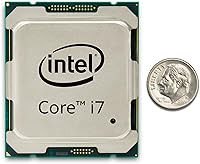
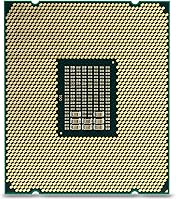
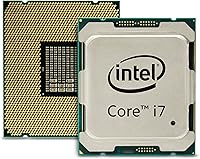
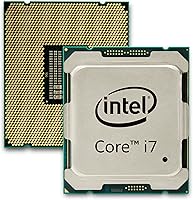
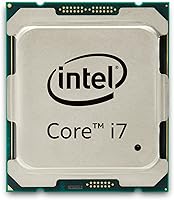
The Intel Core i7-6850K Desktop Processor launched in Q2 2016 as Intel's entry point into the high-end desktop tier, and it has held up surprisingly well. Built on Broadwell-E architecture with a 14nm process, this six-core Intel chip requires an LGA 2011-v3 socket — meaning an X99 motherboard is non-negotiable, a fact worth emphasizing before any purchase. The 6-core, 12-thread configuration sits comfortably above mainstream quad-core chips without pushing into full workstation pricing. At today's street price, the i7-6850K offers genuine value for multi-threaded workloads. The unlocked multiplier is a welcome bonus, giving patient overclockers real headroom beyond the 3.8 GHz stock turbo ceiling.

Features & Benefits

The i7-6850K's most practical advantage is its 6 physical cores paired with Hyper-Threading, producing 12 concurrent threads that handle demanding multi-tasking without choking. What separates this HEDT processor from mainstream alternatives is the 40 PCIe 3.0 lanes — enough bandwidth for multiple NVMe drives or a multi-GPU setup without the bottlenecking common on standard Z-series platforms. Quad-channel DDR4 support accommodates up to 128 GB of RAM, which matters for video work and large dataset processing. The 15 MB Smart Cache keeps frequently accessed data close to the cores, and Turbo Boost Max 3.0 can push the fastest core to 4.00 GHz. Just plan your cooling carefully — the 140W TDP is not a suggestion.

Best For

This six-core Intel chip makes the most sense for users whose workloads are genuinely CPU-bound. Video editors and 3D artists working in Blender, DaVinci Resolve, or Premiere will feel the difference across those 12 threads compared to any quad-core setup. Streamers encoding live footage while gaming also benefit from having spare cores to dedicate to the encoder without wrecking frame rates. If you're already running an X99 board with an older quad-core i7, this is one of the cleanest upgrade paths available — no new platform, no new RAM required. Budget-focused builders hunting for a capable HEDT build using quality used parts will find particularly strong value here.

User Feedback

Across 239 ratings and a 4.2-star average, owners are largely satisfied — but it helps to know who's writing those reviews. Enthusiasts consistently praise the overclocking stability, with many reporting steady daily runs at 4.2–4.4 GHz on a decent tower cooler or 240mm AIO. Thermal complaints surface regularly too, especially from builders who underestimated this chip's heat output inside compact cases with limited airflow. A number of negative reviews trace back to BIOS incompatibilities — updating motherboard firmware before installing is essential, not optional. Critically, most low-star reviews point to installation or compatibility errors rather than any fault with the processor itself, which is a meaningful distinction for buyers weighing the risk.

Pros

  • Six cores and 12 threads handle demanding multi-threaded workloads that would bottleneck a standard quad-core chip.
  • Up to 40 PCIe 3.0 lanes support multi-GPU rigs or NVMe RAID arrays without bandwidth headaches.
  • Quad-channel DDR4 with up to 128 GB capacity gives memory-hungry applications serious room to breathe.
  • The unlocked multiplier makes overclocking accessible, with many users stabilizing at 4.2–4.4 GHz on mid-range cooling.
  • Turbo Boost Max 3.0 pushes the fastest core to 4.00 GHz, improving responsiveness in lightly-threaded tasks.
  • At current pricing, the i7-6850K delivers a compelling performance-per-dollar ratio for content creation workloads.
  • X99 platform flexibility means you can pair it with large RAM kits and high-bandwidth storage configs.
  • The Intel Core i7-6850K Desktop Processor holds a solid 4.2-star average, reflecting genuine satisfaction among technically savvy owners.
  • Ideal drop-in upgrade for existing X99 users moving up from an older quad-core i7 — no new platform required.
  • 15 MB Smart Cache reduces latency noticeably when processing large datasets or complex project files.

Cons

  • Single-core performance lags behind modern mid-range CPUs, limiting frame rates in fast-paced, CPU-sensitive games.
  • The X99 platform is a dead end — no future CPU upgrade path exists beyond existing LGA 2011-v3 chips.
  • 140W TDP demands thoughtful case airflow; compact builds without proper cooling will thermal throttle under load.
  • Total platform cost can be high when factoring in an X99 motherboard, matched DDR4 kits, and an aftermarket cooler.
  • DDR4 speeds cap at 2400 MHz officially, falling behind newer platforms that support significantly faster memory.
  • BIOS updates are required on many X99 boards before the chip is recognized — a potential trap for less experienced builders.
  • No ECC memory support limits its appeal for true workstation or data-integrity-critical deployments.
  • Used and refurbished market availability means condition and warranty coverage can vary significantly between sellers.
  • Power consumption is higher than competing modern chips at similar performance levels, raising long-term energy costs.
  • Driver and chipset support for X99 is increasingly mature, meaning fewer optimizations or firmware improvements going forward.

Ratings

Our scorecard for the Intel Core i7-6850K Desktop Processor was generated by AI after systematically analyzing verified purchase reviews from buyers worldwide, with spam, bot-submitted, and incentivized feedback actively filtered out before scoring. The ratings reflect both the genuine strengths this HEDT chip delivers in real-world creative and workstation contexts, and the honest pain points — thermal demands, platform complexity, and aging single-core output — that real owners have consistently flagged. Nothing has been averaged away: where this six-core Intel chip excels and where it genuinely struggles are both represented with equal transparency.

Multi-threaded Performance
88%
Across video editing, 3D rendering, and live encoding workflows, the six cores and 12 threads consistently impressed users who pushed the chip hard. Blender render times and Premiere Pro exports hold up well against chips that cost significantly more at launch, making it a productive workhorse for sustained content pipelines.
The architecture is showing its age in workloads optimized for newer instruction sets, and sustained all-core frequency is capped by the 3.80 GHz turbo ceiling. Users running the most demanding modern simulations or large-scale compilation jobs will eventually notice the performance gap versus current-generation alternatives.
Single-core Performance
62%
38%
For lightly threaded tasks like office software, casual photo editing, and everyday desktop use, this HEDT processor performs adequately without feeling sluggish. Turbo Boost Max 3.0 helps by directing resources to the chip's fastest core, squeezing out better responsiveness than the base clock alone would suggest.
In gaming titles and applications that rely heavily on per-core speed, the deficit against newer architectures is noticeable. Users expecting competitive frame rates in CPU-sensitive games will likely be disappointed compared to a modern mid-range chip running on a current platform.
Value for Money
84%
At current street pricing, the performance delivered across multi-threaded workloads is genuinely hard to match without spending more on a newer platform. Buyers who source a compatible X99 motherboard and DDR4 RAM secondhand can put together a capable content creation rig at a total cost that remains competitive.
The value calculation shifts considerably once you factor in the full platform cost — X99 motherboards, matched quad-channel DDR4 kits, and a capable cooler all add up quickly. Buyers who underestimate total system cost may find the price advantage over newer alternatives narrower than it initially appeared.
Overclocking Potential
83%
The unlocked multiplier and Intel Turbo Boost Max 3.0 give serious overclockers a solid foundation to build on. A notable share of owners reported stable daily overclocks at 4.2–4.4 GHz using mid-range air coolers, with some pushing further on custom water loops — impressive for a chip of this vintage.
Achieving stable high overclocks demands quality cooling, a capable X99 board with robust VRM circuitry, and patience with BIOS tuning. Buyers expecting effortless headroom with the included box cooler will hit thermal limits quickly, and silicon variance means not every unit will reach the same ceiling.
PCIe Lane Count
91%
Forty PCIe 3.0 lanes directly from the CPU is a meaningful differentiator that mainstream platforms simply cannot match. Workstation builders running dual GPU setups alongside multiple NVMe drives reported no bandwidth contention, making this chip a strong foundation for storage-heavy or multi-display creative workstations.
PCIe 3.0 is now a full generation behind the current standard, and in storage-intensive workflows built around the latest high-speed NVMe drives, the throughput ceiling will become more apparent over time. The gap is manageable today but will only widen as newer storage hardware reaches mainstream pricing.
Thermal Management
57%
43%
In full-tower cases with deliberate airflow planning and a quality aftermarket cooler installed, temperatures stay controllable even during extended rendering sessions. Users who invested in a 240mm AIO or a high-end tower cooler reported comfortable sustained operation without thermal throttling under typical workloads.
The 140W TDP is one of the most consistently flagged pain points across user reviews, particularly for builders using compact mid-tower cases. Without proper airflow planning, thermal throttling under sustained all-core load is a real risk that directly undermines the multi-threaded performance this chip is purchased for.
Memory Performance
78%
22%
Quad-channel DDR4 delivers noticeably higher bandwidth than the dual-channel setups found on mainstream platforms, which translates to real gains in memory-hungry applications like large Photoshop projects, video caching, and virtual machine workloads. Support for up to 128 GB provides meaningful headroom for professional use cases.
The official memory speed ceiling of DDR4 2400 MHz trails behind what current platforms support natively, limiting the benefit of faster RAM kits. Some X99 boards handle XMP profiles inconsistently, making memory stability tuning a more involved process than on modern platforms with better out-of-box support.
Installation Experience
66%
34%
For experienced builders who verify BIOS versions and check compatibility lists beforehand, installation goes smoothly and the physical LGA socket process is familiar. Sourcing matched quad-channel RAM kits is straightforward for anyone who has built on an HEDT platform before.
BIOS update requirements caught a meaningful number of buyers off guard, with several negative reviews tracing entirely to this single issue. Newcomers may not realize they need a compatible CPU already installed to flash firmware, creating a frustrating situation before the build can even properly begin.
Gaming Performance
61%
39%
In GPU-bound gaming scenarios — which describes the majority of modern titles — the i7-6850K stays out of the way well enough. Streamers running concurrent game and encoding workloads benefit from the extra core headroom in ways a quad-core chip genuinely cannot replicate.
In CPU-bound competitive titles where single-core speed drives frame rates, this chip lags behind current mid-range processors in ways that become obvious at higher refresh rates. Dedicated gamers prioritizing maximum frame rates in fast-paced games will find newer architectures deliver a more satisfying return per dollar.
Content Creation
86%
Video editing, 3D rendering, and audio production all put the six cores and 12 threads to productive use, with users reporting smooth timeline scrubbing and faster-than-expected exports in Premiere Pro and DaVinci Resolve. The large cache and quad-channel memory bandwidth compound the advantage when working with large project files.
Compared to current-generation chips at similar used-market prices, render times on complex, node-heavy scenes show a measurable deficit. For professionals billing time against render queues, that gap is worth calculating carefully before committing to this platform over a more modern alternative.
Power Efficiency
48%
52%
At stock settings with a well-matched motherboard, power draw is predictable and the chip operates within its designed thermal envelope reliably. For workloads that leave some cores idle, real-world consumption can stay meaningfully below the full 140W rated ceiling during lighter tasks.
Compared to modern six-core processors built on more recent process nodes, this chip consumes considerably more power for equivalent multi-threaded output, raising long-term electricity costs for users running heavy workloads daily. The efficiency gap has grown wider as competitors moved to smaller, more power-conscious manufacturing nodes.
Platform Longevity
53%
47%
X99 owners consistently cite platform flexibility as a highlight — large RAM configs, multiple storage devices, and multi-GPU setups from a single socket have kept builds productive for years beyond typical mainstream platform lifespans. An active enthusiast community continues to offer support, guides, and troubleshooting resources.
X99 is definitively end-of-life with no further CPU upgrade path available, meaning buyers are committing to a closed ecosystem with a known ceiling. As software increasingly targets newer instruction sets and modern architectures, the relevance of this platform will continue to narrow over the coming years.
Out-of-Box Setup
69%
31%
Intel's retail packaging is clean and functional, and the included documentation covers basic installation steps clearly enough for experienced builders. The boxed cooler arrives with thermal compound pre-applied, reducing first-time setup friction for users running the chip at stock speeds without overclocking.
The documentation makes no mention of X99 BIOS compatibility requirements, which is arguably the single most important pre-installation step for many users. Intel's support resources for this aging platform have also thinned considerably compared to current product lines, pushing buyers toward community forums for nuanced troubleshooting.

Suitable for:

The Intel Core i7-6850K Desktop Processor is a strong fit for anyone whose primary workloads are multi-threaded by nature — think video editors cutting 4K timelines, 3D artists running Blender renders overnight, or engineers working with large simulation datasets. The six-core, 12-thread configuration combined with quad-channel DDR4 and 40 PCIe 3.0 lanes gives content creators and workstation builders a platform that genuinely punches above its current price point. Streamers who need to encode a broadcast stream while simultaneously running a game will appreciate having real core headroom rather than juggling tasks on a four-core chip. Enthusiasts already invested in the X99 ecosystem — whether upgrading from a quad-core i7 or assembling a high-value used build — will find this HEDT processor a logical, cost-effective choice. The unlocked multiplier also makes it appealing to overclockers who want to extract extra performance with patience and a decent cooler.

Not suitable for:

Buyers hoping for strong single-threaded gaming performance should temper their expectations — the i7-6850K's Broadwell-E architecture is showing its age in titles that depend heavily on per-core speed, where newer mid-range processors from both Intel and AMD will outperform it. Anyone building from scratch should also factor in the total platform cost: the LGA 2011-v3 socket demands an X99 motherboard, DDR4 RAM in matched pairs, and a capable cooler, all of which add up quickly and can undercut the value proposition for first-time builders on a tight overall budget. Users in compact or poorly ventilated cases may find the 140W TDP difficult to manage without deliberate airflow planning, and cutting corners on cooling will result in thermal throttling that negates the chip's strengths. If future platform longevity matters — the ability to drop in a next-generation CPU down the road — this six-core Intel chip is a closed-end investment, since the X99 platform has no upgrade path beyond existing LGA 2011-v3 processors.

Specifications

  • Architecture: The i7-6850K is built on Intel's Broadwell-E architecture using a 14nm manufacturing process, launched in Q2 2016.
  • Core Count: The processor features 6 physical cores, placing it firmly in the high-end desktop segment above mainstream quad-core offerings.
  • Thread Count: Intel Hyper-Threading Technology enables 12 concurrent threads, significantly improving throughput in multi-threaded applications.
  • Base Frequency: The processor runs at a base clock speed of 3.60 GHz under sustained all-core load.
  • Turbo Frequency: Intel Turbo Boost 2.0 can raise clock speeds up to 3.80 GHz across multiple active cores depending on thermal headroom.
  • Boost Max 3.0: Intel Turbo Boost Max Technology 3.0 identifies and preferentially boosts the fastest single core up to 4.00 GHz.
  • Cache: The chip includes 15 MB of Intel Smart Cache shared across all six cores to reduce memory access latency.
  • TDP: Thermal Design Power is rated at 140W, requiring a capable cooling solution for stable operation under sustained load.
  • CPU Socket: The processor uses the LGA 2011-v3 socket and is exclusively compatible with Intel X99 chipset motherboards.
  • PCIe Lanes: Up to 40 PCIe 3.0 lanes are available directly from the CPU, supporting configurations such as dual x16 slots plus one x8 slot.
  • Memory Type: The chip officially supports DDR4 memory at speeds of 2400 MHz and 2133 MHz in standard operation.
  • Max Memory: The platform supports up to 128 GB of DDR4 RAM across four memory channels with one DIMM per channel at specification.
  • Memory Channels: Quad-channel memory architecture delivers substantially higher memory bandwidth than dual-channel mainstream platforms.
  • Overclocking: The unlocked multiplier allows clock speed adjustments above stock settings through compatible X99 motherboard BIOS controls.
  • ECC Support: ECC (Error-Correcting Code) memory is not supported, making this processor unsuitable for true workstation data-integrity applications.
  • Virtualization: Intel VT-x, VT-d, and Extended Page Tables (EPT) are all supported, enabling efficient virtual machine hosting and container workloads.
  • Conflict Free: Intel certifies this processor as conflict-free, meaning the minerals used in manufacturing are sourced from validated, responsible supply chains.

Related Reviews
Intel Core i7-8700K Desktop Processor
73%
88%
Gaming Performance
87%
Single-Core Speed
91%
Overclocking Potential
83%
Value for Money
41%
Future-Proofing
More
Intel Core i7-9700F Desktop Processor
71%
88%
Gaming Performance
91%
Single-Core Speed
74%
Multi-Core / Threaded Performance
86%
Thermal Efficiency
69%
Platform Compatibility
More
Intel Core i7-12700 Desktop Processor
81%
92%
Multi-threaded Performance
89%
Gaming Performance
83%
Value for Money
71%
Thermal Management
68%
Platform Compatibility
More
Intel Core i7-10700F Desktop Processor
77%
91%
Multi-Threaded Performance
88%
Single-Core Responsiveness
84%
Value for Money
67%
Thermal Management
86%
Platform Compatibility
More
Intel Core i7-11700K Desktop Processor
67%
88%
Gaming Performance
54%
Thermal Management
77%
Overclocking Headroom
63%
Value for Money
49%
Power Efficiency
More
Intel Core i7-7700K Desktop Processor
70%
91%
Single-Core Performance
88%
Gaming Performance
84%
Overclocking Headroom
54%
Thermal Management
78%
Value for Money
More
Intel Core i5-13400F 2.5GHz 10-Core Desktop Processor
87%
88%
Performance
92%
Value for Money
84%
Gaming Performance
89%
Multi-core Efficiency
91%
Ease of Installation
More
Intel Core i7-9700K Octa-Core Desktop Processor
73%
91%
Gaming Performance
89%
Single-Core Speed
88%
Overclocking Potential
86%
Build Quality & Longevity
74%
Value for Money
More
Intel Core i5-9500 Desktop Processor
72%
88%
Everyday Performance
81%
Gaming Capability
91%
Thermal Management
58%
Multi-threaded Workloads
83%
Platform Compatibility
More
Intel Core i5-8600 Desktop Processor
71%
83%
Single-Core Performance
61%
Multithreaded Performance
74%
Gaming Performance
71%
Value for Money
88%
Thermal Efficiency
More

FAQ

The Intel Core i7-6850K Desktop Processor requires a motherboard with an LGA 2011-v3 socket running the Intel X99 chipset — no other platform is compatible. Popular choices include boards from ASUS, MSI, Gigabyte, and ASRock in the X99 range. Make sure to check that your specific board supports this CPU model, as some older X99 boards may need a BIOS update first.

Yes, Intel includes a box cooler in the retail package, and it is adequate for running the chip at stock settings. That said, given the 140W TDP, most experienced builders recommend investing in at least a mid-range tower air cooler or a 240mm all-in-one liquid cooler, especially if you plan to overclock or run sustained heavy workloads.

Yes — the unlocked multiplier makes overclocking straightforward through your X99 motherboard's BIOS. Many owners report stable daily overclocks in the 4.2–4.4 GHz range on decent cooling, with some pushing further on more aggressive setups. Your specific chip, motherboard, and cooling solution will all influence how far you can go, so treat those numbers as a realistic ballpark rather than a guarantee.

It handles gaming reasonably well, but managing expectations is important here. This chip excels at multi-threaded workloads, not raw single-core speed, and modern games increasingly favor high single-core performance. You won't be bottlenecked badly, but a newer mid-range processor will often outperform it in frame-rate-sensitive titles. Where it genuinely shines for gamers is in streaming scenarios, where the extra cores absorb encoding work without robbing the game of resources.

You'll need DDR4 RAM — DDR3 is not compatible with the X99 platform. For best performance, populate all four channels with matched sticks, since quad-channel mode delivers meaningfully more memory bandwidth than running two channels. The chip officially supports DDR4 2133 and 2400 MHz, so there's no strong reason to pay a premium for significantly faster kits unless your specific motherboard supports XMP profiles beyond spec.

For many X99 boards, yes — this is one of the most common causes of installation problems reported by buyers. Older board revisions may not recognize the chip without a prior firmware update, which can require a compatible older CPU to perform. Check your motherboard manufacturer's support page before you buy, confirm the minimum BIOS version needed, and if necessary, arrange access to a compatible CPU to flash the firmware first.

The i7-7800X has a more modern architecture and slightly better single-core performance, but it only offers 28 PCIe lanes compared to the i7-6850K's 40 — a meaningful difference if you need bandwidth for multiple NVMe drives or multiple GPUs. The i7-6850K also typically comes in at a lower price point on the used market. For pure multi-threaded rendering or content creation on a budget, the older chip can still be the more practical choice depending on your specific build requirements.

At 140W TDP, it does run warm, particularly under sustained all-core load. In a well-ventilated mid-tower or full-tower case with a quality cooler, temperatures are easily manageable. The problems show up in compact cases or builds with poor airflow planning, where thermal throttling can become a real issue. Pay attention to case airflow when planning your build and don't scrimp on the cooler if you intend to push the chip hard.

Honestly, yes — for video editing workflows in applications like DaVinci Resolve or Adobe Premiere, the six cores, 12 threads, quad-channel memory bandwidth, and large cache still hold up well for most projects. Render times on complex timelines will be slower than on a current-generation chip, but the gap is not as wide as the launch date might suggest. Pair it with fast NVMe storage and sufficient RAM and it remains a productive editing platform.

Most of the low-rated reviews for this HEDT processor trace back to compatibility issues — particularly missing BIOS updates, mismatched RAM, or incorrect platform assumptions — rather than the chip itself being defective. The overall 4.2-star average from a technically aware user base is a better signal of real-world satisfaction. As long as you go in with the correct platform knowledge and verify compatibility before purchasing, the failure points most negative reviewers encountered are entirely avoidable.