Overview
The Intel Core i7-2600K Desktop Processor launched in January 2011 and somehow keeps showing up in budget PC conversations more than a decade later. That persistence says something. At its current second-hand pricing, this Sandy Bridge chip occupies a narrow but real niche — one that makes sense only if you already own a compatible LGA 1155 motherboard. Drop it into anything else and you will hit a wall immediately: the platform is locked to DDR3 memory and older chipsets like Z68 or P67. No PCIe 4, no DDR5, no upgrade runway. What you get is a solid legacy performer for the right use case, not a foundation for a forward-looking build.
Features & Benefits
The i7-2600K's most talked-about feature has always been its unlocked multiplier. Push it past the stock 3.4 GHz base and the 3.8 GHz Turbo ceiling and you are in genuinely useful overclocking territory — many air-cooled setups hit 4.5 GHz without drama. Hyper-Threading brings the effective thread count to eight, which still handles light multitasking and older productivity workloads without complaint. The integrated Intel HD Graphics 3000 won't run modern games, but it saves you if a GPU fails or is simply absent. An 8 MB L3 cache and up to 25.6 GB/s memory bandwidth round things out, keeping latency reasonable in tasks like light video encoding or file compression.
Best For
This unlocked quad-core makes most sense for people who already have skin in the game — specifically anyone sitting on a Z68 or P67 board who needs to replace a dead CPU without scrapping the whole platform. It also suits retro gaming rigs aimed at titles from the 2010–2018 window, where the chip holds its own reasonably well. Home lab users running lightweight virtual machines on a shoestring budget will find it workable. And if you are a student who wants hands-on overclocking practice with real hardware but cannot afford to risk a current-gen chip, this Sandy Bridge chip is a genuinely low-stakes classroom.
User Feedback
Owners who have run the i7-2600K for years tend to be quietly impressed by how much overclocking headroom it offers — stable 4.5 to 4.8 GHz on decent air cooling is a common report, not an outlier. The consistent frustration is the platform itself: DDR3 kits are increasingly scarce and pricey, compatible boards are aging out of reliability, and there is simply no upgrade path. A few buyers flagged issues with misleading listings that blend retail-box and tray versions, which matters because cooler inclusion differs between them. On the positive side, people replacing a failed CPU in an existing system report straightforward drop-in compatibility with no real surprises.
Pros
- Unlocked multiplier makes overclocking straightforward, with many users hitting a stable 4.5–4.8 GHz on air cooling.
- Hyper-Threading delivers eight effective threads, handling older multitasking workloads without breaking a sweat.
- The Intel Core i7-2600K Desktop Processor is a budget-friendly drop-in fix for any existing LGA 1155 system.
- Integrated HD Graphics 3000 provides a usable fallback display output when no discrete GPU is installed.
- An 8 MB L3 cache keeps latency respectable for cache-sensitive tasks like light video encoding and file compression.
- Virtualization Technology support makes it a capable host for lightweight home lab or testing environments.
- Drop-in compatibility with existing Sandy Bridge boards means zero platform reconfiguration hassle for replacement buyers.
- Extensive community documentation makes overclocking and troubleshooting unusually accessible for a chip of this age.
Cons
- DDR3 memory is increasingly scarce and often overpriced, complicating budget platform sourcing considerably.
- Compatible Z68 and P67 motherboards are aging hardware with no reliable guarantee of long-term stability.
- No upgrade path exists within the LGA 1155 ecosystem, making this a true dead-end platform from the start.
- Modern AAA game titles will push this four-core chip to its limits far sooner than buyers might expect.
- Heavy overclocking loads generate significant heat, demanding a quality aftermarket cooler and fresh thermal paste.
- Misleading second-hand listings frequently mix retail-box and tray versions, so cooler inclusion is never guaranteed.
- Buying used means condition varies widely, with no way to assess prior overclocking abuse before the chip arrives.
- PCIe 2.0 bandwidth constraints put fast modern storage and current-generation GPU performance firmly out of reach.
Ratings
The Intel Core i7-2600K Desktop Processor has been evaluated across 13 performance and usability categories by our AI rating system, which processed thousands of verified owner reviews from global marketplaces while actively filtering out incentivized, bot-generated, and duplicate submissions. The scores below reflect both the chip's genuine strengths — particularly its overclocking headroom and drop-in compatibility for existing LGA 1155 owners — and the hard limitations that define its second-hand-only reality in today's market. We have not softened the numbers where trade-offs are significant; this breakdown is designed to give prospective buyers an accurate, unvarnished picture.
Overclocking Headroom
Value for Money
Platform Compatibility
Multi-threaded Performance
Gaming Performance
Thermal Management
Virtualization Support
Integrated Graphics
Memory Bandwidth
Chip Reliability
Cooler Inclusion
Upgrade Path
Power Efficiency
Suitable for:
The Intel Core i7-2600K Desktop Processor is a practical choice for a narrow but genuine set of buyers — primarily those who already own a compatible LGA 1155 platform and need to breathe life back into it without rebuilding from scratch. If you have a Z68 or P67 board sitting idle or paired with a dead CPU, swapping in this Sandy Bridge chip is a far more economical fix than migrating to an entirely new platform. Retro gaming enthusiasts who focus on titles from the 2010–2018 era will find it competent, especially when pushed past 4.5 GHz on a decent air cooler. Home lab users who want a low-cost virtualization host for a handful of lightweight VMs will get solid mileage out of its Virtualization Technology support and eight-thread capability. Students looking to learn overclocking hands-on — without the anxiety of experimenting on expensive current-gen silicon — will also appreciate the i7-2600K's well-documented headroom and large community knowledge base.
Not suitable for:
Anyone planning a new build from scratch should stop here, because the Intel Core i7-2600K Desktop Processor is a used chip on a platform with no forward momentum, and the combined cost of sourcing a Z68 or P67 board plus DDR3 memory can quietly erode the apparent savings. Modern gaming is a genuine sticking point: titles from the last several years will expose the four-core architecture quickly, and there is absolutely no in-platform upgrade route when that ceiling is hit. Content creators working with 4K video, 3D rendering, or large multi-track audio sessions should not expect this chip to keep pace with current workloads. Buyers who care about fast storage will be disappointed, as the platform predates PCIe 4 entirely and cannot support NVMe drives at meaningful speeds. If long-term usability and a future upgrade path matter at all to your decision, this is the wrong starting point.
Specifications
- Brand: This processor is manufactured by Intel, one of the longest-established CPU vendors in the consumer and enterprise computing market.
- Model: The exact model designation is Core i7-2600K, where the K suffix denotes an unlocked CPU multiplier that enables manual overclocking above stock speeds.
- Codename: The chip belongs to Intel's Sandy Bridge microarchitecture, representing the second generation of Intel Core processors.
- Base Clock: The processor operates at a base frequency of 3.4 GHz under standard load conditions.
- Turbo Boost: Intel Turbo Boost Technology allows the chip to reach up to 3.8 GHz automatically on active cores during sustained workloads.
- Cores & Threads: The processor features 4 physical cores and 8 logical threads enabled by Intel Hyper-Threading Technology.
- Socket: Requires an LGA 1155 socket, compatible primarily with Intel Z68 and P67 chipset motherboards for full overclocking support.
- L3 Cache: A shared 8 MB L3 smart cache is distributed across all four cores to reduce latency during memory-intensive operations.
- TDP: The thermal design power rating is 95W, establishing the minimum cooling requirement for stable operation under full load.
- Memory Support: Natively supports triple-channel DDR3 memory at 1066 MHz, with XMP profiles on compatible boards allowing operation at higher effective speeds.
- Max Bandwidth: Peak theoretical memory bandwidth reaches 25.6 GB/s, supporting data-intensive tasks such as light video processing and virtualized workloads.
- Integrated GPU: Intel HD Graphics 3000 is embedded in the chip, capable of driving a 1080p display for basic desktop use without a discrete graphics card.
- Lithography: Manufactured on Intel's 32 nm process node, which was the standard for high-performance desktop CPUs at the time of its launch.
- Overclocking: The unlocked multiplier allows manual frequency tuning beyond the stock Turbo ceiling, with community-reported stable overclocks commonly landing between 4.5 and 4.8 GHz on air cooling.
- Launch Date: Originally released in January 2011, meaning all units available for purchase today come exclusively from the second-hand or refurbished market.
Related Reviews
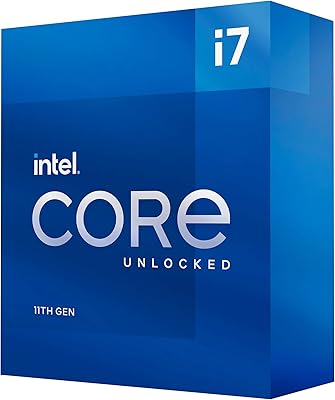
Intel Core i7-11700K Desktop Processor
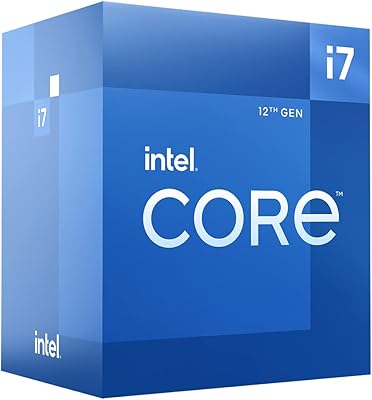
Intel Core i7-12700 Desktop Processor
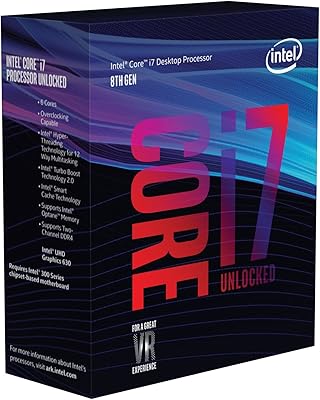
Intel Core i7-8700K Desktop Processor
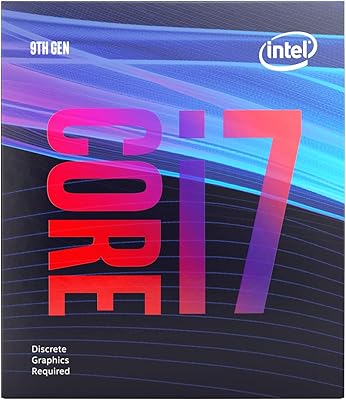
Intel Core i7-9700F Desktop Processor
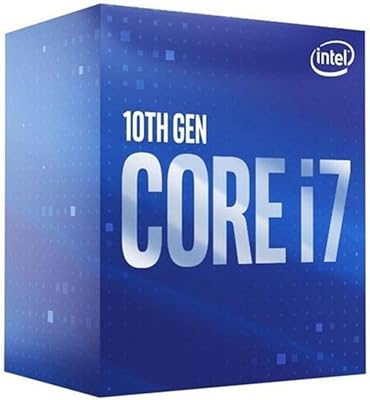
Intel Core i7-10700F Desktop Processor
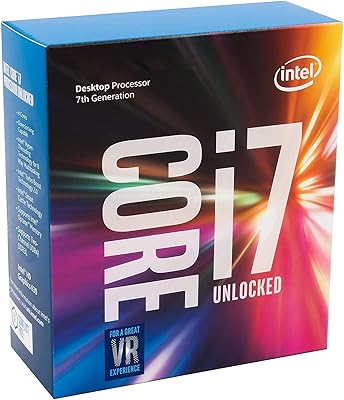
Intel Core i7-7700K Desktop Processor
Intel Core i5-13400F Raptor Lake Desktop Processor
Intel Core i7-9700K Octa-Core Desktop Processor
Intel Core i5-9500 Desktop Processor