Overview

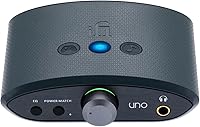
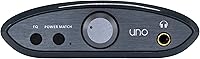
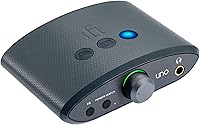
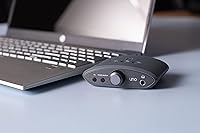
The iFi Uno DAC Headphone Amplifier is iFi Audio's answer to one of the most common frustrations in everyday listening: the embarrassingly weak, often hissy audio output built into most laptops, phones, and tablets. A DAC — short for digital-to-analog converter — takes the digital signal from your device and converts it cleanly, before handing it to a dedicated amplifier stage. The iFi Uno handles both in a compact, desk-friendly box with a USB-C input that works with modern hardware right out of the box, no drivers required on most platforms. It is not a high-end audiophile endgame, but as an entry-level audio upgrade, it covers the basics honestly well.

Features & Benefits

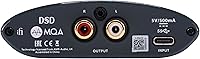
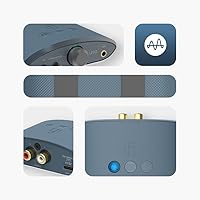
The most practical feature of this desktop DAC/amp is the three onboard EQ presets — Music, Movie, and Game — controlled by a physical switch, no app required. Music mode adds a slight warmth and fullness to the midrange; Movie mode broadens the soundstage with a touch of bass weight; Game mode sharpens transient attack for positional cues. On the technical side, the hardware supports 32-bit/384kHz playback and MQA decoding, which is useful if you subscribe to Tidal HiFi, though most casual listeners will never notice the difference. The RCA output is a genuine plus for anyone running powered desktop speakers, letting you drive both headphones and monitors from a single source.

Best For

This USB audio upgrade is most at home on a desk where a laptop or PC is the primary audio source. If you find yourself turning the volume up just to push past background hiss, or your headphones sound thin and flat through your computer's built-in output, this is the kind of fix that makes an immediate, obvious difference. Gamers get real value from the dedicated Game EQ mode, which adds clarity and punch without any software configuration. The RCA outputs make it practical for hybrid setups — headphones during calls, speakers for music. That said, if you own high-impedance headphones above 150 ohms, the 37mW output may leave you wanting more power than this unit can cleanly deliver.

User Feedback

Across more than 500 ratings, the iFi Uno sits at 4.2 stars — a score that feels accurate given both its strengths and its rough edges. The most consistent praise centers on the immediate sonic improvement over built-in laptop audio: buyers describe a cleaner background, better instrument separation, and tighter bass. Less enthusiastic feedback targets the all-plastic chassis, which feels lightweight in a way some find underwhelming at this price. The Game EQ mode earns the most love; Music mode divides opinion, with several users calling it overly warm. A handful of Windows users flagged initial driver conflicts, though most resolved them with a firmware update or switching USB ports. Honest summary: it delivers on its core promise more often than not.

Pros

  • Immediately reduces background hiss and adds noticeable clarity compared to built-in laptop or phone audio outputs.
  • Three physical EQ presets — Music, Movie, and Game — let you shift the sound character without installing any software.
  • The RCA stereo output makes it easy to connect powered desktop speakers alongside headphones from one device.
  • Bus-powered over USB means no extra cables, no wall adapter, and no clutter on your desk.
  • Supports hi-res audio up to 32-bit/384kHz and DSD256, covering virtually every streaming and local file format in common use.
  • Plug-and-play on Windows, macOS, Android, and iOS — most users are up and running in under a minute.
  • Compact footprint fits comfortably on a crowded desk without demanding dedicated space.
  • The iFi Uno comes from a brand with a genuine track record in the budget-to-mid-range DAC space, lending credibility to the hardware design.
  • Game EQ mode consistently earns praise for sharpening directional audio in competitive and cinematic gaming contexts.

Cons

  • The all-plastic chassis feels noticeably lightweight and does not project the durability buyers might expect at this price point.
  • At 37mW output, the unit struggles to properly power high-impedance or planar magnetic headphones.
  • Music EQ mode divides opinion sharply — some users find it adds a coloration that feels unnatural rather than flattering.
  • MQA decoding is a niche feature with fading industry support, making it a weak justification for purchase on its own.
  • Some Windows users encounter driver conflicts on first setup, requiring a firmware update or USB port swap to resolve.
  • No balanced output option limits compatibility with higher-end IEM cables and balanced headphone amplifiers.
  • The included USB-A to USB-C cable is functional but short, restricting placement flexibility relative to your computer.
  • Volume control is basic, with no fine-grained adjustment — step increments can feel coarse with sensitive in-ear monitors.

Ratings

The iFi Uno DAC Headphone Amplifier has been scored by our AI system after analyzing verified purchase reviews from buyers across global markets, with spam, incentivized, and bot-generated submissions actively filtered out before scoring. Each category below reflects the full spread of real user experience — not just the highlights — so both where this desktop DAC/amp genuinely delivers and where it falls short are captured honestly.

Sound Quality Improvement
83%
The jump from a laptop's onboard audio to this USB audio upgrade is immediately obvious — buyers consistently describe a quieter background, more defined instrument separation, and a bass response that actually has shape to it. For anyone living with thin, hissy headphone output from a MacBook or budget Windows machine, the difference is audible on first listen.
The improvement is most dramatic when upgrading from a particularly weak source — users coming from a mid-range gaming headset or a decent motherboard with quality onboard audio may find the gap less significant than expected. This is an entry-level unit, and the ceiling becomes noticeable if you push it with more resolving headphones.
Build Quality
61%
39%
The plastic shell is solid enough that it does not flex or creak under normal desk use, and the unit sits flat without wobbling. At its compact size, the lightweight chassis makes it easy to reposition or pack away without disturbing the rest of your desk setup.
The all-plastic construction is the most criticized aspect of this desktop DAC/amp in buyer reviews — several users explicitly note it feels out of step with competing devices at a similar price point that use aluminum or brushed-metal enclosures. The switches and port surrounds feel functional but not confidence-inspiring for long-term daily handling.
Ease of Setup
88%
On macOS and most Android devices, setup takes under a minute — plug in the USB cable, select the output in your audio settings, and you are listening. Even buyers who describe themselves as non-technical consistently report getting up and running without consulting any documentation or visiting a support page.
Windows users wanting hi-res audio above 24-bit/96kHz may need to separately install iFi's ASIO driver, which adds a friction point some find frustrating after expecting a fully plug-and-play experience. A smaller subset of Windows users also encountered device recognition errors that required switching USB ports or reinstalling drivers before the unit was properly detected.
EQ Modes
74%
26%
The physical EQ switch is genuinely useful — no app, no software, just a quick toggle between three distinct sound profiles. Game mode stands out as the most universally praised preset, sharpening transient response in a way that makes footsteps and environmental audio cues noticeably more distinct during competitive or atmospheric gaming sessions.
Music mode is the most divisive preset — a meaningful share of reviewers find it adds a midrange warmth that tips from pleasant into colored, making it less suited for acoustic instruments or vocal-led recordings. Movie mode is pleasant but subtle enough that some users feel the difference over a flat response is not pronounced enough to bother toggling for.
Value for Money
82%
18%
Buyers get a hardware DAC and amplifier from a brand with genuine audiophile credibility, plus features like RCA outputs and onboard EQ presets that many competitors at a similar price skip entirely. Most users feel the sonic improvement over built-in audio alone justifies the purchase within the first day of use, without needing to rationalize secondary features.
The plastic enclosure is the main sticking point when assessing overall value — at this price, several rival units offer a more premium-feeling chassis that simply feels better to own long-term. If your primary goal is powering demanding headphones rather than average consumer cans, the value calculation shifts considerably given the hard ceiling on output power.
Headphone Compatibility
71%
29%
The iFi Uno drives the vast majority of everyday headphones — budget closed-backs, consumer over-ears, and most IEMs — without any audible strain or distortion. Sensitive earbuds and typical closed-back designs in the 16–80 ohm range respond particularly well, reaching comfortable listening levels cleanly and without any sense of running out of headroom.
Anything above 150 ohms — including Beyerdynamic studio headphones, Sennheiser HD-series models, or planar magnetic designs — will expose the 37mW ceiling quickly, with users reporting compressed dynamics and reduced low-end authority at higher volume levels. Balanced-connection headphones cannot be accommodated at all, since the unit offers only a single-ended 3.5mm output.
Speaker Connectivity
79%
21%
The stereo RCA output is a practical and frequently praised addition that lets users connect powered bookshelf speakers or studio monitors alongside their headphones from a single source device. Most active speakers accept RCA input natively, so no additional adapters are typically needed to get a full hybrid desk audio setup working.
Both the headphone jack and RCA outputs are live simultaneously with no independent muting, so switching between headphones and speakers requires physically disconnecting one or using a switch on the speaker side. There is also no dedicated output-level control for the RCA stage — the main volume knob adjusts both outputs together, which limits precision in mixed setups.
Hi-Res Audio Support
86%
Supporting playback up to 32-bit/384kHz PCM and DSD256 puts this unit well ahead of what most competing products in its price bracket offer on paper. Listeners who maintain local FLAC or DSD libraries — or subscribe to hi-res streaming services — can run their full catalog through it without any enforced downsampling.
The impressive technical specs are partially limited in practice by the modest amplifier stage, meaning gains from higher-resolution sources may be masked before they fully reach your ears — particularly through more revealing headphones. Casual listeners streaming at standard quality from Spotify or YouTube will hear no benefit from the hi-res DAC specification whatsoever.
Cross-Platform Compatibility
87%
Broad device support is one of the iFi Uno's quieter strengths — it works across Windows, macOS, Android, and iOS without requiring anything beyond the included cable on most configurations. Users who regularly switch between a MacBook for work and an Android phone for personal listening particularly appreciate that both transitions require no reconfiguration.
iOS users with older Lightning-port iPhones need an additional adapter not included in the box, adding a small but real cost and an extra point of failure in the cable chain. Windows users seeking bit-perfect hi-res output also need to separately download and install iFi's ASIO driver, which is not clearly signposted in the packaging or quick-start materials.
Power Delivery
63%
37%
Bus-powered operation is the right design choice for a unit of this size — there are no extra cables to manage, no dedicated wall outlet required, and the device draws cleanly from the USB host without the audible noise that switching power supplies can introduce. For the sensitivity range it is built around, the power delivery is adequate and dependable.
At 37mW, the amplifier headroom is a real and frequently encountered ceiling, not a theoretical one. Users who have pushed high-impedance or planar magnetic headphones through this USB audio upgrade consistently describe dynamics that compress and a presentation that loses authority at higher volumes — a direct result of the limited output stage reaching its limits.
Noise Floor
81%
19%
The most consistent win buyers report is a dramatically quieter background — a clean noise floor that makes fine detail in recordings, whether jazz brushwork or reverb tails in electronic music, far more audible than through typical built-in laptop or phone audio. This is where the dedicated hardware DAC investment pays off most immediately and tangibly.
A small number of users with very sensitive in-ear monitors have reported trace levels of hiss from the 3.5mm output at low volume settings, which is not uncommon for a bus-powered device but is worth knowing if your IEMs have extremely high sensitivity ratings above 110dB. The issue is rarely reported with standard over-ear or on-ear headphones.
Portability
77%
23%
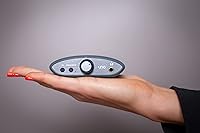
At 5.3 oz and slightly larger than a deck of playing cards, this desktop DAC/amp is easy to slip into a laptop bag for a commute or a co-working session — a quality that occasional remote workers and frequent travelers have noted approvingly in their reviews. It occupies minimal desk space, which matters in tight or shared work environments.
Despite its compact dimensions, the square footprint and permanently attached USB cable make it feel desk-anchored rather than genuinely portable — it is not designed for pocket use or active on-the-go listening the way a small dongle DAC is. The protruding RCA jacks on the rear also create mild cable management challenges in more compact or tidy desk setups.
Driver Stability
69%
31%
On macOS and modern Android devices, the unit is recognized instantly and operates without any manual intervention at all. When firmware updates are needed on Windows, the process is relatively straightforward — iFi provides clear update instructions and the patch resolves most reported conflicts without requiring a system restart or reinstalling the operating system's audio stack.
Windows is the weak point in the compatibility picture — a meaningful minority of Windows users report the device failing to initialize correctly on first connection, with the system either not detecting it or defaulting to a limited generic driver. Switching USB ports resolves it for many, but the inconsistency remains a real friction point for less technically confident buyers.
MQA Decoding
58%
42%
For Tidal HiFi Plus subscribers who actively stream MQA content, hardware decoding offers a genuine advantage over software-only rendering — the unit performs the full unfold in hardware rather than relying on the app's partial decode. It is a real feature that adds tangible value for a specific, if increasingly niche, category of listener.
MQA as a format has lost significant industry momentum, with several major hardware manufacturers having already dropped support and the format remaining absent from dominant platforms including Spotify, Apple Music, and Amazon Music. Reviewers who listed MQA as a purchase driver frequently note in retrospect that they rarely or never actually encounter it in their day-to-day listening.

Suitable for:

The iFi Uno DAC Headphone Amplifier is the right call for anyone whose laptop, desktop, or phone produces audio that sounds thin, hissy, or just plain uninspiring through a decent pair of headphones. It is particularly well-matched to everyday desk setups where a single device needs to serve both headphones and a pair of powered speakers, since the RCA output handles that without any fuss. Gamers who want a quick sonic boost — tighter positional cues, more cinematic bass — will appreciate the physical EQ switch that requires zero software to configure. If you stream on Tidal HiFi or use another hi-res platform and have been curious whether your setup is actually resolving those higher-quality files, this desktop DAC/amp gives you a legitimate hardware path to find out. It also suits anyone new to external audio gear who wants a plug-and-play entry point without a steep learning curve or a complicated driver installation.

Not suitable for:

Buyers who already own — or plan to buy — demanding headphones with impedances above 150 ohms should look elsewhere; at 37mW of output power, the iFi Uno simply lacks the headroom to drive planar magnetic or high-impedance dynamic headphones to their full potential. Listeners who prioritize build quality and expect a premium feel from their accessories may be disappointed by the all-plastic chassis, which is functional but does not inspire confidence the way an aluminum-bodied competitor might. If you are an experienced audiophile with a dedicated amplifier chain already in place, this USB audio upgrade is unlikely to offer meaningful improvement over what you already have. The lack of a balanced output — a feature common in even mid-tier dedicated DACs — will frustrate anyone whose headphone amp or IEM setup relies on a 4.4mm or XLR connection. MQA decoding is technically present but, given the format's declining industry adoption, it should not be a deciding factor in the purchase.

Specifications

  • Brand: Manufactured by iFi Audio, a UK-based brand known for producing accessible hi-fi equipment across a range of price points.
  • Model: The Uno is iFi's entry-level desktop DAC and headphone amplifier, designed for everyday listening and desk setups.
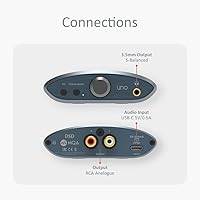
  • Audio Input: Accepts digital audio via a single USB-C port, with a USB-A to USB-C adapter cable included in the box.
  • Audio Outputs: Provides a 3.5mm stereo headphone jack for personal listening and a pair of stereo RCA jacks for connecting powered or active speakers.
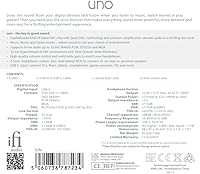
  • Max Resolution: Supports PCM audio up to 32-bit depth and 384kHz sample rate for high-resolution local file and streaming playback.
  • DSD Support: Decodes native DSD audio up to DSD256, suitable for listeners using DSD libraries or DSD-capable streaming services.
  • MQA Decoding: Full MQA hardware decoding is supported, enabling bit-perfect unfolding of MQA files from Tidal HiFi and compatible sources.
  • Output Power: Delivers up to 37mW of output power, adequate for most consumer headphones with sensitivities above 95dB and impedances below 150 ohms.
  • EQ Modes: Three hardware EQ presets — Music, Movie, and Game — are selectable via a physical switch without any software or companion app.
  • Power Source: Bus-powered directly from the connected USB host device; no external power adapter or wall outlet is required for standard operation.
  • Voltage: Operates at 3V DC, drawing power entirely from the 5V USB bus of the connected computer, tablet, or smartphone.
  • Compatibility: Works across Windows PCs, Apple Macs, Android smartphones and tablets, and iOS devices without requiring manufacturer-specific drivers on most platforms.
  • Dimensions: The unit measures 3.46 x 3.19 x 1.02 inches, giving it a compact square footprint suitable for tight desk environments.
  • Weight: Weighs 5.3 oz, making it lightweight enough to travel with a laptop bag without adding meaningful bulk.
  • Chassis Material: The outer enclosure is constructed from plastic, keeping weight low but resulting in a less premium tactile feel than metal-bodied alternatives.

Related Reviews
iFi GO blu

iFi GO blu
77%
93%
Sound Quality
89%
Codec Performance
91%
Balanced Output (4.4mm)
78%
Portability & Form Factor
84%
Build Quality
More
iFi hip-dac2
iFi hip-dac2
81%
91%
Sound Quality
88%
Build Quality
89%
Balanced Output Performance
74%
MQA Decoding
87%
Driving Power
More
iFi xDSD Gryphon Portable DAC Headphone Amplifier
79%
93%
Sound Quality
91%
Build Quality
89%
Connectivity & Inputs
84%
Bluetooth Performance
88%
IEM Compatibility
More
AIYIMA DAC-A2
AIYIMA DAC-A2
77%
83%
Sound Clarity Improvement
79%
Tone Controls (Bass & Treble)
86%
Input Versatility
74%
Headphone Amplifier Performance
53%
Build Quality & Materials
More
Topping DX3 Pro+
Topping DX3 Pro+
84%
91%
Sound Quality
88%
Headphone Amplifier Performance
93%
DAC Chip Performance
71%
Bluetooth & Wireless Performance
89%
Input & Output Versatility
More
FiiO Q11
FiiO Q11
78%
88%
Sound Quality
74%
Driving Power
91%
Battery Life
83%
Build Quality
61%
Noise Floor & IEM Compatibility
More
HiBy FC4
HiBy FC4
81%
91%
Sound Quality
93%
Balanced Output Performance
86%
Driving Power
74%
MQA Decoding
89%
Hi-Res Format Support
More
FiiO KA15
FiiO KA15
84%
93%
Sound Quality
91%
Output Power
82%
Battery Impact & Power Management
74%
EQ & App Experience
78%
Build Quality
More
FiiO K11
FiiO K11
80%
91%
Value for Money
88%
Output Power & Headphone Driving
82%
Sound Quality
79%
Build Quality
71%
Balanced Output Implementation
More
SMSL DL200
SMSL DL200
84%
93%
Audio Performance
88%
Headphone Amplifier Quality
96%
DAC Chip & Measurements
91%
Connectivity & Input Options
89%
Balanced Output Implementation
More

FAQ

On macOS, it is genuinely plug-and-play — connect the USB cable, select the device as your audio output in System Settings, and you are done. Windows works the same way for standard 16-bit and 24-bit playback, but if you want to push hi-res audio above 24-bit/96kHz or use exclusive mode, you may want to download iFi's ASIO driver from their website. A small number of users have hit driver conflicts on initial setup, but switching USB ports or updating the firmware typically resolves it.

Yes, with a small caveat. On Android, most modern phones with USB-C will recognize this desktop DAC/amp automatically and route audio through it. On iPhone, you will need Apple's USB-C to USB-A adapter (or a USB-C to Lightning adapter on older models), as iOS does not directly support USB audio over Lightning without an adapter. Once connected, iOS treats it as a standard USB audio device.

The differences are real and audible, though not dramatic. Music mode adds a subtle warmth in the lower midrange — some people love it, others find it colors the sound too much for critical listening. Movie mode widens the perceived soundstage and gives bass a little more weight, which works well for dialogue-heavy content and action sequences. Game mode is the sharpest of the three, boosting upper-frequency transient detail for clearer positional cues in competitive or atmospheric games. If in doubt, most users find starting with Music mode for headphones and Game mode for gaming gives them the most immediately useful results.

You can have both physically connected simultaneously — the 3.5mm jack handles headphones and the RCA jacks connect to your powered speakers. However, both outputs are active at the same time, so you would need to manage switching either by unplugging the headphones or using a switch on your speakers. There is no software or hardware toggle on the unit itself to mute one output independently.

Honestly, probably not to their full potential. The iFi Uno DAC Headphone Amplifier puts out 37mW, which is workable for sensitive, low-impedance headphones but starts to run out of steam with high-impedance cans like the Beyerdynamic DT 770 Pro or Sennheiser HD 600 series. You will likely be able to get listenable volume levels, but the dynamics, bass control, and overall authority will fall short of what a dedicated headphone amp would provide for those headphones.

It is useful in one specific scenario: if you have a Tidal HiFi Plus subscription and stream MQA tracks, having hardware MQA decoding means you get the full unfolding of the format rather than a software approximation. Outside of that, it is not relevant. MQA as a format has lost significant industry support in recent years and is not available on Spotify, Apple Music, or most other mainstream platforms, so for the majority of listeners it will never come into play.

It feels functional rather than premium. The plastic shell is sturdy enough for desk use and will not feel like it is about to break, but it does not have the satisfying weight or cool-to-the-touch feel of an aluminum chassis. If build quality is important to you and you are comparing this against a similarly priced metal-bodied competitor, that is a fair and reasonable concern to weigh in your decision.

It runs entirely off USB bus power — no wall adapter, no power brick. The USB-A end of the included cable can plug directly into your computer, a powered USB hub, or a standard USB charger if you are using it with a phone or tablet that does not have a free USB port. For most desktop and laptop use cases, you will never need anything beyond what is in the box.

A passive dongle contains a very basic DAC chip — usually the bare minimum required to pass audio. The iFi Uno uses a significantly higher-quality DAC chip and adds a dedicated headphone amplifier stage, which is where most of the audible improvement actually comes from. The result is a lower noise floor, better channel separation, more dynamic headroom, and the ability to properly drive a wider range of headphones. The RCA speaker output and EQ presets are also things no dongle can offer.

Not directly in the traditional line-level sense, since the RCA outputs carry a speaker-level signal intended for powered monitors rather than a fixed line-level output for feeding a separate amp. Some users do run it this way with volume at maximum into a passive attenuator, but it is not the cleanest or most ideal configuration. If your goal is to use a standalone headphone amp, you would be better served by a dedicated USB DAC with a proper line output.

Where to Buy