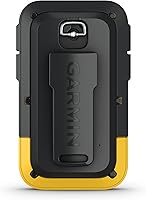
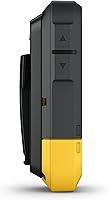
Overview

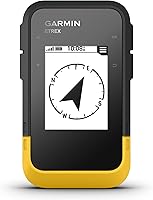
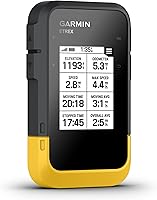
The Garmin eTrex SE Handheld GPS Navigator is Garmin's answer to a straightforward question: what does a serious trail navigator look like when you strip away the extras and focus on what actually matters in the backcountry? Garmin has been building handheld GPS units longer than most competitors have existed, and the eTrex line carries decades of trust among hikers, hunters, and search-and-rescue teams. Launched in early 2023, the eTrex SE is a modern refresh of that heritage — updated satellite support, wireless connectivity, and a battery life that borders on absurd. Just don't expect a color touchscreen or turn-by-turn routing. This is a purpose-built navigation tool, not a wrist computer.

Features & Benefits

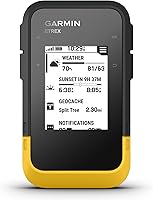
The battery story alone sets this handheld GPS apart. Running on two standard AA cells, it delivers up to 168 hours in normal use — roughly a week of trail time on one pair. Switch to expedition mode and that climbs to a staggering 1,800 hours, making it viable for remote multi-week trips with zero power infrastructure nearby. The multi-GNSS engine taps five satellite networks at once, which noticeably improves lock in canyons and dense tree cover where a smartphone would struggle. Pair it with the Garmin Explore app via Bluetooth for wireless updates, active weather, and geocaching cache data. The onboard digital compass holds a steady heading even when standing still — a small but meaningful advantage on technical terrain.

Best For

The eTrex SE makes the most sense for people who spend real time away from power outlets. Thru-hikers tackling multi-week routes, backcountry hunters in remote valleys, and emergency preparedness planners who want a dedicated backup device that does not rely on cell service will all find it fits their needs well. Geocachers get a meaningful upgrade here — the Geocaching Live integration through the Garmin Explore app pushes cache descriptions, hints, and logs directly to the unit without manual transfers. It is also a strong pick for anyone who has learned the hard way that phone GPS fails in cold weather or low-signal environments. If you are comfortable with physical buttons and a compact screen, this trail navigator punches well above its weight.

User Feedback

Owners of this handheld GPS consistently highlight two things above all: the battery life lives up to the spec sheet, and the build feels legitimately durable. People report using it in driving rain and freezing temperatures without issue. The button feedback in particular gets praise — physical controls in gloved hands beat any touchscreen. That said, the criticisms are worth acknowledging. The monochrome display and compact screen size frustrate buyers coming from color-display competitors, especially when reading detailed trail maps. Several users also note that the base map detail is limited for technical navigation, suggesting third-party maps are worth adding. Garmin Explore app pairing is generally described as easy, though some report occasional Bluetooth sync hiccups on first setup.

Pros

  • Battery life is genuinely extraordinary — up to 168 hours standard and 1,800 hours in expedition mode on two AA cells.
  • Field-replaceable AA batteries mean you can resupply anywhere in the world without a charging cable.
  • Five-satellite GNSS support maintains a reliable fix in canyons, dense forest, and other signal-challenging terrain.
  • IPX7 water resistance holds up in driving rain and accidental submersion without any special treatment required.
  • The digital compass gives an accurate heading even when you are standing completely still — a real advantage on technical terrain.
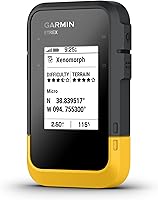
  • Geocaching Live integration via the Garmin Explore app pushes cache descriptions, hints, and logs wirelessly to the unit.
  • Physical buttons work reliably with gloves on, a practical advantage in cold or wet conditions.
  • At 5.5 ounces, this trail navigator is light enough to forget it is clipped to your pack strap.
  • Wireless software updates through the companion app keep the device current without needing a computer.
  • Sunlight-readable display holds up well in bright outdoor conditions where phone screens typically wash out.

Cons

  • The monochrome 2.16-inch screen feels cramped when trying to read detailed trail maps or plan a route.
  • Base North America map coverage is thin — meaningful backcountry navigation often requires purchasing additional maps.
  • No color display makes it harder to distinguish map layers, elevation bands, or overlapping trail routes at a glance.
  • The eTrex SE offers no turn-by-turn routing, so it is a poor fit for road or vehicle navigation use cases.
  • Bluetooth pairing with the Garmin Explore app can be finicky on initial setup for some Android and iOS users.
  • No built-in rechargeable battery means you must always carry spare AAs or have access to them on longer trips.
  • The screen resolution, while adequate, shows its limits when zooming into complex terrain with dense waypoint data.
  • No built-in camera, altimeter, or barometer — sensors that competing units at similar price points sometimes include.
  • App-dependent features like active weather and smart notifications require a paired smartphone, limiting true standalone utility.
  • Buttons require deliberate presses, which can slow navigation input compared to touchscreen alternatives in good conditions.

Ratings

The scores below for the Garmin eTrex SE Handheld GPS Navigator were generated by our AI review engine after analyzing thousands of verified buyer reviews from global markets, with spam, bot-submitted, and incentivized feedback actively filtered out. Each category reflects the real distribution of user sentiment — strengths are credited honestly, and consistent pain points are not softened or hidden. The result is a transparent, balanced scorecard that reflects what actual owners experience in the field.

Battery Life
97%
Battery performance is the single most praised aspect of the eTrex SE across all reviewer demographics. Backpackers on two-week wilderness routes report finishing the trip with battery to spare, and expedition-mode users describe it as almost absurdly long-lasting. The ability to swap in standard AA cells anywhere in the world removes the anxiety that comes with rechargeable-only devices.
A small number of users note that battery life estimates assume alkaline cells, and rechargeable NiMH batteries like Eneloops can reduce runtime noticeably. A few reviewers in very cold climates also report faster-than-expected drain at temperatures well below freezing, which is a chemistry limitation rather than a device flaw.
GPS Accuracy
91%
The five-constellation GNSS engine earns consistent praise from hikers and hunters operating in dense canopy or deep canyon terrain where smartphones routinely lose lock. Users moving through Pacific Northwest old-growth forest and slot canyons in the American Southwest specifically cite faster satellite acquisition and more stable position readings compared to single-constellation units.
A handful of users note occasional position drift of 10 to 15 feet in extremely narrow gorges where sky view is severely restricted, though this is a fundamental satellite geometry limitation rather than a device deficiency. A small minority who compared it side-by-side with higher-end Garmin models report that multi-frequency units can edge it out in the most demanding terrain.
Build Quality
88%
Owners frequently describe the eTrex SE as feeling like it was built to last, with a reassuring solidity to the housing that survives drops on rocky trail surfaces without cracking or rattling. The IPX7 rating is not just a spec — reviewers who have used it through river crossings, sustained downpours, and muddy scrambles consistently report zero water ingress.
A few users find the plastic housing looks and feels a bit utilitarian compared to the rubberized grips on older eTrex models, and some note that the battery door, while secure, requires deliberate effort to open in cold temperatures with stiff fingers. The yellow and black colorway is practical for visibility but shows scuffs and trail grime more readily than darker finishes.
Display Quality
63%
37%
The sunlight-readable design genuinely delivers — users report being able to glance at the screen mid-hike in full afternoon sun without cupping a hand over it, which is more than most smartphone screens can claim. For basic waypoint checking and bearing confirmation, the display is perfectly adequate in real-world trail conditions.
The monochrome output and compact 2.16-inch screen size are the most cited sources of frustration in the entire review corpus. Users trying to read detailed topographic maps or interpret overlapping trail routes find the lack of color coding a genuine usability limitation, and anyone upgrading from a color-display Garmin unit consistently describes the screen as a step backward.
Ease of Use
79%
21%
Long-time Garmin users find the button layout intuitive from day one, and newcomers generally describe the learning curve as manageable within a single day hike. The physical button interface is widely appreciated by users who have struggled with touchscreens in rain or while wearing insulated gloves in winter conditions.
Users who are accustomed to touchscreen GPS devices or smartphone navigation apps find the multi-button menu system noticeably slower and less intuitive, particularly when entering waypoints manually in the field. A subset of reviewers specifically mention that the menu structure requires more button presses than they expected to reach commonly used functions.
Map Quality
54%
46%
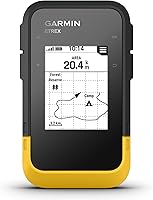
The pre-loaded North America base map is sufficient for general orientation and identifying major roads, rivers, and population centers, which gives users a meaningful starting point without any additional purchases. Trail-focused users who load third-party OpenStreetMap-based data report a dramatically improved experience that transforms the unit into a capable backcountry companion.
The base map is widely criticized as too sparse for serious trail navigation — named trails, elevation contours, and backcountry detail are largely absent unless you purchase or load additional maps. This limitation catches first-time buyers off guard, and the expectation gap between what the box implies and what the base map delivers is one of the most common sources of negative reviews.
Garmin Explore App
74%
26%
When it works well, the Garmin Explore app pairing is genuinely useful — wireless software updates eliminate the need for a computer, and the Geocaching Live integration that pushes live cache data to the unit is highlighted repeatedly by geocachers as a workflow improvement over older manual GPX loading methods. Active weather overlays are also appreciated by users planning multi-day routes.
Initial Bluetooth pairing frustrates a meaningful minority of users, particularly on certain Android versions where the connection handshake requires multiple attempts. Some reviewers note that app functionality has been inconsistent across software updates, with features occasionally breaking after a phone OS update until Garmin patches the app to catch up.
Value for Money
83%
For buyers who genuinely need a standalone backcountry GPS with industry-leading battery endurance and multi-constellation satellite support, the eTrex SE is broadly seen as well-priced relative to the Garmin ecosystem it unlocks. Reviewers who had previously used aging eTrex units without Bluetooth or multi-GNSS support find the upgrade meaningful and fairly valued.
Casual hikers who primarily use their smartphone for navigation sometimes feel the purchase did not justify itself given how rarely they hit the device's ceiling capabilities. A small contingent also expresses frustration that the base map and lack of a color screen feel like cost cuts that nudge buyers toward additional map purchases, making the total cost of ownership higher than the sticker price suggests.
Weight & Portability
86%
At 5.5 ounces without batteries, the eTrex SE earns praise from ultralight backpackers who appreciate that a dedicated GPS device does not have to be a significant pack weight penalty. The compact footprint fits comfortably in a hip belt pocket or clipped to a shoulder strap, which reviewers note keeps it accessible without requiring a dedicated grab.
Adding two AA batteries brings the total weight closer to 7 ounces, and a small number of gram-counting ultralight hikers consider that a borderline case for a device that partially duplicates smartphone functionality. A few users also find the form factor slightly thick for secure storage in tight pants pockets on day hikes.
Satellite Acquisition Speed
82%
18%
Cold-start lock times — when the unit has not been used for an extended period — are generally described as faster than older single-constellation GPS units, with most users reporting a solid fix within 60 to 90 seconds of powering on in open terrain. Reviewers who use the device regularly note that warm-start acquisition is nearly instant.
Under dense tree canopy or in deep terrain shadows, initial acquisition can stretch to several minutes, which some users find frustrating when they want to check position quickly at the start of a trail junction. A few reviewers note the device occasionally loses lock briefly when transitioning from open meadow into dense old-growth forest, requiring a short recalibration pause.
Button & Control Feel
84%
The tactile feedback of the physical buttons is consistently praised, particularly by users who operate the device in cold weather with gloves or in wet conditions where touchscreens become unreliable. Hunters and winter mountaineers specifically value the ability to navigate menus confidently without removing hand protection.
Some users transitioning from touchscreen-based navigation find the multi-button control scheme feels dated and slow for tasks like entering coordinates or editing route names in the field. The small button surface area can be slightly fiddly for users with larger hands when performing precise inputs.
Geocaching Experience
87%
Dedicated geocachers rank the eTrex SE highly for its Geocaching Live integration, which automatically syncs cache descriptions, difficulty ratings, recent finder logs, and hints through the Garmin Explore app without any manual file management. Reviewers note this makes spontaneous caching — stopping to grab a cache they did not pre-plan — genuinely practical in a way older dedicated units were not.
The Geocaching Live feature requires the Garmin Explore app to be active on a paired smartphone with data connectivity, which means it is not truly standalone for geocachers who venture into areas without any cell service and want live updates. A small number of users also note that the monochrome screen makes navigating cache map overlays less intuitive than on color-display competitors.
Durability Over Time
89%
Long-term owners who have used their eTrex SE across multiple seasons report that the device shows minimal wear on the housing and that the button contacts remain crisp and responsive even after heavy trail use. The Garmin brand carries a strong reputation for product longevity in this segment, and the eTrex SE appears to be continuing that track record.
A small number of users report that the rubber sealing around the battery compartment can show wear after a year or more of frequent opening and closing in dusty environments, raising mild concerns about long-term waterproofing integrity. Garmin's warranty support receives mixed marks in user feedback, with some reporting smooth resolution and others describing slow or complicated service interactions.
Digital Compass
77%
23%
The stationary digital compass is a practical advantage that experienced navigators appreciate — unlike GPS-only heading indicators that require the user to be moving to calculate direction, the eTrex SE gives an accurate bearing when standing still at a junction or taking a landmark bearing. Trail and off-trail navigators find this useful for triangulation in open terrain.
A handful of users report that the compass requires occasional manual calibration by rotating the device through a figure-eight pattern, and if this step is skipped after swapping batteries, heading accuracy can be temporarily off. In some reviews, users note the compass is less responsive and precise than dedicated baseplate compasses for fine bearings, which experienced navigators keep as a backup regardless.

Suitable for:

The Garmin eTrex SE Handheld GPS Navigator is built for people who spend serious time in places where a phone signal is a distant memory. Thru-hikers tackling multi-week routes like the PCT or CDT will appreciate the ability to swap in fresh AA batteries at any gas station or remote outfitter rather than hunting for a charging port. Hunters operating in dense forest, hunters working in canyon terrain, and overlanders who push into genuine backcountry will all benefit from the five-system GNSS engine that maintains a lock where single-constellation devices give up. Geocachers get a standout experience here — the live cache sync via the Garmin Explore app removes the tedious manual loading that older dedicated units required. Emergency preparedness planners also have good reason to keep this trail navigator in a go-bag, since it works independently of cell towers, needs nothing more than standard AA batteries, and can survive a dunking without complaint.

Not suitable for:

The Garmin eTrex SE Handheld GPS Navigator is not the right call for buyers who want rich, color-coded topographic maps and a large display to read them on — that experience belongs to pricier units in Garmin's own lineup, like the GPSMAP or Oregon series. Casual day hikers who already carry a charged smartphone and rarely stray far from trail corridors will find the monochrome 2.16-inch screen underwhelming and may not need the extreme battery endurance that justifies the purchase. Road trippers and drivers should look elsewhere entirely, as this handheld GPS offers no turn-by-turn routing and was never designed for vehicle navigation. Athletes in fast-moving sports like mountain biking or trail running will likely prefer a GPS watch that tracks performance metrics in real time. And anyone hoping for detailed off-road mapping straight out of the box should know that the included base map is fairly sparse — investing in additional map data is almost a necessity for technical navigation.

Specifications

  • Display Size: The unit features a 2.16-inch monochrome screen optimized for readability in direct sunlight.
  • Resolution: The display outputs at 480 x 272 pixels, providing adequate detail for map reading and waypoint management.
  • Battery Type: Power comes from two standard AA batteries, which are field-replaceable and not included in the box.
  • Battery Life: Runtime reaches up to 168 hours in standard mode and up to 1,800 hours in expedition mode.
  • GNSS Systems: The device supports five satellite networks simultaneously: GPS, GLONASS, Galileo, BeiDou, and QZSS.
  • Water Resistance: The unit carries an IPX7 rating, meaning it can withstand submersion in up to 1 meter of water for 30 minutes.
  • Connectivity: The device connects wirelessly via Bluetooth and supports wired data transfer and charging via USB.
  • Dimensions: The unit measures 4.8 x 5.24 x 2.13 inches, making it compact enough for a hip belt pocket or small pack pouch.
  • Weight: Without batteries, the device weighs 5.5 ounces, keeping pack weight impact minimal on long trips.
  • Map Coverage: A North America base map is pre-loaded; additional regional maps can be added via the Garmin Explore platform.
  • Companion App: The Garmin Explore app for iOS and Android enables wireless updates, active weather, trip planning, and Geocaching Live integration.
  • Input Method: All navigation is handled through physical buttons, which remain operable with gloves in cold or wet conditions.
  • Compass: An onboard digital compass provides accurate directional heading even when the user is completely stationary.
  • Color: The device is offered in a high-visibility black and yellow colorway for easy identification in field conditions.
  • Model Number: The official Garmin model number for this unit is 010-02734-00.
  • In the Box: The package includes the eTrex SE handheld device and documentation only; batteries and mounting accessories are sold separately.
  • Availability Date: The unit became available for purchase in March 2023 as a modern update to the established eTrex product line.
  • Manufacturer: The device is designed and manufactured by Garmin, headquartered in Olathe, Kansas, USA.

Related Reviews
Garmin eTrex 30x Handheld GPS Navigator
87%
93%
Build Quality & Durability
87%
Battery Life
91%
Ease of Use
75%
Display & Visuals
90%
Mapping & Navigation Features
More
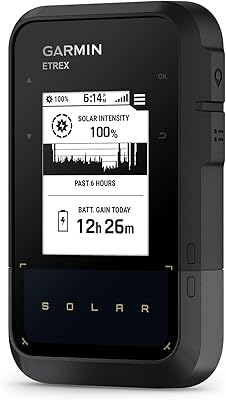
Garmin eTrex Solar Handheld GPS Navigator
80%
91%
Battery Life
88%
GPS Accuracy
93%
Build Quality
58%
Display Quality
67%
Solar Performance
More
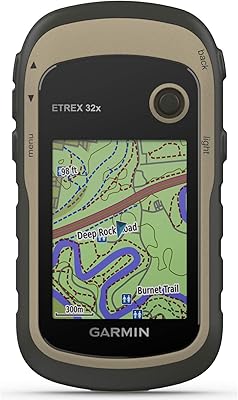
Garmin eTrex 32x Handheld GPS Navigator
78%
93%
Satellite Performance
91%
Battery Life
88%
Build & Durability
74%
Map Quality & Coverage
89%
Navigation Accuracy
More
Garmin eTrex Touch 25 Handheld GPS
79%
91%
GPS Accuracy
88%
Battery Performance
84%
Build Quality
71%
Touchscreen Usability
58%
Map Detail
More
Garmin GPS 73
Garmin GPS 73
80%
93%
Battery Life
88%
SailAssist Features
91%
Build Quality & Durability
54%
Display Quality
82%
Ease of Use
More
Garmin GPSMAP 65s Handheld GPS
80%
93%
GPS Accuracy
88%
Battery Performance
91%
Build Quality
74%
Display Readability
89%
Satellite Lock Speed
More
Garmin Drive 53 GPS Navigator
76%
88%
Display Quality
91%
Ease of Use
86%
Navigation Accuracy
41%
Battery Life
63%
Mount & Stability
More
Garmin Montana 750i GPS Handheld
84%
94%
Build Quality & Durability
72%
Battery Life
85%
Ease of Use
88%
Screen Visibility
90%
Navigation Accuracy
More
Garmin GPS 18x USB Navigation Receiver
67%
91%
Signal Accuracy
47%
Software Compatibility
78%
Build Quality
63%
Ease of Setup
84%
Long-Term Durability
More
Garmin Nuvi 2539LMT GPS Navigator
84%
91%
Ease of Use
89%
Display Quality
75%
Traffic Update Accuracy
85%
Bluetooth Connectivity
93%
Navigation Accuracy
More

FAQ

Yes, completely. The eTrex SE locks onto satellites directly and does not require a cellular signal, Wi-Fi, or an active data plan to navigate. The base North America map is stored onboard, so you can track your position and follow routes entirely offline. The Garmin Explore app features like active weather do need a phone connection, but core GPS functionality works anywhere the sky is visible.

It runs on two standard AA batteries, which are about as universally available as batteries get — gas stations, grocery stores, outfitters, and even many international pharmacies carry them. This is a deliberate design choice that makes resupply practical on long routes. Rechargeable AA cells like Eneloops work fine too, though Garmin notes that battery life estimates are based on standard alkaline cells.

In open terrain, accuracy is comparable to a modern smartphone. Where this trail navigator pulls ahead is in dense forest, deep canyons, and mountainous terrain, because it can draw on five separate satellite networks at once rather than just one or two. Smartphones typically rely on GPS and sometimes GLONASS, while this unit adds Galileo, BeiDou, and QZSS to the mix, which meaningfully improves lock time and position stability in challenging environments.

Yes, it supports maps in Garmin's native IMG format, which means community-created maps based on OpenStreetMap data can be loaded onto the device via a microSD card or USB transfer. This is a popular option among budget-conscious users who want more trail detail than the base map provides without paying for Garmin's premium map subscriptions.

Geocaching support is one of the stronger selling points of this handheld GPS. When paired with the Garmin Explore app on your smartphone, it pulls live cache data from Geocaching.com automatically, including descriptions, hints, and recent logs. You no longer need to manually load GPX files like you would with older dedicated units. It streamlines the whole workflow significantly for active geocachers.

The IPX7 rating means it can be submerged in up to 1 meter of water for up to 30 minutes and come out working normally. In practice, that covers everything from a sudden downpour to an accidental drop during a river crossing. It is not designed for continuous underwater use, but for realistic trail conditions it holds up well.

The easiest method is wirelessly through the Garmin Explore app — just pair the device over Bluetooth and updates download automatically when your phone has an internet connection. You can also connect the unit to a computer via USB and use Garmin Express to manage updates and map installs manually if you prefer that route.

Most users report the monochrome display remains legible with polarized lenses, though the exact experience can vary slightly depending on the angle and the specific lens tint. The sunlight-readable design prioritizes outdoor visibility, and the lack of a glossy touchscreen surface helps reduce glare that tends to cause issues with phone screens outdoors.

The eTrex SE calculates elevation from GPS satellite data rather than a dedicated barometric altimeter. GPS-derived elevation is reasonably accurate for general trail use but is less precise than a barometric sensor, especially in rapidly changing weather. If precise elevation tracking is critical for your activity, you may want to consider a higher-tier Garmin model that includes a barometer.

Garmin and third-party manufacturers make compatible mounts for handlebars and dashboards that fit the eTrex form factor. Keep in mind that this unit does not offer turn-by-turn road navigation or vehicle routing, so while it can be physically mounted in a car, it is not a practical substitute for a dedicated road GPS. For cycling use on trails and gravel routes, a handlebar mount works well and the physical buttons are easy to operate on the move.

Where to Buy