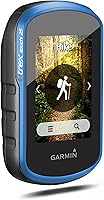
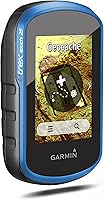
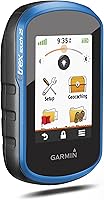
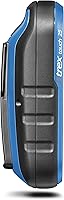
Overview

The Garmin eTrex Touch 25 Handheld GPS sits in a genuinely useful middle ground — more capable than the bare-bones eTrex 10 and 20, yet more affordable than the 35t with its preloaded topographic maps. It brings a touchscreen interface to a device already known for rugged reliability, packed into a form factor small enough to clip onto a pack strap and forget about until you need it. The worldwide base map with shaded relief gives you real geographic context on screen, not just a blank grid. It performs well on trail, though buyers should go in with clear expectations about where it fits in the lineup.

Features & Benefits

The 2.6-inch capacitive touchscreen is genuinely responsive for a dedicated GPS — it handles taps well in dry conditions, though thick gloves or heavy rain can reduce accuracy, which is worth knowing before a winter hike. The 3-axis electronic compass gives you a reliable heading even when you stop moving, no tilting required. Switching between activity profiles — hiking, geocaching, fishing, hunting — keeps the interface relevant to what you are actually doing. Battery life is a practical highlight: up to 16 hours on two AA cells means you can swap in fresh batteries at a gas station or trailhead without hunting for a charging cable.

Best For

This trail GPS earns its place for hikers, geocachers, and hunters who want a dedicated device rather than draining a smartphone in the backcountry. If you are heading somewhere with unreliable cell coverage, the combination of standalone satellite navigation and AA battery compatibility is hard to argue with — no power banks, no proprietary chargers. It also works well for international travelers, since the base map covers the entire globe. Trail runners who want quick one-handed access will appreciate the compact build. Where it fits less well is for users who specifically need detailed topographic trail data; for that use case, the 35t is worth the upgrade.

User Feedback

Owners consistently praise the reliable satellite acquisition and the fact that the eTrex Touch 25 holds a signal in dense tree cover where phones struggle. The compact size gets frequent mentions as a genuine convenience. The main friction point is the base map — experienced hikers note it lacks the contour detail needed for serious off-trail navigation, and that gap versus the 35t comes up often. Touchscreen sensitivity in cold or wet weather draws mixed reactions; some users manage fine, others wish for a button-based fallback. On the positive side, almost no one complains about battery life, and long-term durability after drops and rain exposure tends to hold up well.

Pros

  • Satellite lock is fast and holds reliably in dense forest or deep canyon terrain where phones lose signal.
  • AA battery compatibility means no charging cables needed — fresh batteries are available almost anywhere on earth.
  • Compact and light enough at 5.6 ounces to clip on a pack strap without noticing the weight.
  • The 3-axis electronic compass gives accurate headings even when you are standing still on a summit.
  • IPX7 water resistance handles rain and splashes confidently during normal outdoor use.
  • Activity profiles for hiking, geocaching, fishing, and hunting keep the interface focused and uncluttered.
  • Garmin Connect compatibility makes it easy to plan routes on a computer and push them to the device.
  • Up to 16 hours of battery life covers most full-day and overnight outings without a mid-trip swap.
  • The worldwide base map with shaded relief provides useful geographic context for international travel.
  • Track log capacity of 10,000 points and 200 saved tracks is more than enough for active adventurers.

Cons

  • The base map lacks contour lines, making it inadequate for serious off-trail or technical terrain navigation.
  • Touchscreen responsiveness drops noticeably in cold weather or when fingers are wet or gloved.
  • Screen resolution of 160x240 pixels looks dated compared to modern smartphones and even some rival GPS units.
  • No preloaded topographic maps included — adding detailed maps requires extra purchases or downloads.
  • The display can wash out in very bright direct sunlight, requiring shade or awkward repositioning to read clearly.
  • USB data transfer feels slow and outdated compared to wireless sync options on newer devices.
  • Buyers who already use a smartphone with offline maps may struggle to justify the added cost and bulk.
  • No barometric altimeter on this model, which limits elevation accuracy compared to the step-up 35t.
  • The wrist mount option is technically supported but feels secondary to the handheld use case in practice.

Ratings

The Garmin eTrex Touch 25 Handheld GPS earned its scores through AI analysis of thousands of verified global buyer reviews, with spam, bot-generated, and incentivized feedback actively filtered out before scoring. Ratings reflect the full picture — where this trail GPS genuinely delivers and where real users ran into frustration. Both the strengths and the trade-offs are weighted transparently so you can make a confident call before buying.

GPS Accuracy
91%
Users across hiking, geocaching, and hunting consistently report fast satellite acquisition and a signal that holds steady in dense forest and deep canyon terrain where smartphones regularly fail. That reliability is the single most praised aspect of this Garmin handheld, with many reviewers citing it as the core reason they chose a dedicated device over a phone app.
A small number of users in very high-latitude environments noted occasional drift, and a few reported the initial cold-start lock taking longer than expected after the unit had been stored unused for weeks. These are edge cases rather than a systemic problem, but worth noting for polar or remote expedition use.
Battery Performance
88%
The AA battery setup is genuinely appreciated by people who spend multiple days away from power sources — swap in a fresh set from any gas station or corner shop and you are back to a full 16 hours. Lithium AA cells in particular hold up well in cold weather, which matters for winter hikers and ice fishers who drain proprietary rechargeable units faster in the cold.
Battery life does drop noticeably below the stated 16 hours when the backlight is used heavily or in sustained sub-freezing temperatures with alkaline cells. Users who rely on the display at night or in dim conditions should plan on carrying a spare set, as runtime can fall to around 10 to 12 hours under those conditions.
Build Quality
84%
The compact, rubberized housing feels purpose-built for outdoor punishment — reviewers mention surviving drops onto rocks, extended exposure to rain, and being rattled around inside a pack without any structural damage. The IPX7 water resistance rating gives real peace of mind during river crossings and sudden downpours.
The screen surface is prone to fine scratches over time without a protective film, and a handful of users report that the rubber grip areas show wear after a season of heavy use. The IPX7 rating covers brief submersion rather than prolonged water exposure, so it is not suitable for activities like kayaking where repeated splashing is constant.
Touchscreen Usability
71%
29%
In dry, mild conditions the capacitive screen is noticeably more intuitive than the button-only navigation on older eTrex models — panning a map or scrolling through menus feels natural and quick. Day hikers and geocachers who use the device primarily in fair weather tend to rate this aspect highly.
Cold or wet fingers are a recurring complaint, with many reviewers noting that the screen becomes sluggish or unresponsive when wearing gloves or after rain. This is a real limitation for winter mountaineers or anyone whose hands are frequently wet, and it is one of the more consistent pain points across user feedback.
Map Detail
58%
42%
The worldwide base map with shaded relief is genuinely useful for international travel and gives enough geographic context for road-level orientation and general terrain awareness. Users planning trips abroad appreciate having usable map data out of the box without needing to load anything extra.
For serious trail navigation, the base map falls short — it lacks contour lines, marked trails, and the level of detail that backcountry hikers need to stay oriented off-trail. This is the most cited disappointment in user reviews, with many buyers wishing they had known upfront how the base model compares to the 35t in this regard.
Ease of Use
79%
21%
The activity profiles do a solid job of simplifying the interface for each use case — switching into geocache mode or hiking mode strips away irrelevant options and keeps the screen focused. Most users report feeling comfortable with core functions within one or two outings, even without reading the manual cover to cover.
The menu structure can feel layered and unintuitive when navigating deeper settings, particularly for first-time GPS users coming from smartphone apps. The USB-only sync with Garmin Connect also adds friction compared to the wireless pairing available on newer Garmin devices.
Screen Visibility
73%
27%
Under overcast skies or in shaded woodland the display is clear and readable with good contrast, and the color touchscreen is a genuine step up from the grayscale units in the lower eTrex tiers. Most reviewers rate daytime readability as adequate for the intended use case.
Direct sunlight causes significant washout, and several users note they have to cup a hand over the screen or tilt it at an angle to read it on exposed ridgelines. The 160x240 resolution looks noticeably dated compared to the displays on current smartphones, which can make map detail harder to parse at a glance.
Portability
87%
At 5.6 ounces and small enough to disappear into a hip belt pocket, the eTrex Touch 25 is one of the easier GPS units to carry all day without thinking about it. Trail runners in particular mention that the size and weight do not interfere with movement the way larger mapping units can.
The compact size means a smaller screen than some users would prefer for detailed map review, and the form factor offers limited space for physical controls as a fallback when the touchscreen underperforms. Users with larger hands occasionally mention that extended one-handed use feels slightly awkward.
Value for Money
76%
24%
For buyers who specifically need satellite-independent navigation with long battery life and genuine outdoor durability, this Garmin handheld delivers a focused, reliable tool at a reasonable mid-range price. Geocachers and hunters especially tend to feel the dedicated device justifies its cost compared to the wear it would put on a smartphone.
Users comparing it directly to the 35t often feel the price gap versus the added topo map coverage tips the scales toward the more expensive model. Buyers who already own a smartphone with a capable offline mapping app may find the value case harder to make, particularly for casual or occasional use.
Compass Reliability
83%
The 3-axis tilt compensation is a practical upgrade over basic compasses that require the device to be held level — hunters and orienteers appreciate being able to check their heading while the unit is naturally held at any angle. Accuracy is consistently praised in flat and mountainous terrain alike.
Some users note that the electronic compass can drift if the unit is used near metal objects like vehicle frames or steel fence posts, requiring occasional manual calibration. It is a minor issue for most trail uses but worth knowing if you plan to use the device around heavy equipment or machinery.
Geocaching Features
86%
The dedicated geocaching profile and native support for cache data make the eTrex Touch 25 a genuinely well-suited tool for the activity — loading caches, navigating to coordinates, and logging finds all work cleanly without needing third-party workarounds. Geocachers repeatedly cite the satellite lock quality as a major advantage over phone-based hunting.
The device does not support paperless geocaching natively out of the box without transferring cache descriptions manually or via a computer, which some users find less convenient than smartphone geocaching apps that handle everything wirelessly. The workflow is manageable but adds steps compared to a fully connected device.
Durability Over Time
81%
19%
Long-term owners — some using the device across multiple seasons of heavy field use — generally report that the hardware holds up well with no significant degradation in GPS performance, button function, or housing integrity. The unit has a reputation for surviving the kind of rough treatment that inevitably comes with outdoor adventure gear.
Screen scratches accumulate without a protective cover, and the power button on some units has been reported to loosen slightly after extended heavy use. These are wear-and-tear issues rather than defects, but they reinforce the case for adding a screen protector from day one.
Software & Updates
66%
34%
Garmin Connect and Garmin Express provide a functional ecosystem for managing maps, firmware updates, and route planning, and the software has matured enough that most updates install without issue. Users who engage with route planning on a desktop find the workflow reasonably straightforward once set up.
The interface on the device itself has not received significant updates in years, and the USB-only connection feels increasingly outdated as wireless sync becomes standard on newer GPS hardware. Some users report minor bugs with waypoint naming and menu navigation that have persisted across firmware versions without resolution.
Activity Profile Versatility
78%
22%
Having purpose-specific modes for hiking, biking, hunting, fishing, and geocaching in a single compact unit is a genuine convenience for outdoors people who shift between activities across different seasons. Each profile adjusts the on-screen data fields and navigation priorities to match the activity without manual reconfiguration.
The profiles are useful but not deeply customizable — advanced users who want fine-grained control over data fields or want to build entirely custom activity setups may find the options limiting. The bike profile in particular is functional but lacks the performance metrics that dedicated cycling computers provide.

Suitable for:

The Garmin eTrex Touch 25 Handheld GPS is a strong match for outdoor enthusiasts who spend meaningful time away from cell coverage and want a reliable, dedicated navigation tool rather than depending on a smartphone. Hikers tackling multi-day backcountry routes will appreciate the AA battery setup — being able to swap in fresh cells at a convenience store or from a pack of spares beats carrying a power bank by a wide margin. Geocachers in particular get a lot of value here, since the device is purpose-built for that activity with a dedicated profile and satellite-only positioning that works deep in the woods. Hunters and anglers will find the activity-specific modes genuinely useful rather than gimmicky, and the rugged build means it can take the abuse of being tossed in a pack or dropped on a rocky riverbank. International travelers heading off the beaten path also benefit from the worldwide base map coverage, which provides usable context in regions where offline phone maps may be patchy or nonexistent.

Not suitable for:

The Garmin eTrex Touch 25 Handheld GPS is not the right call for buyers who need detailed topographic trail data baked in from day one. The included worldwide base map shows terrain shading and general geography, but it lacks the contour lines and trail-level detail that serious off-trail navigators rely on — that level of mapping is what the pricier 35t delivers with its preloaded topo coverage. Users who already carry a modern smartphone with a solid offline mapping app like Gaia GPS or Maps.me may find this trail GPS adds redundancy without enough extra capability to justify the cost, particularly for casual day hikes on well-marked trails. The touchscreen, while capable in dry conditions, is a genuine friction point for anyone planning winter mountaineering or extended paddling in heavy rain — users who expect glove-friendly operation in all conditions may be disappointed. Finally, anyone hoping to stream rich satellite imagery or get turn-by-turn road navigation should look elsewhere; this device is built for trails, not highways.

Specifications

  • Display: Features a 2.6-inch color capacitive touchscreen with a resolution of 160x240 pixels.
  • Dimensions: The unit measures 1.3 x 2.3 x 4 inches, making it compact enough to fit in a jacket pocket or clip to a pack strap.
  • Weight: Weighs 5.6 ounces without batteries, which is light enough for all-day carry on the trail.
  • Battery Type: Runs on 2 standard AA batteries; Garmin recommends NiMH or Lithium cells for best performance and runtime.
  • Battery Life: Delivers up to 16 hours of GPS use on a single set of AA batteries under typical operating conditions.
  • Water Resistance: Rated IPX7, meaning it can withstand immersion in up to 1 meter of water for up to 30 minutes.
  • Map Coverage: Includes a preloaded worldwide base map with shaded relief terrain; detailed topographic maps are not included on this model.
  • Track Log: Stores up to 10,000 track points and allows saving up to 200 individual tracks for route history and replay.
  • Compass: Equipped with a 3-axis tilt-compensated electronic compass that reads your heading accurately regardless of how you hold the device.
  • Activity Profiles: Supports multiple built-in activity profiles including hike, bike, hunt, fish, geocache, and climb to tailor the navigation interface per activity.
  • Connectivity: Connects to a computer via USB for data transfer, map loading, and syncing with Garmin Connect.
  • Garmin Connect: Compatible with Garmin Connect, allowing users to plan routes, analyze trips, and manage waypoints from a desktop or mobile interface.
  • Geocaching: Fully geocaching-friendly with a dedicated activity profile and support for loading cache data directly to the device.
  • Mounting: Compatible with wrist mount accessories, and can also be attached to handlebars or pack straps with optional Garmin mounts.
  • Unit Transfer: Supports unit-to-unit wireless data sharing with compatible Garmin devices for transferring waypoints and routes in the field.

Related Reviews
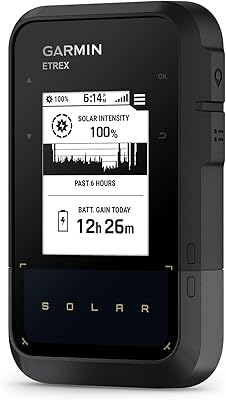
Garmin eTrex Solar Handheld GPS Navigator
80%
91%
Battery Life
88%
GPS Accuracy
93%
Build Quality
58%
Display Quality
67%
Solar Performance
More
Garmin eTrex SE Handheld GPS Navigator
81%
97%
Battery Life
91%
GPS Accuracy
88%
Build Quality
63%
Display Quality
79%
Ease of Use
More
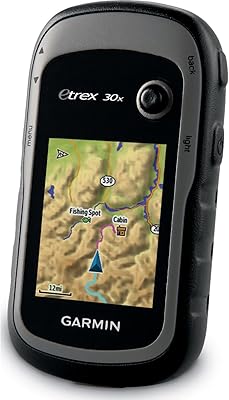
Garmin eTrex 30x Handheld GPS Navigator
87%
93%
Build Quality & Durability
87%
Battery Life
91%
Ease of Use
75%
Display & Visuals
90%
Mapping & Navigation Features
More
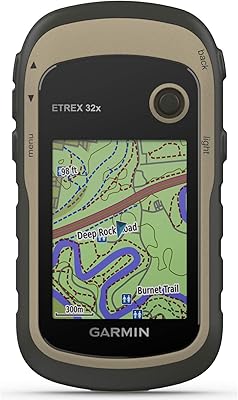
Garmin eTrex 32x Handheld GPS Navigator
78%
93%
Satellite Performance
91%
Battery Life
88%
Build & Durability
74%
Map Quality & Coverage
89%
Navigation Accuracy
More
Garmin GPS 73
Garmin GPS 73
80%
93%
Battery Life
88%
SailAssist Features
91%
Build Quality & Durability
54%
Display Quality
82%
Ease of Use
More
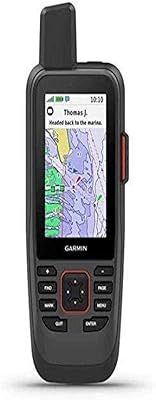
Garmin GPSMAP 64sc Handheld GPS
78%
93%
GPS & Satellite Accuracy
89%
Battery Life & Flexibility
91%
Build Quality & Durability
58%
Built-in Camera & Geotagging
82%
Display Readability
More
Garmin GPSMAP 65s Handheld GPS
80%
93%
GPS Accuracy
88%
Battery Performance
91%
Build Quality
74%
Display Readability
89%
Satellite Lock Speed
More
Garmin Montana 750i GPS Handheld
84%
94%
Build Quality & Durability
72%
Battery Life
85%
Ease of Use
88%
Screen Visibility
90%
Navigation Accuracy
More
Garmin GPSMAP 86Sci Handheld GPS
87%
92%
Durability & Build Quality
88%
Display Quality
85%
Battery Life
90%
Ease of Use
93%
Water Resistance & Floating Design
More
Garmin GPSMAP 79s Marine Handheld GPS
78%
93%
GPS Accuracy
91%
Floatation Design
74%
Battery Life
78%
Water Resistance
63%
Display Quality
More

FAQ

Yes, completely. It uses dedicated GPS satellite positioning and does not need a cell signal, Wi-Fi, or any data connection to navigate. That independence is one of the main reasons people choose it over a smartphone for backcountry use.

It comes with a worldwide base map that includes shaded terrain relief, which gives you a general sense of elevation and geography. What it does not include is detailed topographic contour data — for that level of trail-specific mapping, you would need to either purchase and load additional maps or consider stepping up to the eTrex Touch 35t, which comes preloaded with topo coverage.

Yes, you can load compatible maps via the microSD card slot or through Garmin Express on your computer. Garmin sells detailed topo maps for most regions, and some free community maps are also compatible with the device.

It handles light rain reasonably well, but the capacitive screen does become less responsive when your fingers are very wet or when wearing thick gloves. Thin liner gloves tend to work better than bulky winter gloves. It is something to keep in mind if you plan to use it primarily in cold or wet climates.

The IPX7 rating means it can handle rain, splashes, and brief accidental submersion up to 1 meter for around 30 minutes — so a dunking in a shallow river or getting soaked in a storm is not going to kill it. That said, it is not designed for prolonged underwater use, so do not take it diving.

Most users find the 16-hour estimate to be fairly accurate in mild temperatures. Cold weather can reduce runtime noticeably, so if you are heading out in winter, lithium AA batteries handle the cold better than alkaline and tend to maintain capacity longer at low temperatures.

A dedicated GPS unit like the eTrex Touch 25 has a few real advantages: it acquires satellite signals faster and holds them better in dense terrain, the battery lasts far longer without draining your phone, and you never have to worry about a call or notification interrupting your navigation. The trade-off is that modern offline apps like Gaia GPS offer much richer map detail on a bigger screen. Which one wins depends on whether signal reliability and battery independence matter more to you than map quality.

It works well for cycling too — there is a dedicated bike activity profile, and it is compatible with standard handlebar mounts. The screen and interface are straightforward enough to glance at while riding, though it lacks the turn-by-turn road cycling features you would get from a dedicated Garmin cycling computer.

It connects to Garmin Connect via USB rather than Bluetooth, so the sync process is less instant than newer Garmin devices. You plug it into your computer, open Garmin Express or Garmin Connect, and transfer routes, tracks, and waypoints from there. It is functional but not as convenient as the wireless pairing you get on higher-end units.

It is reasonably approachable, especially with the activity profiles that simplify the interface for whatever you are doing. That said, GPS devices in general have a learning curve, and setting up waypoints and routes for the first time takes some patience. Garmin's documentation and online community are solid resources if you get stuck, and most users feel comfortable with the basics after a trip or two.

Where to Buy