Overview

The Garmin eTrex Solar Handheld GPS Navigator is Garmin's answer to a question serious hikers have been asking for years: what if your trail GPS never ran out of power? Built on the well-established eTrex platform, this solar GPS unit adds a charging panel that can theoretically keep it running indefinitely under strong, direct sunlight. It sits at a premium price point, competing with other dedicated trail navigators rather than budget options. Compact enough to clip to a pack strap and rugged enough to take a beating, it's built for outdoor use — but it's worth being clear upfront: this is a purpose-built navigator, not a substitute for your phone or watch.
Features & Benefits

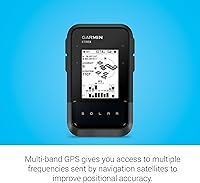
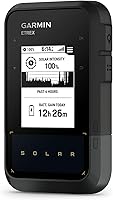
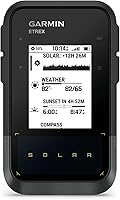
The standout feature here is, predictably, the solar panel — but it pays to understand what that actually means in practice. Adequate charging requires bright, direct sun at a level you'd experience on an open alpine ridge or a clear desert day, not dappled forest shade. That said, the multi-band GPS reception is genuinely impressive, pulling signals from multiple satellite systems to maintain accuracy even under tree cover where single-band units often struggle. The high-contrast 2.2-inch display holds up well in harsh glare, physical buttons work with gloves on, and IPX7 water resistance means a sudden downpour isn't a crisis. Pairing with Garmin Explore adds trip planning, live weather, and geocache data on the fly.

Best For

This handheld navigator makes the most sense for people who spend extended time away from power sources — think multi-day backpacking trips, long-distance thru-hikes, or paddling remote waterways. Geocachers in particular will appreciate the live cache integration through the app, which delivers descriptions, hints, and community logs without needing a separate device. It's also a strong pick for boaters and those who regularly operate in wet environments where a touchscreen phone becomes unreliable. If you prefer physical button controls over a glass screen that ignores gloved fingers or wet hands, this unit was designed with you in mind. Smartphone-dependent navigation starts feeling fragile once you've spent real time in the backcountry.

User Feedback

Owners of the eTrex Solar tend to praise its build quality and the confidence that comes from knowing battery depletion is rarely a concern on longer trips. Reception accuracy in dense tree cover gets consistent compliments, especially from users who've been burned by phone GPS in the same conditions. On the flip side, the screen resolution draws regular criticism — by current standards, the display feels dated, and fine map details can be hard to read. A few users note that real-world solar gains require genuinely sunny skies, not partial cloud cover. App syncing is described as reliable by most, though some find the initial setup finicky. Whether the solar premium justifies the cost over a standard model comes down to how much time you spend off-grid.

Pros

  • Solar charging removes battery anxiety on long off-grid trips where power sources are days away.
  • Multi-band GPS holds a reliable signal in dense tree cover where phone GPS frequently struggles.
  • IPX7 water resistance means rain, river crossings, and wet hands are simply not a concern.
  • Physical buttons remain fully operable with thick gloves on, a real advantage in cold or wet conditions.
  • The high-contrast display stays readable in direct sunlight without needing shade or squinting.
  • At just five ounces, this solar GPS unit barely registers on a pack weight budget.
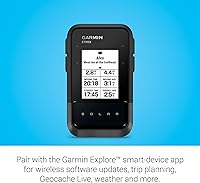
  • Garmin Explore app integration brings live weather, geocache logs, and trip planning to one workflow.
  • USB-C charging keeps the device compatible with modern cables most people already carry.
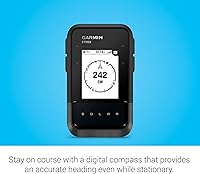
  • The digital compass provides accurate heading data even when standing still, unlike GPS-only compasses.
  • Built-in North America maps mean basic navigation is available straight out of the box.

Cons

  • Screen resolution feels noticeably behind modern standards, making fine map detail harder to read.
  • Effective solar charging demands strong, direct sunlight — overcast days or forest shade offer little benefit.
  • The menu system has a genuine learning curve that can frustrate users new to dedicated GPS devices.
  • No touchscreen means input can feel slow and cumbersome when entering waypoints or searching locations.
  • The solar premium over a standard eTrex model is difficult to justify for hikers who rarely leave tree cover.
  • App pairing and initial Bluetooth setup have been reported as inconsistent by a subset of users.
  • Map detail depth for offline use may not satisfy users expecting the granularity of premium topo apps.
  • The 2.2-inch display, while readable, offers limited screen real estate for complex route visualization.
  • Users in rainy or northern climates report the solar feature is effectively inactive for much of the year.

Ratings

The scores below reflect an AI-driven analysis of verified global user reviews for the Garmin eTrex Solar Handheld GPS Navigator, with spam, bot activity, and incentivized feedback actively filtered out to ensure the results represent genuine buyer experiences. Every category is scored to honestly reflect both where this solar GPS unit earns its reputation and where real users have run into frustration. You will find the strengths celebrated and the trade-offs called out plainly.

Battery Life
91%
Among all the praise this handheld navigator receives, battery endurance is the most consistent theme. Backpackers on multi-day routes report going entire trips without reaching for a charging cable, especially on exposed terrain with reliable sun. For long-haul adventurers, that kind of independence is a genuine confidence booster.
Solar effectiveness drops sharply under cloud cover or tree canopy, which frustrates users in wetter climates or forested environments who feel the headline battery claim does not translate to their specific conditions. A handful of users in northern latitudes report that seasonal low sun angles reduce solar gains to nearly nothing.
GPS Accuracy
88%
Multi-band satellite reception earns consistent praise from users who have tested the eTrex Solar against phone GPS in dense woodland — the dedicated unit holds a reliable signal where smartphones visibly drift or lose lock. Trail runners and canyon hikers in particular highlight how much more trustworthy the position tracking feels in tight terrain.
A small segment of users report occasional cold-start delays when acquiring satellites after the device has been powered off for extended periods. While not a common complaint, it surfaces often enough in reviews from high-latitude winter users to be worth noting.
Build Quality
93%
The physical construction of this solar GPS unit draws enthusiastic feedback across the board. Users describe it as genuinely tough — surviving drops on rocky trails, extended rain exposure, and the general abuse of frequent outdoor use without cosmetic or functional damage. IPX7 water resistance holds up in real-world conditions, not just lab tests.
A few long-term owners note that the rubber button covers can show wear after heavy use over one or more seasons, and that the solar panel surface attracts fine scratches from pack contact. Neither issue affects functionality, but they are worth knowing if pristine condition matters to you.
Display Quality
58%
42%
The high-contrast screen genuinely delivers on its promise in direct sunlight — users consistently note it remains readable where a phone screen would wash out completely. For basic trail navigation, waypoint viewing, and compass heading, the display does what it needs to do without requiring shade or squinting.
The resolution is where the display falls short by modern standards, and users are not shy about saying so. Fine map detail, small text labels, and complex route overlays are harder to read than on competing devices or any current smartphone. First-time buyers accustomed to high-resolution screens often describe the display as a notable disappointment.
Solar Performance
67%
33%
In genuinely sunny conditions — open ridgelines, alpine meadows, coastal paddling routes — users report the solar panel makes a measurable and meaningful difference to battery sustainability. Several thru-hikers in sun-heavy environments describe going weeks without needing to plug in, which is exactly the use case the feature was built for.
The solar charging threshold requires intense, direct sunlight that simply is not available in many real hiking environments, and users in the Pacific Northwest, Scotland, and heavily forested regions feel they paid a premium for a feature that rarely activates. Realistic expectations matter here, and many buyers feel the marketing undersells this limitation.
Navigation Features
82%
18%
Waypoint management, track logging, and route planning are all handled competently, and the digital compass that works from a standstill is a practical tool that gets positive mentions from mountaineers and orienteers alike. Geocaching integration through the Garmin Explore app is a standout for that community, delivering logs and hints directly to the device.
The overall feature set, while solid, has not evolved dramatically from earlier eTrex models, and experienced GPS users note that competing devices at similar price points offer richer onscreen data and more flexible navigation modes. The menu structure can also feel dated and slow to navigate compared to touchscreen alternatives.
Ease of Use
63%
37%
Physical buttons are praised by gloved hikers and paddlers who find touchscreen devices unusable in cold or wet conditions. Once muscle memory kicks in after a few outings, most users describe the button layout as intuitive and fast enough for mid-hike use without stopping to fiddle.
The initial learning curve is a recurring theme in negative reviews, particularly from users coming from smartphone navigation for the first time. Menu depth and the lack of any touchscreen mean setup tasks like loading waypoints or adjusting settings take noticeably longer than on competing modern devices.
App Integration
71%
29%
When the Garmin Explore pairing works well, users find it genuinely useful — wireless map updates, weather overlays, and live geocache data add real value that the standalone device cannot provide on its own. The app experience is polished enough that regular Garmin users feel at home immediately.
Initial Bluetooth pairing causes frustration for a meaningful number of users, with some reporting repeated sync failures before a stable connection is established. App update frequency and occasional connectivity drops during active sessions are mentioned often enough to suggest this is not an isolated edge case.
Value for Money
61%
39%
For users who regularly venture into remote, sun-exposed terrain over multiple days, the solar premium over a standard GPS unit represents a practical investment that pays back in reduced charging logistics and greater peace of mind. Geocachers and thru-hikers in this category tend to rate value highly.
Buyers who do not spend significant time in open, sunny environments frequently conclude that the solar feature does not justify the price gap over a standard eTrex or a comparably capable competitor. At this price, a smartphone with an offline maps app and a small power bank is a serious alternative that many buyers wish they had considered more carefully.
Portability
89%
At five ounces and slim enough to slip into a chest pocket, this handheld navigator is one of the lighter dedicated GPS options available. Ultralight backpackers and fastpackers specifically call out the weight as a genuine reason they chose it over bulkier alternatives.
The 2.2-inch screen, while compact, means there is limited real estate for map viewing — users who want a more panoramic navigation view feel constrained by the small footprint. A few users mention the device is just slightly too thick to sit entirely flat in a shirt pocket.
Durability
92%
Long-term owners who have carried this solar GPS unit across multiple seasons report it holds together exceptionally well, with no structural failures or button malfunctions even after years of hard use. The build inspires genuine confidence in harsh conditions, which is exactly what dedicated outdoor gear should do.
The solar panel surface is more prone to surface scratches than some users expect, particularly when the device rides in a pack pocket alongside other gear. While purely cosmetic, it bothers owners who paid a premium price and expected better surface resilience.
Satellite Connectivity
86%
Multi-constellation support means the eTrex Solar can pull from GPS, GLONASS, and other available satellite systems simultaneously, and users in deep valleys and dense urban canyons report noticeably better position lock than single-band devices. Hikers in the Rockies and Alps highlight this as a meaningful practical advantage.
Cold-start acquisition in very remote areas with no recent location data can occasionally take longer than users expect, which is frustrating when you are standing at a trailhead ready to go. Warm starts after brief power-offs are fast, but the cold-start experience is inconsistent enough to appear repeatedly in reviews.
Weather Resistance
94%
IPX7 certification translates to real-world confidence according to users who have used this handheld navigator in heavy rain, river crossings, and kayaking splash zones. Multiple reviewers specifically tested submersion and report the device resumed normal function without issue.
IPX7 is rated for fresh water, and a small number of saltwater users — specifically coastal kayakers and sailors — raise concerns about long-term exposure to salt spray that the rating does not cover. Rinsing the device after saltwater exposure is recommended but not prominently communicated in the product documentation.
Geocaching Support
84%
Geocachers consistently praise the live cache integration as one of the most practical reasons to choose this device over older GPS units. Having descriptions, hints, and recent community logs available directly on the device removes the need to carry printed notes or juggle a phone simultaneously.
Live geocache features require an active smartphone connection via Bluetooth, so in areas with no cell signal where the phone app cannot pull fresh data, the cache information on the device may be outdated. Offline cache pre-loading is possible but requires advance planning that not all users are aware of.

Suitable for:

The Garmin eTrex Solar Handheld GPS Navigator is a natural fit for anyone who spends multiple days in the backcountry and has grown tired of rationing phone battery or hauling a pocket full of AA cells. Multi-day backpackers and thru-hikers who frequently cross open ridges or alpine terrain will get the most out of the solar charging, since those environments deliver exactly the kind of direct, intense sunlight the panel needs to work well. Dedicated geocachers will appreciate the live cache data piped in through the Garmin Explore app, which removes the need to print logs or juggle a second device. It also makes a compelling case for boaters, kayakers, and paddlers who need a water-resistant navigator that won't flinch when spray hits the screen. For travelers heading into remote regions — where cell signals disappear and power outlets are a memory — having a device that can sustain itself on sunlight alone is a genuine practical advantage, not just a marketing angle.
Not suitable for:

The Garmin eTrex Solar Handheld GPS Navigator is a harder sell if most of your hiking happens under dense forest canopy or in consistently overcast climates, because the solar panel simply won't deliver meaningful charge in those conditions, and you are essentially paying a premium for a feature you rarely use. Casual day hikers or weekend walkers who are never far from a car charger or a power bank will likely find the value proposition unconvincing compared to a less expensive dedicated GPS or a well-configured smartphone. Anyone who prioritizes a sharp, modern display will be disappointed — the screen resolution is functional but visibly dated next to today's smartphones or even some competing trail GPS units. First-time dedicated GPS users should also be aware that the button-driven interface has a learning curve, and it takes time to navigate menus confidently before a trip. If you primarily hike in areas with strong LTE coverage and already trust your phone for navigation, the case for this handheld navigator becomes much harder to justify at this price point.
Specifications

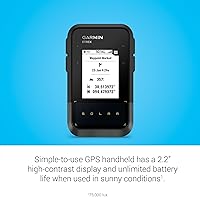
  • Display Size: The device features a 2.2-inch high-contrast screen designed to remain legible under direct sunlight without requiring shade or screen brightness adjustments.
  • Resolution: The display renders at 240x320 pixels, which is functional for navigation but visibly lower in detail compared to modern smartphone screens.
  • Battery Life: Without any solar input, the built-in lithium-ion battery supports up to approximately 200 hours of use on a full charge.
  • Solar Charging: The integrated solar panel can sustain or extend battery life under strong, direct sunlight conditions equivalent to a bright, clear midday sky.
  • GPS Technology: Multi-band, multi-frequency GPS reception pulls signals from several satellite constellations simultaneously to improve positional accuracy in challenging terrain.
  • Water Resistance: Rated IPX7, meaning the unit can withstand submersion in up to one meter of fresh water for approximately 30 minutes.
  • Weight: The unit weighs 5 ounces, making it light enough to clip to a shoulder strap or pack hipbelt without noticeable added burden.
  • Dimensions: Physical size measures approximately 2.51 inches wide, 4.14 inches tall, and 1.2 inches deep, fitting comfortably in most jacket pockets.
  • Connectivity: Bluetooth is the primary wireless connection method, used for pairing with the Garmin Explore app on a compatible smartphone.
  • Charging Port: The device charges via a USB Type-C port, compatible with the cable included in the box and most modern charging adapters.
  • Input Method: All navigation and menu interactions are handled through physical buttons, with no touchscreen functionality.
  • Map Coverage: North America base maps are preloaded on the device, providing offline navigational reference without requiring additional purchases for that region.
  • Geocaching: Live geocache data including descriptions, community logs, and hints is accessible when the unit is paired with the Garmin Explore app.
  • Compass: An integrated digital compass delivers accurate directional heading regardless of whether the user is moving or standing completely still.
  • App Support: The Garmin Explore app, available for compatible iOS and Android smartphones, enables wireless map updates, trip planning, and weather access.

Related Reviews
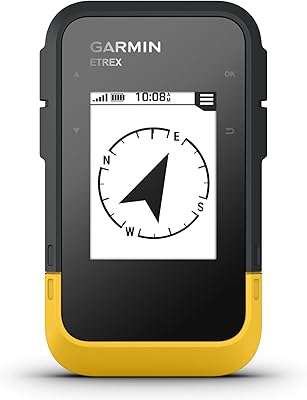
Garmin eTrex SE Handheld GPS Navigator
81%
97%
Battery Life
91%
GPS Accuracy
88%
Build Quality
63%
Display Quality
79%
Ease of Use
More
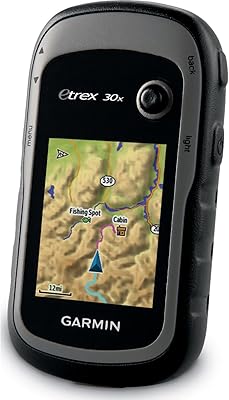
Garmin eTrex 30x Handheld GPS Navigator
87%
93%
Build Quality & Durability
87%
Battery Life
91%
Ease of Use
75%
Display & Visuals
90%
Mapping & Navigation Features
More
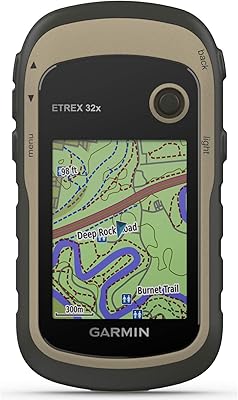
Garmin eTrex 32x Handheld GPS Navigator
78%
93%
Satellite Performance
91%
Battery Life
88%
Build & Durability
74%
Map Quality & Coverage
89%
Navigation Accuracy
More
Garmin eTrex Touch 25 Handheld GPS
79%
91%
GPS Accuracy
88%
Battery Performance
84%
Build Quality
71%
Touchscreen Usability
58%
Map Detail
More
Garmin GPS 73
Garmin GPS 73
80%
93%
Battery Life
88%
SailAssist Features
91%
Build Quality & Durability
54%
Display Quality
82%
Ease of Use
More
Garmin GPSMAP 86Sci Handheld GPS
87%
92%
Durability & Build Quality
88%
Display Quality
85%
Battery Life
90%
Ease of Use
93%
Water Resistance & Floating Design
More
Garmin GPSMAP 64sc Handheld GPS
78%
93%
GPS & Satellite Accuracy
89%
Battery Life & Flexibility
91%
Build Quality & Durability
58%
Built-in Camera & Geotagging
82%
Display Readability
More
Garmin Nuvi 2539LMT GPS Navigator
84%
91%
Ease of Use
89%
Display Quality
75%
Traffic Update Accuracy
85%
Bluetooth Connectivity
93%
Navigation Accuracy
More
Garmin Instinct Solar Rugged Smartwatch
78%
88%
Battery Life
93%
Build Quality
91%
GPS Accuracy
89%
Navigation Features
74%
Solar Charging
More
Garmin Drive 53 GPS Navigator
76%
88%
Display Quality
91%
Ease of Use
86%
Navigation Accuracy
41%
Battery Life
63%
Mount & Stability
More

FAQ

It depends heavily on conditions. In strong, direct sunlight — think open alpine terrain or a clear desert trail — the panel can genuinely maintain or even recover battery charge. In mixed shade, forest canopy, or overcast skies, the solar contribution is minimal. Think of it as a meaningful supplement in sunny environments rather than a guaranteed top-up in all conditions.

Yes, the eTrex Solar functions as a standalone GPS unit right out of the box. The app is optional, but it unlocks genuinely useful features like wireless software updates, live weather, trip planning, and geocache data. If you skip the app entirely, you lose access to those extras but the core navigation and preloaded maps still work fine.

A dedicated unit like this has a few real advantages over a smartphone: it handles battery life much more conservatively, the display stays readable in direct glare, and physical buttons work reliably with wet or gloved hands. Your phone is more capable in many ways, but it is also fragile, battery-hungry, and dependent on signal in ways this device simply is not. For serious backcountry use, the dedicated GPS earns its place.

Yes, Garmin devices in the eTrex family support loading of custom maps in compatible formats, including OpenStreetMap-derived files formatted for Garmin. You would need to source and load those maps manually via the USB connection or a memory card, but it is a well-documented process with plenty of community support online.

Light surface dirt can reduce charging efficiency, so wiping the panel clean periodically is worth doing on longer trips. Minor surface scratches typically have little effect on overall output. Severe damage to the panel surface could impair charging, but the unit will continue to operate normally on its stored battery charge regardless.

The GPS receiver itself works globally — it will track your position anywhere in the world. The preloaded base maps cover North America, so outside that region you would be navigating with a position dot but limited map context unless you load additional regional maps separately.

Yes, the eTrex Solar records track logs during your activity, and those tracks can be exported via the Garmin Explore app or by connecting the device directly to a computer over USB. Files can typically be saved in GPX format, which is widely compatible with mapping and planning tools.

Charging time varies depending on the power source, but via a standard USB-C charger the internal battery generally reaches a full charge within a few hours. Using a low-output charger or a power bank will extend that time somewhat.

There is a real learning curve, especially with menu navigation using physical buttons rather than a touchscreen. Most new users find it intuitive within an hour or two of hands-on time, but it is worth spending time at home before relying on it in the field. Garmin has solid documentation and the community around eTrex devices is large and helpful.

Not in the traditional sense. This handheld navigator is designed for trail and outdoor navigation — it shows your position on a map, lets you set waypoints, and displays bearing and distance to a destination. It is not optimized for road routing or voice-guided turn-by-turn directions the way a car GPS is.

Where to Buy