Overview

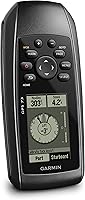
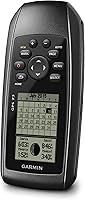
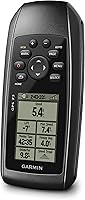
The Garmin GPS 73 is an entry-level marine handheld built specifically for sailors and recreational boaters who want straightforward, reliable navigation on the water. Compact enough to pocket and rugged enough to take spray without complaint, this marine handheld strikes a no-frills balance between function and portability. The gray-scale display is honest about what it is — readable in bright sunlight, but not the color chart experience you get from pricier alternatives. It ships with a lanyard and a quick-start manual; there is no preloaded basemap, so buyers expecting full chart navigation should set realistic expectations before purchasing.

Features & Benefits

The SailAssist suite is what sets the GPS 73 apart from generic marine handhelds — the virtual starting line, countdown timers, tack assist, and speed history are tools competitive sailors actually use on race day, not checkbox features. Safety is covered with a dedicated Man Overboard button and marine alarms for anchor drag and off-course situations. Battery life is a quiet but real strength: over 18 hours from two standard AA batteries means no hunting for a USB port mid-passage. The device stores 1,000 waypoints and 100 tracks, and the backlit dedicated buttons work reliably one-handed even in gloves or wet conditions.

Best For

This sailing GPS suits a surprisingly broad range of water users. Competitive dinghy and keelboat sailors get the most from the race-start tools, but kayakers and paddleboarders will appreciate the rugged, lightweight build and clean interface without the complexity of full chart navigation. It also works as a reliable backup device for boaters whose primary chartplotter depends on boat power — when that system goes dark, two AA batteries and a familiar button layout can be genuinely reassuring. Coastal cruisers prioritizing long battery life over screen quality will find it fits that role well, as will anyone wanting dependable waypoint navigation without unnecessary overhead.

User Feedback

Owners consistently highlight battery longevity as a standout quality — the freedom to use standard AAs rather than proprietary charging is a recurring theme across boating communities and verified reviews. Sailors who race describe the SailAssist tools as legitimately useful at the start line. On the critical side, the gray-scale screen draws the most complaints; compared to color competitors at a similar price point, it feels a generation behind. Some buyers also cite the lack of a basemap as a real limitation if they assumed chart data was included. Durability, though, rarely comes up negatively — build quality holds up well to marine conditions, and those using it as a dedicated safety backup tend to be genuinely satisfied.

Pros

  • SailAssist race tools — virtual start line, countdown timer, tack assist — are genuinely race-ready, not just spec-sheet padding.
  • Running on standard AA batteries means replacements are available at any marina, airport, or corner store worldwide.
  • Over 18 hours of battery life covers full race days and overnight passages without anxiety.
  • The MOB button and marine alarms add real safety value for solo sailors and short-handed crews.
  • Backlit dedicated buttons work reliably with wet hands or sailing gloves — no touchscreen frustration.
  • At 7.7 ounces, the GPS 73 is light enough to wear on a lanyard all day without fatigue.
  • Garmin build quality holds up to sustained marine exposure across multiple seasons of use.
  • Stores 1,000 waypoints and 100 tracks — enough for years of favorite anchorages and race marks.
  • Gray-scale display outperforms color screens in direct sunlight, which is exactly where sailors need it most.
  • Simple, button-driven interface means critical functions are always one or two presses away.

Cons

  • No preloaded basemap means positional data has zero chart context out of the box.
  • The gray-scale 128x160 screen looks dated against color competitors available at comparable price points.
  • Bluetooth functionality is too limited for users expecting smartphone sync or wireless data sharing.
  • No microSD slot means waypoint storage is capped with no workaround for heavy users.
  • The included quick-start manual is too thin to support SailAssist setup without external resources.
  • Battery compartment seal requires careful attention to maintain water resistance over time.
  • Button labels can wear and fade with extended heavy use, making the unit look prematurely aged.
  • Cold-weather battery performance drops noticeably, which matters for early-season or high-latitude sailing.
  • Off-course alarm default sensitivity can trigger false alerts in choppy beam-sea conditions.
  • Tack assist accuracy has limitations in complex, shifty wind conditions compared to dedicated sailing instruments.

Ratings

The Garmin GPS 73 earns its place in a crowded marine handheld market by doing a focused job well — but it is not without real trade-offs. The scores below are generated by AI after analyzing verified buyer reviews from around the world, with spam, bot-submitted, and incentivized feedback actively filtered out. Both the genuine strengths and the recurring frustrations are reflected honestly in every category.

Battery Life
93%
Buyers repeatedly call out the AA battery setup as one of the best decisions Garmin made with this device. Getting 18-plus hours from two standard AAs means sailors on multi-day passages can grab replacement batteries at any marina or convenience store rather than hunting for a charging cable mid-voyage.
A small number of users found runtime dropped noticeably in cold conditions, which matters for early-season racing or higher-latitude cruising. There is no battery indicator granular enough to give precise remaining time, which can make planning slightly uncertain.
SailAssist Features
88%
Competitive sailors consistently describe the virtual starting line and countdown timer as tools they actually rely on during races, not gimmicks. Tack assist and speed history round out a suite that genuinely serves dinghy and keelboat racers who want dedicated functionality without carrying a full chartplotter to the helm.
The SailAssist interface has a learning curve that a few users found steeper than expected for a device marketed as intuitive. Tack assist calculations have been flagged by experienced racers as occasionally less accurate than dedicated sailing instruments in complex wind conditions.
Build Quality & Durability
91%
Garmin's reputation for rugged construction holds up here. Owners who have dropped this marine handheld overboard, left it in a cockpit locker through seasons, or used it in heavy rain report that it keeps performing without degradation. The button housing feels solid rather than hollow.
The lanyard attachment point has drawn a handful of complaints about feeling less robust than the rest of the unit. A small group of users also noted that the battery compartment seal requires careful closing to maintain water resistance over time.
Display Quality
54%
46%
The gray-scale screen is genuinely readable in direct sunlight — a real advantage over some color displays that wash out at sea. For waypoint navigation and basic data readout, the 4-level gray LCD gets the job done in clear outdoor conditions without any glare-related squinting.
At 128x160 pixels on a gray-scale panel, the display feels noticeably dated against color competitors in the same price bracket. Below-deck or low-light use requires the backlight, and even then the screen lacks the clarity and detail that color chart displays offer at comparable price points.
Ease of Use
82%
18%
The dedicated backlit buttons are a genuine usability win for anyone operating this sailing GPS with wet hands or gloves. Users transitioning from older Garmin devices find the interface familiar, and the physical button layout means critical functions like MOB can be accessed without fumbling through menus.
First-time GPS users occasionally describe the menu structure as requiring patience to learn, particularly for setting up SailAssist functions before a race. The quick-start manual is thin on detail, and some buyers wished for more comprehensive documentation out of the box.
Navigation Accuracy
86%
GPS lock-on speed and positional accuracy draw consistent praise from coastal and offshore users who rely on this marine handheld for waypoint tracking. Track log reliability is a frequently mentioned strength, with 10,000-point capacity covering long passages without gaps.
Without a preloaded basemap, positional data is contextless for users who expect chart overlay. A few buyers operating in areas with high magnetic variation noted occasional heading inconsistencies, though these were not widespread complaints.
Waypoint & Track Storage
79%
21%
A thousand waypoints and a hundred saved tracks is a practical ceiling for most recreational cruisers and racing sailors. Frequent coastal boaters who revisit favorite anchorages and fishing spots appreciate being able to store a full season of locations without managing external data cards.
Power users and offshore passage makers who accumulate large numbers of waypoints found the 1,000-point limit restrictive over time. There is no expandable storage via memory card, so once the limit is hit, users must delete older data — a friction point that competitors at this tier sometimes address with microSD slots.
Marine Safety Features
84%
The MOB button and the suite of marine alarms — anchor drag, off-course — cover the scenarios that matter most when things go wrong on the water. Buyers specifically mention the anchor drag alarm as a feature they actually set and rely on during overnight anchorages.
The off-course alarm sensitivity requires manual calibration to avoid false alerts in choppy conditions, and a few users found the default settings triggered too readily in beam seas. Compared to higher-end Garmin units, alarm customization options are limited.
Portability & Form Factor
89%
At 7.7 ounces, this marine handheld is light enough to wear on a lanyard for an entire race without fatigue. Kayakers and paddleboarders in particular appreciate that the dimensions allow secure one-handed gripping without the bulk of chart-capable devices.
The 6-inch length, while comfortable for most hands, sits just at the edge of fitting neatly into smaller sailing jacket pockets. A handful of users would have preferred a slightly more tapered profile for easier single-handed retrieval from a pocket while underway.
Connectivity
58%
42%
USB connectivity covers the core need of transferring waypoints and tracks to and from a desktop, and the serial interface satisfies users with older chart plotters that require NMEA data input. For straightforward data management, this is adequate.
Bluetooth is listed as a feature but its practical utility is narrow compared to what users familiar with connected Garmin devices expect. There is no wireless sync to smartphones, no Garmin Connect integration, and no live data sharing — the Bluetooth spec reads more capable than it performs in daily use.
Value for Money
74%
26%
For sailors who specifically want SailAssist tools and a rugged AA-powered backup, the price-to-function ratio holds up reasonably well. The device fills a genuine gap between basic handheld GPSes and expensive color chartplotters for buyers whose needs are navigation-simple but sailing-specific.
At its price point, the gray-scale display and absence of a basemap feel like meaningful compromises that color-screen competitors address. Buyers who do not race and do not specifically need SailAssist may find the value case harder to make against alternatives with richer display and mapping capabilities.
Setup & Initial Configuration
71%
29%
Out-of-the-box GPS acquisition is fast, and users who have handled any previous Garmin handheld will find the menu logic familiar enough to be productive within minutes. Basic waypoint entry and track recording require no manual consultation for experienced users.
SailAssist configuration before a first race requires time investment that the included quick-start manual does not adequately support. Several buyers mentioned relying on community forums and third-party YouTube guides rather than official documentation to get race-day settings right.
Screen Visibility in Conditions
77%
23%
The transflective gray-scale panel performs better than many color screens in direct overhead sun — a scenario sailors face constantly. Users on tropical or Mediterranean waters specifically noted this as a practical advantage when glare renders color displays hard to read.
In overcast conditions, the screen loses some of its contrast advantage and the backlight becomes necessary more often than expected. Rain droplets on the screen surface can scatter the backlit display in a way that briefly obscures readout, an issue a few offshore users flagged during night watches.
Longevity & Long-Term Reliability
87%
Multi-year ownership reviews are consistently positive for this sailing GPS. Users who have carried it through several racing seasons and coastal cruising passages report no significant degradation in button response, GPS performance, or water resistance after sustained use.
Button labeling can wear over extended heavy use, which matters less functionally than cosmetically but does make the device look aged. A small proportion of long-term owners reported the battery contacts showing corrosion if the device was stored with batteries installed during the off-season.

Suitable for:

The Garmin GPS 73 is genuinely well-matched to competitive dinghy and keelboat sailors who want dedicated race-start tools — the virtual starting line, countdown timers, and tack assist are features that translate directly to race-day performance rather than sitting unused in a menu. Recreational boaters who want a rugged, always-ready backup device will also find it earns its place in the grab bag; when the main chartplotter loses power, having a unit that runs on two AA batteries from any petrol station is a quiet but meaningful insurance policy. Kayakers and paddleboarders who want marine GPS functionality without the bulk or complexity of a chart-capable device will appreciate the lightweight build and stripped-back interface. Coastal cruisers who prioritize long battery life over color charts, and offshore sailors who simply want dependable waypoint tracking and safety alarms on multi-day passages, are squarely in this device's wheelhouse. If your navigation needs center on knowing where you are, storing your favorite spots, and getting a MOB alert when things go wrong, this sailing GPS delivers on all of it reliably.

Not suitable for:

Buyers expecting a device that functions like a handheld chartplotter will be disappointed — the Garmin GPS 73 ships without any preloaded basemap, cannot accept additional charts via memory card, and offers no route-planning experience layered over navigational charts. If you are accustomed to a color display and need to read detailed positional context at a glance, the gray-scale 128x160 panel will feel like a step backward rather than a compromise. Boaters who want meaningful Bluetooth connectivity — syncing to a smartphone, pushing data to Garmin Connect, or integrating with onboard electronics wirelessly — should look at higher-tier models, as the Bluetooth spec on this marine handheld is far more limited in practice than it sounds on paper. Anyone navigating complex coastal waters where chart context is essential for safety would be better served by a color chartplotter with mapping capability. Power users who accumulate large waypoint libraries across multiple seasons may also bump against the 1,000-waypoint ceiling more quickly than they expect, with no expandable storage to fall back on.

Specifications

  • Manufacturer: Designed and manufactured by Garmin, a company with an established track record in marine and outdoor GPS devices.
  • Model Number: The official model number is 010-01504-00, also sold under the product name GPS 73.
  • Dimensions: The unit measures 6 x 1.2 x 2.6 inches, making it compact enough to pocket or wear on the included lanyard.
  • Weight: The device weighs 7.7 ounces, light enough for all-day wear without discomfort during racing or paddling.
  • Display Size: The screen measures 2.6 inches diagonally, with an active display area of 1.4″ x 2.1″ (3.6 x 5.4 cm).
  • Display Type: A 4-level gray LCD panel with a resolution of 128 x 160 pixels provides basic but sunlight-readable navigation readout.
  • Battery Type: Powered by 2 standard AA batteries, which are user-replaceable and widely available worldwide.
  • Battery Life: Rated at 18 or more hours of continuous operation on a single set of AA batteries under typical conditions.
  • Waypoints: The device stores up to 1,000 waypoints, allowing sailors and cruisers to log a full season of locations.
  • Track Log: Supports a continuous track log of up to 10,000 points and up to 100 individually saved tracks.
  • Connectivity: Connects to computers and compatible devices via USB and serial interface for waypoint and track data transfer.
  • Wireless: Bluetooth is included for basic wireless connectivity, though its functional scope is more limited than on higher-tier Garmin models.
  • Interface: Operated via dedicated physical backlit buttons, designed for reliable one-handed use in wet or gloved conditions.
  • Basemap: No preloaded basemap or nautical charts are included; the device does not accept additional map data cards.
  • SailAssist: Includes a SailAssist suite comprising a virtual starting line, countdown timers, tack assist, and speed history for competitive sailing.
  • Marine Alarms: Equipped with Man Overboard (MOB) alert, anchor drag alarm, and off-course alarm for on-water safety monitoring.
  • Color: Available in black only.
  • In the Box: Package includes the GPS 73 unit, a lanyard, and a quick-start manual; no charging cable or chart data is included.
  • First Available: This marine handheld was first made available on November 19, 2015, and has not been discontinued by the manufacturer.
  • Hunt & Fish: Includes a hunt and fish calendar function, extending the device's usability beyond strictly marine environments.

Related Reviews
Garmin Nuvi 2689LMT GPS
86%
91%
Ease of Use
94%
Traffic & Map Updates
85%
Bluetooth Connectivity
88%
Voice-Activated Navigation
92%
Display Quality
More
Garmin nüvi 2455LMT GPS
83%
90%
Navigation Accuracy
88%
Ease of Use
75%
Screen Visibility
70%
Battery Life
92%
Real-time Traffic Updates
More
Garmin Venu 2 GPS Smartwatch
87%
94%
Battery Life
88%
Health Tracking Accuracy
91%
Display Quality
80%
Ease of Use
86%
Fitness Features
More
Garmin Instinct Solar GPS Smartwatch
86%
92%
Battery Life
90%
Durability/Build Quality
88%
GPS Accuracy
85%
Health Tracking Features
95%
Water Resistance
More
Garmin tactix Delta GPS Smartwatch
84%
94%
Build Quality & Durability
91%
Battery Life
89%
Navigation & GPS Accuracy
78%
Ease of Use & Setup
85%
Display Visibility in Sunlight
More
Garmin Nuvi 2539LMT GPS Navigator
84%
91%
Ease of Use
89%
Display Quality
75%
Traffic Update Accuracy
85%
Bluetooth Connectivity
93%
Navigation Accuracy
More
Garmin Montana 750i GPS Handheld
84%
94%
Build Quality & Durability
72%
Battery Life
85%
Ease of Use
88%
Screen Visibility
90%
Navigation Accuracy
More
Garmin aera660 Touchscreen Aviation GPS
84%
89%
Ease of Use
85%
Battery Life
78%
Connectivity
91%
Display Clarity
88%
Setup and Installation
More
Garmin GPSMAP 64SC Handheld GPS
86%
91%
Performance in Challenging Terrains
89%
Battery Life
94%
Build Quality & Durability
86%
Ease of Use & Navigation
82%
Screen Visibility in Sunlight
More
Garmin vivoactive 4 GPS Smartwatch
88%
90%
Battery Life
94%
Fitness & Health Tracking
86%
Music Storage & Playback
88%
Build Quality
85%
Ease of Use
More

FAQ

No, it does not. The device ships with no preloaded basemap or nautical charts, and it cannot accept memory cards to add them later. It is purely a waypoint and track navigation device, so if you are expecting chart-overlay navigation like you would get from a chartplotter, this is not the right tool for that job.

That is one of the genuine practical advantages of this marine handheld — it runs on two standard AA batteries that you can swap anywhere. No proprietary charging cable, no dock, no waiting. Sailors on multi-day passages especially appreciate being able to grab a fresh pair of AAs from any port or chandlery.

The GPS 73 is built to withstand water exposure, and real-world users consistently report it holding up to rain, spray, and general marine conditions. If you store it with batteries inside during the off-season, check the battery compartment seal periodically — a small number of long-term owners noted corrosion at the contacts, which suggests keeping it dry and battery-free during storage is a sensible habit.

SailAssist lets you set a virtual starting line between two points — typically the committee boat and the pin end — and then tracks your position relative to that line as the countdown timer runs. Tack assist helps you calculate laylines, and speed history lets you review your boat speed over time. It is a practical toolkit for club racers who want data without carrying a full tactical instrument system.

Honestly, not much compared to what you might expect from newer connected Garmin devices. There is no smartphone app sync, no Garmin Connect integration, and no wireless chart or firmware updates over Bluetooth. The spec is listed, but in practical daily use, most owners rely on the USB connection for any data transfer needs.

Surprisingly well, actually — and this is one area where the gray-scale display has a genuine advantage over color screens, which can wash out in direct overhead sun. Sailors on tropical or Mediterranean waters often specifically mention this as a positive. Below deck or in low light, the backlight kicks in and the screen is serviceable, though not as crisp as a modern color panel.

Technically yes — it has a hunt and fish calendar and standard GPS waypoint functions that work on land. But it is clearly optimized for marine use, and without any basemap, land navigation without contextual mapping would be very basic. If marine is not your primary use, a more general-purpose Garmin handheld would serve you better.

Up to 1,000 waypoints, which covers a lot of ground for most recreational sailors. A typical club racing sailor might use 20 to 50 marks per season, so in practice the limit is generous for most users. If you are a very heavy user who logs dozens of new waypoints every season across multiple cruising grounds, you may eventually need to manage and delete older entries.

Yes — it is a dedicated physical button, not buried in a menu, which is exactly how it should be on a safety device. Users consistently rate the button layout positively for this reason. In an actual man-overboard situation, speed matters, and having a single dedicated press to mark the position is the right design choice.

The serial interface supports NMEA 0183 output, so it can communicate position data to compatible chartplotters and instruments. USB handles computer-side data transfer for waypoints and tracks. Just check your existing equipment for NMEA 0183 compatibility before assuming integration — the GPS 73 does not support the newer NMEA 2000 network standard that many modern onboard systems use.