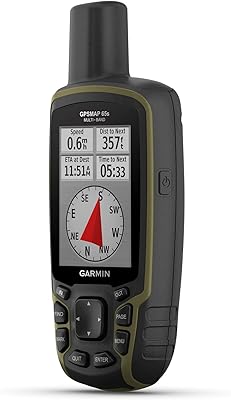
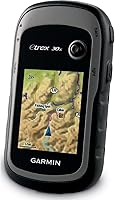
Garmin eTrex 30x Handheld GPS Navigator
Overview
The Garmin eTrex 30x Handheld GPS Navigator sits in that sweet spot between bare-bones trail GPS units and the bulkier, pricier mapping handhelds. It's not flashy, but that's sort of the point. The 2.2-inch color display is sunlight-readable, which matters more than people realize once you're squinting at a screen on a bright ridge line. A worldwide basemap comes preloaded, so you're not stuck with a blank screen out of the box. Power comes from two AA batteries, which is a small thing until you're three days into a backcountry trip with no outlet in sight and a pack of spares in your bag.
Features & Benefits
What stands out most with this navigator is the 3-axis compass, which stays accurate even when you're not holding it perfectly level — useful when you're checking direction while scrambling over rocks. The barometric altimeter is a nice bonus too, tracking elevation shifts and pressure changes that can hint at incoming weather. Storage is generous for the category: 3.7GB built in, plus a microSD slot for loading topo, satellite, or marine charts as needed. You can also share waypoints and routes wirelessly with other compatible units. The touchscreen pairs with physical buttons, so you're never fully reliant on tapping a screen with cold or gloved hands.
Best For
This handheld GPS makes the most sense for backcountry hikers and backpackers who need dependable offline navigation in places where phones lose signal entirely. Hunters will appreciate the ability to load detailed topo and hunting-specific maps onto the device. Geocachers, too, tend to gravitate toward this kind of unit for its dedicated accuracy and ample storage for caches and tracks. Boaters and anglers can load marine charts via the microSD slot, extending its usefulness beyond land. And for anyone who simply wants a rugged outdoor companion without ongoing subscription fees, this navigator covers the basics well without nagging you for updates or payments.
User Feedback
Owners consistently mention how well this navigator holds up — durability and battery life come up again and again, especially from people who've used it through cold, wet, or dusty conditions without issues. The compass and altimeter readings are also frequently called out as reliable on actual trails, not just on paper. On the flip side, the touchscreen isn't always the most responsive, particularly in cold weather or when wet, so some users lean more on the physical buttons. Loading maps can also feel a bit clunky compared to the instant updates you'd expect from a smartphone app, though most agree it's a fair tradeoff for offline reliability.
Pros
- Sunlight-readable transflective display stays clear in bright conditions that completely wash out phone screens.
- Battery life comfortably supports multi-day backcountry trips on just two standard AA batteries.
- The 3-axis tilt-compensated compass delivers accurate headings even when the unit is not held perfectly level.
- IPX7 water resistance means this handheld GPS unit handles rain, splashes, and shallow stream crossings reliably.
- 3.7 GB of internal memory plus a microSD slot provides serious capacity for loading detailed regional maps.
- Barometric altimeter tracks both elevation and pressure trends, which can help anticipate changing weather on longer trips.
- ANT+ wireless makes sharing waypoints, routes, and geocaches with compatible Garmin devices quick and cable-free.
- At 4.9 oz, the eTrex 30x fits easily in a hip belt pocket without adding meaningful pack weight.
- Supports up to 200 routes and a 10,000-point track log, giving heavy users plenty of room to work with.
- A worldwide basemap with shaded relief comes preloaded, so basic global navigation is ready straight out of the box.
Cons
- The button-only interface has a genuine learning curve, particularly for users coming from touchscreen devices.
- Detailed maps like TOPO 24K and HuntView require separate purchases, adding real cost beyond the unit price.
- BirdsEye Satellite Imagery requires an ongoing subscription fee that is easy to overlook before buying.
- GPS signal acquisition can be noticeably slower under dense tree canopy compared to newer multi-band receivers.
- The 2.2-inch screen, while crisp, is small enough to feel limiting when reviewing complex or detailed route data.
- No built-in Wi-Fi means map updates and firmware upgrades require a physical USB cable connection to a computer.
- Data entry for waypoint names and route labels is tedious using physical buttons compared to a touchscreen keyboard.
- Menu navigation feels dated alongside newer outdoor GPS devices available at comparable price points.
- Carrying spare AA batteries is a practical necessity on longer trips, which adds a small but real logistical burden.
- Voice navigation is not supported, making this unit a poor choice for any hands-free or vehicle-mounted use case.
Ratings
Our scores for the Garmin eTrex 30x Handheld GPS Navigator are generated by AI after analyzing thousands of verified user reviews from outdoor enthusiasts worldwide, with spam, bot activity, and incentivized feedback filtered out. The result is a transparent picture that reflects both what people love about this navigator and where it tends to frustrate them.
Build Quality & Durability
Battery Life
Battery Life Cons
Suitable for:
The Garmin eTrex 30x Handheld GPS Navigator is the right tool for outdoor enthusiasts who need reliable, self-contained navigation in places where phone signals vanish and battery infrastructure does not exist. Serious hikers and backpackers tackling multi-day routes in remote terrain will find the combination of a sunlight-readable display, barometric altimeter, and tilt-compensated compass genuinely hard to beat in a device this compact. Hunters can load HuntView maps, anglers can use BlueChart g2 charts, and geocachers benefit from wireless cache sharing and a 200-route waypoint system — making it unusually versatile across different outdoor disciplines. International travelers and expedition users will appreciate the preloaded worldwide basemap and, crucially, the ability to run on standard AA batteries sourced almost anywhere on the planet. If your activities regularly take you off-grid and you want a dedicated navigation device that does not depend on a cell tower or a charging port, this unit makes a strong case for itself.
Not suitable for:
The Garmin eTrex 30x Handheld GPS Navigator is a poor match for casual users who primarily navigate roads, urban environments, or well-marked trails where a smartphone works perfectly well. The physical button interface requires a real investment of time to learn, and anyone used to tapping and swiping their way through maps will find the menu system slow and unintuitive at first. It is also worth being direct about costs: the base unit ships without detailed regional maps, and serious use of topo data or satellite imagery means budgeting for additional map purchases and an ongoing BirdsEye subscription that the listed price does not cover. Drivers expecting turn-by-turn voice guidance or commuters wanting a car navigation replacement should look elsewhere entirely — this device was never designed for that use case. If your navigation needs are occasional, low-stakes, or fully covered by your phone, the price and learning curve here are genuinely hard to justify.
Specifications
- Display: The screen is a 2.2-inch transflective color display with 65K colors that stays readable in direct sunlight.
- Resolution: Screen resolution is 240 x 320 pixels.
- Dimensions: The unit measures 2.1″ x 4.0″ x 1.3″.
- Weight: The device weighs 4.9 oz.
- Internal Storage: It includes 3.7GB of internal memory for storing maps and data.
- Expandable Storage: A microSD card slot allows for additional map storage beyond the internal memory.
- Compass: A built-in 3-axis tilt-compensated electronic compass provides accurate bearings even when the device is not held level.
- Altimeter: A barometric altimeter tracks elevation changes and can log barometric pressure over time.
- Battery: The device runs on 2 AA batteries with a rated battery life of up to 25 hours.
- Connectivity: It supports ANT+ wireless connectivity for sharing data with compatible devices.
- Input Method: The unit features a touchscreen interface combined with physical buttons for control.
- Water Resistance: The housing is built to a water-resistant standard suitable for outdoor use.
- Preloaded Maps: A worldwide basemap with shaded relief comes preloaded on the device.
- Included Accessories: The package includes a lanyard, USB cable, and printed documentation.
Related Reviews
Garmin eTrex SE Handheld GPS Navigator
Garmin eTrex Solar Handheld GPS Navigator
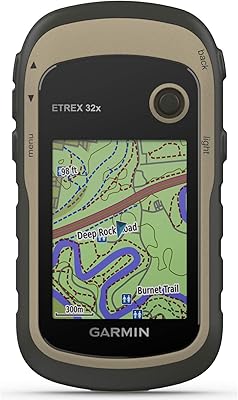
Garmin eTrex 32x Handheld GPS Navigator
Garmin eTrex Touch 25 Handheld GPS
Garmin GPS 73
Garmin GPSMAP 86Sci Handheld GPS
Garmin GPS 18x USB Navigation Receiver
Garmin GPSMAP 64sc Handheld GPS
Garmin Nüvi 2539LMT GPS Navigator