Overview

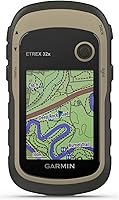
The Garmin eTrex 32x Handheld GPS Navigator occupies a comfortable middle ground in Garmin's lineup — capable enough for serious backcountry use, yet priced without stepping into professional-grade territory. Where smartphones lose signal or die mid-trail, this handheld GPS keeps working. It's compact enough to clip onto a pack strap without feeling like a burden, and the rubberized housing handles the kind of abuse that comes with multi-day trips in unpredictable weather. Think of it as a dedicated tool with one job: getting you there and back safely. It won't track your sleep or ping your messages, and that focused simplicity is exactly the point.
Features & Benefits

The eTrex 32x pairs GPS with GLONASS satellite tracking, which makes a real difference when you're navigating under a dense forest canopy or dropping into a steep canyon where a single-system receiver would struggle to lock on. The preloaded Topo Active maps cover routable trails and roads, so most hikers won't need to buy anything extra — though international travelers or those venturing into less-charted regions may want to download additional maps beforehand. The built-in barometric altimeter and 3-axis compass give you accurate elevation and heading data even while standing still. Storage is generous at 8 GB with a microSD slot for expansion, and the ANT+ connectivity lets you pair compatible sensors like heart rate monitors — a feature many buyers don't notice until they dig into the settings.

Best For

This trail navigator is purpose-built for anyone who spends real time away from cell towers. Hikers and backpackers heading into the wilderness will get the most out of it, but it's also a solid pick for off-road cyclists who need routable trail maps rather than a turn-by-turn street guide. Hunters and anglers love it for dropping waypoints in thick brush or along remote waterways. Because it runs on standard AA batteries, emergency responders and preppers consider it a reliable backup when rechargeable devices aren't practical — finding AAs at a rural gas station is far easier than hunting down a charging cable mid-crisis. International travelers benefit too, since it works entirely offline without roaming fees or data plans.

User Feedback

Owners consistently praise the satellite lock speed — even in forested terrain where phones give up, the eTrex 32x tends to acquire a signal quickly. The 25-hour battery life earns repeated mention as a genuine advantage on multi-day trips. On the critical side, the 2.2-inch screen is a common sticking point: it gets the job done outdoors, but anyone accustomed to a modern smartphone display will notice the difference in sharpness and screen real estate. Garmin's menu system also draws mixed reactions — experienced GPS users find it logical, while newcomers often describe a learning curve. Durability feedback is largely positive, with users reporting use through downpours and accidental drops without failure. The preloaded maps satisfy most North American hikers, though a few noted gaps in coverage for more remote international destinations.

Pros

  • Locks onto satellites quickly even under heavy tree cover, thanks to dual GPS and GLONASS support.
  • Preloaded Topo Active maps mean you can hit the trail right out of the box without spending extra on maps.
  • The barometric altimeter delivers accurate elevation readings even when standing completely still.
  • Runs on two AA batteries — find replacements at any corner store, anywhere in the world.
  • Up to 25 hours of GPS runtime makes it genuinely reliable across multi-day backcountry trips.
  • Compact and light at 5 ounces, so it clips to a pack strap without adding noticeable weight.
  • The 3-axis compass holds an accurate heading regardless of how you hold or tilt the device.
  • ANT+ support lets you pair external sensors like heart rate monitors for activity tracking on the trail.
  • 8 GB of internal storage plus a microSD slot gives you room to load maps for multiple regions.
  • Rugged build holds up well to rain, drops, and the general punishment of outdoor use.

Cons

  • The 2.2-inch screen feels cramped when trying to read detailed map sections or fine trail data.
  • Garmin's button-driven menu system has a real learning curve for users new to dedicated GPS devices.
  • No wireless syncing or Bluetooth — transferring routes requires a physical USB cable connection.
  • Preloaded maps may have gaps for remote international destinations, requiring manual downloads.
  • Display resolution is noticeably dated compared to newer competitors at a similar price point.
  • No touchscreen makes one-handed operation in gloves slower and less intuitive than it could be.
  • The device does not support live weather updates or two-way messaging in any configuration.
  • Urban and road navigation is functional but lacks the real-time traffic awareness of smartphone apps.

Ratings

The scores below for the Garmin eTrex 32x Handheld GPS Navigator were generated by AI after analyzing thousands of verified global user reviews, with spam, bot-submitted, and incentivized feedback actively filtered out. Each category reflects the honest distribution of real buyer experiences — strengths and frustrations alike — so you get a transparent picture of where this trail navigator excels and where it falls short.

Satellite Performance
93%
Users consistently report that this handheld GPS acquires a satellite fix faster than expected, even in dense Pacific Northwest forests and steep canyon trails where smartphone GPS simply drops out. The dual GPS and GLONASS support gives it a meaningful edge in reliability that backcountry hikers notice immediately.
A small number of users in very deep canyon environments or under thick snow-laden canopy reported occasional signal drift. These cases were relatively rare, but they do suggest the device is not completely immune to extreme positioning challenges.
Battery Life
91%
The ability to run on standard AA batteries is one of the most praised practical features among long-distance hikers and hunters. Being able to swap in a fresh pair of alkalines purchased at a rural gas station — rather than hunting for a power outlet after three days on trail — is genuinely valued by the people who rely on this device most.
Real-world battery life can drop noticeably below the rated 25 hours when GLONASS is enabled alongside GPS, or in cold temperatures where battery chemistry underperforms. Users doing multi-week expeditions in winter conditions report planning for shorter intervals than the spec sheet suggests.
Build & Durability
88%
Reviewers who have taken the eTrex 32x through sustained rain, river crossings, and accidental drops on rocky terrain largely report it emerging unscathed. The rubberized grip panels and solid construction give it a reassuring feel that matches the rugged environments it's designed for.
A handful of users noted that the battery door and compartment gasket can show wear after extended heavy use, which raises some concern about long-term water resistance. The overall build is solid, but it is not indestructible, and the plastic housing can show cosmetic scuffing fairly quickly.
Map Quality & Coverage
74%
26%
For North American hiking and cycling, the preloaded Topo Active maps satisfy the majority of users without requiring any additional purchases. Trail routing works reliably in popular wilderness areas, and routable roads make it practical for mixed hiking and cycling trips.
Users venturing internationally or into less-documented regions frequently find the preloaded coverage thin or incomplete, requiring manual map downloads before departure. Urban navigation is also a weak point — anyone expecting city-level routing detail comparable to a smartphone app will be disappointed.
Navigation Accuracy
89%
The combination of barometric altimeter and 3-axis compass gives the eTrex 32x a notable accuracy advantage over GPS-only devices, particularly when navigating off-trail where elevation changes are critical. Hunters and mountaineers specifically praised the compass for holding a reliable heading even while standing completely still.
Altimeter readings can drift over time if users do not periodically calibrate the barometric sensor against a known elevation reference, which requires some awareness of the device's calibration needs. New users unaware of this can encounter cumulative elevation errors on longer trips.
Display Quality
61%
39%
The screen performs adequately in direct sunlight — a scenario where many competing displays become washed out — and the color rendering makes distinguishing map layers straightforward in typical trail conditions. For a purpose-built outdoor device, it gets the fundamentals right.
Buyers comparing it to modern smartphone screens consistently flag the 2.2-inch size and 240x320 resolution as a real limitation, particularly when trying to read fine map details or dense trail labels. Zooming in to compensate for the small display means less contextual information visible at once, which can slow down navigation decisions.
Ease of Use
63%
37%
Experienced Garmin users or anyone with prior handheld GPS exposure tend to feel at home with the interface quickly, appreciating its logical structure once internalized. The physical button layout is practical in cold weather or with gloves, where touchscreens become unreliable.
First-time GPS device owners frequently cite the layered button-driven menu system as a frustrating barrier, with some reporting they needed hours of reading the manual before feeling confident navigating basic functions. The lack of a touchscreen makes the learning curve steeper than it needs to be for new users.
Value for Money
78%
22%
For users who genuinely need an offline, satellite-based navigator with real sensors and preloaded maps, the eTrex 32x delivers strong capability at a price that sits comfortably below Garmin's premium inReach and GPSMAP lines. It represents a reasonable investment for anyone who takes backcountry navigation seriously.
Casual users or those who only occasionally hike on well-marked trails may find it hard to justify the price over a free smartphone app paired with an offline map download. The value equation only truly works for buyers who will push the device into environments where a smartphone cannot follow.
Portability & Form Factor
86%
At 5 ounces and compact enough to slip into a chest pocket or clip onto a shoulder strap, this trail navigator adds almost no meaningful weight burden even on ultralight pack setups. Hikers and cyclists specifically appreciate that it does not shift or bounce awkwardly when mounted or carried.
The small footprint, while great for portability, directly limits the screen real estate available for map viewing, creating a trade-off that not everyone is willing to accept. Users with larger hands also occasionally note that the buttons feel tightly spaced during extended use.
ANT+ Connectivity
71%
29%
For cyclists and trail runners who use ANT+ heart rate monitors or cadence sensors, this connectivity feature adds meaningful workout data alongside route tracking without requiring a separate device. It is a genuinely useful capability that many buyers discover only after purchase.
ANT+ is not widely understood by casual buyers, and the lack of Bluetooth means the device cannot pair with the broader ecosystem of modern wireless accessories. Users expecting smartphone-style wireless syncing will find the USB-only data transfer approach outdated and inconvenient.
Route Planning & Waypoints
82%
18%
Support for up to 2,000 waypoints and the ability to import GPX files from popular trail platforms like AllTrails makes pre-trip planning flexible and practical. Hunters and anglers in particular praised the waypoint system for reliably marking and returning to specific spots in dense terrain.
The route planning interface on the device itself is cumbersome without using Garmin's BaseCamp desktop software, which adds a dependency on a computer for anyone planning complex multi-day routes. Users who prefer to plan entirely on the device find the experience slow and limited.
Software & Firmware
67%
33%
Garmin has maintained firmware updates for the device, and users generally find the core navigation software stable and reliable in the field. The BaseCamp desktop companion is functional for map loading and route management once users get over its dated interface.
BaseCamp itself draws consistent criticism for feeling outdated and unintuitive compared to modern software tools. Several users also noted that firmware update processes can be opaque, and the device's menu structure has not seen meaningful modernization since earlier eTrex generations.
Cold & Extreme Weather Performance
79%
21%
Multiple winter hikers and ice fishers report that the device continues to function reliably in subfreezing temperatures where smartphone batteries fail within minutes. The physical button interface also remains operable with thick gloves, which touchscreen devices cannot match in genuine cold-weather scenarios.
Battery drain accelerates noticeably in cold conditions, and alkaline AAs are especially prone to voltage drop in low temperatures, meaning effective battery life can be significantly shorter than the rated 25 hours during winter use. Lithium AA batteries help, but they add cost per trip.
Accessory Ecosystem
72%
28%
A range of third-party mounts, cases, and handlebar brackets are available for the eTrex series, making it straightforward to configure for cycling, marine, or vehicle use beyond just hiking. The standard mounting interface is consistent across Garmin's eTrex lineup.
Compared to Garmin's higher-end lines, the accessory ecosystem for the eTrex series is narrower, and some users found that certain mounts or protective cases designed for older eTrex models do not fit the 32x perfectly. Buyers should verify compatibility before purchasing third-party accessories.

Suitable for:

The Garmin eTrex 32x Handheld GPS Navigator is built for people who regularly put themselves in situations where a smartphone simply isn't a viable navigation tool. If you're a backpacker logging multi-day routes through remote wilderness, a hunter marking waypoints in thick brush, or an off-road cyclist tackling trails that don't show up on Google Maps, this handheld GPS will earn its place in your kit. It's also a smart pick for anyone who has ever watched their phone battery die at the worst possible moment on a long trail — running on standard AA batteries means you can restock at virtually any gas station or general store anywhere in the world, which matters enormously when you're days from the nearest outlet. Anglers working remote lakes and rivers will appreciate the accurate waypoint marking, and emergency responders or preparedness-minded individuals will value having a capable navigator that functions entirely off-grid without any data plan or cell signal.

Not suitable for:

The Garmin eTrex 32x Handheld GPS Navigator is not the right tool for buyers who want a versatile, connected device that does more than navigate. If you're expecting a rich display experience similar to a modern smartphone, you'll find the 2.2-inch screen noticeably small and its pixel density modest by today's standards — it's readable in sunlight, but browsing detailed maps on it requires patience. Urban commuters and road travelers will also find it underwhelming, since city navigation is where smartphone apps with live traffic data genuinely outperform a dedicated trail GPS. Casual day-hikers who rarely stray far from marked trails may find the learning curve of Garmin's menu system more frustrating than the device is worth for their needs. International users planning to navigate outside of North America should also know that the preloaded maps may require supplemental downloads to cover their destination reliably.

Specifications

  • Brand: Manufactured by Garmin, a leading name in GPS navigation technology for outdoor and automotive use.
  • Display Size: Features a 2.2-inch sunlight-readable color screen designed to remain legible in bright outdoor conditions.
  • Resolution: The screen renders at 240x320 pixels, providing a functional level of map detail for trail navigation.
  • Satellite Systems: Supports both GPS and GLONASS satellite networks simultaneously for stronger positioning in difficult terrain.
  • Preloaded Maps: Comes with Topo Active maps covering routable roads and trails, ready to use without any additional purchase.
  • Internal Storage: Includes 8 GB of onboard memory for storing downloaded map regions and recorded tracks.
  • Storage Expansion: A microSD card slot allows users to add extra map storage beyond the built-in 8 GB capacity.
  • Sensors: Equipped with a 3-axis compass and a barometric altimeter for accurate heading and elevation data while stationary.
  • Battery Life: Rated for up to 25 hours of continuous use in GPS mode on a single set of batteries.
  • Battery Type: Powered by two standard AA batteries, compatible with both alkaline and rechargeable NiMH cells.
  • Connectivity: Uses ANT+ wireless protocol to pair with compatible external sensors such as heart rate monitors and cadence sensors.
  • Dimensions: Measures 4 x 2.1 x 1.3 inches, making it compact enough to fit comfortably in a hand or jacket pocket.
  • Weight: Weighs 5 ounces without batteries, keeping pack weight minimal during extended outdoor trips.
  • Build Quality: Constructed with a rugged, weather-resistant housing rated for outdoor use in rain and rough handling conditions.
  • In the Box: Package includes the eTrex 32x unit, a USB cable for data transfer and charging, and basic documentation.
  • Map Transfer: Additional maps can be loaded via USB connection using Garmin's BaseCamp software or directly through the microSD slot.
  • Waypoints: Supports storage of up to 2,000 waypoints with names and symbols for marking locations in the field.
  • Model Number: Official Garmin model number is 010-02257-00, used for warranty registration and accessory compatibility verification.

Related Reviews
Garmin eTrex Solar Handheld GPS Navigator
80%
91%
Battery Life
88%
GPS Accuracy
93%
Build Quality
58%
Display Quality
67%
Solar Performance
More
Garmin eTrex SE Handheld GPS Navigator
81%
97%
Battery Life
91%
GPS Accuracy
88%
Build Quality
63%
Display Quality
79%
Ease of Use
More
Garmin eTrex 30x Handheld GPS Navigator
87%
93%
Build Quality & Durability
87%
Battery Life
91%
Ease of Use
75%
Display & Visuals
90%
Mapping & Navigation Features
More
Garmin eTrex Touch 25 Handheld GPS
79%
91%
GPS Accuracy
88%
Battery Performance
84%
Build Quality
71%
Touchscreen Usability
58%
Map Detail
More
Garmin GPS 73
Garmin GPS 73
80%
93%
Battery Life
88%
SailAssist Features
91%
Build Quality & Durability
54%
Display Quality
82%
Ease of Use
More
Garmin GPSMAP 65s Handheld GPS
80%
93%
GPS Accuracy
88%
Battery Performance
91%
Build Quality
74%
Display Readability
89%
Satellite Lock Speed
More
Garmin Nuvi 2539LMT GPS Navigator
84%
91%
Ease of Use
89%
Display Quality
75%
Traffic Update Accuracy
85%
Bluetooth Connectivity
93%
Navigation Accuracy
More
Garmin Montana 750i GPS Handheld
84%
94%
Build Quality & Durability
72%
Battery Life
85%
Ease of Use
88%
Screen Visibility
90%
Navigation Accuracy
More
Garmin GPS 18x USB Navigation Receiver
67%
91%
Signal Accuracy
47%
Software Compatibility
78%
Build Quality
63%
Ease of Setup
84%
Long-Term Durability
More
Garmin GPSMAP 64sc Handheld GPS
78%
93%
GPS & Satellite Accuracy
89%
Battery Life & Flexibility
91%
Build Quality & Durability
58%
Built-in Camera & Geotagging
82%
Display Readability
More

FAQ

Yes, completely. The eTrex 32x communicates directly with GPS and GLONASS satellites, so it has no dependency on cell towers, Wi-Fi, or any data plan. Once you have a satellite lock, it navigates fully offline regardless of where you are.

It works with both. Standard alkaline AAs are the most common choice, but NiMH rechargeable AAs function just fine. If you use rechargeables, you can adjust the battery type setting in the menu so the device estimates remaining battery life accurately.

In open sky conditions, expect a lock within 30 to 60 seconds. Under dense tree cover or in a narrow canyon, it can take a bit longer — usually a minute or two — but the dual GPS and GLONASS support helps it acquire and hold a signal faster than single-system devices in those challenging spots.

For most hiking, backpacking, and cycling in North America, the included Topo Active maps are genuinely solid — they cover routable trails and roads without any extra cost. Where you may run into gaps is in very remote international destinations or highly detailed urban routing, in which case downloading supplemental maps via Garmin's BaseCamp software is straightforward.

It carries an IPX7 waterproof rating, meaning it can withstand submersion in up to 1 meter of water for 30 minutes. In practical terms, it handles driving rain, accidental dunking in a stream, and general wet-weather use without issue.

There is a real learning curve, especially if you're coming from smartphone navigation apps. The interface is button-driven with layered menus rather than a touchscreen, so it takes some time to learn where everything lives. Most new users feel comfortable with basic navigation within a few hours of hands-on practice, and the manual does help.

Yes. You can create or import routes and tracks using Garmin's free BaseCamp software on a computer, then transfer them to the device via USB. GPX files from trail platforms like Gaia GPS or AllTrails can also be imported, which is useful for planning specific routes before a trip.

ANT+ allows the trail navigator to wirelessly pair with compatible external sensors — things like heart rate monitors, cadence sensors for cycling, or temperature sensors. It's not Bluetooth, so it only works with ANT+ certified accessories. It's a feature many buyers overlook, but it's useful for anyone tracking fitness metrics alongside their route.

Quite well for its size. The display is specifically designed to be readable in bright conditions, and most users find it clear enough to read map details without needing to shade it. It's not going to match the brightness of a premium smartphone display, but for a dedicated GPS screen, it performs reliably outdoors.

The main differences are the built-in sensors. The eTrex 32x adds a 3-axis compass and a barometric altimeter that the 22x lacks. Those two sensors matter quite a bit in the field — the altimeter tracks elevation changes accurately, and the compass gives you a reliable heading even when you're standing still, which a GPS-only compass cannot do.

Where to Buy