Overview
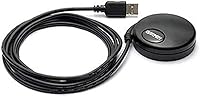
The Garmin GPS 18x USB Navigation Receiver is a compact, puck-style external GPS unit built not for solo navigation but for feeding precise location data into a connected computer or compatible device. Think of it as the brains behind the map, not the map itself — there is no screen here. It outputs data exclusively in Garmin's proprietary format, so compatibility with third-party software is limited from the start. WAAS support improves positional accuracy across North America, which is a real advantage for anyone doing serious mapping work. Despite launching back in 2008, this external GPS receiver remains in production — a quiet vote of confidence from the market.
Features & Benefits
The GPS 18x USB earns its reputation primarily through signal lock reliability. Its high-sensitivity receiver holds a fix in environments where cheaper units struggle — dense urban areas, wooded trails, even partially obstructed vehicle interiors. WAAS integration brings accuracy improvements for North American users specifically, narrowing positional error without requiring any paid subscription or external hardware. A built-in motion sensor provides basic dead-reckoning during brief signal gaps, keeping data feeds consistent rather than cutting out entirely. Configuration settings are stored in non-volatile memory, so the unit remembers its setup even after losing power. USB connectivity handles the rest — no serial port adapter hunting required.
Best For
This Garmin GPS puck is genuinely well-suited for a specific kind of buyer, and that specificity matters. Developers and hobbyists building Garmin-compatible mapping applications will find it a reliable data source without much fuss. Amateur radio operators and geocachers who need a consistent, standalone GPS feed — rather than depending on a phone signal — will appreciate the dedicated hardware approach. Fleet operators using Garmin-based platforms can mount it discreetly on a dashboard and forget about it. It is also a practical choice whenever you want a purpose-built GPS input that does not drain a phone battery or depend on cellular coverage to function properly.
User Feedback
Buyers consistently highlight fast signal acquisition and stable lock as the standout strengths, especially compared to older or budget GPS receivers. Long-term users in professional settings report the hardware holds up well over years of continuous use. On the other side, the proprietary data output is a real friction point — users who expected this external GPS receiver to work with any NMEA-compatible software often run into a wall. A few buyers have noted the cable connector feels less robust than the main unit under heavy daily use. Driver setup can also require some patience on certain operating systems, so plug-and-play is not always guaranteed out of the box.
Pros
- Holds a strong GPS signal lock even in challenging urban or heavily wooded environments.
- WAAS support meaningfully improves accuracy for North American users at no added cost.
- Built-in motion sensor maintains data continuity during brief signal interruptions.
- Non-volatile memory keeps your configuration intact through power cycles.
- USB connectivity removes the need for legacy serial port adapters on modern computers.
- The GPS 18x USB has remained in active production for over 15 years, reflecting real-world durability.
- Compact, lightweight puck design mounts discreetly without cluttering a dashboard or workspace.
- Entirely independent of smartphone batteries, cellular signals, and data plans.
Cons
- Outputs data only in Garmin proprietary format, blocking use with most third-party or open-source mapping software.
- No display at all — buyers who misread the listing will be frustrated immediately upon arrival.
- WAAS accuracy improvements only apply in North America, limiting value for international users.
- Driver setup can be inconsistent across operating systems, making true plug-and-play unreliable.
- Cable connector quality has been flagged by some long-term users as a weak point under daily strain.
- Requires a compatible host device to be useful — it cannot function as a standalone navigation tool.
- Available in three cable variants, and ordering the wrong one (PC vs USB vs LVC) means the unit will not work as expected.
- Software ecosystem lock-in means switching away from Garmin platforms later could make the hardware redundant.
Ratings
The scores below for the Garmin GPS 18x USB Navigation Receiver were generated by our AI after analyzing thousands of verified global user reviews, with spam, bot-submitted, and incentivized feedback actively filtered out. Each category reflects the honest consensus of real buyers — from professional developers to weekend geocachers — with both strengths and recurring frustrations weighted fairly. No score has been softened or inflated.
Signal Accuracy
Software Compatibility
Build Quality
Ease of Setup
Long-Term Durability
Value for Money
Signal Recovery
Driver & OS Support
Physical Design
Configuration Retention
Use Case Clarity
Cable Quality
Ecosystem Lock-In Risk
Suitable for:
The Garmin GPS 18x USB Navigation Receiver is built for a specific kind of buyer — one who already knows they need a dedicated external GPS data source rather than a consumer navigation display. Developers building Garmin-compatible mapping applications will find it a dependable hardware input that removes the inconsistency of phone-based GPS. Amateur radio operators and geocachers benefit from the reliable, standalone signal that does not depend on cellular coverage or battery-draining smartphone use. Fleet managers running Garmin-based tracking platforms can mount this puck discreetly on a dashboard and trust it to hold a lock through urban corridors, tunnels, and wooded routes alike. Anyone working outdoors in North America who needs WAAS-level accuracy feeding into a laptop or compatible device will get genuine value here.
Not suitable for:
If you are shopping for a GPS unit with a screen and turn-by-turn directions, the Garmin GPS 18x USB Navigation Receiver will disappoint immediately — it has no display whatsoever and exists purely as a data source. Buyers who expect broad software compatibility should take note: the output uses Garmin's proprietary format, not the widely supported NMEA standard, which effectively rules it out for most third-party mapping applications. Users outside North America will not benefit from WAAS accuracy improvements, since that correction network is region-specific. Anyone hoping for a simple plug-and-play experience on every OS may hit driver configuration hurdles, particularly on less common setups. And if your workflow is already well-served by a modern smartphone with a GPS app, spending money on this external GPS receiver is hard to justify unless you have a clear, specific reason to need dedicated hardware.
Specifications
- Manufacturer: Made by Garmin, a well-established name in GPS and navigation hardware.
- Model Number: The official model number is 010-00321-31, useful when seeking drivers or support documentation.
- Connectivity: Connects to a host computer or compatible device via a standard USB interface.
- Data Format: Outputs location data exclusively in Garmin proprietary format, not the open NMEA 0183 standard.
- WAAS Support: WAAS-enabled for improved positional accuracy, with correction benefits applying specifically to users in North America.
- Motion Sensor: Includes a built-in motion sensor that enables basic dead-reckoning during brief GPS signal loss events.
- Memory: Non-volatile memory retains unit configuration settings even after the device loses power.
- Dimensions: Physical footprint measures 5.9″ long by 5.7″ wide by 3″ high.
- Weight: Weighs 7 ounces, making it light enough for discreet dashboard or vehicle mounting.
- Display: Contains no screen or visual interface; this is a data-output-only device requiring a connected host system.
- Mounting Type: Designed for dashboard mounting, with a form factor suitable for vehicle or fixed-position installation.
- Cable Variant: This specific unit is the USB variant; Garmin also offers the GPS 18x in PC (serial) and LVC configurations.
- Map Coverage: WAAS-based accuracy improvements are calibrated for North American geographic coverage.
- Color: Ships in a solid black finish that blends unobtrusively into most vehicle or desk environments.
- Release Date: First made available in March 2008 and has remained in continuous production since.
- National Stock No.: Carries National Stock Number 5825-01-570-9473, indicating use in government and institutional procurement.
Related Reviews
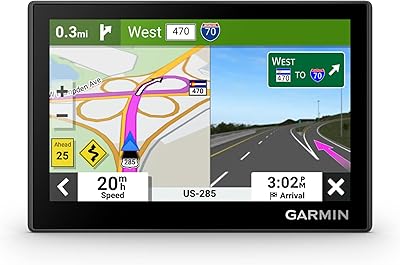
Garmin Drive 53 GPS Navigator
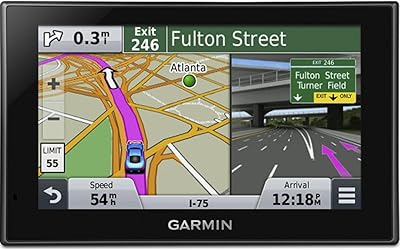
Garmin Nüvi 2539LMT GPS Navigator
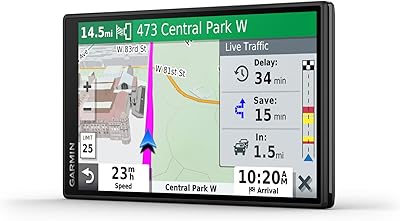
Garmin DriveSmart 55 GPS Navigator
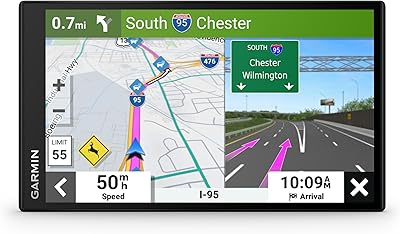
Garmin DriveSmart 71 EX Car GPS Navigator
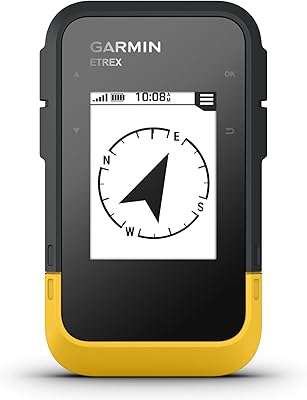
Garmin eTrex SE Handheld GPS Navigator
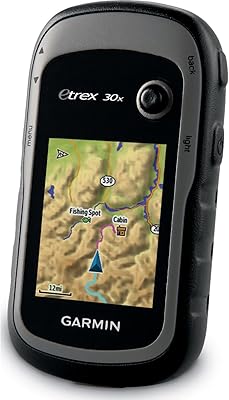
Garmin eTrex 30x Handheld GPS Navigator
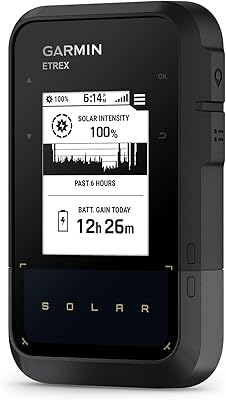
Garmin eTrex Solar Handheld GPS Navigator
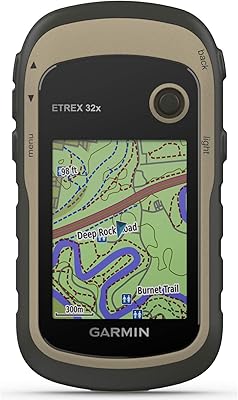
Garmin eTrex 32x Handheld GPS Navigator
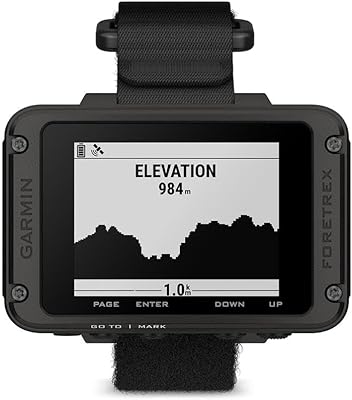
Garmin Foretrex 801 Wrist-Mounted GPS Navigator