Overview

The Garmin GPSMAP 64sc Handheld GPS sits at the serious end of the dedicated navigation market — built for people who spend real time in the backcountry, not casual day hikers. Within Garmin's GPSMAP 64 lineup, the 64sc distinguishes itself by adding a built-in digital camera and expanded internal storage, features uncommon on purpose-built GPS devices. The dual GPS/GLONASS satellite system is what really sets it apart from simpler units — pulling signals from two satellite networks means faster locks and more reliable positioning when you're deep in a canyon or under heavy tree cover. The 2.6-inch sunlight-readable display rounds out a package designed for real outdoor demands.
Features & Benefits

What makes the GPSMAP 64sc genuinely useful in the field goes well beyond satellite reception. The onboard camera lets you snap a photo and automatically tie it to a waypoint — handy for marking a trailhead, a hunting blind, or anything you need to relocate later. It won't rival your phone for image quality, but that's not the point. Up to 16 hours of runtime on standard AA batteries is a real comfort on multi-day trips, and the option to swap in a rechargeable NiMH pack adds flexibility. Bluetooth and ANT+ connectivity allow pairing with heart rate monitors and temperature sensors, making this Garmin handheld a surprisingly capable expedition tool.

Best For

This rugged GPS unit is a natural fit for anyone who regularly ventures off marked trails and can't afford to lose signal when it matters most. Hunters will find the geotagging camera especially practical for pinning locations without fumbling with a separate device. Serious hikers and backpackers benefit from dedicated satellite hardware that doesn't drain a phone battery or drop signal when data coverage disappears. Geocaching enthusiasts will appreciate the 8GB of onboard storage and wireless sync to Garmin Connect. That said, this is a purpose-built tool with a price to match — casual weekend walkers or anyone expecting smartphone-level ease will likely find it more than they need.

User Feedback

Owners consistently praise the satellite lock reliability of the GPSMAP 64sc in dense terrain where phones give up entirely, and many long-distance hikers call the AA battery fallback a genuine lifesaver on extended trips. The rugged build earns high marks too. On the flip side, the camera draws frequent criticism — the resolution is modest, and buyers used to phone cameras often feel its only real value is geotagging waypoints. The interface has a noticeable learning curve, and new Garmin users sometimes find the menu structure unintuitive at first. A handful of reviewers also question the value relative to what capable GPS apps now offer on modern smartphones.

Pros

  • Dual GPS/GLONASS tracking delivers fast, reliable satellite locks in dense forests and deep canyons.
  • AA battery fallback removes charging anxiety entirely on multi-day backcountry trips.
  • The rugged build handles rain, mud, and rough handling without any babying required.
  • 8GB of internal storage holds detailed topographic maps without constant file management.
  • Built-in camera automatically geotags photos to waypoints — genuinely useful for hunters and field researchers.
  • ANT+ and Bluetooth Smart allow pairing with heart rate monitors and temperature sensors mid-expedition.
  • Live Track lets family or trip partners monitor your location remotely via a shared map link.
  • Sunlight-readable display stays legible in conditions where phone screens wash out completely.
  • Physical button interface is reliably operable with gloves in cold or wet conditions.
  • The included accessory bundle — rechargeable pack, carabiner clip, USB cable — gets you field-ready immediately.

Cons

  • Camera resolution is too low to produce usable photos beyond basic waypoint reference shots.
  • Menu structure has a steep learning curve that frustrates new Garmin users for the first several sessions.
  • Premium topographic maps require additional purchases on top of an already high device price.
  • At 8.1 oz with batteries, the weight is a real consideration for ultralight or fastpacking setups.
  • Live Track becomes useless in truly remote areas where the paired smartphone has no data signal.
  • Display resolution looks noticeably dated compared to screens on current competing devices.
  • Bluetooth pairing with smartphones can be inconsistent and occasionally requires repeated attempts.
  • Map rendering lags noticeably when panning across dense topographic layers in the field.
  • Battery compartment seals can degrade with heavy seasonal use, reducing weather resistance over time.
  • Value is hard to justify for occasional hikers when capable GPS apps run on phones they already own.

Ratings

The Garmin GPSMAP 64sc Handheld GPS earned these scores through AI analysis of thousands of verified global user reviews, with spam, bot-submitted, and incentivized feedback actively filtered out before any scoring was applied. Ratings reflect the full spectrum of real buyer experiences — from seasoned backcountry navigators to first-time dedicated GPS users — capturing both what this rugged unit does exceptionally well and where it genuinely falls short. Every score is calibrated to be honest, so prospective buyers can make a fully informed decision rather than relying on curated highlights alone.

GPS & Satellite Accuracy
93%
The dual GPS/GLONASS system is the single most praised aspect of the GPSMAP 64sc across user reviews. Hikers in densely forested Pacific Northwest trails and canyon climbers in Utah both report satellite locks within seconds and positioning that stays reliable even when smartphone apps lose signal entirely. For off-grid navigation, this is the core reason most buyers chose a dedicated unit.
A small number of users report occasional position drift in extremely steep-walled environments like slot canyons, though this is a physics limitation shared across all consumer GPS hardware. Under open sky, accuracy complaints are virtually nonexistent.
Battery Life & Flexibility
89%
The ability to run on standard AA batteries is repeatedly called out as a genuine lifesaver by multi-day backpackers and hunters who operate far from any charging source. Up to 16 hours of runtime is competitive in this category, and the flexibility to swap in convenience-store AAs mid-trip removes a major anxiety that plagues rechargeable-only devices.
The rechargeable NiMH pack, while a nice inclusion, charges relatively slowly compared to modern lithium-ion alternatives. Users who rely heavily on the backlight or run frequent wireless syncs report noticeably shorter real-world battery life than the rated maximum.
Build Quality & Durability
91%
Owners frequently describe the physical construction as tank-like — the rubberized casing absorbs drops confidently, and the device has been reported to survive heavy rain, river crossings, and freezing temperatures without issues. Hunters and trail runners who put real stress on gear consistently rate the durability among the best they have used in a handheld unit.
The unit is on the bulkier and heavier side at 8.1 oz with batteries, which some ultralight hikers find impractical for extended trips where every ounce matters. The button layout, while durable, feels slightly dated in ergonomics compared to more recent competitors.
Built-in Camera & Geotagging
58%
42%
The camera earns its place specifically for geotagging waypoints — hunters marking a productive spot or hikers logging a campsite find it genuinely practical to snap a photo that automatically pins to a map location without needing a second device. For functional field documentation, it serves its purpose reliably.
Image quality is a consistent disappointment for anyone expecting modern standards. The low resolution produces noticeably soft, washed-out photos that users describe as barely adequate for reference purposes. Nearly every reviewer recommends ignoring it as a standalone camera and treating it purely as a geotagging utility.
Display Readability
82%
18%
The transflective 2.6-inch display genuinely performs in direct sunlight in a way that glossy smartphone screens simply cannot match. Hikers operating at high elevation with intense midday sun report being able to read maps and waypoints without any shading or squinting, which matters when navigation decisions need to be made quickly.
At 160 x 240 pixel resolution, the screen looks noticeably coarse by current standards — map text and icons lack the sharpness that users accustomed to modern device displays expect. The display size also limits how much map context is visible at once, requiring frequent panning on complex routes.
Interface & Ease of Use
63%
37%
Experienced Garmin users find the button-driven interface efficient once internalized, and longtime owners appreciate the consistency across the product family. The physical buttons are preferred by gloved users in cold or wet conditions where touchscreens become unreliable.
New users face a steep learning curve that multiple reviewers describe as frustrating in the first week. The nested menu structure feels unintuitive compared to modern app-based navigation, and the onboarding documentation does not adequately bridge the gap for buyers new to dedicated GPS hardware.
Wireless Connectivity
74%
26%
Bluetooth Smart and ANT+ pairing works reliably for connecting heart rate monitors and Garmin temperature sensors on longer expeditions, and Live Track sharing is genuinely valued by users whose families track their backcountry progress remotely. Garmin Connect sync is straightforward once initial setup is complete.
Initial Bluetooth pairing can be finicky, and several users report needing multiple attempts to establish a stable connection with their smartphones. The wireless feature set, while functional, lags behind what modern GPS-enabled wearables offer at comparable price points.
ANT+ Sensor Ecosystem
77%
23%
For users already invested in the ANT+ ecosystem — particularly those pairing with Garmin heart rate monitors or temperature sensors — this Garmin handheld integrates smoothly and adds meaningful data to expedition logs. The ability to control a VIRB action camera via the device is a niche but appreciated feature for adventure content creators.
ANT+ utility is largely irrelevant unless you already own compatible sensors, which adds cost on top of an already premium device price. Buyers who purchase this unit purely for navigation often find the connectivity features go completely unused.
Mapping & Navigation Software
78%
22%
Worldwide satellite basemap coverage out of the box gives users a functional starting point anywhere on the planet, and the 8GB of internal storage provides ample room for detailed regional topographic maps. Geocachers in particular appreciate the paperless geocaching support built into the software.
Premium topographic maps require additional purchases through Garmin, which surprises buyers who expected comprehensive maps included at this price tier. The map rendering speed can feel sluggish when zooming or panning across detailed topo layers in the field.
Value for Money
67%
33%
For dedicated backcountry professionals — guides, serious hunters, or expedition backpackers who need a device that works where phones do not — the investment is consistently justified by reliability and durability over years of use. Long-term owners frequently cite it as one of the best navigation decisions they made.
Casual hikers and buyers comparing this unit against increasingly capable smartphone GPS apps often feel the price is difficult to justify. Several reviewers specifically note that newer competitors offer sharper displays and better cameras at similar or lower price points, making the value proposition harder to defend for occasional users.
Size & Portability
71%
29%
The form factor is well-balanced for belt or pack attachment, and the included carabiner clip earns positive mentions for making the unit genuinely accessible on the go. Most users who prioritize ruggedness over weight find the dimensions acceptable for day and multi-day trips alike.
Ultralight backpackers and trail runners consistently flag the weight and bulk as a drawback relative to lighter competitors. At 8.1 oz with batteries, this Garmin handheld is noticeably heavier than some rival units in the same performance class.
Waypoint & Route Management
84%
Hunters and geocachers consistently highlight waypoint management as one of the strongest practical features — saving, naming, and navigating back to dozens of field locations is fast and reliable. The combination of onboard storage and wireless sync means waypoints are backed up and accessible across devices.
Bulk importing of custom waypoints and routes from third-party platforms can be cumbersome and requires file format conversions that less technical users find intimidating. The process is well-documented in community forums but not in the official materials.
Weather & Environmental Resistance
88%
The GPSMAP 64sc handles rain, mud, and humidity without complaint across the overwhelming majority of user reports. Anglers, hunters in wet climates, and hikers caught in sudden mountain storms all report the device continuing to function normally through sustained exposure that would disable less ruggedized hardware.
While weather resistance is solid for normal outdoor conditions, the device is not rated for submersion, and users who have dropped it in streams or shallow water report mixed outcomes. A few reviewers note that the battery compartment seal can degrade with heavy use over multiple seasons.
Live Track & Data Sharing
72%
28%
Live Track is repeatedly praised by solo hikers and backcountry hunters whose families or trip partners monitor their position remotely. The ability to share a real-time map link requires minimal setup and works reliably in areas with phone signal at the paired smartphone end.
Live Track depends entirely on a paired smartphone having active data coverage, so its usefulness drops to zero in truly remote areas — precisely where this rugged GPS unit is most likely to be taken. Users expecting satellite-based messaging or SOS capability will need to supplement with a separate device.
In-Box Accessories & Setup
76%
24%
The inclusion of the rechargeable NiMH battery pack, AC charger, USB cable, and carabiner clip gives buyers everything needed to get started immediately without additional purchases. Reviewers generally appreciate that Garmin does not artificially strip the accessory bundle at this tier.
The documentation included in the box is minimal and frequently criticized as inadequate for first-time Garmin users. Several buyers report spending significant time on third-party forums and YouTube to learn features that could have been covered in a more thorough quick-start guide.

Suitable for:

The Garmin GPSMAP 64sc Handheld GPS was built for people who take their outdoor navigation seriously and operate in environments where a smartphone simply is not a credible backup plan. Serious backpackers tackling multi-day wilderness routes, hunters navigating dense woodland to mark and return to game locations, and geocachers who want a dedicated unit with real storage and wireless sync will all find this device earns its place in their kit. The dual GPS/GLONASS satellite system is the core reason to choose this over cheaper alternatives — in heavily forested terrain, slot canyons, or high-latitude environments where satellite geometry gets tricky, the position reliability is meaningfully better than single-system units. The built-in camera is a genuine field tool for geotagging waypoints without carrying a second device, and the AA battery fallback makes this Garmin handheld a trustworthy companion on extended trips where charging infrastructure does not exist. ANT+ users who already own compatible sensors — heart rate monitors, temperature probes, or Garmin's VIRB cameras — will find the integration adds real expedition value beyond basic navigation.

Not suitable for:

The Garmin GPSMAP 64sc Handheld GPS is not the right choice for casual hikers who stick to marked trails and carry a charged smartphone — at this price point, the investment only makes sense when you are regularly operating in conditions that genuinely defeat phone-based navigation. Ultralight backpackers and fastpackers who obsess over base weight will find the 8.1 oz form factor a difficult sell when lighter dedicated GPS options exist. Anyone expecting a capable standalone camera will be immediately disappointed; the onboard shooter produces low-resolution images that are functional for waypoint reference but embarrassing by any modern photographic standard. First-time GPS device users should be prepared for a real learning curve — the nested menu structure and button-only interface take meaningful time to internalize, and the included documentation does not do much to accelerate that process. Finally, buyers drawn to this device for smartphone-style navigation features like turn-by-turn voice guidance or rich app ecosystems will find the experience falls well short of what they are picturing.

Specifications

  • Display: The device features a 2.6″ transflective 65K-color TFT screen that remains readable in direct sunlight without requiring a backlight.
  • Resolution: Screen resolution is 160 x 240 pixels, sufficient for map navigation and waypoint display in field conditions.
  • Satellite Systems: Positioning is supported by a dual GPS and GLONASS satellite system for faster acquisition and improved accuracy in challenging terrain.
  • Internal Storage: The unit includes 8GB of built-in storage for maps, waypoints, tracks, and geotagged photos.
  • RAM: The device is equipped with 4GB of RAM to support map rendering and onboard software operations.
  • Battery Type: Power is supplied by two standard AA batteries or the included rechargeable NiMH battery pack, which can be charged while installed in the device.
  • Battery Life: Rated battery life is up to 16 hours under typical use conditions with the standard AA battery configuration.
  • Weight: The unit weighs 8.1 oz (230g) with batteries installed, which is the typical carry weight in the field.
  • Dimensions: Physical dimensions are 1.4 x 2.4 x 6.3 inches, making this a full-size handheld unit designed for secure grip rather than pocket portability.
  • Connectivity: Wireless connectivity includes Bluetooth Smart for smartphone pairing and ANT+ for sensor and accessory integration.
  • Built-in Camera: An onboard digital camera allows users to capture and automatically geotag photos directly to saved waypoints on the map.
  • ANT+ Sensors: Compatible ANT+ accessories include heart rate monitors, the Tempe temperature sensor, and speed/cadence sensors for fitness and environmental tracking.
  • VIRB Control: The device supports wireless control of compatible Garmin VIRB action cameras directly from the unit interface.
  • Live Track: Live Track allows real-time location sharing with contacts via a web-based map link, requiring a paired smartphone with active data connectivity.
  • Garmin Connect: Activities, routes, and waypoints can be wirelessly uploaded to Garmin Connect for review, storage, and sharing on a paired smartphone.
  • Map Type: A worldwide satellite basemap is included by default, with support for additional detailed topographic and recreational maps loaded via microSD or internal storage.
  • Input Method: All device interaction is handled through physical buttons, with no touchscreen — a deliberate design choice for reliable use with gloves or in wet conditions.
  • In-Box Contents: The package includes the unit, AC charger, USB/charging cable, carabiner clip, rechargeable NiMH battery pack, and product documentation.
  • Manufacturer: The device is manufactured by Garmin, a company headquartered in Olathe, Kansas, with a long history in dedicated GPS hardware.
  • Discontinuation Status: As of the last confirmed product data, this unit has not been discontinued by the manufacturer and remains in active distribution.

Related Reviews
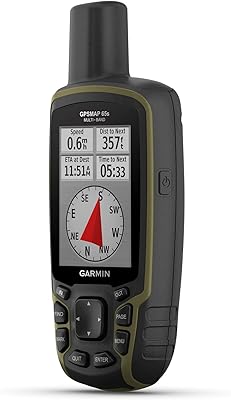
Garmin GPSMAP 65s Handheld GPS
80%
93%
GPS Accuracy
88%
Battery Performance
91%
Build Quality
74%
Display Readability
89%
Satellite Lock Speed
More
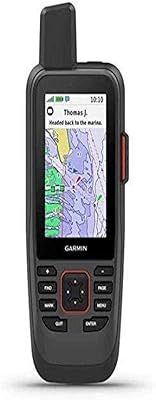
Garmin GPSMAP 86Sci Handheld GPS
87%
92%
Durability & Build Quality
88%
Display Quality
85%
Battery Life
90%
Ease of Use
93%
Water Resistance & Floating Design
More
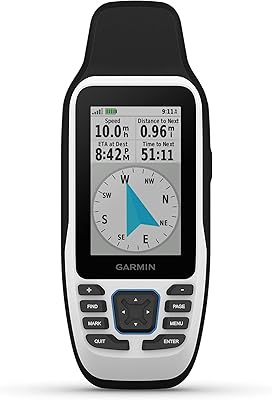
Garmin GPSMAP 79s Marine Handheld GPS
78%
93%
GPS Accuracy
91%
Floatation Design
74%
Battery Life
78%
Water Resistance
63%
Display Quality
More
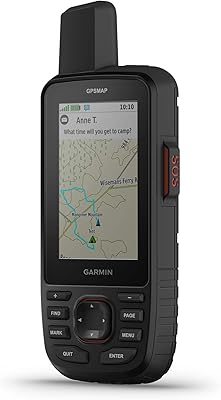
Garmin GPSMAP 66i GPS Satellite Communicator
82%
93%
Satellite Communication Reliability
89%
GPS Accuracy & Lock Speed
84%
Battery Life
91%
Map Quality & Coverage
82%
Display Legibility
More
Garmin GPSMAP 67i Satellite GPS Handheld
79%
93%
GPS Accuracy
89%
Satellite Communication
91%
Battery Life
88%
Display Quality
92%
Build Quality & Durability
More
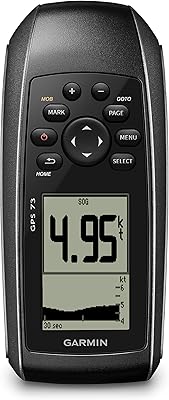
Garmin GPS 73
Garmin GPS 73
80%
93%
Battery Life
88%
SailAssist Features
91%
Build Quality & Durability
54%
Display Quality
82%
Ease of Use
More
Garmin Montana 750i GPS Handheld
84%
94%
Build Quality & Durability
72%
Battery Life
85%
Ease of Use
88%
Screen Visibility
90%
Navigation Accuracy
More
Garmin eTrex SE Handheld GPS Navigator
81%
97%
Battery Life
91%
GPS Accuracy
88%
Build Quality
63%
Display Quality
79%
Ease of Use
More
Garmin eTrex Solar Handheld GPS Navigator
80%
91%
Battery Life
88%
GPS Accuracy
93%
Build Quality
58%
Display Quality
67%
Solar Performance
More
Garmin eTrex Touch 25 Handheld GPS
79%
91%
GPS Accuracy
88%
Battery Performance
84%
Build Quality
71%
Touchscreen Usability
58%
Map Detail
More

FAQ

Yes, completely. The GPSMAP 64sc operates entirely independently of your phone and does not need a cellular or data connection to determine your position. It locks onto GPS and GLONASS satellites directly, so it functions just as well in the most remote wilderness as it does in your backyard. Your phone is only needed if you want features like Live Track sharing or syncing data to Garmin Connect.

Honestly, it is not impressive by modern standards. The camera produces low-resolution images that are fine for tagging a waypoint — marking a campsite, a hunting spot, or a trail junction — but you would not want to use it for anything you actually care about photographically. Think of it as a field note tool, not a camera. If photography matters to you, bring your phone or a dedicated camera alongside this rugged GPS unit.

Yes, and this is one of the stronger points of the platform. The 8GB of internal storage holds a substantial library of maps, and you can also use a microSD card to expand capacity further. Garmin sells detailed topo maps for most regions through their website, though these cost extra. Many users also load free community-created maps in compatible formats, which works well once you know the process.

This is where the dual battery system really earns its keep. If the rechargeable NiMH pack runs low, you can swap in standard AA batteries purchased at virtually any gas station, grocery store, or outfitter along the way. For multi-day backcountry trips, many users carry a small supply of lithium AA batteries as an emergency backup — they are lightweight, last longer in cold weather, and give you genuine peace of mind.

It is weather-resistant and handles rain, splashing, and humid conditions without any trouble. However, it is not rated for submersion, so falling into a stream or getting dunked is a different matter. Most users who take it through serious wet weather — including heavy Pacific Northwest rain and river crossings — report it holding up well, but deliberately submerging it is not recommended.

In open sky, most users report a lock within about 30 to 60 seconds on a fresh start. The GLONASS system significantly speeds this up compared to GPS-only devices, and once the unit has established a recent fix, subsequent starts are noticeably faster. Under heavy tree cover or in canyons, it takes a bit longer but still outperforms single-system units in those conditions.

There is a real learning curve, and it is worth being honest about that. The menu system is nested and button-driven, which feels unintuitive at first if you are coming from smartphone apps. Most new users find themselves spending a few sessions just learning where key functions live. The included manual is not particularly detailed, so community forums and YouTube tutorials are genuinely helpful resources for getting up to speed faster.

Yes, the ANT+ radio supports pairing with compatible heart rate monitors, Garmin's Tempe temperature sensor, and speed or cadence sensors. If you are already using ANT+ accessories from Garmin or another brand, they will connect and log data alongside your route. It is a genuinely useful feature for users who want environmental or fitness data layered into their trip records, though buyers who do not already own ANT+ gear will need to purchase sensors separately.

Not exactly. Live Track works by transmitting your location through a paired smartphone, so it depends entirely on your phone having an active data connection. In remote wilderness areas — which is exactly where you are most likely to use this Garmin handheld — your phone may have no signal at all, making Live Track non-functional. If two-way satellite communication or SOS capability is important to your safety plan, you will need a separate satellite messenger device.

For casual hikers on established trails with a charged phone, probably not — modern GPS apps are remarkably capable. The case for this device gets much stronger when you are regularly in areas with no cell signal, spending multiple days in the backcountry, operating in extreme cold where phone batteries fail, or simply cannot afford to have your primary navigation tool die mid-trip. If any of those scenarios describes your typical outing, the dedicated hardware pays for itself in reliability alone.

Where to Buy